



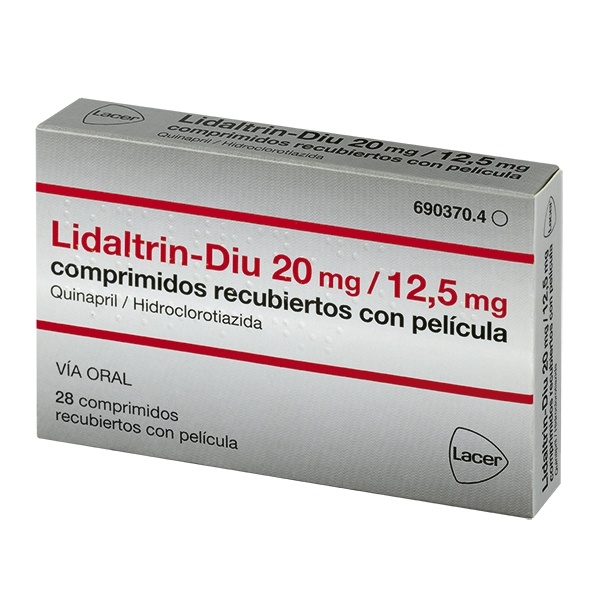
ЛИДАЛТРИН ДИУ 20 мг/12,5 мг Таблетки, покрытые плёночной оболочкой

Онлайн-рассмотрение запроса на рецепт
Врач изучит вашу ситуацию и примет решение о рецепте, если назначение будет медицински обосновано.

Обсудите это лекарство с врачом
Задайте вопросы о симптомах, лечении и возможных дальнейших шагах на онлайн-консультации.



Инструкция и информация о ЛИДАЛТРИН ДИУ 20 мг/12,5 мг ТАБЛЕТКИ, ПОКРЫТЫЕ ПЛЁНОЧНОЙ ОБОЛОЧКОЙ
Содержание инструкции к препарату
- Введение
- Что такое Лидальтрин-Диу и для чего он используется
- Что нужно знать перед началом приема Лидальтрин-Диу
- Как принимать Лидальтрин-Диу
- Возможные побочные эффекты
- Хранение Лидальтрин-Диу
- Содержание упаковки и дополнительная информация
Введение
Проспект: Информация для пациента
Лидальтрин-Диу 20 мг/12,5 мг таблетки, покрытые пленкой
Квинаприл / гидрохлортиазид
Прочитайте внимательно весь проспект перед началом приема этого лекарства, поскольку он содержит важную информацию для вас.
- Сохраните этот проспект, поскольку вам может потребоваться прочитать его снова.
- Если у вас есть какие-либо вопросы, проконсультируйтесь с вашим врачом или фармацевтом.
- Это лекарство было назначено только вам, и не передавайте его другим людям, даже если у них такие же симптомы, как у вас, поскольку оно может нанести им вред.
- Если вы испытываете побочные эффекты, проконсультируйтесь с вашим врачом или фармацевтом, даже если это побочные эффекты, которые не указаны в этом проспекте. См. раздел 4.
Содержание проспекта
1.- Что такое Лидальтрин-Диу и для чего он используется
2.- Что нужно знать перед началом приема Лидальтрин-Диу
3.- Как принимать Лидальтрин-Диу
4.- Возможные побочные эффекты
5.- Хранение Лидальтрин-Диу
6.- Содержание упаковки и дополнительная информация
1. Что такое Лидальтрин-Диу и для чего он используется
Лидальтрин-Диу является комбинацией квинаприла, который относится к семейству лекарств, называемых ингибиторами фермента преобразования ангиотензина (ФПА), и гидрохлортиазида, который относится к семейству диуретиков. Квинаприл действует, расширяя кровеносные сосуды в организме, а гидрохлортиазид действует, удаляя воду.
Лидальтрин-Диу используется для лечения повышенного артериального давления (гипертонии).

Не уверены, подходит ли вам это лекарство?
Обсудите симптомы, противопоказания и варианты лечения с врачом онлайн.
2. Что нужно знать перед началом приема Лидальтрин-Диу
Лечение Лидальтрин-Диу требует периодического контроля вашим врачом.
Не принимайтеЛидальтрин-Диу
? если вы беременны более 3 месяцев (лучше избегать Лидальтрин-Диу также в первые месяцы беременности – см. раздел Беременность).
? если вы аллергичны (гиперчувствительны) к квинаприлу, гидрохлортиазиду или любому другому компоненту этого лекарства (включая раздел 6).
? если у вас есть анамнез ангиоэдемы головы и шеи (отек лица, глаз, губ, языка или трудности с дыханием) или ангиоэдемы кишечника.
? если у вас тяжелая почечная недостаточность (анурия, тяжелая почечная недостаточность).
- если у вас диабет или почечная недостаточность и вы лечитесь лекарством для снижения артериального давления, содержащим алискирен.
? если вы принимали или принимаете сейчас сакубитрил/вальсартан, лекарство, используемое для лечения определенного типа хронической сердечной недостаточности у взрослых, поскольку риск ангиоэдемы (быстрого отека под кожей в области, такой как горло) высок.
? если вы принимаете любое из следующих лекарств, риск ангиоэдемы может увеличиться:
- Расекадотрил, лекарство, используемое для лечения диареи.
- Лекарства, используемые для предотвращения отторжения трансплантата органов и для лечения рака (например, темсиролимус, сиролимус, эверолимус).
- Вилдаглиптин, лекарство, используемое для лечения диабета.
Предостережения и меры предосторожности
Проконсультируйтесь с вашим врачом или фармацевтом перед началом приема Лидальтрин-Диу.
? если у вас есть заболевания печени.
? если у вас есть заболевание соединительной ткани (системная красная волчанка), поскольку могут возникнуть ухудшения.
? если вы диабетик.
? если вы будете оперированы, сообщите вашему врачу, что вы принимаете Лидальтрин-Диу.
? если вы принимаете другие лекарства.
? если вы соблюдаете строгую безсольную диету. Не используйте заменители соли, содержащие калий, без консультации с вашим врачом. Ваш врач может проводить периодические тесты для контроля уровня соли в крови.
- если вы принимаете любое из следующих лекарств, используемых для снижения артериального давления:
- антагонист рецепторов ангиотензина II (АРА) (также известный как "сартан" - например, валсартан, телмисартан, иберсартан), особенно если у вас есть проблемы с почками, связанные с диабетом
- алискирен
Ваш врач может контролировать функцию почек, артериальное давление и уровень электролитов в крови (например, калия) на регулярных интервалах.
См. также информацию под заголовком "Не принимайте Лидальтрин-Диу".
? если у вас есть определенные заболевания (цирроз печени, дефицит солей, увеличенная диурез или отеки) или если вы лечитесь кортикостероидами или АКТГ, поскольку могут возникнуть нарушения уровня натрия и калия в крови.
? сообщите вашему врачу, если вы беременны (или если вы подозреваете, что можете быть беременной). Не рекомендуется использовать Лидальтрин-Диу в начале беременности, и в любом случае он не должен быть назначен, если вы беременны более трех месяцев, поскольку он может нанести серьезный вред вашему ребенку, когда он назначается после этого срока (см. раздел Беременность).
? если у вас есть заболевания почек, вы проходите сеансы диализа или вам был трансплантирован почка. Ваш врач может проводить различные тесты периодически, чтобы проверить, функционируют ли ваши почки хорошо.
? если у вас есть заболевание, которое влияет на кровеносные сосуды (коллагеноз), или заболевания почек (почечная недостаточность), ваш врач может проводить различные тесты, чтобы проверить состояние вашей иммунной системы.
- если вы принимаете другие лекарства для снижения артериального давления, поскольку оно может снизиться чрезмерно (гипотония). Другие процессы, такие как рвота, диарея, обезвоживание и чрезмерное потоотделение, также могут снизить артериальное давление. Проконсультируйтесь с вашим врачом, если вы испытываете головокружение и вертиго. Если возникает головокружение, присядьте, пока не пройдет это ощущение. После того, как вы сели, вставайте всегда медленно, чтобы избежать ощущения головокружения. Если вы падаете в обморок или испытываете головокружение, сообщите об этом вашему врачу.
- как и с другими ингибиторами ФПА, при приеме Лидальтрин-Диу может возникнуть сухой кашель. В этом случае проконсультируйтесь с вашим врачом. Этот кашель исчезнет после прекращения лечения.
- если у вас был рак кожи или если у вас появляется неожиданный кожный дефект во время лечения. Лечение гидрохлортиазидом, в частности его длительное использование в высоких дозах, может увеличить риск некоторых видов рака кожи и губ (не-меланомный рак кожи). Защитите свою кожу от воздействия солнца и ультрафиолетового излучения, пока вы принимаете Лидальтрин-Диу.
- если вы испытываете снижение зрения или глазную боль, это могут быть симптомы накопления жидкости в сосудистой оболочке глаза (хороидальный отек) или повышения давления в глазу, и они могут возникнуть в течение нескольких часов или недели после приема Лидальтрин-Диу.
- если у вас были проблемы с дыханием или легкими (например, воспаление или жидкость в легких) после приема гидрохлортиазида в прошлом. Если вы испытываете одышку или трудности с дыханием после приема Лидальтрин-Диу, немедленно обратитесь к врачу.
Дети и подростки
Безопасность и эффективность у детей и подростков (моложе 18 лет) не установлены.
Другие лекарства и Лидальтрин-Диу
Сообщите вашему врачу или фармацевту, если вы принимаете, недавно принимали или можете принять любое другое лекарство.
Ваш врач может потребовать изменить вашу дозу и/или принять другие меры предосторожности:
Если вы принимаете антагонист рецепторов ангиотензина II (АРА) или алискирен (см. также информацию под заголовками "Не принимайте Лидальтрин-Диу" и "Предостережения и меры предосторожности").
Если вы госпитализированы или посещаете другого врача, дантиста или фармацевта, сообщите им, что вы принимаете Лидальтрин-Диу или любое другое лекарство. Лидальтрин-Диу может взаимодействовать с лекарствами, перечисленными ниже. Не принимайте эти лекарства одновременно с Лидальтрин-Диу, если только ваш врач не назначил их вам:
- Литий (лекарство для лечения депрессии)
- Тетрациклины (антибиотики)
- Диуретики (лекарства для увеличения количества мочи)
- Добавки калия, или лекарства или заменители соли, содержащие калий
- Лекарства типа кортикостероидов
- Лекарства для лечения диабета (инсулин или пероральные гипогликемические средства)
- Алкоголь, барбитураты и наркотические вещества
- Миорелаксанты
- Нестероидные противовоспалительные средства (НПВС)
- Лекарства типа амин-прессоров
- Лекарства для снижения артериального давления (антигипертензивные средства)
- Ионообменные смолы (лекарства, снижающие уровень холестерина).
- Добавки калия (включая заменители соли), диуретики, сохраняющие калий, и другие лекарства, которые могут увеличить количество калия в крови (например, триметоприм и котримоксазол для бактериальных инфекций; циклоспорин, иммунодепрессивное средство, используемое для предотвращения отторжения трансплантата органов; и гепарин, лекарство, используемое для разжижения крови для предотвращения тромбов).
Если у вас есть какие-либо вопросы о приеме других лекарств с Лидальтрин-Диу, проконсультируйтесь с вашим врачом.
Прием Лидальтрин-Диу с пищей, напитками и алкоголем
Лидальтрин-Диу можно принимать с пищей или без нее.
Беременность, лактация и фертильность
Если вы беременны или кормите грудью, считаете, что можете быть беременной, или планируете стать беременной, проконсультируйтесь с вашим врачом или фармацевтом перед использованием этого лекарства.
- Беременность
Ваш врач обычно порекомендует вам прекратить прием Лидальтрин-Диу перед беременностью или как можно скорее после того, как вы узнаете, что беременны, и порекомендует вам принимать другое лекарство вместо Лидальтрин-Диу. Не рекомендуется использовать Лидальтрин-Диу в начале беременности, и в любом случае он не должен быть назначен после третьего месяца беременности, поскольку может нанести серьезный вред вашему ребенку, когда он назначается после этого срока.
- Лактация
Не рекомендуется использовать Лидальтрин-Диу в этот период. Ваш врач может решить назначить вам лечение, которое более подходит, если вы хотите кормить грудью, особенно для новорожденных и недоношенных детей.
Использование в спорте
Спортсменам сообщается, что это лекарство содержит компонент, который может дать положительный результат при тесте на допинг.
Вождение и использование машин
Лидальтрин-Диу может вызвать внезапное снижение артериального давления,导致 головокружение и в некоторых случаях обморок. Это может произойти в течение первых дней лечения. Поэтому необходимо проявлять особую осторожность при выполнении задач, таких как вождение, использование опасных машин и т. д.
Лидальтрин-Диусодержит лактозу
Это лекарство содержит лактозу. Если ваш врач сказал вам, что у вас есть непереносимость некоторых сахаров, проконсультируйтесь с ним перед приемом этого лекарства.
3. Как принимать Лидальтрин-Диу
Следуйте точно инструкциям по приему этого лекарства, указанным вашим врачом или фармацевтом. В случае сомнений проконсультируйтесь с вашим врачом или фармацевтом снова.
Ваш врач укажет вам, какая доза этого лекарства наиболее подходит для вас.
Не принимайте больше таблеток, чем указано вашим врачом. В зависимости от индивидуальной реакции и состояния пациента врач может изменить дозу Лидальтрин-Диу. Следуйте точно инструкциям вашего врача относительно дозы и способа приема.
Лидальтрин-Диу принимается перорально. Ваш врач укажет вам, сколько таблеток вам нужно принимать каждый день.
Проглотите таблетки с достаточным количеством жидкости (например, стаканом воды).
Следуйте этим инструкциям, если только ваш врач не дал вам других указаний. Помните, что нужно принимать свое лекарство.
Ваш врач укажет вам продолжительность лечения Лидальтрин-Диу. Не прекращайте лечение раньше, поскольку это может быть вредно для вашего здоровья.
Если вы считаете, что эффект этого лекарства слишком сильный или слишком слабый, проконсультируйтесь с вашим врачом или фармацевтом.
Если вы приняли больше Лидальтрин-Диу, чем должно быть
Немедленно проконсультируйтесь с вашим врачом или фармацевтом.
Передозировка Лидальтрин-Диу может вызвать снижение артериального давления. В этом случае присядьте с головой, опущенной вниз.
В случае передозировки или случайного приема проконсультируйтесь с Токсикологической службой. Телефон 915 62 04 20, указав лекарство и количество, использованное.
Если вы забыли принять Лидальтрин-Диу
Не принимайте двойную дозу, чтобы компенсировать пропущенные дозы.
Если вы прекратили лечение Лидальтрин-Диу
Если у вас есть какие-либо другие вопросы о использовании этого лекарства, проконсультируйтесь с вашим врачом или фармацевтом.

Уже принимаете препарат и появились вопросы?
Обсудите самочувствие, побочные эффекты и дальнейшие шаги с врачом онлайн.
4. Возможные побочные эффекты
Как и все лекарства, Лидальтрин-Диу может вызывать побочные эффекты, хотя не все люди испытывают их. Побочные реакции обычно являются временными и легкими.
Наблюдались следующие побочные эффекты:
- Частые (могут возникнуть у до 1 из 10 человек):
- головная боль
- головокружение
- вертиго
- воспаление слизистой оболочки носа (ринит)
- кашель
- усталость
- тошнота и/или рвота
- боль в мышцах (миалгия)
- вирусная инфекция
- инфекция верхних дыхательных путей
- диарея
- боль в груди
- боль в животе
- нарушение функции пищеварения (диспепсия)
- боль в спине
- воспаление глотки (фарингит)
- воспаление бронхов (бронхит)
- слабость (астения)
- расширение кровеносных сосудов (вазодилатация)
- трудности с засыпанием (бессонница)
- сонливость
- снижение уровня натрия в крови
- Редкие (могут возникнуть у до 1 из 100 человек):
- аллергическая реакция (анafilactoидная реакция)
- повышенная чувствительность к солнечному свету (фотосенсибилизация)
- сердцебиение
- низкое артериальное давление (гипотония)
- учащенное сердцебиение (тахикардия)
- снижение артериального давления при стоянии (ортостатическая гипотония)
- обморок
- вздутие живота
- сухость во рту или горле
- воспаление печени (гепатит)
- воспаление поджелудочной железы (панкреатит)
- снижение количества тромбоцитов (тромбоцитопения)
- воспаление придаточных пазух носа (синусит)
- трудности с дыханием (диспноэ)
- нервозность
- онемение (парестезия)
- выпадение волос (алопеция)
- заболевания кожи (эксфолиативный дерматит, эритема мультиформе, синдром Стивенса-Джонсона, пемфигус, зуд, высыпания)
- инфекции мочевыводящих путей
- импотенция
- чрезмерное накопление жидкости в организме (отеки)
- боль в суставах (артралгия)
- снижение продолжительности жизни красных кровяных клеток (гемолитическая анемия).
- Очень редкие (могут возникнуть у до 1 человека из 10 000):
- Трудности с дыханием (симптомы включают тяжелые трудности с дыханием, лихорадку, слабость и спутанность сознания).
- Частота неизвестна (не может быть оценена на основе доступных данных):
- Рак кожи и губ (не-меланомный рак кожи).
- Снижение зрения или глазная боль из-за повышенного давления [возможные симптомы накопления жидкости в сосудистой оболочке глаза (хороидальный отек) или глаукома с закрытым углом].
- Темная моча, тошнота, рвота, мышечные спазмы, спутанность сознания и судороги. Эти симптомы могут быть признаками состояния, называемого СИАДГ (несоответствующая секреция антидиуретического гормона).
- Псориаз или ухудшение существующего псориаза (заболевание кожи, характеризующееся красными пятнами, покрытыми серебристыми чешуйками).
- Лабораторные находки:
- нарушения электролитного баланса в крови
- нарушения крови (агранулоцитоз, лейкопения)
- нарушения различных лабораторных тестов.
Эти возможные побочные эффекты могут исчезнуть во время лечения. Однако, если они продолжаются или являются неприятными, сообщите об этом вашему врачу, медсестре или фармацевту.
Могут возникнуть также другие побочные эффекты у некоторых пациентов. Если вы заметите любую другую непредвиденную реакцию, не описанную выше, проконсультируйтесь с вашим врачом или фармацевтом.
Сообщение о побочных эффектах
Если вы испытываете любой тип побочного эффекта, проконсультируйтесь с вашим врачом или фармацевтом, даже если это возможные побочные эффекты, которые не указаны в этом проспекте. Вы также можете сообщить об этом напрямую через Испанскую систему фармаковигиланса для лекарств для человека: https://www.notificaram.es
Сообщая о побочных эффектах, вы можете способствовать предоставлению более полной информации о безопасности этого лекарства.
5. Хранение Лидальтрин-Диу
Храните это лекарство в недоступном для детей месте.
Не храните при температуре выше 30°C. Храните в защищенном от света и влаги месте.
Не используйте Лидальтрин-Диу после даты истечения срока годности, указанной на упаковке после "CAD". Дата истечения срока годности является последним днем месяца, указанного.
Лекарства не должны выбрасываться в канализацию или мусор. Поместите упаковки и лекарства, которые вам больше не нужны, в пункт SIGRE аптеки. В случае сомнений проконсультируйтесь с вашим фармацевтом, как правильно утилизировать упаковки и лекарства, которые вам больше не нужны. Таким образом, вы поможете защитить окружающую среду.
6. Содержание упаковки и дополнительная информация
Состав Лидальтрин-Диу
Активные вещества – квинаприл (гидрохлорид) и гидрохлортиазид. Каждая таблетка содержит 20 мг квинаприла (в виде гидрохлорида) и 12,5 мг гидрохлортиазида.
Другие компоненты (вспомогательные вещества) – лактоза моногидрат, кросповидон, тяжелый магний карбонат (E504), магний стеарат (E572), повидон (E1201), гипромеллоза (E464), гидроксипропилцеллюлоза (E463), макрогол 400, оксид железа красный (E172), оксид железа желтый (E172), диоксид титана (E171) и пчелиный воск (E902).
Внешний вид продукта и содержание упаковки
Таблетки Лидальтрин-Диу, покрытые пленкой, имеют розовый цвет, треугольную форму, биконвексную и ребристую. Каждая упаковка содержит 28 таблеток.
Владелец разрешения на маркетинг и ответственный за производство
LACER, S.A. - Boters, 5
08290 Cerdanyola del Vallès
Barcelona – Испания
Дата последнего пересмотра этого проспекта:Март 2022
Подробная и актуальная информация о этом лекарстве доступна на сайте Испанского агентства по лекарствам и медицинским изделиям (AEMPS) https://www.aemps.gob.es/
- Страна регистрации лекарства
- Форма выпуска и дозировкаТАБЛЕТКА, 20/12,5 мг/мг
- Код АТХC09BA06
- Средняя цена в аптеках3.04 EUR
- Действующее вещество
- Отпускается по рецептуДа
- Производитель лекарства
- Состав препаратаLACTOSA MONOHIDRATO (77,16 mg mg)
- Информация на этой странице является справочной и не заменяет медицинскую консультацию. Перед началом приема лекарства обязательно проконсультируйтесь с врачом.
- Похожие лекарства и аналоги ЛИДАЛТРИН ДИУ 20 мг/12,5 мг ТАБЛЕТКИ, ПОКРЫТЫЕ ПЛЁНОЧНОЙ ОБОЛОЧКОЙФорма выпуска и дозировка: ТАБЛЕТКА, 20/12,5 мг/мгДействующее вещество: enalapril and diureticsПроизводитель лекарства: Alfasigma Espana S.L.Отпускается по рецептуФорма выпуска и дозировка: ТАБЛЕТКА, 20/12,5 мг/мгДействующее вещество: enalapril and diureticsПроизводитель лекарства: Aristo Pharma Iberia S.L.Отпускается по рецептуФорма выпуска и дозировка: ТАБЛЕТКА, 20/12,5 мг/мгДействующее вещество: enalapril and diureticsПроизводитель лекарства: Neuraxpharm Spain S.L.Отпускается по рецепту
Врачи онлайн по ЛИДАЛТРИН ДИУ 20 мг/12,5 мг ТАБЛЕТКИ, ПОКРЫТЫЕ ПЛЁНОЧНОЙ ОБОЛОЧКОЙ
Обсудите применение ЛИДАЛТРИН ДИУ 20 мг/12,5 мг ТАБЛЕТКИ, ПОКРЫТЫЕ ПЛЁНОЧНОЙ ОБОЛОЧКОЙ и возможные следующие шаги — по оценке врача.
Как получить рецепт на ЛИДАЛТРИН ДИУ 20 мг/12,5 мг ТАБЛЕТКИ, ПОКРЫТЫЕ ПЛЁНОЧНОЙ ОБОЛОЧКОЙ онлайн
Заполните форму за 2 минуты
Расскажите о симптомах, истории болезни и нужном препарате.
Выберите врача или мы назначим
Выберите специалиста или мы подберём ближайшего доступного врача.
Врач рассматривает ваш случай
Обычно в течение 30 минут. Может задать уточняющие вопросы в чате.
Получите в любой аптеке
Электронный рецепт отправляется на вашу почту — действителен по всей Испании.
Часто задаваемые вопросы
ЛИДАЛТРИН ДИУ 20 мг/12,5 мг ТАБЛЕТКИ, ПОКРЫТЫЕ ПЛЁНОЧНОЙ ОБОЛОЧКОЙ требует рецепта в Испания. Вы можете уточнить у врача онлайн, подходит ли это лекарство для вашей ситуации.
Действующее вещество ЛИДАЛТРИН ДИУ 20 мг/12,5 мг ТАБЛЕТКИ, ПОКРЫТЫЕ ПЛЁНОЧНОЙ ОБОЛОЧКОЙ — quinapril and diuretics. Эта информация помогает определить лекарства с тем же составом под другими торговыми названиями.
Средняя цена ЛИДАЛТРИН ДИУ 20 мг/12,5 мг ТАБЛЕТКИ, ПОКРЫТЫЕ ПЛЁНОЧНОЙ ОБОЛОЧКОЙ в аптеках составляет около 3.04 EUR. Стоимость может отличаться в зависимости от производителя, формы выпуска и аптеки.
ЛИДАЛТРИН ДИУ 20 мг/12,5 мг ТАБЛЕТКИ, ПОКРЫТЫЕ ПЛЁНОЧНОЙ ОБОЛОЧКОЙ производится компанией Lacer S.A.. Упаковка и торговое название могут отличаться в зависимости от дистрибьютора.
Врачи, включая Семейные врачи, Психиатры, Дерматологи, Кардиологи, Эндокринологи, Гастроэнтерологи, Пульмонологи, Нефрологи, Ревматологи, Гематологи, Инфекционисты, Аллергологи, Гериатры, Педиатры, Онкологи, могут оценить целесообразность применения ЛИДАЛТРИН ДИУ 20 мг/12,5 мг ТАБЛЕТКИ, ПОКРЫТЫЕ ПЛЁНОЧНОЙ ОБОЛОЧКОЙ с учетом вашей ситуации и местных правил. Вы можете записаться на онлайн-консультацию, чтобы обсудить возможные варианты.
Польша имеет хорошо развитую систему здравоохранения в крупных городах, таких как Варшава, Краков, Вроцлав и Гданьск. Аптеки широко доступны и работают в соответствии с действующим законодательством, обеспечивая доступ к рецептурным препаратам.
Вы можете купить ЛИДАЛТРИН ДИУ 20 мг/12,5 мг ТАБЛЕТКИ, ПОКРЫТЫЕ ПЛЁНОЧНОЙ ОБОЛОЧКОЙ в Варшаве, Кракове, Вроцлаве или Гданьске в любой аптеке при наличии действующего рецепта.
Чтобы получить рецепт, вы можете воспользоваться Oladoctor:
Другие лекарства с тем же действующим веществом (quinapril and diuretics) включают АЦЕДИУР 20 мг/12,5 мг таблетки, АЦЕТЕНСИЛ ПЛЮС 20 мг/12,5 мг ТАБЛЕТКИ, БАРИПРИЛ ДИУ 20 мг/12,5 мг ТАБЛЕТКИ. Они могут отличаться торговым названием или формой выпуска, но содержат одинаковый терапевтический компонент. Перед изменением лечения рекомендуется проконсультироваться с врачом.
