



LATUDA 74 mg Comprimidos Recubiertos Con Película

Revisión de receta online
Un médico revisará tu caso y determinará si la prescripción es médicamente apropiada.

Habla con un médico sobre este medicamento
Comenta tus síntomas y las opciones de tratamiento en una consulta online.



Cómo usar LATUDA 74 MG COMPRIMIDOS RECUBIERTOS CON PELICULA
Contenido del prospecto
- Introducción
- Qué es Latuda y para qué se utiliza
- Qué necesita saber antes de empezar a tomar Latuda
- No tome Latuda si:
- Cómo tomar Latuda
- Posibles efectos adversos
- Conservación de Latuda
- Contenido del envase e información adicional
- Composición de Latuda
Introducción
Prospecto: información para el paciente
Latuda 18,5 mg comprimidos recubiertos con película
Latuda 37 mg comprimidos recubiertos con película
Latuda 74 mg comprimidos recubiertos con película
lurasidona
Lea todo el prospecto detenidamente antes de empezar a tomar este medicamento, porque
contiene información importante para usted.
- Conserve este prospecto, ya que puede tener que volver a leerlo.
- Si tiene alguna duda, consulte a su médico o farmacéutico.
- Este medicamento se le ha recetado solamente a usted, y no debe dárselo a otras personas aunque tengan los mismos síntomas que usted, ya que puede perjudicarles.
- Si experimenta efectos adversos, consulte a su médico o farmacéutico, incluso si se trata de efectos adversos que no aparecen en este prospecto. Ver sección 4.
Contenido del prospecto
- Qué es Latuda y para qué se utiliza
- Qué necesita saber antes de empezar a tomar Latuda
- Cómo tomar Latuda
- Posibles efectos adversos
- Conservación de Latuda
- Contenido del envase e información adicional
1. Qué es Latuda y para qué se utiliza
Latuda contiene la sustancia activa lurasidona y pertenece a un grupo de medicamentos denominados antipsicóticos. Se utiliza para tratar los síntomas de la esquizofrenia en adultos (de 18 años de edad y mayores) y adolescentes de 13 a 17 años. Lurasidona actúa bloqueando los receptores cerebrales sobre los que las sustancias dopamina y serotonina actúan. La dopamina y la serotonina son neurotransmisores (sustancias que permiten a las células nerviosas comunicarse unas con otras) que están implicados en los síntomas de la esquizofrenia. Al bloquear estos receptores, lurasidona ayuda a normalizar la actividad cerebral, reduciendo los síntomas de la esquizofrenia.
La esquizofrenia es un trastorno con síntomas como escuchar, ver o sentir cosas que no existen, tener creencias erróneas, suspicacia exagerada, retraimiento, habla y comportamiento incoherentes y ausencia de emociones. Las personas que sufren este trastorno pueden sentirse deprimidas, angustiadas, culpables o tensas. Este medicamento se utilizar para mejorar sus síntomas de esquizofrenia.

¿No estás seguro de si este medicamento es adecuado para ti?
Comenta tus síntomas y tratamiento con un médico online.
2. Qué necesita saber antes de empezar a tomar Latuda
No tome Latuda si:
- es alérgico a lurasidona o a cualquiera de los demás componentes de este medicamento (incluidos en la sección 6)
- está tomando medicamentos que puedan influir en la concentración de lurasidona en la sangre, como:
- medicamentos para infecciones por hongos como itraconazol, ketoconazol (excepto en
- champú), posaconazol o voriconazol
- medicamentos contra las infecciones, como el antibiótico claritromicina o telitromicina
- medicamentos para la infección por el VIH como cobicistat, indinavir, nelfinavir, ritonavir y saquinavir
- medicamentos para la hepatitis crónica como boceprevir y telaprevir
- nefazodona, un medicamento para la depresión
- rifampicina, un medicamento para la tuberculosis
- medicamentos para las convulsiones como carbamazepina, fenobarbital y fenitoína
- hierba de San Juan (Hypericum perforatum), una planta medicinal para tratar la depresión.
Advertencias y precauciones
El efecto completo de este medicamento puede tardar varios días o incluso semanas en aparecer.
Consulte a su médico si tiene alguna duda sobre este medicamento.
Consulte a su médico o farmacéutico antes de tomar este medicamento o durante el tratamiento sobre todo si:
- tiene pensamientos o comportamientos suicidas
- sufre enfermedad de Parkinson o demencia
- le han diagnosticado alguna vez una enfermedad cuyos síntomas son fiebre alta y rigidez muscular (también denominada síndrome neuroléptico maligno) o ha sufrido alguna vez rigidez, temblores o problemas de movilidad (síntomas extrapiramidales) o movimientos anormales de la lengua o la cara (discinesia tardía). Debe ser consciente de que estas dolencias pueden ser causadas por este medicamento
- sufre enfermedad cardíaca o recibe tratamiento por una enfermedad cardíaca que le hace propenso a la tensión arterial baja o tiene antecedentes familiares de latidos cardíacos
- irregulares (incluida prolongación del QT)
- tiene antecedentes de convulsiones o epilepsia
- tiene antecedentes de coágulos de sangre, o algún otro miembro de su familia tiene antecedentes de coágulos de sangre, ya que los medicamentos para la esquizofrenia se han asociado con formación de coágulos de sangre
- aumento del tamaño de las mamas en hombres (ginecomastia), secreción lechosa de los pezones (galactorrea), ausencia de menstruación (amenorrea) o disfunción eréctil
- sufre diabetes o es propenso a ella
- tiene disminuida la función renal
- tiene disminuida la función hepática
- aumenta de peso
- la tensión arterial desciende al levantarse lo que puede provocarle desvanecimientos
- tiene dependencia a opioides (tratados con buprenorfina) o dolor severo (tratados con opioides) o depresión u otras enfermedades tratadas con antidepresivos. El uso de estos medicamentos en combinación con Latuda puede provocar el síndrome serotoninérgico, una enfermedad potencialmente mortal (ver “Otros medicamentos y Latuda”).
Si cumple cualquiera de estas condiciones, consulte a su médico, ya que es posible que quiera ajustarle la dosis, vigilarle más estrechamente o interrumpir el tratamiento con Latuda.
Niños y adolescentes
No administrar a niños menores de 13 años.
Otros medicamentos y Latuda
Informe a su médico o farmacéutico si está tomando, ha tomado recientemente o pudiera tener que tomar cualquier otro medicamento. Esto es especialmente importante si está tomando:
- cualquier medicamento que actúe también en el cerebro, ya que sus efectos podrían ser aditivos de forma negativa a los de Latuda en su cerebro
- medicamentos que bajen la tensión arterial, ya que este medicamento también puede reducir la tensión arterial
- medicamentos para la enfermedad de Parkinson y el síndrome de piernas inquietas (p. ej., levodopa), ya que este medicamento puede reducir sus efectos
- medicamentos que contengan derivados de alcaloides del cornezuelo del centeno (utilizados para tratar las jaquecas), y otros medicamentos como terfenadina y astemizol (utilizados para tratar la fiebre del heno y otros procesos alérgicos), cisaprida (utilizada para tratar los problemas digestivos), pimozida (utilizada para tratar las enfermedades psiquiátricas), quinidina (utilizada para tratar las dolencias cardíacas), bepridilo (utilizado para tratar el dolor torácico).
Informe a su médico si toma cualquiera de estos medicamentos, ya que es posible que tenga que
cambiar la dosis de ese medicamento durante el tratamiento con Latuda.
Los siguientes medicamentos pueden aumentar la concentración de lurasidona en su sangre:
- diltiazem (para tratar la hipertensión)
- eritromicina (para tratar las infecciones)
- fluconazol (para tratar infecciones por hongos)
- verapamilo (para tratar la hipertensión o el dolor torácico).
Los siguientes medicamentos pueden disminuir la concentración de lurasidona en su sangre:
- amprenavir, efavirenz, etravirina (para tratar la infección por VIH)
- aprepitant (para tratar las náuseas y los vómitos)
- armodafinilo, modafinilo (para tratar la somnolencia)
- bosentan (para tratar la presión arterial alta o las úlceras de los dedos)
- nafcilina (para tratar infecciones)
- prednisona (para tratar enfermedades inflamatorias)
- rufinamida (para tratar las convulsiones)
Informe a su médico si toma cualquiera de estos medicamentos, ya que es posible que cambie su dosis de Latuda.
Toma de Latuda con alimentos, bebidas y alcohol
Se debe evitar el consumo de alcohol cuando se tome este medicamento, ya que tendrá un efecto
negativo aditivo.
No beba zumo de pomelo mientras tome este medicamento. El pomelo puede influir en la acción de este medicamento.
Embarazo y lactancia
Si está embarazada o en período de lactancia, cree que podría estar embarazada o tiene intención de quedarse embarazada, consulte a su médico o farmacéutico antes de utilizar este medicamento.
No debe tomar este medicamento durante el embarazo a menos que lo haya acordado así con su médico.
Si el médico decide que el posible beneficio del tratamiento durante el embarazo justifica el posible riesgo para el niño no nacido, el médico vigilará estrechamente a su hijo después del parto. El motivo es que en los recién nacidos de madres que han utilizado lurasidona en el último trimestre (últimos tres meses) del embarazo pueden aparecer los síntomas siguientes:
- temblores, rigidez o debilidad muscular, somnolencia, agitación, problemas respiratorios ydificultad para alimentarse.
Si su hijo desarrolla cualquiera de estos síntomas, debe consultar a su médico.
Se desconoce si lurasidona pasa a la leche materna. Informe a su médico si está dando el pecho a su hijo o tiene intención de hacerlo.
Conducción y uso de máquinas
Durante el tratamiento con este medicamento se pueden producir somnolencia, mareos y problemas de visión (ver sección 4, Posibles efectos adversos). No conduzca ni maneje herramientas o maquinaria hasta que sepa que este medicamento no le afecta negativamente.
Latuda contiene sodio
Cada comprimido contiene menos de 1 mmol de sodio (23 mg), es decir, es esencialmente “libre de sodio”.

¿Has empezado a tomar el medicamento y tienes preguntas?
Comenta tus síntomas y tratamiento con un médico online.
3. Cómo tomar Latuda
Siga exactamente las instrucciones de administración de este medicamento indicadas por su médico o farmacéutico. En caso de duda, pregunte de nuevo a su médico o farmacéutico.
Su dosis la decidirá su médico y puede depender de:
- cómo responda a una dosis
- si está tomando otros medicamentos (ver sección 2, Otros medicamentos y Latuda)
- si tiene problemas de riñón o de hígado.
Adultos (de 18 años o más)
La dosis inicial recomendada es de 37 mg una vez al día.
Su médico puede aumentar o disminuir la dosis dentro del intervalo de 18,5 mg a 148 mg una vez al día. La dosis máxima no debe superar los 148 mg una vez al día.
Adolescentes de 13 a 17 años
La dosis inicial recomendada es de 37 mg de lurasidona una vez al día.
La dosis puede ser aumentada o disminuida por su médico dentro del intervalo de dosis de 37 a 74 mg una vez al día. La dosis máxima diaria no debe superar los 74 mg.
Cómo tomar Latuda
Tráguese el comprimido entero con agua, a fin de enmascarar su sabor amargo. Debe tomar la dosis de forma regular cada día a la misma hora, para que sea más fácil de recordar. Debe tomar este medicamento con alimentos o justo después de comer, ya que esto ayuda al organismo a absorber el medicamento y permite que actúe mejor.
Si toma más Latuda del que debe
Si toma más cantidad de este medicamento de lo que debe, consulte a su médico inmediatamente.
Puede sufrir somnolencia, cansancio, movimientos corporales anormales, problemas para permanecer de pie y caminar, mareos por tensión arterial baja y latidos cardiacos anormales.
Si olvidó tomar Latuda
No tome una dosis doble para compensar las dosis olvidadas. Si olvida tomar una dosis, tome la dosis siguiente en el día posterior a la dosis olvidada. Si se olvida de dos o más dosis, consulte a su médico.
Si interrumpe el tratamiento con Latuda
Si deja de tomar este medicamento, perderá sus efectos. No debe dejar de tomar el medicamento a menos que se lo indique su médico, ya que los síntomas pueden reaparecer.
Si tiene cualquier otra duda sobre el uso de este medicamento, pregunte a su médico o farmacéutico.
4. Posibles efectos adversos
Al igual que todos los medicamentos, este medicamento puede producir efectos adversos, aunque no todas las personas los sufran.
Solicite atención médicainmediata si nota cualquiera de los síntomas siguientes:
- una reacción alérgica intensa consistente en fiebre, hinchazón de boca, cara, labios o lengua, dificultad para respirar, picor, erupción en la piel y, a veces, descenso de la tensión arterial (hipersensibilidad). Estas reacciones son raras (pueden afectar a 1 de cada 10 personas).
- Erupción grave con ampollas que afecta a piel, boca, ojos y genitales (síndrome de Stevens- Johnson). Esta reacción tiene una frecuencia desconocida
- Fiebre, sudoración, rigidez muscular y disminución del nivel de conciencia. Estos podrían ser síntomas de una condición conocida como síndrome neuroléptico maligno. Estas reacciones son raras (pueden afectar a 1 de cada 1.000 personas).
- Coágulos de sangre en las venas, sobre todo de las piernas (sus síntomas son hinchazón, dolor y enrojecimiento de la pierna), que se pueden desplazar por los vasos sanguíneos hasta los pulmones y causar dolor torácico y dificultad para respirar. Si nota alguno de estos síntomas, solicite atención médica de inmediato.
También pueden aparecer los efectos adversos siguientes en los adultos:
Muy frecuentes (pueden afectar a más de 1 de cada 10 personas):
- sensación de agitación e imposibilidad de mantenerse quieto
- náuseas (ganas de vomitar)
- insomnio.
Frecuentes (pueden afectar hasta 1 de cada 10 personas):
- Parkinsonismo: Este término médico describe numerosos síntomas, que incluyen aumento de la secreción de saliva o boca muy húmeda, babeo, espasmos al flexionar las extremidades, movimientos corporales lentos, reducidos o difíciles, inexpresividad de la cara, tensión muscular, rigidez de cuello, rigidez muscular, pasos cortos, arrastrados y apresurados y falta de los movimientos normales de los brazos al caminar, guiños oculares persistentes al golpear la frente (reflejo anormal)
- problemas del habla, movimientos musculares inusuales; una serie de síntomas denominados síntomas extrapiramidales (SEP) que incluirán de forma habitual movimientos musculares involuntarios inusuales innecesarios
- frecuencia cardíaca rápida
- aumento de la tensión arterial
- mareos
- espasmos y rigidez muscular
- vómitos
- diarrea
- dolor de espalda
- erupción y prurito
- indigestión
- boca seca o exceso de saliva
- dolor abdominal
- somnolencia, cansancio, agitación y ansiedad
- aumento de peso
- aumento de las concentraciones de la creatinfosfoquinasa (una enzima de los músculos) en los análisis de sangre
- aumento de la concentración de creatinina (un marcador de la función del riñón) visto en los análisis de sangre
- apetito disminuido.
Poco frecuentes (pueden afectar hasta 1 de cada 100 personas):
- habla lenta y dificultosa
- pesadillas
- dificultad para tragar
- irritación de la mucosa del estómago
- sensación repentina de ansiedad
- convulsiones
- dolor torácico
- dolores musculares
- pérdida temporal de la conciencia
- sensación de que todo da vueltas
- impulsos nerviosos anormales en el corazón
- frecuencia cardíaca baja
- dolores en articulaciones
- problemas para caminar
- postura rígida
- aumentos de la prolactina y la glucosa en la sangre o de algunas enzimas hepáticas en los
análisis de sangre
- caída de la tensión arterial al ponerse en pie, que puede causar desvanecimiento
- resfriado común
- sofocos
- visión borrosa
- sudoración
- dolor al orinar
- movimientos involuntarios de la boca, lengua y extremidades (discinesia tardía)
- niveles bajos de sodio en sangre que pueden causar cansancio y confusión, espasmos musculares, convulsiones y coma (hiponatremia).
- falta de energía (letargo)
- gases (flatulencia)
- dolor de cuello
- problemas de erección
- período menstrual doloroso o ausente
- reducción del número de glóbulos rojos (que llevan el oxígeno por todo el cuerpo).
Raros (pueden afectar hasta a 1 de cada 1.000 personas):
- Rabdomiólisis, que es la rotura de las fibras musculares, que origina la liberación del contenido de las fibras musculares (mioglobina) a la circulación sanguínea y causa dolor muscular, náuseas, confusión, frecuencia y ritmo cardiacos anormales y, posiblemente, orina oscura
- aumento de los eosinófilos (un tipo de glóbulo blanco).
- hinchazón bajo la superficie de la piel (angioedema)
- autolesión deliberada
- accidente cerebrovascular
- insuficiencia renal
- reducción del número de glóbulos blancos (que combaten la infección)
- dolor de mama, secreción de leche de las mamas
- muerte súbita.
Frecuencia no conocida (no puede estimarse a partir de los datos disponibles):
- reducción del número de un subgrupo de glóbulos blancos (neutrófilos)
- trastorno del sueño
- los recién nacidos pueden mostrar lo siguiente: agitación, aumento o disminución del tono
muscular, temblor, somnolencia, problemas respiratorios o de alimentación
- aumento anormal del tamaño de la mama
En personas de edad avanzada con demencia, se ha notificado un pequeño aumento del número de muertes en pacientes que tomaban medicamentos para la esquizofrenia en comparación con los que no los tomaban.
En los adolescentes pueden aparecer los efectos adversos siguientes:
Muy frequentes (pueden afectar a más de 1 de cada 10 personas):
- sensación de agitación e imposibilidad de mantenerse quieto
- dolor de cabeza
- somnolencia
- náuseas.
Frequentes (pueden afectar hasta 1 de cada 10 personas):
- reducción o aumento del apetito
- sueños anormales
- dificultad para dormir, tensión, agitación, ansiedad e irritabilidad
- debilidad física, cansancio
- depresión
- trastorno psicótico: es un término médico que describe muchas enfermedades mentales que causan pensamientos y percepciones anormales; las personas con psicosis pierden el contacto con la realidad
- síntomas de la esquizofrenia
- dificultad en la atención
- sensación de que todo da vueltas
- movimientos involuntarios anormales (discinesia)
- tono muscular anormal, incluyendo tortícolis y desviación involuntaria hacia arriba de los ojos,
- Parkinsonismo: este término médico describe numerosos síntomas, que incluyen aumento de la secreción de saliva o boca muy húmeda, babeo, espasmos al flexionar las extremidades, movimientos corporales lentos, reducidos o difíciles, inexpresividad de la cara, tensión muscular, rigidez de cuello, rigidez muscular, pasos cortos, arrastrados y apresurados y falta de los movimientos normales de los brazos al caminar, guiños oculares persistentes al golpear la frente (reflejo anormal)
- latidos cardíacos rápidos
- dificultad para vaciar los intestinos (estreñimiento)
- boca seca o exceso de saliva
- vómitos
- sudoración
- rigidez muscular
- problemas de erección
- aumento de las concentraciones de la creatinfosfoquinasa (una enzima de los músculos) en los análisis de sangre
- aumentos de la prolactina (una hormona) en la sangre, visto en los análisis de sangre
- aumento o pérdida de peso.
Poco frequentes (pueden afectar hasta 1 de cada 100 personas):
- hipersensibilidad
- resfriado común, infección de garganta y nariz
- disminución de la actividad de la tiroides, inflamación de la tiroides
- comportamiento agresivo, comportamiento impulsivo
- apatía
- estado de confusión
- estado de ánimo deprimido
- separación de los procesos mentales normales (disociación)
- alucinación (auditiva o visual)
- pensamientos homicidas
- dificultad para dormir
- aumento o disminución del deseo sexual
- falta de energía
- alteración del estado mental
- pensamientos obsesivos
- sensación de ansiedad aguda e incapacitante (ataque de pánico)
- realizar movimientos involuntarios que no sirven para nada (hiperactividad psicomotora)
- hiperactividad de los músculos del cuerpo (hiperquinesia), incapacidad para descansar (inquietud)
- urgencia incontrolable de mover las piernas (síndrome de piernas inquietas), movimientos incontrolables de la boca, la lengua y las extremidades (discinesia tardía)
- trastornos del sueño
- pensamientos suicidas deliberados
- pensamientos anormales
- inestabilidad (sensación de que todo da vueltas)
- alteración del sentido del gusto
- deterioro de la memoria
- sensación anormal de la piel (parestesia)
- sensación de tener una banda ajustada alrededor de la cabeza (dolor de cabeza por tensión), migraña
- dificultad de los ojos para enfocar, visión borrosa
- aumento de la sensibilidad auditiva
- palpitaciones, alteraciones del ritmo cardíaco
- la tensión arterial desciende al levantarse lo que puede provocarle desvanecimientos
- aumento de la tensión arterial
- dolor o molestias abdominales
- ausencia o deficiencia de secreción de saliva
- diarrea
- indigestión
- labios secos
- dolor de muelas
- ausencia parcial o completa de pelo, crecimiento anormal del pelo
- erupción, urticaria
- espasmos y rigidez muscular, dolores musculares
- dolores articulares, dolor en brazos y piernas, dolor en la mandíbula
- presencia de bilirrubina en la orina, presencia de proteínas en la orina, un marcador de la función renal
- dolor o dificultad al orinar, micción frecuente, trastorno renal
- disfunción sexual
- dificultad en la eyaculación
- aumento anormal del tamaño de las mamas, dolor mamario, secreción de leche de las mamas
- menstruación ausente o irregular
- hacer ruidos y movimientos incontrolados (Trastorno de Tourette)
- escalofríos
- problemas para caminar
- malestar
- dolor torácico
- fiebre
- sobredosis intencional
- efectos en la función tiroidea, vistas en los análisis de sangre, aumento del colesterol en sangre, aumento de los triglicéridos en sangre, disminución de lipoproteínas de alta densidad, disminución de lipoproteínas de baja densidad, vistas en los análisis de sangre
- aumento de la glucosa en la sangre (azúcar en la sangre), aumento de la insulina en la sangre, aumento de algunas enzimas hepáticas (un marcador de la función hepática), vistos en los análisis de sangre
- aumento o disminución de la testosterona en sangre, aumento de la hormona estimulante de la tiroides en sangre, vistos en los análisis de sangre
- alteraciones del electrocardiograma
- disminución de la hemoglobina, reducción del número de glóbulos blancos (que combaten la infección), vistos en los análisis de sangre.
Comunicación de efectos adversos
Si experimenta cualquier tipo de efecto adverso, consulte a su médico o farmacéutico, incluso si se trata de posibles efectos adversos que no aparecen en este prospecto. También puede comunicarlos directamente a través del sistema nacional de notificación incluido en el Apéndice V. Mediante la comunicación de efectos adversos usted puede contribuir a proporcionar más información sobre la seguridad de este medicamento.
5. Conservación de Latuda
Mantener este medicamento fuera de la vista y del alcance de los niños.
No utilice este medicamento después de la fecha de caducidad que aparece en el envase y el blíster después de CAD o EXP. La fecha de caducidad es el último día del mes que se indica.
Conservar en el embalaje original para protegerlo de la luz.
Los medicamentos no se deben tirar por los desagües ni a la basura. Pregunte a su farmacéutico cómo deshacerse de los envases y de los medicamentos que ya no necesita. De esta forma, ayudará a proteger el medio ambiente.
6. Contenido del envase e información adicional
Composición de Latuda
- El principio activo es lurasidona.
Cada comprimido de 18,5 mg contiene hidrocloruro de lurasidona equivalente a 18,6 mg de lurasidona.
Cada comprimido de 37 mg contiene hidrocloruro de lurasidona equivalente a 37,2 mg delurasidona.
Cada comprimido de 74 mg contiene hidrocloruro de lurasidona equivalente a 74,5 mg de lurasidona.
- Los demás componentes son manitol, almidón pregelatinizado, croscarmelosa sódica,
hipromelosa, estearato de magnesio (E 470b), dióxido de titanio (E171), macrogol, óxido de hierro amarillo (E172) (presente en los comprimidos de 74 mg), indigotina (E132) (presente en los comprimidos de 74 mg) y cera de carnauba (E903).
Aspecto del producto y contenido del envase
- Latuda 18,5 mg comprimidos recubiertos con película, son comprimidos recubiertos con película, redondos de color blanco o blanquecino con “LA” grabado
- Latuda 37 mg comprimidos recubiertos con película, son comprimidos recubiertos con película redondos de color blanco o blanquecino con “LB” grabado
- Latuda 74 mg comprimidos recubiertos con película, son comprimidos recubiertos con películaovalados de color verde claro con “LD”grabado
Latuda comprimidos recubiertos con película está disponible en tamaños de envase que contienen 14 x 1, 28 x 1, 30 x 1, 56 x 1, 60 x 1, 90 x 1 ó 98 x 1 comprimidos en blísters precortados unidosis de aluminio/aluminio.
Puede que solamente estén comercializados algunos tamaños de envases.
Titular de la autorización de comercialización
Angelini Pharma S.p.A.Viale Amelia 70, 00181
Roma - Italia
Responsable de la fabricación
Aziende Chimiche Riunite Angelini Francesco ACRAF SPA
Via Vecchia del Pinocchio, 22 60100
Ancona (AN), Italia
Pueden solicitar más información respecto a este medicamento dirigiéndose al representante local del titular de la autorización de comercialización:
België/ Belgique/ BelgienCNX Therapeutics Netherlands B.V. | Lithuania/ LietuvaCNX Therapeutics Netherlands B.V. |
????????? ????? ???????? ???? | Luxembourg/ Luxemburg CNX Therapeutics Netherlands B.V. |
Czech Republic/ Ceská republika Angelini Pharma Ceská republika s.r.o. | Hungary/ Magyarország Angelini Pharma Magyarország Kft |
Denmark/ Danmark CNX Therapeutics Netherlands B.V. [email protected] | Malta CNX Therapeutics Netherlands B.V. [email protected] |
Germany/ Deutschland CNX Therapeutics Netherlands B.V. [email protected] | Netherlands/ Nederland CNX Therapeutics Netherlands B.V. |
Estonia/ Eesti CNX Therapeutics Netherlands B.V. [email protected] | Norway/ Norge CNX Therapeutics Netherlands B.V. [email protected] |
Greece/ Ελλ?δα Angelini Pharma Hellas Μονοπρ?σωπη ABEE | Austria/ Österreich Angelini Pharma Österreich GmbH |
Spain/ España ANGELINI PHARMA ESPAÑA, S.L. Tel: + 34 93 253 45 00 | Poland/ Polska Angelini Pharma Polska Sp. z o.o. |
France CNX Therapeutics Netherlands B.V. | Portugal Angelini Pharma Portugal, Unipessoal Lda |
Croatia/ Hrvatska Aziende Chimiche Riunite Angelini Francesco – A.C.R.A.F. S.p.A. Tel: + 39 06 78 0531 | Romania/ România Angelini Pharmaceuticals România SRL |
Ireland CNX Therapeutics Netherlands B.V. | Slovenia/ Slovenija Bonifar d.o.o. Tel: + 386 1 235 0490 |
Iceland/ Ísland CNX Therapeutics Netherlands B.V. [email protected] | Slovak republic/ Slovenská republika Angelini Pharma Slovenská republika s.r.o. |
Italy/ Italia Angelini S.p.A. Tel: + 39 06 78 0531 | Suomi/ Finland CNX Therapeutics Netherlands B.V. |
Cyprus/Κ?προς Angelini Pharma Hellas Μονοπρ?σωπη ABEE | Sweden/ Sverige CNX Therapeutics Netherlands B.V. |
Latvia/ Latvija CNX Therapeutics Netherlands B.V. [email protected] | Northern Ireland CNX Therapeutics Netherlands B.V. |
Fecha de la última revisión de este prospecto:
La información detallada de este medicamento está disponible en la página web de la Agencia Europea de Medicamentos: http://www.ema.europa.eu.
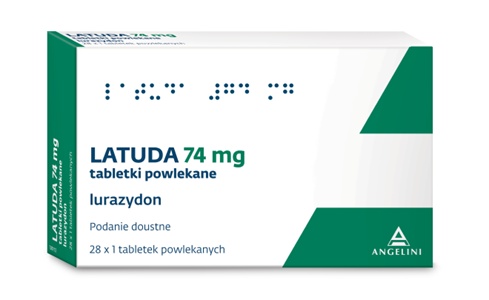
- País de registro
- Forma farmacéuticaCOMPRIMIDO, 80 mg
- Código ATCN05AE05
- Precio medio en farmacia37.84 EUR
- Principio activo
- Requiere recetaSí
- Fabricante
- ComposiciónMANITOL (E-421) (142 mg mg), CROSCARMELOSA SODICA (4 mg mg)
- Esta información es de carácter general y no sustituye la consulta con un profesional sanitario.
- Alternativas a LATUDA 74 MG COMPRIMIDOS RECUBIERTOS CON PELICULAForma farmacéutica: COMPRIMIDO, 20 mgPrincipio activo: lurasidoneFabricante: Angelini Pharma Italia Aziende Chimiche Riunite Angelini Francesc O A.C.R.A.F. S.P.A. Enunciabile AnRequiere recetaForma farmacéutica: COMPRIMIDO, 40 mgPrincipio activo: lurasidoneFabricante: Angelini Pharma Italia Aziende Chimiche Riunite Angelini Francesc O A.C.R.A.F. S.P.A. Enunciabile AnRequiere recetaForma farmacéutica: COMPRIMIDO, 18,5 MGPrincipio activo: lurasidoneFabricante: Laboratorios Cinfa S.A.Requiere receta
Médicos online para LATUDA 74 MG COMPRIMIDOS RECUBIERTOS CON PELICULA
Comenta la dosis, los posibles efectos secundarios, interacciones, contraindicaciones o la revisión de receta de LATUDA 74 MG COMPRIMIDOS RECUBIERTOS CON PELICULA, sujeto a valoración médica y a la normativa local.







Obtén una receta de LATUDA 74 MG COMPRIMIDOS RECUBIERTOS CON PELICULA online
Rellena un formulario de 2 minutos
Cuéntanos tus síntomas, historial y el medicamento que necesitas.
Elige un médico o nosotros te asignamos uno
Escoge un especialista o te conectamos con el próximo médico disponible.
El médico revisa tu caso
Normalmente en 30 minutos. Puede hacerte preguntas adicionales por chat.
Recógela en cualquier farmacia
Receta electrónica enviada a tu correo, válida en toda España.
Preguntas frecuentes
LATUDA 74 MG COMPRIMIDOS RECUBIERTOS CON PELICULA requiere receta en España. Puedes confirmarlo con un médico online según tu caso.
El principio activo de LATUDA 74 MG COMPRIMIDOS RECUBIERTOS CON PELICULA es lurasidone. Esta información ayuda a identificar medicamentos con la misma composición pero con diferentes nombres comerciales.
El precio medio en farmacia de LATUDA 74 MG COMPRIMIDOS RECUBIERTOS CON PELICULA es de aproximadamente 37.84 EUR. Puede variar según el fabricante y la forma farmacéutica.
LATUDA 74 MG COMPRIMIDOS RECUBIERTOS CON PELICULA es fabricado por Angelini Pharma Italia Aziende Chimiche Riunite Angelini Francesc O A.C.R.A.F. S.P.A. Enunciabile An. La marca y el envase pueden variar según el distribuidor.
Los Médicos de familia, Psiquiatras, Dermatólogos, Cardiólogos, Endocrinólogos, Gastroenterólogos, Neumólogos, Nefrólogos, Reumatólogos, Hematólogos, Infectólogos, Alergólogos, Geriatras, Pediatras, Oncólogos pueden valorar la prescripción de LATUDA 74 MG COMPRIMIDOS RECUBIERTOS CON PELICULA cuando esté clínicamente indicado. Puedes reservar una videoconsulta para comentar tu caso y las opciones de tratamiento.
España cuenta con una infraestructura sanitaria bien desarrollada en ciudades principales como Madrid, Barcelona, Valencia y Sevilla. Las farmacias están ampliamente disponibles y operan bajo estrictas regulaciones, garantizando el acceso a medicamentos con receta.
Puedes comprar LATUDA 74 MG COMPRIMIDOS RECUBIERTOS CON PELICULA en Madrid, Barcelona, Sevilla o Valencia en cualquier farmacia local con una receta válida.
Para obtener una receta, puedes utilizar Oladoctor:
Otros medicamentos con el mismo principio activo (lurasidone) incluyen LATUDA 18,5 MG COMPRIMIDOS RECUBIERTOS CON PELICULA, LATUDA 37 MG COMPRIMIDOS RECUBIERTOS CON PELÍCULA, LURASIDONA CINFA 18,5 MG COMPRIMIDOS RECUBIERTOS CON PELÍCULA EFG. Pueden tener diferentes nombres comerciales o formulaciones, pero contienen el mismo componente terapéutico. Consulta siempre con un médico antes de cambiar o iniciar un nuevo medicamento.
