



LANSOPRAZOL 15 mg Cápsulas Gastrorresistentes

Revisión de receta online
Un médico revisará tu caso y determinará si la prescripción es médicamente apropiada.

Habla con un médico sobre este medicamento
Comenta tus síntomas y las opciones de tratamiento en una consulta online.



Cómo usar LANSOPRAZOL SANDOZ 15 mg CAPSULAS GASTRORRESISTENTES EFG
Contenido del prospecto
- Introducción
- Qué es Lansoprazol Sandoz y para qué se utiliza
- Qué necesita saber antes de empezar a tomar Lansoprazol Sandoz
- Cómo tomar Lansoprazol Sandoz
- Posibles efectos adversos
- Conservación de Lansoprazol Sandoz
- Contenido del envase e información adicional
Introducción
Prospecto:información para el paciente
Lansoprazol Sandoz 15 mg cápsulas duras gastrorresistentes EFG
Lansoprazol Sandoz 30 mg cápsulas duras gastrorresistentes EFG
Lea todo el prospecto detenidamente antes de empezar a tomar el medicamento, porque contiene información importante para usted
- Conserve este prospecto, ya que puede tener que volver a leerlo.
- Si tiene alguna duda, consulte a su médico o farmacéutico.
- Este medicamento se le ha recetado solamente a usted, y no debe dárselo a otras personas aunque tengan los mismos síntomas que usted, ya que puede perjudicarles.
- Si experimenta efectos adversos, consulte a su médico o farmacéutico, incluso si se trata de efectos adversos que no aparecen en este prospecto. Ver sección 4.
Contenido delprospecto
- Qué es Lansoprazol Sandoz y para qué se utiliza
- Qué necesita saber antes de empezar a tomar Lansoprazol Sandoz
- Cómo tomar Lansoprazol Sandoz
- Posibles efectos adversos
- Conservación de Lansoprazol Sandoz
- Contenido del envase e información adicional
1. Qué es Lansoprazol Sandoz y para qué se utiliza
El principio activo es lansoprazol, un inhibidor de la bomba de protones. Los inhibidores de la bomba de protones disminuyen la cantidad de ácido que genera el estómago.
Su médico puede recetarle lansoprazol para las indicaciones siguientes en adultos:
- Tratamiento de la úlcera duodenal y gástrica
- Tratamiento de la inflamación del esófago (esofagitis por reflujo)
- Prevención de la esofagitis por reflujo
- Tratamiento del ardor de estómago y la regurgitación ácida
- Tratamiento de infecciones causadas por la bacteria Helicobacter pylori, en combinación con antibióticos
- Tratamiento o prevención de la úlcera duodenal o gástrica en pacientes que requieren tratamiento continuo con antiinflamatorios no esteroideos (AINEs) (el tratamiento con AINEs se utiliza para el dolor o la inflamación)
- Tratamiento del síndrome de Zollinger-Ellison.
Puede que su médico le haya recetado lansoprazol para otra indicación o a una dosis distinta de la indicada en este prospecto. Siga las instrucciones de su médico relativas a la toma del medicamento.
Debe consultar a un médico si empeora o si no mejora después de 14 días.

¿No estás seguro de si este medicamento es adecuado para ti?
Comenta tus síntomas y tratamiento con un médico online.
2. Qué necesita saber antes de empezar a tomar Lansoprazol Sandoz
No tome Lansoprazol Sandoz
- Si es alérgico a lansoprazol o a alguno de los demás componentes de este medicamento (incluidos en la sección 6).
Advertencias y precauciones
Consulte a su médico o farmacéutico antes de empezar a tomar Lansoprazol Sandoz.
Informe a su médico si tiene una enfermedad grave del hígado. Es posible que el médico deba ajustar la dosis.
Su médico puede realizarle o haberle realizado una prueba complementaria denominada endoscopia para diagnosticar su enfermedad y/o descartar una enfermedad maligna.
En caso de experimentar diarrea durante el tratamiento con lansoprazol, póngase en contacto con su médico inmediatamente, ya que lansoprazol se ha asociado con un leve aumento de la diarrea infecciosa.
Si su médico le ha recetado lansoprazol además de otros medicamentos destinados para el tratamiento de la infección por Helicobacter pylori(antibióticos) o junto con antiinflamatorios para tratar el dolor o el reumatismo, lea también detenidamente los prospectos de estos medicamentos.
Si está tomando inhibidores de la bomba de protones como lansoprazol, especialmente durante un periodo de más de un año puede aumentar ligeramente el riesgo de fractura de cadera, muñeca y columna vertebral. Informe a su médico si tiene osteoporosis (densidad ósea reducida) o si su médico le ha dicho que corre riesgo de padecer osteoporosis (por ejemplo si está tomando corticosteroides).
Si toma lansoprazol desde hace tiempo (más de 1 año), probablemente su médico le hará controles de forma regular. En las visitas a su médico, debe informarle de cualquier síntoma y circunstancia nuevo o anómalo.
Consulte a su médico antes de empezar a tomar lansoprazol:
- si usted tiene reservar corporales de vitamina B12 disminuidas o factores de riesgo para ello y recibe durante un largo periodo de tiempo tratamiento con lansoprazol. Como todos los medicamentos que reducen la cantidad de ácido, lansoprazol podría reducir la absorción de vitamina B12,
- si está previsto que le realicen un análisis especifico de sangre (Cromogranina A),
- si alguna vez ha tenido una reacción en la piel después del tratamiento con un medicamento similar a lansoprazol para reducir la acidez de estómago.
- Se han notificado casos de reacciones cutáneas graves en relación con el tratamiento con lansoprazol (síndrome de Stevens-Johnson, necrólisis epidérmica tóxica y síndrome de sensibilidad a medicamentos con eosinofilia y síntomas sistémicos (DRESS)). Deje de usar lansoprazol y llame a su médico de inmediato si refiere alguno de los síntomas relacionados con las reacciones cutáneas graves descritas en la sección 4.
- Si sufre una erupción cutánea, especialmente en zonas de la piel expuestas al sol, consulte a su médico lo antes posible, ya que puede ser necesario interrumpir el tratamiento con lansoprazol. Recuerde mencionar cualquier otro síntoma que pueda notar, como dolor en las articulaciones.
Al tomar lansoprazol, puede producirse una inflamación en el riñón. Los signos y síntomas pueden incluir la disminución del volumen de orina o la presencia de sangre en la orina y/o reacciones de hipersensibilidad como fiebre, erupción cutánea y rigidez articular. Debe informar de estos signos a su médico.
Otros medicamentos y Lansoprazol Sandoz
Informe a su médico o farmacéutico si está utilizando, ha utilizado o pudiera tener que utilizar cualquier otro medicamento, incluso los adquiridos sin receta médica.
En especial, informe a su médico o farmacéutico si está usando medicamentos que contengan alguno de los siguientes principios activos, puesto que lansoprazol puede afectar a su modo de acción:
- inhibidores de la proteasa del VIH como atazanavir y nelfinavir (utilizado en el tratamiento del VIH),
- metotrexato (utilizado para tratar enfermedades autoinmunes y cáncer),
- ketoconazol, itraconazol, rifampicina (utilizados para tratar infecciones),
- digoxina (utilizado para tratar problemas cardíacos),
- warfarina (utilizado para tratar coágulos sanguíneos),
- teofilina (utilizado para tratar el asma),
- tacrolimus (utilizado para prevenir el rechazo de trasplantes),
- fluvoxamina (utilizado para tratar la depresión y otros trastornos psiquiátricos),
- antiácidos (utilizados para tratar el ardor de estómago o la regurgitación ácida),
- sucralfato (utilizado para curar las úlceras),
- hierba de San Juan (Hypericum perforatum) (utilizado para tratar la depresión leve).
Toma de Lansoprazol Sandoz con los alimentos y bebidas
Para obtener los mejores resultados de su medicamento, debe tomar lansoprazol como mínimo 30 minutos antes de las comidas con un vaso de agua.
Embarazo y lactancia
Si está embarazada o en periodo de lactancia, cree que podría estar embarazada o tiene intención de quedarse embarazada, consulte a su médico o farmacéutico antes de utilizar este medicamento
Conducción y uso de máquinas
Los pacientes que toman lansoprazol pueden experimentar en ocasiones efectos secundarios, tales como mareo, vértigo, cansancio y trastornos visuales. Si experimenta alguno de estos efectos secundarios, debe actuar con precaución puesto que su capacidad de reacción puede verse reducida.
Usted es el único responsable de decidir si se encuentra en condiciones para conducir vehículos o realizar actividades que exijan un elevado nivel de concentración. Debido a sus efectos o reacciones adversas, uno de los factores que puede reducir su capacidad para llevar a cabo estas operaciones de forma segura es el uso que se hace de los medicamentos.
En los siguientes apartados encontrará las descripciones de estos efectos.
Lea atentamente la información de este prospecto.
Si tiene cualquier duda, pregunte a su médico o farmacéutico.
Lansoprazol Sandoz contiene sacarosa y sodio.
Si su médico le ha indicado que padece una intolerancia a ciertos azúcares, consulte con él antes de tomar este medicamento.
Este medicamento contiene menos de 1 mmol de sodio (23 mg) por cápsula; esto es, esencialmente “exento de sodio”.
3. Cómo tomar Lansoprazol Sandoz
Siga exactamente las instrucciones de administración de este medicamento indicadas por su médico. En caso de duda, consulte de nuevo con su médico o farmacéutico.
La dosis de lansoprazol depende de su estado general. Las dosis normales de lansoprazol para adultos se indican más abajo. En ocasiones, puede que su médico le recete una dosis diferente y le indique una duración distinta del tratamiento.
Tratamiento del ardor de estómago y la regurgitación ácida:una cápsula de 15 mg o 30 mg al día durante 4 semanas. Si los síntomas persisten, informe a su médico. Si los síntomas no mejoran al cabo de 4 semanas, consulte a su médico.
Tratamiento de la úlcera duodenal:dos cápsulas de 15 mg o una cápsula de 30 mg al día durante 2 semanas.
Tratamiento de la úlcera gástrica:dos cápsulas de 15 mg o una cápsula de 30 mg al día durante 4 semanas.
Tratamiento de la inflamación del esófago (esofagitis por reflujo):dos cápsulas de 15 mg o una cápsula de 30 mg al día durante 4 semanas.
Prevención a largo plazo de la esofagitis por reflujo:una cápsula de 15 mg al día; su médico puede ajustar la dosis a dos cápsulas de 15 mg o una cápsula de 30 mg al día .
Tratamiento de la infección porHelicobacter pylori:la dosis normal es dos cápsulas de 15 mg o una cápsula de 30 mg junto con dos antibióticos distintos por la mañana y dos cápsulas de 15 mg o una cápsula de 30 mg junto con dos antibióticos distintos por la noche. El tratamiento, normalmente, será diario durante 7 días.
Las combinaciones de antibióticos recomendadas son las siguientes:
- 30 mg de lansoprazol con 250–500 mg de claritromicina y 1.000 mg de amoxicilina
- 30 mg de lansoprazol con 250 mg de claritromicina y 400- 500 mg de metronidazol
Si usted recibe tratamiento antiinfeccioso debido a una úlcera, no es probable que la úlcera vuelva a aparecer si la infección se trata satisfactoriamente. Para obtener los mejores resultados de su medicamento, tómelo a la hora adecuada y no se olvide de ninguna toma.
Tratamiento de la úlcera duodenal o gástrica en pacientes que requieren un tratamiento continuo con AINEs:dos cápsulas de 15 mg ouna cápsula de 30 mg al día durante 4 semanas.
Prevención de la úlcera duodenal o gástrica en pacientes que requieren un tratamiento continuo con AINEs:una cápsula de 15 mg al día; su médico puede ajustar la dosis a dos cápsulas de 15 mg o una cápsula de 30 mg al día.
Síndrome de Zollinger-Ellison:la dosis inicial normal es de cuatro cápsulas de 15 mg o dos cápsulas de 30 mg al día; posteriormente, en función de su respuesta al tratamiento con lansoprazol, el médico decidirá la mejor dosis para usted.
Uso en niños
Lansoprazol no debe administrarse a niños
Cómo tomar este medicamento
Tome la cápsula entera con un vaso de agua. Si tiene dificultades para tragar la cápsula, su médico le informará de otros modos alternativos para tomar el medicamento. No debe triturar ni masticar las cápsulas o el contenido de una cápsula vaciada, puesto que ello hará que no actúen adecuadamente.
Si toma lansoprazol una vez al día, intente tomarlo siempre a la misma hora. Puede obtener mejores resultados si toma lansoprazol a primera hora de la mañana. Lansoprazol se debe tomar al menos 30 minutos antes de las comidas.
Si toma lansoprazol dos veces al día, debe tomar la primera dosis por la mañana y la segunda por la noche.
Si toma más Lansoprazol Sandoz del que debe
En caso de sobredosis o ingestión accidental consulte inmediatamente a su médico o farmacéutico o llame al Servicio de Información Toxicológica, teléfono: 91 562 04 20, indicando el medicamento y la cantidad ingerida.
Si olvidó tomar Lansoprazol Sandoz
Si olvidó tomar una dosis, tómela cuanto antes a menos que la hora de la siguiente dosis esté próxima. En este caso, sáltese la dosis olvidada y tome las cápsulas siguientes según lo habitual. No tome una dosis doble para compensar la dosis olvidada.
Si interrumpe el tratamiento con Lansoprazol Sandoz
No interrumpa el tratamiento antes de tiempo porque los síntomas hayan mejorado. Es posible que su afección no se haya curado por completo y puede volver a aparecer si no termina todo el tratamiento.
Si tiene cualquier otra duda sobre el uso de este medicamento, pregunte a su médico o farmacéutico.

¿Has empezado a tomar el medicamento y tienes preguntas?
Comenta tus síntomas y tratamiento con un médico online.
4. Posibles efectos adversos
Al igual que todos los medicamentos, este medicamento puede producir efectos adversos, aunque no todas las personas los sufran.
Si empieza a notar alguno de los efectos adversos siguientes, deje de tomar lansoprazol y póngase en contacto con su médico de inmediato:
- manchas circulares o en forma de diana de color ligeramente rojizo en el tronco, a menudo con ampollas en el centro, descamación, úlceras en boca, garganta, nariz, genitales y ojos. Estas erupciones cutáneas graves pueden ir precedidos de fiebre y síntomas similares a los de la gripe (síndrome de Stevens‑Johnson, necrólisis epidérmica tóxica).
- exantema generalizado, temperatura corporal elevada y adenopatías (síndrome de DRESS o síndrome de hipersensibilidad a medicamentos).
Efectos adversos frecuentes (pueden afectar a hasta 1 de cada 10 personas):
- dolor de cabeza, mareo
- diarrea, estreñimiento, dolor de estómago, náuseas y vómitos, flatulencia, sequedad o dolor de boca o garganta
- erupción cutánea, picor,
- cambios en los valores de las pruebas de función hepática,
- cansancio,
- pólipos benignos en el estómago.
Efectos adversos poco frecuentes (pueden afectar a hasta 1 de cada 100 personas)
- depresión,
- dolor articular o muscular,
- retención de líquidos o hinchazón,
- cambios en el recuento de células sanguíneas.
Efectos adversos raros (pueden afectar hasta 1 de cada 1.000 personas)
- fiebre,
- inquietud, somnolencia, confusión, alucinaciones, insomnio, trastornos visuales, vértigo,
- alteración del gusto, pérdida de apetito, inflamación de la lengua (glositis),
- reacciones cutáneas como sensación de ardor o picazón bajo la piel, hematomas, enrojecimiento y sudoración excesiva,
- sensibilidad a la luz,
- pérdida de pelo,
- sensación de hormigueo (parestesia), temblor,
- anemia (palidez),
- problemas renales,
- pancreatitis,
- inflamación del hígado (puede manifestarse por piel u ojos amarillentos),
- hinchazón del pecho en varones, impotencia,
- candidiasis (infección fúngica, puede afectar a la piel o a la mucosa),
- angioedema; contacte inmediatamente con su médico si experimenta síntomas de angioedema, tales como inflamación de la cara, lengua o faringe, dificultad para tragar, urticaria y dificultad para respirar.
Efectos adversos muy raros(pueden afectar hasta 1 de cada 10.000 personas)
- reacciones de hipersensibilidad graves, incluido shock anafiláctico. Los síntomas de reacción de hipersensibilidad pueden incluir fiebre, erupción, hinchazón y, en ocasiones, descenso de la presión arterial
- inflamación de boca (estomatitis),
- inflamación del intestino, (colitis)
- cambios en valores analíticos, como niveles de sodio, colesterol y triglicéridos,
- reacciones cutáneas muy graves con enrojecimiento, vesículas, inflamación grave y pérdida de piel,
- en muy raras ocasiones lansoprazol puede causar una reducción del número de leucocitos, lo que puede causar una disminución de su resistencia frente a infecciones. Si experimenta una infección con síntomas como fiebre y deterioro grave de su estado general, o fiebre con síntomas de infección local como dolor de garganta/faringe/boca o problemas urinarios, consulte inmediatamente a su médico. Se le realizará un análisis de sangre para comprobar la posible reducción de leucocitos (agranulocitosis).
Efectos adversos de frecuencia no conocida(no puede estimarse a partir de los datos disponibles)
- Si está tomando lansoprazol durante más de tres meses es posible que los niveles de magnesio en sangre puedan descender. Los niveles bajos de magnesio pueden causar cansancio, contracciones musculares involuntarias, desorientación, convulsiones, mareos y aumento del ritmo cardiaco. Si nota alguno de estos síntomas, acuda al médico inmediatamente. Niveles bajos de magnesio también pueden producir una disminución de los niveles de potasio y calcio en sangre. Su médico puede decidir realizar análisis de sangre periódicos para controlar los niveles de magnesio,
- bajos niveles de sodio en sangre. Los síntomas comunes incluyen náuseas y vómitos, dolor de cabeza, somnolencia y fatiga, confusión, debilidad muscular o espasmos, irritabilidad, convulsiones, coma,
- erupción cutánea posiblemente con dolor en las articulaciones,
- alucinaciones visuales.
Si considera que alguno de los efectos adversos que sufre es grave o si aprecia cualquier efecto adverso no mencionado en este prospecto, informe a su médico o farmacéutico.
Comunicación de efectos adversos:
Si experimenta cualquier tipo de efecto adverso, consulte a su médico o farmacéutico, incluso si se trata de posibles efectos adversos que no aparecen en este prospecto. También puede comunicarlos directamente a través del Sistema Español de Farmacovigilancia de Medicamentos de Uso Humano: https://www.notificaram.es. Mediante la comunicación de efectos adversos usted puede contribuir a proporcionar más información sobre la seguridad de este medicamento.
5. Conservación de Lansoprazol Sandoz
Mantener este medicamento fuera de la vista y del alcance de los niños.
No conservar a temperatura superior a 30ºC.
No utilice este medicamento después de la fecha de caducidad que aparece en el envase y blíster, después de CAD/EXP. La fecha de caducidad es el último día del mes que se indica.
Los medicamentos no se deben tirar por los desagües ni a la basura. Deposite los envases y los medicamentos que no necesita en el Punto SIGRE de la farmacia. En caso de duda pregunte a su farmacéutico cómo deshacerse de los envases y de los medicamentos que no necesita. De esta forma, ayudará a proteger el medioambiente.
6. Contenido del envase e información adicional
Composición de Lansoprazol Sandoz
- El principio activo es lansoprazol.
Cada cápsula dura gastrorresistente contiene 15 mg de lansoprazol.
Cada cápsula dura gastrorresistente contiene 30 mg de lansoprazol
- Los demás componentes son: esferas de azúcar (constituidas por almidón de maíz y sacarosa), laurilsulfato de sodio, N-metilglucamina, manitol (E-421), hipromelosa, macrogol 6000, talco, polisorbato 80, dióxido de titanio (E171) y copolímero de ácido metacrílico y acrilato de etilo.
- Los componentes de la cápsula son:
Lansoprazol Sandoz 15 mg: amarillo de quinoleína (E104), dióxido de titanio (E171), agua y gelatina.
Lansoprazol Sandoz 30 mg: dióxido de titanio (E171), agua y gelatina.
Aspecto del producto y contenido del envase
Lansoprazol Sandoz 15 mg se presenta en forma de cápsulas duras gastrorresistentes de color amarillo opaco que contienen gránulos de lansoprazol gastrorresistentes en blíster Alu/Alu acondicionados en envase de cartón. Cada envase contiene 28 ó 500 cápsulas.
Lansoprazol Sandoz 30 mg se presenta en forma de cápsulas duras gastrorresistentes de color blanco opaco que contienen gránulos de lansoprazol gastrorresistentes en blíster Alu/Alu acondicionados en envase de cartón. Cada envase contiene 14, 28, 56 ó 500 cápsulas.
Puede que solamente estén comercializados algunos tamaños de envases.
Titular de la Autorización de comercialización y responsable de la fabricación:
Titular de la autorización de comercialización
Sandoz Farmacéutica, S.A.Centro Empresarial Parque Norte
Edificio Roble
C/ Serrano Galvache, 56
28033 Madrid
España
Responsable de la fabricación:
Liconsa, S.A.
Avda. Miralcampo nº 7,
Polígono Industrial Miralcampo
19200 Azuqueca de Henares (Guadalajara)
España
Fecha de la última revisión de este prospecto:mayo 2025.
La información detallada de este medicamento está disponible en la página web de la Agencia Española de Medicamentos y Productos Sanitarios (AEMPS) http://www.aemps.gob.es
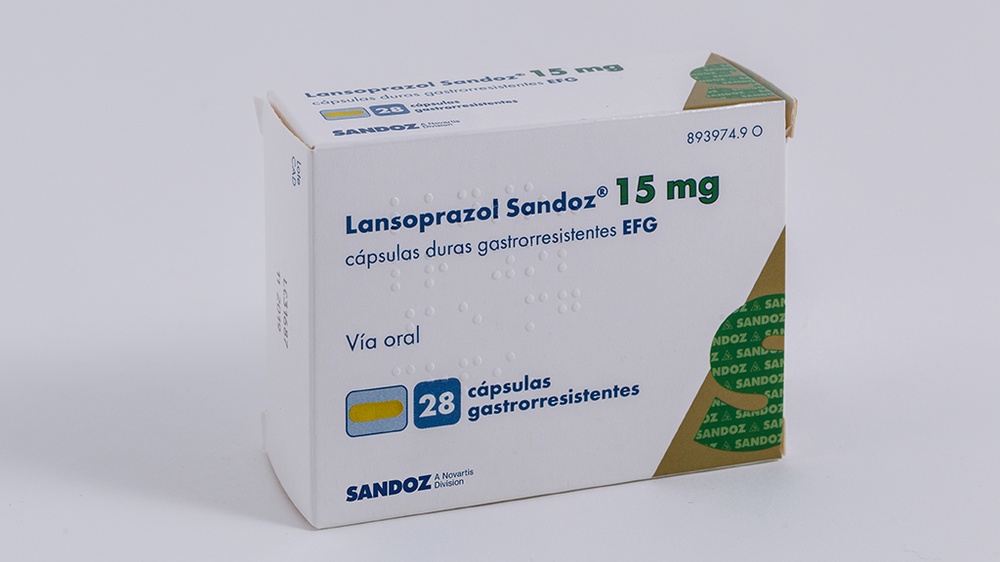
- País de registro
- Forma farmacéuticaCAPSULA, 15 mg lansoprazol
- Código ATCA02BC03
- Precio medio en farmacia7.96 EUR
- Principio activo
- Requiere recetaSí
- Fabricante
- ComposiciónAZUCAR (118,835 mg mg), LAURILSULFATO DE SODIO (0,007 mg mg), MANITOL (E-421) (6,275 mg mg), POLISORBATO 80 (0,890 mg mg)
- Esta información es de carácter general y no sustituye la consulta con un profesional sanitario.
- Alternativas a LANSOPRAZOL SANDOZ 15 mg CAPSULAS GASTRORRESISTENTES EFGForma farmacéutica: COMPRIMIDO BUCODISPERSABLE/LIOTAB, 15 mgPrincipio activo: LansoprazolFabricante: Laboratorios Salvat S.A.Requiere recetaForma farmacéutica: COMPRIMIDO BUCODISPERSABLE/LIOTAB, 30 mgPrincipio activo: LansoprazolFabricante: Laboratorios Salvat S.A.Requiere recetaForma farmacéutica: CAPSULA, 15 mg lansoprazolPrincipio activo: LansoprazolFabricante: Merck S.L.Requiere receta
Médicos online para LANSOPRAZOL SANDOZ 15 mg CAPSULAS GASTRORRESISTENTES EFG
Comenta la dosis, los posibles efectos secundarios, interacciones, contraindicaciones o la revisión de receta de LANSOPRAZOL SANDOZ 15 mg CAPSULAS GASTRORRESISTENTES EFG, sujeto a valoración médica y a la normativa local.









Obtén una receta de LANSOPRAZOL SANDOZ 15 mg CAPSULAS GASTRORRESISTENTES EFG online
Rellena un formulario de 2 minutos
Cuéntanos tus síntomas, historial y el medicamento que necesitas.
Elige un médico o nosotros te asignamos uno
Escoge un especialista o te conectamos con el próximo médico disponible.
El médico revisa tu caso
Normalmente en 30 minutos. Puede hacerte preguntas adicionales por chat.
Recógela en cualquier farmacia
Receta electrónica enviada a tu correo, válida en toda España.
Preguntas frecuentes
LANSOPRAZOL SANDOZ 15 mg CAPSULAS GASTRORRESISTENTES EFG requiere receta en España. Puedes confirmarlo con un médico online según tu caso.
El principio activo de LANSOPRAZOL SANDOZ 15 mg CAPSULAS GASTRORRESISTENTES EFG es Lansoprazol. Esta información ayuda a identificar medicamentos con la misma composición pero con diferentes nombres comerciales.
El precio medio en farmacia de LANSOPRAZOL SANDOZ 15 mg CAPSULAS GASTRORRESISTENTES EFG es de aproximadamente 7.96 EUR. Puede variar según el fabricante y la forma farmacéutica.
LANSOPRAZOL SANDOZ 15 mg CAPSULAS GASTRORRESISTENTES EFG es fabricado por Sandoz Farmaceutica S.A.. La marca y el envase pueden variar según el distribuidor.
Los Médicos de familia, Psiquiatras, Dermatólogos, Cardiólogos, Endocrinólogos, Gastroenterólogos, Neumólogos, Nefrólogos, Reumatólogos, Hematólogos, Infectólogos, Alergólogos, Geriatras, Pediatras, Oncólogos pueden valorar la prescripción de LANSOPRAZOL SANDOZ 15 mg CAPSULAS GASTRORRESISTENTES EFG cuando esté clínicamente indicado. Puedes reservar una videoconsulta para comentar tu caso y las opciones de tratamiento.
España cuenta con una infraestructura sanitaria bien desarrollada en ciudades principales como Madrid, Barcelona, Valencia y Sevilla. Las farmacias están ampliamente disponibles y operan bajo estrictas regulaciones, garantizando el acceso a medicamentos con receta.
Puedes comprar LANSOPRAZOL SANDOZ 15 mg CAPSULAS GASTRORRESISTENTES EFG en Madrid, Barcelona, Sevilla o Valencia en cualquier farmacia local con una receta válida.
Para obtener una receta, puedes utilizar Oladoctor:
Otros medicamentos con el mismo principio activo (Lansoprazol) incluyen DUOMATE FLAS 15 MG COMPRIMIDOS BUCODISPERSABLES, DUOMATE FLAS 30 MG COMPRIMIDOS BUCODISPERSABLES, ESTOMIL 15 mg CAPSULAS DURAS GASTRORRESISTENTES EFG. Pueden tener diferentes nombres comerciales o formulaciones, pero contienen el mismo componente terapéutico. Consulta siempre con un médico antes de cambiar o iniciar un nuevo medicamento.
