


HEMLIBRA 30 MG/ML SOLUCION INYECTABLE
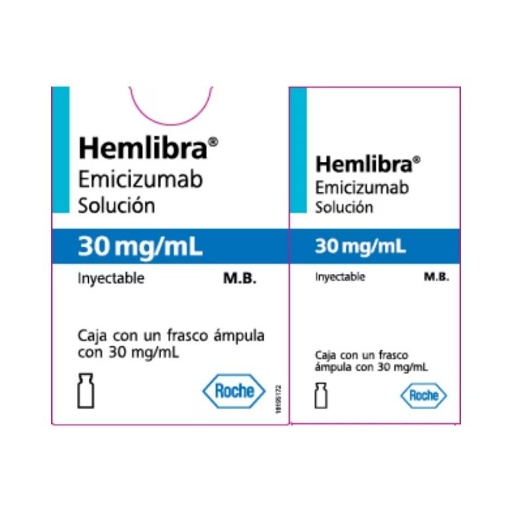



Cómo usar HEMLIBRA 30 MG/ML SOLUCION INYECTABLE
Traducción generada por IA
Este contenido ha sido traducido automáticamente y se ofrece solo con fines informativos. No sustituye la consulta con un profesional sanitario.
Ver originalContenido del prospecto
Introducción
Prospecto: información para el usuario
Hemlibra 30mg/ml solución inyectable
emicizumab
Lea todo el prospecto detenidamente antes de empezar a usar este medicamento, porque contiene información importante para usted.
- Conserve este prospecto, ya que puede tener que volver a leerlo.
- Si tiene alguna duda, consulte a su médico, farmacéutico o enfermero.
- Este medicamento se le ha recetado solamente a usted, y no debe dárselo a otras personas aunque tengan los mismos síntomas que usted, ya que puede perjudicarles.
- Si experimenta efectos adversos, consulte a su médico, farmacéutico o enfermero, incluso si se trata de efectos adversos que no aparecen en este prospecto. Ver sección 4.
Además de este prospecto, su médico le entregará una tarjeta de información para el paciente, que contiene información importante sobre seguridad que necesita conocer. Conserve esta tarjeta consigo.
Contenido del prospecto
- Qué es Hemlibra y para qué se utiliza
- Qué necesita saber antes de empezar a usar Hemlibra
- Cómo usar Hemlibra
- Posibles efectos adversos
- Conservación de Hemlibra
- Contenido del envase e información adicional
- Instrucciones de uso
1. Qué es Hemlibra y para qué se utiliza
Qué es Hemlibra
Hemlibra contiene el principio activo “emicizumab”. Este pertenece a un grupo de medicamentos llamados “anticuerpos monoclonales”. Los anticuerpos monoclonales son un tipo de proteína que reconoce y se une a una diana en el organismo.
Para qué se utiliza Hemlibra
Hemlibra es un medicamento que puede usarse para tratar a los pacientes de todas las edades con hemofilia A (deficiencia congénita de factor VIII):
- que han desarrollado inhibidores del factor VIII
- que no han desarrollado inhibidores del factor VIII con:
- enfermedad grave (el nivel de factor VIII en sangre es menor de 1%)
- enfermedad moderada (el nivel de factor VIII en sangre es del 1% al 5%) con fenotipo de sangrado grave.
La hemofilia A es una condición hereditaria causada por la falta de factor VIII, una sustancia esencial necesaria para que la sangre forme coágulos y para detener cualquier sangrado.
El medicamento previene el sangrado o reduce los episodios de sangrado en personas con esta condición.
Algunos pacientes con hemofilia A pueden desarrollar inhibidores del factor VIII (anticuerpos frente a factor VIII) impidiendo que el factor VIII de sustitución funcione.
Cómo funciona Hemlibra
Hemlibra restaura la función de factor VIII activado que falta necesaria para una coagulación efectiva de la sangre. Su estructura es diferente del factor VIII, por tanto Hemlibra no se ve afectado por los inhibidores del factor VIII.

2. Qué necesita saber antes de empezar a usar Hemlibra
No use Hemlibra
- si es alérgico a emicizumab o a alguno de los demás componentes de este medicamento (incluidos en la sección 6). Si no está seguro, consulte a su médico, farmacéutico o enfermero antes de empezar a usar Hemlibra.
Advertencias y precauciones
Antes de empezar a usar Hemlibra, es muy importante que consulte a su médico sobre el uso de los “agentes bypass”(medicamentos que ayudan a la coagulación de la sangre, pero funcionan de manera diferente al factor VIII). Esto se debe a que puede necesitar cambiar el tratamiento con agentes bypass mientras recibe Hemlibra. Son ejemplos de agentes bypass el concentrado de complejo de protrombina activada (CCPa) y el FVIIa recombinante (rFVIIa). Pueden ocurrir efectos adversos graves y potencialmente mortales cuando se usa CCPa en pacientes que también reciben Hemlibra:
Efectos adversos potencialmente graves del uso de CCPa mientras recibe Hemlibra.
- Destrucción de glóbulos rojos (microangiopatía trombótica)
- Se trata de una afección grave y potencialmente mortal.
- Cuando una persona presenta esta afección, el recubrimiento de los vasos sanguíneos puede sufrir daños y pueden formarse coágulos de sangre en los vasos sanguíneos pequeños. En algunos casos, esto puede provocar daños en los riñones u otros órganos.
- Debe tener precaución si está en alto riesgo de tener esta afección (ha tenido esta afección en el pasado, o un miembro de su familia lo ha padecido), o si está tomando medicamentos que puedan aumentar el riesgo de desarrollar esta afección, como ciclosporina, quinina y tacrolimus.
- Es importante conocer los síntomas de la microangiopatía trombótica por si desarrolla la afección (ver sección 4, “Posibles efectos adversos” para consultar una lista de los síntomas).
Deje de usar Hemlibra y CCPa y consulte al médico inmediatamentesi usted o su cuidador notan algún síntoma de microangiopatía trombótica.
- Coágulos de sangre (tromboembolismo)
- En casos infrecuentes, un coágulo de sangre puede formarse dentro de los vasos sanguíneos y bloquearlos, y podría resultar potencialmente mortal.
- Es importante conocer los síntomas de tales coágulos internos de la sangre por si se forman (ver sección 4, “Posibles efectos adversos” para consultar una lista de los síntomas).
Deje de usar Hemlibra y CCPa y consulte al médico inmediatamentesi usted o su cuidador notan algún síntoma de coágulos de sangre en los vasos sanguíneos.
Otra información importante sobre Hemlibra
- Formación de anticuerpos (inmunogenicidad)
- Puede notar que su sangrado no está siendo controlado con la dosis prescrita de este medicamento. Esto puede deberse al desarrollo de anticuerpos a este medicamento.
Hable con el médico inmediatamentesi usted o su cuidador nota un incremento en los sangrados. Su médico puede decidir cambiar el tratamiento si este medicamento deja de funcionar para usted.
Niños menores de 1 año de edad
En los niños menores de 1 año de edad el sistema sanguíneo aún se está desarrollando. Si su niño es menor de un año, su médico podría prescribirle Hemlibra solamente después de haber valorado cuidadosamente los beneficios esperados y los riesgos de usar Hemlibra.
Otros medicamentos y Hemlibra
Informe a su médico o farmacéutico si está utilizando, ha utilizado recientemente o pudiera tener que utilizar cualquier otro medicamento.
- Uso de un agente bypass mientras recibe Hemlibra
- Antes de empezar a usar Hemlibra, consulte a su médico y siga atentamente sus instrucciones acerca de cuándo usar un agente bypass y la dosis y pauta que debe seguir. Hemlibra aumenta la capacidad de coagulación de la sangre. Por tanto, la dosis del agente bypass necesario podría ser inferior a la dosis que usaba antes de iniciar Hemlibra.
- Use CCPa sólo si no puede usar otro tratamiento. Si hace falta CCPa, consulte a su médico si cree que necesita más de 50 unidades/kg de CCPa en total. Para hallar más información sobre el uso de CCPa mientras recibe Hemlibra, ver sección 2: Efectos adversos potencialmente graves del uso de CCPa mientras recibe Hemlibra.
- A pesar de la limitada experiencia con la administración concomitante de anti-fibrinolíticos con CCPa o rFVIIa en pacientes tratados con Hemlibra, debe saber que podrían presentarse episodios trombóticos usando anti-fibrinolíticos administrados intravenosamente en combinación con CCPa o rFVIIa.
Pruebas analíticas
Consulte a su médico si utiliza Hemlibra antes de hacerse análisis para medir la capacidad de coagulación de la sangre. Esto se debe a que la presencia de Hemlibra en la sangre podría interferir en algunas de estas pruebas de laboratorio y dar resultados inexactos.
Embarazo y lactancia
- Debe usar un método de control de la natalidad (anticonceptivo) eficaz durante el tratamiento con Hemlibra y durante los 6 meses posteriores a la última inyección de Hemlibra.
- Si está embarazada o en periodo de lactancia, cree que podría estar embarazada o tiene intención de quedarse embarazada, consulte a su médico o farmacéutico antes de utilizar este medicamento. El médico sopesará el beneficio de que usted tome Hemlibra frente al riesgo para su bebé.
Conducción y uso de máquinas
Es improbable que este medicamento afecte a su capacidad de conducir o usar máquinas.
3. Cómo usar Hemlibra
Hemlibra se suministra en viales no reutilizables en forma de solución lista para usar que no es necesario diluir.
Un médico cualificado para tratar a pacientes con hemofilia le enseñará a usar el tratamiento con Hemlibra. Siga exactamente las instrucciones de administración de este medicamento indicadas por su médico. En caso de duda, consulte de nuevo a su médico.
Mantener un registro
Cada vez que use Hemlibra, anote el nombre y el número de lote del medicamento.
Cuánto Hemlibra usar
La dosis de Hemlibra depende de su peso y su médico calculará la cantidad (en mg) y la correspondiente cantidad de la solución de Hemlibra (en ml) que debe inyectarse:
- Régimen de dosis de carga, semanas 1-4: la dosis es de 3 miligramos por cada kilogramo de peso, inyectados una vez por semana.
- Régimen de dosis de mantenimiento, semana 5 y posteriores:la dosis es bien de 1,5 miligramos por cada kilogramo de peso, inyectados una vez por semana; 3 miligramos por cada kilogramo de peso, inyectados cada 2 semanas; o 6 miligramos por cada kilogramo de peso, inyectados cada 4 semanas.
La decisión de usar la dosis de mantenimiento de 1,5 mg/kg una vez a la semana, 3 mg/kg cada dos semanas o 6 mg/kg cada cuatro semanas, debe consultarla con su médico y, cuando corresponda, con su cuidador.
No debencombinarse concentraciones diferentes de Hemlibra (30 mg/ml y 150 mg/ml) en una sola inyección para llegar al volumen total a administrar.
En cada inyección no se debe administrar una cantidad superior a 2 ml de solución de Hemlibra.
Cómo se administra Hemlibra
Si usted o su cuidador administran una inyección de Hemlibra, debe leer atentamente y seguir las instrucciones que se dan en la sección 7, “Instrucciones de uso”.
- Hemlibra se administra en una inyección bajo la piel (vía subcutánea).
- El médico o enfermero le enseñarán a usted cómo inyectar Hemlibra.
- Una vez que usted haya recibido la formación, podrá inyectarse el medicamento en casa, solo o con ayuda de un cuidador.
- Para introducir correctamente la aguja bajo la piel, forme un pliegue de piel en el lugar de inyección limpio con la mano libre. Es importante formar el pliegue de piel para garantizar que inyecta debajo de la piel (en el tejido adiposo) y no a más profundidad (en el músculo). Una inyección en el músculo podría ser molesta.
- Prepare y administre la inyección en condiciones de limpieza y sin gérmenes mediante una técnica aséptica. El médico o enfermero le dará más información al respecto.
Dónde inyectar Hemlibra
- El médico le enseñará a usted en qué regiones del cuerpo es adecuado inyectar Hemlibra.
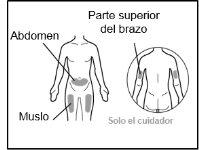
- Los lugares recomendados para aplicar la inyección son: la parte frontal de la cintura (el abdomen inferior), la parte superior externa del brazo o la parte frontal de los muslos. Use solamente lugares recomendados para la inyección.
- Para cada inyección, use un área diferente del cuerpo a la que usó la última vez.
- No administre las inyecciones en lugares en los que la piel esté enrojecida, amoratada, sensible, endurecida, ni en regiones con lunares o cicatrices.
- Cuando use Hemlibra, los otros medicamentos inyectados bajo la piel se deberán administrar en una región diferente.
Uso de jeringas y agujas
- Para extraer la solución Hemlibra del vial, introducirla en la jeringa e inyectarla bajo la piel hacen falta una jeringa, una aguja de transferencia con filtro de 5 micrómetros o un adaptador de vial con filtro de 5 micrómetros y una aguja para inyección.
- Las jeringas, agujas de transferencia con filtro o adaptador de vial con filtro y agujas de inyección no se incluyen en el envase. Para obtener más información, consulte en la sección 6 “Qué se necesita para la administración de Hemlibra que no está incluido en el envase”.
- Asegúrese de usar una aguja para inyección nueva para cada inyección y de desecharla después de un solo uso.
- Para una inyección de hasta 1 ml de solución Hemlibra debe usarse una jeringa de 1 ml.
- Para una inyección mayor de 1 ml y de hasta 2 ml de solución Hemlibra se debe usar una jeringa de 2-3 ml.
Uso en niños y adolescentes
Hemlibra puede usarse en niños y adolescentes de todas las edades.
- Un niño puede inyectarse el medicamento él mismo, siempre que el profesional sanitario y el progenitor o cuidador del niño estén de acuerdo. No se recomienda la auto-inyección en niños menores de 7 años.
Si usa más Hemlibra del que debe
Si usted usa más Hemlibra del que debe, informe a su médico inmediatamente. Esto se debe a que puede estar en riesgo de experimentar efectos adversos como coágulos de sangre. Siga exactamente las instrucciones de administración de Hemlibra indicadas por su médico. En caso de duda, consulte de nuevo a su médico, farmacéutico o enfermero.
Si olvidó usar Hemlibra
- Si olvida la inyección programada, inyecte la dosis olvidada lo antes posible antes del día de la siguiente dosis programada. A continuación, siga con las inyecciones programadas del medicamento. No inyecte dos dosis en el mismo día para compensar las dosis olvidadas.
- En caso de duda, pregunte a su médico, farmacéutico o enfermero.
Si interrumpe el tratamiento con Hemlibra
No interrumpa el tratamiento con Hemlibra sin consultar a su médico. Si interrumpe el tratamiento con Hemlibra, podría dejar de estar protegido contra los sangrados.
Si tiene cualquier otra duda sobre el uso de este medicamento, pregunte a su médico, farmacéutico o enfermero.

4. Posibles efectos adversos
Al igual que todos los medicamentos, este medicamento puede producir efectos adversos, aunque no todas las personas los sufran.
Efectos adversos graves del uso de CCPa mientras recibe Hemlibra
Deje de usar Hemlibra y CCPa y consulte al médico inmediatamentesi usted o su cuidador notan alguno de los efectos adversos siguientes:
- Destrucción de glóbulos rojos (microangiopatía trombótica):
- confusión, debilidad, hinchazón de brazos y piernas, amarilleamiento de la piel y los ojos, dolor difuso (abdominal) o la espalda, sensación de mareo (náuseas), estar con malestar (vómitos) u orinar menos de lo habitual: estos síntomas podrían ser signos de microangiopatía trombótica.
- Coágulos de sangre (tromboembolismo):
- hinchazón, calor, dolor o enrojecimiento: estos síntomas podrían ser signos de la presencia de un coágulo de sangre en una vena cerca de la superficie de la piel.
- dolor de cabeza, adormecimiento del rostro, dolor o hinchazón en los ojos o problemas de su visión: estos síntomas podrían ser signos de la presencia de un coágulo de sangre en una vena detrás del ojo.
- oscurecimiento de la piel: este síntoma podría ser signo de daños graves en el tejido de la piel.
Otros efectos adversos al usar Hemlibra
Muy frecuentes:pueden afectar a más de 1 de cada 10 personas
- reacción en la zona en la que se aplica la inyección (enrojecimiento, picor, dolor)
- dolor de cabeza
- dolor de las articulaciones
Frecuentes:pueden afectar hasta 1 de cada 10 personas
- fiebre
- dolores musculares
- diarrea
- erupción pruriginosa o ronchas (urticaria)
- erupción cutánea
Poco frecuentes: pueden afectar hasta 1 de cada 100 personas
- destrucción de glóbulos rojos (microangiopatía trombótica)
- coágulo de sangre en una vena detrás del ojo (trombosis de seno cavernoso)
- daños graves en el tejido de la piel (necrosis cutánea)
- coágulo de sangre en una vena cerca de la superficie de la piel (tromboflebitis superficial)
- inflamación de la cara, lengua y/o garganta y/o dificultad para tragar, o ronchas, junto con dificultad para respirar, que son indicativos de un angioedema
- falta de efecto o respuesta disminuida al tratamiento
Comunicación de efectos adversos
Si experimenta cualquier tipo de efecto adverso, consulte a su médico, farmacéutico o enfermero, incluso si se trata de efectos adversos que no aparecen en este prospecto. También puede comunicarlos directamente a través del sistema nacional de notificación incluido en el Apéndice V. Mediante la comunicación de efectos adversos usted puede contribuir a proporcionar más información sobre la seguridad de este medicamento.
5. Conservación de Hemlibra
Mantener este medicamento fuera de la vista y del alcance de los niños.
No utilice este medicamento después de la fecha de caducidad que aparece en la etiqueta de la caja y el vial después de “EXP”. La fecha de caducidad es el último día del mes que se indica.
Conservar en nevera (entre 2 ºC‑8 ºC). No congelar.
Conservar en el embalaje original para protegerlo de la luz.
Una vez fuera de la nevera, los viales no abiertos pueden conservarse a temperatura ambiente (por debajo de 30 ?C) durante un máximo de 7 días. Tras su conservación a temperatura ambiente, los viales sin abrir pueden volver a meterse en nevera. El tiempo total de conservación del medicamento a temperatura ambiente no debe superar los 7 días.
Deseche los viales que se hayan conservado a temperatura ambiente más de 7 días o se hayan expuesto a temperaturas superiores a 30 ?C.
Una vez transferida la solución del vial a la jeringa, use Hemlibra de manera inmediata. No refrigere la solución en la jeringa.
Antes de usar el medicamento, compruebe que la solución no presenta partículas ni cambio de color. La solución debe ser entre incolora y ligeramente amarilla. No use este medicamento si observa que está turbio, si ha cambiado de color o si contiene partículas visibles.
Deseche correctamente la solución no utilizada. Los medicamentos no se deben tirar por los desagües ni a la basura. Pregunte a su farmacéutico cómo deshacerse de los envases y de los medicamentos que ya no necesita. De esta forma, ayudará a proteger el medio ambiente.
6. Contenido del envase e información adicional
Composición de Hemlibra
- El principio activo es emicizumab. Cada vial de Hemlibra contiene 12 mg (0,4 ml a una concentración de 30 mg/ml) o 30 mg (1 ml a una concentración de 30 mg/ml) de emicizumab.
- Los demás componentes son L-arginina, L-histidina, L-ácido aspártico, poloxámero 188 y agua para preparaciones inyectables.
Aspecto de Hemlibra y contenido del envase
Hemlibra es una solución inyectable. Es un líquido incoloro o ligeramente amarillento.
Cada envase de Hemlibra contiene 1 vial de vidrio.
Puede que solamente estén comercializados algunos tamaños de envase.
Qué se necesita para la administración de Hemlibra que no está incluido en el envase
Para extraer la solución Hemlibra del vial, introducirla en una jeringa e inyectarla bajo la piel se necesita una jeringa, una aguja de transferencia con filtro o un adaptador de vial con filtro y una aguja para inyección (ver sección 7, “Instrucciones de uso”).
Jeringas
- Jeringa de1ml:jeringa transparente de polipropileno o policarbonato con punta Luer-lock, graduación de 0,01 ml o
- Jeringa de2-3ml:jeringa transparente de polipropileno o policarbonato con punta Luer-lock, graduación de 0,1 ml.
Nota: se deben usar jeringas con émbolo de Bajo Espacio Muerto (LDS, por sus siglas en inglés) cuando se utilice el adaptador de vial con filtro.
Dispositivos y agujas de transferencia
- Aguja de transferencia con filtro:acero inoxidable con conexión Luer-lock, calibre 18 G, longitud de 35 mm (1½″), conteniendo un filtro de 5 micrómetros y preferentemente con punta semirroma o
- Adaptador de vial con filtro:polipropileno con conexión Luer-lock, con un filtro integrado de 5 micrómetros y ajuste de diámetro exterior del cuello del vial de 15 mm y
- Aguja para inyección:acero inoxidable con conexión Luer-lock, calibre 26 G (rango aceptable: calibre 25-27), longitud preferible de 9 mm (3/8″) o como máximo 13 mm (½″), preferentemente con seguridad de la aguja.
Titular de la autorización de comercialización
Roche Registration GmbH
Emil-Barell-Strasse 1
79639 Grenzach-Wyhlen
Alemania
Responsable de la fabricación
Roche Pharma AG
Emil-Barell-Strasse 1
79639 Grenzach Wyhlen
Alemania
Pueden solicitar más información respecto a este medicamento dirigiéndose al representante local del titular de la autorización de comercialización:
|

Ceská republika Roche s. r. O. Tel.: +420 - 2 20382111 | Magyarország Roche (Magyarország) Kft. Tel: +36 – 1 279 4500 |
Danmark Roche Pharmaceuticals A/S Tel.: +45 - 36 39 99 99 | Malta (See Ireland) |
Deutschland Roche Pharma AG Tel: +49 (0) 7624 140 | Nederland Roche Nederland B.V. Tel: +31 (0) 348 438050 |
Eesti Roche Eesti OÜ Tel: + 372 - 6 177 380 | Norge Roche Norge AS Tlf: +47 - 22 78 90 00 |
Ελλ?δα Roche (Hellas) A.E. Τηλ: +30 210 61 66 100 | Österreich Roche Austria GmbH Tel: +43 (0) 1 27739 |
España Roche Farma S.A. Tel: +34 - 91 324 81 00 | Polska Roche Polska Sp.z o.o. Tel: +48 - 22 345 18 88 |
France Roche Tél: +33 (0) 1 47 61 40 00 | Portugal Roche Farmacêutica Química, Lda Tel: +351 - 21 425 70 00 |
Hrvatska Roche d.o.o. Tel: +385 1 4722 333 Ireland Roche Products (Ireland) Ltd. Tel: +353 (0) 1 469 0700 | România Roche România S.R.L. Tel: +40 21 206 47 01 Slovenija Roche farmacevtska družba d.o.o. Tel: +386 - 1 360 26 00 |
Ísland Roche Pharmaceuticals A/S c/o Icepharma hf Sími: +354 540 8000 | Slovenská republika Roche Slovensko, s.r.o. Tel: +421 - 2 52638201 |
Italia Roche S.p.A. Tel: +39 - 039 2471 | Suomi/Finland Roche Oy Puh/Tel: +358 (0) 10 554 500 |
Κ?προς Γ.Α.Σταμ?της & Σια Λτδ. Τηλ: +357 - 22 76 62 76 | Sverige Roche AB Tel: +46 (0) 8 726 1200 |
Latvija Roche Latvija SIA Tel: +371 - 6 7039831 | United Kingdom (Northern Ireland) Roche Products (Ireland) Ltd. Tel: +44 (0) 1707 366000 |
Fecha de la última revisión de este prospecto
Otras fuentes de información
La información detallada de este medicamento está disponible en la página web de la Agencia Europea de Medicamentos: http://www.ema.europa.eu/
- Instrucciones de uso
Aguja de Transferencia con Filtro Opción (para transferir el medicamento del vial a la jeringa) |
Instrucciones de uso
Hemlibra
Inyección
Vial(es) de Dosis Única(s)
Debe leer, entender y seguir las instrucciones de uso antes de inyectar Hemlibra. Su profesional sanitario debería enseñarle a preparar, medir e inyectar Hemlibra correctamente antes de que lo use por primera vez. En caso de duda, consulte a su profesional sanitario. Información importante: No siga estas instrucciones cuando utilice un Adaptador de Vial para transferir Hemlibra desde el vial. Estas instrucciones sólo se usan con la Aguja de Transferencia. ? No se inyecte a usted mismo ni a otra persona a menos que su profesional sanitario le haya enseñado a hacerlo. ? Compruebe que el nombre Hemlibra aparece en la caja y la etiqueta del vial. ? Antes de abrir el vial, lea la etiqueta del vial para comprobar que tiene el medicamento de la concentración correcta para administrar la dosis prescrita para usted. Puede que necesite usar más de 1 vial para administrar la dosis total correcta. ? Compruebe la fecha de caducidad que figura en la caja y la etiqueta del vial. Nolo usedespués de la fecha de caducidad. ? Solouse el vial una vez.Una vez inyectada la dosis, deseche el resto de la solución de Hemlibra que quede en el vial. No guarde el medicamento no utilizado en el vial para usarlo posteriormente. ? Solouse las jeringas, agujas de transferencia y agujas para inyección que le prescriba su profesional sanitario. ? Solo uselas jeringas, agujas de transferencia y agujas para inyección una única vez. Deseche las tapas, vial(es) y jeringas y agujas utilizadas. ? Si la dosis prescrita es superior a 2 ml, tendrá que administrar más de una inyección subcutánea de Hemlibra; póngase en contacto con su profesional sanitario para conocer las instrucciones de inyección adecuadas. ? Debe inyectar Hemlibra solamente bajo la piel. Conservación de los viales de Hemlibra: ? Conserve el vial en la nevera (2 ºC a 8 ºC). Nocongelar.
? Una vez fuera de la nevera, el vial sin abrir puede conservarse a temperatura ambiente (por debajo de 30 ºC) durante un máximo de 7 días. Tras su conservación a temperatura ambiente, los viales sin abrir pueden volver a meterse en nevera. El tiempo total de conservación fuera de nevera y a temperatura ambiente no debe superar los 7 días. ? Deseche los viales que se hayan mantenido a temperatura ambiente durante más de 7 días o hayan estado a temperatura por encima de 30ºC. ? Mantenga los viales fuera de la vista y el alcance de los niños. ? Saque el vial de la nevera 15 minutos antes de usarlo y deje que alcance la temperatura ambiente (por debajo de 30 ºC) antes de preparar una inyección.
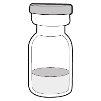
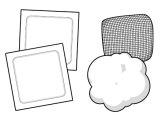
Conservación de las agujas y jeringas: ? Conserve secas la aguja de transferencia, la aguja para inyección y la jeringa. ? Mantenga la aguja de transferencia, la aguja para inyección y la jeringa fuera de la vista y el alcance de los niños. Inspección del medicamento y los materiales: ? Reúna todos los materiales mencionados a continuación para preparar y administrar la inyección. ? Compruebela fecha de caducidad que figura en la caja, en la etiqueta del vial y en los materiales mencionados a continuación. No los usedespués de la fecha de caducidad. ? No useel vial si:
? Inspeccione los materiales para detectar daños. No los usesi parecen dañados o han caído al suelo. ? Coloque los materiales en una superficie de trabajo plana, limpia y bien iluminada.
|
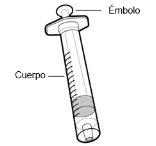
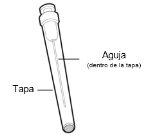
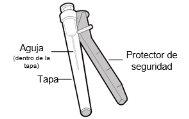
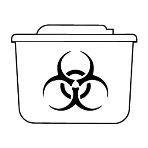
Prepárese:
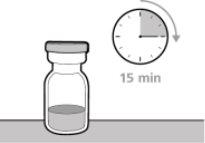
? Antes de usarlo(s), deje el/los vial(es) unos 15 minutos sobre una superficie plana, limpia y protegida de la luz del sol directa para que se ponga(n) a temperatura ambiente. ? Nointente calentar el vial de ninguna otra manera. ? Lávese las manosbien con agua y jabón. |
Selección y preparación del lugar de inyección:
| ? Limpie la zona del lugar de inyección escogido con una toallita con alcohol. ? Deje que la piel se seque unos 10 segundos.
antes de la inyección. | ||
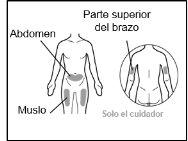
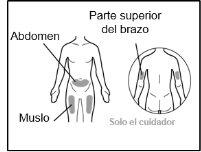
Para la inyección, puede usar: ? El muslo (parte frontal y media). ? La zona del estómago (abdomen), excepto los 5 cm en torno al ombligo. ? La zona exterior de la parte superior del brazo (solo si el cuidador administra la inyección). ? Debe usar un lugar de inyección diferente cada vez que aplica una inyección, al menos a 2,5 cm de distancia del que usó en cualquier inyección anterior. ? Noinyecte en zonas que podrían estar irritadas por un cinturón o faja. ? Noinyecte en lunares, cicatrices, hematomas o zonas en las que la piel está sensible, enrojecida, endurecida o dañada. |
Preparación de la jeringa para la inyección: ? Cuando haya llenado la jeringa con el medicamento, debe usarla inmediatamente. ? Una vez retirada la tapa de la aguja para inyección, el medicamento debe inyectarse bajo la piel en el plazo de 5 minutos. ? Notoque las agujas descubiertas ni las deje en ninguna superficie una vez retirada la tapa. ? Nouse la jeringa si la aguja toca alguna superficie. |
Información importante después de la inyección: ?Si observa gotas de sangre en el lugar de inyección, puede presionarlo con un algodón o gasa estériles durante al menos 10segundos hasta que pare la hemorragia. ? Si tiene un hematoma (una pequeña hemorragia bajo la piel), también puede aplicar hielo con una ligera presión. Si la hemorragia no se detiene, póngase en contacto con un profesional sanitario. ?Nofrote el lugar de inyección después de la inyección. |
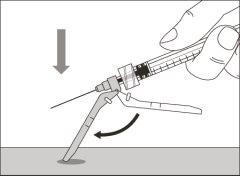
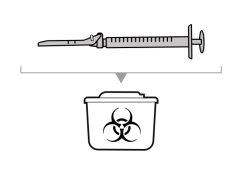
Eliminación del medicamento y de los materiales: Importante: Mantenga siempre el recipiente para objetos cortopunzantes fuera del alcance de los niños. ? Deseche cualquier tapa(s), vial(es), agujas y jeringas usadas en un recipiente para objetos cortopunzantes. ? Elimine las agujas y jeringas utilizadas en un recipiente para objetos cortopunzantes inmediatamente después de su uso. Nodeseche tapas, viales, agujas ni jeringas sueltas en la basura doméstica. ? Si no dispone de recipiente para objetos cortopunzantes, puede usar un recipiente para basura doméstica que:
? Cuando el recipiente para objetos cortopunzantes esté casi lleno, deberá seguir las directrices locales sobre la manera correcta de eliminarlo. ? No deseche ningún recipiente para objetos cortopunzantes utilizado en la basura doméstica a menos que las directrices locales lo permitan. No recicle su recipiente para objetos cortopunzantes. |
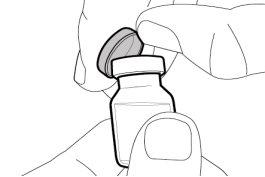
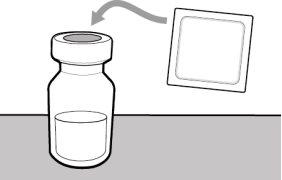
Paso 1. Retire la tapa del vial y limpie la parte superior | |
|
|
|
|
Paso 2. Una la aguja de transferencia con filtro a la jeringa | |
|
|
|
|
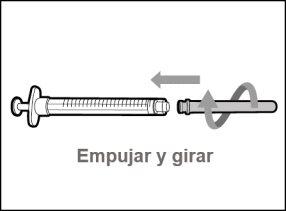
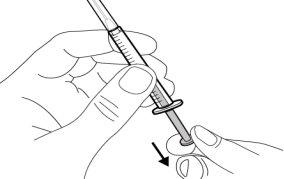
Paso 3. Quite la tapa de la aguja de transferencia | |
|
|
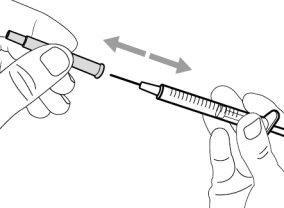
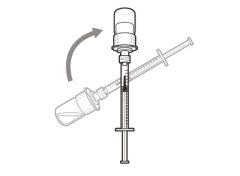
Paso 4. Inyecte aire en el vial | |
|
|
|
|
|
|
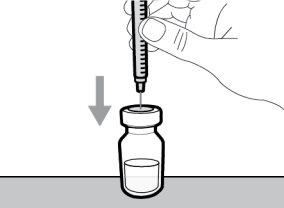
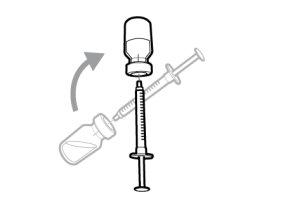
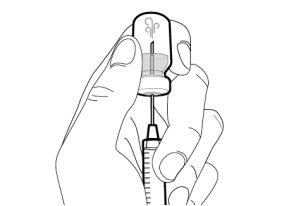
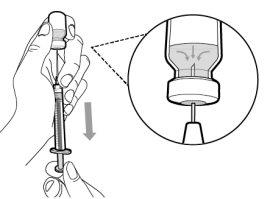
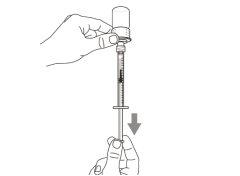
Paso 5. Transfiera el medicamento a la jeringa | |
|
|
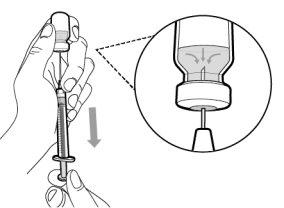
Importante:Si la dosis prescrita es superior a la cantidad de Hemlibra del vial, extraiga todo el medicamentoy consulte ahora la sección “Combinación de viales”.
Paso 6. Extraiga las burbujas de aire | |
|
|
| |
Nota:Compruebe que tiene medicamento suficiente en la jeringa para completar la dosis antes de pasar al paso siguiente. Si no puede extraer todo el medicamento, invierta el vial boca arriba para llegar a la cantidad restante. |
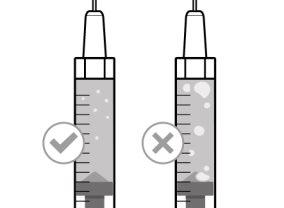
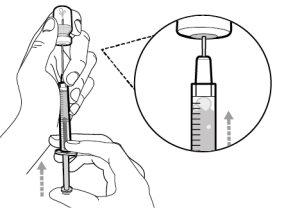
Nouse la aguja de transferencia para inyectar el medicamento, porque podría provocar dolor y sangrado.
Paso 7. Vuelva a poner la tapa de la aguja de transferencia | |
|
|
Paso 8. Limpie el lugar de inyección | |
|
|
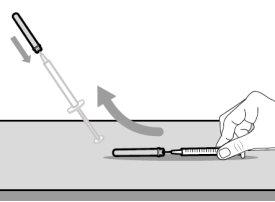
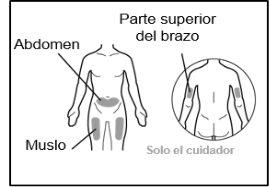
Paso 9. Extraiga la aguja de transferencia usada de la jeringa | |
|
|
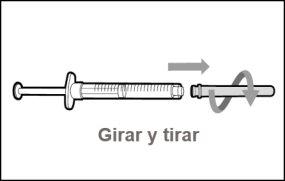
Paso 10. Coloque la aguja para inyección en la jeringa | |
|
|
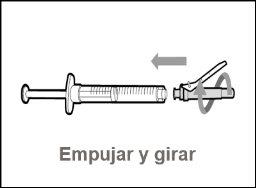
Paso 11. Quite el protector de seguridad | |
|
|
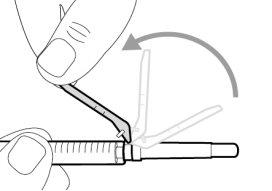
Paso 12. Destape la aguja para inyección | |
|
|
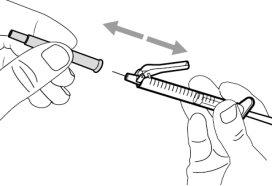
Paso 13. Ajuste el émbolo según la dosis prescrita | |
|
|
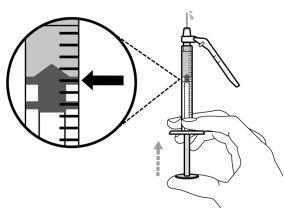
Paso 14. Inyección subcutánea (bajo la piel) | |
|
|
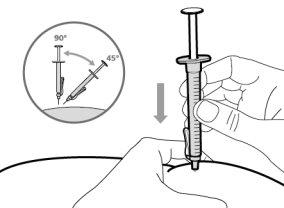
Paso 15. Inyecte el medicamento | |
|
|
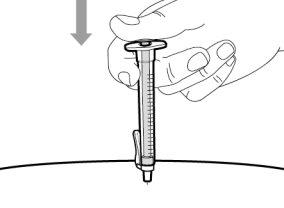
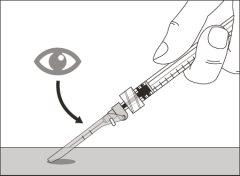
Paso 16. Tape la aguja con el protector de seguridad | |
|
|
|
|
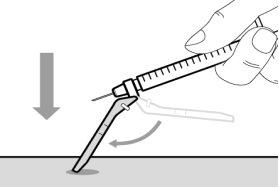
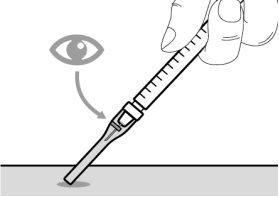
Paso 17. Deseche la jeringa y la aguja. | |
|
|
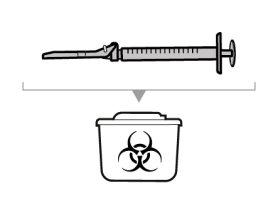
Combinación de viales |
Si necesita usar más de 1 vial para llegar a la dosis prescrita, siga estos pasos después de extraer el medicamento del primer vial como se describe en el paso 5. Debe usar una aguja de transferencia nueva para cada vial. |
Paso A. Vuelva a poner la tapa de la aguja de transferencia | |
|
|
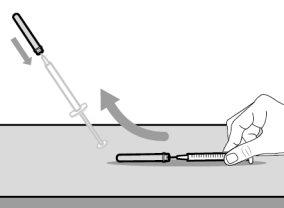
Paso B. Extraiga la aguja de transferencia usada de la jeringa | |
|
|
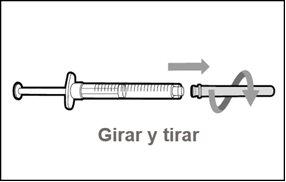
Paso C. Coloque una aguja de transferencia con filtro nueva en la jeringa | |
|
|
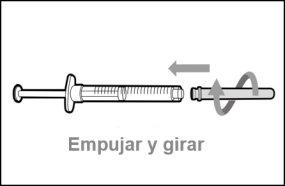
Paso D. Quite la tapa de la aguja de transferencia | |
|
|
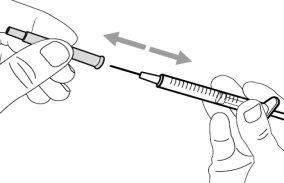
Paso E. Inyecte aire en el vial | |
|
|
|
|
|
|
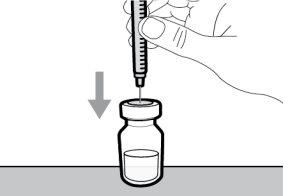
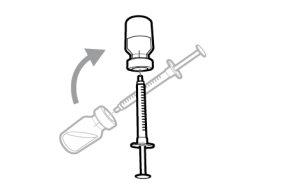
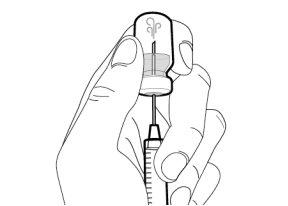
Paso F. Transfiera el medicamento a la jeringa | |
|
|
Nota:Compruebe que tiene medicamento suficiente en la jeringa para completar la dosis antes de pasar a los pasos siguientes. Si no puede extraer todo el fármaco, invierta el vial boca arriba para llegar a la cantidad restante. |
Nouse la aguja de transferencia para inyectar el medicamento, porque podría provocar daños como dolor y hemorragia.
Repita los pasos A a F con cada vial adicional hasta tener más de la cantidad del medicamento necesario para su dosis prescrita. Cuando haya terminado, mantenga la aguja de transferencia insertada en el vial y vuelva al paso6 “Extraiga las burbujas de aire”. Continúe con los pasos restantes. |
Adaptador de vial con filtro Opción (para transferir el medicamento del vial a la jeringa)
|
Instruccciones de Uso Hemlibra Inyección Vial(es) de Dosis única(s) |
Debe leer, entender y seguir las Instrucciones de Uso antes de inyectar Hemlibra. Su profesional sanitario debería enseñarle a preparar, medir e inyectar Hemlibra correctamente antes de que lo use por primera vez. En caso de duda, consulte a su profesional sanitario. |
Información importante: |
No siga estas instrucciones cuando utilice una Aguja de Transferencia para transferir Hemlibra desde el vial. Estas instrucciones solo se usan con el Adaptador de Vial. |
|
Conservación de los viales de Hemlibra:
|
Conservación de los adaptadores de vial, agujas y jeringas:
|
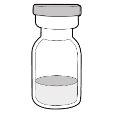
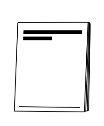
Inspección del medicamento y los materiales:
|

La caja incluye: | |
|
|
|
|
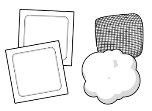
La caja no incluye: | |
|
|
|
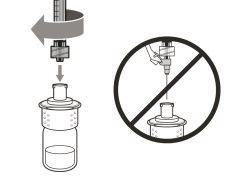
No inserte la aguja de inyección dentro del adaptador de vial. |
|
Importante:
|
|
|
|
|

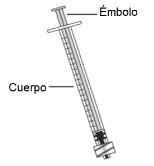
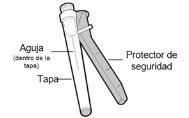
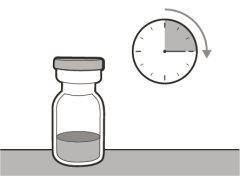
Prepárese: | |
|
|
Selección y preparación del lugar de inyección: | |
|
|
Para la inyección, puede usar:
| |
Preparación de la jeringa para la inyección:
| |
Información importante después de la inyección:
| |
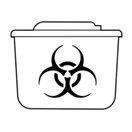
Eliminación del medicamento y de los materiales: Importante: Mantenga siempre el recipiente para objetos cortopunzantes fuera del alcance de los niños.
|

| |
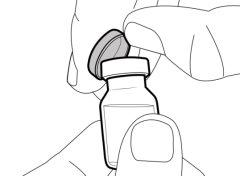
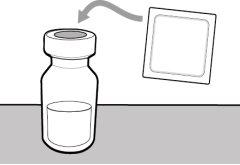
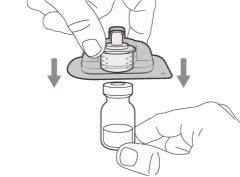
Paso 1. Retire la tapa del vial y limpie la parte superior | |
|
|
|
|
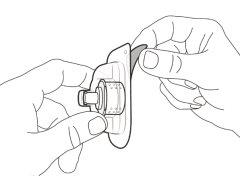
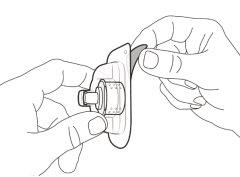
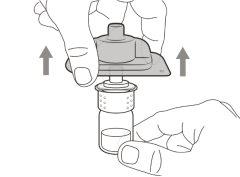
Paso 2. Inserte el adaptador de vial en el vial | |
|
No saqueel adaptador de vial del blíster de plástico transparente. |
|
|
|
|
Paso 3. Conecte la jeringa al adaptador de vial | |
|
|
Paso 4. Transfiera el medicamento a la jeringa | |
|
|
|
|
Importante:si la dosis prescrita es superior a la cantidad de Hemlibra del vial, extraiga todo el medicamentoy consulte ahora la sección “Combinación de viales”. | |
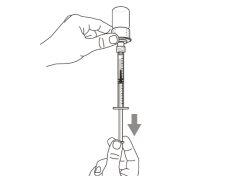
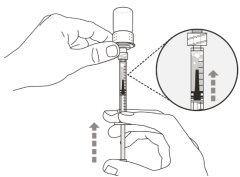
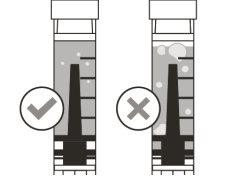
Paso 5. Extraiga las burbujas de aire | |
|
|
|
|
Nota:compruebe que tiene medicamento suficiente en la jeringa para completar la dosis antes de pasar al paso siguiente. |
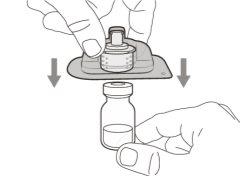
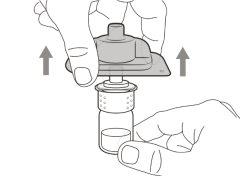
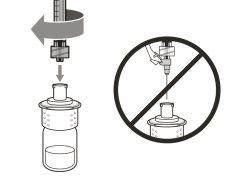
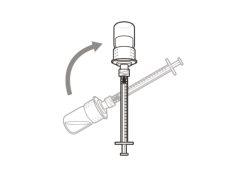
| |
Paso 6. Limpie el lugar de inyección | |
|
|
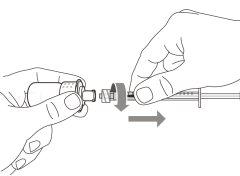
Paso 7. Extraiga la jeringa del adaptador de vial | |
|
|
Paso 8. Coloque la aguja para inyección en la jeringa | |
|
|
Paso 9. Quite el protector de seguridad | |
|
|
Paso 10. Destape la aguja para inyección | |
|
|
Paso 11. Ajuste el émbolo según la dosis prescrita | |
|
|
Paso 12. Inyección subcutánea (bajo la piel) | |
|
|
Paso 13. Inyecte el medicamento | |
|
|
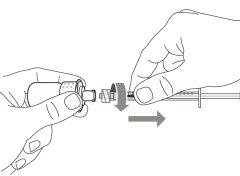


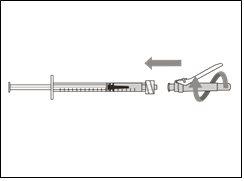
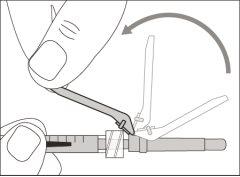
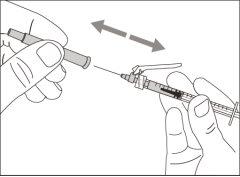
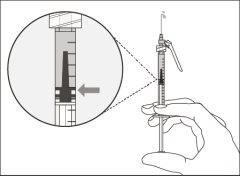
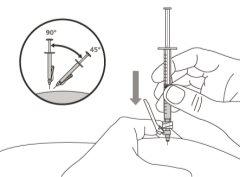
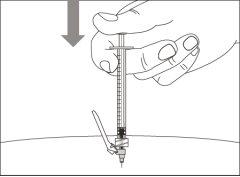
| |
Paso 14. Tape la aguja con el protector de seguridad | |
|
|
|
? Mantenga los dedos detrás del protector de seguridad y lejos de la aguja en todo momento. ? Nosepare la aguja para inyección. |
Paso 15. Deseche la jeringa y la aguja | |
|
|
Combinación de viales | |
Si necesita usar más de 1 vial para llegar a la dosis prescrita, siga estos pasos después de extraer el medicamento del primer vial como se describe en el paso 4. Debe usar un adaptador de vial nuevo para cada vial. | |
Paso A. Inserte un adaptador de vial nuevo en el nuevo vial | |
|
No saqueel adaptador de vial del blíster de plástico transparente. |
|
|
|
|
Paso B. Extraiga la jeringa del adaptador de vial usado | |
|
|
Paso C. Coloque la jeringa al adaptador de vial nuevo | |
|
|
Paso D. Transfiera el medicamento a la jeringa | |
|
|
|
|
Nota:compruebe que tiene medicamento suficiente en la jeringa para completar la dosis antes de pasar al paso siguiente. | |
Repita los pasos A a D con cada vial adicional hasta tener más cantidad del medicamento necesario para su dosis prescrita. Cuando haya terminado, mantenga el adaptador de vial en el vial y vuelva al paso 5 “Extraiga las burbujas de aire”.Continúe con los pasos restantes. |
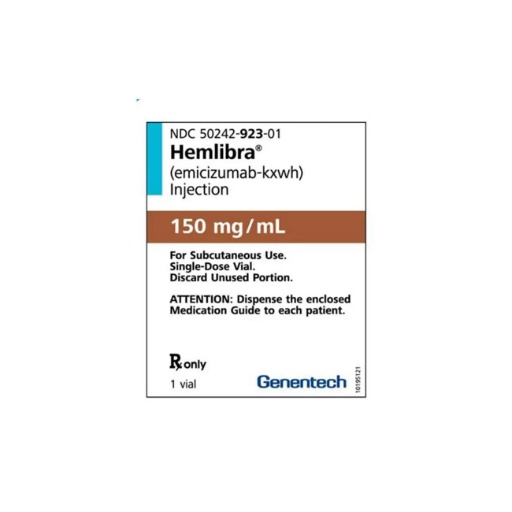
- País de registro
- Forma farmacéuticaINYECTABLE, 30 mg/ml
- Código ATCB02BX06
- Principio activo
- Requiere recetaSí
- Fabricante
- Esta información es de carácter general y no sustituye la consulta con un profesional sanitario.
- Alternativas a HEMLIBRA 30 MG/ML SOLUCION INYECTABLEForma farmacéutica: INYECTABLE, 150 mg/mlPrincipio activo: EmicizumabFabricante: Roche Registration GmbhRequiere recetaForma farmacéutica: INYECTABLE, 100 mg/mlPrincipio activo: concizumabFabricante: Novo Nordisk A/SRequiere recetaForma farmacéutica: INYECTABLE, 100 mg/mlPrincipio activo: concizumabFabricante: Novo Nordisk A/SRequiere receta

Médicos online para HEMLIBRA 30 MG/ML SOLUCION INYECTABLE
Comenta la dosis, los posibles efectos secundarios, interacciones, contraindicaciones o la revisión de receta de HEMLIBRA 30 MG/ML SOLUCION INYECTABLE, sujeto a valoración médica y a la normativa local.






.jpg)




Preguntas frecuentes
