


EXTRANEAL (ICODEXTRIN 7.5%) SOLUTION FOR PERITONEAL DIALYSIS
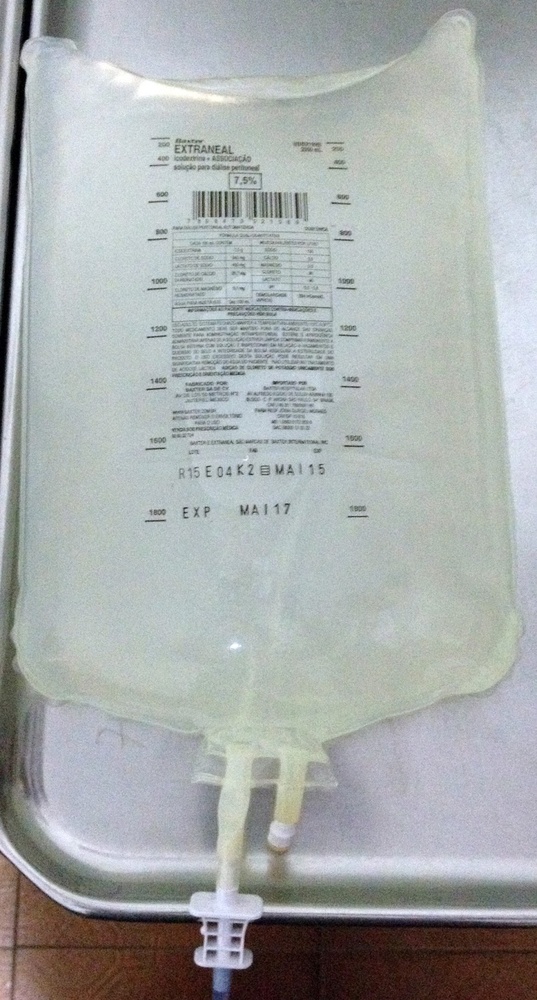



How to use EXTRANEAL (ICODEXTRIN 7.5%) SOLUTION FOR PERITONEAL DIALYSIS
Translated with AI
This page provides general information and does not replace a doctor’s consultation. Always consult a doctor before taking any medication. Seek urgent medical care if symptoms are severe.
Show originalContents of the leaflet
Introduction
Package Leaflet: Information for the User
EXTRANEAL, Solution for Peritoneal Dialysis
Read all of this leaflet carefully before you start using this medicine, because it contains important information for you.
- Keep this leaflet, you may need to read it again.
- If you have any further questions, ask your doctor or pharmacist.
- If you experience any side effects, talk to your doctor, even if they are not listed in this leaflet. See section 4.
Contents of the Package Leaflet:
- What is EXTRANEAL and what is it used for
- What you need to know before you start using EXTRANEAL
- How to use EXTRANEAL
- Possible side effects
- Storage of EXTRANEAL
- Contents of the pack and further information
1. What is Extraneal and what is it used for
EXTRANEAL is a solution for peritoneal dialysis. The peritoneal cavity is the space in the abdomen (belly) between the skin and the peritoneum. The peritoneum is the membrane that surrounds the internal organs, such as the intestines or liver. The EXTRANEAL solution is introduced into the peritoneal cavity, where it removes water and waste products from the blood. Additionally, it corrects abnormal levels of various blood components.
EXTRANEAL may be prescribed for you if:
- you are an adult patient with permanent kidney failure who requires peritoneal dialysis.
- conventional glucose solutions for peritoneal dialysis cannot remove enough water.

2. Before using Extraneal
Your doctor should supervise the administration of this product if it is the first time you are using it.
Do not use EXTRANEAL
- if you are allergic to icodextrin or starch derivatives (e.g., cornstarch) or to any of the other components of this medicine (listed in section 6).
- if you do not tolerate maltose or isomaltose (sugar derived from starch)
- if you have any glycogen storage disease
- if you have acute lactic acidosis (too much acid in the blood)
- if you have any uncorrectable surgical condition that affects your abdominal wall or cavity or an uncorrectable condition that increases the risk of abdominal infections
- if you have a documented loss of peritoneal function due to severe peritoneal scarring.
Warnings and Precautions
Talk to your doctor before starting to use Extraneal:
- if you are an elderly patient. There is a risk of dehydration
- if you are diabetic and using this solution for the first time. You may need to adjust your insulin dose
- if you need to control your blood glucose levels (e.g., if you are diabetic). Your doctor will indicate which test method you should use (see "Other forms of interaction")
- if you have a high risk of severe lactic acidosis (too much acid in the blood). You have a high risk of lactic acidosis if:
- you have very low blood pressure
- you have a blood infection
- you have sudden severe kidney failure
- you have a congenital metabolic disorder
- you are taking metformin (a medicine used to treat diabetes)
- you are taking medicines to treat HIV, especially those called NRTIs
- if you feel abdominal pain or notice that the drainage fluid is cloudy, has lumps, or contains particles. This may be a sign of peritonitis (inflamed peritoneum) or infection. You should contact your medical team urgently. Note the batch number and take it along with the drained fluid bag to the medical team. The medical team will decide whether to interrupt treatment or start corrective treatment. For example, if you have an infection, your doctor may perform several tests to determine which antibiotic is most suitable for you. Your doctor may give you a broad-spectrum antibiotic that is effective against a wide range of different bacteria until they know what infection you have.
- during peritoneal dialysis, your body may lose proteins, amino acids, and vitamins. Your doctor will determine if you need to replace these losses.
- if you have problems that affect the integrity of the abdominal wall or cavity. For example, in the case of a hernia or chronic infection or inflammatory disease that affects the intestines
- if you have had an aortic graft
- if you have severe lung disease, such as emphysema
- if you have breathing difficulties
- if you have disorders that prevent normal nutrition
- if you have low potassium levels.
You should also be aware that:
- a disorder called encapsulating peritoneal sclerosis (EPS) is a rare and known complication of peritoneal dialysis therapy. You, probably together with your doctor, should be aware of this possible complication. EPS causes:
- abdominal inflammation (belly)
- growth of layers of fibrous tissue that cover and join the organs, which will affect their normal movement. In rare cases, it has been fatal
- you, probably together with your doctor, will keep a record of your fluid balance and body weight. Your doctor will check your blood parameters at regular intervals
- your doctor will regularly check your potassium levels. If the levels drop too low, you may be given potassium chloride to compensate.
In some cases, treatment with this medicine is not recommended, for example, if:
- you have acute kidney disease
Children
The safety and efficacy of Extraneal in children under 18 years of age have not been established.
Using Extraneal with other medicines
- Tell your doctor or pharmacist if you are using, have recently used, or might use any other medicines. If you use other medicines, your doctor may need to increase your dose. This is because peritoneal dialysis treatment increases the elimination of certain medicines.
- Be careful if you use heart medicines called cardiac glycosides (e.g., digoxin). Your heart medicines may not be as effective or their toxicity may be increased. You may:
- need potassium and calcium supplements
- develop heart rhythm disturbances (arrhythmia)
Your doctor will closely monitor you during treatment, especially your potassium levels.
Other forms of interaction
EXTRANEAL interferes with the determination of blood glucose with certain assays. If you need to perform blood glucose tests, make sure you use a method that is specific to glucose. Your doctor will advise you on which assay to use. Using an unsuitable assay can cause a falsely high blood glucose reading, which may lead to the administration of more insulin than necessary. This can cause hypoglycemia (low blood glucose levels), which can lead to loss of consciousness, coma, brain damage, and death. Additionally, false measures of high blood glucose levels can mask real hypoglycemia and allow it to remain untreated with similar consequences. Falsely high glucose readings may occur up to two weeks after stopping treatment with Extraneal. In case you are hospitalized, you should inform the medical team about this possible interaction, and they should carefully review the product information of the assay to ensure they use a glucose-specific assay. |
Pregnancy and Breastfeeding
If you are pregnant or breastfeeding, think you may be pregnant, or plan to become pregnant, consult your doctor before using this medicine.
Use of EXTRANEAL during pregnancy or breastfeeding is not recommended unless your doctor advises you otherwise.
Driving and Using Machines
This treatment can cause fatigue, weakness, blurred vision, or dizziness. Do not drive or use machines if you are affected.
3. How to use Extraneal
EXTRANEAL should be administered into your peritoneal cavity. This cavity is located in the abdomen (belly) between the skin and the peritoneum. The peritoneum is the membrane that surrounds the internal organs, such as the intestines or liver.
Follow exactly the administration instructions of this medicine indicated by your specialized doctor in peritoneal dialysis. If in doubt, consult your doctor.
The recommended dose is
- One bag per day during the longest dwell period, such as:
- During the night in continuous ambulatory peritoneal dialysis (CAPD) regimen.
- During the day in automated peritoneal dialysis (APD) regimen.
- The solution should be infused over a period of 10 to 20 minutes.
- The dwell time with EXTRANEAL is 6 to 12 hours in CAPD and 14 to 16 hours in APD.
Method of Administration
Before using:
- Warm the bag to 37°C. Use the specially designed heating plate for this purpose. Never submerge the bag in water to warm it.
- You must use an aseptic technique during the entire administration of the solution, as you have been taught.
- Before performing an exchange, make sure to wash your hands and the area where you will perform the exchange.
- Before opening the overbag, check that it is the correct solution, the expiration date, and the quantity (volume). Lift the bag to check for leaks (excess liquid in the overbag). Do not use the bag if you find any leaks.
- After removing the overbag, check for signs of leaks in the container by pressing the bag firmly. Do not use the bag if you detect any leaks.
- Check that the solution is clear. Do not use the bag if the solution is cloudy or contains particles.
- Before starting the exchange, check that all connections are secure.
- Consult your doctor if you have any questions or doubts about this product or its use.
Use each bag only once. Discard any unused solution.
After use, check that the drainage fluid is not cloudy.
Compatibility with other medicines
Your doctor may prescribe other injectable medicines to be added directly to the EXTRANEAL bag. In such a situation, add the medicine through the medication addition site located at the bottom of the bag. Use the product immediately after adding the medicine. Consult your doctor if you are unsure.
If you use more than one bag of EXTRANEAL in 24 hours
If you are given an excessive dose of EXTRANEAL, you may experience:
- abdominal distension
- stomach heaviness and/or
- difficulty breathing.
Contact your doctor immediately. They will inform you of what to do.
If you interrupt treatment with EXTRANEAL
Do not interrupt peritoneal dialysis without your doctor's consent. Stopping treatment can have life-threatening consequences.

4. Possible side effects
Like all medicines, this medicine can cause side effects, although not everybody gets them.
If you experience side effects, talk to your doctor, even if they are not listed in this leaflet.
If you suffer from any of the following side effects, contact your doctor or peritoneal dialysis center immediately:
- hypertension (high blood pressure),
- inflammation of the ankles or legs, swollen eyes, difficulty breathing, or chest pain (hypervolemia),
- hypersensitivity (allergic reaction) that may include swelling of the face, throat, or around the eyes (angioedema),
- abdominal pain,
- chills (flu-like symptoms).
These may be signs of serious side effects. You may need urgent medical attention.
Common side effects (may affect up to 1 in 10 patients) in patients using EXTRANEAL:
- redness and skin peeling, rash, itching (pruritus)
- dizziness, thirst (dehydration)
- decreased blood volume (hypovolemia)
- abnormal laboratory test results
- weakness, headache, fatigue
- swollen feet and ankles,
- low blood pressure (hypotension)
- ringing in the ears
Other side effects related to the peritoneal dialysis procedure or common to all peritoneal dialysis solutions:
- cloudy solution drained from the peritoneum, stomach pain
- peritoneal hemorrhage, pus, swelling, pain, or infection around the catheter exit site, catheter blockage, traumatic injury, or interaction with the catheter
- low blood sugar (hypoglycemia)
- shock or coma caused by low blood sugar
- high blood sugar (hyperglycemia)
- nausea, vomiting, loss of appetite, dry mouth, constipation, diarrhea, flatulence (gas), stomach or intestinal disorders such as intestinal obstruction, stomach ulcer, gastritis (inflammation of the stomach), or indigestion
- abdominal inflammation, abdominal cavity hernia (this causes a bulge in the groin)
- changes in your blood parameters
- abnormal liver function tests
- weight gain or loss
- pain, fever, general malaise
- heart problems, rapid heartbeat, difficulty breathing, or chest pain
- anemia (reduced red blood cell count, which can cause pale skin and weakness or difficulty breathing); increased or decreased white blood cell count; reduced platelet count, which increases the risk of bleeding or bruising
- numbness, tingling, burning sensation
- hyperkinesia (increased movement and inability to remain still)
- blurred vision
- loss of taste
- fluid in the lungs (pulmonary edema), shortness of breath, difficulty breathing, or wheezing, cough, hiccups
- kidney pain
- nail disorders
- skin disorders such as hives (urticaria), psoriasis, skin ulcers, eczema, dry skin, skin color changes, blisters, allergic or contact dermatitis, and itching
- skin rashes may be red spots with itching covered with bumps or with rashes or peeling. The following three types of severe skin reactions can occur:
- toxic epidermal necrolysis (TEN). This causes:
- a red skin rash over most of the body
- peeling of the outer layers of the skin
- erythema multiforme. An allergic skin reaction that causes spots, red rashes, or areas with blisters or purple color. It can also affect the mouth, eyes, and other mucous membranes.
- Vasculitis. Inflammation of certain blood vessels in the body. The clinical symptoms depend on the part of the body affected, but on the skin, they can manifest as red or purple spots or rashes or symptoms similar to those of an allergic reaction, including skin rash, joint pain, and fever.
- muscle cramps, pain in the bones, joints, muscles, back, and neck
- drop in blood pressure when standing up (orthostatic hypotension)
- peritonitis (inflamed peritoneum) including peritonitis caused by fungal or bacterial infection
- infections, including flu-like syndrome and furuncle
- abnormal thinking, anxiety, nervousness
Reporting of side effects
If you experience any side effects, talk to your doctor, pharmacist, or nurse, even if they are not listed in this leaflet. You can also report them directly through the Spanish Pharmacovigilance System for Human Use Medicines: www.notificaRAM.es*. By reporting side effects, you can help provide more information on the safety of this medicine.
5. Storage of Extraneal
- Keep out of the sight and reach of children.
- Store in the original packaging.
- Do not store below 4°C.
- Do not use this medicine after the expiry date stated on the outer packaging label and on the bag label after the abbreviation EXP. and the symbol. The expiry date is the last day of the month indicated.
Dispose of Extraneal as instructed.
6. Additional Information
This leaflet does not contain all the information about this medicine. If you have any doubts, ask your doctor.
Composition of EXTRANEAL
The active ingredients are:
Icodextrin | 75 g/l |
Sodium chloride | 5.4 g/l |
Sodium lactate | 4.5 g/l |
Calcium chloride | 0.257 g/l |
Magnesium chloride | 0.051 g/l |
Sodium | 133 mmol/l |
Calcium | 1.75 mmol/l |
Magnesium | 0.25 mmol/l |
Chloride | 96 mmol/l |
Lactate | 40 mmol/l |
The other components are:
- water for injectable preparations.
- sodium hydroxide or hydrochloric acid.
Appearance of the product and packaging content
- EXTRANEAL is packaged in flexible plastic bags of 1.5, 2.0, or 2.5 liters capacity.
- The solution in the bag is transparent and colorless.
- Each bag is wrapped in an overbag and supplied in cardboard boxes.
Volume | Number of units per box | Product presentation | Types of connectors |
1.5 l | 8 | Simple bag (DPA) | Luer and spike |
1.5 l | 8 | Bag with integrated disconnection system (DPAC) | Luer and spike |
1.5 l | 6 | Simple bag (DPA) | Luer and spike |
1.5 l | 6 | Bag with integrated disconnection system (DPAC) | Luer and spike |
2.0 l | 8 | Simple bag (DPA) | Luer and spike |
2.0 l | 8 | Bag with integrated disconnection system (DPAC) | Luer and spike |
2.0 l | 6 | Simple bag (DPA) | Luer and spike |
2.0 l | 6 | Bag with integrated disconnection system (DPAC) | Luer and spike |
2.0 l | 5 | Simple bag (DPA) | Luer and spike |
2.0 l | 5 | Bag with integrated disconnection system (DPAC) | Luer and spike |
2.5 l | 5 | Simple bag (DPA) | Luer and spike |
2.5 l | 5 | Bag with integrated disconnection system (DPAC) | Luer and spike |
2.5 l | 4 | Simple bag (DPA) | Luer and spike |
2.5 l | 4 | Bag with integrated disconnection system (DPAC) | Luer and spike |
Only some pack sizes may be marketed.
You can request more information about this medicine by contacting the local representative of the marketing authorization holder:
Marketing authorization holder
Vantive Health, S.L.
Polígono Industrial Sector 14
C/Pouet de Camilo 2
46394 Ribarroja del Turia (Valencia) Spain
Manufacturer
Vantive Manufacturing Limited
Moneen Road
Castlebar, County Mayo
Ireland
Date of the last revision of this leaflet: December 2021
Vantive and EXTRANEAL are registered trademarks of Vantive Health Inc. or its affiliates
- Country of registration
- Dosage formPERITONEAL DIALYSIS, -
- ATC codeB05DA92
- Active substance
- Prescription requiredYes
- Manufacturer
- This information is for reference only and does not constitute medical advice. Always consult a doctor before taking any medication. Oladoctor is not responsible for medical decisions based on this content.
- Alternatives to EXTRANEAL (ICODEXTRIN 7.5%) SOLUTION FOR PERITONEAL DIALYSISDosage form: PERITONEAL DIALYSIS, 1000 mlActive substance: Hypertonic solutionsManufacturer: Fresenius Medical Care Deutschland GmbhPrescription requiredDosage form: PERITONEAL DIALYSIS, 1000 mlActive substance: Hypertonic solutionsManufacturer: Fresenius Medical Care Deutschland GmbhPrescription requiredDosage form: PERITONEAL DIALYSIS, 4.25 %Active substance: Hypertonic solutionsManufacturer: Fresenius Medical Care Deutschland GmbhPrescription required

Online doctors for EXTRANEAL (ICODEXTRIN 7.5%) SOLUTION FOR PERITONEAL DIALYSIS
Discuss questions about EXTRANEAL (ICODEXTRIN 7.5%) SOLUTION FOR PERITONEAL DIALYSIS, including use, safety considerations and prescription review, subject to medical assessment and local regulations.







.jpg)



Frequently Asked Questions
