



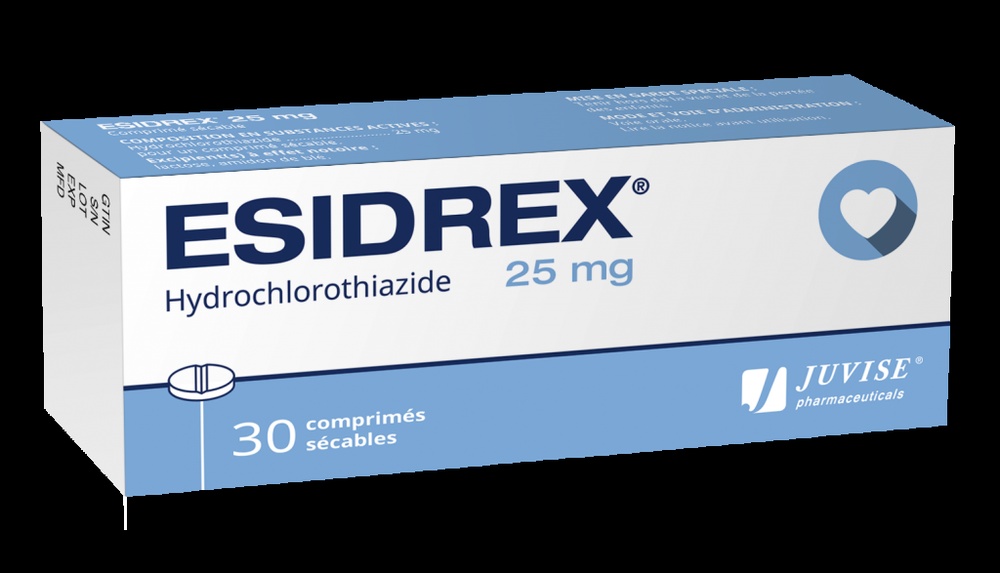
ESIDREX 25 mg Comprimidos

Revisión de receta online
Un médico revisará tu caso y determinará si la prescripción es médicamente apropiada.

Habla con un médico sobre este medicamento
Comenta tus síntomas y las opciones de tratamiento en una consulta online.



Cómo usar ESIDREX 25 mg COMPRIMIDOS
Contenido del prospecto
- Introducción
- Qué es Esidrex y para qué se utiliza
- Qué necesita saber antes de empezar a tomar Esidrex
- Cómo tomar Esidrex
- Posibles efectos adversos
- Conservación de Esidrex
- Contenido del envase e información adicional
Introducción
Prospecto: información para el usuario
Esidrex 25 mg comprimidos
Hidroclorotiazida
Lea todo el prospecto detenidamente antes de empezar a tomar este medicamento, porque contiene información importante para usted.
- Conserve este prospecto, ya que puede tener que volver a leerlo.
- Si tiene alguna duda, consulte a su médico o farmacéutico.
- Este medicamento se le ha recetado solamente a usted, y no debe dárselo a otras personas aunque tengan los mismos síntomas que usted, ya que puede perjudicarles.
- Si experimenta efectos adversos, consulte a su médico o farmacéutico, incluso si se trata de efectos adversos que no aparecen en este prospecto. Ver sección 4.
Contenido del prospecto
- Qué es Esidrex y para qué se utiliza
- Qué necesita saber antes de empezar a tomar Esidrex
- Cómo tomar Esidrex
- Posibles efectos adversos
- Conservación de Esidrex
- Contenido del envase e información adicional
1. Qué es Esidrex y para qué se utiliza
Esidrex es un medicamento que contiene hidroclorotiazida como principio activo. Hidroclorotiazida es un diurético (medicamento que aumenta la eliminación de orina) que pertenece al grupo de las tiazidas. Hidroclorotiazida aumenta la cantidad de orina (diurético) ayudando a reducir la presión sanguínea (antihipertensivo).
Este medicamento está indicado para el tratamiento de las siguientes enfermedades:
- hipertensión arterial (tensión arterial elevada) solo o en combinación con otros medicamentos antihipertensivos,
- edema (retención excesiva de líquido en los tejidos) debido a enfermedad de corazón, riñón o hígado,
- prevención de la formación de cálculos urinarios (piedras en el aparato urinario) en pacientes con niveles elevados de calcio en orina,
- diabetes insípida renal (trastorno en el cual un defecto en los pequeños conductos (túbulos) del riñón hace que una persona elimine una gran cantidad de orina) cuando no esté indicado el tratamiento con hormona antidiurética.

¿No estás seguro de si este medicamento es adecuado para ti?
Comenta tus síntomas y tratamiento con un médico online.
2. Qué necesita saber antes de empezar a tomar Esidrex
No tome Esidrex:
- si es alérgico a hidroclorotiazida o a alguno de los demás componentes de este medicamento (incluidos en la sección 6),
- si tiene problemas para eliminar la orina (anuria),
- si está embarazada y tiene la tensión elevada,
Advertencias y precauciones
Consulte a su médico o farmacéutico antes de empezar a tomar este medicamento.
Tenga especial cuidado en las siguientes situaciones:
- si tiene problemas de riñones,
- si tiene problemas de hígado,
- si padece desequilibrio de electrolitos, como niveles elevados de calcio en sangre,
- si padece problemas metabólicos y endocrinos,
- si padece una enfermedad autoinmune llamada lupus eritematoso sistémico,
- si experimenta una disminución de la visión o dolor ocular, podrían ser síntomas de acumulación de líquido en la capa vascular del ojo (derrame coroideo) o un aumento de la presión en el ojo y se pueden producir en un plazo de entre unas horas y una semana después de tomar Esidrex,
- si padece alergias o asma,
- si ha tenido cáncer de piel o si le aparece una lesión de la piel inesperada durante el tratamiento. El tratamiento con hidroclorotiazida, en particular su uso a largo plazo a dosis altas, puede aumentar el riesgo de algunos tipos de cáncer de piel y labios (cáncer de piel no- melanoma). Proteja la piel de la exposición al sol y a los rayos UV mientras esté tomando Esidrex,
- si ha tenido problemas respiratorios o pulmonares (como inflamación o líquido en los pulmones) tras la toma de hidroclorotiazida en el pasado. Si presenta disnea o dificultad para respirar grave después de tomar Esidrex, acuda al médico inmediatamente.
Toma de Esidrex con otros medicamentos
Informe a su médico o farmacéutico si está tomando, ha tomado recientemente o pudiera tener que tomar cualquier otro medicamento.
Los siguientes medicamentos pueden interaccionar con hidroclorotiazida cuando se utilizan al mismo tiempo:
- litio (antidepresivo),
- otros antihipertensivos,
- relajantes musculares,
- medicamentos utilizados para disminuir los niveles de potasio,
- medicamentos antipsicóticos, antidepresivos y antiepilépticos,
- medicamentos utilizados para el tratamiento de la diabetes,
- digitálicos (digoxina),
- medicamentos antiinflamatorios (derivados de ácido salicílico, indometacina),
- medicamentos para el tratamiento de la gota, como alopurinol,
- amantadina (medicamento antiviral),
- medicamentos utilizados para el tratamiento del cáncer (como metotrexato, ciclofosfamida),
- agentes anticolinérgicos (como atropina),
- resinas utilizadas para disminuir los niveles de colesterol (como colestiramina, colestipol),
- vitamina D,
- ciclosporina (medicamento utilizado en pacientes trasplantados),
- sales de calcio,
- medicamentos utilizados para el tratamiento de la hipoglucemia (diazóxido),
- metildopa, utilizada para el tratamiento de la hipertensión,
- alcohol, medicamentos para conciliar el sueño (como barbitúricos y narcóticos),
- aminas presoras (como noradrenalina).
Toma de Esidrex con alimentos, bebidas y alcohol
En combinación con la ingesta de alcohol, este medicamento puede causar vértigos, mareos o dolor de cabeza.
Embarazo, lactancia y fertilidad
Si está embarazada o en periodo de lactancia, cree que podría estar embarazada o tiene intención de quedarse embarazada, consulte a su médico o farmacéutico antes de utilizar este medicamento.
Por lo general, su médico le aconsejará que tome otro medicamento en lugar de tomar Esidrex, ya que Esidrex no está recomendado durante el embarazo. Esto es debido a que hidroclorotiazida atraviesa la placenta y su uso después del primer trimestre de embarazo puede causar efectos potencialmente dañinos en el feto y neonato.
Hidroclorotiazida se elimina en la leche materna por lo que no se recomienda su uso en madres lactantes.
No se dispone de datos en humanos. Los estudios en animales, no muestran efectos sobre la fertilidad.
Conducción y uso de máquinas
Es poco probable que hidroclorotiazida afecte a la habilidad para conducir o utilizar máquinas.
Esidrex contiene lactosa
Si su médico le ha indicado que padece una intolerancia a ciertos azúcares, consulte con él antes de tomar este medicamento.
Esidrex contiene almidón de trigo con gluten
Este medicamento contiene niveles muy bajos de gluten (procedente de almidón de trigo). Se considera “sin gluten”, y es muy poco probable que le cause problemas si padece la enfermedad celíaca.
Un comprimido no contiene más de 0,49 microgramos de gluten.
Si usted padece alergia al trigo (distinta de la enfermedad celíaca) no debe tomar este medicamento.
Uso en deportistas
Se informa a los deportistas que este medicamento contiene un componente que puede establecer un resultado analítico de control de dopaje como positivo.
3. Cómo tomar Esidrex
Siga exactamente las instrucciones de administración de este medicamento indicadas por su médico o farmacéutico. En caso de duda, consulte de nuevo a su médico o farmacéutico.
Las dosis habituales son:
- Tratamiento de la hipertensión arterial (presión arterial elevada): inicialmente se recomienda una dosis de 12,5 a 25 mg una vez al día, dosis que se puede aumentar hasta 50 mg/día repartidos en una o dos tomas.
- Tratamiento del edema (retención excesiva de líquido debajo de los tejidos): la dosis no debe exceder los 50 mg/día.
- Prevención de la formación de cálculos urinarios (piedras en el aparato urinario): la dosis diaria recomendada es de 25 a 50 mg.
- Tratamiento de la diabetes insípida renal: se utilizan dosis iniciales de hasta 100 mg/día.
Forma de administración
Los comprimidos se deben tomar por vía oral, con o sin alimentos.
El comprimido se puede partir en mitades iguales.
Si toma más Esidrex del que debe
Si ha tomado más Esidrex del que debe, consulte inmediatamente a su médico, a su farmacéutico o llame al Servicio de Información Toxicológica, teléfono: 91 562 04 20, indicando el medicamento y la cantidad utilizada.
Pueden ocurrir los siguientes signos y síntomas en el envenenamiento producido a causa de una sobredosis: mareos, ganas de vomitar (náuseas), sueño (somnolencia), disminución de la cantidad de sangre circulante (hipovolemia), niveles bajos de tensión arterial (hipotensión), y trastornos electrolíticos asociados con alteraciones del ritmo normal de los latidos del corazón (arritmias cardiacas) y espasmos musculares.
Si olvidó tomar Esidrex
No tome una dosis doble para compensar las dosis olvidadas.
Si interrumpe el tratamiento con Esidrex
El tratamiento de la hipertensión es un tratamiento de larga duración y la interrupción de este tratamiento debe ser consultado con el médico.
Si tiene cualquier otra duda sobre el uso de este medicamento, pregunte a su médico o farmacéutico.

¿Has empezado a tomar el medicamento y tienes preguntas?
Comenta tus síntomas y tratamiento con un médico online.
4. Posibles efectos adversos
Al igual que todos los medicamentos, este medicamento puede producir efectos adversos, aunque no todas las personas los sufran.
Efectos adversos muy frecuentes (pueden afectar a más de 1 de cada 10 pacientes):
- disminución de los niveles de potasio en sangre, aumento de los lípidos en sangre.
Efectos adversos frecuentes (pueden afectar hasta 1 de cada 10 pacientes):
- disminución de los niveles de sodio y magnesio en sangre, aumento de los niveles de ácido úrico,
- urticaria, erupción cutánea,
- disminución del apetito, ganas de vomitar, vómitos,
- hipotensión ortostática (bajada repentina de la tensión sanguínea),
- impotencia.
Efectos adversos raros (pueden afectar hasta 1 de cada 1.000 pacientes):
- disminución de la cantidad de plaquetas en sangre que puede desencadenar una enfermedad llamada púrpura,
- aumento de los niveles de calcio y azúcar en sangre, azúcar en orina, empeoramiento de la diabetes,
- dolor de cabeza, mareo, alteraciones del sueño, depresión, sensación de hormigueo,
- trastornos en la visión,
- alteraciones en la piel debido a reacciones de fotosensibilidad,
- dolor abdominal, estreñimiento, diarrea,
- coloración amarilla de la piel,
- alteraciones del ritmo cardiaco.
Efectos adversos muy raros (pueden afectar hasta 1 de cada 10.000 pacientes):
- disminución de la cantidad de glóbulos blancos, anemia hemolítica, trastornos del funcionamiento de la medula ósea,
- reacciones de tipo alérgico, dificultad para respirar,
- disminución de los niveles de cloro en sangre,
- inflamación de los vasos sanguíneos, aparición de ampollas en la piel, reacciones de tipo lupus eritematoso cutáneo,
- inflamación del páncreas,
- dificultad respiratoria aguda (los signos incluyen dificultad respiratoria grave, fiebre, debilidad y confusión).
Efectos adversos frecuencia no conocida (no puede estimarse a partir de los datos disponibles):
- cáncer de piel y labios (cáncer de piel no-melanoma).
- disminución de la visión o dolor en los ojos debido a una presión elevada [signos posibles de acumulación de líquido en la capa vascular del ojo (derrame coroideo) o glaucoma agudo de ángulo cerrado]
Experiencias de reacciones adversas tras la comercialización
Se han identificado las siguientes reacciones adversas tras las experiencias post-comercialización. Debido a que estas reacciones han sido comunicadas voluntariamente por parte de una población de tamaño incierto, no es posible estimar la fiabilidad de su frecuencia.
Frecuencia desconocida: fallo renal agudo, trastorno renal, anemia aplásica, eritema multiforme, pirexia, espasmos musculares, astenia, glaucoma de ángulo cerrado.
Comunicación de efectos adversos
Si experimenta cualquier tipo de efecto adverso, consulte a su médico o farmacéutico, incluso si se trata de posibles efectos adversos que no aparecen en este prospecto. También puede comunicarlos directamente a través del Sistema Español de Farmacovigilancia de Medicamentos de Uso Humano: https://www.notificaram.es. Mediante la comunicación de efectos adversos usted puede contribuir a proporcionar más información sobre la seguridad de este medicamento.
5. Conservación de Esidrex
Mantener este medicamento fuera de la vista y del alcance de los niños.
Conservar en el embalaje original para protegerlo de la humedad.
No utilice este medicamento después de la fecha de caducidad que aparece en el envase después de CAD. La fecha de caducidad es el último día del mes que se indica.
Los medicamentos no se deben tirar por los desagües ni a la basura. Deposite los envases y los medicamentos que no necesita en el Punto SIGRE de la farmacia. En caso de duda pregunte a su farmacéutico cómo deshacerse de los envases y de los medicamentos que no necesita. De esta forma, ayudará a proteger el medio ambiente.
6. Contenido del envase e información adicional
Composición de Esidrex
- El principio activo es hidroclorotiazida. Cada comprimido contiene 25 mg de hidroclorotiazida.
- Los demás componentes (excipientes) son lactosa, almidón de trigo (ver sección 2 contiene gluten), talco, sílice coloidal anhidra y estearato de magnesio.
Aspecto del producto y contenido del envase
Esidrex 25 mg comprimidos son comprimidos blancos, redondos, planos con bordes biselados, con una cara con ranura, y con la otra cara sin ranura.
Esidrex se envasa en blíster y está disponible en envases conteniendo 20 comprimidos.
Titular de la autorización de comercialización y responsable de la fabricación
Titular de la autorización de comercialización
Laboratoires Juvisé Pharmaceuticals
149 boulevard Stalingrad
69100 Villeurbanne
Francia
Responsable de la fabricación
Cenexi
52 Rue Marcel et Jacques Gaucher
94120 Fontenay-sous-Bois
Francia
Delpharm l’Aigle
Zone Industrielle N°1, Route de Crulai
61300 L’Aigle
Francia
Fecha de la última revisión de este prospecto:enero de 2022
La información detallada y actualizada de este medicamento está disponible en la página web de la Agencia Española de Medicamentos y Productos Sanitarios (AEMPS) http://www.aemps.gob.es/.
- País de registro
- Forma farmacéuticaCOMPRIMIDO, 25 mg
- Código ATCC03AA03
- Precio medio en farmacia2.34 EUR
- Principio activo
- Requiere recetaSí
- Fabricante
- ComposiciónALMIDON DE TRIGO (49 mg mg), LACTOSA (50 mg mg)
- Esta información es de carácter general y no sustituye la consulta con un profesional sanitario.
- Alternativas a ESIDREX 25 mg COMPRIMIDOSForma farmacéutica: COMPRIMIDO, 50 mgPrincipio activo: HidroclorotiazidaFabricante: Chiesi España S.A.U.Requiere recetaForma farmacéutica: COMPRIMIDO, 25 mgPrincipio activo: HidroclorotiazidaFabricante: Aristo Pharma Iberia S.L.Requiere recetaForma farmacéutica: COMPRIMIDO, 25 mgPrincipio activo: HidroclorotiazidaFabricante: Aurovitas Spain, S.A.U.Requiere receta
Médicos online para ESIDREX 25 mg COMPRIMIDOS
Comenta la dosis, los posibles efectos secundarios, interacciones, contraindicaciones o la revisión de receta de ESIDREX 25 mg COMPRIMIDOS, sujeto a valoración médica y a la normativa local.
Obtén una receta de ESIDREX 25 mg COMPRIMIDOS online
Rellena un formulario de 2 minutos
Cuéntanos tus síntomas, historial y el medicamento que necesitas.
Elige un médico o nosotros te asignamos uno
Escoge un especialista o te conectamos con el próximo médico disponible.
El médico revisa tu caso
Normalmente en 30 minutos. Puede hacerte preguntas adicionales por chat.
Recógela en cualquier farmacia
Receta electrónica enviada a tu correo, válida en toda España.
Preguntas frecuentes
ESIDREX 25 mg COMPRIMIDOS requiere receta en España. Puedes confirmarlo con un médico online según tu caso.
El principio activo de ESIDREX 25 mg COMPRIMIDOS es Hidroclorotiazida. Esta información ayuda a identificar medicamentos con la misma composición pero con diferentes nombres comerciales.
El precio medio en farmacia de ESIDREX 25 mg COMPRIMIDOS es de aproximadamente 2.34 EUR. Puede variar según el fabricante y la forma farmacéutica.
ESIDREX 25 mg COMPRIMIDOS es fabricado por Laboratoires Juvise Pharmaceuticals. La marca y el envase pueden variar según el distribuidor.
Los Médicos de familia, Psiquiatras, Dermatólogos, Cardiólogos, Endocrinólogos, Gastroenterólogos, Neumólogos, Nefrólogos, Reumatólogos, Hematólogos, Infectólogos, Alergólogos, Geriatras, Pediatras, Oncólogos pueden valorar la prescripción de ESIDREX 25 mg COMPRIMIDOS cuando esté clínicamente indicado. Puedes reservar una videoconsulta para comentar tu caso y las opciones de tratamiento.
España cuenta con una infraestructura sanitaria bien desarrollada en ciudades principales como Madrid, Barcelona, Valencia y Sevilla. Las farmacias están ampliamente disponibles y operan bajo estrictas regulaciones, garantizando el acceso a medicamentos con receta.
Puedes comprar ESIDREX 25 mg COMPRIMIDOS en Madrid, Barcelona, Sevilla o Valencia en cualquier farmacia local con una receta válida.
Para obtener una receta, puedes utilizar Oladoctor:
Otros medicamentos con el mismo principio activo (Hidroclorotiazida) incluyen DRINE 50 MG COMPRIMIDOS, HIDROCLOROTIAZIDA ARISTO 25 MG COMPRIMIDOS EFG, HIDROCLOROTIAZIDA AUROVITAS 25 MG COMPRIMIDOS EFG. Pueden tener diferentes nombres comerciales o formulaciones, pero contienen el mismo componente terapéutico. Consulta siempre con un médico antes de cambiar o iniciar un nuevo medicamento.
