



DOXAZOSINA AUROVITAS 2 MG COMPRIMIDOS

Revisión de receta online
Un médico revisará tu caso y determinará si la prescripción es médicamente apropiada.

Habla con un médico sobre este medicamento
Comenta tus síntomas y las opciones de tratamiento en una consulta online.



Cómo usar DOXAZOSINA AUROVITAS 2 MG COMPRIMIDOS EFG
Contenido del prospecto
- Introducción
- Qué es Doxazosina Aurovitas y para qué se utiliza
- Qué necesita saber antes de empezar a tomar Doxazosina Aurovitas
- Cómo tomar Doxazosina Aurovitas
- Posibles efectos adversos
- Conservación de Doxazosina Aurovitas
- Contenido del envase e información adicional
Introducción
Prospecto: información para el usuario
Doxazosina Aurovitas 2 mg comprimidos EFG
Lea todo el prospecto detenidamente antes de empezar a tomar este medicamento, porque contiene información importante para usted.
- Conserve este prospecto, ya que puede tener que volver a leerlo.
- Si tiene alguna duda, consulte a su médico o farmacéutico.
- Este medicamento se le ha recetado solamente a usted, y no debe dárselo a otras personas aunque tengan los mismos síntomas que usted, ya que puede perjudicarles.
- Si experimenta efectos adversos, consulte a su médico o farmacéutico, incluso si se trata de efectos adversos que no aparecen en este prospecto. Ver sección 4.
Contenido del prospecto
- Qué es Doxazosina Aurovitas y para qué se utiliza
- Qué necesita saber antes de empezar a tomar Doxazosina Aurovitas
- Cómo tomar Doxazosina Aurovitas
- Posibles efectos adversos
- Conservación de Doxazosina Aurovitas
- Contenido del envase e información adicional
1. Qué es Doxazosina Aurovitas y para qué se utiliza
Doxazosina Aurovitas pertenece al grupo de medicamentos llamados vasodilatadores. Estas sustancias hacen que los vasos sanguíneos se dilaten, lo que reduce la presión de la sangre. Doxazosina puede reducir también la tensión en los tejidos de los músculos de la próstata y del tracto urinario.
Doxazosina se usa para tratar:
- La presión sanguínea alta.
- Los síntomas del aumento de tamaño de la próstata.

¿No estás seguro de si este medicamento es adecuado para ti?
Comenta tus síntomas y tratamiento con un médico online.
2. Qué necesita saber antes de empezar a tomar Doxazosina Aurovitas
No tome Doxazosina Aurovitas
- Si es alérgico a doxazosina, a cualquier otro medicamento del mismo grupo (conocido con el nombre de quinazolinas al que pertenecen medicamentos tales como prazosina y terazosina) o a alguno de los demás componentes de este medicamento (incluidos en la sección 6).
- Si tiene un historial de una condición conocida como “presión ortostática” que es una forma de presión baja de la sangre que hace que pueda sentirse mareado o aturdido cuando se incorpora desde la posición de sentado o tumbado.
- Si padece un aumento de tamaño de la próstata con uno de los siguientes síntomas: congestión o bloqueo del conducto de la orina, infección de larga duración del conducto de la orina o cálculos (piedras) en la vejiga de la orina.
- Si tiene un aumento de tamaño de la próstata (hiperplasia prostática benigna) ytiene la presión de la sangre baja.
- Si tiene incontinencia por sobreflujo (no siente urgencia de ganas de orinar) o anuria (su organismo no produce orina) con o sin problemas en los riñones.
Advertencias y precauciones
Consulte a su médico o farmacéutico antes de empezar a tomar Doxazosina Aurovitas si:
- sufre problemas graves de corazón tales como por ejemplo, función cardíaca gravemente reducida o una sensación limitada y dolorosa en el pecho (angina de pecho);
- tiene una dieta estricta baja de sal;
- está utilizando diuréticos;
- tiene problemas de riñón o de hígado.
Informe a su médico especialista de la vista que está utilizando o ha utilizado anteriormente Doxazosina Aurovitas si le van a practicar una operación de cataratas (cristalino del ojo opaco). Doxazosina Aurovitas puede causar complicaciones durante la intervención que puede ser controladas por el especialista si ha sido advertido previamente.
Información importante sobre Doxazosina Aurovitas
La posibilidad de un descenso brusco de la presión de la sangre es mayor al comienzo del tratamiento o cuando se aumenta la dosis. Esto puede manifestarse en forma de mareos o más raramente desmayos cuando se cambia de postura. Para reducir el riesgo de que esto ocurra, el médico deberá comprobar la presión de la sangre al comienzo del tratamiento y cuando la dosis se aumenta. Deberá evitarse al comienzo del tratamiento situaciones en las que los mareos o desmayos puedan causarle lesiones.
Doxazosina Aurovitas puede afectar también los resultados de algunas pruebas de sangre y orina. Advierta que está tomando Doxazosina Aurovitas si le van a hacer análisis de sangre u orina.
Otros medicamentos y Doxazosina Aurovitas
Informe a su médico o farmacéutico si está tomando, ha tomado recientemente o pudiera tener que tomar cualquier otro medicamento.
- Algunos pacientes que toman medicamentos alfa-bloqueantes para el tratamiento de la presión alta o para el agrandamiento de próstata pueden experimentar mareos o aturdimiento que pueden ser causados por un descenso de la presión de la sangre al sentarse o levantarse bruscamente. Ciertos pacientes han experimentado estos síntomas cuando han tomado medicamentos para la disfunción eréctil (impotencia) con alfa-bloqueantes. De cara a reducir la posibilidad de que estos síntomas se produzcan, antes de tomar medicamentos para tratar la disfunción eréctil deberá haberse regularizado su dosis diaria de alfa-bloqueante.
- Doxazosina puede disminuir aún más la presión sanguínea si está ya tomando otros medicamentos para tratar la presión sanguínea alta tales como terazosina y prazosina.
- Medicamentos para tratar infecciones bacterianas o fúngicas, por ejemplo, claritromicina, itraconazol, ketoconazol, telitromicina, voriconazol.
- Medicamentos utilizados en el tratamiento del VIH, por ejemplo, indinavir, nelfinavir, ritonavir, saquinavir.
- Nefazodona, medicamento utilizado para tratar la depresión.
- Nitratos (medicamentos para problemas del corazón) tales como nitroglicerina y nitrato de isosorbida ya que pueden aumentar el efecto de disminución de presión.
- Ciertos analgésicos para el reumatismo (conocidos como medicamentos antiinflamatorios no esteroideos) tales como naproxeno, ibuprofeno o cualquier otro analgésico antiinflamatorio ya que pueden reducir el efecto de disminución de presión.
- Medicamentos que pueden también afectar posiblemente el metabolismo del hígado como cimetidina (medicamento para los problemas de estómago).
Embarazo, lactancia y fertilidad
Si está embarazada o en periodo de lactancia, cree que podría estar embarazada o tiene intención de quedarse embarazada, consulte a su médico o farmacéutico antes de utilizar este medicamento.
Si está embarazada o cree que podría estarlo, debe contactar con su médico antes de tomar Doxazosina Aurovitas. Doxazosina Aurovitas sólo debe usarse durante el embarazo si el médico decide que el beneficio para la madre superar el posible riesgo para el feto.
Pequeñas cantidades de doxazosina, pueden pasar a la leche materna. No debe utilizar doxazosina durante la lactancia a menos que su médico se lo recomiende.
Conducción y uso de máquinas
Doxazosina puede causar a veces mareos o desmayos. En caso de que esto ocurra deberá tenerse cuidado durante las actividades que requieran atención, tales como conducción, manejo de maquinaria y trabajo en altura. Consulte con su médico si no se está seguro de que doxazosina vaya a tener un efecto negativo sobre la capacidad de conducir.
Doxazosina Aurovitas contiene lactosa
Este medicamento contiene lactosa. Si su médico le ha indicado que padece una intolerancia a ciertos azúcares, consulte con él antes de tomar este medicamento.
Doxazosina Aurovitas contiene sodio
Este medicamento contiene menos de 1 mmol de sodio (23 mg) por comprimido; esto es, esencialmente “exento de sodio”.
3. Cómo tomar Doxazosina Aurovitas
Siga exactamente las instrucciones de administración de este medicamento indicadas por su médico. En caso de duda, consulte de nuevo a su médico o farmacéutico.
La dosis recomendada es:
PRESIÓN DE LA SANGRE ALTA
La dosis inicial es de 1 mg al día (cada 24 horas) en una dosis única. Después de 1 a 2 semanas, la dosis se aumenta generalmente a 2 mg tomados en una dosis única diaria única (cada 24 horas). Esta dosis se mantiene durante 1 a 2 semanas. Si fuera necesario, la dosis puede aumentarse adicionalmente hasta 4, 8 ó 16 mg por día, hasta que se consiga la reducción deseada de la presión de la sangre. La dosis máxima diaria es de 16 mg.
La dosis inicial debe tomarse preferiblemente antes de ir a la cama; ya que cualquier mareo que se pudiera experimentar sería un problema menor.
AUMENTO DEL TAMAÑO DE PRÓSTATA
La dosis inicial es de 1 mg al día (cada 24 horas) en una dosis única. Después la dosis habitual es de 2 mg o 4 mg al día. En algunas circunstancias la dosis puede aumentarse hasta un máximo de 8 mg al día.
Los comprimidos deben tomarse cada día como una dosis única (cada 24 horas). Los comprimidos deben tomarse con mucha agua.
Si toma más Doxazosina Aurovitas del que debe
Consulte inmediatamente a su médico o diríjase al servicio de urgencias del hospital más próximos, llevando consigo este prospecto o llame al Servicio de Información Toxicológica (teléfono 91-562.04.20), indicando el medicamento y la cantidad ingerida. En caso de sentirse extremadamente mareado o si pensara que pudiera desmayarse, túmbese con la cabeza hacia abajo.
Si olvidó tomar Doxazosina Aurovitas
Si olvidó tomar una dosis, tome su dosis normal cuando le toque la siguiente. Consulte a su médico o farmacéutico si no estuviera seguro. No tome una dosis doble para compensar las dosis olvidadas.
Si interrumpe el tratamiento con Doxazosina Aurovitas
En caso de interrumpirse bruscamente el tratamiento con doxazosina podrían volver los problemas anteriores al comienzo del tratamiento. Por tanto se aconseja no interrumpir este tratamiento bruscamente. El médico disminuirá la dosis gradualmente. Consulte siempre a su médico o farmacéutico si no estuviera seguro.
Si tiene cualquier otra duda sobre el uso de este producto, pregunte a su médico o farmacéutico.

¿Has empezado a tomar el medicamento y tienes preguntas?
Comenta tus síntomas y tratamiento con un médico online.
4. Posibles efectos adversos
Al igual que todos los medicamentos, este medicamento puede producir efectos adversos, aunque no todas las personas los sufran.
Algunos efectos adversos pueden ser graves:
Deje de tomar este medicamento y diríjase inmediatamente a un médico o al hospital más cercano, si nota alguno de los siguientes efectos adversos:
- Reacciones alérgicas tales como pitos, dificultad para respirar, mareos fuertes o colapso, hinchazón de la cara o garganta o erupción grave de la piel con manchas rojas o ampollas.
- Dolor en el pecho (angina de pecho), aumento de palpitaciones del corazón o palpitaciones irregulares, ataque al corazón o ictus (los síntomas pueden incluir colapso, adormecimiento o debilidad de los brazos o piernas, dolor de cabeza, mareo y confusión, alteración visual, dificultad al tragar, balbuceo o pérdida del habla).
- Coloración amarilla de la piel o del blanco de los ojos, causados por problemas de hígado (ictericia).
- Moratones o hemorragias no habituales causados por un número bajo de plaquetas.
- Presencia de sangre en la orina.
- Hepatitis (enfermedad del hígado con náuseas, vómitos, pérdida de apetito, malestar general, fiebre).
- Colestasis (flujo biliar bloqueado – puede causar piel pruriginosa, heces de color claro, y orina oscura).
Estos efectos adversos son pocos frecuentes (afectan a menos de 1 de cada 100 pacientes) o raros (afectan a menos de 1 de cada 1.000 pacientes).
Otros efectos adversos:
Frecuentes (pueden afectar hasta a 1 de cada 10 personas):
- Infección respiratoria (nariz, garganta, pulmones).
- Infección urinaria (los síntomas pueden incluir: dolor o sensación de ardor cuando usted orine o una necesidad frecuente de orinar), incontinencia urinaria (incapacidad de controlar el flujo de orina).
- Mareo, deseo de dormir (somnolencia), dolor de cabeza.
- Sensación de mareo o de dar vueltas la cabeza (vértigo).
- Sensación de latidos irregulares (palpitaciones), aumento del ritmo del corazón.
- Descenso de la presión de la sangre y presión de la sangre baja como consecuencia de cambio de posición de sentado o tumbado (hipotensión postural).
- Inflamación de los conductos que llevan el aire a los pulmones, tos, dificultad para respirar, nariz atascada y/o secreción de fluido por la nariz.
- Dolor en abdomen, indigestión, boca seca, sensación de mareo (náuseas).
- Picores (prurito).
- Dolor en la espalda, dolor en los músculos (mialgia).
- Inflamación de la vejiga (cistitis), incremento de la producción de orina.
- Sensación de debilidad (astenia), dolor en el pecho, síntomas gripales.
- Inflamación de los tobillos, pies o dedos (edema periférico), edema generalizado.
- Trastornos de acomodación.
Poco frecuentes(pueden afectar hasta a 1 de cada 100 pacientes):
- Gota, aumento del apetito, anorexia (pérdida de apetito), sed.
- Agitación, depresión, ansiedad, dificultad para dormir (insomnio), inestabilidad emocional, nerviosismo, temblor, apatía.
- Flujo lagrimal anormal, fotofobia.
- Ictus, sentido o sensación del tacto reducidos, desmayo.
- Pitidos o ruido en los oídos (tinitus).
- Faringitis, hemorragia nasal.
- Estreñimiento, flatulencia, vómitos (sensación de mareo), inflamación del tracto gastrointestinal, diarrea.
- Análisis anómalos de la función del hígado, aumento de las enzimas hepáticas.
- Erupción de la piel.
- Dolor en las articulaciones.
- Dolor o dificultad para orinar, palidez.
- Dificultad para tener una erección (impotencia).
- Dolor, hinchazón de la cara.
- Aumento de peso, hipopotasemia, hipoglucemia.
Raros(pueden afectar hasta a 1 de cada 1.000 pacientes):
- Alteraciones cerebrovasculares
- Edema laríngeo.
Muy raros(pueden afectar hasta a 1 de cada 10.000 pacientes):
- Mareo postural (mareo como consecuencia de levantarse después de estar sentado o acostado), hormigueo o entumecimiento de manos y pies (parestesia), hiperestesia, rigidez muscular, alteración del gusto, pesadillas, pérdida de memoria.
- Disminución de glóbulos blancos (los síntomas pueden incluir infecciones frecuentes como fiebre, escalofríos fuertes, dolor de garganta o úlceras en la boca), anemia.
- Visión borrosa.
- Enlentecimiento del latido del corazón.
- Sofocos.
- Broncoespasmos (dificultad para respirar, sibilancias o tos).
- Espasmos musculares, debilidad muscular.
- Poliuria (eliminación de grandes cantidades de orina).
- Niveles elevados en sangre de urea y creatinina.
- Habones (urticaria), pérdida de pelo (alopecia), erupción causada por hemorragias debajo de la piel (púrpura).
- Trastornos en el acto de orinar, necesidad de orinar por la noche, aumento del volumen de orina producido.
- Crecimiento temporal de las mamas en hombres (ginecomastia).
- Sentirse cansado (fatiga), indisposición (sensación de malestar general), disminución de la temperatura corporal en pacientes de edad avanzada.
- Erección del pene persistente y dolorosa. Consulte a un médico urgentemente.
Frecuencia no conocida(no puede estimarse a partir de los datos disponibles):
- Problemas en los ojos que pueden ocurrir durante una operación de cataratas (cristalino del ojo opaco). Ver sección “Tenga especial cuidado con Doxazosina Aurovitas”.
- Eyaculación escasa o nula durante el orgasmo, orina turbia tras el orgasmo (eyaculación retrógrada).
Comunicación de efectos adversos:
Si experimenta cualquier tipo de efecto adverso, consulte a su médico o farmacéutico, incluso si se trata de posibles efectos adversos que no aparecen en este prospecto. También puede comunicarlos directamente a través del Sistema Español de Farmacovigilancia de medicamentos de Uso Humano: https://www.notificaram.es. Mediante la comunicación de efectos adversos usted puede contribuir a proporcionar más información sobre la seguridad de este medicamento.
5. Conservación de Doxazosina Aurovitas
Mantener este medicamento fuera de la vista y del alcance de los niños.
No utilice este medicamento después de la fecha de caducidad que aparece en el blíster y el estuche después de CAD. La fecha de caducidad es el último día del mes que se indica.
No requiere condiciones especiales de conservación.
Los medicamentos no se deben tirar por los desagües ni a la basura. Deposite los envases y los medicamentos que no necesita en el Punto SIGRE de la farmacia. En caso de duda pregunte a su farmacéutico cómo deshacerse de los envases y de los medicamentos que ya no necesita. De esta forma, ayudará a proteger el medio ambiente.
6. Contenido del envase e información adicional
Composición de Doxazosina Aurovitas
- El principio activo es doxazosina. Cada comprimido contiene 2 mg de doxazosina (como mesilato de doxazosina).
- Los demás componentes (excipientes) son: celulosa microcristalina, lactosa, carboximetilalmidón sódico (tipo A) (procedente de almidón de patata) y estearato de magnesio
Aspecto del producto y contenido del envase
Comprimidos sin recubrir de color blanco a blanquecino, de forma oblonga, grabados con “D O” por una cara separados por una ranuray un “2” por la otra.
El comprimido se puede dividir en dosis iguales.
Doxazosina Aurovitas 2 mg comprimidos está disponible en envases blíster.
Tamaños de envases: 10, 14, 15, 20, 28, 30, 50, 56, 60, 90, 98, 100 y 140 comprimidos.
Puede que solamente estén comercializados algunos tamaños de envases.
Titular de la autorización de comercialización y responsable de la fabricación
Titular de la autorización de comercialización:
Aurovitas Spain, S.A.U.
Avda. de Burgos, 16-D
28036 Madrid
España
Responsable de la fabricación:
APL Swift Services (Malta) Limited
HF26, Hal Far Industrial Estate, Hal Far
Birzebbugia, BBG 3000
Malta
Este medicamento está autorizado en los estados miembros del Espacio Económico Europeo bajo los siguientes nombres:
República Checa: Doxazosin Aurovitas 2 mg tablety
Malta: Doxazosin Aurobindo 2 mg tablets
Polonia: Doxazosin Aurovitas
Portugal: Doxazosina Aurovitas
España: Doxazosina Aurovitas 2 mg comprimidos EFG
Fecha de la última revisión de este prospecto:septiembre 2023
La información detallada de este medicamento está disponible en la página web de la Agencia Española de Medicamentos y Productos Sanitarios (AEMPS) (http://www.aemps.gob.es/).
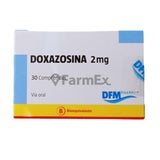
- País de registro
- Forma farmacéuticaCOMPRIMIDO, 2 mg
- Código ATCC02CA04
- Precio medio en farmacia3.64 EUR
- Principio activo
- Requiere recetaSí
- Fabricante
- ComposiciónLACTOSA (24 mg mg)
- Esta información es de carácter general y no sustituye la consulta con un profesional sanitario.
- Alternativas a DOXAZOSINA AUROVITAS 2 MG COMPRIMIDOS EFGForma farmacéutica: COMPRIMIDO LIBERACION MODIFICADA, 4 mgPrincipio activo: doxazosinaFabricante: Viatris Healthcare LimitedRequiere recetaForma farmacéutica: COMPRIMIDO LIBERACION MODIFICADA, 8 mgPrincipio activo: doxazosinaFabricante: Viatris Healthcare LimitedRequiere recetaForma farmacéutica: COMPRIMIDO, 2 mgPrincipio activo: doxazosinaFabricante: Laboratorios Alter S.A.Requiere receta
Médicos online para DOXAZOSINA AUROVITAS 2 MG COMPRIMIDOS EFG
Comenta la dosis, los posibles efectos secundarios, interacciones, contraindicaciones o la revisión de receta de DOXAZOSINA AUROVITAS 2 MG COMPRIMIDOS EFG, sujeto a valoración médica y a la normativa local.
Obtén una receta de DOXAZOSINA AUROVITAS 2 MG COMPRIMIDOS EFG online
Rellena un formulario de 2 minutos
Cuéntanos tus síntomas, historial y el medicamento que necesitas.
Elige un médico o nosotros te asignamos uno
Escoge un especialista o te conectamos con el próximo médico disponible.
El médico revisa tu caso
Normalmente en 30 minutos. Puede hacerte preguntas adicionales por chat.
Recógela en cualquier farmacia
Receta electrónica enviada a tu correo, válida en toda España.
Preguntas frecuentes
DOXAZOSINA AUROVITAS 2 MG COMPRIMIDOS EFG requiere receta en España. Puedes confirmarlo con un médico online según tu caso.
El principio activo de DOXAZOSINA AUROVITAS 2 MG COMPRIMIDOS EFG es doxazosina. Esta información ayuda a identificar medicamentos con la misma composición pero con diferentes nombres comerciales.
El precio medio en farmacia de DOXAZOSINA AUROVITAS 2 MG COMPRIMIDOS EFG es de aproximadamente 3.64 EUR. Puede variar según el fabricante y la forma farmacéutica.
DOXAZOSINA AUROVITAS 2 MG COMPRIMIDOS EFG es fabricado por Aurovitas Spain, S.A.U.. La marca y el envase pueden variar según el distribuidor.
Los Médicos de familia, Psiquiatras, Dermatólogos, Cardiólogos, Endocrinólogos, Gastroenterólogos, Neumólogos, Nefrólogos, Reumatólogos, Hematólogos, Infectólogos, Alergólogos, Geriatras, Pediatras, Oncólogos pueden valorar la prescripción de DOXAZOSINA AUROVITAS 2 MG COMPRIMIDOS EFG cuando esté clínicamente indicado. Puedes reservar una videoconsulta para comentar tu caso y las opciones de tratamiento.
España cuenta con una infraestructura sanitaria bien desarrollada en ciudades principales como Madrid, Barcelona, Valencia y Sevilla. Las farmacias están ampliamente disponibles y operan bajo estrictas regulaciones, garantizando el acceso a medicamentos con receta.
Puedes comprar DOXAZOSINA AUROVITAS 2 MG COMPRIMIDOS EFG en Madrid, Barcelona, Sevilla o Valencia en cualquier farmacia local con una receta válida.
Para obtener una receta, puedes utilizar Oladoctor:
Otros medicamentos con el mismo principio activo (doxazosina) incluyen CARDURAN NEO 4 mg COMPRIMIDOS DE LIBERACION MODIFICADA, CARDURAN NEO 8 mg COMPRIMIDOS DE LIBERACION MODIFICADA, DOXAZOSINA ALTER 2 mg COMPRIMIDOS EFG. Pueden tener diferentes nombres comerciales o formulaciones, pero contienen el mismo componente terapéutico. Consulta siempre con un médico antes de cambiar o iniciar un nuevo medicamento.
