



DICLOFENACO ABAMED 1 MG/ML Colirio

Revisión de receta online
Un médico revisará tu caso y determinará si la prescripción es médicamente apropiada.

Habla con un médico sobre este medicamento
Comenta tus síntomas y las opciones de tratamiento en una consulta online.



Cómo usar DICLOFENACO ABAMED 1 MG/ML COLIRIO EN SOLUCION EN ENVASE UNIDOSIS
Contenido del prospecto
- Introducción
- Qué es Diclofenaco Abamed y para qué se utiliza
- Qué necesita saber antes de empezar a usar Diclofenaco Abamed
- Cómo usar Diclofenaco Abamed
- Posibles efectos adversos
- Conservación de Diclofenaco Abamed
- Contenido del envase e información adicional
Introducción
Prospecto: información para el usuario
Diclofenaco Abamed 1 mg/ml colirio en solución en envase unidosis
diclofenaco sódico
Lea todo el prospecto detenidamente antes de empezar a usar este medicamento, porque contiene información importante para usted.
- Conserve este prospecto, ya que puede tener que volver a leerlo.
- Si tiene alguna duda, consulte a su médico, farmacéutico o enfermero.
- Este medicamento se le ha recetado solamente a usted, y no debe dárselo a otras personas aunque tengan los mismos síntomas que usted, ya que puede perjudicarles.
- Si experimenta efectos adversos, consulte a su médico, farmacéutico o enfermero, incluso si se trata de efctos adversos que no aparecen en este prospecto. Ver sección 4.
Contenido del prospecto:
- Qué es Diclofenaco Abamed y para qué se utiliza
- Qué necesita saber antes de empezar a usar Diclofenaco Abamed
- Cómo usar Diclofenaco Abamed
- Posibles efectos adversos
- Conservación de Diclofenaco Abamed
- Contenido del envase e información adicional
1. Qué es Diclofenaco Abamed y para qué se utiliza
Este medicamento pertenece al grupo de medicamentos oftalmológicos tópicos. Contiene diclofenaco sódico como principio activo, que es un antiinflamatorio no esteroideo (AINE).
Diclofenaco Abamed se utiliza para:
- Tratamiento postoperatorio de la inflamación del segmento anterior del ojo.
- Tratamiento de inhibición de la miosis (contracción de la pupila) pre y postoperatorio de cataratas.
- Tratamiento sintomático de las conjuntivitis crónicas no infecciosas.
- Tratamiento de la inflamación ocular, del dolor ocular y fotofobia post cirugía refractiva (realizada para corregir miopía, astigmatismo e hipermetropía).

¿No estás seguro de si este medicamento es adecuado para ti?
Comenta tus síntomas y tratamiento con un médico online.
2. Qué necesita saber antes de empezar a usar Diclofenaco Abamed
No useDiclofenacoAbamed
- si es alérgico al principio activo o a alguno de los demás componentes de este medicamento (incluidos en la sección 6).
Advertencias y precauciones
Consulte a su médico o farmacéutico antes de empezar a usar Diclofenaco Abamed.
Tenga especial cuidado con Diclofenaco Abamed:
- En caso de infección o cuando exista riesgo de ésta, su médico le podrá prescribir Diclofenaco Abamed conjuntamente con otro tratamiento apropiado (por ejemplo, antibióticos).
- Los antiinflamatorios no esteroideos (AINE) pueden enmascarar un proceso infeccioso agudo.
Otros medicamentos y Diclofenaco Abamed
Informe a su médico o farmacéutico si está utilizando, ha utilizado recientemente o pudiera tener que utilizar cualquier otro medicamento.
En aplicación ocular no se han descrito, hasta la fecha, interacciones con otros fármacos.
Embarazo, lactancia y fertilidad
Si está embarazada o en periodo de lactancia, cree que podría estar embarazada o tiene intención de quedarse embarazada, consulte a su médico o farmacéutico antes de utilizar este medicamento.
Diclofenaco Abamed no se debe usar si se encuentra en los 3 últimos meses de embarazo. No debe usar Diclofenaco Abamed durante los 6 primeros meses de embarazo, a menos que sea estrictamente necesario y lo recomiende su médico. Si necesita tratamiento durante este periodo, deberá tomar la dosis mínima posible durante el menor tiempo posible.
Las formulaciones para uso oral (p. ej., comprimidos) de Diclofenaco Abamed pueden causar reacciones adversas al feto. Se desconoce si se aplica este mismo riesgo a Diclofenaco Abamed cuando se utiliza para los ojos.
Conducción y uso de máquinas
Es aconsejable evitar la aplicación del colirio antes de la conducción de vehículos o el uso de máquinas.
Diclofenaco Abamed contiene ácido bórico
No administrar a niños menores de 2 años de edad, ya que este medicamento contiene boro y puede afectar a la fertilidad en el futuro.
3. Cómo usar Diclofenaco Abamed
Siga exactamente las instrucciones de administración de este medicamento indicadas por su médico o farmacéutico. En caso de duda, consulte de nuevo a su médico o farmacéutico.
Su médico le indicará la duración de su tratamiento con Diclofenaco Abamed. No suspenda el tratamiento antes de lo indicado.
La dosis recomendada para los casos indicados a continuación es la siguiente:
- Antes de la intervención quirúrgica: 1 gota del colirio de 3 a 5 veces durante las 3 horas anteriores a la operación, aplicadas a intervalos regulares de tiempo, lo que significa un máximo de 5 gotas.
- Después de la intervención quirúrgica: 3 gotas del colirio aplicadas a intervalos regulares de tiempo, comenzando inmediatamente después de la operación. Después, durante el período de tiempo requerido de 1 a 2 gotas del colirio de 3 a 5 veces al día, lo que significa un máximo diario de 10 gotas.
- Otras indicaciones: de 1 a 2 gotas del colirio de 3 a 4 veces al día, según la gravedad del caso, lo que significa un máximo diario de 8 gotas.
Si estima que la acción de Diclofenaco Abamed es demasiado fuerte o débil, comuníqueselo a su médico o farmacéutico.
Instrucciones para el uso correcto de DiclofenacoAbamed
- Separe un envase unidosis ejerciendo un movimiento de arriba hacia abajo, tirando de él.
- Golpee ligeramente la base del envase unidosis con la punta del dedo para que el colirio baje hacia la apertura.
- Gire el tapón con delicadeza para abrir el envase.
- Aplique el colirio en el ojo presionando la base del envase repetidamente para facilitar el descenso del líquido, que puede estar dificultado por burbujas de aire.
Si usa másDiclofenacoAbameddel que debe
En caso de sobredosis o ingestión accidental consulte inmediatamente a su médico o farmacéutico, o llame al Servicio de Información Toxicológica, teléfono: 91 562 04 20.
Si olvidó usarDiclofenacoAbamed
No se aplique una dosis doble para compensar las dosis olvidadas.
Si tiene cualquier otra duda sobre el uso de este producto, pregunte a su médico o farmacéutico.

¿Has empezado a tomar el medicamento y tienes preguntas?
Comenta tus síntomas y tratamiento con un médico online.
4. Posibles efectos adversos
Al igual que todos los medicamentos, este medicamento puede producir efectos adversos, aunque no todas las personas los sufran.
Ocasionalmente, como ocurre con otros colirios en solución de la misma clase terapéutica, se puede tener una leve o moderada sensación de escozor transitoria justo después de la aplicación del colirio. Raramente pueden producirse reacciones de hipersensibilidad con prurito (picor), enrojecimiento y fotosensibilidad (sensibilidad a la luz). Asimismo, con una frecuencia no conocida, puede producirse sensación de quemazón en el ojo.
Comunicación de efectos adversos
Si experimenta cualquier tipo de efecto adverso, consulte a su médico o farmacéutico, incluso si se trata de posibles efectos adversos que no aparecen en este prospecto. También puede comunicarlos directamente a través del Sistema Español de Farmacovigilancia de Medicamentos de Uso Humano: www.notificaRAM.es. Mediante la comunicación de efectos adversos usted puede contribuir a proporcionar más información sobre la seguridad de este medicamento.
5. Conservación de Diclofenaco Abamed
Mantener este medicamento fuera de la vista y del alcance de los niños.
No requiere condiciones especiales de conservación.
Este medicamento no contiene conservantes. Tras la apertura y después de su uso, el envase unidosis se debe desechar, aunque sólo se haya utilizado en parte.
No utilice este medicamento después de la fecha de caducidad que aparece en el envase después de CAD. La fecha de caducidad es el último día del mes que se indica.
Los medicamentos no se deben tirar por los desagües ni a la basura. Deposite los envases y los medicamentos que no necesita en el Punto SIGRE de la farmacia. En caso de duda pregunte a su farmacéutico cómo deshacerse de los envases y de los medicamentos que ya no necesita. De esta forma, ayudará a proteger el medio ambiente.
6. Contenido del envase e información adicional
Composición de Diclofenaco Abamed:
- El principio activo es diclofenaco sódico.
- Los demás componentes son aceite de ricino polioxietilenado, ácido bórico (E-284), trometamina y agua purificada.
Aspecto del producto y contenido del envase
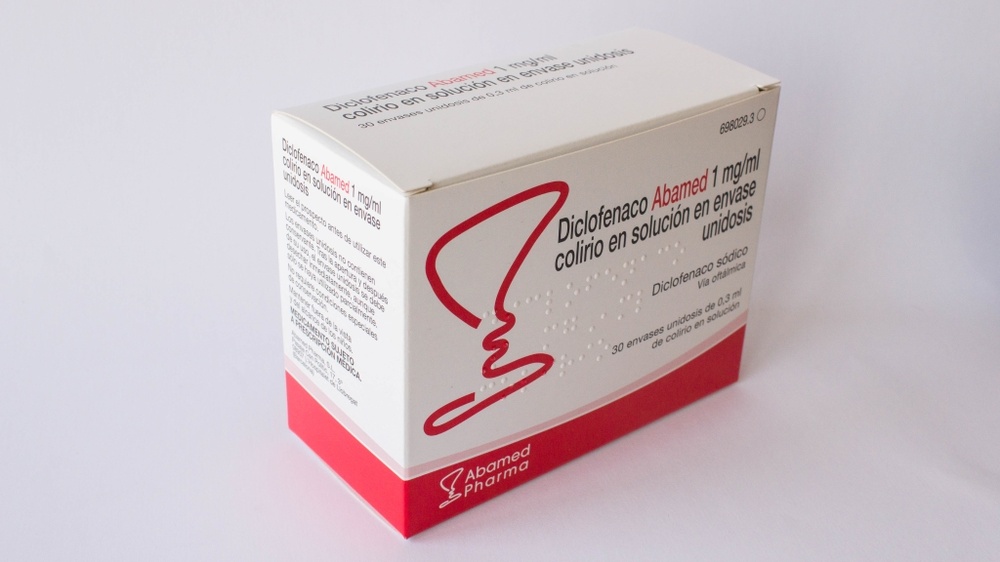
Diclofenaco Abamed se presenta en forma de colirio en solución en envases unidosis. Estuche de cartón con 30 envases unidosis que se presentan en bloques de 5 unidades de plástico, envasados en una bolsa.
Titular de la autorización de comercialización
Qualix Pharma, S.L.
c/ Botánica, 137-139
08908 L’Hospitalet de Llobregat (Barcelona)
España
Responsable de la fabricación
Qualix Pharma, S.L.
c/ Botánica, 137-139
08908 L’Hospitalet de Llobregat (Barcelona)
España
Fecha de la última revisión de este prospecto:Agosto 2024.
La información detallada y actualizada de este medicamento está disponible en la página web de la Agencia Española de Medicamentos y Productos Sanitarios (AEMPS) http://www.aemps.gob.es/
- País de registro
- Forma farmacéuticaCOLIRIO, 1 MG/ML
- Código ATCS01BC03
- Precio medio en farmacia7.52 EUR
- Disponibilidad en farmaciasProblema de suministro reportado
- Principio activo
- Requiere recetaSí
- Fabricante
- ComposiciónACEITE DE RICINO POLIOXIETILENADO (50 mg mg), ACIDO BORICO (19 mg mg)
- Esta información es de carácter general y no sustituye la consulta con un profesional sanitario.
- Alternativas a DICLOFENACO ABAMED 1 MG/ML COLIRIO EN SOLUCION EN ENVASE UNIDOSISForma farmacéutica: COLIRIO, 1 mg/mlPrincipio activo: DiclofenacoFabricante: Laboratoires TheaRequiere recetaForma farmacéutica: COLIRIO, 0,1% diclofenaco sodicoPrincipio activo: DiclofenacoFabricante: Angelini Pharma Espana S.L.Requiere recetaForma farmacéutica: COLIRIO, 0,1% diclofenaco sodicoPrincipio activo: DiclofenacoFabricante: Angelini Pharma Espana S.L.Requiere receta
Médicos online para DICLOFENACO ABAMED 1 MG/ML COLIRIO EN SOLUCION EN ENVASE UNIDOSIS
Comenta la dosis, los posibles efectos secundarios, interacciones, contraindicaciones o la revisión de receta de DICLOFENACO ABAMED 1 MG/ML COLIRIO EN SOLUCION EN ENVASE UNIDOSIS, sujeto a valoración médica y a la normativa local.









Obtén una receta de DICLOFENACO ABAMED 1 MG/ML COLIRIO EN SOLUCION EN ENVASE UNIDOSIS online
Rellena un formulario de 2 minutos
Cuéntanos tus síntomas, historial y el medicamento que necesitas.
Elige un médico o nosotros te asignamos uno
Escoge un especialista o te conectamos con el próximo médico disponible.
El médico revisa tu caso
Normalmente en 30 minutos. Puede hacerte preguntas adicionales por chat.
Recógela en cualquier farmacia
Receta electrónica enviada a tu correo, válida en toda España.
Preguntas frecuentes
DICLOFENACO ABAMED 1 MG/ML COLIRIO EN SOLUCION EN ENVASE UNIDOSIS requiere receta en España. Puedes confirmarlo con un médico online según tu caso.
El principio activo de DICLOFENACO ABAMED 1 MG/ML COLIRIO EN SOLUCION EN ENVASE UNIDOSIS es Diclofenaco. Esta información ayuda a identificar medicamentos con la misma composición pero con diferentes nombres comerciales.
El precio medio en farmacia de DICLOFENACO ABAMED 1 MG/ML COLIRIO EN SOLUCION EN ENVASE UNIDOSIS es de aproximadamente 7.52 EUR. Puede variar según el fabricante y la forma farmacéutica.
DICLOFENACO ABAMED 1 MG/ML COLIRIO EN SOLUCION EN ENVASE UNIDOSIS es fabricado por Qualix Pharma S.L.. La marca y el envase pueden variar según el distribuidor.
Los Médicos de familia, Psiquiatras, Dermatólogos, Cardiólogos, Endocrinólogos, Gastroenterólogos, Neumólogos, Nefrólogos, Reumatólogos, Hematólogos, Infectólogos, Alergólogos, Geriatras, Pediatras, Oncólogos pueden valorar la prescripción de DICLOFENACO ABAMED 1 MG/ML COLIRIO EN SOLUCION EN ENVASE UNIDOSIS cuando esté clínicamente indicado. Puedes reservar una videoconsulta para comentar tu caso y las opciones de tratamiento.
España cuenta con una infraestructura sanitaria bien desarrollada en ciudades principales como Madrid, Barcelona, Valencia y Sevilla. Las farmacias están ampliamente disponibles y operan bajo estrictas regulaciones, garantizando el acceso a medicamentos con receta.
Puedes comprar DICLOFENACO ABAMED 1 MG/ML COLIRIO EN SOLUCION EN ENVASE UNIDOSIS en Madrid, Barcelona, Sevilla o Valencia en cualquier farmacia local con una receta válida.
Para obtener una receta, puedes utilizar Oladoctor:
Otros medicamentos con el mismo principio activo (Diclofenaco) incluyen DICLOABAK 1 mg/ml COLIRIO EN SOLUCION, DICLOFENACO-LEPORI 1 mg/ml COLIRIO EN SOLUCION EN ENVASE UNIDOSIS, DICLOFENACO-LEPORI 1 MG/ML COLIRIO EN SOLUCIÓN. Pueden tener diferentes nombres comerciales o formulaciones, pero contienen el mismo componente terapéutico. Consulta siempre con un médico antes de cambiar o iniciar un nuevo medicamento.
