






Cómo usar DEVIK 10.000 UI/ML GOTAS ORALES EN SOLUCION
Traducción generada por IA
Este contenido ha sido traducido automáticamente y se ofrece solo con fines informativos. No sustituye la consulta con un profesional sanitario.
Ver originalContenido del prospecto
Introducción
Prospecto: Información para el usuario
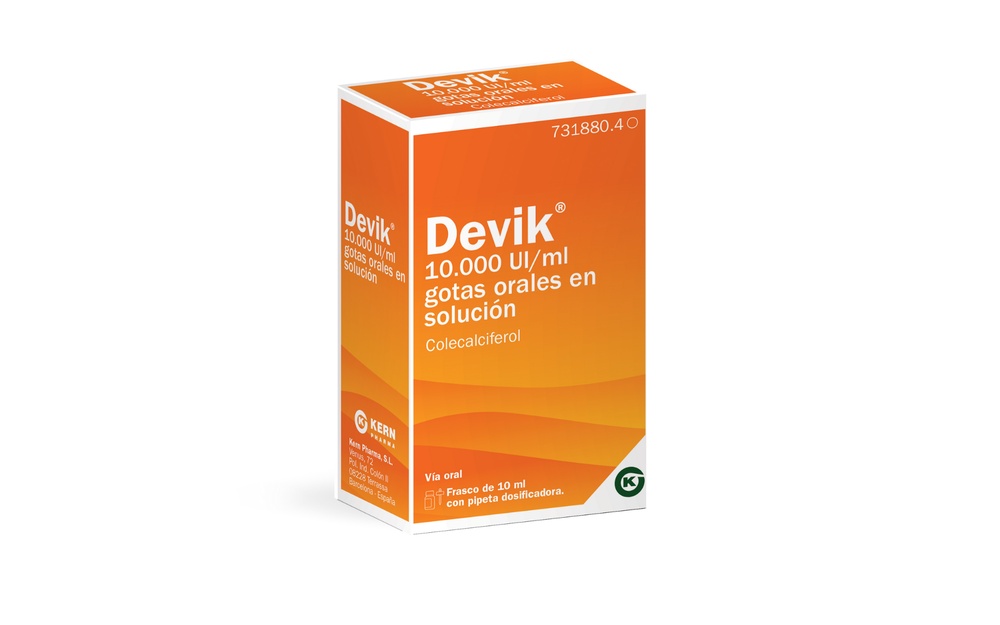
Devik®10.000 UI/ml gotas orales en solución
Colecalciferol (vitamina D3)
Lea todo el prospecto detenidamente antes de empezar a tomar este medicamento porque contiene información importante para usted
- Conserve este prospecto, ya que puede tener que volver a leerlo.
- Si tiene alguna duda, consulte a su médico o farmacéutico.
- Este medicamento se le ha recetado solamente a usted y no debe dárselo a otras personas, aunque tengan los mismos síntomas que usted, ya que puede perjudicarles.
- Si experimenta efectos adversos, consulte a su médico o farmacéutico, incluso si se trata de efectos adversos que no aparecen en este prospecto. Ver sección 4.
Contenido del prospecto
- Qué es Devik y para qué se utiliza
- Qué necesita saber antes de empezar a tomar Devik
- Cómo tomar Devik
- Posibles efectos adversos
- Conservación de Devik
- Contenido del envase e información adicional
1. Qué es Devik y para qué se utiliza
Devik contiene colecalciferol (vitamina D3). La vitamina D3, que es liposoluble, se puede encontrar en algunos alimentos y es producida por el organismo cuando la piel se expone a la luz solar. La vitamina D favorece la absorción de calcio en los riñones y el intestino ayudando a la formación del hueso. La deficiencia de vitamina D es la causa principal del raquitismo (mineralización deficiente de los huesos en niños) y la osteomalacia (mineralización inadecuada de los huesos en adultos).
Devik está indicado para prevenir y tratar la deficiencia de vitamina D, por falta de ingesta, por falta de exposición a la luz solar o por alteración de la absorción intestinal de grasas; en adultos, adolescentes y niños con un riesgo identificado de deficiencia de vitamina D.
También se puede utilizar como un adyuvante en la prevención y el tratamiento de la pérdida de masa ósea (osteoporosis).

2. Qué necesita saber antes de empezar a tomar Devik
No tome Devik
- si es alérgico a la vitamina D3 o a cualquiera de los demás componentes de este medicamento (incluidos en la sección 6).
- si presenta altos niveles de calcio en sangre (hipercalcemia) o en orina (hipercalciuria).
- si tiene piedras en los riñones (cálculos renales) o insuficiencia renal grave.
- si presenta altos niveles de vitamina D en sangre (hipervitaminosis D).

Advertencias y precauciones
Consulte a su médico o farmacéutico antes de empezar a tomar Devik si,
- está en tratamiento con algunos medicamentos indicados en enfermedades cardiacas (por ejemplo, glicósidos cardiacos, tales como digoxina).
- padece sarcoidosis (enfermedad autoinmune que puede causar aumento de los niveles de vitamina D en el organismo).
- está en tratamiento con medicamentos que contienen vitamina D o toma alimentos o leche enriquecidos con vitamina D.
- es probable que vaya a tomar el sol mientras utiliza este medicamento.
- toma otros suplementos que contienen calcio. Su médico deberá controlar los niveles de calcio para asegurar que no sean demasiado altos mientras dure su tratamiento con Devik.
- padece enfermedad o daño renal. Su médico deberá controlar sus niveles de calcio en sangre y orina.
- si tiene niveles elevados de lípidos (grasas) en sangre
- el médico deberá monitorizar los niveles de calcio en sangre mediante análisis de laboratorio si la ingesta diaria de vitamina D3 supera las 1.000 IU durante un tiempo prolongado.
Uso de Devik con otros medicamentos
Informe a su médico o farmacéutico si está utilizando, ha utilizado recientemente o podría tener que utilizar cualquier otro medicamento. Esto es especialmente importante si está tomando:
- medicamentos indicados en el tratamiento de enfermedades del corazón o los riñones, tales como glicósidos cardiacos (por ejemplo, digoxina) o diuréticos (por ejemplo, bendroflumetazida). Cuando estos medicamentos se usan al mismo tiempo que la vitamina D3, pueden causar un aumento importante de los niveles de calcio en la sangre y la orina.
- medicamentos que contengan vitamina D o alimentos ricos en vitamina D, como algunos tipos de leche enriquecida con vitamina D.
- actinomicina (medicamento utilizado en el tratamiento de algunos tipos de cáncer) y antifúngicos imidazólicos (por ejemplo, clotrimazol y ketoconazol, que son medicamentos utilizados en el tratamiento de enfermedades causadas por hongos). Estos medicamentos pueden interferir en el procesamiento de la vitamina D3 en el organismo.
- los siguientes medicamentos, debido a que pueden interferir con el efecto o la absorción de la vitamina D3:
- medicamentos antiepilépticos (anticonvulsivantes), barbitúricos.
- glucocorticoides (hormonas esteroideas como la hidrocortisona o la prednisolona), ya que podrían reducir el efecto de la vitamina D3.
- medicamentos que reducen el nivel del colesterol en la sangre (como colestiramina o colestipol).
- algunos medicamentos utilizados para perder peso mediante la reducción de la absorción de grasa corporal (por ejemplo, orlistat).
- algunos laxantes (como la parafina líquida).
Uso de Devik con alimentos, bebidas y alcohol
Debería tomar Devik preferiblemente en una de las comidas principales para ayudar a la absorción de la vitamina D3. Puede tomarlo solo o mezclando las gotas con alimento frío o templado. Para más información ver la sección 3 “Cómo tomar Devik”.
Embarazo, lactancia y fertilidad
Si está embarazada o en periodo de lactancia, cree que podría estar embarazada o tiene intención de quedarse embarazada, consulte a su médico antes de utilizar este medicamento.
Devik debe tomarse durante el embarazo y la lactancia solo bajo recomendación de su médico.
Las sobredosis de vitamina D deben evitarse durante el embarazo, ya que la hipercalcemia prolongada puede provocar retraso del desarrollo físico y mental, estrechamiento de la aorta provocando una disminución del flujo sanguíneo y enfermedad ocular en el niño (retinopatía).
Conducción y uso de máquinas
La información sobre posibles efectos de este medicamento en la capacidad de conducir es limitada. No obstante, no es esperable que afecte a la capacidad de conducir y utilización de máquinas.
3. Cómo tomar Devik
Siga exactamente las instrucciones de administración de este medicamento indicadas por su médico. En caso de duda, consulte de nuevo a su médico o farmacéutico.
El envase contiene un frasco y una pipeta dosificadora. El frasco está cerrado con un tapón de plástico a prueba de niños. La pipeta dosificadora está protegida por un tubo de plástico que se enrosca.
Para utilizar el medicamento agite el frasco antes de usar y siga las instrucciones siguientes:
- Para abrir el frasco, presionar el tapón hacia abajo y girar al mismo tiempo. No tire el tapón de plástico, lo utilizará para cerrarlo.
- Antes de utilizar la pipeta, desenrosque el tubo de plástico que la protege. No tire el tubo de plástico, lo utilizará para guardarla después de cada uso.
- Introducir la pipeta en el frasco para extraer el contenido, presionando la goma que tiene en el extremo superior. Poner en una cuchara el número de gotas recetadas.
- Cerrar el frasco con su tapón original, absorber el resto de aceite que pueda quedar en la punta de la pipeta con un papel absorbente y guardar la pipeta en el tubo de plástico. No lavar con agua.
- Asegúrese de que ambos están bien cerrados. Guarde el frasco y la pipeta dosificadora en el envase original.
Devik debe tomarse preferiblemente con las comidas principales.
Este medicamento tiene un sabor a aceite de oliva. Devik puede tomarse solo o mezclando la cantidad de gotas recetadas con una pequeña cantidad de alimento frío o templado inmediatamente antes de su ingesta. Debe asegurarse de tomar la dosis completa.
Volumen en gotas (para uso con pipeta dosificadora) | UI de Vitamina D3 |
2 gotas | 400 UI |
3 gotas | 600 UI |
4 gotas | 800 UI |
6 gotas | 1.200 UI |
10 gotas | 2.000 UI |
12 gotas | 2.400 UI |
20 gotas | 4.000 UI |
Uso en adultos
Dosis recomendadas para la deficiencia de vitamina Dy como complemento de la medicación específica para la pérdida ósea (osteoporosis) es de 3-4 gotas (600 IU - 800 UI) al día.
Para el tratamiento de la deficiencia de vitamina D, la dosis suele ser de 4 gotas (800 UI) al día. Dosis más altas deben ajustarse dependiendo de los niveles séricos deseados de 25-hidroxicolecalciferol (25 (OH) D), la gravedad de la enfermedad y la respuesta del paciente al tratamiento.
La dosis diaria no debe exceder las 4.000 UI (20 gotas al día).
Uso en niños y adolescentes
Para la prevención de la deficiencia de vitamina D en niños (de 0 a 11 meses) con riesgo identificado, la dosis recomendada es de 2 gotas (400 UI) por día. Para la prevención en niños y adolescentes (de 1 a 18 años) con riesgo identificado, la dosis recomendada es 3-4 gotas (600-800 UI) por día.
Para el tratamiento de la deficiencia de vitamina D en niños y adolescentes, la dosis debe ser ajustada dependiendo de los niveles séricos deseables de 25-hidroxiclolecalciferol (25 (OH) D), la gravedad de la enfermedad y la respuesta del paciente al tratamiento. La dosis diaria no debe exceder de 1000 UI al día para niños menores de 1 año, 2000 UI al día para niños de 1 año a 10 años de edad, y 4000 UI al día para adolescentes a partir de 11 años.
En niños, Devik puede mezclarse con una pequeña cantidad de alimento para niños, yogur, leche, queso u otros productos lácteos. No añada Devik a biberones de leche u otros recipientes con alimentos que el niño no vaya a ingerir por completo ininterrumpidamente, a fin de evitar que el niño no tome la dosis completa. Debe asegurarse de que el niño tome la dosis completa. En casos de niños que hayan superado la etapa de lactancia, la dosis prescrita debe ser administrada junto con alguna comida principal.
No almacenar ningún producto ni alimento que contenga Devik para ser utilizado posteriormente o en la comida siguiente.
Poblaciones especiales
Este medicamento no debería utilizarse en pacientes con insuficiencia renal grave.
Uso durante el embarazo y la lactancia
La dosis recomendada es de 600 UI/día (3 gotas). Podrían necesitarse dosis mayores tras la confirmación de la deficiencia de vitamina D, pero no debe tomar más de lo que le recomiende su médico. La dosis máxima diaria para embarazadas y lactantes es de 2000UI /día – 10 gotas.
Si toma más Devik del que debe
La toxicidad por exceso de vitamina D se caracteriza por hipercalcemia (niveles altos de calcio en la sangre). Los síntomas más frecuentes en caso de sobredosis son: falta de apetito (anorexia), náuseas, vómitos, diarreas, sed excesiva, producción excesiva de orina durante unas 24 horas, debilidad, nerviosismo, picor y deshidratación, y niveles elevados de calcio en la sangre y en la orina (hipercalcemia e hipercalciuria) en los análisis clínicos.
También la hipervitaminosis D puede producir trastornos más graves (cardiacos, vasculares, entre otros).
Los casos de hipervitaminosis moderada pueden tratarse simplemente reduciendo o suprimiendo el consumo de la vitamina D. En casos de hipercalcemias más severas, se pueden administrar glucocorticoides o calcitonina con el fin de reducir los niveles plasmáticos de calcio.
En caso de sobredosis o ingestión accidental, consulte inmediatamente a su médico, farmacéutico o acuda a un centro médico, o llame al servicio de Información Toxicológica, teléfono 91 562 04 20, indicando el medicamento y la cantidad ingerida.
Deje de tomar el medicamento y llame a su médico o farmacéutico inmediatamente si usted o su hijo toman más cantidad de este medicamento que la recetada por su médico. Si no es posible hablar con el médico, vaya al hospital más cercano y lleve consigo el envase con el medicamento.
Si olvidó tomar Devik
Si se olvida de tomar una dosis de Devik, tome la próxima dosis lo antes posible. Posteriormente, tome la siguiente dosis a la hora habitual. No obstante, si se encuentra muy cerca de la hora de la siguiente dosis, no tome la dosis olvidada y, en su lugar, tome la siguiente dosis a la hora habitual.
No tome una dosis doble para compensar las dosis olvidadas.
Si tiene cualquier otra duda sobre el uso de este medicamento, pregunte a su médico o farmacéutico.
4. Posibles efectos adversos
Al igual que cualquier otro medicamento, Devik puede producir efectos adversos, aunque no todas las personas los sufran. Los posibles efectos adversos asociados al uso de Devik pueden ser:
Poco frecuentes(afectan a 1 de cada 100 personas):
-Exceso de calcio en la sangre (hipercalcemia)
-Exceso de calcio en la orina (hipercalciuria)
Raros(afectan a 1 de cada 1000 personas):
-Rash cutáneo (sarpullido o erupción cutánea)
-Prurito (picor)
-Urticaria
Comunicación de efectos adversos
Si experimenta cualquier tipo de efecto adverso, consulte a su médico o farmacéutico, incluso si se trata de posibles efectos adversos que no aparecen en este prospecto. También puede comunicarlos directamente a través del Sistema Español de Farmacovigilancia de medicamentos de Uso Humano: https://www.notificaram.es. Mediante la comunicación de efectos adversos usted puede contribuir a proporcionar más información sobre la seguridad de este medicamento.
5. Conservación de Devik
Mantener este medicamento fuera de la vista y del alcance de los niños.
Este medicamento no requiere condiciones especiales de conservación.
No utilice este medicamento después de la fecha de caducidad que aparece en el envase después de CAD. La fecha de caducidad es el último día del mes que se indica.
Los medicamentos no se deben tirar por los desagües ni a la basura. Deposite los envases y los medicamentos que no necesita en el Punto SIGRE de la farmacia. En caso de duda pregunte a su farmacéutico cómo deshacerse de los envases y de los medicamentos que no necesita. De esta forma ayudará a proteger el medio ambiente.
6. Contenido del envase e información adicional
Composición de Devik
El principio activo es colecalciferol (vitamina D3). 1 ml de solución oral (50 gotas) contiene 10.000 UI de colecalciferol (vitamina D3), equivalentes a 0.25 mg.
1 gota contiene 200 UI de colecalciferol (vitamina D3), equivalente a 0,005 mg.
Los demás componentes son: aceite de oliva y aroma de frutos del bosque (contiene triacetato de glicerilo, trietil citrato, propilenglicol y aromatizantes).
Aspecto de Devik y contenido del envase
Devik es un líquido oleoso de color claro amarillento.
Se presenta en frascos de vidrio ámbar de 10 ml sellado por una cápsula metálica. El producto va acompañado de una pipeta de polietileno de baja densidad para dispensar el producto y una cubierta protectora para el tubo dispensador.
Titular de la autorización de comercialización y responsable de la fabricación
Kern Pharma, S.L.
Venus, 72 - Pol. Ind. Colón II
08228 Terrassa - Barcelona
España
Fecha de la última revisión de este prospecto: Octubre 2021
La información detallada de este medicamento está disponible en la página Web de la Agencia Española de Medicamentos y Productos Sanitarios (AEMPS) http://www.aemps.gob.es
-

- País de registro
- Forma farmacéuticaSOLUCION/SUSPENSION GOTAS ORALES, 10.000 IU/ml
- Código ATCA11CC05
- Precio medio en farmacia9.37 EUR
- Principio activo
- Requiere recetaSí
- Fabricante
- Esta información es de carácter general y no sustituye la consulta con un profesional sanitario.
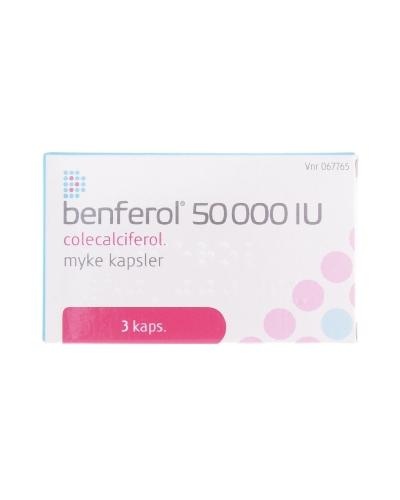
- Alternativas a DEVIK 10.000 UI/ML GOTAS ORALES EN SOLUCIONForma farmacéutica: CAPSULA, 25.000 UIPrincipio activo: colecalciferolFabricante: Laboratorios Alter S.A.Requiere recetaForma farmacéutica: CAPSULA, 50.000 UIPrincipio activo: colecalciferolFabricante: Laboratorios Alter S.A.Requiere recetaForma farmacéutica: CAPSULA, 50,000 UIPrincipio activo: colecalciferolFabricante: Consilient Health LimitedRequiere receta

Médicos online para DEVIK 10.000 UI/ML GOTAS ORALES EN SOLUCION
Comenta la dosis, los posibles efectos secundarios, interacciones, contraindicaciones o la revisión de receta de DEVIK 10.000 UI/ML GOTAS ORALES EN SOLUCION, sujeto a valoración médica y a la normativa local.









Obtén una receta de DEVIK 10.000 UI/ML GOTAS ORALES EN SOLUCION online
Rellena un formulario de 2 minutos
Cuéntanos tus síntomas, historial y el medicamento que necesitas.
Elige un médico o nosotros te asignamos uno
Escoge un especialista o te conectamos con el próximo médico disponible.
El médico revisa tu caso
Normalmente en 30 minutos. Puede hacerte preguntas adicionales por chat.
Recógela en cualquier farmacia
Receta electrónica enviada a tu correo, válida en toda España.
Preguntas frecuentes
DEVIK 10.000 UI/ML GOTAS ORALES EN SOLUCION requires receta en España. Puedes confirmarlo con un médico online según tu caso.
El principio activo de DEVIK 10.000 UI/ML GOTAS ORALES EN SOLUCION es colecalciferol. Esta información ayuda a identificar medicamentos con la misma composición pero con diferentes nombres comerciales.
El precio medio en farmacia de DEVIK 10.000 UI/ML GOTAS ORALES EN SOLUCION es de aproximadamente 9.37 EUR. Puede variar según el fabricante y la forma farmacéutica.
DEVIK 10.000 UI/ML GOTAS ORALES EN SOLUCION es fabricado por Kern Pharma S.L.. La marca y el envase pueden variar según el distribuidor.
Los Médicos de familia, Psiquiatras, Dermatólogos, Cardiólogos, Endocrinólogos, Gastroenterólogos, Neumólogos, Nefrólogos, Reumatólogos, Hematólogos, Infectólogos, Alergólogos, Geriatras, Pediatras, Oncólogos pueden valorar la prescripción de DEVIK 10.000 UI/ML GOTAS ORALES EN SOLUCION cuando esté clínicamente indicado. Puedes reservar una videoconsulta para comentar tu caso y las opciones de tratamiento.
España cuenta con una infraestructura sanitaria bien desarrollada en ciudades principales como Madrid, Barcelona, Valencia y Sevilla. Las farmacias están ampliamente disponibles y operan bajo estrictas regulaciones, garantizando el acceso a medicamentos con receta.
Puedes comprar DEVIK 10.000 UI/ML GOTAS ORALES EN SOLUCION en Madrid, Barcelona, Sevilla o Valencia en cualquier farmacia local con una receta válida.
Para obtener una receta, puedes utilizar Oladoctor:
Otros medicamentos con el mismo principio activo (colecalciferol) incluyen ALDEXINA 25.000 UI CÁPSULAS DURAS, ALDEXINA 50.000 UI CÁPSULAS DURAS, BENFEROL CHOQUE 50.000 UI CAPSULAS BLANDAS. Pueden tener diferentes nombres comerciales o formulaciones, pero contienen el mismo componente terapéutico. Consulta siempre con un médico antes de cambiar o iniciar un nuevo medicamento.
