



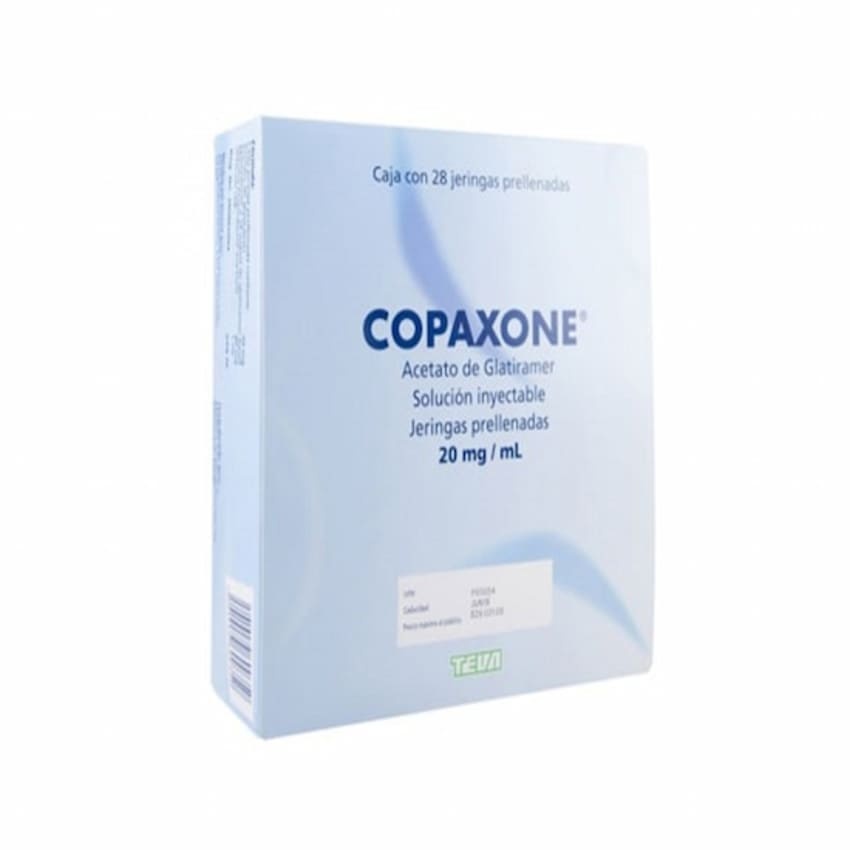
COPAXONE 20 mg /Ml Solución Inyectable En Jeringa Precargada

Revisión de receta online
Un médico revisará tu caso y determinará si la prescripción es médicamente apropiada.

Habla con un médico sobre este medicamento
Comenta tus síntomas y las opciones de tratamiento en una consulta online.



Cómo usar COPAXONE 20 mg/ml SOLUCION INYECTABLE EN JERINGA PRECARGADA
Contenido del prospecto
- Introducción
- Qué es Copaxone y para qué se utiliza
- Qué necesita saber antes de empezar a usar Copaxone
- Cómo usar Copaxone
- Posibles efectos adversos
- Conservación de Copaxone
- Contenido del envase e información adicional
Introducción
Prospecto: Información para el usuario
Copaxone 20 mg/ml solución inyectable en jeringa precargada
glatiramero, acetato
Lea todo el prospecto detenidamente antes de empezar a usar este medicamento, porque contiene información importante para usted.
- Conserve este prospecto, ya que puede tener que volver a leerlo.
- Si tiene alguna duda, consulte a su médico o farmacéutico.
- Este medicamento se le ha recetado solamente a usted, y no debe dárselo a otras personas aunque tengan los mismos síntomas que usted, ya que puede perjudicarles.
- Si experimenta efectos adversos, consulte a su médico o farmacéutico, incluso si se trata de efectos adversos que no aparecen en este prospecto. Ver sección 4.
Contenido del prospecto:
- Qué es Copaxone y para qué se utiliza
- Qué necesita saber antes de empezar a usar Copaxone
- Cómo usar Copaxone
- Posibles efectos adversos
- Conservación de Copaxone
- Contenido del envase e información adicional
1. Qué es Copaxone y para qué se utiliza
Copaxone es un medicamento indicado para el tratamiento de las formas recurrentes de la esclerosis múltiple (EM). Modifica el modo en que funciona el sistema inmunitario de su cuerpo y se clasifica como un agente inmunomodulador. Se cree que los síntomas de la esclerosis múltiple (EM) se producen por un defecto en el sistema inmunitario del organismo. Esto produce zonas de inflamación en el cerebro y en la médula espinal
Copaxone se usa para reducir el número de veces que usted sufre ataques de EM (recaídas). No se ha demostrado que ayude si usted padece alguna forma de EM que no tiene recaídas, o casi ninguna recaída. Copaxone puede no tener efecto alguno en la duración de un ataque de EM, o en lo mal que usted lo pasa durante un ataque.
Se utiliza para tratar pacientes que pueden caminar sin ayuda.
Copaxone puede usarse también en pacientes que han experimentado síntomas por primera vez, que indican un alto riesgo de desarrollar EM. Su médico descartará cualquier otro motivo que explique estos síntomas antes de tratarle.

¿No estás seguro de si este medicamento es adecuado para ti?
Comenta tus síntomas y tratamiento con un médico online.
2. Qué necesita saber antes de empezar a usar Copaxone
No use Copaxone
- si es alérgico al acetato de glatiramero o a cualquiera de los demás componentes de este medicamento (incluidos en la sección 6).
Advertencias y precauciones
Copaxone puede causar reacciones alérgicas graves, algunas de las cuales pueden ser potencialmente mortales.
Estas reacciones se pueden producir poco después de la administración, incluso meses o años después del inicio del tratamiento e incluso aunque no se hayan producido reacciones alérgicas tras administraciones previas.
Los signos y síntomas de las reacciones alérgicas se pueden superponer con las reacciones tras la inyección. Su médico le informará sobre los signos de una reacción alérgica.
Consulte a su médico o farmacéutico antes de empezar a usar Copaxone, si usted padece algún problema de riñón o de corazón, ya que podría necesitar hacerse análisis o reconocimientos periódicos.
Consulte a su médico o farmacéutico antes de empezar a usar Copaxone, si tiene o ha tenido problemas de hígado (incluidos los debidos al consumo de alcohol).
Niños
Copaxone no se puede utilizar en niños menores de 12 años.
Pacientes de edad avanzada
Copaxone no ha sido estudiado específicamente en pacientes de edad avanzada. Por favor consulte con su médico.
Uso de Copaxone con otros medicamentos
Informe a su médico o farmacéutico si está utilizando, ha utilizado recientemente o podría tener que utilizar cualquier otro medicamento.
Embarazo y lactancia
Si está embarazada, cree que podría estar embarazada o tiene intención de quedarse embarazada, consulte a su médico acerca del tratamiento con Copaxone durante el embarazo.
Copaxone puede utilizarse durante el embarazo por indicación de su médico.
Datos limitados en humanos no mostraron efectos negativos de Copaxone en recién nacidos/niños lactantes. Copaxone puede utilizarse durante la lactancia.
Conducción y uso de máquinas
Se desconoce si Copaxone tiene influencia sobre la capacidad para conducir o manejar maquinaria.
3. Cómo usar Copaxone
Siga exactamente las instrucciones de administración de este medicamento indicadas por su médico. En caso de duda, consulte de nuevo a su médico o farmacéutico.
La dosis recomendada diaria en adultos y adolescentes a partir de 12 años es una jeringa precargada (20 mg de acetato de glatiramero), administrado bajo la piel (por vía subcutánea).
Es muy importante que la inyección de Copaxone se realice correctamente:
- Sólo dentro del tejido debajo de la piel (uso subcutáneo) (ver “Instrucciones de uso”)
- A la dosis indicada por su médico. Use únicamente la dosis prescrita por su médico.
- Nunca utilice la misma jeringa más de una vez. Cualquier producto no utilizado o sobrante deberá ser desechado.
- No mezcle o coadministre el contenido de las jeringas precargadas de Copaxone con ningún otro producto.
- Si la solución contiene partículas, no la utilice. Use una jeringa nueva.
La primera vez que utilice Copaxone se le darán instrucciones completas y será supervisado por un médico o una enfermera. Ellos estarán con usted durante la inyección y media hora más tarde, solo para asegurarse de que no tiene ningún problema.
Instrucciones de uso
Lea estas instrucciones cuidadosamente antes de utilizar Copaxone.
Antes de la inyección asegúrese de que tiene todo lo que necesita:
- Un blister con una jeringa precargada de Copaxone solución inyectable.
- Un contenedor para desechar las agujas y jeringas usadas.
- Para cada inyección, saque sólo un blister con una jeringa precargada, del envase. Mantenga el resto de las jeringas en la caja.
- Si su jeringa estaba en la nevera, saque el blister que contiene la jeringa al menos 20 minutos antes de que vaya a inyectarse el medicamento, así se calentará hasta la temperatura ambiente.
Lávese las manos enérgicamente con agua y jabón.
Si desea utilizar un dispositivo para inyección para inyectarse, el dispositivo CSYNC puede utilizarse con Copaxone. El dispositivo CSYNC está únicamente autorizado para ser utilizado con COPAXONE y no ha sido probado con otros productos. Por favor, consulte las instrucciones de uso proporcionadas junto con el dispositivo para inyección CSYNC.
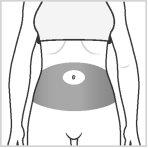
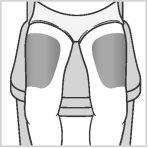
Elija un lugar para la inyección dentro de las áreas, siguiendo los diagramas.
Hay siete posibles zonas para la inyección en su cuerpo:
Área 1: Área del estómago (abdomen) alrededor del ombligo. Evite poner la inyección 5 cm a cada lado del ombligo.
Áreas 2 y 3: Muslos (sobre sus rodillas)
Áreas 4, 5, 6 y 7: Parte superior de los brazos, y parte superior de las caderas (debajo de la cintura)
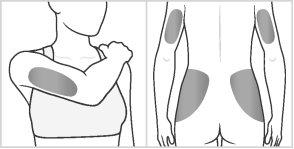
Dentro de cada área de inyección existen múltiples lugares para la inyección. Elija cada día un lugar diferente para poner la inyección. Así reducirá la posibilidad de irritación o de dolor en el lugar de la inyección. Cambie las áreas de inyección y también cambie el lugar para la inyección dentro de cada área. No use siempre el mismo lugar para la inyección.
Advertencia: no se inyecte en ninguna zona que esté dolorida o sin color, o en donde usted note nudos o bultos firmes.
Se recomienda tener un esquema con los lugares para la inyección planificados, y anotarlo en un diario. Existen algunos lugares en su cuerpo que pueden ser difíciles para la auto-inyección (como la parte de atrás de su brazo). Si quiere usarlos, puede necesitar ayuda.
Como inyectar:
- Saque la jeringa del blister protector despegando la cubierta del blíster.
- Quite el capuchón de la aguja, no quiteel protector con la boca o los dientes.
- Pellizque suavemente la piel haciendo un pliegue entre el dedo pulgar e índice de la mano libre (Figura 1).
- Con suavidad introduzca la aguja en la piel como se muestra en la Figura 2.
- Inyecte el medicamento empujando el émbolo, firmemente hasta el tope quedando la jeringa vacía
- Saque la jeringa y la aguja.
- Deseche la jeringa en un contenedor seguro para productos desechables. No tire las jeringas usadas a la basura, deposítelas cuidadosamente en un contenedor a prueba de pinchazos como le ha recomendado su médico o enfermera.

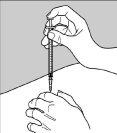
Figura 1 Figura 2
Si tiene la impresión de que el efecto de Copaxone es demasiado fuerte o débil comuníqueselo a su médico.
Si usa más Copaxone del que debe
En caso de sobredosis o ingestión accidental, consulte inmediatamente a su médico, farmacéutico o llame al Servicio de Información Toxicológica, teléfono 915620420, indicando el medicamento y la cantidad ingerida.
Si olvidó usar Copaxone
Adminístrelo en cuanto lo recuerde pero no se administre una dosis doble para compensar las dosis olvidadas. Administrese la siguiente dosis 24 horas después.
Si interrumpe el tratamiento con Copaxone
No deje de usar Copaxone sin consultar con su médico
Si tiene cualquier otra duda sobre el uso de este medicamento, pregunte a su médico o farmacéutico.

¿Has empezado a tomar el medicamento y tienes preguntas?
Comenta tus síntomas y tratamiento con un médico online.
4. Posibles efectos adversos
Al igual que todos los medicamentos, este medicamento puede producir efectos adversos, aunque no todas las personas los sufran.
Reacciones alérgicas (hipersensibilidad, reacción anafiláctica)
Usted puede desarrollar una reacción alérgica grave a este medicamento poco después de la administración. Este es un efecto adverso poco frecuente. Estas reacciones se pueden producir meses o años después del inicio del tratamiento con Copaxone, incluso aunque no se hayan producido reacciones alérgicas tras administraciones previas.
Si nota cualquiera de los siguientes efectos adversos repentinos, deje de utilizar Copaxone y llame inmediatamente a su médico, o diríjase al servicio de urgencias del hospital más próximo:
- sarpullido generalizado (manchas rojas o ronchas)
- inflamación de los párpados, la cara, los labios, la boca, la garganta o la lengua
- repentina falta de aliento, dificultad para respirar o sibilancias (“pitos” al respirar)
- convulsiones (crisis)
- problemas para tragar o hablar
- síncope (desfallecimiento), sensación de mareo o de desmayo
- colapso
Otras reacciones tras la inyección (reacción inmediatamente después de la inyección)
Es poco frecuente pero algunas personas pueden tener uno o más de los siguientes síntomas minutos después de la inyección de Copaxone. Estos normalmente no suponen ningún problema y desaparecen en media hora.
No obstante, si los siguientes síntomas duran más de 30 minutos, contacte inmediatamente con su médico, o diríjase al servicio de urgencias del hospital más próximo:
- rubor (enrojecimiento) del pecho o la cara (vasodilatación)
- dificultad para respirar (disnea)
- dolor en el pecho
- latidos del corazón rápidos y fuertes (palpitaciones, taquicardia)
Problemas hepáticos (de hígado)
Problemas hepáticos o empeoramiento de los problemas hepáticos, incluyendo insuficiencia hepática (que en algunos casos llevó al trasplante hepático), pueden ocurrir raramente con Copaxone. Contacte con su médico inmediatamente si tiene síntomas como:
- nausea
- pérdida de apetito
- orina de color oscuro y heces de color pálido
- coloración amarillenta de la piel o de la parte blanca del ojo
- sangra más fácilmente de lo normal
Se han comunicado los siguientes efectos adversos con Copaxone:
Muy frecuentes: pueden afectar a más de 1 de cada 10 personas
- infecciones, gripe
- ansiedad, depresión
- dolor de cabeza
- náuseas
- erupción en la piel
- dolor en las articulaciones o la espalda
- sensación de debilidad, reacciones de la piel en el lugar de inyección que incluyen enrojecimiento de la piel, dolor, formación de ampollas, picor, hinchazón de los tejidos, inflamación e hipersensibilidad (estas reacciones en el lugar de la inyección no son anormales y normalmente desaparecen con el tiempo), dolor inespecífico.
Frecuentes: pueden afectar hasta 1 de cada 10 personas
- inflamación del tracto respiratorio, enfermedad gástrica, calenturas, inflamación de los oídos, moqueo nasal, abscesos dentales, candidiasis vaginal
- crecimientos en la piel no malignos (neoplasias benignas de la piel), crecimiento de tejido (neoplasia)
- hinchazón de los ganglios linfáticos
- reacciones alérgicas
- pérdida del apetito, ganancia de peso
- nerviosismo
- alteración del sentido del gusto, aumento de la opresión del tono muscular, migraña, problemas en el habla, desvanecimiento, temblor
- doble visión, problemas en los ojos
- problemas de oído
- tos, fiebre del heno
- problemas anales o del recto, estreñimiento, dientes con caries, indigestión, dificultad para tragar, incontinencia intestinal, vómitos.
- resultados anormales de las pruebas de la función hepática
- cardenales, sudoración excesiva, picor, alteraciones en la piel, urticaria
- dolor en el cuello
- necesidad de vaciar rápidamente su vejiga, orinar frecuentemente, incapacidad para vaciar adecuadamente su vejiga
- escalofríos, hinchazón de la cara, pérdida de tejido bajo la piel en el lugar de la inyección, reacción local, hinchazón periférica por acumulación de líquidos, fiebre.
Poco frecuentes: pueden afectar hasta 1de cada 100 personas
- abscesos, inflamación de la piel y del tejido blando inferior, forúnculos, herpes, inflamación de los riñones
- cáncer de piel
- aumento de la cantidad de glóbulos blancos, disminución de la cantidad de glóbulos blancos, agrandamiento del bazo, disminución de la cantidad de plaquetas, cambio en la forma de los glóbulos blancos
- agrandamiento del tiroides o hiperactividad del tiroides
- baja tolerancia al alcohol, gota, aumento de los niveles de grasas en la sangre, aumento del sodio en sangre, disminución de la ferritina en sangre.
- sueños extraños, confusión, estado eufórico, ver, oír, oler, tocar o sentir cosas que no están ahí (alucinaciones), agresividad, estado anormalmente feliz, trastornos de personalidad, intento de suicidio
- entumecimiento de las manos y dolor (síndrome del túnel carpiano), trastornos mentales, crisis (convulsión), problemas para escribir y leer, trastornos musculares, problemas con el movimiento, espasmos musculares, inflamación de los nervios, conexión anormal nervio-muscular que produce una función muscular anormal, movimiento rápido e involuntario de los globos oculares, parálisis, pie caído (parálisis del nervio peroneo), estado de inconsciencia (estupor), manchas visuales ciegas
- cataratas, lesiones oculares en la córnea, sequedad ocular, sangrado en el ojo, párpado caído, dilatación de la pupila, desgaste del nervio óptico que produce problemas visuales.
- latidos cardiacos de más, latidos cardiacos lentos, episodios de latidos cardiacos rápidos
- varices
- paradas periódicas de la respiración, sangrado de la nariz, respiración anormalmente rápida o profunda (hiperventilación), sensación de estrechamiento de la garganta, problemas en los pulmones, incapacidad para respirar por estrechamiento de la garganta (sensación de asfixia)
- inflamación del intestino delgado, pólipos en el colon, inflamación del intestino, eructos, úlcera en la garganta, inflamación de las encías, sangrado rectal, agrandamiento de las glándulas salivares
- cálculos biliares, agrandamiento del hígado
- hinchazón de la piel y tejidos blandos, sarpullido en la piel por contacto, bultos en la piel enrojecidos dolorosos, bultos en la piel
- hinchazón, inflamación y dolor de las articulaciones (artritis u osteoartritis), inflamación y dolor de las bolsas de líquido que cubren las articulaciones (existentes en algunas de las articulaciones), dolor en el costado, disminución de la masa muscular
- sangre en la orina, piedras en los riñones, problemas en el sistema urinario, anomalías en la orina
- hinchazón de los pechos, dificultad para la erección, caída o desplazamiento de los órganos pélvicos (prolapso pélvico), erecciones mantenidas, alteraciones de la próstata, prueba de papanicolau con resultados anormales (frotis anormal de cérvix), alteraciones en los testículos, sangrado vaginal, trastorno vaginal.
- quiste, resaca, temperatura corporal más baja de lo normal (hipotermia), inflamación no específica, destrucción de tejidos en el lugar de la inyección, problemas en las membranas mucosas
- alteraciones tras la vacunación
Comunicación de efectos adversos
Si experimenta cualquier tipo de efecto adverso, consulte a su médico o farmacéutico, incluso si se trata de posibles efectos adversos que no aparecen en este prospecto. También puede comunicarlos directamente a través del Sistema Español de Farmacovigilancia de Medicamentos de Uso Humano: https://www.notificaram.es. Mediante la comunicación de efectos adversos usted puede contribuir a proporcionar más información sobre la seguridad de este medicamento.
5. Conservación de Copaxone
Mantener este medicamento fuera de la vista y del alcance de los niños.
No utilice este medicamento después de la fecha de caducidad que aparece en la etiqueta y la caja (CAD o EXP). La fecha de caducidad es el último día del mes que se indica.
Conservar en nevera (entre 2 ºC y 8 ºC).
Copaxone solución inyectable en jeringa precargada se puede conservar hasta un mes fuera de nevera entre 15 ºC y 25 ºC. Solo puede hacer esto una vez. Si después de este periodo de un mes las jeringas precargadas de Copaxone no han sido utilizadas y se encuentran todavía en su envase original, deben volver a conservarse en nevera.
No congelar.
Las jeringas precargadas deben conservarse en su envase original, protegidas de la luz.
Deseche cualquier jeringa que contenga partículas.
Los medicamentos no se deben tirar por los desagües ni a la basura. Deposite los envases y los medicamentos que no necesita en el Punto SIGRE de la farmacia. En caso de duda pregunte a su farmacéutico cómo deshacerse de los envases y de los medicamentos que no necesita. De esta forma ayudará a proteger el medio ambiente.
6. Contenido del envase e información adicional
Composición de Copaxone
- El principio activo es acetato de glatiramero. 1 ml de la solución para inyección (el contenido de 1 jeringa precargada) contiene 20 mg de acetato de glatiramero, equivalente a 18 mg de glatiramero.
- Los demás componentes son manitol y agua para inyectables.
Aspecto del producto y contenido del envase
Copaxone solución inyectable en jeringa precargada es una solución estéril, clara, sin partículas visibles.
Cada jeringa precargada está acondicionada individualmente en un envase blister de PVC.
Copaxone está disponible en envases que contienen 7, 28 ó 30 jeringas precargadas de 1 ml de solución inyectable o un multienvase de 90 jeringas precargadas compuesto de 3 envases, conteniendo cada uno 30 jeringas precargadas de 1 ml de solución inyectable.
Puede que solamente estén comercializados algunos tamaños de envases.
Titular de la autorización de comercialización y responsable de la fabricación
Titular de la autorización de comercialización
Teva GmbH
Graf Arco Strasse 3
89079 Ulm
Alemania
Responsable de la fabricación
Norton Healthcare Limited T/A IVAX Pharmaceuticals UK (Teva Runcorn)
Aston Lane North, Whitehouse Vale Industrial Estate
Runcorn, Cheshire, WA7 3FA
United Kingdom
ó
Actavis Group PTC ehf.
Dalshraun 1,
220 Hafnarfjörður
Islandia
ó
Merckle GmBH
Graf Arco Strasse 3
Ulm - D-89079
Alemania
Este medicamento está autorizado en los estados miembros del Espacio Económico Europeo con el nombre deCOPAXONE 20 mg/ml:
Alemania Austria, Bélgica, Croacia, República Checa, Chipre, Dinamarca, Eslovaquia, Eslovenia, España Estonia, Finlandia, Francia, Grecia, Hungría, Irlanda, Islandia, Italia, Letonia, Lituania, Luxemburgo, Malta, Noruega, Países Bajos, Polonia, Portugal, Reino Unido (Irlanda del Norte), Rumanía, Suecia,
Pueden solicitar más información respecto a este medicamento dirigiéndose al representante local del titular de la autorización de comercialización:
Teva Pharma, S.L.U.
C/ Anabel Segura, 11, Edificio Albatros B, 1ª planta
28108, Alcobendas, Madrid (España)
Fecha de la última revisión de este prospecto: septiembre 2024
La información detallada y actualizada de este medicamento está disponible en la página web de la Agencia Española de Medicamentos y Productos Sanitarios (AEMPS) http://www.aemps.gob.es/
Puede acceder a información detallada y actualizada sobre este medicamento escaneando con su teléfono móvil (smartphone) el código QR incluido en el cartonaje. También puede acceder a esta información en la siguiente dirección de internet: https://cima.aemps.es/cima/dochtml/p/65983/P_65983.html
Código QR + URL.
- País de registro
- Forma farmacéuticaINYECTABLE, 20 mg acetato glatiramero/ ml
- Código ATCL03AX13
- Principio activo
- Requiere recetaSí
- Fabricante
- ComposiciónMANITOL (E-421) (40 mg mg)
- Esta información es de carácter general y no sustituye la consulta con un profesional sanitario.
- Alternativas a COPAXONE 20 mg/ml SOLUCION INYECTABLE EN JERINGA PRECARGADAForma farmacéutica: INYECTABLE, 40 mg/mlPrincipio activo: Glatiramero acetatoFabricante: Teva GmbhRequiere recetaForma farmacéutica: INYECTABLE, 20 mg/mlPrincipio activo: Glatiramero acetatoFabricante: Viatris LimitedRequiere recetaForma farmacéutica: INYECTABLE, 40 mg/mlPrincipio activo: Glatiramero acetatoFabricante: Viatris LimitedRequiere receta
Médicos online para COPAXONE 20 mg/ml SOLUCION INYECTABLE EN JERINGA PRECARGADA
Comenta la dosis, los posibles efectos secundarios, interacciones, contraindicaciones o la revisión de receta de COPAXONE 20 mg/ml SOLUCION INYECTABLE EN JERINGA PRECARGADA, sujeto a valoración médica y a la normativa local.









Obtén una receta de COPAXONE 20 mg/ml SOLUCION INYECTABLE EN JERINGA PRECARGADA online
Rellena un formulario de 2 minutos
Cuéntanos tus síntomas, historial y el medicamento que necesitas.
Elige un médico o nosotros te asignamos uno
Escoge un especialista o te conectamos con el próximo médico disponible.
El médico revisa tu caso
Normalmente en 30 minutos. Puede hacerte preguntas adicionales por chat.
Recógela en cualquier farmacia
Receta electrónica enviada a tu correo, válida en toda España.
Preguntas frecuentes
COPAXONE 20 mg/ml SOLUCION INYECTABLE EN JERINGA PRECARGADA requiere receta en España. Puedes confirmarlo con un médico online según tu caso.
El principio activo de COPAXONE 20 mg/ml SOLUCION INYECTABLE EN JERINGA PRECARGADA es Glatiramero acetato. Esta información ayuda a identificar medicamentos con la misma composición pero con diferentes nombres comerciales.
COPAXONE 20 mg/ml SOLUCION INYECTABLE EN JERINGA PRECARGADA es fabricado por Teva Gmbh. La marca y el envase pueden variar según el distribuidor.
Los Médicos de familia, Psiquiatras, Dermatólogos, Cardiólogos, Endocrinólogos, Gastroenterólogos, Neumólogos, Nefrólogos, Reumatólogos, Hematólogos, Infectólogos, Alergólogos, Geriatras, Pediatras, Oncólogos pueden valorar la prescripción de COPAXONE 20 mg/ml SOLUCION INYECTABLE EN JERINGA PRECARGADA cuando esté clínicamente indicado. Puedes reservar una videoconsulta para comentar tu caso y las opciones de tratamiento.
España cuenta con una infraestructura sanitaria bien desarrollada en ciudades principales como Madrid, Barcelona, Valencia y Sevilla. Las farmacias están ampliamente disponibles y operan bajo estrictas regulaciones, garantizando el acceso a medicamentos con receta.
Puedes comprar COPAXONE 20 mg/ml SOLUCION INYECTABLE EN JERINGA PRECARGADA en Madrid, Barcelona, Sevilla o Valencia en cualquier farmacia local con una receta válida.
Para obtener una receta, puedes utilizar Oladoctor:
Otros medicamentos con el mismo principio activo (Glatiramero acetato) incluyen COPAXONE 40 MG/ML SOLUCION INYECTABLE EN JERINGA PRECARGADA, GLATIRAMERO VIATRIS 20 MG/ML SOLUCION INYECTABLE EN JERINGA PRECARGADA, GLATIRAMERO VIATRIS 40 MG/ML SOLUCION INYECTABLE EN JERINGA PRECARGADA. Pueden tener diferentes nombres comerciales o formulaciones, pero contienen el mismo componente terapéutico. Consulta siempre con un médico antes de cambiar o iniciar un nuevo medicamento.
