



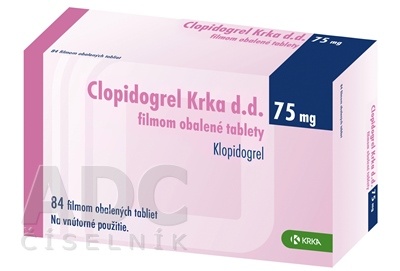
CLOPIDOGREL 75 mg Film-Coated Tablets

Prescription review online
A doctor will review your case and decide whether a prescription is medically appropriate.

Talk to a doctor about this medicine
Discuss your symptoms and possible next steps in a quick online consultation.



How to use CLOPIDOGREL KRKA 75 mg FILM-COATED TABLETS
Contents of the leaflet
- Introduction
- What is Clopidogrel Krka and what is it used for
- What you need to know before you take Clopidogrel Krka
- How to take Clopidogrel Krka
- Possible side effects
- Storing Clopidogrel Krka
- Package Contents and Additional Information
Introduction
Package Leaflet: Information for the User
Clopidogrel Krka 75 mg Film-Coated Tablets EFG
clopidogrel
Read all of this leaflet carefully before you start taking this medicine because it contains important information for you.
- Keep this leaflet, you may need to read it again.
- If you have any further questions, ask your doctor or pharmacist.
- This medicine has been prescribed for you only. Do not pass it on to others. It may harm them, even if their signs of illness are the same as yours.
- If you get any side effects, talk to your doctor or pharmacist. This includes any possible side effects not listed in this leaflet. See section 4.
Contents of the pack and other information:
- What is Clopidogrel Krka and what is it used for
- What you need to know before you take Clopidogrel Krka
- How to take Clopidogrel Krka
- Possible side effects
- Storing Clopidogrel Krka
- Contents of the pack and other information
1. What is Clopidogrel Krka and what is it used for
Clopidogrel Krka contains clopidogrel and belongs to a group of medicines called antiplatelet agents. Platelets are very small cells in the blood that clump together to form blood clots. Antiplatelet agents prevent this clumping, reducing the risk of blood clots (a process called thrombosis).
Clopidogrel Krka is given to adults to prevent blood clots (thrombi) in blood vessels (arteries) that have become hardened, a process known as atherothrombosis, which can lead to atherothrombotic events (such as stroke, myocardial infarction, or death).
You have been prescribed Clopidogrel Krka to help prevent blood clots and reduce the risk of these serious events because:
- you have a condition that causes hardening of the arteries (also known as atherosclerosis), and
- you have previously had a myocardial infarction, a stroke, or suffer from a disease called peripheral arterial disease, or
- you have had a type of severe chest pain known as "unstable angina" or "myocardial infarction". For the treatment of this disease, your doctor may need to place a stent in the obstructed or narrowed artery to restore proper blood flow. Your doctor may also have prescribed acetylsalicylic acid (a substance found in many medications used to relieve pain and reduce fever, as well as to prevent blood clots).
- you have an irregular heartbeat, a disease called "atrial fibrillation", and you cannot take medications known as "oral anticoagulants" (vitamin K antagonists) that prevent the formation of new clots and prevent the growth of existing clots. You will have been told that "oral anticoagulants" are more effective than acetylsalicylic acid or the combined use of Clopidogrel Krka and acetylsalicylic acid for this disease. Your doctor will have prescribed Clopidogrel Krka plus acetylsalicylic acid if you cannot take "oral anticoagulants" and do not have a risk of severe bleeding.

Not sure if this medicine is right for you?
Discuss your symptoms and treatment with a doctor online.
2. What you need to know before you take Clopidogrel Krka
Do not take Clopidogrel Krka
- If you are allergic to clopidogrel or any of the other ingredients of this medicine (listed in section 6);
- If you have an active bleeding, such as a stomach ulcer or bleeding in the brain;
- If you have a severe liver disease.
If you think any of these apply to you, or if you are in any doubt, consult your doctor before taking Clopidogrel Krka.
Warnings and precautions
Before starting treatment with Clopidogrel Krka, inform your doctor if you are in any of the following situations:
- If you are at risk of bleeding because:
- you have a disease that involves a risk of internal bleeding (such as a stomach ulcer).
- you have a blood disorder that predisposes you to internal bleeding (bleeding in tissues, organs, or joints of the body).
- you have recently had a severe injury.
- you have recently undergone surgery (including dental surgery).
- you are scheduled to undergo surgery (including dental surgery) in the next seven days.
- If you have had a blood clot in an artery of the brain (ischemic stroke) in the last 7 days.
- If you have liver or kidney disease.
- If you have had an allergy or reaction to any medication used to treat your disease.
During treatment with Clopidogrel Krka:
- Tell your doctor if you are scheduled to have surgery (including dental surgery).
- Tell your doctor immediately if you develop a disorder (also known as Thrombotic Thrombocytopenic Purpura or TTP) that includes fever and bruising (bleeding under the skin that can appear as red spots), accompanied or not by unexplained extreme tiredness, confusion, yellowing of the skin or eyes (jaundice) (see section 4 "Possible side effects").
- If you cut or injure yourself, bleeding may take longer than usual to stop. This is related to the way the medicine works, as it prevents the blood from forming clots. For minor cuts or injuries, such as cuts while shaving, this is usually not a problem. However, if you are concerned about your bleeding, consult your doctor immediately (see section 2 "Warnings and precautions").
- Your doctor may ask you to have blood tests.
Children and adolescents
This medicine should not be given to children because it is not effective.
Other medicines and Clopidogrel Krka
Tell your doctor or pharmacist if you are taking, have recently taken, or might take any other medicines, including those obtained without a prescription.
Some medicines may affect the use of Clopidogrel Krka or vice versa.
You must specifically tell your doctor if you are taking:
- medicines that may increase the risk of bleeding, such as:
- oral anticoagulants, medications used to decrease blood clotting,
- non-steroidal anti-inflammatory drugs, medications used to treat pain and/or inflammation of muscles or joints,
- heparin, or any other injectable medication used to decrease blood clotting,
- ticlopidine, another antiplatelet agent,
- a serotonin reuptake inhibitor (such as fluoxetine or fluvoxamine and other medications of the same type), medications used to treat depression,
- omeprazole or esomeprazole, medications to treat stomach discomfort,
- fluconazole or voriconazole, medications to treat fungal infections,
- efavirenz, a medication to treat HIV (human immunodeficiency virus) infections,
- carbamazepine, a medication to treat some forms of epilepsy,
- moclobemide, a medication for depression,
- repaglinide, a medication for the treatment of diabetes,
- paclitaxel, a medication for the treatment of cancer,
- antiretrovirals (medications to treat HIV infection).
If you have had severe chest pain (unstable angina or myocardial infarction), you may have been prescribed Clopidogrel Krka in combination with acetylsalicylic acid, a substance found in many medications used to relieve pain and reduce fever. A dose of acetylsalicylic acid taken occasionally (not exceeding 1,000 mg in 24 hours) is generally not a problem, but prolonged use in other circumstances should be discussed with your doctor.
Taking Clopidogrel Krka with food and drinks
Clopidogrel Krka can be taken with or without food.
Pregnancy and breastfeeding
It is preferable not to take this medicine during pregnancy.
If you are pregnant or think you may be pregnant, you must inform your doctor or pharmacist before taking Clopidogrel Krka. If you become pregnant while taking Clopidogrel Krka, consult your doctor immediately, as it is not recommended to take clopidogrel during pregnancy.
You should not breastfeed while taking this medicine.
If you are breastfeeding or plan to breastfeed, inform your doctor before taking this medicine.
Consult your doctor or pharmacist before using any medication.
Driving and using machines
Clopidogrel Krka is unlikely to affect your ability to drive or use machines.
3. How to take Clopidogrel Krka
Follow exactly the instructions of administration of this medicine given by your doctor or pharmacist. In case of doubt, consult your doctor or pharmacist again.
The recommended dose, even for patients with a disease called "atrial fibrillation" (an irregular heartbeat), is one 75 mg tablet of Clopidogrel Krka per day, taken orally, with or without food, and at the same time each day.
If you have had severe chest pain (unstable angina or myocardial infarction), your doctor may prescribe 300 mg of Clopidogrel Krka (4 tablets of 75 mg) to be taken once at the start of treatment. After that, the recommended dose is one 75 mg tablet of Clopidogrel Krka per day, as described above.
You should take Clopidogrel Krka for as long as your doctor continues to prescribe it.
If you take more Clopidogrel Krka than you should
Contact your doctor or go to the nearest hospital emergency department, as there is a higher risk of bleeding.
If you forget to take Clopidogrel Krka
If you forget to take a dose of Clopidogrel Krka, but remember before 12 hours have passed since the time you should have taken the medication, take the tablet immediately and the next one at the usual time.
If you forget for more than 12 hours, simply take the next dose at the usual time. Do not take a double dose to make up for a forgotten tablet.
If you stop taking Clopidogrel Krka
Do not stop your treatment unless your doctor tells you to.Consult your doctor or pharmacist before stopping this medicine.
If you have any further questions on the use of this medicine, ask your doctor or pharmacist.

Started taking the medicine and have questions?
Discuss your symptoms and treatment with a doctor online.
4. Possible side effects
Like all medicines, this medicine can cause side effects, although not everybody gets them.
Consult your doctor immediately if you experience:
- Fever, signs of infection, or extreme tiredness. These symptoms may be due to a rare decrease in some blood cells.
- Signs of liver problems, such as yellowing of the skin and/or eyes (jaundice), associated or not with bleeding that appears under the skin as red spots and/or confusion (see section 2 "Warnings and precautions").
- Swelling of the mouth or skin disorders such as rashes and itching, blisters on the skin. These can be signs of an allergic reaction.
The most common side effect reported with Clopidogrel Krka is bleeding.
Bleeding may occur in the stomach or intestine, bruising, hematoma (abnormal bleeding or bruising under the skin), nosebleeds, blood in urine. A small number of cases of bleeding in the blood vessels of the eyes, intracranial, pulmonary, or joint bleeding have also been reported.
If you experience prolonged bleeding while taking Clopidogrel Krka
If you cut or injure yourself, it is possible that bleeding may take a little longer than usual to stop. This is related to the mechanism of action of the medicine, as it prevents the blood from forming clots. For minor cuts or injuries, such as cuts while shaving, this is usually not a problem. However, if you are concerned about your bleeding, consult your doctor immediately (see section 2 "Warnings and precautions").
Other side effects include:
Common side effects (may affect up to 1 in 10 people):
Diarrhea, abdominal pain, indigestion, or heartburn.
Uncommon side effects (may affect up to 1 in 100 people):
Headache, stomach ulcer, vomiting, nausea, constipation, excess gas in the stomach or intestine, rash, itching, dizziness, tingling, and numbness.
Rare side effects (may affect up to 1 in 1,000 people):
Dizziness, breast enlargement in men.
Very rare side effects (may affect up to 1 in 10,000 people):
Jaundice; severe abdominal pain with or without back pain; fever, difficulty breathing, sometimes associated with cough; generalized allergic reactions (e.g., general feeling of heat with sudden general discomfort leading to fainting); swelling of the mouth; blisters on the skin; skin allergy; inflammation of the mucous membrane of the mouth (stomatitis); low blood pressure; confusion; hallucinations; joint pain; muscle pain; changes in taste or loss of taste of food.
Side effects with unknown frequency (cannot be estimated from available data): Hypersensitivity reactions with chest or abdominal pain, persistent symptoms of low blood sugar levels.
Your doctor may also observe changes in the results of your blood or urine tests.
Reporting of side effects
If you experience any side effects, consult your doctor or pharmacist, even if it is possible that they are not listed in this leaflet. You can also report side effects directly through the national reporting system included in Appendix V. By reporting side effects, you can help provide more information on the safety of this medicine.
5. Storing Clopidogrel Krka
Keep this medicine out of the sight and reach of children.
Do not use this medicine after the expiry date which is stated on the carton and blister after EXP. The expiry date is the last day of the month shown.
Store in the original package to protect from light and moisture.
Medicines should not be disposed of via wastewater or household waste. Ask your pharmacist how to dispose of medicines no longer required. This will help protect the environment.
6. Package Contents and Additional Information
Clopidogrel Krka Composition
- The active ingredient is clopidogrel. Each film-coated tablet contains 75 mg of clopidogrel (as hydrochloride).
- The other ingredients are: microcrystalline cellulose, anhydrous colloidal silica, crospovidone (type A), macrogol 6000, and hydrogenated castor oil in the tablet, and polyvinyl alcohol, titanium dioxide (E171), red iron oxide (E172), yellow iron oxide (E172), talc, and macrogol 3000 in the film coating.
Appearance of Clopidogrel Krka and Package Contents
Film-coated tablets are pink, round, and slightly convex.
Boxes of 7, 14, 28, 30, 50, 56, 60, 84, 90, 100, 112, and 120 film-coated tablets in blisters.
Marketing Authorization Holder
KRKA, d.d., Novo mesto, Šmarješka cesta 6, 8501 Novo mesto, Slovenia
Manufacturers
KRKA, d.d., Novo mesto, Šmarješka cesta 6, 8501 Novo mesto, Slovenia TAD Pharma GmbH, Heinz-Lohmann-Strasse 5, 27472 Cuxhaven, Germany
You can request more information about this medicinal product by contacting the local representative of the marketing authorization holder:
Belgium KRKA Belgium, SA. Tel: +32 (0) 487 50 73 62 | Lithuania UAB KRKA Lietuva Tel: +370 5 236 27 40 |
Bulgaria KRKA Bulgaria EOOD Tel: +359 (02) 962 34 50 | Luxembourg KRKA Belgium, SA. Tel: +32 (0) 487 50 73 62 (BE) |
Czech Republic KRKA CR, s.r.o. Tel: +420 (0) 221 115 150 | Hungary KRKA Magyarország Kereskedelmi Kft. Tel: +36 (1) 355 8490 |
Denmark KRKA Sverige AB Tel: +46 (0)8 643 67 66 (SE) | Malta
Tel: +356 21 445 885 |
Germany TAD Pharma GmbH Tel: +49 (0) 4721 606-0 | Netherlands KRKA Belgium, SA. Tel: +32 (0) 487 50 73 62 (BE) |
Estonia KRKA, d.d., Novo mesto Eesti filiaal Tel: +372 (0)6 671 658 | Norway KRKA Sverige AB Tel: +46 (0)8 643 67 66 (SE) |
Greece QUALIA PHARMA S.A. Tel: +30 210 6256177 | Austria KRKA Pharma GmbH, Wien Tel: +43 (0)1 66 24 300 |
Spain KRKA Farmacéutica S.L. Tel: +34 911 61 03 81 | Poland KRKA-POLSKA Sp. z o.o. Tel: +48 (0)22 573 7500 |
France KRKA France Eurl Tel: +33 (0)1 57 40 82 25 | Portugal KRKA Farmacêutica, Sociedade Unipessoal Lda. Tel: +351 (0)21 46 43 650 |
Croatia KRKA – FARMA d.o.o. Tel: +385 1 6312 100 | Romania KRKA Romania S.R.L., Bucharest Tel: +4 021 310 66 05 |
Ireland KRKA Pharma Dublin, Ltd. Tel: +353 1 293 91 80 | Slovenia KRKA, d.d., Novo mesto Tel: +386 (0) 1 47 51 100 |
Iceland LYFIS ehf. Tel: +354 534 3500 | Slovakia KRKA Slovensko, s.r.o. Tel: +421 (0) 2 571 04 501 |
Italy KRKA Farmaceutici Milano S.r.l. Tel: +39 02 3300 8841 | Finland KRKA Finland Oy Tel: +358 20 754 5330 |
Cyprus Kipa Pharmacal Ltd. Tel: +357 24 651 882 | Sweden KRKA Sverige AB Tel: +46 (0)8 643 67 66 (SE) |
Latvia KRKA Latvija SIA Tel: +371 6 733 86 10 | United Kingdom KRKA UK Ltd. Tel: +44 (0) 207 400 3352 |
Date of Last Revision of this Leaflet:
Detailed information on this medicinal product is available on the European Medicines Agency website http://www.ema.europa.eu/.
- Country of registration
- Dosage formTABLET, 75 mg
- ATC codeB01AC04
- Average pharmacy price16.81 EUR
- Active substance
- Prescription requiredYes
- Manufacturer
- This information is for reference only and does not constitute medical advice. Always consult a doctor before taking any medication. Oladoctor is not responsible for medical decisions based on this content.
- Alternatives to CLOPIDOGREL KRKA 75 mg FILM-COATED TABLETSDosage form: TABLET, 75 mg Clopidogrel (112.10 mg Clopidogrel Besilate)Active substance: clopidogrelManufacturer: Especialidades Farmaceuticas Centrum S.A.Prescription requiredDosage form: TABLET, 75 mg clopidogrelActive substance: clopidogrelManufacturer: Almus Farmaceutica S.A.U.Prescription requiredDosage form: TABLET, 75 mgActive substance: clopidogrelManufacturer: Laboratorios Alter S.A.Prescription required
Online doctors for CLOPIDOGREL KRKA 75 mg FILM-COATED TABLETS
Discuss questions about CLOPIDOGREL KRKA 75 mg FILM-COATED TABLETS, including use, safety considerations and prescription review, subject to medical assessment and local regulations.









Get CLOPIDOGREL KRKA 75 mg FILM-COATED TABLETS Prescription Online
Fill in a 2-min form
Tell us your symptoms, history, and what medicine you're requesting.
Pick a doctor or let us assign
Choose a specialist or we'll match you with the next available doctor.
Doctor reviews your case
Usually within 30 minutes. They may ask follow-up questions via chat.
Collect from any pharmacy
Electronic prescription sent to your email — valid across Spain.
Frequently Asked Questions
CLOPIDOGREL KRKA 75 mg FILM-COATED TABLETS requires a prescription in Spain. You can check with a doctor online whether this medicine may be appropriate for your situation.
The active ingredient in CLOPIDOGREL KRKA 75 mg FILM-COATED TABLETS is clopidogrel. This information helps identify medicines with the same composition but different brand names.
The average pharmacy price for CLOPIDOGREL KRKA 75 mg FILM-COATED TABLETS is around 16.81 EUR. Prices may vary depending on the manufacturer and dosage form.
CLOPIDOGREL KRKA 75 mg FILM-COATED TABLETS is manufactured by Krka D.D. Novo Mesto. Pharmacy brands and packaging may differ depending on the distributor.
Doctors such as Family doctors, Psychiatrists, Dermatologists, Cardiologists, Endocrinologists, Gastroenterologists, Pulmonologists, Nephrologists, Rheumatologists, Hematologists, Infectious disease physicians, Allergists, Geriatricians, Paediatricians, Oncologists may assess whether CLOPIDOGREL KRKA 75 mg FILM-COATED TABLETS is appropriate, depending on your situation and local regulations. You can book an online consultation to discuss your symptoms and possible next steps.
Spain has a well-developed healthcare infrastructure across major cities such as Madrid, Barcelona, Valencia, and Seville. Pharmacies are widely available and operate under strict regulations, ensuring access to prescribed medications.
You can buy CLOPIDOGREL KRKA 75 mg FILM-COATED TABLETS in Madrid, Barcelona, Seville, or Valencia at any local pharmacy with a valid prescription.
To obtain a prescription, you can use Oladoctor:
Other medicines with the same active substance (clopidogrel) include AGRELAN 75 mg FILM-COATED TABLETS, CLOPIDOGREL ALMUS 75 mg FILM-COATED TABLETS, CLOPIDOGREL ALTER 75 mg FILM-COATED TABLETS. These may have different brand names or formulations but contain the same therapeutic ingredient. Always consult a doctor before switching or starting a new medicine.
