


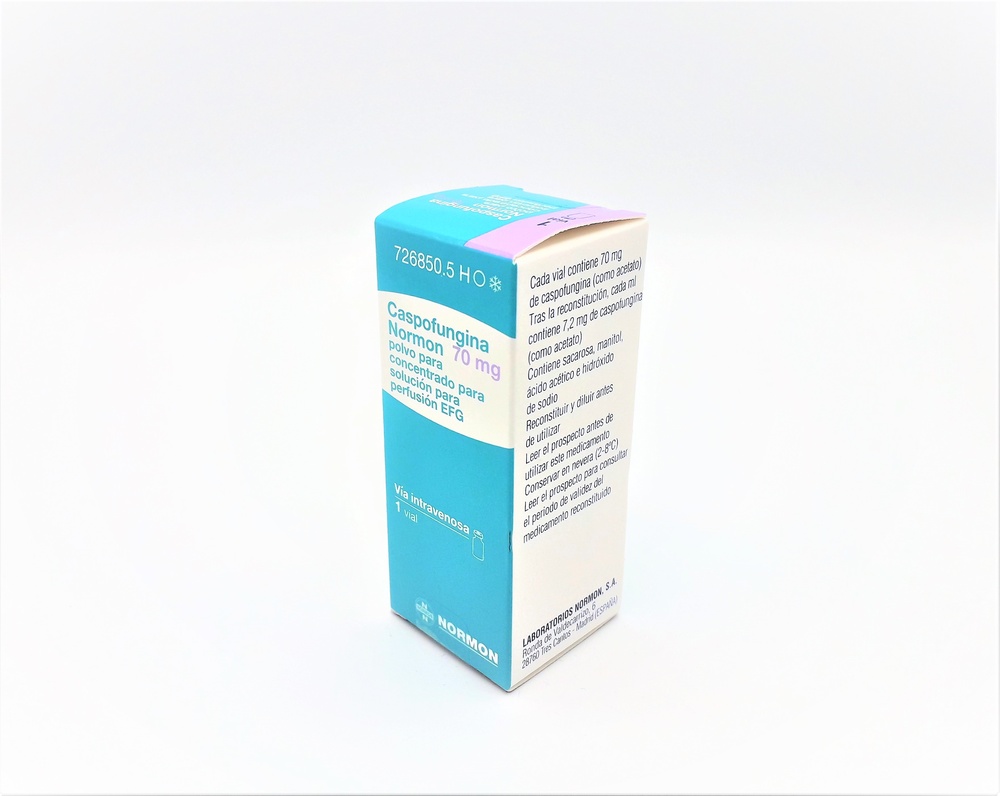
CASPOFUNGINA NORMON 70 MG POLVO PARA CONCENTRADO PARA SOLUCION PARA PERFUSION EFG



Cómo usar CASPOFUNGINA NORMON 70 MG POLVO PARA CONCENTRADO PARA SOLUCION PARA PERFUSION EFG
Traducción generada por IA
Este contenido ha sido traducido automáticamente y se ofrece solo con fines informativos. No sustituye la consulta con un profesional sanitario.
Ver originalContenido del prospecto
Introducción
Prospecto: información para el usuario
Caspofungina Normon70 mg polvo para concentrado para solución paraperfusiónEFG
Caspofungina
Lea todo el prospecto detenidamente antes de que usted o su hijo empiecen a usar este medicamento, porque contiene información importante para usted.
- Conserve este prospecto, ya que puede tener que volver a leerlo.
- Si tiene alguna duda, consulte a su médico, farmacéutico o enfermero.
- Si experimenta efectos adversos, consulte a su médico, farmacéutico o enfermero, incluso si se trata de efectos adversos que no aparecen en este prospecto. Ver sección 4.
Contenido del prospecto
- Qué es Caspofungina Normon y para qué se utiliza
- Qué necesita saber antes de empezar a usar Caspofungina Normon
- Cómo usar Caspofungina Normon
- Posibles efectos adversos
- Conservación de Caspofungina Normon
- Contenido del envase e información adicional
1. Qué es Caspofungina Normon y para qué se utiliza
Qué esCaspofungina Normon
Caspofungina Normon contiene un medicamento llamado caspofungina. Este pertenece a un grupo de medicamentos denominados antifúngicos.
Para qué seutiliza Caspofungina Normon
Caspofungina Normon se utiliza para tratar las siguientes infecciones en niños, adolescentes y adultos:
- Infecciones fúngicas graves en sus tejidos u órganos (denominadas “candidiasis invasora”). Esta infección está causada por células de hongos (levaduras) llamadas Candida.
Las personas que pueden sufrir este tipo de infección incluyen a aquellas que se acaban de someter a una operación o aquellas cuyo sistema inmunitario está debilitado. Fiebre y escalofríos que no responden al tratamiento antibiótico son los síntomas más frecuentes de este tipo de infección.
- Infecciones fúngicas en su nariz, senos nasales o pulmones (denominadas “aspergilosis invasora”) si otros tratamientos antifúngicos no han funcionado o han causado efectos adversos. Esta infección está causada por mohos denominados Aspergillus.
Las personas que pueden sufrir este tipo de infección incluyen a aquellas que están recibiendo quimioterapia, aquellas que se han sometido a un trasplante y aquellas cuyo sistema inmunitario está debilitado.
- Presuntas infecciones fúngicas si tiene fiebre y un recuento bajo de leucocitos, que no han mejorado con el tratamiento con un antibiótico. Las personas que tienen riesgo de sufrir una infección fúngica incluyen a aquellas que se acaban de someter a una operación o aquellas cuyo sistema inmunitario está debilitado.
Cómo actúaCaspofungina Normon
Caspofungina Normon hace que las células de los hongos sean frágiles e impide que el hongo crezca adecuadamente. Esto impide que la infección se propague y proporciona a las defensas naturales del organismo la posibilidad de librarse completamente de la infección.

2. Qué necesita saber antes de empezar a usar Caspofungina Normon
No use Caspofungina Normon
- Si es alérgico a caspofungina o a alguno de los demás componentes de este medicamento (incluidos en la sección 6).
Si no está seguro, consulte a su médico, farmacéutico o enfermero antes de empezar a usar su medicamento.
Advertencias y precauciones
Consulte a su médico, farmacéutico o enfermero antes de empezar a usar caspofungina si:
- Es alérgico a cualquier otro medicamento.
- Ha tenido alguna vez problemas hepáticos; podría necesitar una dosis distinta de este medicamento.
- Ya está tomando ciclosporina (que se usa para evitar el rechazo del trasplante de órganos o para causar una supresión de su sistema inmunitario), ya que es probable que su médico tenga que realizar análisis de sangre adicionales durante el tratamiento.
- Ha tenido alguna vez cualquier otro problema médico.
Si cualquiera de los puntos anteriores se refiere a usted (o no está seguro) consulte a su médico, farmacéutico o enfermero antes de empezar a usar caspofungina
Caspofungina puede causar también reacciones adversas cutáneas graves, tales como síndrome de Stevens-Johnson (SSJ) y necrolisis epidérmica tóxica (NET).
Uso de Caspofungina Normon con otros medicamentos
Informe a su médico, farmacéutico o enfermero si está utilizando, ha utilizado recientemente o pudiera tener que utilizar cualquier otro medicamento. Esto incluye los medicamentos adquiridos sin receta, incluyendo plantas medicinales. Esto se debe a que caspofungina puede afectar a la forma en la que actúan otros medicamentos. También otros medicamentos pueden afectar a la forma en la que actúa caspofungina.
Informe a su médico, farmacéutico o enfermero si está tomando cualquiera de los siguientes medicamentos:
- Ciclosporina o tacrolimus (que se usan para evitar el rechazo del trasplante de órganos o para causar una supresión de su sistema inmunitario), ya que es probable que su médico tenga que realizar análisis de sangre adicionales durante su tratamiento.
- Algunos medicamentos anti-VIH como efavirenz o nevirapina.
- Fenitoína o carbamazepina (que se utilizan para el tratamiento de las convulsiones).
- Dexametasona (un esteroide).
- Rifampicina (un antibiótico).
Si cualquiera de los puntos anteriores se refiere a usted (o no está seguro), consulte a su médico, farmacéutico o enfermero antes de empezar a usar caspofungina.
Embarazo y lactancia
Si está embarazada o en periodo de lactancia, cree que podría estar embarazada o tiene intención de quedarse embarazada, consulte a su médico antes de utilizar este medicamento.
- No se ha estudiado caspofungina en mujeres embarazadas. Sólo debe utilizarse en el embarazo si el beneficio potencial justifica los posibles riesgos para el bebé en desarrollo.
- Las mujeres que usen caspofungina no deben dar el pecho.
Conducción y uso de máquinas
No existe información que sugiera que caspofungina influye en la capacidad para conducir o manejar maquinaria.
Caspofungina Normon contiene sodio
Este medicamento contiene menos de 1 mmol de sodio (23 mg) por vial; esto es, esencialmente “exento de sodio”.
3. Cómo usar Caspofungina Normon
Caspofungina siempre será preparado y le será administrado por un profesional sanitario.
Se le administrará caspofungina:
- Una vez al día.
- Mediante inyección lenta en una vena (perfusión intravenosa).
- Durante alrededor de 1 hora.
Su médico determinará la duración del tratamiento y la cantidad de caspofungina que se le administrará cada día. Su médico monitorizará si el efecto del medicamento es adecuado. Si pesa más de 80 kg, es posible que necesite una dosis distinta.
Uso en niños y adolescentes
La dosis para niños y adolescentes puede ser diferente a la dosis en adultos.
Si usa más Caspofungina Normon de la que debe
Su médico decidirá cuánta caspofungina necesita y durante cuánto tiempo cada día. Si le preocupa que le hayan podido administrar demasiado caspofungina, informe a su médico o enfermero en seguida.
En caso desobredosis consulte a su médico o farmacéutico o llame al Servicio de Información Toxicológica, teléfono: 91 562 04 20, indicando el medicamento y la cantidad ingerida
Si tiene cualquier otra duda sobre el uso de este medicamento, pregunte a su médico, farmacéutico o enfermero.

4. Posibles efectos adversos
Al igual que todos los medicamentos, este medicamento puede producir efectos adversos, aunque no todas las personas los sufran.
Consulte a su médico o enfermero en seguida si nota alguno de los siguientes efectos adversos – es posible que necesite tratamiento médico urgente:
- Erupción, picor, sensación de calor, hinchazón de su cara, labios o garganta o problemas para respirar: es posible que esté teniendo una reacción histamínica al medicamento.
- Dificultad para respirar con sibilancias o empeoramiento de una erupción que ya existía: es posible que esté teniendo una reacción alérgica al medicamento.
- Tos, dificultades respiratorias graves: si usted es un adulto y tiene aspergilosis invasora, es posible que experimente un problema respiratorio grave que podría dar lugar a una insuficiencia respiratoria.
- Erupción, descamación de piel, llagas en la membrana de la mucosa, ronchas, grandes áreas de descamación de la piel.
Como ocurre con cualquier medicamento de venta con receta, algunos efectos adversos pueden ser graves. Pida más información a su médico.
Otros efectos adversos en adultos incluyen
Frecuentes: pueden afectar hasta 1 de cada 10 personas:
- Descenso de la hemoglobina (descenso de la sustancia que transporta el oxígeno en la sangre), disminución de los leucocitos.
- Descenso de la albúmina (un tipo de proteína) en su sangre, descenso del potasio o niveles bajos de potasio en la sangre.
- Cefalea.
- Inflamación de la vena.
- Falta de aliento.
- Diarrea, náuseas o vómitos.
- Cambios en algunos análisis de sangre de laboratorio (como valores incrementados de algunas pruebas hepáticas).
- Picor, erupción, enrojecimiento de la piel o sudoración más de lo normal.
- Dolor de las articulaciones.
- Escalofríos, fiebre.
- Picor en el lugar de la inyección.
Poco frecuentes: pueden afectar hasta 1 de cada 100 personas:
- Cambios en algunos análisis de sangre de laboratorio (incluidos enfermedades de la coagulación de la sangre, plaquetas, glóbulos rojos y leucocitos).
- Pérdida de apetito, aumento en la cantidad de líquido corporal, desequilibrio en la sal del cuerpo, nivel elevado de azúcar en la sangre, nivel bajo de calcio en la sangre, nivel elevado de calcio en la sangre, niveles bajos de magnesio en la sangre, aumento del nivel de ácidos en la sangre.
- Desorientación, sensación de nervios, no ser capaz de dormir.
- Sensación de mareo, disminución de las sensaciones o la sensibilidad (especialmente en la piel), agitación, sensación de sueño, cambio en la manera que saben las cosas, cosquilleo o entumecimiento.
- Visión borrosa, aumento de las lágrimas, párpado hinchado, coloración amarilla de la parte blanca de los ojos.
- Sensación de latidos cardiacos rápidos o irregulares, latido cardiaco rápido, latido cardiaco irregular, ritmo cardiaco anormal, insuficiencia cardiaca.
- Rubor, sofocos, presión arterial elevada, presión arterial baja, enrojecimiento a lo largo de una vena que está muy sensible al tacto.
- Tensión en las bandas de músculo alrededor de las vías aéreas, que conduce a sibilancias o tos, velocidad de respiración rápida, falta de aliento que hace despertarse, escasez de oxígeno en la sangre, ruidos respiratorios anormales, sonidos crepitantes en los pulmones, sibilancias, congestión nasal, tos, dolor de garganta.
- Dolor de abdomen, dolor de la parte superior del abdomen, hinchazón abdominal, estreñimiento, dificultad para tragar, sequedad de boca, indigestión, expulsión de gases, molestias gástricas, hinchazón debida a acumulación de líquido alrededor de la tripa.
- Disminución del flujo de bilis, aumento de tamaño del hígado, coloración amarilla de la piel y/o de la parte blanca de los ojos, lesión del hígado causada por un medicamento o un compuesto químico, trastorno del hígado.
- Tejido de la piel anormal, picor generalizado, ronchas, erupción de apariencia variada, piel anormal, manchas rojas, a menudo con picor, en brazos y piernas y a veces, en la cara y el resto del cuerpo.
- Dolor de espalda, dolor en un brazo o pierna, dolor óseo, dolor muscular, debilidad muscular.
- Pérdida de la función del riñón, pérdida súbita de la función del riñón.
- Dolor en el lugar del catéter, síntomas en el lugar de la inyección (enrojecimiento, bulto duro, dolor, hinchazón, irritación, erupción, ronchas, fuga de líquido del catéter al tejido), inflamación de la vena en el lugar de la inyección.
- Aumento de la presión arterial y alteraciones en algunos análisis de sangre de laboratorio (como pruebas de electrolitos del riñón y pruebas de coagulación), aumento de niveles de medicamentos que usted esté tomando que debilitan el sistema inmunitario.
- Malestar torácico, dolor torácico, sensación de cambio de la temperatura corporal, sentirse generalmente indispuesto, dolor general, hinchazón de la cara, hinchazón de los tobillos, las manos o los pies, hinchazón, dolor a la palpación, sensación de cansancio.
Otros efectos adversos en niños y adolescentes
Muy frecuentes:pueden afectar a más de 1 de cada 10 personas:
- Fiebre.
Frecuentes:pueden afectar hasta 1 de cada 10 personas:
- Cefalea.
- Latido cardiaco rápido.
- Rubor, presión arterial baja.
- Cambios en algunos análisis de sangre de laboratorio (valores aumentados de algunas pruebas hepáticas).
- Picor, erupción.
- Dolor en el lugar de catéter.
- Escalofríos.
- Cambios en algunos análisis de sangre de laboratorio.
Comunicación de efectos adversos
Si experimenta cualquier tipo de efecto adverso, consulte a su médico, farmacéutico o enfermero, incluso si se trata de posibles efectos adversos que no aparecen en este prospecto. También puede comunicarlos directamente a través del Sistema Español de Farmacovigilancia de Medicamentos de Uso Humano: https://www.notificaram.es. Mediante la comunicación de efectos adversos usted puede contribuir a proporcionar más información sobre la seguridad de este medicamento.
5. Conservación de Caspofungina Normon
Mantener este medicamento fuera de la vista y del alcance de los niños.
No utilice este medicamento después de la fecha de caducidad que aparece en el envase y en el vial (después de “CAD”). La fecha de caducidad es el último día del mes que se indica.
Conservar en nevera (entre 2 °C y 8 °C).
Casponfugina Normon no contiene conservantes. Desde un punto de vista microbiológico, el producto debe utilizarse inmediatamente. Si no se usa inmediatamente, los tiempos de conservación en uso y condiciones antes del uso son responsabilidad del usuario y no deberían ser mayores de 24 horas entre 2 y 8 °C, a menos que la reconstitución y la dilución hayan tenido lugar en condiciones asépticas controladas y validadas.
Sólo un profesional sanitario preparado que haya leído las instrucciones completas deberá preparar el medicamento (ver más adelante “Instrucciones para reconstituir y diluir Caspofungina Normon”).
Los medicamentos no se deben tirar por los desagües ni a la basura. Pregunte a su farmacéutico cómo deshacerse de los envases y de los medicamentos que ya no necesita. De esta forma, ayudará a proteger el medio ambiente..
6. Contenido del envase e información adicional
Composición deCaspofungina Normon
- El principio activo es caspofungina. Cada vial de Caspofungina Normon contiene 70 mg de caspofungina.
- Los demás componentes son sacarosa, manitol, ácido acético glacial e hidróxido de sodio (ver la sección 2. Qué necesita saber antes de empezar a usar Caspofungina Normon).
Aspecto del producto y contenido del envase
Caspofungina Normon es un polvo compacto, estéril, de color blanco a blanquecino.
Cada envase contiene un vial de polvo.
Titular de la autorización de comercialización y responsable de la fabricación
LABORATORIOS NORMON, S.A. Ronda de Valdecarrizo, 6 – 28760 Tres Cantos – Madrid (España) Fecha de la última revisión de este prospecto: Septiembre 2019 |
Otras fuentes de información
La información detallada y actualizada de este medicamento está disponible en la página Web de la Agencia Española de Medicamentos y Productos Sanitarios (AEMPS) http://www.aemps.
Esta información está destinada únicamente a profesionales del sector sanitario:
Instrucciones para reconstituir y diluir Caspofungina Normon:
Reconstitución de Caspofungina Normon
NO UTILIZAR DILUYENTES QUE CONTENGAN GLUCOSA, ya que Caspofungina Normon no es estable en diluyentes que contengan glucosa. NO MEZCLE NI INFUNDA CONJUNTAMENTE Caspofungina Normon CON NINGÚN OTRO MEDICAMENTO, ya que no se dispone de datos sobre la compatibilidad de Caspofungina Normon con otras sustancias, aditivos o especialidades farmacéuticas intravenosas. La solución de perfusión debe inspeccionarse visualmente en busca de partículas sólidas o de un cambio de color.
INSTRUCCIONES DE USO EN PACIENTES ADULTOS
Paso 1 Reconstitución de los viales
Para reconstituir el polvo, llevar el vial a temperatura ambiente y añadir asépticamente 10,5 ml de agua para preparaciones inyectables. La concentración del vial reconstituido será de 7,2 mg/ml.
El polvo compacto liofilizado de color blanco a blanquecino se disolverá completamente. Mezclar suavemente hasta obtener una solución transparente. Las soluciones reconstituidas deben inspeccionarse visualmente en busca de partículas sólidas o de un cambio de color. La solución reconstituida puede conservarse durante un máximo de 24 horas a una temperatura igual o inferior a 25 °C.
Paso 2 Adición de Caspofungina Normon reconstituido a la solución de perfusión al paciente
Los diluyentes para la solución final para perfusión son: solución de cloruro sódico para inyección o solución de Ringer lactada. La solución para perfusión se prepara añadiendo asépticamente la cantidad apropiada del concentrado reconstituido (como se muestra en la tabla siguiente) a una bolsa o frasco de perfusión de 250 ml. Pueden utilizarse perfusiones de volumen reducido en 100 ml, en caso de que sea médicamente necesario, para las dosis diarias de 50 mg ó 35 mg. No utilizar si la solución está turbia o ha precipitado.
PREPARACIÓN DE LA SOLUCIÓN PARA PERFUSIÓN EN ADULTOS
DOSIS* | Volumen de Caspofungina Normon reconstituido para transferir a una bolsa o frasco intravenoso | Preparación estándar (Caspofungina Normon reconstituido añadido a 250 ml) concentración final | Perfusión de volumen reducido (Caspofungina Normon reconstituido añadido a 100 ml) concentración final |
70 mg | 10 ml | 0,28 mg/ml | No recomendado |
70 mg (de dos viales de 50 mg) ** | 14 ml | 0,28 mg/ml | No recomendado |
35 mg para insuficiencia hepática moderada (de un vial de 70 mg) | 5 ml | 0,14 mg/ml | 0,34 mg/ml |
*Se deben utilizar 10,5 ml para la reconstitución de todos los viales
*Si el vial de 70 mg no está disponible, la dosis de 70 mg puede prepararse a partir de dos viales de 50 mg
INSTRUCCIONES DE USO EN PACIENTES PEDIÁTRICOS
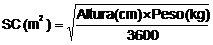
Cálculo de la superficie corporal (SC) para la dosificación pediátrica
Antes de preparar la perfusión, calcular la superficie corporal (SC) del paciente utilizando la siguiente fórmula: (Fórmula de Mosteller[1])
Preparación de laperfusiónde 70mg/m2para pacientes pediátricos de >3meses (utilizando un vial de 70mg)
- Determinar la dosis de carga real a utilizar en el paciente pediátrico utilizando la SC del paciente (tal y como se ha calculado arriba) y la siguiente ecuación:
SC (m2) X 70 mg/m2 = dosis de carga
La dosis de carga máxima en el día 1 no debe superar los 70 mg independientemente de la dosis que se haya calculado para el paciente.
- Esperar a que el vial refrigerado de Caspofungina Normon alcance la temperatura ambiente.
- Asépticamente, añadir 10,5 ml de agua para preparaciones inyectables.a Esta solución reconstituida se puede conservar hasta 24 horas a una temperatura igual o inferior a 25 °C.b Esto dará lugar a una concentración final de caspofungina en el vial de 7,2 mg/ml.
- Extraer del vial un volumen del medicamento igual a la dosis de carga calculada (Paso 1). Transferir asépticamente este volumen (ml)c de Caspofungina Normon reconstituido a una bolsa (o frasco) IV (intravenoso) que contenga 250 ml de solución inyectable de cloruro sódico al 0,9 % ó 0,225 %, o solución de Ringer lactada. Alternativamente, el volumen (ml)c de Caspofungina Normon reconstituido se puede añadir a un volumen reducido de solución inyectable de cloruro sódico al 0,9 % ó 0,225 %, o solución de Ringer lactada, sin superar una concentración final de 0,5 mg/ml. Esta solución para perfusión se debe utilizar en un plazo de 24 horas si se conserva a una temperatura igual o inferior a 25 °C o en un plazo de 48 horas si se conserva refrigerada entre 2 y 8 °C.
Preparación de la perfusión de 50mg/m2para pacientes pediátricos de >3meses (utilizando un vial de 70mg)
- Determinar la dosis diaria de mantenimiento real a utilizar en el paciente pediátrico utilizando la SC del paciente (tal y como se ha calculado arriba) y la siguiente ecuación:
SC (m2) X 50 mg/m2 = Dosis diaria de mantenimiento
La dosis diaria de mantenimiento no debe superar los 70 mg independientemente de la dosis calculada para el paciente.
- Esperar a que el vial refrigerado de Caspofungina Normon alcance la temperatura ambiente.
- Asépticamente, añadir 10,5 ml de agua para preparaciones inyectables.a Esta solución reconstituida se puede conservar hasta 24 horas a una temperatura igual o inferior a 25 °C.b Esto dará lugar a una concentración final de caspofungina en el vial de 7,2 mg/ml.
- Extraer del vial un volumen del medicamento igual a la dosis diaria de mantenimiento calculada (Paso 1). Transferir asépticamente este volumen (ml)c de Caspofungina Normon reconstituido a una bolsa (o frasco) IV que contenga 250 ml de solución inyectable de cloruro sódico al 0,9 % ó 0,225 %, o solución de Ringer lactada. Alternativamente, el volumen (ml)c de Caspofungina Normon reconstituido se puede añadir a un volumen reducido de solución inyectable de cloruro sódico al 0,9 % ó 0,225 %, o solución de Ringer lactada, sin superar una concentración final de 0,5 mg/ml. Esta solución para perfusión se debe utilizar en un plazo de 24 horas si se conserva a una temperatura igual o inferior a 25 °C o en un plazo de 48 horas si se conserva refrigerada entre 2 y 8 °C.
Notas de preparación:
- La torta de color blanco a blanquecino se va a disolver por completo. Mezclar suavemente hasta que se obtenga una solución transparente.
- Inspeccionar visualmente la solución reconstituida para ver si aparecen partículas sólidas o cambia de color durante la reconstitución y antes de la perfusión. No utilizar si la solución está turbia o ha precipitado.
- Caspofungina Normonestá formulado para proporcionar la dosis completa del vial que aparece en la ficha técnica (70 mg) cuando se extraen 10 ml del vial.
[1] Mosteller RD: Simplified Calculation of Body Surface Area. N Engl J Med1987 Oct 22;317(17):1098 (carta)
- País de registro
- Forma farmacéuticaINYECTABLE PERFUSION, 70 mg
- Código ATCJ02AX04
- Principio activo
- Requiere recetaSí
- Fabricante
- Esta información es de carácter general y no sustituye la consulta con un profesional sanitario.
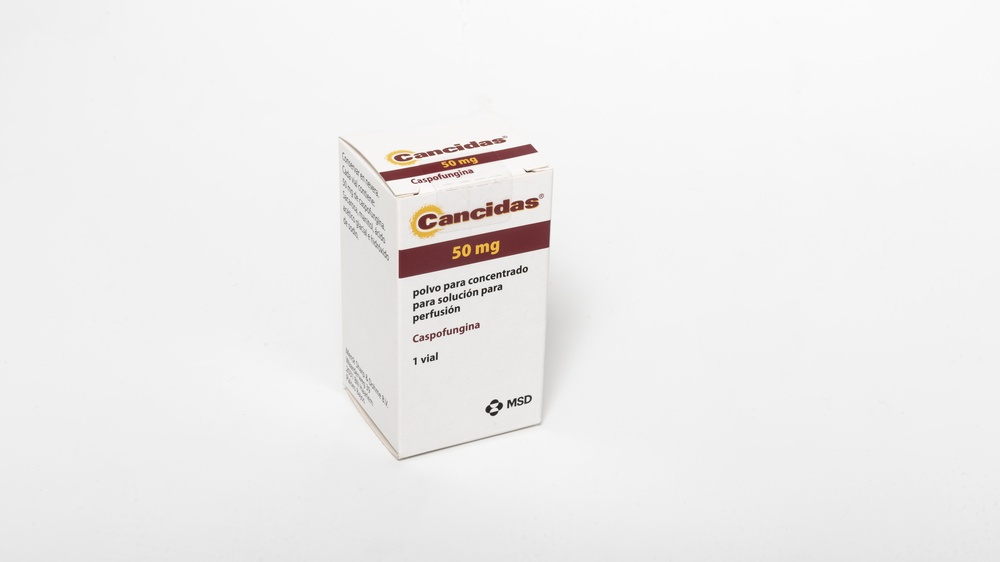
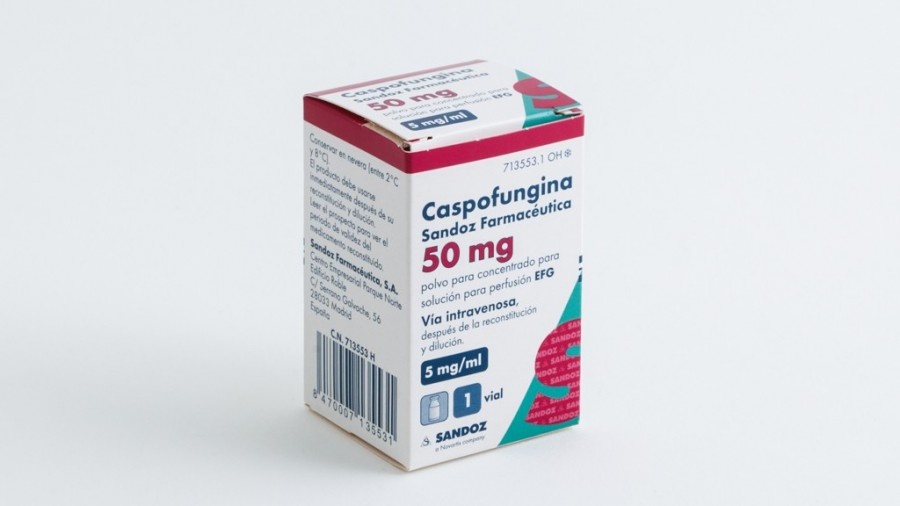
- Alternativas a CASPOFUNGINA NORMON 70 MG POLVO PARA CONCENTRADO PARA SOLUCION PARA PERFUSION EFGForma farmacéutica: INYECTABLE PERFUSION, DesconocidaPrincipio activo: CaspofunginaFabricante: Merck Sharp & Dohme B.V.Requiere recetaForma farmacéutica: INYECTABLE PERFUSION, DesconocidaPrincipio activo: CaspofunginaFabricante: Merck Sharp & Dohme B.V.Requiere recetaForma farmacéutica: INYECTABLE PERFUSION, 50 mgPrincipio activo: CaspofunginaFabricante: Demo S.A. Pharmaceutical IndustryRequiere receta

Médicos online para CASPOFUNGINA NORMON 70 MG POLVO PARA CONCENTRADO PARA SOLUCION PARA PERFUSION EFG
Comenta la dosis, los posibles efectos secundarios, interacciones, contraindicaciones o la revisión de receta de CASPOFUNGINA NORMON 70 MG POLVO PARA CONCENTRADO PARA SOLUCION PARA PERFUSION EFG, sujeto a valoración médica y a la normativa local.








.jpg)


Preguntas frecuentes
