



BERINERT 500 UI SOLUCIÓN INYECTABLE

Revisión de receta online
Un médico revisará tu caso y determinará si la prescripción es médicamente apropiada.

Habla con un médico sobre este medicamento
Comenta tus síntomas y las opciones de tratamiento en una consulta online.



Cómo usar BERINERT 500 UI POLVO Y DISOLVENTE PARA SOLUCION INYECTABLE Y PARA PERFUSION
Contenido del prospecto
- Introducción
- Qué es Berinert y para qué se utiliza
- Qué necesita saber antes de empezar a usar Berinert
- Cómo usar Berinert
- Posibles efectos adversos
- Conservación de Berinert
- Contenido del envase e información adicional
Introducción
Prospecto: información para el usuario
Berinert 500 UI
Polvo y disolvente para solución inyectable y para perfusión.
Inhibidor de la C1 esterasa humano
Lea todo el prospecto detenidamente antes de empezar a usar este medicamento.
- Conserve este prospecto, ya que puede tener que volver a leerlo.
- Si tiene alguna duda, consulte a su médico o farmacéutico.
- Este medicamento se le ha recetado solamente a usted y no debe dárselo a otras personas, aunque tengan los mismos síntomas que usted ya que puede perjudicarles.
- Si experimenta efectos adversos, consulte a su médico o farmacéutico, incluso si se trata de efectos adversos que no aparecen en este prospecto. Ver sección 4.
Contenido del prospecto
- Qué es Berinert y para qué se utiliza
- Qué necesita saber antes de empezar a usar Berinert
- Cómo usar Berinert
- Posibles efectos adversos
- Conservación de Berinert
- Contenido del envase e información adicional
1. Qué es Berinert y para qué se utiliza
¿Qué es Berinert ?
Berinert se presenta como polvo y disolvente. La solución preparada se debe administrar mediante inyección o perfusión en una vena.
Berinert se prepara a partir de plasma humano (la parte líquida de la sangre), el principio activo es la proteína inhibidora de la C1 esterasa humana, obtenida a partir del plasma.
¿Para qué se utiliza Berinert?
Berinert se utiliza para el tratamiento y prevención preoperatoria del angioedema hereditario de tipo I y II (AEH, edema = hinchazón). El angioedema hereditario es una enfermedad congénita del sistema vascular. AEH no es una enfermedad alérgica. AEH está causado por una síntesis insuficiente, ausente o defectuosa del inhibidor de la C1 esterasa, que es una proteína importante. La enfermedad se caracteriza por los síntomas siguientes:
- hinchazón repentina de manos y pies,
- hinchazón repentina de la cara con sensación de tirantez,
- hinchazón de los párpados, labios, posible hinchazón de la laringe (órgano de la voz) con dificultades respiratorias,
- hinchazón de la lengua,
- dolor de tipo cólico en la región abdominal.
Generalmente, todas las partes del cuerpo pueden verse afectadas.

¿No estás seguro de si este medicamento es adecuado para ti?
Comenta tus síntomas y tratamiento con un médico online.
2. Qué necesita saber antes de empezar a usar Berinert
Las secciones siguientes contienen información que su médico debería tener en consideración antes de administrarle Berinert.
No use Berinert:
- Si es alérgico a la proteína inhibidor de la C1 esterasa o a cualquiera de los demás componentes de este medicamento (incluidos en la sección 6).
Informe a su médico o farmacéutico si usted es alérgico a algún medicamento o a algún alimento.
Advertencias y precauciones
- Si ha sufrido reacciones alérgicas a Berinert en el pasado. Debe tomar antihistamínicos y corticosteroides como profilaxis, si es aconsejado por su médico.
- Cuando ocurran reacciones alérgicas o anafilácticas (reacción alérgica grave que produce graves dificultades respiratorias o mareos). La administración de Berinert debe interrumpirse inmediatamente (por ejemplo, interrumpiendo la perfusión).
- Si sufre hinchazón en la laringe (edema de laringe). Usted debe ser supervisado cuidadosamente y tener tratamiento de urgencia listo para ser usado.
- Durante el uso para el tratamiento de indicaciones y posologías para las que el medicamento no ha sido aprobado (por ejemplo, el Síndrome de extravasación capilar, SEC). Véase la sección 4. "Posibles efectos adversos".
Su médico sopesará minuciosamente el beneficio del tratamiento con Berinert comparando con el riesgo de padecer estas complicaciones.
Seguridad vírica
Cuando se administran medicamentos derivados de la sangre o plasma humanos, hay que llevar a cabo ciertas medidas para evitar que las infecciones pasen a los pacientes. Tales medidas incluyen:
- cuidadosa selección de los donantes de sangre y plasma para excluir a aquellos que están en riesgo de ser portadores de enfermedades infecciosas, y
- análisis de marcadores específicos de virus e infecciones en las donaciones individuales y en las mezclas de plasma,
Los fabricantes de estos productos también incluyen etapas en el procesado de la sangre o plasma para eliminar o inactivar virus. A pesar de esto, cuando se administran medicamentos derivados de la sangre o plasma humanos, la posibilidad de transmisión de agentes infecciosos no se puede excluir totalmente. Esto también se refiere a virus emergentes o de naturaleza desconocida u otro tipo de infecciones.
Las medidas aplicadas se consideran eficaces para los virus envueltos tales como el virus de inmunodeficiencia humano (VIH, el virus del SIDA), el virus de la hepatitis B, el virus de la hepatitis C (inflamación del hígado) y para virus no envueltos como el virus de la hepatitis A (inflamación del hígado) y el parvovirus B19.
Es posible que su médico le recomiende la vacunación contra la hepatitis A y B si usted se trata periódicamente/repetidamente con medicamentos derivados del plasma humano.
Se recomienda encarecidamente que cada vez que se administre Berinert, su médico registre la fecha de administración, el número de lote y el volumen inyectado.
Uso de Berinert con otros medicamentos
- Informe a su médico o farmacéutico si está utilizando, ha utilizado recientemente o pudiera tener que utilizar cualquier otro medicamento, incluso los medicamentos sin receta.
- Berinert no se debe mezclar con otros medicamentos y diluyentes en la misma jeringa o equipo de perfusión.
Embarazo y lactancia
- Si está embarazada o en periodo de lactancia, cree que podría estar embarazada o tiene intención de quedarse embarazada, consulte a su médico o farmacéutico antes de utilizar este medicamento.
- Durante el embarazo y la lactancia, Berinert sólo debe utilizarse si está claramente indicado.
Conducción y uso de máquinas
La influencia de Berinert sobre la capacidad para conducir y usar máquinas es nula o insignificante.
Berinert contiene sodio
Berinert contiene hasta 49 mg de sodio (componente principal de la sal de mesa/para cocinar) en cada vial. Esto equivale al 2,5% de la ingesta diaria máxima de sodio recomendada para un adulto.
3. Cómo usar Berinert
El tratamiento debe iniciarse y ser supervisado por un médico con experiencia en el tratamiento de la deficiencia del inhibidor de la C1 esterasa.
Posología
Adultos
Tratamiento de ataques de angioedema agudo:
20 UI por kilo de peso corporal (20 UI/kg de p.c.).
Prevención preoperatoria de ataques de angioedema agudo:
1000 UI antes de 6 horas de una intervención médica, dental o quirúrgica.
Población pediátrica
Tratamiento de ataques de angioedema agudo:
20 UI por kilo de peso corporal (20 UI/kg de p.c.).
Prevención preoperatoria de ataques de angioedema agudo:
De 15 a 30 UI por kilogramo de peso corporal (15-30 UI/kg de p.c.) antes de 6 horas de una intervención médica, dental o quirúrgica. La dosis debe escogerse teniendo en cuenta las circunstancias clínicas (por ejemplo, el tipo de intervención y la severidad de la enfermedad).
Si usa más Berinert del que debe
No se han descrito casos de sobredosis.
Reconstitución y forma de administración
Berinert se inyecta en vena (administración intravenosa), habitualmente por su médico o enfermera. Usted o su cuidador también pueden inyectar Berinert, pero sólo después de recibir una formación adecuada. Si su médico decide que usted puede tratarse en casa, éste le dará instrucciones detalladas. Se le entregará un diario donde anotará cada inyección administrada en casa, que lo llevará consigo cada vez que visite al médico. Se revisará regularmente a usted o a su cuidador cómo administran las inyecciones para asegurar que lo hacen correctamente a lo largo del tiempo.
Instrucciones generales
- El polvo debe disolverse y extraerse del vial bajo condiciones asépticas. Utilice la jeringa proporcionada con el producto.
- La solución preparada debe ser transparente y clara. Después de filtrar o trasvasar la solución (consulte más adelante), se debe comprobar visualmente que la solución no contenga partículas ni presente decoloración antes de administrarla.
- No use la solución si está visiblemente turbia o si contiene partículas o residuos.
- Cualquier cantidad del medicamento que no se haya usado o cualquier material residual debe eliminarse de acuerdo con la normativa local y siguiendo las instrucciones de su médico.
Reconstitución
Antes de abrir cualquier vial, atempere el polvo Berinert y el disolvente hasta que estén a temperatura ambiente. Para conseguirlo, puede dejar los viales a temperatura ambiente durante aproximadamente una hora o bien puede tenerlos en las manos cerradas durante unos minutos. NO exponga los viales al calor directo. Los viales no se deben calentar a una temperatura superior a la del cuerpo (37 °C).
Retire con cuidado las cápsulas protectoras del vial del disolvente y del vial con el polvo. Limpie los tapones de goma expuestos de ambos viales con una toallita impregnada en alcohol y déjelos secar. Ahora puede transferir el disolvente al vial del polvo con el sistema de administración incluido (Mix2Vial). Por favor, siga las instrucciones siguientes:
|
|
|
|
|
|
|
|
|
Deseche el vial del disolvente con el adaptador azul del Mix2Vial acoplado. |
|
|
|
|
 1
1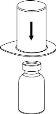 2
2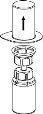 3
3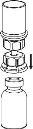 4
4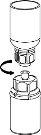 5
5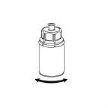 6
6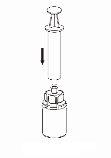 7
7Transvase de la solución reconstituida a la jeringa y administración
8 |
|
9 |
|
Administración
La solución debe administrarse por vía intravenosa (v. i.) lenta, bien por inyección, bien por perfusión (4 ml/minuto).

¿Has empezado a tomar el medicamento y tienes preguntas?
Comenta tus síntomas y tratamiento con un médico online.
4. Posibles efectos adversos
Al igual que todos los medicamentos, este medicamento puede producir efectos adversos, aunque no todas las personas los sufran.
Póngase inmediatamente en contacto con su médico
- si se produce cualquier efecto adverso o
- si advierte cualquier efecto adverso no mencionado en este prospecto.
Los efectos adversos con Berinert son raros.
Los efectos adversos siguientes se han observado raramente (entre 1 y 10 de cada 10.000 personas/pacientes):
? Hay un mayor riesgo de trombosis (formación de coágulos de sangre) en intentos de tratamiento profiláctico o terapéutico del Síndrome de extravasación capilar (salida de fluido de los vasos sanguíneos pequeños hacia los tejidos), por ejemplo, durante y después de cirugía cardiaca con circulación extracorpórea. Véase la sección 2.“Advertencias y precauciones”.
- Incremento de la temperatura corporal, así como quemazón y picor en el lugar donde se administró la inyección.
- Reacciones de hipersensibilidad o alérgicas (como por ejemplo frecuencia cardiaca irregular, el corazón late más rápido, caída de la presión sanguínea, enrojecimiento de la piel, exantema, dificultades respiratorias, dolor de cabeza, mareos, sentirse enfermo).
En casos muy raros (menos de 1 de cada 10.000 pacientes/personas o casos aislados) las reacciones alérgicas pueden llegar al shock.
Comunicación de efectos adversos
Si experimenta cualquier tipo de efecto adverso, consulte a su médico o farmacéutico, incluso si se trata de posibles efectos adversos que no aparecen en este prospecto. También puede comunicarlos directamente a través del Sistema Español de Farmacovigilancia de Medicamentos de Uso Humano: www.notificaRAM.es. Mediante la comunicación de efectos adversos usted puede contribuir a proporcionar más información sobre la seguridad de este medicamento.
5. Conservación de Berinert
- Mantener este medicamento fuera de la vista y del alcance de los niños.
- No utilice Berinert después de la fecha de caducidad, que aparece en la etiqueta y en el envase de cartón.
- No conservar a temperatura superior a 30 °C.
- No congelar.
- Conservar el envase en el embalaje para protegerlo de la luz.
- Berinert no contiene conservantes, de modo que es preferible que la solución preparada se utilice inmediatamente.
- Si la solución preparada no se administra inmediatamente, se deberá utilizar en el plazo de 8 horas. El producto reconstituido sólo se debe conservar en el vial.
6. Contenido del envase e información adicional
Composición de Berinert
El principio activo es:
Inhibidor de la C1 esterasa humano (500 UI/vial; después de la reconstitución: 50 UI/ml)
Para más información ver la sección “Estainformación está destinada únicamente a profesionales del sector sanitario”.
Los demás componentes son:
Glicina, cloruro sódico, citrato sódico.
Consulte el último párrafo de la sección 2. "Berinert contiene sodio”.
Disolvente:agua para preparaciones inyectables.
Aspecto del producto y contenido del envase
Berinert se presenta como un polvo blanco y se suministra con agua para preparaciones inyectables como disolvente.
La solución preparada debe ser transparente y clara.
Presentación
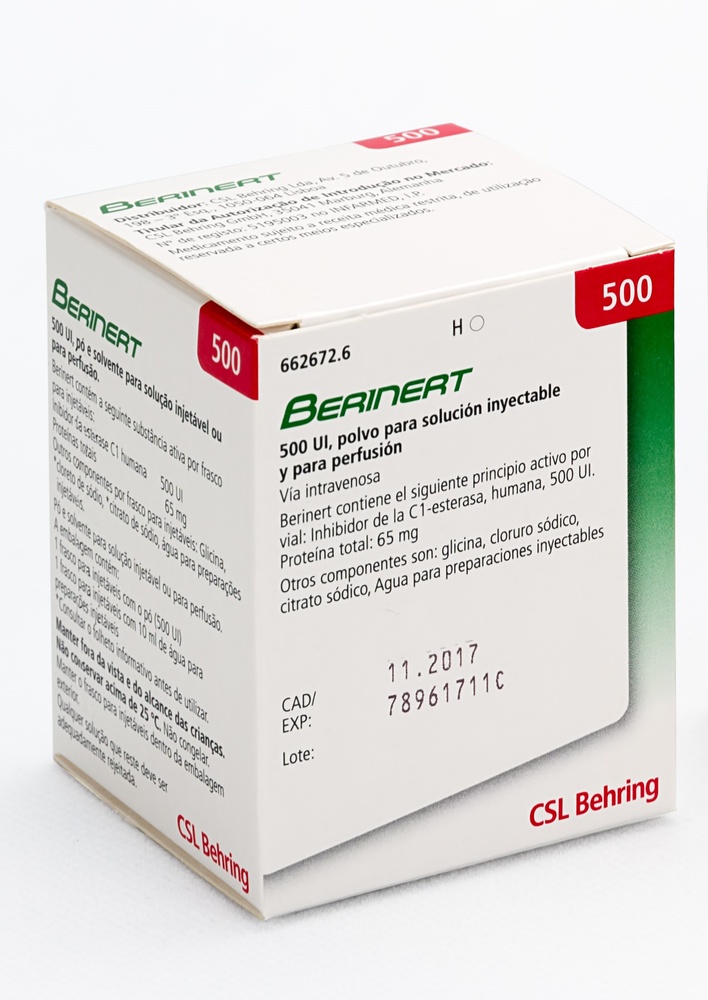
Caja con 500 UI contiene:
1 vial con polvo (500 UI)
1 vial con 10 ml de agua para preparaciones inyectables
1 trasvasador con filtro 20/20
Equipo de administración (caja interior):
1 jeringa de 10 ml de un solo uso
1 equipo para venopunción
2 toallitas con alcohol
1 apósito
Titular de la autorización de comercialización y responsable de la fabricación
CSL Behring GmbH
Emil von Behring Strasse, 76
35041 Marburg, Alemania
Pueden solicitar más información respecto a este medicamento dirigiéndose al representante local del titular de la autorización de comercialización:
CSL Behring S.A.
c/ Tarragona 157, planta 18
08014 Barcelona
España
Este medicamento está autorizado en los estados miembros del Espacio Económico Europeoy en el Reino Unido (Irlanda del Norte)con los siguientes nombres:
Berinert 500 IE Pulver und
Lösungsmittel zur Herstellung einer
Injektions- oder Infusionslösung Austria
Berinert 500 Bélgica, Chipre, Alemania, Grecia, Luxemburgo, Polonia, Portugal
Berinert 500, 500 IU Powder and solvent
for solution for injection/infusion Bulgaria
Berinert 500 IU República Checa, Eslovaquia
Berinert Dinamarca, Italia
Berinert 500 IU, injektio/infuusiokuiva-aine
ja liuotin, liuosta varten Finlandia
Berinert 500 UI, poudre et solvant pour
solution injectable/perfusion Francia
Berinert 500 NE por és oldószer
oldatos injekcióhoz vagy infúzióhoz Hungría
Berinert 500 IU pulver og væske til
injeksjons-/infusjonsvæske, oppløsning Noruega
Berinert 500 UI, pulbere si solvent
pentru solutie injectabila/perfuzabila Rumanía
Berinert 500 i.e. prašek in vehikel za
raztopino za injiciranje ali infundiranje Eslovenia
Berinert 500 UI Polvo y disolvente para solución
inyectable y para perfusión España
Berinert 500 IE, pulver och vätska till
injektions-/infusionsvätska, lösning_____ Suecia
Berinert 500 UI powder and solvent
for solution for injection/infusion Reino Unido
Fecha de la última revisión de este prospecto:Octubre 2021
La información detallada y actualizada de este medicamento está disponible en la página Web de la Agencia Española de Medicamentos y Productos Sanitarios (AEMPS) http://www.aemps.gob.es
Estainformación está destinada únicamente a profesionales del sector sanitario
COMPOSICIÓN CUALITATIVA Y CUANTITATIVA
La potencia del inhibidor de la C1 esterasa humano se expresa en Unidades Internacionales (UI), que está relacionado con el actual estándar de la OMS para los productos inhibidores de la C1 esterasa.
- País de registro
- Forma farmacéuticaINYECTABLE, 500 U
- Código ATCB06AC01
- Principio activo
- Requiere recetaSí
- Fabricante
- ComposiciónCLORURO DE SODIO (70-11 mg mg)
- Esta información es de carácter general y no sustituye la consulta con un profesional sanitario.
- Alternativas a BERINERT 500 UI POLVO Y DISOLVENTE PARA SOLUCION INYECTABLE Y PARA PERFUSIONForma farmacéutica: INYECTABLE, 1500 UIPrincipio activo: c1-inhibitor, plasma derivedFabricante: Csl Behring GmbhRequiere recetaForma farmacéutica: INYECTABLE, 2000 IUPrincipio activo: c1-inhibitor, plasma derivedFabricante: Csl Behring GmbhRequiere recetaForma farmacéutica: INYECTABLE, 3000 IUPrincipio activo: c1-inhibitor, plasma derivedFabricante: Csl Behring GmbhRequiere receta
Médicos online para BERINERT 500 UI POLVO Y DISOLVENTE PARA SOLUCION INYECTABLE Y PARA PERFUSION
Comenta la dosis, los posibles efectos secundarios, interacciones, contraindicaciones o la revisión de receta de BERINERT 500 UI POLVO Y DISOLVENTE PARA SOLUCION INYECTABLE Y PARA PERFUSION, sujeto a valoración médica y a la normativa local.









Obtén una receta de BERINERT 500 UI POLVO Y DISOLVENTE PARA SOLUCION INYECTABLE Y PARA PERFUSION online
Rellena un formulario de 2 minutos
Cuéntanos tus síntomas, historial y el medicamento que necesitas.
Elige un médico o nosotros te asignamos uno
Escoge un especialista o te conectamos con el próximo médico disponible.
El médico revisa tu caso
Normalmente en 30 minutos. Puede hacerte preguntas adicionales por chat.
Recógela en cualquier farmacia
Receta electrónica enviada a tu correo, válida en toda España.
Preguntas frecuentes
BERINERT 500 UI POLVO Y DISOLVENTE PARA SOLUCION INYECTABLE Y PARA PERFUSION requiere receta en España. Puedes confirmarlo con un médico online según tu caso.
El principio activo de BERINERT 500 UI POLVO Y DISOLVENTE PARA SOLUCION INYECTABLE Y PARA PERFUSION es c1-inhibitor, plasma derived. Esta información ayuda a identificar medicamentos con la misma composición pero con diferentes nombres comerciales.
BERINERT 500 UI POLVO Y DISOLVENTE PARA SOLUCION INYECTABLE Y PARA PERFUSION es fabricado por Csl Behring Gmbh. La marca y el envase pueden variar según el distribuidor.
Los Médicos de familia, Psiquiatras, Dermatólogos, Cardiólogos, Endocrinólogos, Gastroenterólogos, Neumólogos, Nefrólogos, Reumatólogos, Hematólogos, Infectólogos, Alergólogos, Geriatras, Pediatras, Oncólogos pueden valorar la prescripción de BERINERT 500 UI POLVO Y DISOLVENTE PARA SOLUCION INYECTABLE Y PARA PERFUSION cuando esté clínicamente indicado. Puedes reservar una videoconsulta para comentar tu caso y las opciones de tratamiento.
España cuenta con una infraestructura sanitaria bien desarrollada en ciudades principales como Madrid, Barcelona, Valencia y Sevilla. Las farmacias están ampliamente disponibles y operan bajo estrictas regulaciones, garantizando el acceso a medicamentos con receta.
Puedes comprar BERINERT 500 UI POLVO Y DISOLVENTE PARA SOLUCION INYECTABLE Y PARA PERFUSION en Madrid, Barcelona, Sevilla o Valencia en cualquier farmacia local con una receta válida.
Para obtener una receta, puedes utilizar Oladoctor:
Otros medicamentos con el mismo principio activo (c1-inhibitor, plasma derived) incluyen BERINERT 1500 UI POLVO Y DISOLVENTE PARA SOLUCION INYECTABLE, BERINERT 2000 UI POLVO Y DISOLVENTE PARA SOLUCION INYECTABLE SUBCUTANEA, BERINERT 3000 UI POLVO Y DISOLVENTE PARA SOLUCION INYECTABLE SUBCUTANEA. Pueden tener diferentes nombres comerciales o formulaciones, pero contienen el mismo componente terapéutico. Consulta siempre con un médico antes de cambiar o iniciar un nuevo medicamento.
