






Cómo usar AZITROMICINA SANDOZ 500 MG COMPRIMIDOS RECUBIERTOS CON PELÍCULA EFG
Traducción generada por IA
Este contenido ha sido traducido automáticamente y se ofrece solo con fines informativos. No sustituye la consulta con un profesional sanitario.
Ver originalContenido del prospecto
Introducción
Prospecto: información para el usuario
Azitromicina Sandoz 500 mg comprimidos recubiertos con película EFG
Lea todo el prospecto detenidamente antes de empezar a tomar este medicamento porque contiene información importante para usted
- Conserve este prospecto, ya que puede tener que volver a leerlo.
- Si tiene alguna duda, consulte a su médico o farmacéutico.
- Este medicamento se le ha recetado solamente a usted, y no debe dárselo a otras personas, aunque tengan los mismos síntomas que usted, ya que puede perjudicarles.
- Si experimenta efectos adversos, consulte a su médico o farmacéutico, incluso si se trata de efectos adversos que no aparecen en este prospecto. Ver sección 4.
Contenido del prospecto
- Qué es Azitromicina Sandoz y para qué se utiliza
- Qué necesita saber antes de empezar a tomar Azitromicina Sandoz
- Cómo tomar Azitromicina Sandoz
- Posibles efectos adversos
- Conservación de Azitromicina Sandoz
- Contenido del envase e información adicional
1. Qué es Azitromicina Sandoz y para qué se utiliza
Azitromicina pertenece a un grupo de antibióticos denominados antibióticos macrólidos. Elimina bacterias causantes de infecciones.
|
Se utiliza para el tratamiento de infecciones causadas por bacterias en diferentes partes del cuerpo, en adultos y en niños con un peso superior a 45 kg.
Este medicamento se usa para el tratamiento de las siguientes infecciones bacterianas: infecciones de garganta, amígdalas, oídos o senos paranasales,
- bronquitis y neumonía (de gravedad leve a moderada),
- infecciones de piel y tejidos blandos (de gravedad leve a moderada),
- infecciones de la uretra (uretritis) o del cuello del útero (cervicitis), ver sección 3,
infecciones de transmisión sexual (chancroide), ver sección 3.

2. Qué necesita saber antes de empezar a tomar Azitromicina Sandoz
No tome Azitromicina Sandoz:
- si es alérgico a azitromicina, eritromicina, a otro antibiótico macrólido o ketólido o a alguno de los demás componentes de este medicamento (incluidos en la sección 6).
Advertencias y precauciones
Consulte a su médico o farmacéutico antes de empezar a tomar Azitromicina Sandoz.
- Durante el tratamiento con azitromicina, pueden aparecer reacciones de tipo alérgico (picor, enrojecimiento, erupción de la piel, hinchazón o dificultad al respirar o una reacción alérgica al medicamento caracterizada por aumentar los glóbulos blancos en sangre y síntomas generalizados) que podrían ser graves. Informe a su médico quien puede decidir interrumpir el tratamiento e instaurar el tratamiento adecuado.
- Si padece problemas hepáticos o durante el tratamiento su piel y/o el blanco de sus ojos se vuelve de color amarillento, coméntelo con su médico para que le confirme si debe interrumpir el tratamiento o si tiene que realizarle pruebas de la función hepática.
- Si está en tratamiento con derivados ergotamínicos (utilizados para el tratamiento de la migraña), informe a su médico ya que el tratamiento conjunto con azitromicina puede producir una reacción adversa denominada ergotismo.
- Durante el tratamiento con este medicamento existe la posibilidad de que se produzca una sobreinfección por gérmenes resistentes, incluidos los hongos. En este caso, informe a su médico.
- Durante o después del tratamiento con azitromicina, pueden aparecer síntomas que sugieran colitis (diarrea) asociada a antibióticos. Si es así, el tratamiento se debe suspender y su médico le pondrá el tratamiento que considere más adecuado.
- Si padece alguna alteración grave de la función de los riñones,informe a su médico.
- Si padece alteraciones del ritmo de los latidos del corazón (arritmias) o factores que le predispongan a padecerlas (ciertas enfermedades del corazón, alteraciones del nivel de electrolitos en la sangre o ciertos medicamentos) informe a su médico, ya que este medicamento puede contribuir a agravar o desencadenar estas alteraciones.
- Si padece una enfermedad llamada miastenia gravis o si aparece debilidad y fatiga muscular durante el tratamiento, informe a su médico, ya que azitromicina puede desencadenar o agravar los síntomas de esta enfermedad.
Niños y adolescentes
Niños y adolescentes con un peso inferior a 45 kg.
Los comprimidos no están indicados para este grupo de pacientes. Se pueden usar otras formas farmacéuticas que contienen azitromicina. No se debe administrar a menores de 6 meses.
Niños y adolescentes con un peso superior a 45 kg.
Este medicamento no es adecuado para niños que no sean capaces de tragar los comprimidos enteros. Se pueden usar otras formas farmacéuticas que contienen azitromicina.
Otros medicamentos y Azitromicina Sandoz
Informe a su médico o farmacéutico si está tomando, ha tomado recientemente o pudiera tener que tomar cualquier otros medicamento.
Especialmente debe avisar a su médico o farmacéutico si está en tratamiento con alguno de los siguientes medicamentos:
- antiácidos (medicamentos que se utilizan en problemas digestivos). se recomienda evitar la administración simultánea de ambos medicamentos a la misma hora del día,
- derivados ergotamínicos (como ergotamina, para el tratamiento de la migraña), ya que la administración simultánea con azitromicina puede originar ergotismo (efecto adverso potencialmente,
- grave con adormecimiento o sensación de hormigueo en las extremidades, calambres musculares, dolores de cabeza, convulsiones o dolor abdominal o de pecho),
- digoxina (un medicamento utilizado para el tratamiento de arritmias del corazón) ya que azitromicina puede elevar los niveles de digoxina en sangre y sus niveles se deben monitorizar,
- colchicina (utilizada para la gota y la fiebre mediterránea familiar),
- ciclosporina (un medicamento usado en pacientes trasplantados) ya que azitromicina puede elevar los niveles de ciclosporina en sangre y sus niveles deben monitorizarse,
- anticoagulantes dicumarínicos (medicamentos utilizados para prevenir la aparición de coágulos de sangre) ya que azitromicina puede potenciar el efecto de dichos anticoagulantes. su médico debe controlar los parámetros de la coagulación (tiempo de protrombina),
- nelfinavir, zidovudina (medicamentos para el tratamiento de infecciones causadas por el virus de la inmunodeficiencia humana), ya que se pueden ver aumentados los niveles de azitromicina en sangre,
- fluconazol (medicamentos para el tratamiento de infecciones por hongos), ya que se pueden ver aumentados los niveles de azitromicina en sangre,
- terfenadina (un medicamento que se usa para el tratamiento de alergias) ya que la combinación de ambos puede producir problemas del corazón,
- rifabutina (un medicamento para el tratamiento de la tuberculosis pulmonar y de infecciones no pulmonares producidas por micobacterias) ya que puede producir un descenso del número de glóbulos blancos en sangre,
- medicamentos con sustancias activas que prolonguen el intervalo QT, tales como antiarrítmicos de clase IA (quinidina y procainamida) y clase III (dofetilida, amiodarona y sotalol), cisaprida, terfenadina, agentes antipsicóticos (como pimozida), antidepresivos (como citalopram) y antiinfecciosos (fluoroquinolonas como moxifloxacino o levofloxacino e hidroxicloroquina o cloroquina), ya que puede producir alteraciones graves del ritmo cardíaco e incluso producir paradas cardiacas.
No se han observado interacciones entre azitromicina y cetirizina (para el tratamiento de reacciones alérgicas); didanosina, efavirenz, indinavir (para el tratamiento de la infección por VIH); atorvastatina (para el tratamiento del colesterol elevado y problemas de corazón); carbamazepina (para el tratamiento de la epilepsia), cimetidina (para el tratamiento del exceso de ácido en el estómago); metilprednisolona (para suprimir el sistema inmune); teofilina (para problemas respiratorios); midazolam, triazolam (para producir sedación); sildenafilo (para el tratamiento de la impotencia) y trimetoprima/sulfametoxazol (para el tratamiento de las infecciones).
Uso de Azitromicina Sandoz con alimentos y bebidas
Los comprimidos deben ser ingeridos enteros con agua y se pueden tomar con o sin comida.
Embarazo, lactancia y fertilidad
Si está embarazada o en periodo de lactancia, cree que podría estar embarazada o tiene intención de quedarse embarazada, consulte a su médico o farmacéutico antes de utilizar este medicamento.
No hay suficiente información respecto a la seguridad de azitromicina durante el embarazo. Por consiguiente, no se recomienda el uso de azitromicina si está embarazada, o desea quedarse embarazada, a menos que sea estrictamente necesario según el criterio médico.
Azitromicina se excreta en la leche materna. Debido a las potenciales reacciones adversas en el lactante, no se recomienda el uso de azitromicina durante la lactancia, si bien puede continuar la lactancia dos días después de finalizar el tratamiento con azitromicina.
Conducción y uso de máquinas
La influencia de este medicamento sobre la capacidad de conducir o utilizar máquinas es nula o insignificante.
Azitromicina Sandoz contiene lactosa y sodio
Si su médico le ha indicado que padece una intolerancia a ciertos azúcares, consulte con él antes de tomar este medicamento.
Este medicamento contiene menos de 1 mmol de sodio (23 mg) por comprimido; esto es, esencialmente “exento de sodio”.
3. Cómo tomar Azitromicina Sandoz
Siga exactamente las instrucciones de administración del medicamento contenidas en este prospecto o las indicadas por su médico. En caso de duda, consulte a su médico o farmacéutico.
Su médico establecerá la dosis y duración del tratamiento más adecuada para usted, de acuerdo a su estado y a la respuesta al tratamiento. Como norma general, la dosis recomendada de medicamento y la frecuencia de administración es la siguiente:
Adultos (incluyendo pacientes de edad avanzada) y niños con peso superior a 45 kg:
La dosis habitual es 1500 mg dividida en 3 o 5 días como sigue:
- Cuando se toma durante 3 días, 500 mg al día.
- Cuando se toma durante 5 días, 500 mg el primer día y 250 mg desde el 2º al 5º día.
En los pacientes de edad avanzada se puede administrar la misma dosis que en el caso de los adultos. No obstante, en el caso de ser pacientes con alteraciones en el ritmo cardiaco, su médico le realizará un estrecho seguimiento.
Infección de la uretra o de cérvix (cervicitis):
La dosis habitual es de 1.000 mg tomados como dosis única, en un sólo día.
En caso de que la infección esté causada por N. gonorrohea, su médico le administrará la misma dosis en combinación con otro antibiótico (ceftriaxona (250 mg)).
Chancroide:
La dosis habitual es de 1.000 mg tomados como dosis única, en un sólo día.
Sinusitis:
El tratamiento está indicado en adultos y adolescentes mayores de 16 años.
Niños y adolescentes de menos de 45 kg de peso:
Los comprimidos no están recomendados para estos pacientes. Se pueden usar otras formas farmacéuticas de azitromicina.
Insuficiencia hepática
Informe a su médico si padece problemas graves de hígado, ya que podría ser necesario ajustar la dosis normal.
Insuficiencia renal
Informe a su médico si padece problemas graves de riñón, ya que podría ser necesario ajustar la dosis normal.
Forma de administración
Vía oral.
Este medicamento se debe administrar como una dosis diaria única. Los comprimidos se deben ingerir enteros con agua y se pueden tomar con o sin comida.
Si toma más Azitromicina Sandoz del que debe
En caso de sobredosis, podría experimentar pérdida reversible de la audición, náusea intensa, vómitos y diarrea.
En caso de sobredosis o de ingestión accidental, consulte inmediatamente a su médico o farmacéutico o llame al Servicio de Información Toxicológica en el 91 562 04 20 indicando el medicamento y la cantidad ingerida. Se recomienda llevar el envase y el prospecto del medicamento al profesional sanitario.
Información para el prescriptor
En caso de sobredosis, está indicada la administración de carbón activo y se deben aplicar las medidas sintomáticas y de soporte general de las funciones vitales
Si olvidó tomar Azitromicina Sandoz
En caso de olvido de una dosis utilice el medicamento lo antes posible continuando con el tratamiento de la forma prescrita. Sin embargo, si está próxima la siguiente dosis, es mejor que no tome la dosis olvidada y espere a la siguiente.
No tome una dosis doble para compensar las dosis olvidadas. Continúe tomando azitromicina tal y como le ha indicado su médico.
Si interrumpe el tratamiento con Azitromicina Sandoz
Si abandona el tratamiento con azitromicina antes de lo que su médico le ha recomendado, los síntomas pueden empeorar o reaparecer.
Si tiene cualquier otra duda sobre el uso de este medicamento, pregunte a su médico o farmacéutico.

4. Posibles efectos adversos
Al igual que todos los medicamentos, este medicamento puede producir efectos adversos, aunque no todas las personas los sufran.
Los efectos adversos notificados durante los ensayos clínicos y después de la comercialización clasificados por frecuencia son:
Efectos adversosmuy frecuentes (pueden afectar a más de 1 de cada 10 personas):
- diarrea.
Efectos adversosfrecuentes (pueden afectar hasta 1 de cada 10 personas):
- dolor de cabeza,
- vómitos, dolor abdominal, náusea,
- alteración del número de algunos tipos de glóbulos blancos (linfocitos, eosinófilos, basófilos, monocitos y neutrófilos),
- disminución del bicarbonato en sangre.
Efectos adversospoco frecuentes (pueden afectar hasta 1 de cada 100 personas):
- infección por el hongo Candidaen la boca o generalizada, infección de la vagina, neumonía, infección por hongos o bacterias, faringitis, gastroenteritis, alteración de la respiración, rinitis,
- disminución del número de algunos tipos de glóbulos blancos (leucocitos, neutrófilos y eosinófilos),
- reacción alérgica, incluyendo un proceso inflamatorio de la zona profunda de la piel (angioedema),
- alteración de la conducta alimentaria (anorexia),
- nerviosismo, insomnio,
- somnolencia, mareo, alteración del gusto, pérdida de la sensación táctil,
- alteración de la visión,
- alteración de la audición, vértigo,
- palpitaciones,
- sofocos,
- alteración de la respiración, hemorragia de la nariz,
- estreñimiento, flatulencia, indigestión, gastritis, dificultad para tragar, distensión abdominal, boca seca, eructos, ulceras en la boca, aumento de la salivación,
- erupción, prurito, aparición de ronchas rojizas elevadas, dermatitis, piel seca, sudoración excesiva, enrojecimiento,
- inflamación de las articulaciones, dolor muscular, dolor de espalda, dolor de cuello,
- dificultad al orinar, dolor en los riñones,
- hemorragia vaginal, alteración en los testículos,
- hinchazón generalizada, debilidad, malestar, cansancio, edema en la cara, dolor de pecho, fiebre, dolor e hinchazón de las extremidades,
- alteración de las pruebas de función hepática (aumento de las enzimas hepáticas got, gpt y fosfatasa alcalina) y aumento de la bilirrubina, urea, creatinina, cloruro, glucosa, bicarbonato y plaquetas en sangre, alteración de los niveles de sodio y potasio, disminución del hematocrito,
- complicaciones tras intervención quirúrgica.
Efectos adversosraros (pueden afectar hasta 1 de cada 1.000 personas):
- agitación,
- alteración de la función hepática, coloración amarillenta de la piel,
- sensibilidad a la exposición solar (fotosensibilidad), reacción al medicamento con aumento de un tipo de glóbulos blancos (eosinofilia) y síntomas generalizados (compromiso multiorgánico) (síndrome DRESS),
- erupción cutánea que se caracteriza por la rápida aparición de zonas de piel roja salpicadas de pequeñas pústulas (pequeñas ampollas llenas de un líquido blanco/amarillo).
Efectos adversosde frecuencia no conocida(no se puede estimar la frecuencia a partir de los datos disponibles):
- diarrea producida por el Clostridium difficile,
- disminución del número de plaquetas en sangre, anemia,
- reacción alérgica severa,
- reacciones de agresividad, ansiedad, delirio, alucinaciones,
- pérdida de consciencia, convulsiones, disminución de la sensibilidad, hiperactividad, alteración y/o pérdida del olfato, pérdida del gusto, debilidad y fatiga muscular (miastenia gravis),
- alteración de la audición incluyendo sordera y pitidos,
- torsade de pointes alteraciones del ritmo cardiaco, prolongación del intervalo QTc en el electrocardiograma,
- disminución de la tensión arterial,
- inflamación del páncreas, cambio de color de la lengua,
- lesiones graves del hígado y fallo hepático que raramente pueden ser mortales, muerte del tejido hepático, hepatitis fulminante,
- aparición de ronchas rojizas elevadas, erupción generalizada con ampollas y piel descamada, que ocurre especialmente alrededor de la boca, nariz, ojos y genitales (Síndrome de Stevens Johnson), reacciones cutáneas graves como eritema multiforme, necrolisis tóxica epidérmica.
- dolor en las articulaciones,
- fallo agudo de los riñones e inflamación del tejido entre los túbulos renales (nefritis intersticial).
Comunicación de efectos adversos
Si experimenta cualquier tipo de efecto adverso, consulte a su médico o farmacéutico, incluso si se trata de posibles efectos adversos que no aparecen en este prospecto. También puede comunicarlos a través del Sistema Español de Farmacovigilancia de Medicamentos de Uso Humano: https://www.notificaram.es. Mediante la comunicación de efectos adversos usted puede contribuir a proporcionar más información sobre la seguridad de este medicamento.
5. Conservación de Azitromicina Sandoz
Mantener este medicamento fuera de la vista y del alcance de los niños.
No requiere condiciones especiales de conservación.
No utilice este medicamento después de la fecha de caducidad que aparece en el envase, después de CAD/EXP. La fecha de caducidad es el último día del mes que se indica.
Los medicamentos no se deben tirar por los desagües ni a la basura. Deposite los envases y los medicamentos que no necesita en el Punto SIGRE de la farmacia. En caso de duda pregunte a su farmacéutico cómo deshacerse de los envases y de los medicamentos que no necesita. De esta forma ayudará a proteger el medio ambiente.
6. Contenido del envase e información adicional
Composición de Azitromicina Sandoz
- El principio activo es azitromicina. Cada comprimido contiene 500 mg de azitromicina (como dihidrato).
- Los demás componentes (excipientes) son:
Núcleo: almidón de maiz pregelatinizado, crospovidona, hidrogenofosfato de calcio anhidro, laurisulfato de sodio, estearato de magnesio.
Recubrimiento: hidroxipropilmetilcelulosa (hipromelosa) (E-464), dióxido de titanio (E171), lactosa monohidrato y triacetina (E-1518).
Aspecto del producto y contenido del envase
Los comprimidos se acondicionan en blisteres de PVC/Aluminio.
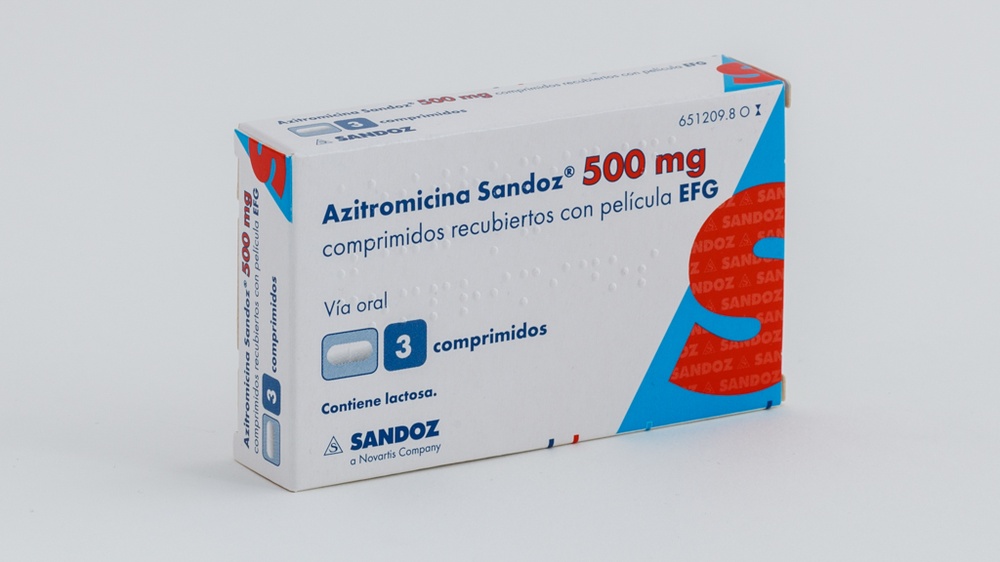
Azitromicina Sandoz 500 mg comprimidos recubiertos con película son comprimidos de color blanco y de forma capsular con línea transversal en una sola cara.
Se presenta en envases de 3 y 150 comprimidos (envase clínico).
Puede que solamente estén comercializados algunos tamaños de envases.
Titular de la autorización de comercialización y responsable de la fabricación
Titular de la autorización de comercialización:
Sandoz Farmacéutica, S.A.Centro Empresarial Parque Norte
Edificio Roble
C/ Serrano Galvache, 56
28033 Madrid
España
Responsable de la fabricación:
Kern Pharma, S.L.
Polígono Ind. Colón II Venus, 72
08228 Terrassa (Barcelona)
España
Fecha de la última revisión de este prospecto:mayo 2022
La información detallada de este medicamento está disponible en la página web de la Agencia Española de Medicamentos y Productos Sanitarios (AEMPS) http://www.aemps.gob.es
-

- País de registro
- Forma farmacéuticaCOMPRIMIDO, 500 mg
- Código ATCJ01FA10
- Precio medio en farmacia5.62 EUR
- Principio activo
- Requiere recetaSí
- Fabricante
- Esta información es de carácter general y no sustituye la consulta con un profesional sanitario.
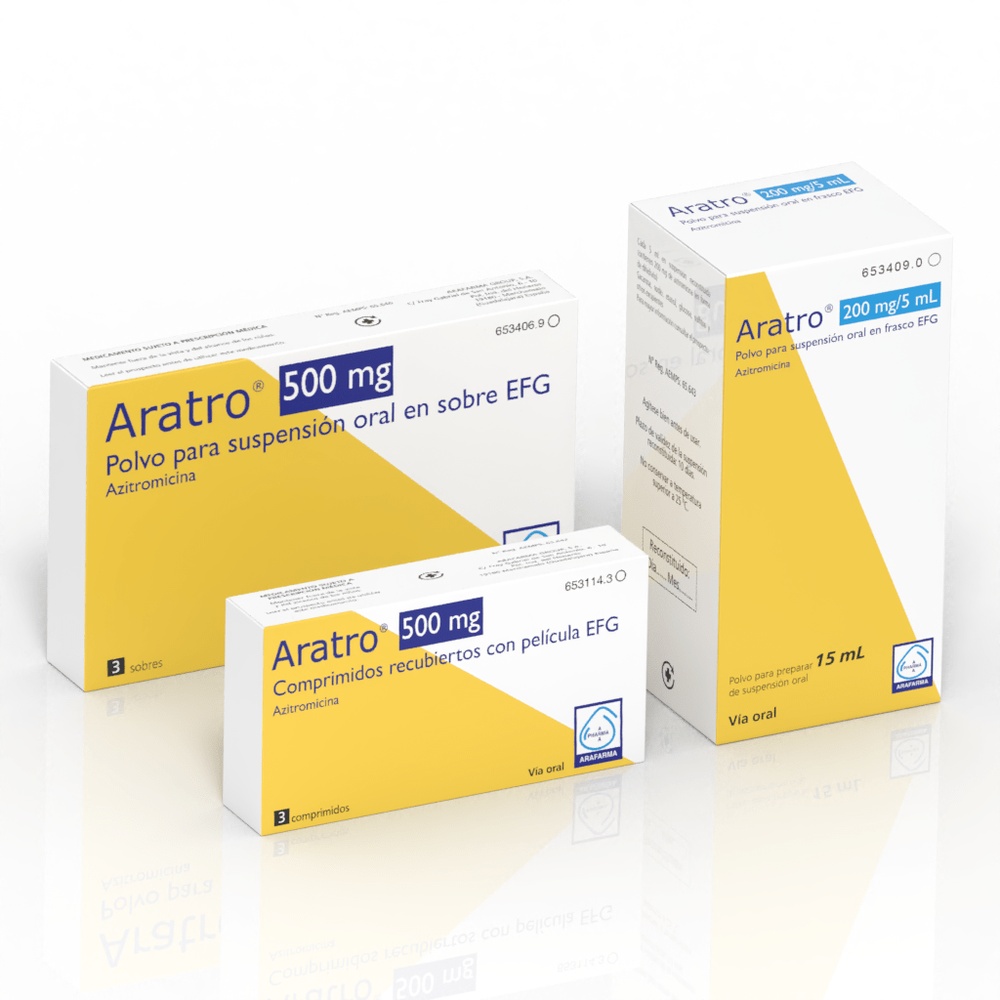
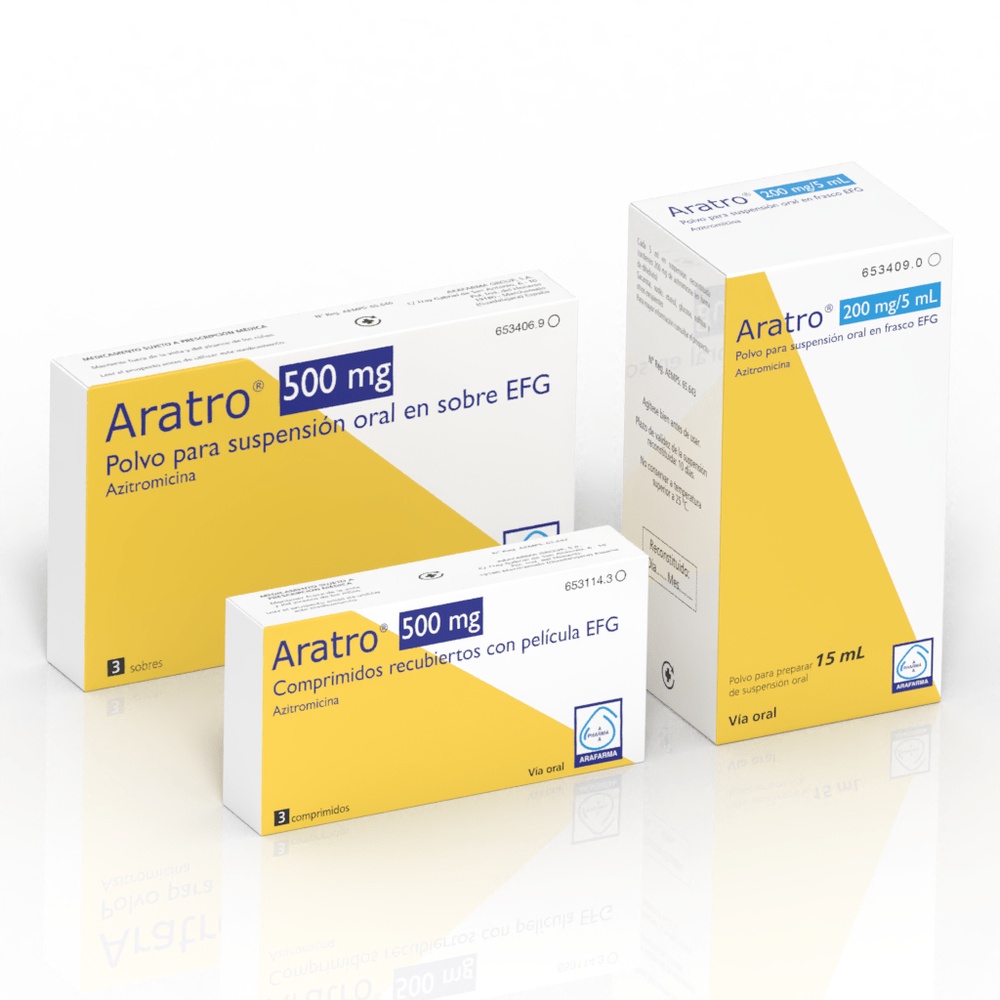
- Alternativas a AZITROMICINA SANDOZ 500 MG COMPRIMIDOS RECUBIERTOS CON PELÍCULA EFGForma farmacéutica: SOLUCIÓN/SUSPENSIÓN ORAL, 200 mg azitromicina / 5 mlPrincipio activo: AzitromicinaFabricante: Arafarma Group S.A.Requiere recetaForma farmacéutica: COMPRIMIDO, 500 mgPrincipio activo: AzitromicinaFabricante: Arafarma Group S.A.Requiere recetaForma farmacéutica: SOLUCIÓN/SUSPENSIÓN ORAL, 500 mgPrincipio activo: AzitromicinaFabricante: Arafarma Group S.A.Requiere receta
Médicos online para AZITROMICINA SANDOZ 500 MG COMPRIMIDOS RECUBIERTOS CON PELÍCULA EFG
Comenta la dosis, los posibles efectos secundarios, interacciones, contraindicaciones o la revisión de receta de AZITROMICINA SANDOZ 500 MG COMPRIMIDOS RECUBIERTOS CON PELÍCULA EFG, sujeto a valoración médica y a la normativa local.









Obtén una receta de AZITROMICINA SANDOZ 500 MG COMPRIMIDOS RECUBIERTOS CON PELÍCULA EFG online
Rellena un formulario de 2 minutos
Cuéntanos tus síntomas, historial y el medicamento que necesitas.
Elige un médico o nosotros te asignamos uno
Escoge un especialista o te conectamos con el próximo médico disponible.
El médico revisa tu caso
Normalmente en 30 minutos. Puede hacerte preguntas adicionales por chat.
Recógela en cualquier farmacia
Receta electrónica enviada a tu correo, válida en toda España.
Preguntas frecuentes
AZITROMICINA SANDOZ 500 MG COMPRIMIDOS RECUBIERTOS CON PELÍCULA EFG requires receta en España. Puedes confirmarlo con un médico online según tu caso.
El principio activo de AZITROMICINA SANDOZ 500 MG COMPRIMIDOS RECUBIERTOS CON PELÍCULA EFG es Azitromicina. Esta información ayuda a identificar medicamentos con la misma composición pero con diferentes nombres comerciales.
El precio medio en farmacia de AZITROMICINA SANDOZ 500 MG COMPRIMIDOS RECUBIERTOS CON PELÍCULA EFG es de aproximadamente 5.62 EUR. Puede variar según el fabricante y la forma farmacéutica.
AZITROMICINA SANDOZ 500 MG COMPRIMIDOS RECUBIERTOS CON PELÍCULA EFG es fabricado por Sandoz Farmaceutica S.A.. La marca y el envase pueden variar según el distribuidor.
Los Médicos de familia, Psiquiatras, Dermatólogos, Cardiólogos, Endocrinólogos, Gastroenterólogos, Neumólogos, Nefrólogos, Reumatólogos, Hematólogos, Infectólogos, Alergólogos, Geriatras, Pediatras, Oncólogos pueden valorar la prescripción de AZITROMICINA SANDOZ 500 MG COMPRIMIDOS RECUBIERTOS CON PELÍCULA EFG cuando esté clínicamente indicado. Puedes reservar una videoconsulta para comentar tu caso y las opciones de tratamiento.
España cuenta con una infraestructura sanitaria bien desarrollada en ciudades principales como Madrid, Barcelona, Valencia y Sevilla. Las farmacias están ampliamente disponibles y operan bajo estrictas regulaciones, garantizando el acceso a medicamentos con receta.
Puedes comprar AZITROMICINA SANDOZ 500 MG COMPRIMIDOS RECUBIERTOS CON PELÍCULA EFG en Madrid, Barcelona, Sevilla o Valencia en cualquier farmacia local con una receta válida.
Para obtener una receta, puedes utilizar Oladoctor:
Otros medicamentos con el mismo principio activo (Azitromicina) incluyen ARATRO 200 mg/5 ml POLVO PARA SUSPENSION ORAL EN FRASCO EFG, ARATRO 500 mg COMPRIMIDOS RECUBIERTOS CON PELICULA EFG, ARATRO 500 mg POLVO PARA SUSPENSION ORAL EN SOBRE EFG. Pueden tener diferentes nombres comerciales o formulaciones, pero contienen el mismo componente terapéutico. Consulta siempre con un médico antes de cambiar o iniciar un nuevo medicamento.
