



AGOMELATINA 25 mg Film-Coated Tablets

Prescription review online
A doctor will review your case and decide whether a prescription is medically appropriate.

Talk to a doctor about this medicine
Discuss your symptoms and possible next steps in a quick online consultation.



How to use AGOMELATINE STADA 25 mg FILM-COATED TABLETS
Contents of the leaflet
- Introduction
- What is Agomelatina Stada and what is it used for
- What you need to know before taking Agomelatina Stada
- How to take Agomelatina Stada
- Possible Side Effects
- Storage of Agomelatina Stada
- Contents of the Pack and Further Information
Introduction
Package Leaflet: Information for the Patient
Agomelatina Stada 25 mg Film-Coated Tablets EFG
Read the entire package leaflet carefully before starting to take this medication, as it contains important information for you.
- Keep this package leaflet, as you may need to read it again.
- If you have any questions, consult your doctor or pharmacist.
- This medication has been prescribed to you only, and you should not give it to others, even if they have the same symptoms as you, as it may harm them.
- If you experience side effects, consult your doctor or pharmacist, even if they are side effects not listed in this package leaflet. See section 4.
Contents of the Package Leaflet
- What is Agomelatina Stada and what is it used for
- What you need to know before taking Agomelatina Stada
- How to take Agomelatina Stada
- Possible side effects
5 Storage of Agomelatina Stada
- Contents of the pack and further information
1. What is Agomelatina Stada and what is it used for
This medication contains the active substance agomelatine. Agomelatine belongs to a group of medications called antidepressants and has been prescribed to treat your depression.
Agomelatine is used in adults.
Depression is a continuous alteration of mood that interferes with daily life. The symptoms of depression vary from person to person, but they usually consist of deep sadness, feelings of uselessness, loss of interest in hobbies, sleep disturbances, feeling of slowness, feeling of anxiety, and weight changes.
The expected benefits of agomelatine are to reduce and gradually eliminate the symptoms related to your depression.

Not sure if this medicine is right for you?
Discuss your symptoms and treatment with a doctor online.
2. What you need to know before taking Agomelatina Stada
Do not take agomelatine
- if you are allergic to agomelatine or any of the other components of this medication (listed in section 6).
- if your liver does not function properly (liver failure).
- if you are taking fluvoxamine (another medication used to treat depression) or ciprofloxacin (an antibiotic).
Warnings and Precautions
There may be reasons why agomelatine is not suitable for you:
- If you are taking medications that are known to affect the liver, ask your doctor for advice on these medications.
- If you have obesity or are overweight, ask your doctor for advice.
- If you are diabetic, ask your doctor for advice.
- If you have elevated liver enzyme levels before treatment, your doctor will decide if this medication is suitable for you.
- If you have bipolar disorder, have experienced or developed manic symptoms (periods of great excitement and abnormal emotional elevation), inform your doctor before starting to take this medication or before continuing to take it (see also "Possible Side Effects" in section 4).
- If you suffer from dementia, your doctor will perform an individual assessment to decide if it is suitable for you to take agomelatine.
During your treatment with agomelatine:
What to do to avoid potentially serious liver problems:
- Your doctor must check that your liver is functioning properly before starting treatment. Some patients may experience increases in blood liver enzyme levels during treatment with agomelatine. Therefore, follow-up tests should be performed at the following intervals:
Before starting or increasing the dose | Approximately 3 weeks | Approximately 6 weeks | Approximately 12 weeks | Approximately 24 weeks | |
Blood tests | ? | ? | ? | ? | ? |
Based on the evaluation of these tests, your doctor will decide if you should receive or continue using this medication (see also section 3 "How to take agomelatine").
Be aware of the signs and symptoms that may indicate that your liver is not functioning properly.
- If you notice any of these signs and symptoms of liver problems: unusual darkening of urine, light-colored stools, yellowing of skin/eyes, pain in the upper right part of the abdomen, unusual fatigue (especially associated with other symptoms mentioned above), seek urgent advice from a doctor, who may recommend stopping treatment with agomelatine.
The effect of agomelatine has not been documented in patients over 75 years old. Agomelatine should not be used in these patients.
Suicidal thoughts and worsening of your depression
If you are depressed, you may occasionally have thoughts of self-harm or suicide. These thoughts may be increased at the beginning of treatment with antidepressants, as all these medications take time to take effect, usually a couple of weeks, but sometimes longer.
You are more likely to have thoughts of this kind:
Contact your doctor or go directly to the hospital as soon as you have any thoughts of self-harm or suicide.
It may be helpful to discuss with a close relative or friend that you are depressed and ask them to read this package leaflet. You can ask them to tell you if they notice that your depression is getting worse or if they are concerned about changes in your behavior.
Children and Adolescents
This medication is not intended for use in children and adolescents (under 18 years old).
Other Medications and Agomelatina Stada
Tell your doctor or pharmacist if you are using or have recently used or may need to take any other medication.
Do not take agomelatine with certain medications (see also "Do not take agomelatine" in section 2): fluvoxamine (another medication used to treat depression) and ciprofloxacin (an antibiotic), as they may alter the expected dose of agomelatine in your blood.
Make sure to inform your doctor if you are taking any of the following medications: propranolol (a beta-blocker used to treat hypertension), enoxacin (an antibiotic).
Make sure to inform your doctor if you smoke more than 15 cigarettes/day.
Taking Agomelatina Stada with Alcohol
It is not recommended to drink alcohol while being treated with this medication.
Pregnancy and Breastfeeding
If you are pregnant or breastfeeding, think you may be pregnant, or plan to become pregnant, consult your doctor or pharmacist before using this medication.
Breastfeeding should be interrupted if you take agomelatine.
Driving and Using Machines
You may feel dizzy or drowsy, which could affect your ability to drive or use machines. You should be sure that your reaction is normal before driving or using machinery.
Agomelatina Stada contains Sodium
This medication contains less than 1 mmol of sodium (23 mg) per tablet; it is essentially "sodium-free".
3. How to take Agomelatina Stada
Follow the instructions for administration of this medication indicated by your doctor or pharmacist. If in doubt, consult your doctor or pharmacist again.
The recommended dose of agomelatine is one tablet (25 mg) before bedtime. In some cases, your doctor may prescribe a higher dose (50 mg), i.e., two tablets that should be taken together before bedtime.
Method of administration
This medication is for oral administration. You should swallow your tablet with the help of a glass of water. You can take agomelatine with or without food.
Duration of treatment
In most people with depression, agomelatine starts to act on the symptoms of depression within two weeks of starting treatment.
Your depression should be treated for a sufficient period of at least 6 months to ensure that you no longer have symptoms.
Your doctor may continue to prescribe agomelatine when you feel better to prevent depression from coming back.
If you have kidney problems, your doctor will perform an individual assessment to decide if it is safe for you to take agomelatine.
Liver function monitoring (see also section 2):
Your doctor will ask for tests to check that your liver is functioning properly before starting treatment and, afterwards, at regular intervals during treatment, usually after 3 weeks, 6 weeks, 12 weeks, and 24 weeks.
If your doctor increases the dose to 50 mg, tests should be performed at the time of dose increase and, afterwards, at regular intervals during treatment, usually after 3 weeks, 6 weeks, 12 weeks, and 24 weeks. Afterwards, tests will be performed if the doctor considers it necessary.
You should not use agomelatine if your liver does not function properly.
How to switch from an antidepressant (SSRI / SNRI) to agomelatine?
If your doctor changes your previous antidepressant medication from an SSRI or SNRI to agomelatine, they will advise you on how to stop treatment with your previous medication when you start taking agomelatine.
You may experience withdrawal symptoms related to the interruption of your previous treatment for a few weeks, even if the dose of your previous antidepressant medication is gradually reduced.
Withdrawal symptoms include: dizziness, numbness, sleep disturbance, agitation or anxiety, headache, nausea, vomiting, and tremors. These effects are usually mild to moderate and disappear spontaneously within a few days.
If treatment with agomelatine is started while gradually reducing the dose of the previous medication, possible withdrawal symptoms should not be confused with a lack of effect of agomelatine at the beginning of treatment.
You should consult your doctor about the best way to stop your previous antidepressant treatment when starting treatment with agomelatine.
If you take more Agomelatina Stada than you should
In case of overdose or accidental ingestion, consult your doctor, pharmacist, or call the Toxicological Information Service, phone: 91 562 04 20, indicating the medication and the amount ingested.
Experience with agomelatine overdose is limited, but reported symptoms include upper stomach pain, drowsiness, fatigue, agitation, anxiety, tension, dizziness, cyanosis, or general malaise.
If you forget to take Agomelatina Stada
Do not take a double dose to make up for forgotten doses. Simply take the next dose at the usual time.
The printed calendar on the blister pack containing the tablets will help you remember when you last took an agomelatine tablet.
If you stop taking Agomelatina Stada
Do not stop taking your medication without consulting your doctor, even if you feel better.
If you have any further questions about the use of this medication, ask your doctor or pharmacist.

Started taking the medicine and have questions?
Discuss your symptoms and treatment with a doctor online.
4. Possible Side Effects
Like all medications, this medication can cause side effects, although not everyone gets them.
Most side effects are mild or moderate. They usually appear in the first two weeks of treatment and are usually transient.
These side effects include:
Very Common Side Effects(may affect more than 1 in 10 people):
- headache.
Common Side Effects(may affect up to 1 in 10 people):
- dizziness, drowsiness, difficulty sleeping (insomnia), nausea, diarrhea, constipation, abdominal pain, back pain, fatigue, anxiety, abnormal dreams, increased liver enzymes in the blood, vomiting, weight gain.
Uncommon Side Effects(may affect up to 1 in 100 people):
- migraine, tingling in the fingers and toes (paresthesia), blurred vision, restless legs syndrome (a disorder characterized by an irresistible urge to move the legs), ringing in the ears, excessive sweating (hyperhidrosis), eczema, itching, hives (urticaria), agitation, irritability, restlessness, aggressive behavior, nightmares, mania/hypomania (see also "Warnings and Precautions" in section 2), suicidal thoughts or behavior, confusion, weight loss, muscle pain.
Rare Side Effects(may affect up to 1 in 1,000 people):
- severe skin rash (erythematous rash), facial edema (swelling) and angioedema (swelling of the face, lips, tongue, and/or throat that can cause difficulty breathing or swallowing), hepatitis, yellowing of the skin or whites of the eyes (jaundice), liver failure*, hallucinations, inability to remain still (due to physical and mental restlessness), inability to empty the bladder completely.
- A small number of cases have been reported that resulted in liver transplantation or death.
Reporting Side Effects
If you experience any side effects, consult your doctor or pharmacist, even if they are possible side effects not listed in this package leaflet. You can also report them directly through the national reporting system: Spanish Medicines and Healthcare Products Agency (AEMPS) (http://www.aemps.gob.es/). By reporting side effects, you can help provide more information on the safety of this medication.
5. Storage of Agomelatina Stada
Keep this medication out of the sight and reach of children.
Do not use this medication after the expiration date stated on the packaging and blister, after EXP. The expiration date is the last day of the month indicated.
Store in the original packaging to protect from moisture. This medication does not require special storage conditions.
Medications should not be disposed of through wastewater or household waste. Place the packaging and any unused medication in the SIGRE collection point at your pharmacy. Ask your pharmacist how to dispose of the packaging and any unused medication. This will help protect the environment.
6. Contents of the Pack and Further Information
Composition of Agomelatina Stada
- The active substance is agomelatine. Each film-coated tablet contains agomelatine-citric acid co-crystals equivalent to 25 mg of agomelatine.
- The other components of the core are:
- colloidal silicon dioxide, microcrystalline cellulose, mannitol, povidone, anhydrous colloidal silica, crospovidone, sodium stearyl fumarate, magnesium stearate, stearic acid.
- The components of the coating are:
- hypromellose, macrogol, titanium dioxide (E171), talc, yellow iron oxide (E172).
Appearance of Agomelatina Stada and Contents of the Pack
Agomelatina Stada 25 mg film-coated tablets are yellow, oblong, biconvex, 9 mm x 4.5 mm.
Agomelatina Stada 25 mg film-coated tablets are available in blister packs. The packs contain 7, 14, 28, 42, 56, 84, 98, or 100 (clinical pack) tablets or 7x1, 14x1, 28x1, 42x1, 56x1, 84x1, 98x1, 100 (clinical pack) x1 tablets (unit dose).
Not all pack sizes may be marketed.
Marketing Authorization Holder and Manufacturer
Marketing Authorization Holder
Laboratorio STADA, S.L.
Frederic Mompou, 5
08960 Sant Just Desvern (Barcelona)
Spain
Manufacturer
MEDIS International a.s., vyrobni zavod Bolatice
Prumyslova 961/16
747 23 Bolatice
Czech Republic
or
STADA Arzneimittel AG
Stadastrasse 2 – 18
61118 Bad Vilbel
Germany
This medication is authorized in the Member States of the European Economic Area under the following names:
Denmark: Agomelatin Stada
Finland: Agomelatine STADA 25 mg tablet, film-coated
France: AGOMELATINE EG 25 mg film-coated tablets
Germany: Agomelatin AL 25 mg film-coated tablets
Hungary: Agomelatin STADA 25 mg film-coated tablet
Iceland: Agomelatine 25 mg film-coated tablets
Netherlands: Agomelatine STADA 25 mg film-coated tablets
Portugal: Agomelatina Ciclum
Slovakia: Agomelatín Stada
Spain: Agomelatina STADA 25 mg film-coated tablets EFG
Sweden: Agomelatine STADA 25 mg film-coated tablets
Date of the last revision of this package leaflet:May 2025
Detailed information on this medication is available on the website of the Spanish Agency for Medicines and Healthcare Products (AEMPS) (http://www.aemps.gob.es/).
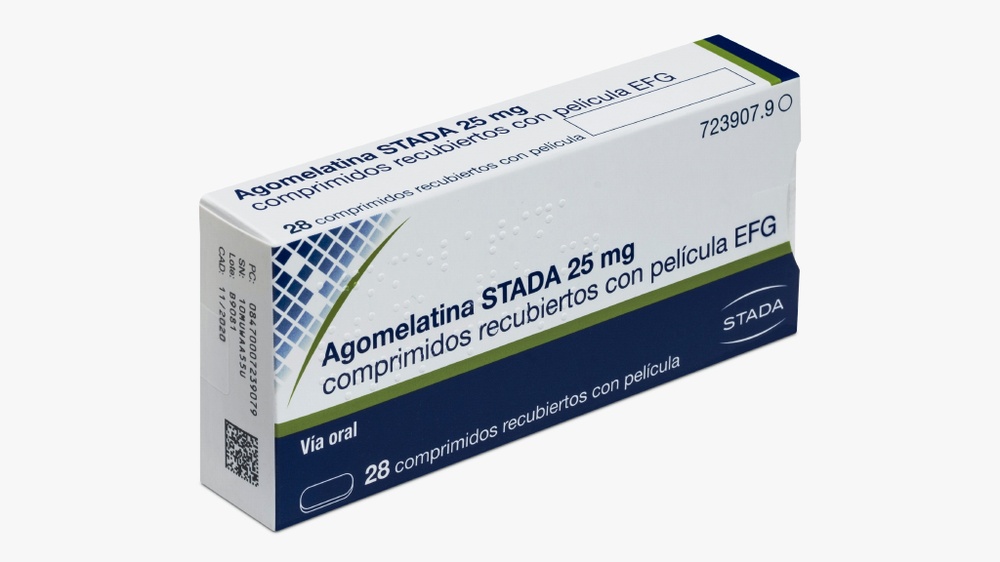
- Country of registration
- Dosage formTABLET, 25 mg
- ATC codeN06AX22
- Average pharmacy price30.66 EUR
- Active substance
- Prescription requiredYes
- Manufacturer
- CompositionMANITOL (E-421) (13.312 mg mg), FUMARATO DE ESTEARILO Y SODIO (3.700 mg mg)
- This information is for reference only and does not constitute medical advice. Always consult a doctor before taking any medication. Oladoctor is not responsible for medical decisions based on this content.
- Alternatives to AGOMELATINE STADA 25 mg FILM-COATED TABLETSDosage form: TABLET, 25 mgActive substance: agomelatineManufacturer: Aurovitas Spain, S.A.U.Prescription requiredDosage form: TABLET, 25 mgActive substance: agomelatineManufacturer: Neuraxpharm Spain S.L.Prescription requiredDosage form: TABLET, 25 mgActive substance: agomelatineManufacturer: Les Laboratoires ServierPrescription required
Online doctors for AGOMELATINE STADA 25 mg FILM-COATED TABLETS
Discuss questions about AGOMELATINE STADA 25 mg FILM-COATED TABLETS, including use, safety considerations and prescription review, subject to medical assessment and local regulations.







Get AGOMELATINE STADA 25 mg FILM-COATED TABLETS Prescription Online
Fill in a 2-min form
Tell us your symptoms, history, and what medicine you're requesting.
Pick a doctor or let us assign
Choose a specialist or we'll match you with the next available doctor.
Doctor reviews your case
Usually within 30 minutes. They may ask follow-up questions via chat.
Collect from any pharmacy
Electronic prescription sent to your email — valid across Spain.
Frequently Asked Questions
AGOMELATINE STADA 25 mg FILM-COATED TABLETS requires a prescription in Spain. You can check with a doctor online whether this medicine may be appropriate for your situation.
The active ingredient in AGOMELATINE STADA 25 mg FILM-COATED TABLETS is agomelatine. This information helps identify medicines with the same composition but different brand names.
The average pharmacy price for AGOMELATINE STADA 25 mg FILM-COATED TABLETS is around 30.66 EUR. Prices may vary depending on the manufacturer and dosage form.
AGOMELATINE STADA 25 mg FILM-COATED TABLETS is manufactured by Laboratorio Stada S.L.. Pharmacy brands and packaging may differ depending on the distributor.
Doctors such as Family doctors, Psychiatrists, Dermatologists, Cardiologists, Endocrinologists, Gastroenterologists, Pulmonologists, Nephrologists, Rheumatologists, Hematologists, Infectious disease physicians, Allergists, Geriatricians, Paediatricians, Oncologists may assess whether AGOMELATINE STADA 25 mg FILM-COATED TABLETS is appropriate, depending on your situation and local regulations. You can book an online consultation to discuss your symptoms and possible next steps.
Spain has a well-developed healthcare infrastructure across major cities such as Madrid, Barcelona, Valencia, and Seville. Pharmacies are widely available and operate under strict regulations, ensuring access to prescribed medications.
You can buy AGOMELATINE STADA 25 mg FILM-COATED TABLETS in Madrid, Barcelona, Seville, or Valencia at any local pharmacy with a valid prescription.
To obtain a prescription, you can use Oladoctor:
Other medicines with the same active substance (agomelatine) include AGOMELATINE AUROVITAS SPAIN 25 mg FILM-COATED TABLETS, AGOMELATINE QUALIGEN 25 mg FILM-COATED TABLETS, VALDOXAN 25 mg FILM-COATED TABLETS. These may have different brand names or formulations but contain the same therapeutic ingredient. Always consult a doctor before switching or starting a new medicine.
