



ACTELSAR 40 mg /12,5 Mg Comprimidos

Revisión de receta online
Un médico revisará tu caso y determinará si la prescripción es médicamente apropiada.

Habla con un médico sobre este medicamento
Comenta tus síntomas y las opciones de tratamiento en una consulta online.



Cómo usar Actelsar HCT 40 mg/12,5 mg comprimidos EFG
Contenido del prospecto
- Introducción
- Qué es Actelsar HCT y para qué se utiliza
- Qué necesita saber antes de empezar a tomar Actelsar HCT
- Cómo tomar Actelsar HCT
- Posibles efectos adversos
- Conservación de Actelsar HCT
- Contenido del envase e información adicional
Introducción
Prospecto: Información para el usuario
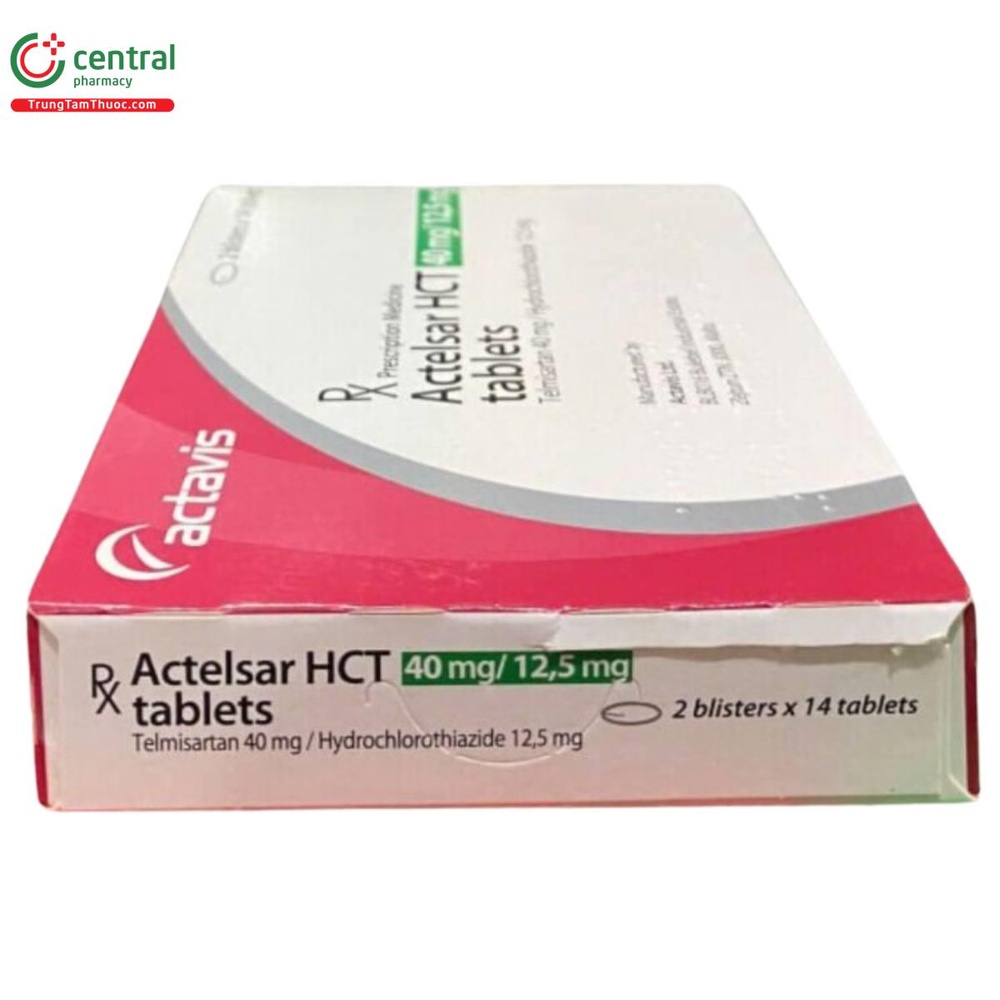
Actelsar HCT 40 mg/12,5 mg comprimidos EFG
telmisartán/hidroclorotiazida
Lea todo el prospecto detenidamente antes de empezar a tomar este medicamento, porque contiene información importante para usted.
- Conserve este prospecto, ya que puede tener que volver a leerlo.
- Si tiene alguna duda, consulte a su médico o farmacéutico.
- Este medicamento se le ha recetado solamente a usted, y no debe dárselo a otras personas aunque tengan los mismos síntomas que usted, ya que puede perjudicarles.
- Si experimenta efectos adversos, consulte a su médico o farmacéutico, incluso si se trata de efectos adversos que no aparecen en este prospecto. Ver sección 4.
Contenido del prospecto:
- Qué es Actelsar HCT y para qué se utiliza
- Qué necesita saber antes de empezar a tomar Actelsar HCT
- Cómo tomar Actelsar HCT
- Posibles efectos adversos
- Conservación de Actelsar HCT
- Contenido del envase e información adicional
1. Qué es Actelsar HCT y para qué se utiliza
Actelsar HCT es una asociación de dos principios activos, telmisartán e hidroclorotiazida en un comprimido. Ambos principios activos ayudan a controlar la tensión arterial elevada.
- Telmisartán pertenece a un grupo de medicamentos conocidos como antagonistas de los receptores de la angiotensina II. La angiotensina II es una sustancia producida en su organismo que provoca que sus vasos sanguíneos se estrechen, aumentando por tanto su tensión arterial. Telmisartán bloquea el efecto de la angiotensina II, de modo que se relajan los vasos sanguíneos y se reduce su tensión arterial.
- Hidroclorotiazida pertenece a un grupo de medicamentos conocidos como diuréticos tiazídicos, que aumentan su eliminación de orina produciendo una disminución de su tensión arterial.
La tensión arterial elevada, si no se trata, puede dañar los vasos sanguíneos de diversos órganos, lo cual en ocasiones puede provocar un ataque al corazón, fallo del corazón o del riñón, ictus o ceguera. Habitualmente no hay síntomas de tensión arterial elevada antes de que el daño ocurra. Por lo tanto, es importante controlar de forma periódica la presión arterial para comprobar que se encuentra dentro del rango normal.
Actelsar HCT se utiliza parael tratamiento de la tensión arterial elevada (hipertensión esencial) en adultos cuya tensión arterial no se controla suficientemente cuando se utiliza telmisartán solo.

¿No estás seguro de si este medicamento es adecuado para ti?
Comenta tus síntomas y tratamiento con un médico online.
2. Qué necesita saber antes de empezar a tomar Actelsar HCT
No tome Actelsar HCT
- si es alérgico a telmisartán o a alguno de los demás componentes de este medicamento (incluidos en la sección 6).
- si es alérgico a hidroclorotiazida o a otros medicamentos derivados de la sulfonamida.
- si está embarazada de más de 3 meses. (En cualquier caso, es mejor evitar tomar Actelsar HCT también al inicio de su embarazo - ver sección Embarazo).
- si tiene problemas graves en el hígado como por ejemplo colestasis u obstrucción biliar (problemas de drenaje de la bilis desde el hígado y la vesícula biliar) o cualquier otra enfermedad grave en el hígado.
- si padece alguna enfermedad grave en el riñón.
- si su médico determina que tiene niveles bajos de potasio o niveles altos de calcio en sangre, que no mejoran con el tratamiento.
- si tiene diabetes o insuficiencia renal y le están tratando con un medicamento para bajar la presión arterial que contiene aliskireno.
Si cualquiera de lo anteriormente mencionado le ocurre, comuníqueselo a su médico o farmacéutico antes de tomar Actelsar HCT.
Advertencias y precauciones
Consulte a su médico antes de empezar a tomar Actelsar HCT si padece o ha padecido alguna vez cualquiera de los siguientes trastornos o enfermedades:
- Tensión arterial baja (hipotensión), que puede presentarse si está usted deshidratado (pérdida excesiva de agua corporal) o padece deficiencia de sales debido a un tratamiento con diuréticos, dieta baja en sodio, diarrea, vómitos o hemodiálisis.
- Enfermedad o trasplante de riñón.
- Estenosis de la arteria renal (estrechamiento de los vasos sanguíneos de uno o ambos riñones).
- Enfermedad del hígado.
- Problemas de corazón.
- Diabetes.
- Gota.
- Niveles elevados de aldosterona (retención de agua y sal en el cuerpo junto con desequilibrio de varios minerales de la sangre)
- Lupus eritematoso sistémico (llamado también “lupus” o “LES”), una enfermedad en la que el sistema inmune del cuerpo ataca el propio cuerpo
- El principio activo hidroclorotiazida puede provocar una reacción poco común, dando lugar a una disminución de la visión y dolor en los ojos. Estos síntomas pueden ser indicativos de acumulación de líquido en la capa vascular del ojo (derrame coroideo) o un aumento de la presión en su ojo y pueden aparecer entre horas y semanas después de tomar Actelsar HCT. Si no se trata, puede conducir a una disminución permanente de la visión.
- si ha tenido cáncer de piel o si le aparece una lesión de la piel inesperada durante el tratamiento. El tratamiento con hidroclorotiazida, en particular su uso a largo plazo a dosis altas, puede aumentar el riesgo de algunos tipos de cáncer de piel y labios (cáncer de piel no-melanoma). Proteja la piel de la exposición al sol y a los rayos UV mientras esté tomando Actelsar HCT
- Si ha tenido problemas respiratorios o pulmonares (como inflamación o líquido en los pulmones) tras la toma de hidroclorotiazida en el pasado. Si presenta disnea o dificultad para respirar grave después de tomar Actelsar HCT, acuda al médico inmediatamente.
Consulte a su médico antes de empezar a tomar Actelsar HCT si está tomando:
- alguno de los siguientes medicamentos utilizados para tratar la presión arterial alta (hipertensión):
- un inhibidor de la enzima convertidora de angiotensina (IECA) (por ejemplo enalapril, lisinopril, ramipril), en particular si sufre problemas renales relacionados con la diabetes.
- aliskireno.
Puede que su médico le controle la función renal, la presión arterial y los niveles de electrolitos en la sangre (por ejemplo, potasio), a intervalos regulares. Ver también la información bajo el encabezado “No tome Actelsar HCT”.
- digoxina
Si está embarazada, si sospecha que pudiera estarlo o si planea quedarse embarazada, debe informar a su médico. No se recomienda el uso de Actelsar HCT al inicio del embarazo (3 primeros meses) y en ningún caso debe administrarse a partir del tercer mes de embarazo porque puede causar daños graves a su bebé (ver sección Embarazo).
El tratamiento con hidroclorotiazida puede causar un desequilibrio electrolítico en su cuerpo. Los síntomas típicos de un desequilibrio de líquidos o electrolitos incluyen sequedad de la boca, debilidad, letargo, somnolencia, inquietud, dolor o calambres musculares, náuseas, vómitos, fatiga de los músculos y un ritmo anormalmente rápido del corazón (más de 100 latidos por minuto). Si experimenta cualquiera de estos síntomas comuníqueselo a su médico.
También debe informar a su médico si experimenta mayor sensibilidad de la piel al sol con síntomas de quemadura solar (tal y como enrojecimiento, picor, hinchazón, aparición de ampollas) que aparecen con mayor rapidez de lo habitual.
Si va a ser sometido a una operación quirúrgica (cirugía) o a anestesia, debe informar a su médico de que está tomando Actelsar HCT.
Actelsar HCT puede ser menos eficaz para disminuir la presión de la sangre en pacientes de raza negra.
Niños y adolescentes
No se recomienda el uso de Actelsar HCT en niños y adolescentes hasta 18 años.
Uso de Actelsar HCT con otros medicamentos
Informe a su médico o farmacéutico si está tomando, ha tomado recientemente o pudiera tener que tomar cualquier otro medicamento. Su médico puede necesitar cambiar la dosis de esos otros medicamentos o tomar otras precauciones. En algunos casos, es posible que deba interrumpir el uso de alguno de estos medicamentos, especialmente si está utilizando junto con Actelsar HCT alguno de los medicamentos indicados a continuación.
- Medicamentos que contienen litio para el tratamiento de algunos tipos de depresión.
- Medicamentos asociados con niveles bajos de potasio en sangre (hipopotasemia) como por ejemplo otros diuréticos, laxantes (p. ej. aceite de ricino), corticosteroides (p. ej. prednisona), ACTH (hormona adrenocorticotropa), amfotericina (medicamento antifúngico), carbenoxolona (utilizado en el tratamiento de úlceras bucales), penicilina G sódica (un antibiótico) y ácido acetilsalicílico y derivados.
- Medicamentos que puedan incrementar los niveles de potasio en sangre como diuréticos ahorradores de potasio, suplementos de potasio, sustitutos de la sal que contienen potasio, inhibidores de la ECA, ciclosporina (medicamento inmunosupresor) y otros medicamentos como heparina sódica (anticoagulante).
- Medicamentos a los que les afectan los cambios en los niveles de potasio en sangre como medicamentos para el corazón (p. ej. digoxina) o medicamentos para controlar el ritmo de su corazón (p.ej. quinidina, disopiramida, amiodarona, sotalol), medicamentos utilizados en el tratamiento de trastornos mentales (p. ej. tioridazina, clorpromazina, levomepromazina) y otros medicamentos como algunos antibióticos (p. ej. esparfloxacino, pentamidina) o algunos medicamentos para tratar reacciones alérgicas (p. ej. terfenadina).
- Medicamentos para el tratamiento de la diabetes (insulinas o agentes orales como metformina).
- Colestiramina y colestipol, medicamentos para reducir los niveles de grasas en sangre.
- Medicamentos para aumentar la presión arterial, como noradrenalina.
- Medicamentos relajantes musculares, como tubocurarina.
- Suplementos de calcio y/o suplementos de vitamina D.
- Medicamentos anticolinérgicos (medicamentos usados para tratar una variedad de trastornos como espasmos gastrointestinales, espasmos urinarios, asma, cinetosis, espasmos musculares, enfermedad de Parkinson y como ayuda a la anestesia) como atropina y biperideno.
- Amantadina (medicamento usado para tratar la enfermedad de Parkinson y también para tratar o prevenir ciertas enfermedades causadas por virus).
- Otros medicamentos utilizados para tratar la tensión arterial alta, corticoesteroides, analgésicos (como medicamentos antiinflamatorios no esteroideos [AINEs]), medicamentos para el tratamiento del cáncer, gota o artritis.
- Si está tomando un inhibidor de la enzima convertidora de angiotensina (IECA) o aliskireno (ver también la información bajo los encabezados “No tome Actelsar HCT” y “Advertencias y precauciones”).
- Digoxina.
Actelsar HCT puede aumentar la capacidad para disminuir la tensión arterial de otros medicamentos utilizados para ello o de medicamentos con potencial para disminuir la tensión arterial (p.ej. baclofeno, amifostina). Además, la tensión arterial baja se puede agravar por el alcohol, barbitúricos, narcóticos o antidepresivos. Puede notarlo como mareo al ponerse de pie. Debe informar a su médico sobre la necesidad de ajustar la dosis de sus otros medicamentos mientras está utilizando Actelsar HCT.
El efecto de Actelsar HCT puede disminuirse al utilizar AINEs (medicamentos antiinflamatorios no esteroideos, p. ej. ácido acetilsalicílico o ibuprofeno).
Toma de Actelsar HCT con alimentos y alcohol
Puede tomar Actelsar HCT con o sin comida.
Evite tomar alcohol hasta que no haya hablado con su médico. El alcohol puede reducir aún más su presión arterial y/o aumentar el riesgo de sentirse mareado o débil.
Embarazo y lactancia
Embarazo
Debe informar a su médico si está embarazada, si sospecha que pudiera estarlo o si planea quedarse embarazada. Por lo general, su médico le aconsejará que deje de tomar Actelsar HCT antes de quedarse embarazada o tan pronto como se quede embarazada, y le recomendará tomar otro medicamento antihipertensivo en su lugar. No se recomienda utilizar Actelsar HCT durante el embarazo y en ningún caso debe administrarse a partir del tercer mes de embarazo ya que puede causar daños graves a su bebé cuando se administra a partir de ese momento.
Lactancia
Informe a su médico si va a iniciar o está en periodo de lactancia puesto que no se recomienda administrar Actelsar HCT a mujeres durante este periodo. Su médico puede decidir administrarle un tratamiento que sea más adecuado si quiere dar el pecho.
Conducción y uso de máquinas
Algunas personas se sienten mareadas o cansadas cuando toman Actelsar HCT. Si se siente mareado o cansado no conduzca o utilice máquinas.
Actelsar HCT contiene sodio
Este medicamento contiene menos de 1 mmol de sodio (23 mg) por comprimido; esto es, esencialmente “exento de sodio”.
3. Cómo tomar Actelsar HCT

¿Has empezado a tomar el medicamento y tienes preguntas?
Comenta tus síntomas y tratamiento con un médico online.
Siga exactamente las instrucciones de administración de este medicamento indicadas por su médico. En caso de duda, consulte de nuevo a su médico o farmacéutico.
La dosis recomendada es de un comprimido al día. Intente tomar el comprimido cada día a la misma hora. Puede tomar Actelsar HCT con o sin alimentos. Los comprimidos deben tragarse con un poco de agua u otra bebida no alcohólica. Es importante que tome Actelsar HCT cada día hasta que su médico le indique lo contrario.
Si su hígado no funciona correctamente, la dosis habitual no debe superar los 40 mg/12,5 mg una vez al día.
Si toma más Actelsar HCT del que debe
Si accidentalmente toma demasiados comprimidos puede experimentar síntomas como baja presión arterial y latidos rápidos del corazón. También se han descrito latidos lentos del corazón, mareos, vómitos y función renal reducida incluyendo fallo renal. Debido al componente hidroclorotiazida, también puede darse presión arterial notablemente baja y bajos niveles de potasio en sangre, que pueden dar lugar a náuseas, somnolencia y calambres musculares y/o latidos irregulares del corazón asociados con el uso concomitante de medicamentos como los digitálicos o ciertos tratamientos antiarrítmicos. Contacte inmediatamente con su médico o farmacéutico o con el servicio de urgencias del hospital más próximo.
Si olvidó tomar Actelsar HCT
Si olvida tomar el medicamento, no se preocupe. Tome la dosis tan pronto como lo recuerde y continúe como antes. Si no toma su comprimido un día, tome su dosis normal al día siguiente. No tome una dosis doble para compensar las dosis olvidadas.
Si tiene cualquier otra duda sobre el uso de este medicamento, pregunte a su médico o farmacéutico.
4. Posibles efectos adversos
Al igual que todos los medicamentos, este medicamento puede producir efectos adversos, aunque no todas las personas los sufran.
Algunos efectos adversos pueden ser graves y requieren de atención médica inmediata:
Si experimenta cualquiera de los siguientes síntomas, debe visitar a su médico inmediatamente:
Sepsis* (frecuentemente llamada “infección de la sangre”), es una infección grave que implica una reacción inflamatoria de todo el organismo, hinchazón rápida de la piel y las mucosas (angioedema), formación de ampollas y descamaciones en la capa superficial de la piel (necrolisis epidérmica tóxica); estos efectos adversos son raros (pueden afectar hasta a 1 de cada 1.000 personas) o de frecuencia no conocida (necrolisis epidérmica tóxica) pero son extremadamente graves y los pacientes deben dejar de tomar el medicamento y visitar a su médico inmediatamente. Si estos efectos adversos no son tratados, pueden ser mortales. Se ha observado un aumento de la incidencia de sepsis con telmisartán solo; sin embargo, no se puede descartar para Actelsar HCT.
Muy raras (pueden afectar hasta a 1 de cada 10.000 personas): dificultad respiratoria aguda (los signos incluyen dificultad respiratoria grave, fiebre, debilidad y confusión).
Posibles efectos adversos de Actelsar HCT:
Frecuentes (pueden afectar hasta a 1 de cada 10 personas):
Mareo
Poco frecuentes (pueden afectar hasta a 1 de cada 100 personas):
Disminución de los niveles de potasio en sangre, ansiedad, desmayo (síncope), sensación de cosquilleo, hormigueo (parestesia), mareo (vértigo), latidos rápidos del corazón (taquicardia), alteraciones del ritmo del corazón, tensión arterial baja, disminución repentina de la tensión arterial al incorporarse, respiración entrecortada (disnea), diarrea, sequedad de boca, flatulencia, dolor de espalda, espasmos de los músculos, dolor de los músculos, disfunción eréctil (incapacidad de tener o mantener una erección), dolor de pecho y aumento de los niveles de ácido úrico en sangre.
Raros (pueden afectar hasta a 1 de cada 1.000 personas):
Inflamación de los pulmones (bronquitis), activación o empeoramiento del lupus eritematoso sistémico (una enfermedad en la que el sistema inmunológico del organismo ataca al propio organismo, lo que causa dolor de articulaciones, erupciones cutáneas y fiebre), dolor de garganta, inflamación de los senos paranasales, sensación de tristeza (depresión), dificultad para dormirse (insomnio), alteración de la visión, dificultad para respirar, dolor abdominal, estreñimiento, distensión abdominal (dispepsia), malestar general (vómitos), inflamación en el estómago (gastritis), alteración en el funcionamiento del hígado (los pacientes japoneses muestran más tendencia a experimentar este efecto adverso), enrojecimiento de la piel (eritema), reacciones alérgicas tales como picor o erupción, aumento de la sudoración, ronchas (urticaria), dolor de las articulaciones (artralgia) y dolor en las extremidades, calambres en los músculos, enfermedad pseudogripal, dolor, niveles bajos de sodio, aumento de los niveles de creatinina, enzimas hepáticas o creatina fosfocinasa en sangre.
Las reacciones adversas notificadas para uno de los componentes individuales pueden ser potenciales reacciones adversas de Actelsar HCT, aunque no se hayan observado en los ensayos clínicos con este producto.
Telmisartán
Se han descrito adicionalmente los siguientes efectos adversos en pacientes que toman telmisartán solo:
Poco frecuentes (pueden afectar hasta a 1 de cada 100 personas):
Infección del tracto respiratorio superior (p. ej. dolor de garganta, inflamación de los senos paranasales, resfriado común), infecciones del tracto urinario, deficiencia de células rojas de la sangre (anemia), niveles altos de potasio, ritmo lento del corazón (bradicardia), alteración en el funcionamiento del riñón incluyendo fallo renal agudo, debilidad, tos.
Raros (pueden afectar hasta a 1 de cada 1.000 personas):
Bajo recuento de plaquetas (trombocitopenia), aumento de ciertas células blancas de la sangre (eosinofilia), reacciones alérgicas graves (p. ej. hipersensibilidad, reacciones anafilácticas, erupción por medicamentos), niveles de azúcar en sangre bajos (en pacientes diabéticos), molestias de estómago, eczema (un trastorno de la piel), artrosis, inflamación de los tendones, disminución de la hemoglobina (una proteína de la sangre), somnolencia.
Muy raros (pueden afectar hasta a 1 de cada 10.000 personas):
Fibrosis progresiva del tejido de los pulmones (enfermedad pulmonar intersticial)**
*Esto puede haber sido un hallazgo casual o estar relacionado con un mecanismo actualmente no conocido.
**Se han notificado casos de fibrosis progresiva del tejido de los pulmones durante la toma de telmisartán. Sin embargo, se desconoce si telmisartán fue la causa.
Hidroclorotiazida
Se han descrito adicionalmente los siguientes efectos adversos en pacientes que toman hidroclorotiazida sola:
Frecuentes (pueden afectar hasta 1 de cada 10 personas):
Náuseas, nivel bajo de magnesio en la sangre.
Raros (pueden afectar hasta 1 de cada 1.000 personas):
Disminución de las plaquetas en la sangre, lo cual aumenta el riesgo de hemorragias y de formación de hematomas (pequeñas marcas de color morado-rojo en la piel o en otros tejidos causadas por hemorragias), nivel alto de calcio en la sangre, cefalea.
Muy raros (pueden afectar hasta 1 de cada 10.000 personas):
Aumento del pH (alteración del equilibrio ácido-base) debido a un nivel bajo de cloruro en la sangre.
Efectos adversos de frecuencia no conocida (no puede estimarse a partir de los datos disponibles):
Inflamación de la glándula salival, cáncer de piel y labios (cáncer de piel no-melanoma), disminución del número (o incluso ausencia) de células en la sangre, incluyendo un bajo recuento de células rojas y blancas de la sangre, reacciones alérgicas graves (p. ej. hipersensibilidad, reacciones anafilácticas), disminución o pérdida del apetito; inquietud, mareo, visión borrosa o amarillenta, disminución de la visión y dolor en los ojos [posibles signos de acumulación de líquido en la capa vascular del ojo (derrame coroideo) o miopía aguda o de glaucoma agudo de ángulo cerrado], inflamación de los vasos sanguíneos (vasculitis necrotizante), inflamación del páncreas, molestias de estómago, coloración amarilla de la piel o de los ojos (ictericia), síndrome seudolúpico (una condición que mimetiza una enfermedad llamada lupus eritematoso sistémico en la que el sistema inmunológico del organismo ataca al propio organismo), trastornos de la piel como inflamación de los vasos sanguíneos de la piel, aumento de la sensibilidad a la luz del sol, erupción cutánea, enrojecimiento de la piel, formación de ampollas en los labios, los ojos o la boca, descamación de la piel, fiebre (posibles signos de eritema multiforme), debilidad, inflamación del riñón o alteración de su función, glucosa en la orina (glucosuria), fiebre, alteración del equilibrio electrolítico, niveles altos de colesterol en sangre, disminución del volumen sanguíneo, aumento de los niveles de azúcar en sangre, dificultad para controlar los niveles de glucosa en sangre/orina en pacientes con diagnóstico de diabetes mellitus, o grasa en la sangre.
Comunicación de efectos adversos
Si experimenta cualquier tipo de efecto adverso, consulte a su médico o farmacéutico, incluso si se trata de posibles efectos adversos que no aparecen en este prospecto. También puede comunicarlos directamente a través del sistema nacional de notificación incluido en el Apéndice V. Mediante la comunicación de efectos adversos usted puede contribuir a proporcionar más información sobre la seguridad de este medicamento.
5. Conservación de Actelsar HCT
Mantener este medicamento fuera de la vista y del alcance de los niños.
No utilice este medicamento después de la fecha de caducidad que aparece en la caja, en el blíster o en la etiqueta del frasco después de “EXP”/“CAD”. La fecha de caducidad es el último día del mes que se indica. “Lot”, que va impreso en el cartonaje, se refiere al número de lote.
Para los blisters de Al/Al y el envase para comprimidos de HDPE Este medicamento no requiere condiciones especiales de conservación.
Para los blisters de Al/PVC/PVDC
No conservar a temperatura superior a 30ºC.
Los medicamentos no se deben tirar por los desagües ni a la basura. Pregunte a su farmacéutico cómo deshacerse de los envases y de los medicamentos que ya no necesita. De esta forma, ayudará a proteger el medio ambiente.
6. Contenido del envase e información adicional
Composición de Actelsar HCT
- Los principios activos son telmisartán e hidroclorotiazida. Cada comprimido contiene 40 mg de telmisartán y 12,5 mg de hidroclorotiazida.
- Los demás componentes son estearato de magnesio (E470b), hidróxido de potasio, meglumina, povidona, almidón glicolato sódico (tipo A), celulosa microcristalina, manitol (E421).
Aspecto del producto y contenido del envase
Actelsar HCT 40 mg/12,5 mg comprimidos son comprimidos blancos o casi blancos, ovalados y biconvexos, de 6,55 x 13,6 mm, con “TH” grabado en una cara.
Tamaños de envase
Blíster de Al/Al: 14, 28, 30, 56, 84, 90 y 98 comprimidos
Blíster de Al/PVC/PVDC: 28, 56, 84, 90 y 98 comprimidos
Envase para comprimidos: 30, 90 y 250 comprimidos
Puede que solamente estén comercializados algunos tamaños de envases.
Titular de la autorización de comercialización y responsable de la fabricación
Titular de la autorización de comercialización
Actavis Group PTC ehf.
Reykjavíkurvegur 76-78, 220 Hafnarfjörður, Islandia
Responsable de la fabricación
Actavis Ltd.
BLB016, Bulebel Industrial Estate, Zejtun ZTN 3000, Malta
Pueden solicitar más información respecto a este medicamento dirigiéndose al representante local del titular de la autorización de comercialización:
België/Belgique/Belgien Teva Pharma Belgium N.V./S.A./AG Tél/Tel: +32 38207373 | Lietuva UAB Teva Baltics Tel: +370 52660203 |
???????? ???? ????? ??? Te?: +359 24899585 | Luxembourg/Luxemburg Teva Pharma Belgium N.V./S.A./AG Belgique/Belgien Tél/Tel: +32 38207373 |
Ceská republika Teva Pharmaceuticals CR, s.r.o. Tel: +420 251007111 | Magyarország Teva Gyógyszergyár Zrt. Tel: +36 12886400 |
Danmark Teva Denmark A/S Tlf: +45 44985511 | Malta Teva Pharmaceuticals Ireland L-Irlanda Tel: +44 2075407117 |
Deutschland ratiopharm GmbH Tel: +49 73140202 | Nederland Teva Nederland B.V. Tel: +31 8000228400 |
Eesti UAB Teva Baltics Eesti filiaal Tel: +372 6610801 | Norge Teva Norway AS Tlf: +47 66775590 |
Ελλ?δα Specifar A.B.E.E. Τηλ: +30 2118805000 | Österreich ratiopharm Arzneimittel Vertriebs-GmbH Tel: +43 1970070 |
España Teva Pharma, S.L.U. Tel: +34 913873280 | Polska Teva Pharmaceuticals Polska Sp. z o.o. Tel: +48 223459300 |
France Teva Santé Tél: +33 155917800 | Portugal Teva Pharma - Produtos Farmacêuticos, Lda. Tel: +351 214767550 |
Hrvatska Pliva Hrvatska d.o.o. Tel: +385 13720000 | România Teva Pharmaceuticals S.R.L. Tel: +40 212306524 |
Ireland Teva Pharmaceuticals Ireland Tel: +44 2075407117 | Slovenija Pliva Ljubljana d.o.o. Tel: +386 15890390 |
Ísland Teva Pharma Iceland ehf. Sími: +354 5503300 | Slovenská republika TEVA Pharmaceuticals Slovakia s.r.o. Tel: +421 257267911 |
Italia Teva Italia S.r.l. Tel: +39 028917981 | Suomi/Finland Teva Finland Oy Puh/Tel: +358 201805900 |
Κ?προς Specifar A.B.E.E. Ελλ?δα Τηλ: +30 2118805000 | Sverige Teva Sweden AB Tel: +46 42121100 |
Latvija UAB Teva Baltics filiale Latvija Tel: +371 67323666 | United Kingdom (Northern Ireland) Teva Pharmaceuticals Ireland Ireland Tel: +44 2075407117 |
Fecha de la última revisión de este prospecto:
La información detallada de este medicamento está disponible en la página web de la Agencia Europea del Medicamento: http://www.ema.europa.eu/.
- País de registro
- Forma farmacéuticaCOMPRIMIDO, 40 mg/12,5 mg
- Código ATCC09DA07
- Principio activo
- Requiere recetaSí
- Fabricante
- ComposiciónPOTASIO, HIDROXIDO DE (E-525) (4,57 mg mg), CARBOXIMETILALMIDON SODICO (10,5 mg mg), MANITOL (E-421) (229,03 mg mg), ALCOHOL ETILICO (ETANOL) (C.S. mg mg)
- Esta información es de carácter general y no sustituye la consulta con un profesional sanitario.
- Alternativas a Actelsar HCT 40 mg/12,5 mg comprimidos EFGForma farmacéutica: COMPRIMIDO, 80 mg/12,5 mgPrincipio activo: telmisartan and diureticsFabricante: Actavis Group Ptc Ehf.Requiere recetaForma farmacéutica: COMPRIMIDO, 80 mg/25 mgPrincipio activo: telmisartan and diureticsFabricante: Actavis Group Ptc Ehf.Requiere recetaForma farmacéutica: COMPRIMIDO, 40/12,5 mg/mgPrincipio activo: telmisartan and diureticsFabricante: Boehringer Ingelheim International GmbhRequiere receta
Médicos online para Actelsar HCT 40 mg/12,5 mg comprimidos EFG
Comenta la dosis, los posibles efectos secundarios, interacciones, contraindicaciones o la revisión de receta de Actelsar HCT 40 mg/12,5 mg comprimidos EFG, sujeto a valoración médica y a la normativa local.
Obtén una receta de Actelsar HCT 40 mg/12,5 mg comprimidos EFG online
Rellena un formulario de 2 minutos
Cuéntanos tus síntomas, historial y el medicamento que necesitas.
Elige un médico o nosotros te asignamos uno
Escoge un especialista o te conectamos con el próximo médico disponible.
El médico revisa tu caso
Normalmente en 30 minutos. Puede hacerte preguntas adicionales por chat.
Recógela en cualquier farmacia
Receta electrónica enviada a tu correo, válida en toda España.
Preguntas frecuentes
Actelsar HCT 40 mg/12,5 mg comprimidos EFG requiere receta en España. Puedes confirmarlo con un médico online según tu caso.
El principio activo de Actelsar HCT 40 mg/12,5 mg comprimidos EFG es telmisartan and diuretics. Esta información ayuda a identificar medicamentos con la misma composición pero con diferentes nombres comerciales.
Actelsar HCT 40 mg/12,5 mg comprimidos EFG es fabricado por Actavis Group Ptc Ehf.. La marca y el envase pueden variar según el distribuidor.
Los Médicos de familia, Psiquiatras, Dermatólogos, Cardiólogos, Endocrinólogos, Gastroenterólogos, Neumólogos, Nefrólogos, Reumatólogos, Hematólogos, Infectólogos, Alergólogos, Geriatras, Pediatras, Oncólogos pueden valorar la prescripción de Actelsar HCT 40 mg/12,5 mg comprimidos EFG cuando esté clínicamente indicado. Puedes reservar una videoconsulta para comentar tu caso y las opciones de tratamiento.
España cuenta con una infraestructura sanitaria bien desarrollada en ciudades principales como Madrid, Barcelona, Valencia y Sevilla. Las farmacias están ampliamente disponibles y operan bajo estrictas regulaciones, garantizando el acceso a medicamentos con receta.
Puedes comprar Actelsar HCT 40 mg/12,5 mg comprimidos EFG en Madrid, Barcelona, Sevilla o Valencia en cualquier farmacia local con una receta válida.
Para obtener una receta, puedes utilizar Oladoctor:
Otros medicamentos con el mismo principio activo (telmisartan and diuretics) incluyen Actelsar HCT 80 mg/12,5 mg comprimidos EFG, Actelsar HCT 80 mg/25 mg comprimidos EFG, MICARDISPLUS 40 mg/12,5 mg COMPRIMIDOS. Pueden tener diferentes nombres comerciales o formulaciones, pero contienen el mismo componente terapéutico. Consulta siempre con un médico antes de cambiar o iniciar un nuevo medicamento.
