



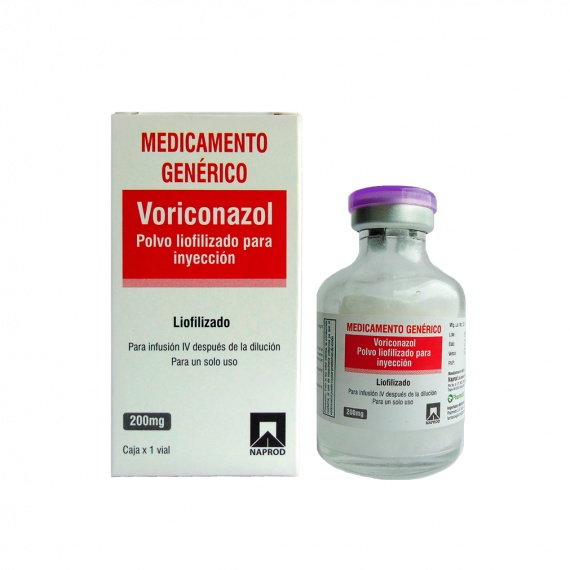
VORICONAZOL 200 mg Injectable Perfusion

Prescription review online
A doctor will review your case and decide whether a prescription is medically appropriate.

Talk to a doctor about this medicine
Discuss your symptoms and possible next steps in a quick online consultation.



How to use VORICONAZOLE TEVA 200 mg POWDER FOR SOLUTION FOR INFUSION
Contents of the leaflet
- Introduction
- What Voriconazole Teva 200 mg powder for solution for infusion is and what it is used for
- What you need to know before you use Voriconazole Teva 200 mg powder for solution for infusion
- How to use Voriconazole Teva 200 mg powder for solution for infusion
- Possible Adverse Effects
- Storage of Voriconazol Teva 200 mg Powder for Solution for Infusion
- Container Contents and Additional Information
Introduction
Package Leaflet: Information for the User
Voriconazole Teva 200 mg powder for solution for infusion EFG
Read all of this leaflet carefully before you start taking this medicine because it contains important information for you.
- Keep this leaflet, you may need to read it again.
- If you have any further questions, ask your doctor, pharmacist or nurse.
- This medicine has been prescribed for you only. Do not pass it on to others. It may harm them, even if their signs of illness are the same as yours.
- If you get any side effects, talk to your doctor, pharmacist or nurse. This includes any possible side effects not listed in this leaflet. See section 4.
Contents of the pack and other information:
- What Voriconazole Teva 200 mg powder for solution for infusion is and what it is used for
- What you need to know before you use Voriconazole Teva 200 mg powder for solution for infusion
- How to use Voriconazole Teva 200 mg powder for solution for infusion
- Possible side effects
5 Storage of Voriconazole Teva 200 mg powder for solution for infusion
- Contents of the pack and further information
1. What Voriconazole Teva 200 mg powder for solution for infusion is and what it is used for
Voriconazole Teva contains the active substance voriconazole. Voriconazole is an antifungal medicine. It works by killing or stopping the growth of fungi that cause infections.
It is used for the treatment of patients (adults and children aged 2 years or older) with:
- invasive aspergillosis (a type of fungal infection caused by Aspergillusspp),
- candidaemia (another type of fungal infection caused by Candidaspp) in non-neutropenic patients (patients who do not have an abnormally low count of white blood cells)
- serious invasive Candidainfections when the fungus is resistant to fluconazole (another antifungal medicine),
- serious fungal infections caused by Scedosporiumspp or Fusariumspp (two different species of fungi).
Voriconazole is used in patients with serious fungal infections that may be life-threatening.
Prevention of fungal infections in bone marrow transplant recipients with high risk.
This medicine should only be used under medical supervision.

Not sure if this medicine is right for you?
Discuss your symptoms and treatment with a doctor online.
2. What you need to know before you use Voriconazole Teva 200 mg powder for solution for infusion
Do not useVoriconazole Teva
- if you are allergic to voriconazole or any of the other ingredients of this medicine (listed in section 6).
It is very important that you inform your doctor, pharmacist or nurse if you are taking or have recently taken other medicines, including those obtained without a prescription, or herbal products.
During treatment with voriconazole, you must not take the following medicines:
- Terfenadine (used for allergy)
- Astemizole (used for allergy)
- Cisapride (used for digestive problems)
- Pimozide (used for mental disorders)
- Quinidine (used for heart rhythm disorders)
- Ivabradine (used for symptoms of chronic heart failure).
- Rifampicin (used for tuberculosis treatment)
- Efavirenz (used for HIV treatment) at doses of 400 mg and above once daily
- Carbamazepine (used to treat seizures)
- Phenobarbital (used for severe insomnia and seizures)
- Ergot alkaloids (e.g. ergotamine, dihydroergotamine; used for migraine)
- Sirolimus (used in transplant patients)
- Ritonavir (used for HIV treatment) at doses of 400 mg and above twice daily
- St John's Wort (Hypericum, herbal product)
- Naloxegol (used to treat constipation caused by opioid painkillers [e.g. morphine, oxycodone, fentanyl, tramadol, codeine]).
- Tolvaptan (used to treat low sodium levels in the blood or to slow the worsening of kidney function in patients with polycystic kidney disease).
- Lurasidone (used to treat depression).
- Venetoclax (used to treat patients with chronic lymphocytic leukemia [CLL]).
Warnings and precautions
Consult your doctor, pharmacist or nurse before starting voriconazole if:
- you have had an allergic reaction to other azoles.
- you have or have ever had liver disease. If you have liver disease, your doctor may prescribe a lower dose of voriconazole. Your doctor should also monitor your liver function with blood tests while you are being treated with voriconazole.
you have kidney failure
- you know that you have cardiomyopathy, irregular heartbeats, slow heart rate or an abnormality in the electrocardiogram (ECG) known as “prolonged QT syndrome”.
You should avoid exposure to sunlight and sunlamps during treatment. It is important to cover exposed areas and use a sunscreen with a high sun protection factor (SPF), as you may be more sensitive to the UV rays of the sun. This sensitivity may be increased further by the use of other medicines that make the skin more sensitive to sunlight, such as methotrexate. These precautions also apply to children.
Tell your doctor immediately if you develop any of the following symptoms while being treated with voriconazole:
- sunburn
- severe skin rash or blisters
- bone pain
If you develop skin disorders such as those described above, your doctor may refer you to a dermatologist, who after examination may consider it important to examine you regularly. There is a small chance that you may develop skin cancer with long-term use of voriconazole.
If you develop signs of “adrenal insufficiency” where the adrenal glands do not produce enough of certain steroid hormones, such as cortisol, which can cause symptoms such as: chronic or prolonged fatigue, muscle weakness, loss of appetite, weight loss, abdominal pain, tell your doctor.
If you develop signs of “Cushing's syndrome” where the body produces too much cortisol hormone which can cause symptoms such as: weight gain, hump of fat between the shoulders, rounded face, darkening of the skin of the abdomen, thighs, breasts and arms, thin skin, easy bruising, high blood sugar levels, excessive hair growth or excessive sweating, tell your doctor.
Your doctor should monitor your liver and kidney function with blood tests.
Children and adolescents
Voriconazole should not be given to children under 2 years of age.
Using Voriconazole Teva with other medicines
Tell your doctor or pharmacist if you are taking, have recently taken or might take any other medicines, including those obtained without a prescription.
Some medicines, when taken at the same time as this medicine, can affect the action of voriconazole or voriconazole may affect the action of other medicines.
Tell your doctor if you are using the following medicines, as concomitant treatment with voriconazole should be avoided if possible:
- Ritonavir (used for HIV treatment) at doses of 100 mg twice daily.
- Glasdegib (used for cancer treatment); if you need to use both medicines, your doctor will frequently monitor your heart rate.
Tell your doctor if you are using any of the following medicines, as concomitant treatment with this medicine should be avoided as much as possible, and a dose adjustment of voriconazole may be necessary:
- Rifabutin (used for tuberculosis treatment). If you are already being treated with rifabutin, your blood count will be monitored and rifabutin side effects will be monitored.
- Phenytoin (used to treat epilepsy). If you are already being treated with phenytoin, your phenytoin blood levels will be monitored during treatment with this medicine and your dose may need to be adjusted.
Tell your doctor if you are taking any of the following medicines, as you may need a dose adjustment or monitoring to check that these medicines and/or voriconazole are still working as they should:
- Warfarin and other anticoagulants (e.g. phenprocoumon, acenocoumarol; used to reduce blood clotting).
- Ciclosporin (used in transplant patients).
- Tacrolimus (used in transplant patients).
- Sulfonylureas (e.g. tolbutamide, glipizide and gliburide) (used for diabetes).
- Statins (e.g. atorvastatin, simvastatin) (used to reduce cholesterol levels).
- Benzodiazepines (e.g. midazolam, triazolam) (used for severe insomnia and stress).
- Omeprazole (used for stomach ulcer treatment).
- Oral contraceptives (if you use voriconazole while using oral contraceptives, you may experience side effects such as nausea and menstrual disorders).
- Vinca alkaloids (e.g. vincristine and vinblastine) (used to treat cancer).
- Tyrosine kinase inhibitors (e.g. axitinib, bosutinib, cabozantinib, ceritinib, cobimetinib, dabrafenib, dasatinib, nilotinib, sunitinib, ibrutinib, ribociclib) (used to treat cancer).
- Tretinoin (used to treat leukemia).
- Saquinavir and other HIV protease inhibitors (used to treat HIV infection).
- Non-nucleoside reverse transcriptase inhibitors (e.g. efavirenz, delavirdine and nevirapine) (used to treat HIV infection) (some doses of efavirenz should NOT be taken at the same time as voriconazole).
- Methadone (used to treat heroin addiction).
- Alfentanil, fentanyl and other short-acting opioids such as sufentanil (painkillers used for operations).
- Oxycodone and other long-acting opioids such as hydrocodone (used to treat moderate to severe pain).
- Non-steroidal anti-inflammatory drugs (e.g. ibuprofen, diclofenac) (used to treat pain and inflammation).
- Fluconazole (used to treat fungal infections).
- Flucloxacillin (antibiotic used against bacterial infections)
- Everolimus (used to treat advanced kidney cancer and in transplant patients).
- Letermovir (used to prevent cytomegalovirus (CMV) infection after bone marrow transplantation).
- Ivacaftor: used to treat cystic fibrosis.
Pregnancy and breast-feeding
Do not use voriconazole during pregnancy unless your doctor has told you to. Women of childbearing potential must use effective contraception. Contact your doctor immediately if you become pregnant during treatment with voriconazole.
Breast-feeding should be stopped before starting Voriconazole Teva 200 mg powder for solution for infusion.
If you are pregnant or breast-feeding, think you may be pregnant or are planning to have a baby, ask your doctor or pharmacist for advice before using this medicine.
Driving and using machines
Voriconazole may cause blurred vision or sensitivity to light. If this happens, do not drive or use tools or machines. Tell your doctor if this happens.
Voriconazole Teva 200 mg powder for solution for infusion contains hydroxypropyl betadex
This medicine contains 2500 mg of cyclodextrin in each vial, which is equivalent to 125 mg / ml when reconstituted in 20 ml.
Do not use in children under 2 years of age unless your doctor has recommended it.
If you have kidney failure, consult your doctor before taking this medicine.
3. How to use Voriconazole Teva 200 mg powder for solution for infusion
Follow exactly the instructions of your doctor or pharmacist. If you are not sure, ask your doctor or pharmacist again.
Your doctor will determine the dose based on your weight and the type of infection you have.
Your doctor may change your dose depending on your situation.
The recommended dose in adults (including elderly patients) is as follows:
Intravenous use | |
Dose during the first 24 hours(loading dose) | 6 mg/kg every 12 hours during the first 24 hours |
Dose after the first 24 hours (maintenance dose) | 4 mg/kg twice daily |
Depending on your response to treatment, your doctor may reduce the dose to 3 mg/kg twice daily.
Your doctor may decide to reduce the dose if you have mild to moderate cirrhosis.
Use in children and adolescents
The recommended dose in children and adolescents is as follows:
Intravenous use | ||
| Children aged 2 to less than 12 years and adolescents aged 12 to 14 years weighing less than 50 kg | Adolescents aged 12 to 14 years weighing 50 kg or more; and all adolescents over 14 years | |
Dose during the first 24 hours(loading dose) | 9 mg/kg every 12 hours during the first 24 hours | 6 mg/kg every 12 hours during the first 24 hours |
Dose after the first 24 hours (maintenance dose) | 8 mg/kg twice daily | 4 mg/kg twice daily |
Depending on your response to treatment, your doctor may increase or decrease the daily dose.
Voriconazole should be reconstituted and diluted to the correct concentration by hospital pharmacy or nursing staff (for more information see section 5 and the end of this leaflet).
It will be given by intravenous infusion (into a vein) at a maximum rate of 3 mg/kg per hour over 1 to 3 hours.
If you or your child are taking voriconazole to prevent fungal infections, your doctor may stop the administration of voriconazole if you or your child experience treatment-related side effects.
If you miss a dose ofVoriconazole Teva
Given that you will receive this medicine under close medical supervision, it is unlikely that you will miss a dose. However, tell your doctor, pharmacist or nurse if you think you have missed a dose.
If you stop treatment with Voriconazole Teva
Treatment with voriconazole should be continued for as long as your doctor considers necessary, however, the duration of treatment with voriconazole should not exceed 6 months.
Patient with compromised immune system or those with complicated infections may require longer treatment to prevent the infection from coming back. Once your condition improves, intravenous infusion may be replaced by oral tablets.
When your doctor stops treatment with voriconazole, you should not experience any effects from stopping treatment.
If you have any further questions on the use of this product, ask your doctor, pharmacist or nurse.

Started taking the medicine and have questions?
Discuss your symptoms and treatment with a doctor online.
4. Possible Adverse Effects
Like all medicines, this medicine can cause adverse effects, although not all people suffer from them.
If any appear, it is most likely to be mild and transient. Nevertheless, some can be serious and require medical attention.
Severe Adverse Effects - Stop taking Voriconazol Teva and consult your doctor immediately
- Skin rash
- Jaundice; alterations in blood tests for liver function control
- Pancreatitis
Other Adverse Effects
Very common (may affect more than 1 in 10 people):
- Visual disturbances (change in vision, such as blurred vision, color vision disturbances, abnormal intolerance to light perception, color blindness, eye disorder, visual halo, night blindness, oscillating vision, spark vision, visual aura, decreased visual acuity, visual clarity, partial loss of usual visual field, spots in the visual field)
- Fever
- Skin rash
- Nausea, vomiting, and diarrhea
- Headache
- Swelling of the limbs
- Stomach pain
- Breathing difficulties
- Elevated liver enzymes
Common (may affect up to 1 in 10 people):
- Irritation and inflammation of the gastrointestinal tract, sinusitis, gum inflammation, chills, weakness
- Low count, including severe, of certain types of red blood cells (sometimes of an immune nature) and/or white blood cells (sometimes accompanied by fever) in the blood, low platelet count that helps blood clot
- Low blood sugar levels, low blood potassium levels, low blood sodium levels
- Anxiety, depression, confusion, agitation, insomnia, hallucinations
- Seizures, tremors, or uncontrolled muscle movements, tingling or abnormal sensations in the skin, increased muscle tone, somnolence, dizziness
- Eye hemorrhage
- Heart rhythm problems, including very fast or very slow heartbeat, fainting
- Hypotension, inflammation of the veins (which may be associated with blood clot formation)
- Acute difficulty breathing, chest pain, swelling of the face (mouth, lips, and around the eyes), fluid retention in the lungs
- Constipation, indigestion, lip inflammation
- Jaundice (yellowish skin color), liver inflammation, and liver damage
- Skin eruptions, which can be severe, with blisters and peeling, characterized by a flat, red area covered with small bumps that merge, skin redness
- Itching
- Alopecia
- Back pain
- Kidney failure, blood in urine, alterations in kidney function tests
- Sunburn or severe skin reaction after exposure to light or sun
- Skin cancer
Uncommon (may affect up to 1 in 100 people):
- Flu-like symptoms, irritation, and inflammation of the gastrointestinal tract, antibiotic-associated gastrointestinal tract inflammation that causes diarrhea, lymphatic vessel inflammation
- Inflammation of the tissue that lines the inner wall of the abdomen and covers the abdominal organs
- Enlargement (sometimes painful) of the lymph nodes, bone marrow failure, increased eosinophils
- Decreased adrenal gland function, underactive thyroid gland
- Abnormal brain function, symptoms similar to Parkinson's disease, nerve damage causing numbness, pain, tingling, or burning in the hands or feet
- Problems with balance or coordination
- Brain swelling
- Double vision, severe eye diseases, such as eye and eyelid pain and inflammation, abnormal eye movements, optic nerve damage that causes vision changes, optic papilla inflammation
- Decreased sensitivity to touch
- Altered sense of taste
- Difficulty hearing, ringing in the ears, vertigo
- Inflammation of certain internal organs, pancreas, and duodenum, tongue swelling and inflammation
- Liver enlargement, liver failure, gallbladder disease, gallstones
- Joint inflammation, inflammation of the veins under the skin (which may be associated with blood clot formation)
- Kidney inflammation, protein in the urine, kidney damage
- Very high or irregular heartbeat, sometimes with erratic electrical impulses
- Abnormal electrocardiogram (ECG)
- High cholesterol in the blood, high urea in the blood
- Severe skin allergic reactions (sometimes life-threatening) such as a skin disease that causes blisters and painful sores on the skin and mucous membranes, especially in the mouth, skin inflammation, hives, skin redness and irritation, reddish or purplish skin color that may be caused by low platelet count, eczema
- Infusion site reaction
- Allergic reaction or exaggerated immune response
- Inflammation of the tissue surrounding the bone
Rare (may affect up to 1 in 1,000 people):
- Overactive thyroid gland
- Worsening of brain activity as a severe complication of liver disease
- Loss of most of the optic nerve fibers, corneal opacity, involuntary eye movement
- Blistering due to photosensitivity
- Disorder in which the immune system attacks part of the peripheral nervous system
- Heart rhythm or conduction problems (sometimes potentially fatal)
- Potentially fatal allergic reaction
- Alterations in blood coagulation
- Severe skin allergic reactions (sometimes life-threatening), such as rapid swelling (edema) of the dermis, subcutaneous tissue, mucosa, and submucosal layers, itchy and painful thickened and reddened skin plaques with silvery scales, potentially life-threatening condition that causes large portions of the epidermis, the outermost layer of skin, to peel off from the underlying skin layers, generalized rash, elevated body temperature, and enlarged lymph nodes
- Small, scaly, dry patches on the skin, sometimes thick and with tips or "horns"
Adverse effects with unknown frequency (frequency cannot be estimated from available data):
- Pigmented spots and patches
- Other important adverse effects whose frequency is unknown but should be reported to the doctor immediately: Red, scaly skin plaques or ring-shaped skin lesions that may be a symptom of an autoimmune disease called cutaneous lupus erythematosus
During infusion, there have been infrequent reactions with voriconazole (including redness, fever, sweating, increased heart rate, difficulty breathing, nausea, itching, and skin rash). The doctor may interrupt the infusion if this occurs.
Since voriconazole has been shown to affect the liver and kidneys, your doctor should monitor liver and kidney function through blood tests. Inform your doctor if you have stomach pain or if your stools have a different consistency.
Cases of skin cancer have been reported in patients treated with voriconazole for long periods.
The frequency of sunburn or severe skin reactions after exposure to light or sun was higher in children. If you or your child have skin disorders, your doctor may refer you to a dermatologist who, after consultation, may decide that it is important for you or your child to undergo regular follow-up. Elevated liver enzymes were also observed more frequently in children.
If any of these adverse effects persist or are bothersome, inform your doctor.
Reporting Adverse Effects:If you experience any type of adverse effect, consult your doctor or pharmacist, even if it is a possible adverse effect that is not listed in this prospectus. You can also report them directly through the Spanish Pharmacovigilance System for Human Use Medicines: https://www.notificaram.es. By reporting adverse effects, you can contribute to providing more information on the safety of this medicine.
5. Storage of Voriconazol Teva 200 mg Powder for Solution for Infusion
Keep this medicine out of the sight and reach of children.
Do not use this medicine after the expiration date that appears on the label or packaging after CAD. The expiration date is the last day of the month indicated.
Do not store above 25°C.
Once reconstituted, this medicine must be used immediately, although, if necessary, it can be stored for up to 24 hours between 2°C and 8°C (in the refrigerator). Voriconazol Teva 200 mg powder for solution for infusion reconstituted must be diluted first with a compatible infusion diluent before being infused. (For more information, see the end of this prospectus).
Medicines should not be thrown away through wastewater or household waste. Deposit the packaging and medicines you no longer need in the SIGRE Point. In case of doubt, ask your pharmacist how to dispose of the packaging and medicines you no longer need. This way, you will help protect the environment.
6. Container Contents and Additional Information
Composition of Voriconazole Teva 200 mg Powder for Solution for Infusion
- The active ingredient is voriconazole.
- The other components (excipients) are hydroxypropyl betadex and hydrochloric acid (for pH adjustment).
Each vial contains 200 mg of voriconazole, equivalent to a concentrated solution of 10 mg/ml once reconstituted following the instructions provided by the hospital pharmacy or nursing staff (see the information at the end of this prospectus).
Appearance of the Product and Container Contents
Voriconazole Teva 200 mg Powder for Solution for Infusion is presented in a single-use glass vial in the form of a white to off-white powder for solution for infusion.
Marketing Authorization Holder and Manufacturer
Marketing Authorization Holder
TEVA PHARMA, S.L.U.
C/ Anabel Segura, 11, Edificio Albatros B, 1ª planta,
Alcobendas, 28108 Madrid, Spain
Manufacturer
Merckle GmbH
Ludwig-Merckle-Straße 3, Blaubeuren, 89143
Germany
Or
PLIVA HRVATSKA D.O.O.
Prilaz Baruna Filipovica 25
10000 Zagreb, Croatia
This Medicinal Product is Authorized in the Member States of the European Economic Area under the Following Names:
Germany | Voriconazole-ratiopharm 200 mg Powder for Solution for Infusion |
Austria | Voriconazole ratiopharm 200 mg Powder for Solution for Infusion |
Belgium | Voriconazole Teva 200 mg Powder for Solution for Infusion |
Cyprus | Voriconazole Teva Pharma 200 mg Powder for Solution for Infusion |
Croatia | Voriconazole Pliva 200 mg Powder for Solution for Infusion |
Denmark | Voriconazole Teva |
Spain | Voriconazole Teva 200 mg Powder for Solution for Infusion EFG |
France | Voriconazole Teva 200 mg, Powder for Solution for Infusion |
Greece | Voriconazole Teva Pharma 200 mg Powder for Solution for Infusion |
Hungary | Voriconazole Teva 200 mg Powder for Solution for Infusion |
Italy | Voriconazole Teva Italia |
Luxembourg | Voriconazole Teva 200 mg Powder for Solution for Infusion |
Netherlands | Voriconazole Teva 200 mg, Powder for Solution for Infusion |
Poland | Voriconazole Teva |
Portugal | Voriconazole Teva 200 mg Powder for Solution for Infusion |
United Kingdom | Voriconazole 200 mg Powder for Solution for Infusion |
Czech Republic | Voriconazole Teva 200 mg Powder for Solution for Infusion |
Romania | VORICONAZOLE TEVA 200 mg Powder for Solution for Infusion |
Date of the Last Revision of this Prospectus: July 2024
Detailed information on this medicinal product is available on the website of the Spanish Agency for Medicines and Health Products (AEMPS)http://www.aemps.gob.es/
-------------------------------------------------------------------------------------------------------------------
The following information is intended only for healthcare professionals:
Information on Reconstitution and Dilution
- Voriconazole needs to be reconstituted with 19 ml of water for injectable preparations or 19 ml of sodium chloride 9 mg/ml (0.9%) for infusion to obtain an extractable volume of 20 ml of clear concentrate containing 10 mg/ml of voriconazole.
- It is recommended to use a standard 20 ml syringe (not automatic) to ensure that the exact amount (19.0 ml) of water for injectable preparations or sodium chloride 9 mg/ml (0.9%) is dispensed.
- The required volume of reconstituted concentrate is then added to a compatible infusion solution, including those listed below, to obtain a final voriconazole solution containing 0.5 to 5 mg/ml of voriconazole.
- This product is for single use only, and any unused solution should be discarded. Only clear solutions without particles should be used.
- It should not be administered by rapid intravenous injection.
- Regarding storage information, see section 5 "Storage of Voriconazole Teva 200 mg Powder for Solution for Infusion".
Required Volumes ofVoriconazole Teva200 mg Powder for Solution for InfusionConcentrate 10 mg/ml
Body Weight (kg) | Volume of Voriconazole Teva 200 mg Powder for Solution for Infusion Concentrate (10 mg/ml) Required for | ||||
Dose of 3 mg/kg (number of vials) | Dose of 4 mg/kg (number of vials) | Dose of 6 mg/kg (number of vials) | Dose of 8 mg/kg (number of vials) | Dose of 9 mg/kg (number of vials) | |
10 | - | 4.0 ml(1) | - | 8.0 ml(1) | 9.0 ml(1) |
15 | - | 6.0 ml(1) | - | 12.0 ml(1) | 13.5 ml(1) |
20 | - | 8.0 ml(1) | - | 16.0 ml(1) | 18.0 ml(1) |
25 | - | 10.0 ml(1) | - | 20.0 ml(1) | 22.5 ml(2) |
30 | 9.0 ml(1) | 12.0 ml(1) | 18.0 ml(1) | 24.0 ml(2) | 27.0 ml(2) |
35 | 10.5 ml(1) | 14.0 ml(1) | 21.0 ml(2) | 28.0 ml(2) | 31.5 ml(2) |
40 | 12.0 ml(1) | 16.0 ml(1) | 24.0 ml(2) | 32.0 ml(2) | 36.0 ml(2) |
45 | 13.5 ml(1) | 18.0 ml(1) | 27.0 ml(2) | 36.0 ml(2) | 40.5 ml(3) |
50 | 15.0 ml(1) | 20.0 ml(1) | 30.0 ml(2) | 40.0 ml(2) | 45.0 ml(3) |
55 | 16.5 ml(1) | 22.0 ml(2) | 33.0 ml(2) | 44.0 ml(3) | 49.5 ml(3) |
60 | 18.0 ml(1) | 24.0 ml(2) | 36.0 ml(2) | 48.0 ml(3) | 54.0 ml(3) |
65 | 19.5 ml(1) | 26.0 ml(2) | 39.0 ml(2) | 52.0 ml(3) | 58.5 ml(3) |
70 | 21.0 ml(2) | 28.0 ml(2) | 42.0 ml(3) | - | - |
75 | 22.5 ml(2) | 30.0 ml(2) | 45.0 ml(3) | - | - |
80 | 24.0 ml(2) | 32.0 ml(2) | 48.0 ml(3) | - | - |
85 | 25.5 ml(2) | 34.0 ml(2) | 51.0 ml(3) | - | - |
90 | 27.0 ml(2) | 36.0 ml(2) | 54.0 ml(3) | - | - |
95 | 28.5 ml(2) | 38.0 ml(2) | 57.0 ml(3) | - | - |
100 | 30.0 ml(2) | 40.0 ml(2) | 60.0 ml(3) | - | - |
Voriconazole is a sterile lyophilized product without preservatives for single use. From a microbiological point of view, the solution should be used immediately after reconstitution. If not used immediately, the storage time and conditions before use are the responsibility of the user, and it should be stored between 2 and 8°C (in a refrigerator) for a maximum period of 24 hours.
Compatible Infusion Solutions:
The reconstituted solution can be diluted with:
Sodium chloride 9 mg/ml (0.9%) injection solution
Compound sodium lactate intravenous infusion
5% glucose solution and Ringer's lactate solution for intravenous infusion
5% glucose solution and 0.45% sodium chloride solution for intravenous infusion
5% glucose solution for intravenous infusion
5% glucose solution with 20 mEq potassium chloride for intravenous infusion
0.45% sodium chloride solution for intravenous infusion
5% glucose solution and 0.9% sodium chloride solution for intravenous infusion
The compatibility of voriconazole with other diluents, other than those specifically mentioned above (or those mentioned below in "Incompatibilities"), is unknown.
Incompatibilities:
Voriconazole should not be infused simultaneously with other drug infusions, including parenteral nutrition (e.g., Aminofusin 10% Plus), in the same line or cannula.
Infusions of blood products and short-term infusions of concentrated electrolyte solutions should not be administered simultaneously with voriconazole.
Total parenteral nutrition can be administered simultaneously with voriconazole, but not in the same line or cannula.
Voriconazole should not be diluted with 4.2% sodium bicarbonate solution.
- Country of registration
- Dosage formINJECTABLE PERFUSION, 200 mg
- ATC codeJ02AC03
- Active substance
- Prescription requiredYes
- Manufacturer
- CompositionHIDROXIPROPIL BETACICLODEXTRINA (2500 mg mg)
- This information is for reference only and does not constitute medical advice. Always consult a doctor before taking any medication. Oladoctor is not responsible for medical decisions based on this content.
- Alternatives to VORICONAZOLE TEVA 200 mg POWDER FOR SOLUTION FOR INFUSIONDosage form: TABLET, UnknownActive substance: voriconazoleManufacturer: Pfizer Europe Ma EeigPrescription requiredDosage form: TABLET, UnknownActive substance: voriconazoleManufacturer: Pfizer Europe Ma EeigPrescription requiredDosage form: TABLET, UnknownActive substance: voriconazoleManufacturer: Pfizer Europe Ma EeigPrescription required
Online doctors for VORICONAZOLE TEVA 200 mg POWDER FOR SOLUTION FOR INFUSION
Discuss questions about VORICONAZOLE TEVA 200 mg POWDER FOR SOLUTION FOR INFUSION, including use, safety considerations and prescription review, subject to medical assessment and local regulations.









Get VORICONAZOLE TEVA 200 mg POWDER FOR SOLUTION FOR INFUSION Prescription Online
Fill in a 2-min form
Tell us your symptoms, history, and what medicine you're requesting.
Pick a doctor or let us assign
Choose a specialist or we'll match you with the next available doctor.
Doctor reviews your case
Usually within 30 minutes. They may ask follow-up questions via chat.
Collect from any pharmacy
Electronic prescription sent to your email — valid across Spain.
Frequently Asked Questions
VORICONAZOLE TEVA 200 mg POWDER FOR SOLUTION FOR INFUSION requires a prescription in Spain. You can check with a doctor online whether this medicine may be appropriate for your situation.
The active ingredient in VORICONAZOLE TEVA 200 mg POWDER FOR SOLUTION FOR INFUSION is voriconazole. This information helps identify medicines with the same composition but different brand names.
VORICONAZOLE TEVA 200 mg POWDER FOR SOLUTION FOR INFUSION is manufactured by Teva Pharma S.L.U.. Pharmacy brands and packaging may differ depending on the distributor.
Doctors such as Family doctors, Psychiatrists, Dermatologists, Cardiologists, Endocrinologists, Gastroenterologists, Pulmonologists, Nephrologists, Rheumatologists, Hematologists, Infectious disease physicians, Allergists, Geriatricians, Paediatricians, Oncologists may assess whether VORICONAZOLE TEVA 200 mg POWDER FOR SOLUTION FOR INFUSION is appropriate, depending on your situation and local regulations. You can book an online consultation to discuss your symptoms and possible next steps.
Spain has a well-developed healthcare infrastructure across major cities such as Madrid, Barcelona, Valencia, and Seville. Pharmacies are widely available and operate under strict regulations, ensuring access to prescribed medications.
You can buy VORICONAZOLE TEVA 200 mg POWDER FOR SOLUTION FOR INFUSION in Madrid, Barcelona, Seville, or Valencia at any local pharmacy with a valid prescription.
To obtain a prescription, you can use Oladoctor:
Other medicines with the same active substance (voriconazole) include VFEND 200 mg FILM-COATED TABLETS, VFEND 200 mg FILM-COATED TABLETS, VFEND 200 mg FILM-COATED TABLETS. These may have different brand names or formulations but contain the same therapeutic ingredient. Always consult a doctor before switching or starting a new medicine.
