



URSITAN 3 mg /Ml Eye Drops

Prescription review online
A doctor will review your case and decide whether a prescription is medically appropriate.

Talk to a doctor about this medicine
Discuss your symptoms and possible next steps in a quick online consultation.



How to use URSITAN 3 MG/ML EYE DROPS IN SINGLE-DOSE CONTAINERS
Contents of the leaflet
- Introduction
- What is Ursitan and what is it used for
- What you need to know before you use Ursitan
- How to use Ursitan
- Possible side effects
- Storage of Ursitan
- Contents of the pack and further information
Introduction
Package Leaflet: Information for the User
Ursitan 3 mg/ml Eye Drops Solution in Single-Dose Container
tobramycin
Read all of this leaflet carefully before you start using this medicine because it contains important information for you.
- Keep this leaflet, you may need to read it again.
- If you have any further questions, ask your doctor or pharmacist.
- This medicine has been prescribed for you only. Do not pass it on to others. It may harm them, even if their signs of illness are the same as yours.
- If you get any side effects, talk to your doctor or pharmacist. This includes any possible side effects not listed in this leaflet. See section 4.
Contents of the Package Leaflet:
- What is Ursitan and what is it used for
- What you need to know before you use Ursitan
- How to use Ursitan
- Possible side effects
- Storage of Ursitan
- Contents of the pack and further information
1. What is Ursitan and what is it used for
Ursitan is an eye drop that contains an antibiotic (tobramycin) that acts against microorganisms that cause bacterial infections of the eye surface.
Antibiotics are used to treat bacterial infections and are not effective against viral infections. It is important that youfollow the instructions regarding dose, administration interval, and treatment duration indicated by your doctor. Do not store or reuse this medication. If you have any leftover antibiotic after completing treatment, return it to the pharmacy for proper disposal. Do not throw away medications down the drain or in the trash. |
This medication is used for the treatment of bacterial infections of the eye surface and other parts of the eye, such as conjunctivitis, in adults, adolescents, and children over 1 year of age. Eye infections can cause symptoms of irritation such as redness and discharge.

Not sure if this medicine is right for you?
Discuss your symptoms and treatment with a doctor online.
2. What you need to know before you use Ursitan
Do not use Ursitan:
If you are allergic to tobramycin or any of the other components of this medication (listed in section 6).
Warnings and precautions
Consult your doctor or pharmacist before starting to use Ursitan.
- Use this medication only in your eye(s).
- If you experience symptoms of an allergic reaction with this medication, discontinue treatment and consult your doctor. Allergic reactions can range from localized itching or skin redness to severe allergic reactions (anaphylactic reaction) or severe skin reactions. These allergic reactions can occur with other topical or systemic antibiotics of the same family (aminoglycosides).
- If you are using another antibiotic treatment with this medication, consult your doctor.
- If you have or have had conditions such as myasthenia gravis (a neuromuscular disorder that causes muscle weakness) or Parkinson's disease (a progressive nervous system disorder that affects movement), consult your doctor. Antibiotics of this type can worsen muscle weakness.
- If your symptoms worsen or return suddenly, contact your doctor. If you use this medication for a long period, you may become more sensitive to eye infections.
- If you wear contact lenses
- Wearing contact lenses is not recommended during the treatment of an eye infection.
- If you or members of your maternal family have a disease caused by a mitochondrial mutation (a genetic disease) or hearing loss due to antibiotics, it is recommended that you inform your doctor or pharmacist before taking this medication. Certain mitochondrial mutations can increase your risk of hearing loss with this product. Your doctor may recommend genetic testing before administering tobramycin.
Other medications and Ursitan
Tell your doctor or pharmacist if you are using, have recently used, or might use any other medication.
Pregnancy and breastfeeding
Ursitan should only be used during pregnancy if your doctor considers it clearly necessary. If you are pregnant or breastfeeding, think you might be pregnant, or plan to become pregnant or start breastfeeding, consult your doctor or pharmacist before using this medication.
Driving and using machines
You may notice that your vision becomes blurry for a while after applying the eye drops. Do not drive or use machines until this effect has disappeared.
Ursitan contains boron
This medication should not be administered to children under 12 years of age without medical advice, as it contains boron and may affect future fertility.
3. How to use Ursitan
Follow exactly the administration instructions of this medication indicated by your doctor or pharmacist. In case of doubt, consult your doctor or pharmacist again.
Do not exceed the recommended dose prescribed by your doctor or pharmacist.
The recommended dose is:
Use in adults
In mild or moderate infections, instill 1 or 2 drops in the affected eye(s) every four hours. In severe infections, instill 2 drops in the affected eye(s) every hour until improvement is noted, then increase the administration interval to complete the total treatment period.
Use in children and adolescents:
This medication can be used in adolescents and children over 1 year of age at the same dose as in adults. The maximum dose that can be administered in a day is 14 drops in children from 1 to 2 years and 45 drops in children from 2 to 12 years of age. In case of doubt, ask your doctor. The safety and efficacy of this medication have not been established in children under 1 year of age. No data are available.
Remember to apply your medication when it is due.
Your doctor will indicate the duration of your treatment with this medication. Do not stop treatment unless your doctor tells you to.
This medication should only be used as eye drops.
Recommendations for use:
Follow exactly the administration instructions of this medication indicated by your doctor. In case of doubt, consult your doctor or pharmacist again.
|
|
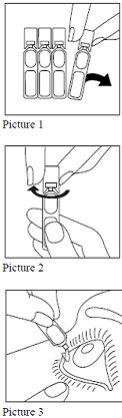
If you apply drops to both eyes, repeat all the previous steps with the other eye.
If the drop does not fall into the eye, try again.
If you are using other eye medications,wait at least 5 minutes between the administration of this medication and the other eye medications. Eye ointments should be administered last.
If you use more Ursitan than you should,you can eliminate it by rinsing your eyes with warm water. Although side effects are not expected, do not apply more drops until it is time to do so again.
In case of overdose or accidental ingestion, consult your doctor or pharmacist immediately or call the Toxicology Information Service, phone 91 562 04 20, indicating the medication and the amount ingested.
If you forget to use Ursitan, apply a single dose as soon as you remember and continue with the next dose that was scheduled. However, if it is almost time for the next dose, do not apply the missed dose and continue with the next dose of your regular regimen. Do not apply a double dose to make up for missed doses.
If you have any other questions about the use of this medication, ask your doctor or pharmacist.

Started taking the medicine and have questions?
Discuss your symptoms and treatment with a doctor online.
4. Possible side effects
Like all medications, Ursitan can cause side effects, although not everyone gets them.
If these side effects become severe, consult your doctor or pharmacist.
The following side effects have been reported:
Common side effects (may affect up to 1 in 10 people)
- Eye effects: eye discomfort, eye redness.
Uncommon side effects (may affect up to 1 in 100 people)
- Eye effects: inflammation of the eye surface, corneal damage, visual impairment, blurred vision, eye and eyelid swelling, eyelid redness, dry eye, increased tear production, eye pain, eye itching, eye discharge.
- General effects: allergy (hypersensitivity), headache, hives, skin inflammation, decreased growth or number of eyelashes, skin depigmentation, itching, and dry skin.
Frequency not known (cannot be estimated from the available data)
- Eye effects: eye allergy, eye irritation, eyelid itching.
- General effects: severe allergic reaction, severe skin reactions (Stevens-Johnson syndrome and erythema multiforme), rash
Reporting of side effects
If you experience any side effects, talk to your doctor or pharmacist, even if it is possible side effects that are not listed in this leaflet. You can also report them directly through the Spanish Pharmacovigilance System for Human Use Medicines: www.notificaRAM.es. By reporting side effects, you can help provide more information on the safety of this medication.
5. Storage of Ursitan
Keep this medication out of the sight and reach of children.
Do not use this medication after the expiration date (EXP) printed on the box and container. The expiration date is the last day of the month indicated.
This medication does not require special storage conditions.
- The expiration date after opening the pouch is 90 days.
- After the first opening, store the containers in the pouch and in the box.
- Expiration date after opening the container: the medication must be used immediately. Any unused contents should be discarded.
Medications should not be thrown away down the drain or in the trash. Deposit the containers and medications you no longer need in the SIGRE collection point at the pharmacy. If in doubt, ask your pharmacist how to dispose of the containers and medications you no longer need. This way, you will help protect the environment.
6. Contents of the pack and further information
Composition of Ursitan
- The active ingredient is tobramycin 3mg/ml.
- 1 ml of solution contains 3 mg of tobramycin.
- Each single-dose container contains approximately 0.75mg of tobramycin.
- The other components are tiloxapol, boric acid, sodium sulfate anhydrous, sodium chloride, and purified water.
Appearance of the product and contents of the pack
Ursitan is a clear eye drop solution packaged in single-dose plastic containers containing 0.25ml.
The single-dose containers are inside an aluminum pouch within a cardboard box. Each single-dose container contains approximately 0.75mg of tobramycin.
It is presented in commercial formats of 10, 20, or 45 single-dose containers. Not all formats may be marketed.
Marketing authorization holder and manufacturer
Laboratorios Salvat, S.A.
C/ Gall, 30-36 - 08950
Esplugues de Llobregat
Barcelona - Spain
This medication is authorized in the Member States of the European Economic Area and in the United Kingdom (Northern Ireland) with the following names:
Spain Ursitan 3 mg/ml eye drops solution in single-dose container
Portugal Ursitan 0.75 mg/0.25 ml eye drops, solution in single-dose container
Italy Ursitan 3 mg/ml eye drops, solution in single-dose containers
France Ursitan 3 mg/ml eye drops solution
Date of revision of the text: September 2023
Detailed and updated information on this medication is available on the website of the Spanish Agency for Medicines and Health Products (AEMPS) http://www.aemps.gob.es/
- Country of registration
- Dosage formEYE DROP, 3 mg/ml
- ATC codeS01AA12
- Availability in pharmaciesSupply issue reported
- Active substance
- Prescription requiredYes
- Manufacturer
- CompositionACIDO BORICO (3.100 mg mg), SULFATO SODICO ANHIDRO (0.375 mg mg), CLORURO DE SODIO (0.700 mg mg)
- This information is for reference only and does not constitute medical advice. Always consult a doctor before taking any medication. Oladoctor is not responsible for medical decisions based on this content.
- Alternatives to URSITAN 3 MG/ML EYE DROPS IN SINGLE-DOSE CONTAINERSDosage form: EYEDROP, 3 mg/mlActive substance: tobramycinManufacturer: Novartis Farmaceutica S.A.Prescription requiredDosage form: OPHTHALMIC OINTMENT, 3 mg/gActive substance: tobramycinManufacturer: Novartis Farmaceutica S.A.Prescription requiredDosage form: Eye drops, solution, 3 mgActive substance: tobramycinManufacturer: Medicom Healthcare Ireland LimitedPrescription required
Online doctors for URSITAN 3 MG/ML EYE DROPS IN SINGLE-DOSE CONTAINERS
Discuss questions about URSITAN 3 MG/ML EYE DROPS IN SINGLE-DOSE CONTAINERS, including use, safety considerations and prescription review, subject to medical assessment and local regulations.









Get URSITAN 3 MG/ML EYE DROPS IN SINGLE-DOSE CONTAINERS Prescription Online
Fill in a 2-min form
Tell us your symptoms, history, and what medicine you're requesting.
Pick a doctor or let us assign
Choose a specialist or we'll match you with the next available doctor.
Doctor reviews your case
Usually within 30 minutes. They may ask follow-up questions via chat.
Collect from any pharmacy
Electronic prescription sent to your email — valid across Spain.
Frequently Asked Questions
URSITAN 3 MG/ML EYE DROPS IN SINGLE-DOSE CONTAINERS requires a prescription in Spain. You can check with a doctor online whether this medicine may be appropriate for your situation.
The active ingredient in URSITAN 3 MG/ML EYE DROPS IN SINGLE-DOSE CONTAINERS is tobramycin. This information helps identify medicines with the same composition but different brand names.
URSITAN 3 MG/ML EYE DROPS IN SINGLE-DOSE CONTAINERS is manufactured by Laboratorios Salvat S.A.. Pharmacy brands and packaging may differ depending on the distributor.
Doctors such as Family doctors, Psychiatrists, Dermatologists, Cardiologists, Endocrinologists, Gastroenterologists, Pulmonologists, Nephrologists, Rheumatologists, Hematologists, Infectious disease physicians, Allergists, Geriatricians, Paediatricians, Oncologists may assess whether URSITAN 3 MG/ML EYE DROPS IN SINGLE-DOSE CONTAINERS is appropriate, depending on your situation and local regulations. You can book an online consultation to discuss your symptoms and possible next steps.
Spain has a well-developed healthcare infrastructure across major cities such as Madrid, Barcelona, Valencia, and Seville. Pharmacies are widely available and operate under strict regulations, ensuring access to prescribed medications.
You can buy URSITAN 3 MG/ML EYE DROPS IN SINGLE-DOSE CONTAINERS in Madrid, Barcelona, Seville, or Valencia at any local pharmacy with a valid prescription.
To obtain a prescription, you can use Oladoctor:
Other medicines with the same active substance (tobramycin) include TOBREX 3 mg/ml EYE DROPS SOLUTION, TOBREX OPHTHALMIC OINTMENT 3 mg/g, Tobrabact 3,0 mg/ml colirio en solucion. These may have different brand names or formulations but contain the same therapeutic ingredient. Always consult a doctor before switching or starting a new medicine.
