

TRINISPRAY 0.4 mg / 0.05 ml Sublingual Spray Solution





How to use TRINISPRAY 0.4 mg / 0.05 ml SUBLINGUAL SPRAY SOLUTION
Translated with AI
This page provides general information and does not replace a doctor’s consultation. Always consult a doctor before taking any medication. Seek urgent medical care if symptoms are severe.
Show originalContents of the leaflet
Introduction
Leaflet: information for the patient
Trinispray 0.4 mg / 0.05 ml solution for sublingual spray
Nitroglycerin
Read this leaflet carefully before starting to use this medicine because it contains important information for you.
- Keep this leaflet, as you may need to read it again.
- If you have any doubts, consult your doctor, pharmacist, or nurse.
- This medicine has been prescribed to you only, and you should not give it to others, even if they have the same symptoms, as it may harm them.
- If you experience side effects, consult your doctor, pharmacist, or nurse, even if they are not listed in this leaflet. See section 4.
Contents of the leaflet
- What is Trinispray and what is it used for
- What you need to know before starting to use Trinispray
- How to use Trinispray
- Possible side effects
5 Conservation of Trinispray
- Contents of the package and additional information
1. What is Trinispray and what is it used for
It belongs to a group of medicines called vasodilators, which relax the muscle of the blood vessels, widening the arteries and veins. Trinispray increases blood flow to the heart and improves its performance when there is a lack of blood flow in the coronary arteries (arteries that carry blood to the heart).
Trinispray is used for:
- treatment of acute attacks of angina pectoris, which consist of episodes of oppressive chest pain of sudden onset due to lack of blood flow in the coronary arteries.
- acute left ventricular failure (decrease in the ability of the heart's ventricle to pump blood) with dyspnea (difficulty breathing), with or without precordial pain (angina pectoris).
- it is also used to prevent the onset of acute attacks of angina pectoris, administered a few minutes before starting the effort or work that may trigger the pain.

2. What you need to know before starting to use Trinispray
Do not use Trinispray:
- if you are allergic to the active substance or to any of the other components of this medicine (listed in section 6).
- patients being treated with this medicine should never take medications that contain sildenafil, vardenafil, tadalafil... (medicines used for erection problems) at the same time.
- if you have obstructive cardiomyopathy (a disease characterized by the obstruction of blood flow in the heart).
- if you have cranial hypertension (high blood pressure in the brain), cerebral lesions, cerebral hemorrhage.
- if you are in a state of shock (a situation in which the body is not receiving enough blood flow and is characterized by low blood pressure, anxiety, confusion, pale skin, dizziness, sweating, chest pain, sometimes loss of consciousness).
- acute circulatory failure.
- if you have severe anemia (decrease in the number of red blood cells in the blood).
- if you have hypovolemia (decrease in total blood volume).
- if you have mitral or aortic stenosis (narrowing of a heart valve)
- if you have constrictive pericarditis (inflammation of the heart).
- if your blood pressure is very low.
- if you have had an acute myocardial infarction with right ventricular involvement (see section "Warnings and precautions").
- if you are using soluble guanylate cyclase stimulators, e.g., riociguat, used in the treatment of pulmonary hypertension, due to an increased risk of hypotension.
Warnings and precautions
Consult your doctor, pharmacist, or nurse before starting to use Trinispray
- tolerance may occur. Sudden discontinuation of treatment should be avoided.
- to avoid the risk of an angina attack, another type of treatment should be started when Trinispray administration is stopped.
- reflex tachycardia (rapid heart rate) and hypotension (see section 4 "Possible side effects") may occur, increasing the heart's oxygen demand. These situations can lead to cardiac arrhythmias (alteration of the heart rate) with ventricular fibrillation (irregular movements of the heart's ventricles), sometimes fatal in patients with acute myocardial infarction with right ventricular involvement (see section 2 "Do not use Trinispray").
- if shock occurs, treatment should be interrupted.
- if you are using other medications such as vasodilators, antihypertensives, or diuretics, or if you drink alcohol, as it may increase the hypotension caused by Trinispray, especially in patients over 65 years old.
- if you have hypoxemia (lack of oxygen in the blood) that may reduce the effect of Trinispray.
- if you have cyanosis (blue-purple skin and mucous membrane discoloration due to insufficient oxygen supply to the tissues) due to treatment with high doses, it is essential to assess whether you also have methemoglobinemia (a disease of the red blood cells that prevents oxygen from being transported to the body's tissues).
- headaches or symptoms of hypotension (low blood pressure), especially when standing up, may be due to an overdose, requiring a dose adjustment.
- if you have incipient glaucoma (eye disease caused by high pressure in the eye).
Due to the lack of data on safety and efficacy, its use is not recommended in children.
Using Trinispray with other medicines
Tell your doctor or pharmacist if you are using, have recently used, or may need to use any other medicine.
Do not use Trinispray if you are being treated with medicines used for erection problems (see section 2 "Do not use Trinispray").
Trinispray should not be used with soluble guanylate cyclase stimulators, e.g., riociguat, due to the possible potentiation of the hypotensive effect (see section 2 "Do not use Trinispray").
Trinispray should be used with caution when used with medications that decrease blood pressure (antihypertensive medications, hypotensive medications, e.g., tricyclic antidepressants, neuroleptics), as well as alcohol, as it may potentiate the hypotensive effects (see section 2 "Warnings and precautions").
Pregnancy, breastfeeding, and fertility
If you are pregnant or breastfeeding, think you may be pregnant, or plan to become pregnant, consult your doctor or pharmacist before using this medicine.
Trinispray should not be used by pregnant women. Your doctor will tell you if you can or cannot use it if necessary.
Trinispray is not recommended for use by breastfeeding mothers.
Driving and using machines
Observe your response to the medication because, in some cases, symptoms of hypotension and dizziness may occur, especially at the start of treatment, which could affect your ability to drive vehicles or use machines. Therefore, do not drive or use potentially hazardous machinery until you have checked how you tolerate the medicine.
Trinispray contains alcohol
This medicine contains small amounts of ethanol (alcohol), less than 100 mg per spray.
3. How to use Trinispray
Follow the administration instructions of this medicine indicated by your doctor or pharmacist exactly. If in doubt, consult your doctor or pharmacist again.
This medicine should only be administered sublingually.
Treatment of acute attacks of angina pectoris and treatment of acute left ventricular failure
If you are performing any physical activity, you should stop it immediately and sit down. You should remember the exact moment when the symptoms started (hour and minutes).
1-2 sprays will be administered. This operation can be repeated if necessary at 5-10 minute intervals, up to 3 or 4 times, until the angina pectoris pain or difficulty breathing due to acute left ventricular failure disappears.
If, after doing this, the chest pain does not disappear (pain lasting more than 20 minutes) or difficulty breathing due to acute left ventricular failure, you should seek immediate medical attention.
Prevention of acute attacks of angina pectoris
To prevent acute attacks of angina pectoris, 1-2 sprays will be administered about 10 minutes before starting the effort or work that may trigger the angina pectoris pain.
Method of administration
During administration, the patient should be at rest, preferably in a sitting position.
To use it correctly, follow these steps:
- Remove the plastic cap.
- Hold the container in a vertical position with your index finger on the actuator (button with a central groove), with the spray nozzle facing up.
- Open your mouth and bring the spray nozzle as close as possible to the sublingual region (area under the tongue). Then, perform 1 or 2 sprays by pressing the spray actuator with your index finger, directing the spray jet to the sublingual region.
- Remove the spray. Close your mouth and remain for a few seconds without swallowing (without swallowing) to facilitate the absorption of the medicine.
Put the cap back on the spray nozzle and store it in a safe place.
Patient should become familiar with the feeling of the finger on the button to be able to use the aerosol in the dark if necessary.
Patient should become familiar with the position of the spray nozzle orifice to facilitate the administration of the product.
The spray should not be inhaled and should be kept away from the eyes.
To check if the content is about to run out, gently move the container. This way, you will check if there is little solution left or not.
If you use more Trinispray than you should
If you have used more Trinispray than you should, consult your doctor, pharmacist, or call the Toxicology Information Service, phone 91 562 04 20, indicating the medicine and the amount used. It is recommended to take the container and the leaflet of the medicine to the healthcare professional.
Due to the short duration of its effects, 30 to 60 minutes, and its rapid metabolism, real intoxications are not usually present. Frequent applications can cause irritation and dryness of the mucosa.
The symptoms of overdose are mainly related to vasodilation, which can lead to reflex tachycardia (rapid heart rate), headache, nausea, dizziness, and hypotension. Cases of methemoglobinemia (blood problem in oxygen transport) have been associated.
In case of overdose, the symptoms should be treated by interrupting the treatment and administering the necessary symptomatic treatment.
If you forget to use Trinispray
Do not use a double dose to make up for forgotten doses.
If you have any other doubts about the use of this product, ask your doctor or pharmacist.
If you have any other doubts about the use of this medicine, ask your doctor or pharmacist.

4. Possible side effects
Like all medicines, this medicine can cause side effects, although not everyone gets them.
The observed side effects, according to their frequency of presentation: very frequent (may affect more than 1 in 10 patients); frequent (may affect up to 1 in 10 patients); uncommon (may affect up to 1 in 100 patients); rare (may affect up to 1 in 1,000 patients); very rare (may affect up to 1 in 10,000 patients); frequency not known (cannot be estimated from the available data), have been:
Frequent:
Nervous system disorders: headache at the start of treatment, which usually disappears after a few days.
Uncommon:
Nervous system disorders: dizziness.
Vascular disorders: hypotension, sometimes severe, including orthostatic hypotension (abnormal decrease in blood pressure when changing from a sitting to a standing position), which may be associated with reflex tachycardia (abnormally rapid heart rate) or paradoxical reflex bradycardia (abnormally slow heart rate).
General disorders and administration site conditions: asthenia (fatigue or weakness).
Rare:
Gastrointestinal disorders: nausea or vomiting
Vascular disorders: flushing of the face and neck (rubor).
Very rare:
Skin and subcutaneous tissue disorders: allergic skin reactions to nitroglycerin.
Frequency not known:
Immune system disorders: anaphylactic reactions, angioedema, inflammation of the lips and tongue, and urticaria (itching).
Reporting of side effects:
If you experience any side effect, consult your doctor or pharmacist, even if it is a possible side effect not listed in this leaflet. You can also report them directly through the Spanish Medicines and Healthcare Products Agency's (AEMPS) website: https://www.notificaram.es. By reporting side effects, you can help provide more information on the safety of this medicine.
5. Conservation of Trinispray
No special storage conditions are required.
Keep out of sight and reach of children.
Do not use this medicine after the expiration date stated on the container after CAD. The expiration date is the last day of the month indicated.
Medicines should not be disposed of via wastewater or household waste. Place the containers and medicines you no longer need in the pharmacy's SIGRE collection point. If in doubt, ask your pharmacist how to dispose of the containers and medicines you no longer need. This way, you will help protect the environment.
6. Contents of the package and additional information
Composition of Trinispray
Each spray contains:
- The active substance is nitroglycerin. Each spray releases 0.05 ml of nitroglycerin solution with an active substance content of 0.4 mg.
- The other component (excipient) is ethanol 96º (c.s.p. 0.05 ml)
Appearance of the product and contents of the container
Trinispray is a clear solution presented in an aluminum container with a dosing spray system.
Each spray container contains 85 mg of nitroglycerin in 10.5 ml of solution (concentration of 8 mg/ml).
Each spray delivers 0.4 mg of nitroglycerin.
Each container contains approximately 200 doses.
Marketing authorization holder and manufacturer
Holder:
sanofi-aventis, S.A.
C/ Roselló i Porcel, 21
08016 Barcelona
Spain
Manufacturer:
Laboratoires Chemineau
93, Route de Monnaie
F-37210 Vouvray (France)
Date of the last revision of this leaflet: June 2017
Detailed and updated information on this medicine is available on the website of the Spanish Agency for Medicines and Healthcare Products (AEMPS) http://www.aemps.es/

-


- Country of registration
- Dosage formSUBLINGUAL SPRAY, 85 mg
- ATC codeC01DA02
- Average pharmacy price3.97 EUR
- Active substance
- Prescription requiredYes
- Manufacturer
- CompositionALCOHOL ETILICO (ETANOL) (c.s.p. 0,05 ml mg)
- This information is for reference only and does not constitute medical advice. Always consult a doctor before taking any medication. Oladoctor is not responsible for medical decisions based on this content.
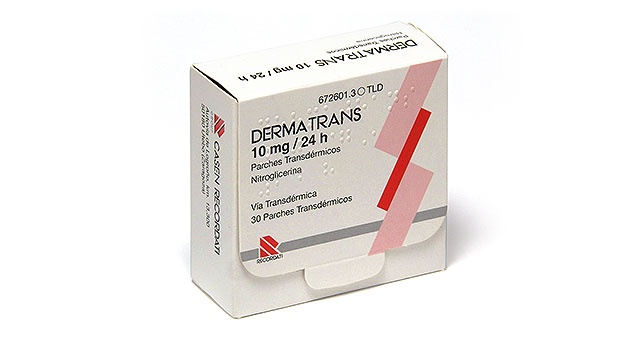
- Alternatives to TRINISPRAY 0.4 mg / 0.05 ml SUBLINGUAL SPRAY SOLUTIONDosage form: TRANSDERMAL PATCH, 37.4 mg nitroglycerinActive substance: glyceryl trinitrateManufacturer: Merus Labs Luxco Ii S.À.R.L.Prescription requiredDosage form: TRANSDERMAL PATCH, 18.7 mg nitroglycerinActive substance: glyceryl trinitrateManufacturer: Merus Labs Luxco Ii S.À.R.L.Prescription requiredDosage form: TRANSDERMAL PATCH, 31.37 mgActive substance: glyceryl trinitrateManufacturer: Casen Recordati S.L.Prescription required
Online doctors for TRINISPRAY 0.4 mg / 0.05 ml SUBLINGUAL SPRAY SOLUTION
Discuss questions about TRINISPRAY 0.4 mg / 0.05 ml SUBLINGUAL SPRAY SOLUTION, including use, safety considerations and prescription review, subject to medical assessment and local regulations.
Get TRINISPRAY 0.4 mg / 0.05 ml SUBLINGUAL SPRAY SOLUTION Prescription Online
Fill in a 2-min form
Tell us your symptoms, history, and what medicine you're requesting.
Pick a doctor or let us assign
Choose a specialist or we'll match you with the next available doctor.
Doctor reviews your case
Usually within 30 minutes. They may ask follow-up questions via chat.
Collect from any pharmacy
Electronic prescription sent to your email — valid across Spain.
Frequently Asked Questions
Is a prescription required for TRINISPRAY 0.4 mg / 0.05 ml SUBLINGUAL SPRAY SOLUTION?
TRINISPRAY 0.4 mg / 0.05 ml SUBLINGUAL SPRAY SOLUTION requires a prescription in Spain. You can check with a doctor online whether this medicine may be appropriate for your situation.
What is the active substance in TRINISPRAY 0.4 mg / 0.05 ml SUBLINGUAL SPRAY SOLUTION?
The active ingredient in TRINISPRAY 0.4 mg / 0.05 ml SUBLINGUAL SPRAY SOLUTION is glyceryl trinitrate. This information helps identify medicines with the same composition but different brand names.
How much does TRINISPRAY 0.4 mg / 0.05 ml SUBLINGUAL SPRAY SOLUTION cost in pharmacies?
The average pharmacy price for TRINISPRAY 0.4 mg / 0.05 ml SUBLINGUAL SPRAY SOLUTION is around 3.97 EUR. Prices may vary depending on the manufacturer and dosage form.
Who manufactures TRINISPRAY 0.4 mg / 0.05 ml SUBLINGUAL SPRAY SOLUTION?
TRINISPRAY 0.4 mg / 0.05 ml SUBLINGUAL SPRAY SOLUTION is manufactured by Sanofi Aventis S.A.. Pharmacy brands and packaging may differ depending on the distributor.
Which doctors can assess the use of TRINISPRAY 0.4 mg / 0.05 ml SUBLINGUAL SPRAY SOLUTION online?
Doctors such as Family doctors, Psychiatrists, Dermatologists, Cardiologists, Endocrinologists, Gastroenterologists, Pulmonologists, Nephrologists, Rheumatologists, Hematologists, Infectious disease physicians, Allergists, Geriatricians, Paediatricians, Oncologists may assess whether TRINISPRAY 0.4 mg / 0.05 ml SUBLINGUAL SPRAY SOLUTION is appropriate, depending on your situation and local regulations. You can book an online consultation to discuss your symptoms and possible next steps.
How to buy TRINISPRAY 0.4 mg / 0.05 ml SUBLINGUAL SPRAY SOLUTION in Spain?
Spain has a well-developed healthcare infrastructure across major cities such as Madrid, Barcelona, Valencia, and Seville. Pharmacies are widely available and operate under strict regulations, ensuring access to prescribed medications.
You can buy TRINISPRAY 0.4 mg / 0.05 ml SUBLINGUAL SPRAY SOLUTION in Madrid, Barcelona, Seville, or Valencia at any local pharmacy with a valid prescription.
To obtain a prescription, you can use Oladoctor:
What are the alternatives to TRINISPRAY 0.4 mg / 0.05 ml SUBLINGUAL SPRAY SOLUTION?
Other medicines with the same active substance (glyceryl trinitrate) include CORDIPLAST 10 mg/24 h TRANSDERMAL PATCHES, CORDIPLAST 5 mg/24 h TRANSDERMAL PATCHES, DERMATRANS 10 mg/24 H TRANSDERMAL PATCH. These may have different brand names or formulations but contain the same therapeutic ingredient. Always consult a doctor before switching or starting a new medicine.
