


Triflusal Qualix Pharma 300 mg cápsulas

Prescription request online
A doctor will review your case and decide whether a prescription is medically appropriate.

Talk to a doctor about this medicine
Discuss your symptoms and possible next steps in a quick online consultation.



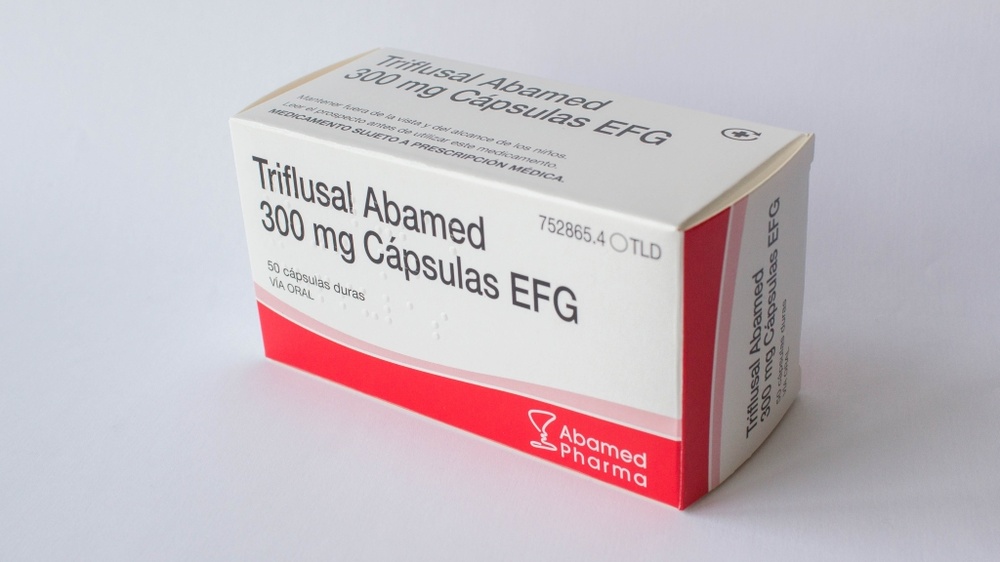
How to use TRIFLUSAL ABAMED 300 mg CAPSULES
Contents of the leaflet
- Introduction
- What Triflusal Abamed 300 mg Capsules EFG is and what it is used for
- What you need to know before starting to take Triflusal Abamed 300 mg Capsules EFG
- How to take Triflusal Abamed 300 mg Capsules
- Possible adverse effects
- Storage of Triflusal Abamed 300 mg Capsules
- Package contents and additional information
Introduction
Prospective: patient information
Triflusal Abamed 300 mg Capsules EFG
Read the entire prospectus carefully before starting to take this medication, as it contains important information for you.
- Keep this prospectus, as you may need to read it again.
- If you have any doubts, consult your doctor or pharmacist.
- This medication has been prescribed to you only, and you should not give it to others, even if they have the same symptoms as you, as it may harm them.
- If you experience adverse effects, consult your doctor or pharmacist, even if they are not listed in this prospectus. See section 4.
Contentsoftheprospectus
- What Triflusal Abamed 300 mg Capsules EFG is and what it is used for
- What you need to know before starting to take Triflusal Abamed 300 mg Capsules EFG
- How to take Triflusal Abamed 300 mg Capsules EFG
- Possible adverse effects
- Storage of Triflusal Abamed 300 mg Capsules EFG
- Package contents and additional information
1. What Triflusal Abamed 300 mg Capsules EFG is and what it is used for
Triflusal belongs to a group of medications called antiplatelet agents, which work by preventing the formation of clots (thrombi) that can block blood vessels.
This medication is indicated in adults to reduce the risk of recurrence of a myocardial infarction, stable or unstable angina, or a cerebral infarction in patients who have previously suffered from any of these conditions. It is also indicated in patients who have undergone coronary bypass surgery.

Not sure if this medicine is right for you?
Discuss your symptoms and treatment with a doctor online.
2. What you need to know before starting to take Triflusal Abamed 300 mg Capsules EFG
Do not take TriflusalAbamed300 mg CapsulesEFG:
- If you are allergic to the active ingredient (triflusal), other salicylates, or any of the other components of this medication (listed in section 6).
- If you have a stomach ulcer or a history of complicated stomach ulcers.
- If you have any other disorder that causes bleeding.
Warnings and precautions:
Consult your doctor or pharmacist before starting to take Triflusal Abamed 300 mg Capsules EFG.
Be especially careful with Triflusal Abamed:
- If you have kidney or liver failure.
- If you are at risk of bleeding, either due to trauma or other pathological conditions, or because you are taking non-steroidal anti-inflammatory drugs (medications used to treat muscle or joint pain and inflammation) for prolonged periods.
- If you are going to undergo surgery. In this case, the risk of bleeding should be assessed, and if necessary, you should stop taking Triflusal Abamed 7 days before the operation.
Consult your doctor, even if any of the above circumstances have occurred to you in the past.
Children and adolescents
The safety and efficacy of Triflusal Abamed in children under 18 years of age have not been established, and therefore, its administration is not recommended.
Taking Triflusal withother medications
Tell your doctor or pharmacist if you are taking, have recently taken, or may need to take any other medication.
Certain medications may interact with Triflusal Abamed. In this case, it may be necessary to change the dose or interrupt treatment. It is essential to inform your doctor if you are taking any of the following medications: non-steroidal anti-inflammatory drugs, oral antidiabetics, or oral anticoagulants, as they may enhance the effects of these medications, including those of Triflusal Abamed.
Taking Triflusal Abamed withfood, drinks, andalcohol
Taking Triflusal Abamed with meals reduces the likelihood of gastrointestinal adverse effects.
Pregnancy and breastfeeding
If you are pregnant or breastfeeding, think you may be pregnant, or plan to become pregnant, consult your doctor or pharmacist before using this medication.
Driving and using machines
No effects on the ability to drive and use machinery have been reported.
3. How to take Triflusal Abamed 300 mg Capsules
Follow the administration instructions indicated by your doctor or pharmacist exactly. If you have any doubts, consult your doctor or pharmacist again.
Triflusal Abamed is administered orally.
The recommended dose is two capsules (600 mg of triflusal) per day in a single dose or divided into two doses, or three capsules (900 mg of triflusal) per day divided into three doses.
Swallow the capsule with a sufficient amount of liquid and, preferably, with meals.
Remember to take your medication every day. Your doctor will indicate the duration of your treatment with Triflusal Abamed. Do not stop taking it without your doctor's indication.
If you take more TriflusalAbamedthan you should
By ingesting very high doses, symptoms of salicylate poisoning (headache, ringing, dizziness, nausea, vomiting, rapid breathing) may appear.
In case of overdose or accidental ingestion, consult your doctor, pharmacist, or the nearest emergency service immediately, or the Toxicology Information Service, phone 915 620 420, indicating the medication and the amount ingested.
If you forget to take TriflusalAbamed
Do not take a double dose to make up for the forgotten dose, but instead, continue with your usual dose.

Started taking the medicine and have questions?
Discuss your symptoms and treatment with a doctor online.
4. Possible adverse effects
Like all medications, this medication can cause adverse effects, although not everyone experiences them.
Very common adverse effects (in more than 1 in 10 people):
Dyspepsia (indigestion)
Common adverse effects (in 1 in 100 people or more and less than 1 in 10 people):
Headache, abdominal pain, nausea, constipation, vomiting, flatulence, anorexia.
These symptoms are usually mild and disappear after a few days, even without stopping treatment.
Uncommon adverse effects (in 1 in 1000 people or more and less than 1 in 100 people):
Pruritus (itching), skin rash, confusion, dizziness, vertigo, convulsions, altered taste, tinnitus (ringing in the ears), hearing loss, diarrhea, gastrointestinal bleeding, melena (blood in stool), rectal bleeding, hypertension, transient ischemic attack, cerebral hemorrhage, dyspnea (shortness of breath), upper respiratory tract infection, anemia, epistaxis (nasal bleeding), hematomas, purpura (purple spots on the skin or mucous membranes), gingival bleeding, hematuria (blood in urine), urinary tract infection, abdominal distension, fever, flu-like symptoms.
There have also been reports of isolated cases of allergic reactions to skin exposed to sunlight.
If you notice any of the mentioned adverse effects intensely or prolonged, stop treatment and consult your doctor as soon as possible.
Reporting adverse effects
If you experience any type of adverse effect, consult your doctor or pharmacist, even if it is a possible adverse effect that is not listed in this prospectus. You can also report them directly through the Spanish Medication Surveillance System for Human Use: https://www.notificaram.es. By reporting adverse effects, you can contribute to providing more information on the safety of this medication.
5. Storage of Triflusal Abamed 300 mg Capsules
Keep this medication out of sight and reach of children.
Do not store at a temperature above 30°C.
Keep in the original package to protect it from moisture.
Do not use this medication after the expiration date shown on the package (after CAD.). The expiration date is the last day of the month indicated.
Medications should not be thrown away in drains or trash. Deposit the packages and medications you no longer need at the SIGRE point in the pharmacy. If you have any doubts, ask your pharmacist how to dispose of the packages and medications you no longer need.
This will help protect the environment.
6. Package contents and additional information
Composition of Triflusal Abamed:
- The active ingredient is triflusal. Each capsule contains 300 mg of triflusal.
- The other components are the capsule gelatin and the colorants: erythrosine (E-127), iron oxides (E-172), and titanium dioxide (E-171).
Appearance of the product and package contents
Hard gelatin capsules with a pink body and a cream-colored cap containing white powder.
This medication is available in packages of 30 or 50 capsules.
Marketing authorization holder
Qualix Pharma, S.L.
c/ Botánica, 137-139
08908 L'Hospitalet de Llobregat
(Barcelona)
Spain
Manufacturer
Toll Manufacturing Services, S.L.
C /Aragoneses, 2
28108 Alcobendas
(Madrid)
Spain
Date of the last revision of the prospectus: September 2014
Detailed and updated information about this medication is available on the website of the Spanish Agency for Medicines and Health Products (AEMPS) http://www.aemps.gob.es
- Country of registration
- Dosage formCAPSULE, 300 mg
- ATC codeB01AC18
- Average pharmacy price5.53 EUR
- Active substance
- Prescription requiredYes
- Manufacturer
- This information is for reference only and does not constitute medical advice. Always consult a doctor before taking any medication. Oladoctor is not responsible for medical decisions based on this content.
- Alternatives to TRIFLUSAL ABAMED 300 mg CAPSULESDosage form: CAPSULE, 300 mgActive substance: triflusalManufacturer: Industria Quimica Y Farmaceutica Vir S.A.Prescription requiredDosage form: CAPSULE, 300 mgActive substance: triflusalManufacturer: Laboratorios Ern S.A.Prescription requiredDosage form: CAPSULE, 300 mgActive substance: triflusalManufacturer: Laboratorios Cinfa S.A.Prescription required
Online doctors for TRIFLUSAL ABAMED 300 mg CAPSULES
Discuss questions about TRIFLUSAL ABAMED 300 mg CAPSULES, including use, safety considerations and whether a prescription is appropriate, subject to medical assessment and local regulations.









Frequently Asked Questions
TRIFLUSAL ABAMED 300 mg CAPSULES requires a prescription in Spain. You can check with a doctor online whether this medicine may be appropriate for your situation.
The active ingredient in TRIFLUSAL ABAMED 300 mg CAPSULES is triflusal. This information helps identify medicines with the same composition but different brand names.
The average pharmacy price for TRIFLUSAL ABAMED 300 mg CAPSULES is around 5.53 EUR. Prices may vary depending on the manufacturer and dosage form.
TRIFLUSAL ABAMED 300 mg CAPSULES is manufactured by Qualix Pharma S.L.. Pharmacy brands and packaging may differ depending on the distributor.
Doctors such as Family doctors, Psychiatrists, Dermatologists, Cardiologists, Endocrinologists, Gastroenterologists, Pulmonologists, Nephrologists, Rheumatologists, Hematologists, Infectious disease physicians, Allergists, Geriatricians, Paediatricians, Oncologists may assess whether TRIFLUSAL ABAMED 300 mg CAPSULES is appropriate, depending on your situation and local regulations. You can book an online consultation to discuss your symptoms and possible next steps.
The prescription is issued by a doctor after assessing your health. In Spain, TRIFLUSAL ABAMED 300 mg CAPSULES is then dispensed in pharmacies with that prescription. An online consultation does not guarantee that a prescription will be issued: the decision always rests with the doctor.
To request an assessment, you can use Oladoctor:
Other medicines with the same active substance (triflusal) include ANPEVAL 300 mg HARD CAPSULES, DISGREN 300 mg HARD CAPSULES, TRIFLUSAL CINFA 300 mg HARD CAPSULES. These may have different brand names or formulations but contain the same therapeutic ingredient. Always consult a doctor before switching or starting a new medicine.
