


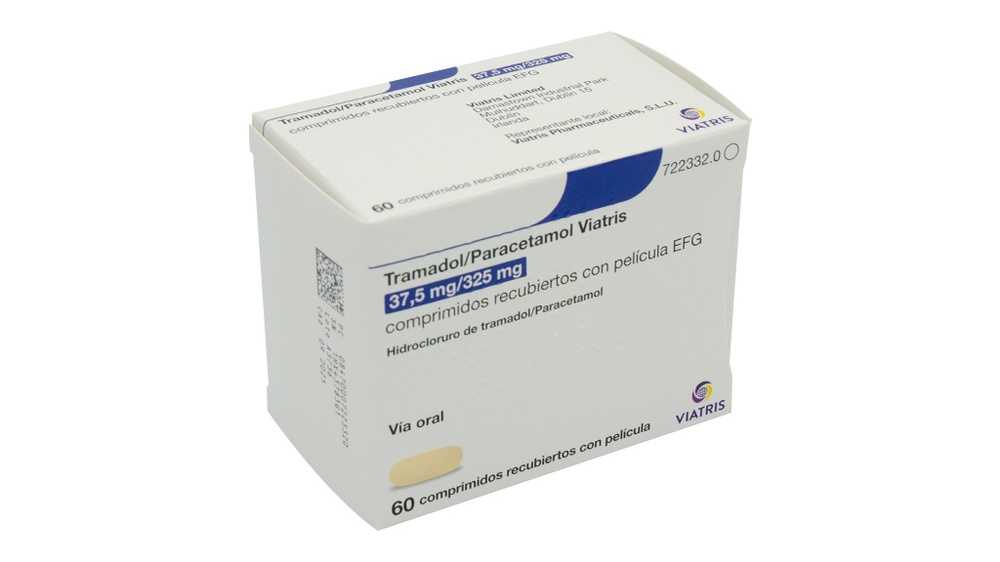
Tramadol Viatris 37,5 mg/325 mg comprimidos recubiertos con película

Prescription request online
A doctor will review your case and decide whether a prescription is medically appropriate.

Talk to a doctor about this medicine
Discuss your symptoms and possible next steps in a quick online consultation.



How to use TRAMADOL/PARACETAMOL VIATRIS 37.5 mg/325 mg FILM-COATED TABLETS
Contents of the leaflet
- Introduction
- What is Tramadol/Paracetamol Viatris and what is it used for
- What you need to know before taking Tramadol/Paracetamol Viatris
- How to Take Tramadol/Paracetamol Viatris
- Possible Side Effects
- Storage of Tramadol/Paracetamol Viatris
- Package Contents and Additional Information
Introduction
Prospect: patient information
Tramadol/Paracetamol Viatris 37.5 mg/325 mg
film-coated tablets EFG
Tramadol/Paracetamol hydrochloride
Read the entire prospectus carefully before starting to take this medication, as it contains important information for you.
- Keep this prospectus, as you may need to read it again.
- If you have any doubts, consult your doctor or pharmacist.
- This medication has been prescribed to you only and should not be given to others, even if they have the same symptoms as you, as it may harm them.
- If you experience side effects, consult your doctor or pharmacist, even if they are not listed in this prospectus. See section 4.
Contents of the prospectus
- What is Tramadol/Paracetamol Viatris and what is it used for
- What you need to know before taking Tramadol/Paracetamol Viatris
- How to take Tramadol/Paracetamol Viatris
- Possible side effects
- Storage of Tramadol/Paracetamol Viatris
- Package contents and additional information
1. What is Tramadol/Paracetamol Viatris and what is it used for
Tramadol/Paracetamol Viatris is a combination of two pain relievers, tramadol hydrochloride and paracetamol, which work together to relieve pain.
Tramadol/Paracetamol Viatris is used to treat moderate or severe pain. Your doctor will prescribe this medication if they consider it appropriate to combine tramadol hydrochloride and paracetamol.
Tramadol/Paracetamol Viatris should only be used by adults and adolescents 12 years of age or older.

Not sure if this medicine is right for you?
Discuss your symptoms and treatment with a doctor online.
2. What you need to know before taking Tramadol/Paracetamol Viatris
Do not take Tramadol/Paracetamol Viatris:
- If you are allergic to tramadol, paracetamol, or any of the other components of this medication (listed in section 6).
- In cases of acute alcohol intoxication.
- If you are taking sleep aids, pain relievers, or medications that affect mood and emotions (psychotropic medications).
- If you are taking monoamine oxidase inhibitors (MAOIs) or in the two weeks following discontinuation of such treatment. MAOIs are used to treat depression or Parkinson's disease.
- If you have severe liver disorders.
- If you have uncontrolled epilepsy.
Warnings and precautions
Consult your doctor or pharmacist before starting to take Tramadol/Paracetamol Viatris:
- If you suffer from depression and are taking antidepressants, as some may interact with tramadol (see "Using Tramadol/Paracetamol Viatris with other medications").
- If you have severe kidney problems. In this case, the use of Tramadol/Paracetamol Viatris is not recommended. In case of moderate kidney problems, it may be necessary to increase the interval between doses.
- If you have other liver problems or liver disease, or if you notice that your eyes and skin may turn yellow, indicating jaundice or bile duct problems.
- If you have severe breathing difficulties, such as asthma or severe lung problems.
- If you have recently suffered a head injury or severe headaches associated with vomiting (dizziness).
- If you have epilepsy or have already suffered seizures or convulsions.
- If you have a decreased level of consciousness for unknown reasons.
During treatment with Tramadol/Paracetamol Viatris, inform your doctor immediately if:
If you have severe illnesses, such as severe kidney failure or sepsis (when bacteria and their toxins circulate in the blood, causing organ damage), or if you have malnutrition, chronic alcoholism, or are also taking flucloxacillin (an antibiotic). A serious disease called metabolic acidosis (an anomaly in the blood and fluids) has been reported in patients in these situations when paracetamol is used at regular doses for a prolonged period or when paracetamol is taken with flucloxacillin. The symptoms of metabolic acidosis may include: severe breathing difficulties with deep and rapid breathing, drowsiness, feeling unwell (nausea) and vomiting.
In all the above cases, this medication should only be used with caution.
There is a weak risk that you may experience a serotonin syndrome that can occur after taking tramadol in combination with certain antidepressants or tramadol monotherapy. Consult your doctor immediately if you experience any of the symptoms related to this serious syndrome (see section 4 "Possible side effects").
Tramadol should not be taken as a substitute therapy in patients dependent on opioids, as it does not suppress morphine withdrawal symptoms.
Tramadol can cause seizures even at recommended doses. Therefore, patients with controlled epilepsy or those prone to seizures or convulsions should not be treated with Tramadol/Paracetamol Viatris unless absolutely necessary.
Tramadol is transformed in the liver by an enzyme. Some people have a variant of this enzyme; this fact can affect people in different ways. In some people, they may not obtain sufficient pain relief, while others are more likely to experience serious side effects. If you detect any of the following side effects, you should stop taking this medication and consult a doctor immediately: slow or shallow breathing, confusion, drowsiness, small pupils, feeling unwell, constipation, loss of appetite.
Extreme fatigue, loss of appetite, severe abdominal pain, nausea, vomiting, or low blood pressure. These may be indicators of adrenal insufficiency (low cortisol levels). If you have these symptoms, contact your doctor, who will decide if you need to take hormonal supplements.
Sleep-related breathing disorders
Tramadol/paracetamol may cause sleep-related breathing disorders, such as sleep apnea (pauses in breathing during sleep) and sleep-related hypoxemia (low oxygen levels in the blood). Symptoms may include pauses in breathing during sleep, nighttime awakenings due to shortness of breath, difficulty maintaining sleep, or excessive daytime sleepiness. If you or someone else observes these symptoms, contact your doctor. Your doctor may consider reducing the dose.
Tolerance, dependence, and addiction
This medication contains tramadol, which is an opioid medication. Repeated use of opioids can make the medication less effective (you get used to it, which is known as tolerance). Repeated use of Tramadol/Paracetamol Viatris tablets can also lead to dependence, abuse, and addiction, which can result in a potentially fatal overdose. The risk of these side effects may increase with higher doses and longer use.
Dependence or addiction can make you feel like you no longer control the amount of medication you need to take or how often you need to take it.
The risk of becoming dependent or addicted varies from person to person. You may have a higher risk of becoming dependent or addicted to Tramadol/Paracetamol Viatris if:
- You or a family member have ever abused or been dependent on alcohol, prescription medications, or illegal drugs ("addiction").
- You are a smoker.
- You have ever had problems with your mood (depression, anxiety, or personality disorder) or have been treated by a psychiatrist for other mental illnesses.
If you notice any of the following signs while taking Tramadol/Paracetamol Viatris, it could be a sign that you have become dependent or addicted:
- You need to take the medication for longer than advised by your doctor.
- You need to take more than the recommended dose.
- You use the medication for reasons other than those prescribed, for example, "to feel calm" or "to sleep".
- You have repeatedly tried and failed to stop or control the use of the medication.
- When you stop taking the medication, you feel unwell, and you feel better when you take it again ("withdrawal effect").
If you notice any of these signs, talk to your doctor, who will indicate the best course of treatment for you, including when it is appropriate to stop taking it and how to do so safely (see section 3, If you stop taking Tramadol/Paracetamol Viatris).
Children and adolescents
Tramadol/Paracetamol Viatris treatment is not recommended in children under 12 years of age. Safety and efficacy have not been established in children.
Tramadol is not recommended for children with respiratory problems, as the symptoms of tramadol toxicity can be worse for these children.
Abuse
At therapeutic doses, tramadol can cause withdrawal symptoms.
Surgery
The use of tramadol with the anesthetics enflurane and nitrous oxide during general anesthesia may help the anesthesiologist to recover the patient during operations if necessary. Until more information is available, the use of tramadol during light anesthesia should be avoided. Inform your doctor or dentist if you are going to be anesthetized.
Using Tramadol/Paracetamol Viatris with other medications
Tell your doctor or pharmacist if you are taking, have recently taken, or may take any other medication.
Important: This medication contains paracetamol and tramadol. Inform your doctor if you are taking any other medication that contains paracetamol or tramadol to avoid exceeding the maximum daily dose.
The concomitant use of Tramadol/Paracetamol Viatris with sedatives, such as benzodiazepines or related drugs, increases the risk of drowsiness, breathing difficulties (respiratory depression), coma, and can be potentially fatal. Due to this, concomitant use should only be considered when other treatment options are not possible.
However, if your doctor prescribes Tramadol/Paracetamol Viatris with sedatives, the doctor should limit the dose and duration of concomitant treatment.
Tell your doctor about all sedatives you are taking, and carefully follow your doctor's dosage recommendation. It may be helpful to inform your friends or family to be aware of the signs and symptoms described above. Contact your doctor if you experience these symptoms.
Tramadol/Paracetamol Viatris should not be taken with: Monoamine oxidase inhibitors (MAOIs) (used to treat depression or Parkinson's disease), as there is a risk of serotonin syndrome. The symptoms of serotonin syndrome include diarrhea, increased heart rate, sweating, tremors, confusion, and even coma. In case of recent treatment with MAOIs, a period of two weeks should be waited before starting treatment with Tramadol/Paracetamol Viatris.
Tramadol/Paracetamol Viatris should not be taken with:
- Carbamazepine (a medication used to treat epilepsy and some types of pain, such as trigeminal neuralgia). If you take these medications simultaneously, the effectiveness and duration of the tramadol effect will be reduced.
- Opioid analgesics (buprenorphine, nalbuphine, pentazocine). If you take these medications simultaneously, the analgesic effect of Tramadol/Paracetamol Viatris will be reduced, with a risk of withdrawal syndrome.
Tell your doctor or pharmacist if you are taking:
- Flucloxacillin (an antibiotic), due to a serious risk of blood and fluid anomalies (called metabolic acidosis) that require urgent treatment (see section 2).
- Gabapentin or pregabalin to treat epilepsy or nerve pain (neuropathic pain).
The risk of side effects increases:
- If you are taking medications that can cause seizures (attacks), such as certain antidepressants or antipsychotics. The risk of having a seizure may increase if you take Tramadol/Paracetamol Viatris at the same time. Your doctor will inform you if Tramadol/Paracetamol Viatris is suitable for you.
- If you are taking certain antidepressants (selective serotonin reuptake inhibitors (SSRIs)) or triptans (used for migraines). Tramadol/Paracetamol Viatris may interact with these medications, and you may experience a serotonin syndrome (see section 4 "Possible side effects").
- Other opioid derivatives (including cough medications and substitution treatments), barbiturates, and benzodiazepines (sedatives). If you take these medications simultaneously, the risk of respiratory depression may increase, which can be fatal in case of overdose.
- Other central nervous system depressants, anxiolytics (used to reduce fear), hypnotics, sedating antidepressants, sedating antihistamines (used to treat allergies), neuroleptics (used to treat psychosis), centrally acting antihypertensive medications (used to lower blood pressure), thalidomide (a sedative), and baclofen (a muscle relaxant). These medications can worsen central depression. The effect on alertness can make driving and operating machinery hazardous.
- Warfarin or other anticoagulants, such as phenprocoumon (used to prevent blood clots). The effectiveness of these medications may be altered, and bleeding may occur. Your doctor may need to regularly evaluate the prothrombin time. Any prolonged or unexpected bleeding should be reported immediately to your doctor.
- Other medications that are known to inhibit the liver enzyme "CYP3A4", such as ketoconazole and erythromycin (medications used against infections).
- Metoclopramide or domperidone (medications used to treat nausea and vomiting/dizziness). The absorption of paracetamol may increase if you take these medications simultaneously.
- Colestyramine (a medication used to lower cholesterol in the blood), as it may reduce the absorption of Tramadol/Paracetamol Viatris.
- If you have taken ondansetron (used to treat nausea), the effectiveness of Tramadol/Paracetamol Viatris may be altered.
Taking Tramadol/Paracetamol Viatris with alcohol
Do not drink alcohol during treatment, as alcohol with Tramadol/Paracetamol Viatris can make you feel drowsy.
Pregnancy and breastfeeding
As Tramadol/Paracetamol Viatris contains tramadol, do not take this medication during pregnancy.
Tramadol can pass into breast milk. For this reason, do not take Tramadol/Paracetamol Viatris more than once during breastfeeding, or, if you take Tramadol/Paracetamol Viatris more than once, you should stop breastfeeding.
Based on human experience, it is not suggested that tramadol affects the fertility of men or women. There are no data available on the combination of tramadol and paracetamol in fertility.
If you are pregnant or breastfeeding, think you may be pregnant, or plan to become pregnant, consult your doctor or pharmacist before using this medication.
Driving and using machines
This medication can cause drowsiness or dizziness, which can be intensified by consuming alcohol or other central nervous system depressants. If you feel drowsy or dizzy, do not drive or operate machinery.
Tramadol/Paracetamol Viatris contains sodium
This medication contains less than 1 mmol of sodium (23 mg) per tablet, i.e., it is essentially "sodium-free".
3. How to Take Tramadol/Paracetamol Viatris
Always follow the administration instructions for this medication as indicated by your doctor or pharmacist. In case of doubt, consult your doctor or pharmacist again.
Before starting treatment and regularly during treatment, your doctor will explain what you can expect from using Tramadol/paracetamol, when and for how long you should take it, when you should contact your doctor, and when you should stop taking it (see also section 2).
The recommended dose is:
Adults and adolescents (12 years or older):
- Your doctor will adjust the dose individually based on the intensity of your pain and your response.
- The recommended dose is to start with 2 tablets unless your doctor has prescribed it otherwise.
- If necessary and recommended by your doctor, you can take more tablets per day, but you should not exceed the maximum daily dose of 8 tablets (equivalent to 300 mg of tramadol and 2,600 mg of paracetamol) and should not take other medications that contain paracetamol or tramadol hydrochloride, in order to avoid overdose.
- The interval between 2 administrations should not be less than 6 hours.
- The dose should be adjusted based on the intensity of your pain and individual pain sensitivity. In general, you should take the lowest dose that relieves your pain.
Elderly patients (over 75 years):
In elderly patients (over 75 years), the excretion of tramadol hydrochloride may be delayed. If this applies to you, your doctor may recommend prolonging the dosing interval.
Severe liver and/or kidney disorders (insufficiency) and/or patients on dialysis:
Patients with severe liver and/or kidney insufficiency should not take Tramadol/Paracetamol Viatris. If you have mild or moderate insufficiency, your doctor may recommend prolonging the dosing interval.
Use in children under 12 years
Tramadol/Paracetamol Viatris is not recommended for use in children under 12 years.
Method of administration
- Take the tablets orally.
- Swallow the tablets whole, with a sufficient amount of liquid (e.g., a 200 ml glass of water). The tablets should not be broken or chewed.
- Tramadol/Paracetamol Viatris can be taken with or without food.
Duration of treatment
Do not take this medication for longer than strictly necessary.
If repeated or prolonged treatment with this medication is required (due to the nature or severity of the disease), caution should be exercised and regular checks should be performed to assess whether continued treatment is necessary. Whenever possible, breaks in treatment should be introduced during long-term treatment.
If you feel that the effect of Tramadol/Paracetamol Viatris is too strong (e.g., you feel very drowsy or have difficulty breathing) or too weak (e.g., inadequate pain reduction), contact your doctor.
If you take more Tramadol/Paracetamol Viatris than you should
- If you have taken more tablets than you should, consult your doctor or the nearest emergency service immediately, even if you feel well, due to the risk of severe delayed liver damage.
- In case of overdose, you may experience nausea (feeling of dizziness), miosis (pupil contraction), vomiting (feeling of dizziness), anorexia (loss of appetite), abdominal pain, severe circulatory failure (cardiovascular collapse), disorders of consciousness, including coma, convulsions, respiratory depression that can cause respiratory arrest, and pale skin.
- Within 12 to 48 hours after ingestion, liver damage may occur. In severe poisoning, liver failure can lead to severe brain disease (encephalopathy), coma, and death. Severe kidney failure with tubular necrosis (destruction of cells) may also develop, even in the absence of severe liver damage. Cardiac arrhythmias (irregular heartbeat) and pancreatitis (inflammation of the pancreas) have also been observed.
In case of overdose or accidental ingestion, consult your doctor or pharmacist immediately or call the Toxicology Information Service, phone 91 562 04 20, indicating the medication and the amount administered.
If you forget to take Tramadol/Paracetamol Viatris
If you forget to take this medication, you can skip the missed dose and continue with the treatment as normal, or you can take the missed tablet, but you will have to wait a 6-hour interval until the next intake.
Do not take a double dose to make up for missed doses.
If you stop taking Tramadol/Paracetamol Viatris
Do not stop taking this medication suddenly, unless your doctor tells you to. If you want to stop taking the medication, you should first discuss it with your doctor, especially if you have been taking it for a long time. Your doctor will inform you about the time and manner of stopping the treatment, which may involve gradually reducing the dose to minimize the risk of unnecessary adverse effects (withdrawal symptoms).
Generally, there will be no adverse effects when stopping treatment with Tramadol/Paracetamol Viatris. However, in rare cases, people who have been taking tramadol for a long time may feel unwell if they stop treatment suddenly.
If therapy is no longer necessary, you should stop treatment by gradually reducing the dose to avoid withdrawal symptoms.
People may:
- Feel agitated, anxious, nervous, or tremulous.
- Be hyperactive.
- Have difficulty breathing.
- Have stomach or intestinal discomfort.
Very few people may also experience:
- Panic attacks.
- Hallucinations, unusual perceptions such as itching, tingling, and numbness.
- Ringing in the ears.
If you experience any of these symptoms after stopping treatment with Tramadol/Paracetamol Viatris, consult your doctor.
If you have any other questions about the use of this medication, ask your doctor or pharmacist.

Started taking the medicine and have questions?
Discuss your symptoms and treatment with a doctor online.
4. Possible Side Effects
Like all medications, this medication can cause side effects, although not everyone will experience them.
If you think you may be experiencing any of the following side effects, stop taking this medication and contact your doctor or go to the nearest hospital immediately. You may need medical attention if you experience these side effects:
Uncommon(may affect up to 1 in 100 people)
- Blood in the stool (stool may be black and tar-like or bright red).
- Difficulty or pain when urinating.
Rare(may affect up to 1 in 1,000 people)
- Sudden signs of allergic reactions such as skin rash, itching, or hives, swelling of the face, lips, tongue, and other parts of the body, shortness of breath, wheezing, or difficulty breathing, low blood pressure.
- Seizures (convulsions).
- Shallow or slow breathing.
- Extreme confusion, which may be associated with hallucinations (seeing, feeling, or hearing things that do not exist), increased or decreased activity, and sleep disorders (delirium).
Very Rare(may affect up to 1 in 10,000 people)
- Reports of severe skin reactions have been noted.
Frequency Not Known(cannot be estimated from the available data)
- Serotonin syndrome, which may manifest as changes in mental status (e.g., agitation, hallucinations, coma), and other effects, such as fever, increased heart rate, unstable blood pressure, involuntary muscle contractions, muscle stiffness, lack of coordination, and/or gastrointestinal symptoms (e.g., nausea, vomiting, diarrhea) (see section 2 "What you need to know before taking Tramadol/Paracetamol Viatris").
- Alterations in the effect of warfarin (used to prevent blood clot formation), including prolonged prothrombin time (which leads to reduced blood coagulation).
- Changes in blood cell counts (seen in blood tests) with frequent infections (fever, chills, sore throat, or mouth ulcers).
Other side effects include:
Very Common(may affect more than 1 in 10 people)
- Dizziness, drowsiness.
- Feeling of dizziness.
Common(may affect up to 1 in 10 people)
- Confusion, mood alteration, anxiety, nervousness, euphoria, sleep disorders.
- Headache, agitation.
- Vomiting (feeling of dizziness), constipation, dry mouth, diarrhea, stomach pain, indigestion, stomach discomfort, gas.
- Sweating, itching.
Uncommon(may affect up to 1 in 100 people)
- Depression, hallucinations (seeing, feeling, or hearing things that do not exist), nightmares, memory loss.
- Involuntary muscle contractions, tingling or numbness, ringing in the ears.
- High blood pressure, palpitations, rapid or irregular heartbeat.
- Alterations in heart rhythm (arrhythmia).
- Difficulty breathing.
- Difficulty swallowing.
- Elevated transaminase levels (a liver enzyme).
- Skin reactions (e.g., skin rash, hives).
- Albumin (a protein) in the urine (albuminuria).
- Chills, hot flashes, chest pain.
Rare(may affect up to 1 in 1,000 people)
- Drug dependence.
- Lack of coordination.
- Speech disorders.
- Blurred vision, pupil contraction or dilation.
- Transient loss of consciousness (syncope)/collapse.
Very Rare(may affect up to 1 in 10,000 people)
- Drug abuse.
Frequency Not Known(cannot be estimated from the available data)
- Decreased blood sugar (glucose) levels, which can cause sweating, weakness, hunger, dizziness, tremors, headache, redness or paleness, numbness, rapid and strong heartbeat.
Additionally, the following side effects have been reported by people using medications that contain only tramadol or only paracetamol:
Rare(may affect up to 1 in 1,000 people)
- Appetite changes, muscle weakness.
Frequency Not Known(cannot be estimated from the available data)
- Feeling of dizziness when standing up from a lying or sitting position, slow heart rate, changes in blood cell counts (seen in blood tests) with bleeding or bruising more easily than normal.
- A severe disease that can make the blood more acidic (called metabolic acidosis) in patients with severe disease using paracetamol (see section 2).
- Mood changes, changes in activity, and changes in perception.
- Worsening of existing asthma.
- Hiccup.
Reporting Side Effects
If you experience any side effects, consult your doctor or pharmacist, even if it is a possible side effect that is not listed in this leaflet. You can also report them directly through the Spanish Medicines Surveillance System for Human Use: https://www.notificaram.es. By reporting side effects, you can help provide more information on the safety of this medication.
5. Storage of Tramadol/Paracetamol Viatris
Keep this medication out of the sight and reach of children.
Store this medication in a safe and protected place, where others cannot access it. It can cause serious harm and be fatal to people when not prescribed to them.
Do not use this medication after the expiration date shown on the blister pack and carton after EXP. The expiration date is the last day of the month indicated.
This medication does not require special storage conditions.
Medications should not be disposed of through wastewater or household waste. Deposit the packaging and medications you no longer need at the SIGRE collection point in the pharmacy. Ask your pharmacist how to dispose of the packaging and medications you no longer need. This will help protect the environment.
6. Package Contents and Additional Information
Composition of Tramadol/Paracetamol Viatris
- The active ingredients are:tramadol hydrochloride and paracetamol. One film-coated tablet contains 37.5 mg of tramadol hydrochloride and 325 mg of paracetamol.
- The other ingredients are:
Core of the film-coated tablet:
Pregelatinized corn starch, corn starch, sodium starch glycolate (potato starch), microcrystalline cellulose, magnesium stearate.
Film coating:
Hypromellose (E-464), titanium dioxide (E-171), triacetin, yellow iron oxide (E-172).
Appearance of the Product and Package Contents
Your medication is presented as a film-coated tablet, light yellow and elongated.
The PVC/PVdC/Al or PVC/Al blisters contain 2, 10, 20, 30, 40, 50, 60, 70, 80, 90, and 100 film-coated tablets.
Only some pack sizes may be marketed.
Marketing Authorization Holder and Manufacturer
Marketing Authorization Holder
Viatris Limited
Damastown Industrial Park
Mulhuddart, Dublin 15
Dublin
Ireland
Manufacturer
MEDIS INTERNATIONAL a.s.
Výrobní závod Bolatice
Prúmyslová 961/16
747 23 Bolatice
Czech Republic
Or
McDermott Laboratories Ltd. T/A Gerard Laboratories T/A Mylan Dublin
35/36 Baldoyle Industrial Estate
Grange Road, Dublin 13
Ireland
Or
Martin Dow
Goualle Le Puy, Champ de Lachaud
19250 Meymac
France
Or
Mylan Hungary Kft.
Mylan utca 1.
Komarom, 2900
Hungary
You can request more information about this medication by contacting the local representative of the marketing authorization holder:
Viatris Pharmaceuticals, S.L.U.
C/ General Aranaz, 86
28027 - Madrid
Spain
This medication has been authorized in EEA member states with the following names:
Slovakia Tramylpa 37.5 mg/325 mg
Spain Tramadol/Paracetamol Viatris 37.5 mg/325 mg film-coated tablets EFG
Portugal Tramadol + Paracetamol Mylan 37.5 mg + 325 mg film-coated tablets
Czech Republic Tramylpa 37.5 mg/325 mg film-coated tablets
Date of the Last Revision of this Leaflet:January 2025
Detailed information about this medication is available on the website of the Spanish Agency for Medicines and Health Products (AEMPS) https://www.aemps.gob.es/
- Country of registration
- Dosage formTABLET, 37.5 mg/325 mg
- ATC codeN02AJ13
- Average pharmacy price2.97 EUR
- Active substance
- Prescription requiredYes
- Manufacturer
- CompositionCARBOXIMETILALMIDON SODICO (8.00 mg mg)
- This information is for reference only and does not constitute medical advice. Always consult a doctor before taking any medication. Oladoctor is not responsible for medical decisions based on this content.
- Alternatives to TRAMADOL/PARACETAMOL VIATRIS 37.5 mg/325 mg FILM-COATED TABLETSDosage form: TABLET, 325/37.5 mgActive substance: tramadol and paracetamolManufacturer: Ferrer Internacional S.A.Prescription requiredDosage form: TABLET, 650/75 mgActive substance: tramadol and paracetamolManufacturer: Ferrer Internacional S.A.Prescription requiredDosage form: EFFERVESCENT TABLET, 37.5 mg/325 mgActive substance: tramadol and paracetamolManufacturer: Aristo Pharma Iberia S.L.Prescription required
Online doctors for TRAMADOL/PARACETAMOL VIATRIS 37.5 mg/325 mg FILM-COATED TABLETS
Discuss questions about TRAMADOL/PARACETAMOL VIATRIS 37.5 mg/325 mg FILM-COATED TABLETS, including use, safety considerations and whether a prescription is appropriate, subject to medical assessment and local regulations.









Frequently Asked Questions
TRAMADOL/PARACETAMOL VIATRIS 37.5 mg/325 mg FILM-COATED TABLETS requires a prescription in Spain. You can check with a doctor online whether this medicine may be appropriate for your situation.
The active ingredient in TRAMADOL/PARACETAMOL VIATRIS 37.5 mg/325 mg FILM-COATED TABLETS is tramadol and paracetamol. This information helps identify medicines with the same composition but different brand names.
The average pharmacy price for TRAMADOL/PARACETAMOL VIATRIS 37.5 mg/325 mg FILM-COATED TABLETS is around 2.97 EUR. Prices may vary depending on the manufacturer and dosage form.
TRAMADOL/PARACETAMOL VIATRIS 37.5 mg/325 mg FILM-COATED TABLETS is manufactured by Viatris Limited. Pharmacy brands and packaging may differ depending on the distributor.
Doctors such as Family doctors, Psychiatrists, Dermatologists, Cardiologists, Endocrinologists, Gastroenterologists, Pulmonologists, Nephrologists, Rheumatologists, Hematologists, Infectious disease physicians, Allergists, Geriatricians, Paediatricians, Oncologists may assess whether TRAMADOL/PARACETAMOL VIATRIS 37.5 mg/325 mg FILM-COATED TABLETS is appropriate, depending on your situation and local regulations. You can book an online consultation to discuss your symptoms and possible next steps.
The prescription is issued by a doctor after assessing your health. In Spain, TRAMADOL/PARACETAMOL VIATRIS 37.5 mg/325 mg FILM-COATED TABLETS is then dispensed in pharmacies with that prescription. An online consultation does not guarantee that a prescription will be issued: the decision always rests with the doctor.
To request an assessment, you can use Oladoctor:
Other medicines with the same active substance (tramadol and paracetamol) include CAPTOR 37.5 mg/325 mg TABLETS, CAPTOR 75 mg/650 mg TABLETS, CLANDERON 37.5 mg/325 mg EFFERVSCENT TABLETS. These may have different brand names or formulations but contain the same therapeutic ingredient. Always consult a doctor before switching or starting a new medicine.
