


Toujeo 300 units/ml doublestar pre-filled pen solución inyectable

Prescription review online
A doctor will review your case and decide whether a prescription is medically appropriate.

Talk to a doctor about this medicine
Discuss your symptoms and possible next steps in a quick online consultation.



How to use TOUJEO 300 Units/mL DoubleStar pre-filled pen solution for injection
Contents of the leaflet
- Introduction
- What is Toujeo and what is it used for
- What you need to know before you use Toujeo
- How to use Toujeo
- Possible Adverse Effects
- Storage of Toujeo
- Container Contents and Additional Information
Introduction
Package Leaflet: Information for the User
Toujeo 300 units/ml DoubleStar solution for injection in a pre-filled pen
Insulin glargine
Each penDoubleStar delivers 2-160 units in steps of 2 units
Read all of this leaflet carefully before you start using this medicine because it contains important information for you.
- Keep this leaflet, you may need to read it again.
- If you have any further questions, ask your doctor, pharmacist, or nurse.
- This medicine has been prescribed for you only. Do not pass it on to others. It may harm them, even if their signs of illness are the same as yours.
- If you get any side effects, talk to your doctor or pharmacist. This includes any possible side effects not listed in this leaflet. See section 4.
Contents of the pack
- What is Toujeo and what is it used for
- What you need to know before you use Toujeo
- How to use Toujeo
- Possible side effects
- Storage of Toujeo
- Contents of the pack and other information
1. What is Toujeo and what is it used for
Toujeo contains insulin, called “insulin glargine”. This is a modified insulin very similar to human insulin.
Toujeo contains three times more insulin in 1 ml than standard insulin that contains 100 units/ml.
It is used to treat diabetes mellitus in adults, adolescents, and children from 6 years of age. Diabetes mellitus is a disease in which your body does not produce enough insulin to control your blood sugar levels.
Toujeo reduces your blood sugar levels constantly over a long period of time. It is used once a day. If needed, you can change the time of your injection because this medicine reduces your blood sugar levels over a long period of time (for more information, see section 3).

Not sure if this medicine is right for you?
Discuss your symptoms and treatment with a doctor online.
2. What you need to know before you use Toujeo
Do not use Toujeo
- if you are allergic to insulin glargine or any of the other ingredients of this medicine (listed in section 6).
Warnings and precautions
Talk to your doctor, pharmacist, or nurse before you start using Toujeo.
Follow strictly the instructions for dosage, control (blood and urine tests), diet, and physical activity (work and exercise) and injection technique established by your doctor.
You must pay special attention to the following:
- Low blood sugar levels (hypoglycemia). If your blood sugar level is too low, follow the hypoglycemia guidelines (see information in the box at the end of this leaflet).
- If you change the type, brand, or manufacturer of insulin, you may need to change your insulin dose.
- Pioglitazone. See “Pioglitazone used with insulin”.
- Make sure to use the correct insulin. Medication errors have been reported due to confusion between insulins, particularly between long-acting and rapid-acting insulins. Always check the label of your insulin before each injection to avoid confusion between Toujeo and other insulins.
- Never use a syringe to withdraw Toujeo from your DoubleStar pre-filled pen. This is to avoid dosing errors and possible overdoses that can lead to low blood sugar. See section 3.
- To avoid underdosing of insulin, perform the safety tests before the first use of the new pen and also before each use of the pen (see Step 3 of the Instructions for Use). See section 3.
- If you are blind or have poor vision, do not use the pre-filled pen without help, as you cannot read the dose window of the pen. Ask for help from another person with good vision and trained in the use of the pen.
Diseases and injuries
The management of your diabetes may require special care in the following situations (e.g., blood and urine tests):
- If you are sick or have a major injury. Your blood sugar level may increase (hyperglycemia).
- If you do not eat enough. Your blood sugar level may drop too low (hypoglycemia).
In most cases, you will need to talk to a doctor. Contact your doctor as soon as you feel sick or have an injury.
If you have “Type 1” diabetes and are sick or have an injury:
- Do not stop taking your insulin.
- Keep taking enough carbohydrates.
Always inform the people in charge of your care or treatment that you have diabetes.
Treatment with insulin can cause your body to produce antibodies to insulin (substances that act against insulin). However, only in very rare cases will this require changing your insulin dose.
Skin changes at the injection site
The injection site should be rotated to avoid skin changes, such as lumps under the skin. Insulin may not work as well if it is injected into a lumpy area (see How to use Toujeo). Contact your doctor if you are currently injecting into a lumpy area, before starting to inject into a different area. Your doctor may advise you to check your blood sugar levels more closely and adjust your insulin or the dose of your other anti-diabetic medications.
Travel
Before traveling, consult your doctor. You may need to discuss:
- Whether your type of insulin is available in the country you are visiting.
- How to obtain insulin, needles, and other materials.
- How to store your insulin properly during travel.
- The schedule of meals and insulin administration.
- The possible effects of time zone changes.
- Health risks in the countries you will visit.
- What to do in emergency situations when you are not feeling well or become ill.
Children and adolescents
This medicine should not be administered in children under 6 years of age because there is no experience with Toujeo in this age group.
Using Toujeo with other medicines
Tell your doctor, pharmacist, or nurse if you are taking, have recently taken, or might take any other medicines.
Some medicines may change your blood sugar levels. This may mean that your insulin dose needs to be changed. Therefore, before taking any medicine, ask your doctor if it will affect your blood sugar levels and what action to take if necessary. You also need to be careful when you stop taking a medicine.
Your blood sugar level may decrease (hypoglycemia) if you take:
- Other medicines for treating diabetes.
- Disopyramide – for certain heart problems.
- Fluoxetine – for depression.
- Antibiotics of the sulphonamide group.
- Fibrates – to reduce high levels of fats in the blood.
- Monooxidase inhibitors (MAOIs) – for depression.
- Angiotensin-converting enzyme (ACE) inhibitors – for heart problems or high blood pressure.
- Pain relievers and fever reducers such as pentoxifylline, propoxyphene, and salicylates (such as acetylsalicylic acid).
- Pentamidine – for certain parasitic infections. This can cause low blood sugar levels that are sometimes followed by very high blood sugar levels.
Your blood sugar level may increase (hyperglycemia) if you take:
- Corticosteroids such as cortisone – for inflammation.
- Danazol – for endometriosis.
- Diazoxide – for high blood pressure.
- Protease inhibitors – for HIV.
- Diuretics – for high blood pressure or fluid retention.
- Glucagon – for very low blood sugar levels.
- Isoniazid – for tuberculosis.
- Somatropin – a growth hormone.
- Thyroid hormones – for thyroid gland problems.
- Estrogens and progestogens – such as birth control pills for contraception.
- Clozapine, olanzapine, and phenothiazine derivatives – for mental health problems.
- Sympathomimetic medicines such as adrenaline (epinephrine), salbutamol, and terbutaline – for asthma.
Your blood sugar level may increase or decrease if you take:
- Beta-blockers or clonidine – for high blood pressure.
- Lithium salts – for mental health problems.
Beta-blockers
Beta-blockers, like other “sympatholytic medicines” (such as clonidine, guanethidine, reserpine – for high blood pressure), may make it more difficult to recognize the warning signs of low blood sugar (hypoglycemia). They may even hide or interrupt the early warning signs of low blood sugar.
Pioglitazone used with insulin
Some patients with type 2 diabetes mellitus of long duration and previous heart disease or stroke who were treated with pioglitazone and insulin developed heart failure. Inform your doctor as soon as possible if you experience signs of heart failure such as unusual difficulty breathing or rapid weight gain or localized swelling (edema). Inform your doctor as soon as possible.
If any of the above applies to you (or if you are not sure), inform your doctor, pharmacist, or nurse before using Toujeo.
Using Toujeo with alcohol
Your blood sugar level may rise or fall if you drink alcohol. You should check your blood sugar level more often.
Pregnancy and breastfeeding
If you are pregnant or breastfeeding, think you may be pregnant, or are planning to have a baby, ask your doctor for advice before using this medicine. Your insulin dose may need to be changed during pregnancy and after delivery. It is especially important for the health of your baby that you control your diabetes carefully and prevent hypoglycemia.
If you are breastfeeding, ask your doctor as you may need to adjust your insulin dose and diet.
Driving and using machines
Low or high blood sugar levels or vision problems may affect your ability to drive and use tools or machines. Your concentration may be affected. This can be dangerous for you and others.
Ask your doctor if you can drive if:
- Your blood sugar level is often too low.
- If you find it difficult to recognize when your blood sugar level is too low.
Toujeo contains sodium
This medicine contains less than 1 mmol (23 mg) of sodium per dose, i.e., it is essentially “sodium-free”.
3. How to use Toujeo
Follow the instructions for administration of this medicine exactly as prescribed by your doctor. If you are in doubt, consult your doctor, pharmacist, or nurse again.
Although Toujeo contains the same active substance as insulin glargine 100 units/ml, these medicines are not interchangeable. Switching from one insulin treatment to another requires a doctor's prescription, medical supervision, and blood glucose monitoring. For more information, consult your doctor.
How much to use
The Toujeo DoubleStar pre-filled pen can deliver doses of 2 to 160 units in one injection, in steps of 2 units. The pen is recommended for patients who need at least 20 units of insulin per day (see section 2).
The dose window of the DoubleStar pen shows the number of units of Toujeo to be injected. Do not adjust the dose.
Depending on your lifestyle, blood sugar tests, and previous insulin, your doctor will tell you:
- How much Toujeo you need each day and at what time.
- When to check your blood sugar levels and if you need to perform urine tests.
- When you may need higher or lower doses.
Toujeo is a long-acting insulin. Your doctor may tell you to use it with a short-acting insulin or with other medicines for high blood sugar levels.
If you use more than one insulin, always check that you are using the correct insulin by checking the label of your insulin before each injection. Medication errors have been reported due to confusion between insulins, particularly between long-acting and rapid-acting insulins. The dose is highlighted in gold on the label of your Toujeo DoubleStar pre-filled pen. Consult your doctor and pharmacist if you have any doubts.
Many factors can influence your blood sugar levels. You should know these factors so that you can react correctly to changes in your blood sugar levels and prevent them from rising or falling too much. For more information, see the box at the end of this leaflet.
Flexibility in administration time
- Use Toujeo once a day, preferably at the same time each day.
- When needed, you can inject up to 3 hours before or after your usual time of use.
Use in elderly patients (65 years and older)
If you are 65 years or older, inform your doctor as you may need a lower dose.
If you have kidney or liver problems
If you have kidney or liver problems, inform your doctor as you may need a lower dose.
Before injecting Toujeo
- Read the instructions for use that appear in this leaflet.
- If you do not follow the instructions completely, you may get too much or too little insulin.
- Perform the safety test described in Step 3 of the Instructions for Use. If you do not do this, the full dose will not be administered. If this happens, you should increase the frequency of your blood sugar tests and you may need additional insulin. See section 2.
How to inject
- Toujeo is injected under the skin (subcutaneously or “SC”).
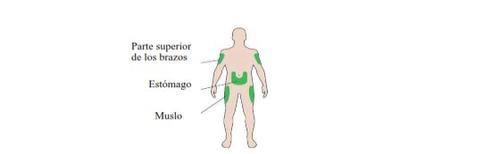
- Inject it into the front of your thighs, upper arms, or front of your waist (abdomen).
- Each day, change the injection site within an injection area. This will reduce the risk of skin shrinking or thickening (for more information, see “Other side effects” in section 4).
To prevent the possible transmission of diseases, insulin pens should never be used by more than one person, even if the needle is changed.
Always insert a new sterile needle before each injection. Never reuse needles. If you reuse a needle, you increase the risk of blockages and getting too much or too little insulin.
Dispose of the used needle in a puncture-resistant container or as instructed by your pharmacist or local authorities.
Do not use Toujeo
- In a vein, as this will change the way it works and may cause your blood sugar level to drop too low.
- In an insulin pump.
- If particles appear in the insulin. The solution should be clear, colorless, and water-like.
Never use a syringe to withdraw Toujeo from your DoubleStar pre-filled pen, as you may suffer a severe overdose. See section 2.
If the DoubleStar pen is damaged, it means it has not been stored properly. If you are not sure if it is working correctly or if your blood sugar control worsens inexplicably:
- Discard the pen and use a new one.
- If you think you have problems with your pen, inform your doctor, pharmacist, or nurse immediately.
If you use more Toujeo than you should
If you have injected too much medicine, your blood sugar level may drop too low. Check your blood sugar level and eat more to prevent your blood sugar level from dropping too low. If your blood sugar level drops too low, see the box at the end of this leaflet.
If you forget to use Toujeo
When needed, Toujeo can be injected up to 3 hours before or after your usual time of use.
If you have missed a dose of Toujeo or if you have not injected enough insulin, your blood sugar level may rise too high (hyperglycemia):
- Do not inject a double dose to make up for missed doses.
- Check your blood sugar level and inject your next dose at the usual time.
- For more information on treating hyperglycemia, see the box at the end of this leaflet.
If you stop using Toujeo
Do not stop your treatment without consulting your doctor. If you do, this could lead to very high blood sugar levels and an increase in blood acid (ketoacidosis).
If you have any further questions on the use of this medicine, ask your doctor, pharmacist, or nurse.

Started taking the medicine and have questions?
Discuss your symptoms and treatment with a doctor online.
4. Possible Adverse Effects
Like all medicines, this medicine can cause adverse effects, although not all people suffer from them.
If you notice signs that your blood sugar level is too low (hypoglycemia),act immediately to raise your blood sugar level (see the box at the end of this prospectus).
Hypoglycemia (low blood sugar) can be very serious and is very common during insulin treatment (it can affect more than 1 in 10 people).
- Low blood sugar means that there is not enough sugar in the blood.
- If your blood sugar level drops too low, you can faint (lose consciousness).
- Severe low blood sugar can cause brain damage and can be potentially fatal.
- For more information, see the box at the end of this prospectus.
Severe allergic reactions(rare, can affect up to 1 in 1,000 people). The signs may include rash and itching all over the body, swelling of the skin or mouth, difficulty breathing, feeling of dizziness (drop in blood pressure) with rapid heartbeat and sweating. Severe allergic reactions can be potentially fatal. Inform your doctor immediately if you notice the signs of a severe allergic reaction.
Other Adverse Effects
Tell your doctor, pharmacist, or nurse if you notice any of the following adverse effects:
- Changes in the skin at the injection site:
If insulin is injected too frequently in the same place, the fatty tissue can shrink (lipoatrophy, can affect up to 1 in 100 people) or become thicker (lipohypertrophy), (can affect up to 1 in 10 people). Lumps under the skin can also occur due to the accumulation of a protein called amyloid (cutaneous amyloidosis; the frequency of this is unknown). Insulin may not work very well if injected into a lumpy area. Change the injection site to help avoid these skin changes.
Frequent:can affect up to 1 in 10 people
- Skin reactions and allergic reactions at the injection site: the signs may include redness, intense pain when injecting, itching, hives, swelling, or inflammation. These reactions can spread around the injection site. Most minor insulin reactions usually disappear within a few days or weeks.
Rare:can affect up to 1 in 1,000 people
- Ocular reactions: a significant change in blood sugar control (improvement or worsening) can affect your vision. If you have a diabetes-related eye disorder called "proliferative retinopathy", episodes of very low blood sugar can cause temporary vision loss.
- Swelling of the calves and ankles caused by temporary water retention in the body.
Very Rare:can affect up to 1 in 10,000 people
- Change in taste (dysgeusia).
- Muscle pain (myalgia).
Tell your doctor, pharmacist, or nurse if you notice any of the above adverse effects.
Reporting Adverse Effects
If you experience any type of adverse effect, consult your doctor, pharmacist, or nurse, even if it is a possible adverse effect that is not listed in this prospectus. You can also report them directly through the national reporting system included in Appendix V. By reporting adverse effects, you can contribute to providing more information on the safety of this medicine.
5. Storage of Toujeo
Keep this medicine out of the sight and reach of children.
Do not use this medicine after the expiration date stated on the carton and on the label of the pen after CAD. The expiration date is the last day of the month indicated.
Before First Use
Store in the refrigerator (between 2°C and 8°C).
Do not freeze, nor place near the freezer or a cold accumulator.
Keep the pen in the outer packaging to protect it from light.
After First Use or if Carried as a Reserve
Do not store the pen in the refrigerator. The pen can be stored for a maximum of 6 weeks below 30°C, protected from direct heat or direct light. Discard the pen after this period. Do not leave your insulin in a car on an exceptionally hot or cold day. When not in use, always put the pen cap on to protect it from light.
Medicines should not be disposed of via wastewater or household waste. Ask your pharmacist how to dispose of the packaging and medicines that are no longer needed. This will help protect the environment.
6. Container Contents and Additional Information
Composition of Toujeo
- The active substance is insulin glargine. Each ml of solution contains 300 units of insulin glargine (equivalent to 10.91mg). Each DoubleStar pen contains 3 ml of injectable solution equivalent to 900 units.
- The other components are: zinc chloride, metacresol, glycerol, water for injectable preparations, sodium hydroxide (see section 2 "Toujeo contains sodium") and hydrochloric acid (for pH adjustment).
Appearance of Toujeo and Container Contents
Toujeo is a clear and colorless solution.
Each DoubleStar pen contains 3ml of injectable solution (equivalent to 900 units).
Packaging of 1, 3, 6 (2 packages of 3), 9 (3 packages of 3) and 10 pre-filled pens.
Only some package sizes may be marketed.
Marketing Authorization Holder and Manufacturer
Sanofi-Aventis Deutschland GmbH, D-65926 Frankfurt am Main, Germany.
You can request more information about this medication by contacting the local representative of the marketing authorization holder:
Belgium/Belgique/Belgien Sanofi Belgium Tel: +32 (0)2 710 54 00 | Lithuania UAB sanofi-aventis Lithuania Tel: +370 5 2755224 |
Bulgaria SANOFI BULGARIA EOOD Tel: +359 (0)2 970 53 00 | Luxembourg/Luxemburg Sanofi Belgium Tel: +32 (0)2 710 54 00 (Belgium/Belgien) |
Czech Republic sanofi-aventis, s.r.o. Tel: +420 233 086 111 | Hungary sanofi-aventis zrt., Hungary Tel: +36 1 505 0050 |
Denmark Sanofi A/S Tel: +45 45 16 70 00 | Malta Sanofi S.p.A. Tel: 30 02 39394275 |
Germany Sanofi-Aventis Deutschland GmbH Tel: 0800 52 52 010 Tel from abroad: +49 69 305 21 131 | Netherlands sanofi-aventis Netherlands B.V. Tel: +31 20 245 4000 |
Estonia sanofi-aventis Estonia OÜ Tel: +372 627 34 88 | Norway sanofi-aventis Norge AS Tel: +47 67 10 71 00 |
Greece sanofi-aventis AEBE Tel: +30 210 900 16 00 | Austria sanofi-aventis GmbH Tel: +43 1 80 185 – 0 |
Spain sanofi-aventis, S.A. Tel: +34 93 485 94 00 | Poland sanofi-aventis Sp. z o.o. Tel: +48 22 280 00 00 |
France sanofi-aventis France Tel: 0 800 222 555 Call from abroad: +33 1 57 63 23 23 | Portugal Sanofi - Produtos Farmacêuticos, Lda Tel: +351 21 35 89 400 |
Croatia sanofi-aventis Croatia d.o.o. Tel: +385 1 600 34 00 | Romania Sanofi Romania SRL Tel: +40 (0) 21 317 31 36 |
Ireland sanofi-aventis Ireland Ltd. T/A SANOFI Tel: +353 (0) 1 403 56 00 | Slovenia sanofi-aventis d.o.o. Tel: +386 1 560 48 00 |
Iceland Vistor hf. Tel: +354 535 7000 | Slovakia sanofi-aventis Pharma Slovakia s.r.o. Tel: +421 2 33 100 100 |
Italy Sanofi S.p.A. Tel: 800 131212 (technical questions) 800 536389 (other questions) | Finland Sanofi Oy Tel: +358 (0) 201 200 300 |
Cyprus sanofi-aventis Cyprus Ltd. Tel: +357 22 871600 | Sweden Sanofi AB Tel: +46 (0)8 634 50 00 |
Latvia sanofi-aventis Latvia SIA Tel: +371 67 33 24 51 | United Kingdom Sanofi Tel: +44 (0) 845 372 7101 |
Date of Last Revision of this Leaflet:
Detailed information on this medicinal product is available on the European Medicines Agency website: http://www.ema.europa.eu.
HYPERTENSION AND HYPOGLYCEMIA
If you are taking insulin, you should always carry the following with you:
- Sugar (at least 20 grams).
- Information indicating that you have diabetes.
Hyperglycemia (high blood sugar levels)
If your blood sugar level is too high (hyperglycemia), you may not have injected enough insulin.
Reasons why hyperglycemia may occur
Some examples are:
- You did not inject your insulin or did not inject enough.
- Your insulin is less effective, for example because it was not stored correctly.
- Your insulin pen is not working properly.
- You are doing less exercise than usual.
- You are stressed - such as emotional distress or nervousness.
- You have an injury, infection, or fever, or have undergone surgery.
- You are taking or have taken certain medications (see section 2, "Using Toujeo with other medications").
Warning signs of hyperglycemia
Thirst, increased need to urinate, fatigue, dry skin, redness of the face, loss of appetite, low blood pressure, rapid heartbeat, and the presence of glucose and ketone bodies in the urine. Stomach pain, deep and rapid breathing, feeling sleepy or fainting (loss of consciousness) can be signs of a serious condition (ketoacidosis) caused by lack of insulin.
What to do if you experience hyperglycemia?
- Check your blood sugar level and your acetone level in the urine as soon as you notice any of the warning signs described above.
- Contact your doctor immediately if you have severe hyperglycemia or ketoacidosis. This should always be treated by a doctor, usually in a hospital.
Hypoglycemia (low blood sugar levels)
If your blood sugar level drops too low, you may lose consciousness. Severe hypoglycemia can cause a heart attack or brain damage and can be life-threatening. You should learn to recognize the signs that indicate your blood sugar level is dropping, so you can take the necessary measures to prevent the situation from getting worse.
Reasons why hypoglycemia may occur
Some examples are:
- You inject too much insulin.
- You miss meals or delay them.
- You do not eat enough, or eat foods that contain less sugar (carbohydrates) than usual. Artificial sweeteners are not carbohydrates.
- You drink alcohol, especially if you do not eat much.
- You lose carbohydrates due to vomiting or diarrhea.
- You are doing more exercise than usual or a different type of physical activity.
- You are recovering from an injury, surgery, or other types of stress.
- You are recovering from an illness or fever.
- You are taking or have stopped taking certain medications (see section 2, "Using Toujeo with other medications").
It is also more likely to experience hypoglycemia if:
- You have just started insulin treatment or changed to another insulin - if you experience low blood sugar, it is more likely to happen in the morning.
- Your blood sugar levels are almost normal or unstable.
- You change the area of the skin where you inject insulin, for example from the thigh to the upper arm.
- You have a serious kidney or liver disease, or another disease such as hypothyroidism.
Warning signs of hypoglycemia
The first signs can be generally in your body. Examples of signs that your blood sugar level is dropping too low or too quickly are: sweating, moist and sticky skin, anxiety, rapid and irregular heartbeat, high blood pressure, and palpitations. These signs often occur before signs of low blood sugar in the brain appear.
The signs in your brain include: headache, feeling very hungry, nausea, vomiting, feeling tired, drowsiness, agitation, sleep problems, aggressive behavior, difficulty concentrating, reduced reaction capacity, depression, feeling confused, difficulty speaking (sometimes, complete loss of speech), change in vision, tremors, inability to move (paralysis), tingling in hands or arms, feeling numb and tingling often around the mouth, feeling dizzy, loss of self-control, inability to take care of oneself, seizures, loss of consciousness.
Situations in which the warning signs of hypoglycemia may be less clear:
The first warning signs of hypoglycemia may change, weaken, or be absent if:
- You are an elderly person.
- You have had diabetes for a long time.
- You have a certain type of nerve disease (called "autonomic diabetic neuropathy").
- You have recently experienced a large drop in blood sugar (for example, the day before).
- Your blood sugar level remains low.
- Your blood sugar level is always more or less "normal" or your blood sugar level has improved significantly.
- You have recently changed from an animal insulin to a human insulin like Toujeo.
- You are taking or have taken certain medications (see section 2, "Using Toujeo with other medications").
In these cases, you may experience severe hypoglycemia (and even lose consciousness) before you realize what is happening. Always be familiar with your warning signs. If necessary, you may need to perform blood sugar tests more frequently. This can help identify mild hypoglycemic episodes. If you have difficulty recognizing your warning signs, you should avoid situations (such as driving a car) that could put you or others at risk due to hypoglycemia.
What to do if you experience hypoglycemia?
- Do not inject insulin. Immediately ingest 10 to 20 grams of sugar, such as glucose, sugar cubes, or a sugary drink. Do not drink or eat foods that contain artificial sweeteners (such as diet drinks) as they do not help treat low blood sugar.
- Then, eat something (such as bread or pasta) that will increase your blood sugar level in the long term. Ask your doctor or nurse if you are not sure what to eat.
With Toujeo, recovery from low blood sugar may be delayed because it has a prolonged action.
- If hypoglycemia recurs, take another 10 to 20 grams of sugar.
- Consult a doctor immediately if you are unable to control hypoglycemia or if it recurs.
What should others do if you have hypoglycemia?
Inform your family, friends, and people close to you that you need urgent medical help if you are unable to swallow or lose consciousness.
You will need an injection of glucose or glucagon (a medication that increases blood sugar levels). These injections are justified even if you are not sure if you have hypoglycemia.
It is recommended to check your blood sugar level immediately after ingesting glucose to confirm that you actually have hypoglycemia.
Toujeo 300 units/ml solution for injection in pre-filled pen (DoubleStar)
INSTRUCTIONS FOR USE
Read this first
Toujeo DoubleStar contains 300 units/ml of insulin glarginein a 3 ml pre-filled disposable pen
- Never reuse needles. If you do, you may not receive the necessary dose (underdosing) or receive too much (overdosing), as the needle may become blocked.
- Never use a syringe to extract insulin from your pen. If you do, you will extract too much insulin. The graduation on most syringes is intended only for non-concentrated insulin.
- The dose selector on the Toujeo DoubleStar penmarks in 2 unit steps.
Important information
Never share your pen - it is only for you.
Never use your pen if it is damaged or if you are not sure it is working correctly.
Always perform a safety test before using the new pen for the first time, until you see the insulin coming out of the needle tip(see STEP 3). If you see the insulin coming out of the needle tip, the pen is ready to use. If you do not see insulin coming out of the needle tip before administering your dose, you may receive a lower dose of insulin or no insulin. This can cause high blood sugar.
To ensure that the pen and needle are working, always perform a safety test until you see the insulin coming out of the needle tip before each injection(see STEP 3). If you do not perform the safety test before each injection, you may receive very little insulin.
Always carry a spare pen and needles in case they are lost or stop working.
Learning to inject
- Ask your doctor, pharmacist, or nurse how to inject before using your pen.
- This pen is not recommended for use by blind or visually impaired people without the help of a trained person.
- Read all these instructions before using your pen. If you do not follow all these instructions, you may receive too much insulin or too little.
Do you need help?
If you have questions about your pen or your diabetes, ask your doctor, pharmacist, or nurse, or call the sanofi-aventis number at the beginning of this leaflet.
Additional items you will need:
- a new sterile needle (see STEP 2).
- a puncture-resistant container for used needles and pens.
Injection sites

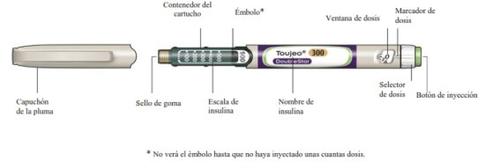
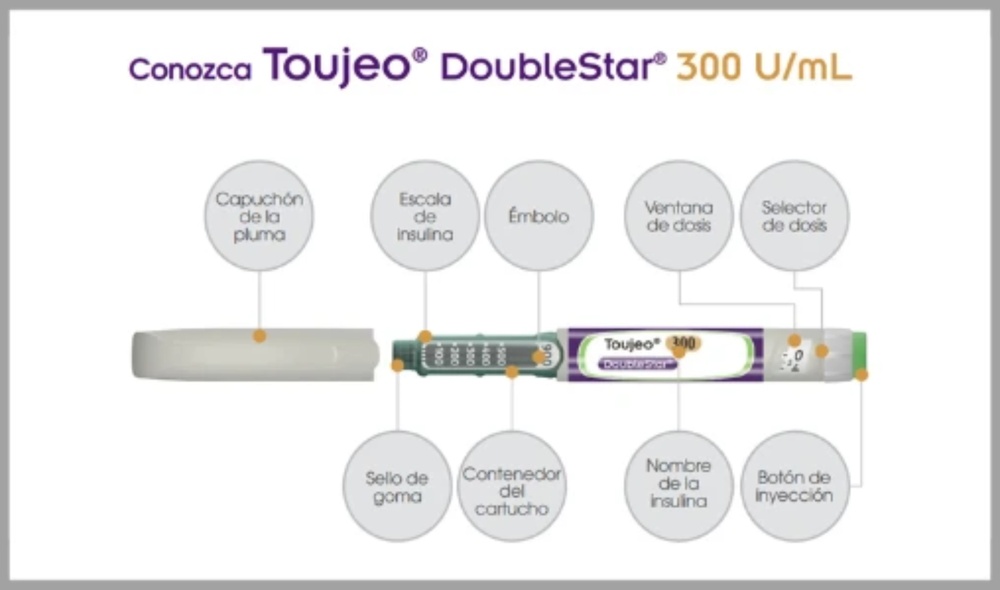
Get to know your pen
STEP 1: Check your pen
Remove a new pen from the refrigerator at least 1 hour before your injection. Injecting cold insulin is more painful.
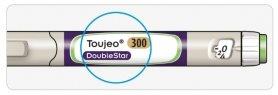
ACheck the name and expiration date on the label of your pen.
- Make sure you have the correct insulin. This is especially important if you have other pens.
- Do not use the pen after the expiration date.
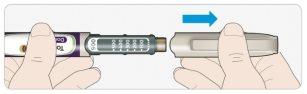
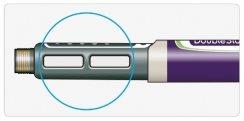
BRemove the cap from the pen.
CCheck that the insulin is clear.
- Do not use the pen if the insulin is cloudy, has color, or contains particles.
STEP 2: Attach a new needle
Always use a new sterile needle for each injection. This will help prevent needle blockage, contamination, and infection.
Only use needles compatible with Toujeo DoubleStar (e.g., BD, Ypsomed Artsana, or Owen Mumford) that are 8 mm long or less.
ATake a new needle and remove the protective seal.
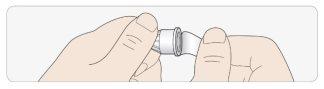
BHold the needle straight and screw it onto the pen until it is fixed. Do not overtighten.
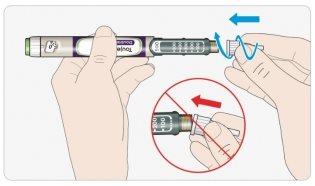
CRemove the outer needle cap. Store it for later use.
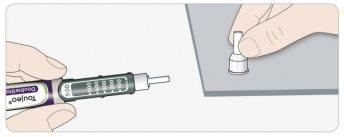
DRemove the inner needle cap and discard it.
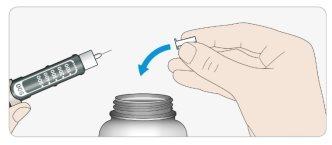
Handling needles
- Be careful when handling needles to avoid puncture injuries and cross-infection.
STEP 3: Perform a safety test
Always perform a safety test before each injectionto:
- check that your pen and needle are working correctly.
- ensure you receive the correct dose of insulin.
If the pen is new, you must perform the safety tests before using the pen for the first time until you see the insulin coming out of the needle tip.If you see the insulin coming out of the needle tip, the pen is ready to use. If you do not see insulin coming out of the needle tip before using your dose, you may receive a lower dose of insulin or no insulin. This can cause high blood sugar.
ASelect 4 units by turning the dose selector until the dose marker is at the 4 mark.
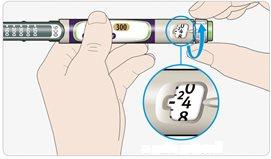
BPress the injection button all the way down.
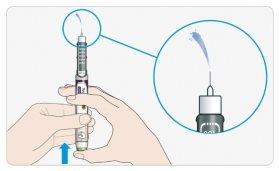
CRepeat this step if insulin does not come out:
- If you are using a pen for the first time, you may need to repeat this step up to 6 times, before you see insulin coming out.
- Do not use your pen if insulin still does not come out of the needle tip. Use a new pen.
- For all injections, if insulin does not come out, the needle may be blocked. If this happens:
- change the needle (see STEP 6 and STEP 2),
- then repeat the safety test (STEP 3A and STEP 3B).
- Do not use your pen if insulin still does not come out of the needle tip. Use a new pen.
- Never use a syringe to withdraw insulin from your pen.
If you see air bubbles
- You may see air bubbles. This is normal; they will not harm you.
STEP 4: Select the dose
Never select a dose or press the injection button while the needle is not in place, as this could damage your pen.
Toujeo DoubleStar allows you to administer the number of insulin units prescribed by your doctor. Do not make any dose adjustments.
AMake sure the needle is in place and the dose is set to “0”.
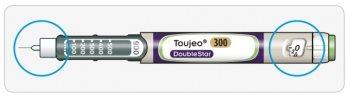
BTurn the dose selector until the dose marker is aligned with your dose.
- Set the dose by turning the dose selector to a line in the dose window. Each line is equal to 2 units.
- The marker clicks as you turn it.
- Do not select your dose by counting the clicks. You may select an incorrect dose. This can lead to too much or too little insulin.
- Always check the number in the dose window to make sure you have selected the correct dose.
- If you exceed your dose, you can turn it back.
- If there are not enough units left in your pen to administer your dose, the dose selector will stop at the number of units left.
- If you cannot select your full prescribed dose, divide the dose into two injections or use a new pen. If you use a new pen, perform the safety test (see STEP 3).
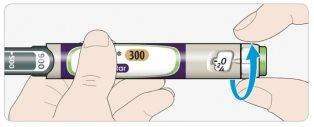
How to read the dose window
The dose selector is adjusted in steps of 2 units.
Even numbers are indicated on the same line as the dose marker:

60 units selected

58 units selected
Insulin units in your pen
- Your pen contains a total of 900 units of insulin. You can select doses from 2 to 160 units in steps of 2 units. Each pen contains more than one dose.
- You can see how many units are left by looking at where the plunger is on the insulin scale
STEP 5: Inject the dose
If you have trouble pressing the injection button, do not force it, as this could break your pen. See the following for help.
AChoose an injection site as shown in the “Injection Sites” drawing.
BPush the needle into your skin, just as your doctor, pharmacist, or nurse has taught you.
- Do not press the injection button yet.
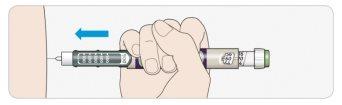
CPlace your thumb on the injection button. Press it all the way down and hold it.
- Do not press the button at an angle: your thumb could block the dose selector and prevent it from turning.
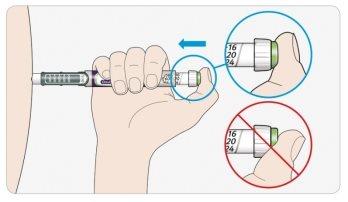
DHold the injection button down and when you see “0” in the dose window, count slowly to 5.
- This will ensure you receive your full dose.
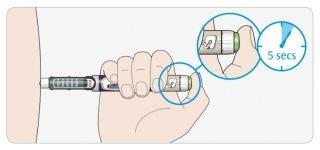
EAfter holding it down and counting slowly to 5, release the injection button. Then, remove the needle from your skin.
If you have trouble pressing the button:
- Change the needle (see STEP 6 and STEP 2) and then perform a safety test (see STEP 3).
- If you still have trouble pressing the button, use a new pen.
- Do not use a syringe to withdraw insulin from your pen.
STEP 6: Remove the needle
Be careful when handling needles to avoid needlestick injuries and cross-infection.
Do not put the inner needle cap back on.
APut the outer needle cap on, and use it to unscrew the needle from the pen.
- To reduce the risk of accidental needlesticks, never put the inner cap on.
- If someone else is giving you the injection or if you are giving the injection to someone else, be especially careful when removing or disposing of the needle.
- Follow the safety measures for removing and disposing of needles (contact your doctor, pharmacist, or nurse) to reduce the risk of accidental needlesticks and the transmission of infectious diseases.
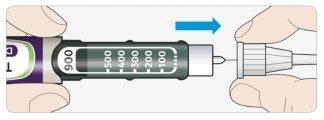
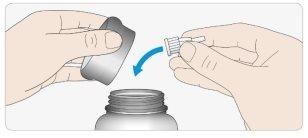
BDispose of the used needle in a puncture-resistant container, or as directed by your pharmacist or local authorities.
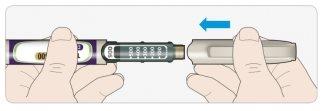
CPut the pen cap back on.
- Do not put the pen back in the refrigerator.
Use
- Only use your pen for a maximum of 6 weeks after first use.
How to store your pen
Before first use
- Store new pens in the refrigerator, at a temperature between 2C and 8C.
- Do not freeze.
After first use
- Store your pen at room temperature, below 30 ºC.
- Do not put your pen back in the refrigerator.
- Do not store your pen with the needle attached.
- Store your pen with the cap on.
- Keep your pen and needles out of the sight and reach of children.
How to care for your pen
Handle your pen with care
- Do not drop your pen or hit it against hard surfaces.
- If you think your pen may be damaged, do not try to repair it, use a new one.
Protect your pen from dust and dirt
- You can clean the outside of your pen with a damp cloth. Do not get your pen wet, wash it, or lubricate it, as this could damage it.
Dispose of your pen
- Remove the needle before disposing of your pen.
- Dispose of your used pen as directed by your healthcare professional or local authorities.
- Country of registration
- Dosage formINJECTABLE, 300 U/ml
- ATC codeA10AE04
- Average pharmacy price101.24 EUR
- Active substance
- Prescription requiredYes
- Manufacturer
- CompositionGLICEROL (E 422) (60 mg mg), HIDROXIDO DE SODIO (E 524) (cs C.S mg)
- This information is for reference only and does not constitute medical advice. Always consult a doctor before taking any medication. Oladoctor is not responsible for medical decisions based on this content.
- Alternatives to TOUJEO 300 Units/mL DoubleStar pre-filled pen solution for injectionDosage form: INJECTABLE, 100 U/mlActive substance: insulin glargineManufacturer: Eli Lilly Nederland B.V.Prescription requiredDosage form: INJECTABLE, UnknownActive substance: insulin glargineManufacturer: Sanofi-Aventis Deutschland GmbhPrescription requiredDosage form: INJECTABLE, UnknownActive substance: insulin glargineManufacturer: Sanofi-Aventis Deutschland GmbhPrescription required
Online doctors for TOUJEO 300 Units/mL DoubleStar pre-filled pen solution for injection
Discuss questions about TOUJEO 300 Units/mL DoubleStar pre-filled pen solution for injection, including use, safety considerations and prescription review, subject to medical assessment and local regulations.









Frequently Asked Questions
TOUJEO 300 Units/mL DoubleStar pre-filled pen solution for injection requires a prescription in Spain. You can check with a doctor online whether this medicine may be appropriate for your situation.
The active ingredient in TOUJEO 300 Units/mL DoubleStar pre-filled pen solution for injection is insulin glargine. This information helps identify medicines with the same composition but different brand names.
The average pharmacy price for TOUJEO 300 Units/mL DoubleStar pre-filled pen solution for injection is around 101.24 EUR. Prices may vary depending on the manufacturer and dosage form.
TOUJEO 300 Units/mL DoubleStar pre-filled pen solution for injection is manufactured by Sanofi-Aventis Deutschland Gmbh. Pharmacy brands and packaging may differ depending on the distributor.
Doctors such as Family doctors, Psychiatrists, Dermatologists, Cardiologists, Endocrinologists, Gastroenterologists, Pulmonologists, Nephrologists, Rheumatologists, Hematologists, Infectious disease physicians, Allergists, Geriatricians, Paediatricians, Oncologists may assess whether TOUJEO 300 Units/mL DoubleStar pre-filled pen solution for injection is appropriate, depending on your situation and local regulations. You can book an online consultation to discuss your symptoms and possible next steps.
The prescription is issued by a doctor after assessing your health. In Spain, TOUJEO 300 Units/mL DoubleStar pre-filled pen solution for injection is then dispensed in pharmacies with that prescription. An online consultation does not guarantee that a prescription will be issued: the decision always rests with the doctor.
To request a review, you can use Oladoctor:
Other medicines with the same active substance (insulin glargine) include ABASAGLAR 100 units/mL KwikPen prefilled pen injector solution, LANTUS 100 units/mL injectable solution in a cartridge, LANTUS 100 units/mL injectable solution in a cartridge. These may have different brand names or formulations but contain the same therapeutic ingredient. Always consult a doctor before switching or starting a new medicine.
