



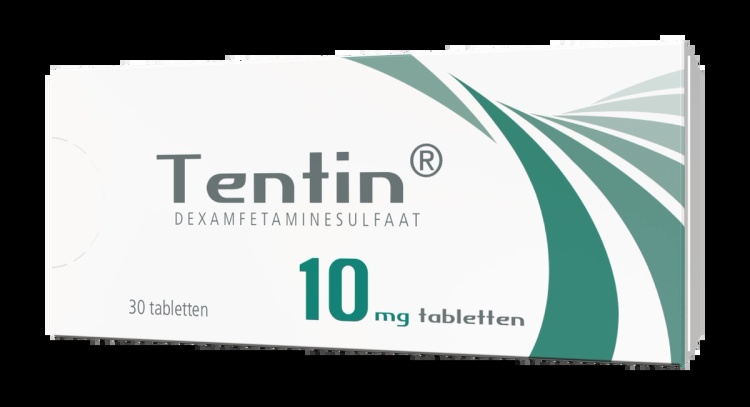
TENTIN 10 mg Tablets

Prescription review online
A doctor will review your case and decide whether a prescription is medically appropriate.

Talk to a doctor about this medicine
Discuss your symptoms and possible next steps in a quick online consultation.



How to use TENTIN 10 mg TABLETS
Contents of the leaflet
- Introduction
- What is Tentin and what is it used for
- What you need to know before taking Tentin
- How to take Tentin
- Possible Adverse Effects
- Storage of Tentin
- Package Contents and Additional Information
Introduction
Package Leaflet: Information for the Patient
Tentin 5mg tablets
Tentin 10mg tablets
Tentin 20 mg tablets
dexanfetamine, sulfate
Read this package leaflet carefully before your child starts taking this medicine, as it contains important information for you.
- Keep this package leaflet, as you may need to read it again. If you have any further questions, ask your doctor or pharmacist.
- This medicine has been prescribed to your child only, and you should not give it to others, even if they have the same symptoms, as it may harm them.
- If your child experiences side effects, consult your doctor or pharmacist, even if they are not listed in this package leaflet. See section 4.
Contents of the Package Leaflet
- What is Tentin and what is it used for
- What you need to know before taking Tentin
- How to take Tentin
- Possible side effects
- Storage of Tentin
- Package contents and further information
1. What is Tentin and what is it used for
What is Tentin
Tentin tablets contain the active substance dexanfetamine, sulfate.
Tentin is a psycho-stimulant. It improves activity in parts of the brain. This medicine may help improve attention and concentration and reduce impulsive behavior.
What is it used for
Tentin is used to treat attention deficit hyperactivity disorder (ADHD).
- It is used in children and adolescents from 6 to 17 years old.
- It is not indicated in all children with ADHD.
- It is used only after another medicine called methylphenidate has not been effective enough.
- It should be used as part of a treatment program that usually includes psychological, educational, and social measures.
Treatment with this medicine should only be started and used under the supervision of a specialist in child and adolescent behavioral disorders.
You should consult a doctor if your child does not improve or worsens after one month. The doctor may decide that a different treatment is necessary.

Not sure if this medicine is right for you?
Discuss your symptoms and treatment with a doctor online.
2. What you need to know before taking Tentin
Do not use Tentin if your child:
- is allergic (hypersensitive) to dexanfetamine or other amphetamine compounds or to any of the other ingredients of this medicine (listed in section 6)
- has a thyroid problem
- has increased eye pressure (glaucoma)
- has a tumor of the adrenal gland (pheochromocytoma)
- has an eating disorder, has no appetite, or does not want to eat (e.g., anorexia nervosa)
- has very high blood pressure or narrowing of blood vessels, which can cause pain in arms and legs
- has advanced arteriosclerosis
- has ever had heart problems, such as myocardial infarction, irregular heartbeat, chest pain and discomfort, heart failure, heart disease, or was born with a heart problem
- has ever had a problem with blood vessels in the brain, such as a stroke, swelling and weakening of part of a blood vessel (aneurysm), narrowed or blocked blood vessels, or inflammation of blood vessels (vasculitis)
- has mental health problems such as:
- a psychopathic or borderline personality disorder
- abnormal or hallucinatory thoughts or schizophrenia
- signs of a severe mood disorder such as:
- suicidal thoughts
- severe depression
- mania
- mood swings (from manic to depressed, also known as bipolar disorder)
- is taking or has taken in the last 14 days an antidepressant (known as a monoamine oxidase inhibitor) - see the section "Other medicines and Tentin" below
- has ever excessively consumed alcohol, prescription medications, or drugs
- has Tourette's syndrome or other motor or vocal tics
- has repeated and uncontrollable spasms in any part of the body or repeats sounds and words
- has porphyria.
Do not use this medicine if your child has any of the above conditions. If you are unsure, consult your doctor or pharmacist before using dexanfetamine. The reason is that this medicine may worsen the mentioned problems.
Warnings and precautions
Consult your doctor or pharmacist before starting to take dexanfetamine if your child:
- has a blood or liver disease or kidney problems
- has an unstable personality
- has had seizures (attacks, convulsions, epilepsy) or abnormalities in brain exploration (EEG)
- is a female who has started menstruating (see the section "Pregnancy and breastfeeding" below)
- has high blood pressure
- has a heart problem not listed in the "Do not use" section above
- has a mental health problem not listed in the "Do not use" section above. This may include mood swings in general, unusual aggression, hallucinations, delusional ideas, paranoia, psychomotor excitement, and anxiety, feelings of guilt or depression.
Tell your doctor or pharmacist if your child is in any of these circumstances before starting treatment. The reason is that this medicine may worsen the mentioned problems. Your doctor will want to monitor how the medicine affects your child.
Checks that your doctor will perform before using Tentin
These checks are to decide if this medicine is suitable for your child. Your doctor will discuss with you:
- any other medicine that your child is taking
- if there is a family history of sudden unexplained death
- any other medical problem (such as heart problems) that you or your family may have
- how your child feels, for example, if they are euphoric or depressed, if they have unusual thoughts or if they have had any of these feelings in the past
- if there is a family history of "tics" (repeated and uncontrollable spasms in any part of the body or repetition of sounds and words)
- any mental health or behavioral problem that you or other family members have ever had.
The doctor will assess if your child is at risk of mood swings (from manic to depressed, also known as bipolar disorder). The doctor will check your child's mental health history and if any family member has a history of suicide, bipolar disorder, or depression.
It is essential that you provide all the information you can. This will help the doctor decide if this medicine is suitable for your child. Your doctor may decide that other medical tests are necessary before starting this medicine.
Effect on weight/growth
This medicine may cause weight loss in some children and adolescents.
- There may be a lack of weight gain.
- Your doctor will closely monitor your child's height and weight and if they are eating enough.
- If your child is not growing as expected, your doctor may interrupt treatment with this medicine for a short period.
Surgical interventions
Tell your doctor if your child is going to have an operation. This medicine should not be taken on the day of surgery if a certain type of anesthesia is used. This is because there is a possibility of a sudden increase in blood pressure during surgery.
Drug tests
This medicine may give a positive result in a drug test.
Pharmacological interactions in analytical tests
This medicine may interfere with laboratory test results.
Children and adolescents
This medicine should not be used to treat ADHD in children under 6 years old or in adults. It is not known if it is safe or effective for these people.
Other medicines and Tentin
Tell your doctor or pharmacist if your child is taking, has recently taken, or might take any other medicine, including those without a prescription.
Monoamine oxidase inhibitors
Do not use this medicine if your child is taking a medicine called "monoamine oxidase inhibitor" (MAOI) used for depression or if they have taken an MAOI in the last 14 days. Taking an MAOI with dexanfetamine may cause a sudden increase in blood pressure.
If your child is taking other medicines, this medicine may affect their efficacy or cause side effects. If your child is taking any of the following medicines, consult your doctor or pharmacist before using this medicine:
- other medicines for depression, such as tricyclic antidepressants and selective serotonin reuptake inhibitors
- medicines for severe mental health problems, e.g., phenothiazines and haloperidol
- medicines for epilepsy, e.g., anticonvulsants such as phenobarbital, phenytoin, primidone, and ethosuximide
- medicines that help to stop drinking, e.g., disulfiram
- medicines used to reduce or increase blood pressure, e.g., guanethidine, clonidine, reserpine, or alpha-methyldopa, or beta-blockers such as propranolol
- some treatments for cough and cold that contain medicines that may affect blood pressure
It is essential that you consult your pharmacist when buying any of these medicines.
- medicines that thin the blood to prevent blood clots, such as coumarin anticoagulants
- any medicine that contains glutamic acid hydrochloride, ascorbic acid, ammonium chloride, sodium acid phosphate, sodium bicarbonate, acetazolamide, thiazides
- any of the following medicines: beta-blockers, antihistamines, lithium, noradrenaline, morphine, and meperidine.
If you are unsure if any of the medicines your child is taking are included in the above list, consult your doctor or pharmacist before your child takes this medicine.
Using Tentin with alcohol
Do not consume alcohol while taking this medicine. Remember that some foods and medicines contain alcohol.
Pregnancy and breastfeeding
Available data on the use of this medicine during the first three months of pregnancy do not indicate an increased risk of congenital malformations in the child, but may increase the risk of preeclampsia (a disease that usually appears after 20 weeks of pregnancy and is characterized by high blood pressure and protein in the urine) and premature birth. Newborns exposed to amphetamines during pregnancy may experience withdrawal symptoms (behavioral changes that include excessive crying, unstable or irritable mood, hyperexcitability, and pronounced exhaustion).
If your daughter is pregnant or breastfeeding, thinks she may be pregnant, or plans to become pregnant, consult your doctor or pharmacist before using this medicine.
- Your doctor will consider contraception.
- If your daughter is pregnant, she may need to stop taking this medicine.
- This medicine may be excreted in breast milk. Therefore, your doctor will decide if your daughter should stop breastfeeding or stop taking this medicine.
Driving and using machines
Your child may feel dizzy, have concentration problems, or blurred vision when taking this medicine. If so, it may be dangerous to do things like driving, using machines, riding a bike, or climbing trees.
Tentincontains isomalt (E953)
If your doctor has told you that your child has an intolerance to certain sugars, consult with them before taking this medicine.
3. How to take Tentin
How much to take
Follow exactly the administration instructions of this medicine indicated by your doctor. In case of doubt, ask your doctor or pharmacist.
The recommended dose is between 5 mg and 20 mg.
- Usually, your doctor will start treatment with a low dose of one 5 mg tablet. If necessary, it will be gradually increased by one 5 mg tablet at weekly intervals.
- The maximum daily dose is 20 mg (in rare cases, 40 mg may be necessary).
How to take it
The medicine is administered orally.
Your child should take the tablets of this medicine with a glass of water, preferably with meals or immediately after them. The Tentin tablets should be taken at the same time with respect to meals. In general, the last dose should not be administered too late after the meal to avoid sleep problems.
The tablets have a score line and can be divided if necessary. The score line is only for breaking the tablet if it is difficult to swallow whole. To break it, place the tablet on a hard surface with the smooth and scored face down and then press gently with your index finger in the center of the top face. The tablet will break into four parts.
If your child does not feel better, tell your doctor. The doctor may decide that a different treatment is necessary.
Long-term treatment
Your doctor will decide the duration of treatment. If your child takes this medicine for more than a year, the doctor may interrupt treatment for a short period, e.g., during school holidays. This will indicate if the medicine is still necessary.
Incorrect use of Tentin
If this medicine is not used correctly, it may cause abnormal behavior. It may also mean that your child starts to depend on the medicine. Tell your doctor if your child has ever had excessive use or dependence on alcohol, prescription medications, or drugs.
This medicine is only for your child. Do not give it to others, even if the symptoms seem similar.
If your child takes more Tentin than they should
In case of overdose or accidental ingestion, consult a doctor, pharmacist, or call the Toxicology Information Service, phone 915620420, indicating the medicine and the amount taken.
Show the doctor the package or this package leaflet. Overdose of these tablets can have very serious consequences.
Signs of overdose may include: excitement, hallucinations, convulsions leading to coma, irregular and rapid heartbeat, and reduced breathing.
If your child forgets to take Tentin
Do not take a double dose to make up for forgotten doses. If your child forgets a dose, wait until it is time for the next one.
If your child stops taking Tentin
If your child stops taking this medicine abruptly, they may experience extreme fatigue, depression, mood disorders, psychomotor excitement, sleep disturbances, increased appetite, or involuntary movements. Your doctor may want to gradually reduce the amount of medicine taken each day before stopping it completely. Consult your doctor before stopping treatment with this medicine.
If you have any other questions about the use of this medicine, ask your doctor or pharmacist.

Started taking the medicine and have questions?
Discuss your symptoms and treatment with a doctor online.
4. Possible Adverse Effects
Like all medicines, this medicine can cause adverse effects, although not all people suffer from them. Your doctor will discuss these adverse effects with you.
Stop administering Tentin and consult a doctor or go to an emergency center immediately if your child experiences the following symptoms:
- hallucinations, psychosis/psychotic reactions, suicidal behavior (very rare: may affect 1 in 10,000 people)
- severe allergic reactions that cause swelling of the face, tongue, or throat; difficulty swallowing; hives, and breathing difficulties (angioedema/anaphylaxis) (frequency not known [cannot be estimated from available data])
- abnormal muscle breakdown with symptoms such as unexplained muscle pain, muscle cramps, or muscle weakness (rhabdomyolysis) (frequency not known [cannot be estimated from available data])
Other Adverse Effects
Very Common: may affect more than 1 in 10 people
- decreased appetite, decreased weight gain, and weight loss during prolonged use in children
- difficulty sleeping
- nervousness
Common: may affect up to 1 in 10 people
- irregular or increased heartbeats, more noticeable heartbeats
- abdominal pain and/or cramps, nausea, vomiting, dry mouth
These effects usually occur at the start of treatment and can be alleviated by taking the medicine with meals.
- changes in blood pressure and heart rate (usually increased)
- joint pain
- dizziness or feeling of "spinning", spasmodic or involuntary movements, headache, hyperactivity
- abnormal behavior, aggression, excitement, anorexia, anxiety, depression, irritability
Uncommon: may affect up to 1 in 1,000 people
- chest pain
- visual acuity and focus problems, blurred vision, dilated pupils
- reduced growth rate during prolonged use in children
- fatigue
- skin rash, hives
Very Rare: may affect up to 1 in 10,000 people
- decrease in red blood cells, which can cause pale skin and lead to weakness or breathing difficulties, changes in blood cell count (leukopenia, thrombocytopenia, thrombocytopenic purpura)
- cardiac arrest
- Tourette's syndrome
- abnormal liver function, from elevated liver enzymes to liver coma
- muscle cramps
- seizures, involuntary movements (choreoathetotic movements), bleeding within the skull (intracranial hemorrhage)
- suicide, tics, worsening of existing tics
- red, itchy skin lesions (erythema multiforme) or scaly skin patches (exfoliative dermatitis), recurrent rash, which occurs in the same place each time the medicine is taken (fixed drug eruption)
- inflammation of the blood vessels in the spinal cord and brain (cerebral vasculitis) or occlusion
Frequency Not Known: cannot be estimated from available data
- heart muscle disease (myocardial disease), myocardial infarction, sudden death
- inflammation of parts of the large intestine when blood flow is reduced (ischemic colitis), diarrhea
- chest pain, increased body temperature, allergic reactions
- disruption of the body's acid-base balance (acidosis)
- difficulty controlling movements (ataxia), dizziness, abnormal or altered sense of taste, concentration problems, hyperreflexia, apoplexy, tremor
- confusion, addiction, dysphoria, emotional instability, euphoria, impaired cognitive performance, altered libido, nightmares, obsessive-compulsive behavior, panic states, paranoia, restlessness
- kidney damage
- impotence
- excessive sweating, hair loss
- circulatory failure
- numbness, tingling, and color change (from white to blue and then to red) in fingers and toes when cold (Raynaud's phenomenon)
Reporting Adverse Effects
If you experience any adverse effects, consult your doctor or pharmacist, even if they are not listed in this leaflet. You can also report them directly through the Spanish Pharmacovigilance System for Human Use Medicines: https://www.notificaram.es. By reporting adverse effects, you can contribute to providing more information on the safety of this medicine.
5. Storage of Tentin
Keep this medicine out of sight and reach of children.
Do not use this medicine after the expiration date shown on the blister pack and carton after "EXP". The expiration date is the last day of the month indicated.
Do not store above 25 °C.
Keep in the original packaging to protect from moisture.
Medicines should not be disposed of via wastewater or household waste. Deposit the packaging and unused medicines at the pharmacy's SIGRE point. If in doubt, ask your pharmacist how to dispose of the packaging and medicines you no longer need. This will help protect the environment.
6. Package Contents and Additional Information
What Tentin contains:
- The active ingredient is dexamfetamine sulfate
Tentin 5 mg:
One tablet contains 5 mg of dexamfetamine sulfate
Tentin 10 mg:
One tablet contains 10 mg of dexamfetamine sulfate
Tentin 20 mg:
One tablet contains 20 mg of dexamfetamine sulfate
- Other ingredients are:
isomalt (E953), see section 2
magnesium stearate
crospovidone in 5 mg tablets
yellow iron oxide (E 172) in 10 mg tablets
red iron oxide (E 172) in 20 mg tablets
Appearance and Package Contents:
Tentin 5 mg tablets
White, round, cloverleaf-shaped tablets with a cross-shaped notch on the top surface and a cross-shaped notch and an "S" embossed in relief on each quarter of the bottom surface.
The notch is only for fracturing and facilitating swallowing, but not for dividing into equal doses.
Package sizes: 20, 28, 30, 50, 98, or 100 tablets
Boxes with tablets packaged in PVC/PE/PVdC and aluminum foil blisters
Tentin 10 mg tablets
Yellow, round, cloverleaf-shaped tablets with a cross-shaped notch on the top surface and a cross-shaped notch and an "M" embossed in relief on each quarter of the bottom surface.
The notch is only for fracturing and facilitating swallowing, but not for dividing into equal doses.
Package sizes: 20, 28, 30, 48, or 50 tablets
Boxes with tablets packaged in PVC/PVdC and aluminum foil blisters
Tentin 20 mg tablets
Reddish, round, cloverleaf-shaped tablets with a cross-shaped notch on the top surface and a cross-shaped notch and an "L" embossed in relief on each quarter of the bottom surface.
The notch is only for fracturing and facilitating swallowing, but not for dividing into equal doses.
Package sizes: 20, 28, or 30 tablets
Boxes with tablets packaged in PVC/PVdC and aluminum foil blisters
Not all package sizes may be marketed.
Marketing Authorization Holder and Manufacturer
MEDICE Arzneimittel Pütter GmbH & Co. KG
Kuhloweg 37
58638 Iserlohn
Germany
This medicine is authorized in the Member States of the European Economic Area and in the United Kingdom (Northern Ireland) under the following names:
Austria: Philla 5 mg/10 mg/20 mg Tablet
Belgium: Attentin 5 mg/10 mg/20 mg Tablets
Estonia: Tentin 5 mg/10 mg/20 mg Tablet
Spain: Tentin 5 mg/10 mg/20 mg tablets
France: Tentin 5 mg/10 mg/20 mg comprimé
Italy: Amfexa 5 mg/10 mg/20 mg compressa
Poland: Tentin 5 mg/10 mg/20 mg Tabletka
Portugal: Tentin 5 mg/10 mg/20 mg comprimido
Denmark: Attentin 5 mg/10 mg/20 mg
Finland: Attentin 5 mg/10 mg/20 mg
Iceland: Attentin 5 mg/10 mg/20 mg
Luxembourg: Attentin 5 mg/10 mg/20 mg
Norway: Attentin 5 mg/10 mg/20 mg
Sweden: Attentin 5 mg/10 mg/20 mg
United Kingdom (Northern Ireland): Amfexa 5 mg/10 mg/20 mg tablet
This leaflet is also available in formats suitable for the blind and visually impaired.
Date of last revision of this leaflet:February 2025
Detailed information on this medicine is available on the website of the Spanish Agency for Medicines and Health Products (AEMPS) (http://www.aemps.gob.es/).
- Country of registration
- Dosage formTABLET, 10 mg
- ATC codeN06BA02
- Active substance
- Prescription requiredYes
- Manufacturer
- CompositionISOMALTA (E 953) (147,7 mg mg)
- This information is for reference only and does not constitute medical advice. Always consult a doctor before taking any medication. Oladoctor is not responsible for medical decisions based on this content.
- Alternatives to TENTIN 10 mg TABLETSDosage form: TABLET, 20 mgActive substance: dexamfetamineManufacturer: Medice Arzneimittel Puetter Gmbh & Co. KgPrescription requiredDosage form: TABLET, 5 mgActive substance: dexamfetamineManufacturer: Medice Arzneimittel Puetter Gmbh & Co. KgPrescription requiredDosage form: CAPSULE, 10 mgActive substance: atomoxetineManufacturer: Laboratorios Rubio S.A.Prescription required
Online doctors for TENTIN 10 mg TABLETS
Discuss questions about TENTIN 10 mg TABLETS, including use, safety considerations and prescription review, subject to medical assessment and local regulations.









Get TENTIN 10 mg TABLETS Prescription Online
Fill in a 2-min form
Tell us your symptoms, history, and what medicine you're requesting.
Pick a doctor or let us assign
Choose a specialist or we'll match you with the next available doctor.
Doctor reviews your case
Usually within 30 minutes. They may ask follow-up questions via chat.
Collect from any pharmacy
Electronic prescription sent to your email — valid across Spain.
Frequently Asked Questions
TENTIN 10 mg TABLETS requires a prescription in Spain. You can check with a doctor online whether this medicine may be appropriate for your situation.
The active ingredient in TENTIN 10 mg TABLETS is dexamfetamine. This information helps identify medicines with the same composition but different brand names.
TENTIN 10 mg TABLETS is manufactured by Medice Arzneimittel Puetter Gmbh & Co. Kg. Pharmacy brands and packaging may differ depending on the distributor.
Doctors such as Family doctors, Psychiatrists, Dermatologists, Cardiologists, Endocrinologists, Gastroenterologists, Pulmonologists, Nephrologists, Rheumatologists, Hematologists, Infectious disease physicians, Allergists, Geriatricians, Paediatricians, Oncologists may assess whether TENTIN 10 mg TABLETS is appropriate, depending on your situation and local regulations. You can book an online consultation to discuss your symptoms and possible next steps.
Spain has a well-developed healthcare infrastructure across major cities such as Madrid, Barcelona, Valencia, and Seville. Pharmacies are widely available and operate under strict regulations, ensuring access to prescribed medications.
You can buy TENTIN 10 mg TABLETS in Madrid, Barcelona, Seville, or Valencia at any local pharmacy with a valid prescription.
To obtain a prescription, you can use Oladoctor:
Other medicines with the same active substance (dexamfetamine) include TENTIN 20 mg TABLETS, TENTIN 5 mg TABLETS, ATAMAX 10 mg HARD CAPSULES. These may have different brand names or formulations but contain the same therapeutic ingredient. Always consult a doctor before switching or starting a new medicine.
