



TENOFOVIR 245 mg Film-Coated Tablets

Prescription review online
A doctor will review your case and decide whether a prescription is medically appropriate.

Talk to a doctor about this medicine
Discuss your symptoms and possible next steps in a quick online consultation.



How to use TENOFOVIR DISOPROXIL MACLEODS 245 mg FILM-COATED TABLETS
Contents of the leaflet
- Introduction
- What is Tenofovir disoproxil Macleods and what is it used for
- What you need to know before taking Tenofovir disoproxil Macleods
- How to take Tenofovir disoproxil Macleods
- Possible Adverse Effects
- Storage of Tenofovir Disoproxil Macleods
- Package Contents and Additional Information
Introduction
Leaflet: Information for the patient
Tenofovir disoproxil Macleods 245 mg film-coated tablets EFG
tenofovir disoproxil
Read the entire leaflet carefully before starting to take this medication, as it contains important information for you.
- Keep this leaflet, as you may need to read it again.
- If you have any questions, consult your doctor or pharmacist.
- This medication has been prescribed to you only, and you should not give it to others, even if they have the same symptoms as you, as it may harm them.
- If you experience side effects, consult your doctor or pharmacist, even if they are not listed in this leaflet. See section 4.
Contents of the leaflet
- What is Tenofovir disoproxil Macleods and what is it used for
- What you need to know before taking Tenofovir disoproxil Macleods
- How to take Tenofovir disoproxil Macleods
- Possible side effects
5 Conservation of Tenofovir disoproxil Macleods
- Package contents and additional information
If this medication has been prescribed to your child, note that all the information in this leaflet is addressed to your child (in this case, read "your child" instead of "you").
1. What is Tenofovir disoproxil Macleods and what is it used for
This medication contains the active ingredient tenofovir disoproxil. This active ingredient is an antiretroviralor antiviral medication used to treat HIV infection, or HBV, or both. Tenofovir is a nucleotide analog reverse transcriptase inhibitor, also known as NtRTI, which works by interfering with the normal function of certain enzymes (in the case of HIV, reverse transcriptase, and in hepatitis B, DNA polymerase) that are essential for the viruses to reproduce. For the treatment of HIV infection, tenofovir disoproxil should always be used in combination with other medications.
Tenofovir disoproxil Macleods is a medication used to treat HIV infection(Human Immunodeficiency Virus).The tablets are suitable for:
- adults,
- adolescents between 12 and less than 18 years who have already been treatedwith other HIV medications that are no longer fully effective due to the development of resistance, or that have caused side effects.
Tenofovir disoproxil Macleods is also used to treat chronic hepatitis B, aninfectioncaused by the HBV (hepatitis B virus).The tablets are suitable for:
- adults,
- adolescents between 12 and less than 18 years.
You do not need to have HIV to be treated with this medication for HBV.
This medication is not a cure for HIV infection. While taking tenofovir disoproxil, you may still have infections or other diseases associated with HIV infection. You may also continue to transmit HBV to others. Therefore, it is essential that you take precautions to avoid infecting others.

Not sure if this medicine is right for you?
Discuss your symptoms and treatment with a doctor online.
2. What you need to know before taking Tenofovir disoproxil Macleods
Do not takeTenofovir disoproxil Macleods:
- If you are allergicto tenofovir, tenofovir disoproxil, or any of the other components of this medication listed in section 6.
- If this is the case, tell your doctor immediately and do not takeTenofovir disoproxil Macleods.
Warnings andprecautions
Tenofovir does not reduce the risk of transmitting HBV to others through sexual contact or blood contamination. You should continue to take precautions to avoid this.
Consult your doctor or pharmacist before starting to take Tenofovir disoproxil Macleods.
- If you have had kidney disease or if your tests have shown kidney problems.This medication should not be administered to adolescents with existing kidney problems. Before starting treatment, your doctor may request that you undergo blood tests to evaluate your kidney function. Tenofovir disoproxil may affect your kidneys during treatment. Your doctor may request that you undergo blood tests during treatment to monitor your kidney function. If you are an adult, your doctor may advise you to take the tablets less frequently. Do not reduce the prescribed dose unless your doctor has indicated it.
This medication is not usually taken with other medications that can harm your kidneys (see Other medications and Tenofovir disoproxil Macleods). If this is unavoidable, your doctor will monitor your kidney function once a week.
- If you have osteoporosis,a history of bone fractures, or bone problems.
Bone problems (which manifest as persistent or worsening bone pain and sometimes result in fractures) may also occur due to damage to the renal tubular cells (see section 4, Possible side effects). Tell your doctor if you have bone pain or fractures.
Tenofovir disoproxil may also cause bone mass loss. The most significant bone loss was observed in clinical studies when patients were treated with tenofovir disoproxil in combination with a protease inhibitor.
In general, the effects of tenofovir disoproxil on long-term bone health and the risk of future fractures in adult and pediatric patients are uncertain.
Some adult patients with HIV who receive combination antiretroviral therapy may develop a bone disease called osteonecrosis (bone tissue death caused by lack of blood supply to the bone). Among the numerous risk factors for developing this disease are the duration of combination antiretroviral therapy, the use of corticosteroids, alcohol consumption, severe immunosuppression, and high body mass index. The symptoms of osteonecrosis are: joint stiffness, pain, and discomfort (especially in the hip, knee, and shoulder), and difficulty moving. If you notice any of these symptoms, tell your doctor.
- Tell your doctor if you have a history of liver disease, includinghepatitis.
Patient with liver disease, including chronic hepatitis B or C, treated with antiretrovirals, have a higher risk of serious and potentially fatal liver complications. If you have a hepatitis B infection, your doctor will carefully consider the best treatment for you. If you have a history of liver disease or chronic hepatitis B infection, your doctor may perform blood tests to monitor your liver function.
- Be careful with infections.If you have advanced HIV infection (AIDS) and have another type of infection, you may develop symptoms of infection and inflammation or worsening of existing infection symptoms when you start treatment with this medication. These symptoms may indicate that your immune system is improving and fighting the infection. Be aware of signs of inflammation or infection after starting to take this medication. If you notice signs of inflammation or infection, tell your doctor immediately.
In addition to opportunistic infections, autoimmune disorders (a condition that occurs when the immune system attacks healthy body tissue) may also occur after you start taking medications for your HIV infection. Autoimmune disorders can occur many months after starting treatment. If you observe any symptoms of infection or other symptoms such as muscle weakness, weakness that starts in the hands and feet and moves up to the torso, palpitations, tremors, or hyperactivity, tell your doctor immediately to receive necessary treatment.
- If you are over 65 years old, tell your doctor or pharmacist.Tenofovir disoproxil has not been studied in patients over 65 years old. If you are over this age and have been prescribed this medication, your doctor will monitor you closely.
Children andadolescents
This medication is suitablefor:
- Adolescents infected with HIV-1 between 12 and less than 18 years old who weigh at least 35 kg and have already been treatedwith other HIV medications that are no longer fully effective due to the development of resistance, or that have caused side effects.
- Adolescents infected with HBVbetween 12 and less than 18 years old who weigh at least 35 kg.
This medication is notsuitable for the following groups:
- Not for children infected with HIV-1under 12 years old.
- Not for children infected with HBVunder 12 years old.
To know the dose, see section 3, How to take Tenofovir disoproxil Macleods.
Other medications andTenofovir Disoproxil Macleods
Tell your doctor or pharmacist if you are taking, have recently taken, or may need to take any other medication.
- Do not stop taking any anti-HIV medicationprescribed by your doctor when you start treatment with this medication if you have HBV and HIV.
- Do not take Tenofovir disoproxil Macleodsif you are using medications that already contain tenofovir disoproxil or tenofovir alafenamide. Do not take this medication with medications that contain adefovir dipivoxil (a medication used to treat chronic hepatitis B).
- It is very important that you tell your doctor if you are taking other medicationsthatcan harm yourkidneys.
These medications include:
- aminoglycosides, pentamidine, or vancomycin (used to treat bacterial infections),
- amphotericin B (used to treat fungal infections),
- foscarnet, ganciclovir, or cidofovir (used to treat viral infections),
- interleukin-2 (used to treat cancer),
- adefovir dipivoxil (used to treat HBV infection),
- tacrolimus (used to produce immune system suppression),
- non-steroidal anti-inflammatory drugs (NSAIDs, to relieve bone or muscle pain).
- Other medications that contain didanosine (for HIV infection):Taking this medication with other antiviral medications that contain didanosine may increase didanosine levels in your blood and may reduce CD4 cell count. When medications containing tenofovir disoproxil and didanosine are taken together, rare cases of pancreatitis and lactic acidosis (excess lactic acid in the blood) have been reported, sometimes fatal. Your doctor will carefully consider whether to treat you with combinations of tenofovir and didanosine.
- It is also important that you tell your doctorif you are taking ledipasvir/sofosbuvir, sofosbuvir/velpatasvir, or sofosbuvir/velpatasvir/voxilaprevir to treat hepatitis C virus infection.
Taking Tenofovir disoproxil Macleods with food anddrinks
Take this medicationwith food(e.g., a meal or snack).
Pregnancy andbreastfeeding
If you are pregnant or breastfeeding, or think you may be pregnant or plan to become pregnant, consult your doctor or pharmacist before using this medication.
- If you have been taking this medicationduring your pregnancy, your doctor may request that you undergo periodic blood tests and other diagnostic tests to monitor your child's development. In children whose mothers took NtRTIs during pregnancy, the benefit of protection against HIV was greater than the risk of adverse effects.
- If you are a mother and have a hepatitis B infection, and your baby has been treated to prevent hepatitis B transmission at birth, you may be able to breastfeed your infant, but first talk to your doctor for more information.
- If you are a mother and have an HIV infection, do not breastfeed your child to avoid transmitting the virus to your child through breast milk. If you are breastfeeding or plan to do so, consult your doctor immediately.
Driving and usingmachines
This medication may cause dizziness. If you feel dizzy during treatment with this medication, do not drive orride a bicycleor use tools or machines.
Tenofovir disoproxil Macleods contains lactose
Consult your doctor before starting to take Tenofovir disoproxil Macleods.If your doctor has told you that you have an intolerance to certain sugars, consult with them before taking this medication.
Tenofovir disoproxil Macleods contains sodium
This medication contains less than 1 mmol of sodium (23 mg) per tablet; this is, essentially "sodium-free".
3. How to take Tenofovir disoproxil Macleods
Follow the administration instructions of this medication exactly as indicated byyourdoctor or pharmacist.If in doubt, consult your doctor or pharmacist again.
The recommended doseis:
- Adults:1 tablet per day with food (e.g., a meal or snack).
- Adolescents between 12 and less than 18 years old who weigh at least 35 kg:1 tablet per day with food (e.g., a meal or snack).
If you have difficulty swallowing, you can use the tip of a spoon to crush the tablet. Then, mix the powder with approximately 100 ml (half a glass) of water, orange juice, or grape juice, and drink it immediately.
- Always take the dose recommended by your doctor.This is to ensure that your medication is completely effective and to reduce the risk of developing resistance to treatment. Do not change the dose unless your doctor tells you to.
- If you are an adult and have kidney problems,your doctor may advise you to take this medication less frequently.
- If you have HBV, your doctor may offer you an HIV test to see if you have HBV and HIV.
Consult the leaflets of other antiretrovirals to know how to take those medications.
If you take moreTenofovir disoproxil Macleodsthan you should
If you have accidentally taken too many tenofovir disoproxil tablets, you may be at a higher risk of experiencing possible side effects with this medication (see section 4, Possible side effects). Consult your doctor or pharmacist, go to the nearest emergency department, or call the Toxicology Information Service, phone: 91 562 04 20, indicating the medication and the amount used. Bring the package and leaflet of the medication with you so that you can easily describe what you have taken.
If you forget to takeTenofovir disoproxil Macleods
It is essential that you do not miss a dose of this medication. If you miss a dose, determine how long it has been since you should have taken it.
- If it is less than 12 hourssince you normally take it, take it as soon as possible, and then take your next dose at your usual time.
- If it is more than 12 hourssince you should have taken it, do not take the missed dose. Wait and take the next dose at your usual time. Do not take a double dose to make up for missed doses.
If you vomit before 1 hour has passed after taking this medication,take another tablet. You do not need to take another tablet if you vomit more than 1 hour after taking this medication.
If you stop treatment withTenofovir disoproxil Macleods
Do not stop taking this medication without your doctor telling you to. Stopping treatment with this medication may reduce the effectiveness of the treatment recommended by your doctor.
If you have hepatitis B, or both HIV and hepatitis B (co-infection),it is very important that you do not stop treatment with this medication without first talking to your doctor. After stopping treatment with this medication, some patients have had blood tests or symptoms indicating that their hepatitis had worsened. You may need to undergo blood tests for several months after stopping treatment. In patients with advanced liver disease or cirrhosis, it is not recommended to stop treatment as this may lead to worsening of hepatitis.
- Talk to your doctor before stopping this medication for any reason, particularly if you experience any side effects or have another illness.
- Talk to your doctor immediately if you experience any new or unusual symptoms after stopping treatment, particularly those symptoms that you associate with hepatitis B virus infection.
- Contact your doctor before restarting treatment with this medication.
If you have any other questions about the use of this medication, ask your doctor or pharmacist.

Started taking the medicine and have questions?
Discuss your symptoms and treatment with a doctor online.
4. Possible Adverse Effects
During HIV treatment, there may be an increase in weight and glucose and lipid levels in the blood. This may be partly related to the recovery of health and lifestyle, and in the case of blood lipids, sometimes to HIV medications themselves. Your doctor will monitor these changes.
Like all medications, this medication can cause adverse effects, although not all people experience them.
Possible Serious Adverse Effects: Inform Your Doctor Immediately
- Lactic Acidosis(excess lactic acid in the blood) is a rare (may affect up to 1 in 1,000 patients) but serious adverse effect that can be fatal. The following adverse effects may be signs of lactic acidosis:
- deep and rapid breathing,
- drowsiness,
- feeling dizzy (nausea), vomiting, and stomach pain.
- If you think you may have Lactic Acidosis, Contact Your Doctor Immediately.
Other Possible Serious Adverse Effects
The following adverse effects are Uncommon(may affect up to 1 in 100 patients):
- Abdominal Pain(abdomen) caused by pancreas inflammation,
- damage to renal tubular cells.
The following adverse effects are Rare(may affect up to 1 in 1,000 patients):
- kidney inflammation, increased urine volume and feeling ofthirst,
- changes inyoururineandback paindue to kidney problems, including kidney failure,
- bone weakening (with bone painand sometimes resulting in fractures), which may occur due to damage to renal tubular cells,
- fatty liver
- If you think you may have any of these serious adverse effects, consult yourdoctor.
More Frequent Adverse Effects
The following adverse effects are Very Common(may affect at least 10 in 100 patients):
- diarrhea, vomiting, nausea, dizziness, rash, feeling weak.
Lab tests may alsoshow:
- decrease in blood phosphate levels.
Other Possible Adverse Effects
The following adverse effects are Common(may affect up to 1 in 10 patients):
- headache, stomach pain, feeling tired, feeling bloated, flatulence, bone mass loss.
Lab tests may alsoshow:
- liver problems.
The following adverse effects are Uncommon(may affect up to 1 in 100 patients):
- muscle rupture, muscle pain or weakness.
Lab tests may alsoshow:
- decrease in blood potassium levels,
- increase in blood creatinine,
- pancreas problems.
Muscle rupture, bone weakening (with bone pain and sometimes resulting in fractures), muscle pain, muscle weakness, and decrease in blood potassium or phosphate levels may occur due to damage to renal tubular cells.
The following adverse effects are Rare(may affect up to 1 in 1,000 patients):
- abdominal pain (abdomen) caused by liver inflammation,
- swelling of the face, lips, tongue, or throat.
Reporting Adverse Effects
If you experience any adverse effects, consult your doctor or pharmacist,even if they are possible adverse effects not listed in this leaflet. You can also report them directly through the Spanish Pharmacovigilance System for Human Use Medications: https://www.notificaram.es. By reporting adverse effects, you can contribute to providing more information on the safety of this medication.
5. Storage of Tenofovir Disoproxil Macleods
Keep this medication out of sight and reach of children.
Do not use this medication after the expiration date shown on the bottle, packaging, or blister pack after CAD. The expiration date is the last day of the month indicated.
Do not store at a temperature above 30°C.
Use this medication within 30 days after opening the package.
Medications should not be disposed of through wastewater or household waste. Deposit the packages and medications you no longer need at the SIGRE Point in the pharmacy. In case of doubt, ask your pharmacist how to dispose of the packages and medications you no longer need. This will help protect the environment.
6. Package Contents and Additional Information
Composition ofTenofovir Disoproxil Macleods
- The active ingredient is tenofovir. Each tablet contains 245 mg of tenofovir disoproxil (as fumarate).
- The other ingredients are: lactose monohydrate (E473), microcrystalline cellulose (E460), pregelatinized corn starch (modified corn starch), sodium croscarmellose (E468), and magnesium stearate (E572) that make up the core of the tablet, and lactose monohydrate (E473), hypromellose (E464), titanium dioxide (E171), triacetin (E1518), and aluminum lake indigo carmine (E132) that make up the film coating of the tablet. See section 2 Tenofovir Disoproxil Macleods contains lactose.
Appearance of the Product and Package Contents
Blue, oval, biconvex film-coated tablets, engraved with "CL 77" on one side and smooth on the other side.
High-density polyethylene (HDPE) bottles with child-resistant closure, containing 30 film-coated tablets and a desiccant silica gel packet.
The available package sizes are: a box containing 1 bottle of 30 film-coated tablets, a box containing 60 (2 bottles of 30) film-coated tablets, and a box containing 90 (3 bottles of 30) film-coated tablets.
This medication is also available in OPA/aluminum/PVC/aluminum blister packs.
Blister pack – 30, 60, and 90 film-coated tablets
Unit dose blister pack – 30, 60, and 90 film-coated tablets
Not all package sizes may be marketed.
Marketing Authorization Holder and Manufacturer
Marketing Authorization Holder
Macleods Pharma España S.L.U.
World Trade Center Barcelona
Moll de Barcelona, s/n,
08039 Barcelona, Spain
Manufacturer
Synoptis Industrial SP.Z.O.O.
ul. Rabowicka 15
62020 Swarzedz
Poland
or
HEUMANN PHARMA
GmbH & Co. Generica KG
Südwestpark 50, 90449 Germany
Date of the Last Revision of thisLeaflet:May 2024
Detailed and updated information on this medication is available on the website of the Spanish Agency for Medicines and Health Products (AEMPS) (http://www.aemps.gob.es/)
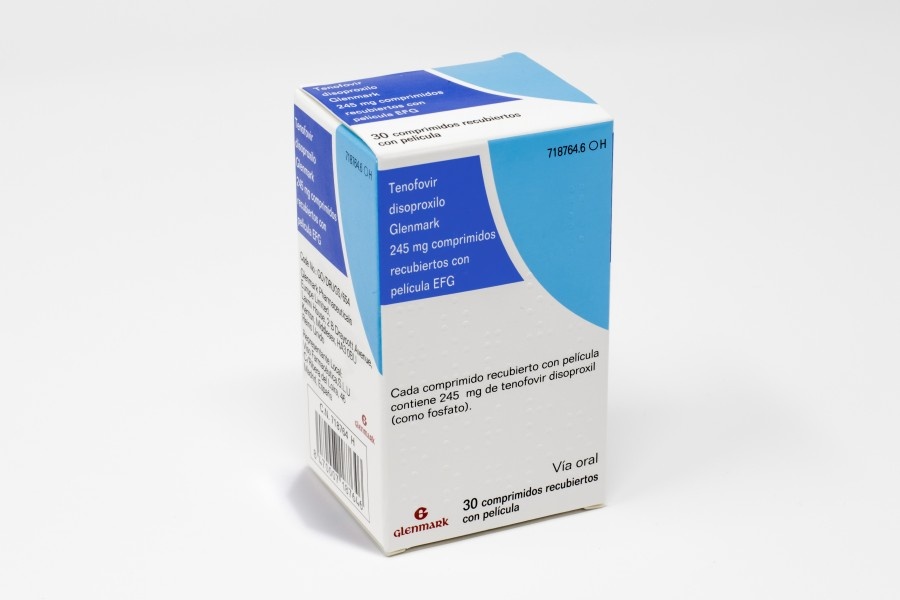
- Country of registration
- Dosage formTABLET, 245 mg
- ATC codeJ05AF07
- Active substance
- Prescription requiredYes
- Manufacturer
- CompositionLACTOSA MONOHIDRATO (208,95 mg mg), CROSCARMELOSA SODICA (27 mg mg)
- This information is for reference only and does not constitute medical advice. Always consult a doctor before taking any medication. Oladoctor is not responsible for medical decisions based on this content.
- Alternatives to TENOFOVIR DISOPROXIL MACLEODS 245 mg FILM-COATED TABLETSDosage form: TABLET, 245 mgActive substance: tenofovir disoproxilManufacturer: Accord Healthcare S.L.U.Prescription requiredDosage form: TABLET, 245 mgActive substance: tenofovir disoproxilManufacturer: Aurovitas Spain, S.A.U.Prescription requiredDosage form: TABLET, 245 mgActive substance: tenofovir disoproxilManufacturer: Cipla EuropePrescription required
Online doctors for TENOFOVIR DISOPROXIL MACLEODS 245 mg FILM-COATED TABLETS
Discuss questions about TENOFOVIR DISOPROXIL MACLEODS 245 mg FILM-COATED TABLETS, including use, safety considerations and prescription review, subject to medical assessment and local regulations.









Get TENOFOVIR DISOPROXIL MACLEODS 245 mg FILM-COATED TABLETS Prescription Online
Fill in a 2-min form
Tell us your symptoms, history, and what medicine you're requesting.
Pick a doctor or let us assign
Choose a specialist or we'll match you with the next available doctor.
Doctor reviews your case
Usually within 30 minutes. They may ask follow-up questions via chat.
Collect from any pharmacy
Electronic prescription sent to your email — valid across Spain.
Frequently Asked Questions
TENOFOVIR DISOPROXIL MACLEODS 245 mg FILM-COATED TABLETS requires a prescription in Spain. You can check with a doctor online whether this medicine may be appropriate for your situation.
The active ingredient in TENOFOVIR DISOPROXIL MACLEODS 245 mg FILM-COATED TABLETS is tenofovir disoproxil. This information helps identify medicines with the same composition but different brand names.
TENOFOVIR DISOPROXIL MACLEODS 245 mg FILM-COATED TABLETS is manufactured by Macleods Pharma España S.L.U.. Pharmacy brands and packaging may differ depending on the distributor.
Doctors such as Family doctors, Psychiatrists, Dermatologists, Cardiologists, Endocrinologists, Gastroenterologists, Pulmonologists, Nephrologists, Rheumatologists, Hematologists, Infectious disease physicians, Allergists, Geriatricians, Paediatricians, Oncologists may assess whether TENOFOVIR DISOPROXIL MACLEODS 245 mg FILM-COATED TABLETS is appropriate, depending on your situation and local regulations. You can book an online consultation to discuss your symptoms and possible next steps.
Spain has a well-developed healthcare infrastructure across major cities such as Madrid, Barcelona, Valencia, and Seville. Pharmacies are widely available and operate under strict regulations, ensuring access to prescribed medications.
You can buy TENOFOVIR DISOPROXIL MACLEODS 245 mg FILM-COATED TABLETS in Madrid, Barcelona, Seville, or Valencia at any local pharmacy with a valid prescription.
To obtain a prescription, you can use Oladoctor:
Other medicines with the same active substance (tenofovir disoproxil) include TENOFOVIR DISOPROXIL ACCORPHARMA 245 mg FILM-COATED TABLETS, TENOFOVIR DISOPROXIL AUROVITAS 245 mg FILM-COATED TABLETS, TENOFOVIR DISOPROXIL CIPLA 245 MG FILM-COATED TABLETS. These may have different brand names or formulations but contain the same therapeutic ingredient. Always consult a doctor before switching or starting a new medicine.
