



SYNALAR 0.1 mg/g CREAM

Prescription review online
A doctor will review your case and decide whether a prescription is medically appropriate.

Talk to a doctor about this medicine
Discuss your symptoms and possible next steps in a quick online consultation.



How to use SYNALAR GAMMA 0.1 mg/g CREAM
Contents of the leaflet
- Introduction
- What Synalar gamma is and what it is used for
- What you need to know before you use Synalar gamma
- Do not use Synalar gamma
- How to use Synalar gamma
- Follow exactly the administration instructions of this medicine indicated by your doctor or pharmacist. In case of doubt, consult your doctor or pharmacist again.
- Possible side effects
- Storage of Synalar gamma
- Keep below 25°C.
- Contents of the pack and other information
Introduction
Package Leaflet: Information for the User
Synalar gamma 0.1 mg/g cream
Fluocinolone, acetonide
Read all of this leaflet carefully before you start using this medicine because it contains important information for you.
- Keep this leaflet, you may need to read it again.
- If you have any further questions, ask your doctor or pharmacist.
- This medicine has been prescribed for you only. Do not pass it on to others. It may harm them, even if their signs of illness are the same as yours.
- If you get any side effects, talk to your doctor or pharmacist. This includes any possible side effects not listed in this leaflet. See section 4.
Contents of the pack:
- What Synalar gamma is and what it is used for
- What you need to know before you use Synalar gamma
- How to use Synalar gamma
- Possible side effects
- Storage of Synalar gamma
- Contents of the pack and other information
1. What Synalar gamma is and what it is used for
The active substance of Synalar gamma is fluocinolone acetonide. This medicine belongs to a group of drugs known as topical corticosteroids (for external use) that act by reducing inflammation, itching, as well as cell proliferation.
Synalar gamma is used in adults and children over 1 year of age to treat a wide variety of inflammatory, pruritic, and allergic skin lesions, such as: eczema, dermatitis, psoriasis, lichen planus, and discoid lupus erythematosus.

Not sure if this medicine is right for you?
Discuss your symptoms and treatment with a doctor online.
2. What you need to know before you use Synalar gamma
Do not use Synalar gamma
- if you are allergic to the active substance or any of the other ingredients of this medicine (listed in section 6).
- in primary skin infections and tuberculosis, syphilis, or viral infections (for example, herpes or chickenpox).
- if you have infected skin lesions, do not apply this cream to infected lesions.
- in areas of skin affected by a red/pink inflammation on the face (rosacea), ulcers, or wounds, inflammation of the sebaceous glands (acne), or skin diseases with skin thinning (atrophy)
- in a skin inflammation that occurs around the mouth (perioral dermatitis)
- in areas of the skin that show a vaccination reaction, i.e., redness or inflammation after vaccination
Warnings and precautions
Consult your doctor or pharmacist before starting to use Synalar gamma.
- If a skin infection appears, your doctor will prescribe the appropriate treatment for that fungal or bacterial infection. If it does not respond to that treatment, your doctor may suspend treatment until the infection is controlled.
- This cream should be used at the lowest possible dose, especially in children, and only for the strictly necessary time to relieve the skin condition.
- Prolonged use of topical corticosteroids, or in skin folds (such as the groin or armpits), as well as application under occlusive dressings (dressings that do not allow air to circulate or, for example, in the area covered by a diaper), can produce skin atrophy, mucous membranes, and subcutaneous tissue.
- Prolonged use, excessive amounts of medication, or in extensive areas can cause the appearance of systemic effects (those that occur when the medication is absorbed and reaches the blood), especially in children.
if the medication causes irritation, you should stop applying it and consult your doctor.
- You should avoid contact of the cream with the eyes or around the eyes, on open wounds, or with mucous membranes (such as the mouth or genital area).
- If you are being treated for psoriasis, your doctor should frequently monitor your disease in order to observe any possible worsening.
Inform your doctor if you experience blurred vision or other visual disturbances.
Pediatric population
Chronic administration in children may interfere with growth and development, so it should be limited to short periods of time and to the minimum effective amount of medication.
Use in athletes
Athletes are warned that this medication contains a component, fluocinolone, that can produce a positive result in doping tests.
Other medicines and Synalar gamma
Tell your doctor or pharmacist if you are using, have recently used, or might use any other medicines.
You should not apply other skin preparations to the treated area along with this cream.
Pregnancy, breastfeeding, and fertility
If you are pregnant or breastfeeding, think you may be pregnant, or are planning to have a baby, ask your doctor or pharmacist for advice before using this medicine.
As a general rule, during the first trimester of pregnancy, this cream should not be applied.
Do not use this medication for a prolonged period, in extensive areas, or with occlusive dressings if you are pregnant. Its use should be reserved for cases where the therapeutic benefit outweighs the possible risk.
Similarly, caution is advised if this medication is to be used during breastfeeding. Do not apply the cream to the breasts and avoid contact between the child and the treated areas.
Driving and using machines
This medicine does not affect the ability to drive and/or use machines.
Synalar gamma contains methylparaben (E-218), propylparaben (E-216), cetyl alcohol, stearyl alcohol, and propylene glycol (E-1520).
This medicine may cause allergic reactions (possibly delayed) because it contains methylparaben (E-218) and propylparaben (E-216).
This medicine may cause local skin reactions (such as contact dermatitis) because it contains stearyl alcohol and cetyl alcohol.
This medicine contains 150 mg of propylene glycol (E-1520) per gram of cream.
Propylene glycol may cause skin irritation.
Do not use this medication in babies under 4 weeks with open wounds or large areas of damaged skin (such as burns) without consulting your doctor or pharmacist first.

Started taking the medicine and have questions?
Discuss your symptoms and treatment with a doctor online.
3. How to use Synalar gamma
Follow exactly the administration instructions of this medicine indicated by your doctor or pharmacist. In case of doubt, consult your doctor or pharmacist again.
Adults and children from 1 year of age:
It can be applied as an open treatment, as a thin layer on the affected skin area, 2 to 3 times a day, rubbing gently until fully absorbed.
It can also be applied as an occlusive treatment, as a thin layer on the affected skin area, once a day, covering it with a non-porous plastic dressing.
Your doctor will indicate the duration of your treatment; normally one week.
Depending on the severity of the condition, treatment may be extended from 1 to 4 weeks. If there is no improvement during this time, your doctor should reevaluate the treatment.
Treatment should not exceed 2 months.
Use in children
Use is not recommended in children under 1 year of age.
Occlusive dressings (such as in the diaper area) are not recommended.
In children, treatment should be limited to short periods of time and the minimum effective amount of medication should be used. If used on the face, treatment should be for up to 5 days and generally no more than one week in other body areas.
If you use more Synalar gamma than you should
Using excessive amounts of cream can cause adrenal suppression (which causes an alteration of normal hormone production). In this case, treatment should be interrupted and the doctor should monitor the function of the adrenal hormonal axis.
Accidental ingestion may cause tachycardia (accelerated heart rate) and occasional elevations in blood pressure, which subside without the need for medical treatment.
If you have used this medication more than you should, consult your doctor, pharmacist, or call the Toxicology Information Service, phone 91-562 04 20, indicating the medication and the amount used.
If you forget to use Synalar gamma
Do not apply a double dose to make up for forgotten doses.
If you forget to apply the cream at the scheduled time, do so as soon as you remember and then continue as before.
If you have any further questions on the use of this medicine, ask your doctor or pharmacist.
4. Possible side effects
Like all medicines, this medicine can cause side effects, although not everybody gets them.
Rare side effects (may affect up to 1 in 1,000 people):
- Skin atrophy with thinning of the epidermis (often irreversible)
- Telangiectasia (dilation of small blood vessels on the skin surface)
- Purpura (presence of red patches and spots on the skin)
- Striae on the skin
- Acneiform eruptions (acne-like eruptions)
- Perioral dermatitis (small red papules around the mouth)
- Skin depigmentation (loss of skin pigmentation)
- Dermatitis and eczema, including contact dermatitis
- Burning sensation
- Rebound effect.
Very rare side effects (may affect up to 1 in 10,000 people):
- Adrenal suppression, which causes an alteration of normal hormone production.
Frequency not known (cannot be estimated from the available data):
- Hypersensitivity (allergic reactions)
- Pruritus (itching)
- Skin dryness
- Miliaria (alteration produced by the obstruction of the sweat secretion ducts, which generates the appearance of white or red grains in various parts of the body) or rash
- Skin maceration
- Hypertrichosis (excessive hair growth)
- Folliculitis (inflammation of one or more hair follicles)
- Secondary infection.
Reporting of side effects
If you experience any side effects, talk to your doctor, pharmacist, or nurse. This includes any possible side effects not listed in this leaflet. You can also report side effects directly through the Spanish Pharmacovigilance System for Human Use Medicines: www.notificaRAM.es. By reporting side effects, you can help provide more information on the safety of this medicine.
5. Storage of Synalar gamma
Keep below 25°C.
Keep this medicine out of the sight and reach of children.
Do not use this medicine after the expiry date stated on the packaging after EXP. The expiry date is the last day of the month indicated.
Medicines should not be disposed of via wastewater or household waste. Place the packaging and any unused medicine in the SIGRE collection point at your pharmacy. If in doubt, ask your pharmacist how to dispose of the packaging and any unused medicine. This will help protect the environment.
6. Contents of the pack and other information
Composition of Synalar gamma
- The active substance is fluocinolone acetonide. Each gram of cream contains 0.1 mg of fluocinolone acetonide.
- The other ingredients are: cetyl alcohol, stearyl alcohol, sorbitan stearate, polysorbate 60 (E-435), liquid paraffin, methylparaben (E-218), propylparaben (E-216), propylene glycol (E-1520), anhydrous citric acid (E-330), and purified water.
Appearance of Synalar gamma and pack contents
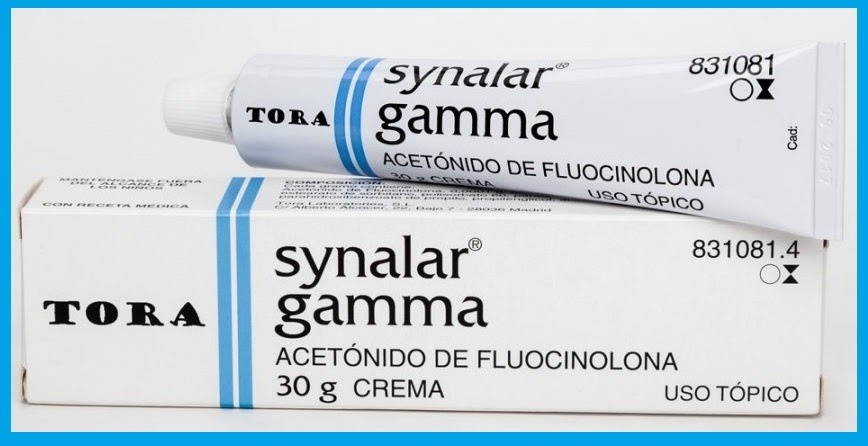
Homogeneous white cream packaged in aluminum tubes with a polyethylene (HDPE) screw cap. It is available in 30 and 60 gram tubes of cream.
Not all pack sizes may be marketed.
Marketing authorization holder
Tora Laboratories, S.L.U.
Avenida de Oporto, 60
28019 Madrid, Spain
Manufacturer
Temmler Italia S.R.L.
Via delle Industrie, 2 - 280061 Carugate – Milan - Italy
Date of last revision of this leaflet:October 2020
Detailed and updated information on this medicine is available on the website of the Spanish Agency for Medicines and Health Products (AEMPS) http://www.aemps.gob.es/
- Country of registration
- Dosage formCREAM, 0.10 mg fluocinolone acetonide/g
- ATC codeD07AC04
- Active substance
- Prescription requiredYes
- Manufacturer
- CompositionPARAHIDROXIBENZOATO DE METILO (E-218) (1,8 mg mg), PARAHIDROXIBENZOATO DE PROPILO (0,5 mg mg), SORBITAN MONOESTEARATO (20,0 mg mg), POLISORBATO 60 (20,0 mg mg), PROPILENGLICOL (150,0 mg mg), CETILICO, ALCOHOL (40,0 mg mg), ESTEARILICO, ALCOHOL (40,0 mg mg)
- This information is for reference only and does not constitute medical advice. Always consult a doctor before taking any medication. Oladoctor is not responsible for medical decisions based on this content.
- Alternatives to SYNALAR GAMMA 0.1 mg/g CREAMDosage form: GEL, 0.25 mg fluocinolone acetonideActive substance: fluocinolone acetonideManufacturer: Laboratorios Ern S.A.Prescription requiredDosage form: CREAM, 0.25 mg fluocinolone acetonide/gActive substance: fluocinolone acetonideManufacturer: Tora Laboratories S.L.U.Prescription requiredDosage form: TOPICAL SOLUTION, 0.25 mg fluocinolone acetonide/gActive substance: fluocinolone acetonideManufacturer: Tora Laboratories S.L.U.Prescription required
Online doctors for SYNALAR GAMMA 0.1 mg/g CREAM
Discuss questions about SYNALAR GAMMA 0.1 mg/g CREAM, including use, safety considerations and prescription review, subject to medical assessment and local regulations.



Get SYNALAR GAMMA 0.1 mg/g CREAM Prescription Online
Fill in a 2-min form
Tell us your symptoms, history, and what medicine you're requesting.
Pick a doctor or let us assign
Choose a specialist or we'll match you with the next available doctor.
Doctor reviews your case
Usually within 30 minutes. They may ask follow-up questions via chat.
Collect from any pharmacy
Electronic prescription sent to your email — valid across Spain.
Frequently Asked Questions
SYNALAR GAMMA 0.1 mg/g CREAM requires a prescription in Spain. You can check with a doctor online whether this medicine may be appropriate for your situation.
The active ingredient in SYNALAR GAMMA 0.1 mg/g CREAM is fluocinolone acetonide. This information helps identify medicines with the same composition but different brand names.
SYNALAR GAMMA 0.1 mg/g CREAM is manufactured by Tora Laboratories S.L.U.. Pharmacy brands and packaging may differ depending on the distributor.
Doctors such as Family doctors, Psychiatrists, Dermatologists, Cardiologists, Endocrinologists, Gastroenterologists, Pulmonologists, Nephrologists, Rheumatologists, Hematologists, Infectious disease physicians, Allergists, Geriatricians, Paediatricians, Oncologists may assess whether SYNALAR GAMMA 0.1 mg/g CREAM is appropriate, depending on your situation and local regulations. You can book an online consultation to discuss your symptoms and possible next steps.
Spain has a well-developed healthcare infrastructure across major cities such as Madrid, Barcelona, Valencia, and Seville. Pharmacies are widely available and operate under strict regulations, ensuring access to prescribed medications.
You can buy SYNALAR GAMMA 0.1 mg/g CREAM in Madrid, Barcelona, Seville, or Valencia at any local pharmacy with a valid prescription.
To obtain a prescription, you can use Oladoctor:
Other medicines with the same active substance (fluocinolone acetonide) include GELIDINA 0.25 mg/g GEL, SYNALAR 0.25 mg/g CREAM, SYNALAR 0.25 mg/g CUTANEOUS FOAM. These may have different brand names or formulations but contain the same therapeutic ingredient. Always consult a doctor before switching or starting a new medicine.
