



SYMBICORT 160 micrograms/4.5 micrograms Pulmonary Inhalation

Prescription review online
A doctor will review your case and decide whether a prescription is medically appropriate.

Talk to a doctor about this medicine
Discuss your symptoms and possible next steps in a quick online consultation.



How to use SYMBICORT 160 micrograms/4.5 micrograms/inhalation pressurized suspension for inhalation
Contents of the leaflet
- Introduction
- What is Symbicort and what is it used for
- What you need to know before you use Symbicort
- How to use Symbicort
- Information about your new Symbicort inhaler
- Preparing Symbicort
- How to take an inhalation
- Possible side effects
- Storage of Symbicort
- Package Contents and Additional Information
Introduction
Package Leaflet: Information for the User
Symbicort 160 micrograms/4.5 micrograms/inhalation suspension for inhalation in a pressurized container
Budesonide/formoterol fumarate dihydrate
Read this package leaflet carefully before you start using this medicine, because it contains important information for you.
- Keep this package leaflet, you may need to read it again.
- If you have any further questions, ask your doctor or pharmacist.
- This medicine has been prescribed for you only. Do not pass it on to others. It may harm them, even if their signs of illness are the same as yours.
- If you get any side effects, talk to your doctor or pharmacist. This includes any possible side effects not listed in this package leaflet. See section 4.
Contents of the package leaflet
- What is Symbicort and what is it used for
- What you need to know before you use Symbicort
- How to use Symbicort
- Possible side effects
- Storage of Symbicort
- Contents of the pack and other information
1. What is Symbicort and what is it used for
Symbicort is an inhaler used for the symptomatic treatment of Chronic Obstructive Pulmonary Disease (COPD) in adults over 18 years of age. COPD is a chronic disease of the respiratory tract in the lungs, often caused by tobacco smoke. It contains two different medicines: budesonide and formoterol fumarate dihydrate.
- Budesonide belongs to a group of medicines called “corticosteroids”, and acts by reducing and preventing inflammation of the lungs.
- Formoterol fumarate dihydrate belongs to a group of medicines called “long-acting beta2 adrenergic agonists” or “bronchodilators”, and acts by relaxing the muscles of the airways, making it easier to breathe.
Do not use this medicine as a relief inhaler.

Not sure if this medicine is right for you?
Discuss your symptoms and treatment with a doctor online.
2. What you need to know before you use Symbicort
Do not use Symbicort:
- if you are allergic to budesonide, formoterol or any of the other ingredients of this medicine (listed in section 6).
Warnings and precautions
Consult your doctor or pharmacist before starting to use Symbicort if:
- You have diabetes.
- You have any lung infection.
- You have high blood pressure, or have ever had any heart disease (including irregular heartbeats, rapid heartbeat, narrowing of the arteries or heart failure).
- You have thyroid or adrenal gland problems.
- You have low potassium levels in your blood.
- You have severe liver problems.
Contact your doctor if you experience blurred vision or other visual disturbances.
Athletes
This medicine contains formoterol, which may produce a positive result in doping tests.
Children and adolescents
Symbicort is not recommended for children and adolescents under 18 years of age.
Other medicines and Symbicort
Tell your doctor or pharmacist if you are using, have recently used or might use any other medicines.
In particular, tell your doctor or pharmacist if you are using any of the following medicines:
- Beta-blocker medicines (such as atenolol and propranolol for high blood pressure), including eye drops (such as timolol for glaucoma).
- Medicines for heart rhythm problems (such as quinidine).
- Medicines such as digoxin, used to treat heart failure.
- Diuretics (such as furosemide), used to treat high blood pressure.
- Oral steroid medicines (such as prednisolone).
- Xanthine medicines (such as theophylline or aminophylline), used to treat COPD or asthma.
- Other bronchodilators (such as salbutamol).
- Tricyclic antidepressants (such as amitriptyline) and the antidepressant nefazodone.
- Phenothiazine medicines (such as chlorpromazine and prochlorperazine).
- Medicines called “HIV protease inhibitors” (such as ritonavir) for the treatment of HIV.
- Medicines for infections (such as ketoconazole, itraconazole, voriconazole, posaconazole, clarithromycin and telithromycin).
- Medicines for Parkinson's disease (such as levodopa).
- Medicines for thyroid problems (such as levothyroxine).
If you are in any of these situations, or if you are not sure, ask your doctor or pharmacist before using Symbicort.
Also, tell your doctor or pharmacist if you are going to have a general anesthetic for a surgical operation or for dental treatment.
Pregnancy, breastfeeding and fertility
- Tell your doctor before using this medicine if you are pregnant, or planning to become pregnant; do not use Symbicort unless your doctor tells you to.
- If you become pregnant while using Symbicort, do not stop using it, but consult your doctor immediately.
- If you are breastfeeding, talk to your doctor before using Symbicort.
Driving and using machines
Symbicort has no or negligible influence on the ability to drive and use machines.
3. How to use Symbicort
- Follow exactly the instructions for administration of this medicine given by your doctor or pharmacist. If you are in doubt, consult your doctor or pharmacist again.
- It is important to use Symbicort every day, even if you do not have symptoms of COPD at that time.
The recommended dose is 2 inhalations twice a day. Symbicort is not recommended for children and adolescents under 18 years of age.
If you have been taking steroid tablets for COPD, your doctor may reduce the number of tablets you take once you start treatment with Symbicort. If you have been taking steroid tablets orally for a long time, your doctor may want to do a blood test from time to time. When your doctor reduces the number of steroid tablets you take, you may feel unwell, even if your lung symptoms are improving. You may temporarily experience some symptoms such as nasal congestion or runny nose, weakness or pain in the muscles or joints, and skin rash (hives). Contact your doctor if any of these symptoms worry you, or if you experience any other symptoms such as headache, tiredness, nausea or vomiting. If you experience symptoms of allergy or arthritis, you may need to take another medicine. You should consult your doctor if you are concerned about whether you should continue using Symbicort.
Your doctor may consider adding steroid tablets to your usual treatment during periods of stress (for example, when you have a chest infection or before a surgical operation).
Important information about COPD symptoms
If, while using Symbicort, you experience difficulty breathing or wheezing, you should continue using it and contact your doctor as soon as possible, as you may need additional treatment.
Contact your doctor immediately if:
- Your breathing worsens or you wake up frequently at night with symptoms of shortness of breath.
- You start to feel chest tightness in the morning, or chest tightness lasts longer than usual.
- These signs may indicate that your COPD is not well controlled and you may need a different or additional treatment immediately.
It is possible that your doctor will prescribe other bronchodilators, such as anticholinergics (such as tiotropium or ipratropium bromide), for your COPD.

Started taking the medicine and have questions?
Discuss your symptoms and treatment with a doctor online.
Information about your new Symbicort inhaler
- Before using your new Symbicort inhaler, take it out of the foil wrapper. Throw away the wrapper and the drying agent that is inside the wrapper. Do not use the inhaler if the drying agent has come out of the package.
- The inhaler must be used within 3 months of taking it out of the foil wrapper. Write the expiry date (3 months from the date of opening) on the inhaler label to remind you when to stop using the inhaler.
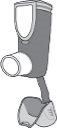
- The picture shows the parts of the inhaler, which will already be assembled when you are given it. Do not take the parts apart. If the container comes loose, put it back into the inhaler and continue using it.
Preparing Symbicort
The inhaler needs to be prepared for use in the following situations:
- If you are using your new Symbicort for the first time.
- If you have not used it for more than 7 days.
- If it has been dropped.
To prepare the inhaler for use, follow these instructions:
- Shake the inhaler well for at least 5 seconds to mix the contents of the aerosol canister.
- Remove the mouthpiece cover by gently squeezing the sides of the mouthpiece.
- Hold the inhaler upright. Then, press the dose counter (on the top of the inhaler) to release a puff into the air. You can use one or both hands, as shown in the pictures.
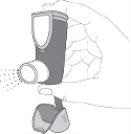
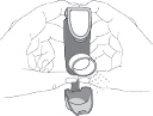
- Remove your finger(s) from the dose counter.
- Wait 10 seconds, shake well and repeat steps 3 and 4.
- Your inhaler is now ready to use.
How to take an inhalation
Each time you need to take an inhalation, follow these instructions:
- Shake the inhaler well for at least 5 seconds to mix the contents of the aerosol canister.
- Remove the mouthpiece cover by gently squeezing the sides of the mouthpiece. Check that the mouthpiece is not blocked.
- Hold the inhaler upright (you can use one or both hands). Breathe out gently.
- Put the mouthpiece between your teeth. Close your lips.
- Breathe in slowly and deeply through your mouth. Press the dose counter (on the top of the inhaler) firmly to release a puff. Hold your breath for a moment while pressing the dose counter. Breathe in at the same time as you press the dose counter to make sure the medicine reaches your lungs.
- Hold your breath for 10 seconds, or for as long as is comfortable.
- Before breathing out, release your finger from the dose counter and remove the inhaler from your mouth. Hold the inhaler upright.
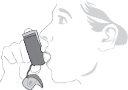 Breathe out gently. Before taking another inhalation, shake the inhaler well for at least 5 seconds and repeat steps 3 to 7.
- Replace the mouthpiece cover.
- Rinse your mouth with water after the morning and evening doses. Do not swallow.
Using a spacer
Your doctor, nurse or pharmacist may suggest using a spacer (such as Aerochamber Plus Flow Vuor Aerochamber Plus). Follow the instructions that come with the spacer.
Cleaning Symbicort
- Clean the inside and outside of the mouthpiece at least once a week with a dry cloth.
- Do not use water or liquids and do not take the canister out of the inhaler.
How do I know when I need to replace my Symbicort inhaler?
- The dose counter on the top of the inhaler tells you how many inhalations are left. It starts with 120 inhalations when it is full.
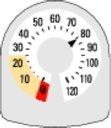
- Each time you take an inhalation, or release a puff into the air, the arrow starts counting down towards zero ('0').
- When the arrow first enters the yellow area, it means that there are about 20 inhalations left.
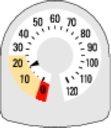
- When the arrow reaches '0', you must stop using your new Symbicort inhaler. You may not feel that the inhaler is empty, and it may seem to be working, but you will not receive the correct amount of medicine if you continue using it.
If you use more Symbicort than you should
If you have used more Symbicort than you should, contact your doctor or pharmacist. The most common symptoms and signs that may occur after an overdose are tremors, headache and rapid heartbeat.
In case of overdose or accidental ingestion, consult the Toxicology Information Service. Telephone: 91 5620420, indicating the medicine and the amount taken.
If you forget to use Symbicort
- If you forget to take a dose of Symbicort, follow the recommended treatment as soon as you remember. However, if it is almost time for your next dose, do not worry about the missed dose.
- Do nottake a double dose to make up for missed doses.
If you stop using Symbicort
Before stopping use of Symbicort, you should consult your doctor or pharmacist. If you stop using Symbicort, the symptoms and signs of COPD may worsen.
If you have any further questions about the use of this medicine, ask your doctor or pharmacist.
4. Possible side effects
Like all medicines, this medicine can cause side effects, although not everybody gets them.
If you experience any of the following, stop using Symbicort and consult your doctor immediately:
- Your face, particularly around the mouth (tongue and/or throat and/or difficulty swallowing) swells, or you experience hives, together with difficulty breathing (angioedema) and/or a sudden feeling of fainting, which indicates that you may be having an allergic reaction. This occurs rarely, affecting less than 1 in 1,000 patients.
- You experience wheezing or difficulty breathing immediately after using your inhaler. If you experience any of these symptoms, stop using Symbicort immediately and use your “reliever” inhaler. Contact your doctor immediately, as you may need to change your treatment.This occurs very rarely, affecting less than 1 in 10,000 patients.
Other possible side effects:
Common (may affect up to 1 in 10 patients)
- Palpitations (feeling your heartbeat), tremors or shakiness. These effects, if they occur, are usually mild and disappear as you continue to use Symbicort.
- Thrush (fungal infection) in the mouth; this effect is less likely if you rinse your mouth with water after using Symbicort.
- Mild throat irritation, cough, hoarseness.
- Headache.
- Pneumonia (lung infection) in patients with COPD.
Tell your doctor if you experience any of the following symptoms while inhaling Symbicort, they could be symptoms of a lung infection:
- Fever or chills.
- Increased production of mucus, change in the color of mucus.
- Increased cough or increased difficulty breathing.
Uncommon (may affect up to 1 in 100 patients)
- Agitation, restlessness, nervousness.
- Difficulty sleeping.
- Dizziness.
- Nausea (feeling sick).
- Rapid heartbeat.
- Bruising.
- Muscle cramps.
- Blurred vision.
Rare (may affect up to 1 in 1,000 patients)
- Rash, itching.
- Bronchospasm (contraction of the airway muscles, causing wheezing). If you experience wheezing immediately after using Symbicort, stop using it and consult your doctor immediately.
- Low potassium levels in the blood.
- Irregular heartbeat.
Very rare (may affect up to 1 in 10,000 patients)
- Depression.
- Changes in behavior, especially in children.
- Chest pain or tightness (angina pectoris).
- Increased blood sugar (glucose) levels.
- Changes in taste, such as unpleasant taste in the mouth.
- Changes in blood pressure.
Inhaled corticosteroids may affect the normal production of steroid hormones in the body, especially if high doses are used for a long time. These effects include:
- changes in bone mineral density (thinning of the bones)
- cataracts (clouding of the lens in the eye)
- glaucoma (increased pressure in the eye)
- growth retardation in children and adolescents
- effects on the adrenal glands (small glands located next to the kidneys).
These effects are much less likely with inhaled corticosteroids than with oral steroid tablets.
Reporting of side effects
If you experience any side effects, talk to your doctor or pharmacist. This includes any possible side effects not listed in this package leaflet. You can also report side effects directly to the Spanish Medicines Agency's Pharmacovigilance System for Human Use: www.notificaRAM.es. By reporting side effects, you can help provide more information on the safety of this medicine.
5. Storage of Symbicort
- Keep this medicine out of the sight and reach of children.
- Do not use this medicine after the expiry date which is stated on the carton, the aluminum foil sleeve, or the label after EXP. The expiry date is the last day of the month indicated.
- As with most pressurized inhalers, the effect of this medicine may decrease when the canister is cold. For best results, this medicine should be at room temperature before use. Do not refrigerate or freeze. Protect from frost and direct sunlight.
- It should be used within 3 months of removing the inhaler from its aluminum foil sleeve. Write the expiry date (3 months from opening the sleeve) on the inhaler label to remind you when to stop using the inhaler.
- Always replace the mouthpiece cap and click it into position after using the inhaler.
- Medicines should not be disposed of via wastewater or household waste. Dispose of containers and medicines you no longer need in the pharmacy's SIGRE point. Ask your pharmacist how to dispose of containers and medicines you no longer need. This will help protect the environment.
Warning: The cartridge contains a pressurized liquid. Do not expose to temperatures above 50 °C. Do not pierce the container. The cartridge should not be broken, pierced, or burned, even when it appears to be empty.
6. Package Contents and Additional Information
Composition of Symbicort
The active ingredients are budesonide and formoterol fumarate dihydrate. Each inhaled dose contains 160 micrograms of budesonide and 4.5 micrograms of formoterol fumarate dihydrate.
The other excipients are apaflurane (HFA 227), povidone, and Macrogol. This inhaler does not contain CFCs.
This medicine contains fluorinated greenhouse gases. Each inhaler contains 10.6 g of apaflurane (HFC-227ea), which corresponds to 0.034 tons of CO2 equivalent (global warming potential GWP = 3,220).
Appearance of the Product and Package Contents
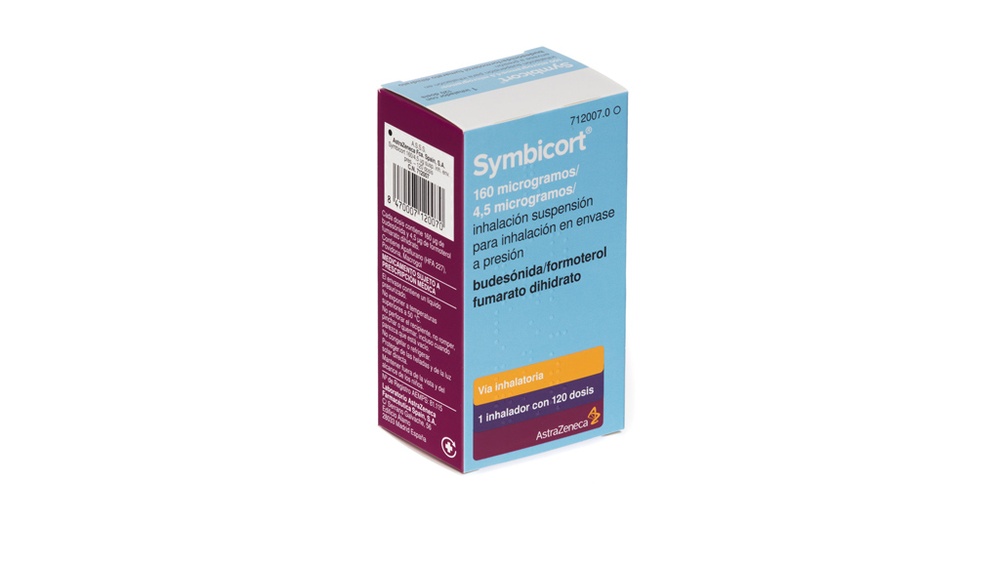
Symbicort is an inhaler that contains your medicine. The pressurized canister with a dose indicator attached contains a white suspension for inhalation. The canister is mounted in a red plastic adapter with a white plastic mouthpiece and an integrated gray plastic cap. Each inhaler contains 120 inhalations after it has been prepared for use. Each inhaler is packaged individually in an aluminum foil sleeve containing a desiccant.
Symbicort 160 micrograms/4.5 micrograms/inhalation suspension for inhalation in a pressurized container (budesonide/formoterol fumarate dihydrate) is available in packages with a single inhaler.
Marketing Authorization Holder and Manufacturer
The holder is:
Laboratory AstraZeneca Farmacéutica Spain, S.A.
C/ Puerto de Somport 21-23
28050 Madrid
Spain
The manufacturer is:
AstraZeneca Dunkerque Production
224, Avenue de la Dordogne BP 41
59640 Dunkerque (France)
This medicine is authorized in the Member States of the European Economic Area under the following names:
Country | Trade Name and Concentration |
Germany | Symbicort 160 Mikrogramm /4.5 Mikrogramm per Inhalation Pressurized inhalation, suspension |
Austria | Symbicort 160 Mikrogramm /4.5 Mikrogramm/Inhalation Pressurized inhalation, suspension |
Belgium | Symbicort 160 microgram /4.5 microgram/inhalation, aerosol, suspension Symbicort 160 microgrammes /4.5 microgrammes/inhalation, suspension for inhalation in a pressurized container Symbicort 160 Mikrogramm /4.5 Mikrogramm/Inhalation, Pressurized inhalation, suspension |
Bulgaria | ????????? 160 ?????????? /4.5 ??????????/?????????? ????????? ??? ???????? ?? ????????? |
Cyprus | Symbicort 160 μικρογραμμ?ρια /4.5 μικρογραμμ?ρια/ψεκασμ? |
Croatia | Symbicort 160 mikrograma /4.5 mikrograma po potisku, stlaceni inhalat, suspenzija |
Denmark | Symbicort 160 mikrogram /4.5 mikrogram/inhalation |
Slovakia | Symbicort 160 mikrogamov /4.5 mikrogamov/inhalacná dávka |
Slovenia | Symbicort 160 mikrogramov /4.5 mikrograma na vdih, inhalacijska suspenzija pod tlakom |
Spain | Symbicort 160 microgramos /4.5 microgramos/inhalación suspension for inhalation in a pressurized container |
Estonia | Symbicort |
Finland | Symbicort 160 mikrog /4.5 mikrog/inhalaatio |
France | Symbicort 200 micro grammes /6 micro grammes par inhalation |
Greece | Symbicort 160 μικρογραμμ?ρια /4.5 μικρογραμμ?ρια/ψεκασμ? |
Netherlands | Symbicort 200/6, 200 microgram /6 microgram/inhalatie |
Hungary | Symbicort 4.5 mikrogramm /160 mikrogramm túlnyomásos inhalációs szuszpenzió |
Ireland | Symbicort 200 micrograms /6 micrograms/inhalation |
Iceland | Symbicort 160 míkrógrömm /4.5 míkrógrömm/ inhalation |
Italy | Symbicort 160 microgrammi /4.5 microgrammi/erogazione, sospensione pressurizzata per inalazione |
Latvia | Symbicort 160 mikrogrami /4.5 mikrogrami/ inhalacija, izsmidzinajuma, aerosols inhalacijam zem spiediena |
Lithuania | Symbicort 160 mikrogramu /4.5 mikrogramo/išpurškime suslegtoji ikvepiamoji suspensija |
Luxembourg | Symbicort 160 microgrammes /4.5 microgrammes/inhalation, suspension pour inhalation en flacon pressurisé |
Malta | Symbicort 200 micrograms /6 micrograms/inhalation |
Norway | Symbicort 160 mikrogram /4.5 mikrogram/ inhalasjon |
Poland | Symbicort |
Portugal | Symbicort 160 microgramas /4.5 microgramas/inalação Suspensão pressurizada para inalação |
United Kingdom | Symbicort 200 micrograms/6 micrograms per actuation pressurised inhalation, suspension |
Czech Republic | Symbicort 160 mikrogramu /4.5 mikrogramu |
Romania | Symbicort 160 micrograme /4.5 micrograme/inhalatie, suspensie de inhalat presurizata |
Sweden | Symbicort 160 mikrogram /4.5 mikrogram/inhalation |
Date of the last revision of this prospectus: January 2025
Detailed information about this medicine is available on the website of the Spanish Agency for Medicines and Health Products (AEMPS) http://www.aemps.gob.es/
- Country of registration
- Dosage formPULMONARY INHALATION, 160 micrograms/4.5 micrograms
- ATC codeR03AK07
- Average pharmacy price39.56 EUR
- Active substance
- Prescription requiredYes
- Manufacturer
- This information is for reference only and does not constitute medical advice. Always consult a doctor before taking any medication. Oladoctor is not responsible for medical decisions based on this content.
- Alternatives to SYMBICORT 160 micrograms/4.5 micrograms/inhalation pressurized suspension for inhalationDosage form: PULMONARY INHALATION, 160 micrograms / 4.5 microgramsActive substance: formoterol and budesonideManufacturer: Teva Pharma B.V.Prescription requiredDosage form: PULMONARY INHALATION, 320 micrograms / 9 microgramsActive substance: formoterol and budesonideManufacturer: Teva Pharma B.V.Prescription requiredDosage form: PULMONARY INHALATION, 160 MICROGRAMS/4.5 MICROGRAMSActive substance: formoterol and budesonideManufacturer: Cipla Europe N.V.Prescription required
Online doctors for SYMBICORT 160 micrograms/4.5 micrograms/inhalation pressurized suspension for inhalation
Discuss questions about SYMBICORT 160 micrograms/4.5 micrograms/inhalation pressurized suspension for inhalation, including use, safety considerations and prescription review, subject to medical assessment and local regulations.









Get SYMBICORT 160 micrograms/4.5 micrograms/inhalation pressurized suspension for inhalation Prescription Online
Fill in a 2-min form
Tell us your symptoms, history, and what medicine you're requesting.
Pick a doctor or let us assign
Choose a specialist or we'll match you with the next available doctor.
Doctor reviews your case
Usually within 30 minutes. They may ask follow-up questions via chat.
Collect from any pharmacy
Electronic prescription sent to your email — valid across Spain.
Frequently Asked Questions
SYMBICORT 160 micrograms/4.5 micrograms/inhalation pressurized suspension for inhalation requires a prescription in Spain. You can check with a doctor online whether this medicine may be appropriate for your situation.
The active ingredient in SYMBICORT 160 micrograms/4.5 micrograms/inhalation pressurized suspension for inhalation is formoterol and budesonide. This information helps identify medicines with the same composition but different brand names.
The average pharmacy price for SYMBICORT 160 micrograms/4.5 micrograms/inhalation pressurized suspension for inhalation is around 39.56 EUR. Prices may vary depending on the manufacturer and dosage form.
SYMBICORT 160 micrograms/4.5 micrograms/inhalation pressurized suspension for inhalation is manufactured by Astrazeneca Farmaceutica Spain S.A.. Pharmacy brands and packaging may differ depending on the distributor.
Doctors such as Family doctors, Psychiatrists, Dermatologists, Cardiologists, Endocrinologists, Gastroenterologists, Pulmonologists, Nephrologists, Rheumatologists, Hematologists, Infectious disease physicians, Allergists, Geriatricians, Paediatricians, Oncologists may assess whether SYMBICORT 160 micrograms/4.5 micrograms/inhalation pressurized suspension for inhalation is appropriate, depending on your situation and local regulations. You can book an online consultation to discuss your symptoms and possible next steps.
Spain has a well-developed healthcare infrastructure across major cities such as Madrid, Barcelona, Valencia, and Seville. Pharmacies are widely available and operate under strict regulations, ensuring access to prescribed medications.
You can buy SYMBICORT 160 micrograms/4.5 micrograms/inhalation pressurized suspension for inhalation in Madrid, Barcelona, Seville, or Valencia at any local pharmacy with a valid prescription.
To obtain a prescription, you can use Oladoctor:
Other medicines with the same active substance (formoterol and budesonide) include BiResp Spiromax 160 micrograms / 4.5 micrograms inhalation powder, BiResp Spiromax 320 micrograms / 9 micrograms inhalation powder, BUDESONIDE/FORMOTEROL CIPLA 160 micrograms/4.5 micrograms inhalation powder (single dose). These may have different brand names or formulations but contain the same therapeutic ingredient. Always consult a doctor before switching or starting a new medicine.
