



SUGAMMADEX ELM 100 mg/mL Injectable Solution

Prescription review online
A doctor will review your case and decide whether a prescription is medically appropriate.

Talk to a doctor about this medicine
Discuss your symptoms and possible next steps in a quick online consultation.



How to use SUGAMMADEX ELM 100 mg/mL Injectable Solution
Contents of the leaflet
- Introduction
- What is Sugammadex Elm and what is it used for
- What you need to know before you start using Sugammadex Elm
- How Sugammadex Elm is administered
- Possible side effects
- Storage of Sugammadex Elm
- Contents of the pack and further information
Introduction
Package Leaflet: Information for the User
Sugammadex Elm 100 mg/ml Solution for Injection EFG
Read all of this leaflet carefully before you are given this medicine because it contains important information for you.
- Keep this leaflet, you may need to read it again.
- If you have any further questions, ask your anesthesiologist (anesthetist) or doctor.
- If you experience any side effects, talk to your anesthesiologist or another doctor, even if they are not listed in this leaflet. See section 4.
Contents of the Package Leaflet
- What is Sugammadex Elm and what is it used for
- What you need to know before you start using Sugammadex Elm
- How Sugammadex Elm is administered
- Possible side effects
- Storage of Sugammadex Elm
- Contents of the pack and further information
1. What is Sugammadex Elm and what is it used for
What is Sugammadex Elm
Sugammadex contains the active substance sugammadex. It is considered a Selective Relaxant Binding Agent as it only works with specific muscle relaxants, namely rocuronium bromide or vecuronium bromide.
What Sugammadex Elm is used for
If you need to undergo surgery, your muscles must be completely relaxed, making it easier for the surgeon to perform the operation. For this, you will be given medications during general anesthesia to relax your muscles. These are called muscle relaxants, such as rocuronium bromide and vecuronium bromide. Since these medications also block the respiratory muscles, you will need help breathing (artificial respiration) during and after the operation until you can breathe on your own again.
Sugammadex is used to accelerate the recovery of the muscles after an operation so that you can breathe on your own again sooner.It does this by combining with rocuronium bromide or vecuronium bromide in your body. It can be used in adults when rocuronium bromide or vecuronium bromide is used, and in children and adolescents (between 2 and 17 years) when rocuronium bromide is used for moderate muscle relaxation.

Not sure if this medicine is right for you?
Discuss your symptoms and treatment with a doctor online.
2. What you need to know before you start using Sugammadex Elm
Do not use Sugammadex Elm
- if you are allergic to sugammadex or any of the other ingredients of this medicine (listed in section 6).
→ Tell your anesthesiologist if this applies to you.
Warnings and precautions
Talk to your anesthesiologist before starting Sugammadex Elm
- if you have or have had kidney disease. This is important because sugammadex is eliminated from your body by the kidneys.
- if you have or have had liver disease.
- if you have fluid retention (edema). If you have a disease that increases the risk of bleeding (blood coagulation disorders) or are taking anticoagulant medication.
Children and adolescents
This medicine is not recommended for children under 2 years of age.
Other medicines and Sugammadex Elm
→ Tell your anesthesiologist if you are taking, have recently taken, or might take any other medicines.
Sugammadex may affect other medicines or be affected by them.
Some medicines reduce the effect of Sugammadex Elm
→It is especially important that you tell your anesthesiologist if you have recently taken:
- toremifene (used to treat breast cancer).
- fusidic acid (an antibiotic).
Sugammadex Elm may affect hormonal contraceptives
- Sugammadex may make hormonal contraceptives - such as the "Pill", vaginal ring, implants, or an Intrauterine Hormonal Device (IUD-h) - less effective because it reduces the amount of progestogen that reaches you. The amount of progestogen lost due to the use of sugammadex is approximately the same as when you miss a birth control pill.
→ If you are taking the Pillon the same day that you are given sugammadex, follow the instructions for missing a pill in the pill leaflet.
→ If you are using otherhormonal contraceptives (e.g., vaginal ring, implant, or IUD-h), you should use a non-hormonal contraceptive method (such as a condom) for the next 7 days and follow the recommendations in the leaflet.
Effects on blood tests
Generally, sugammadex does not affect laboratory tests. However, it may affect the results of a blood test when progesterone levels are measured. Consult your doctor if your progesterone levels need to be analyzed on the same day you receive sugammadex.
Pregnancy and breastfeeding
→Tell your anesthesiologist if you are pregnant or think you may be pregnant or if you are breastfeeding.
It is possible that you will still be given sugammadex, but it needs to be discussed beforehand.
It is not known whether sugammadex can pass into breast milk. Your anesthesiologist will help you decide whether to interrupt breastfeeding or avoid treatment with sugammadex, considering the benefit of breastfeeding for the baby and the benefit of sugammadex for the mother.
Driving and using machines
Sugammadex has no known influence on the ability to drive and use machines.
Sugammadex Elm contains sodium
This medicine contains up to 9.2 mg of sodium (the main component of table/cooking salt) per ml. This is equivalent to 0.5% of the maximum recommended daily sodium intake for an adult.
3. How Sugammadex Elm is administered
Sugammadex will be administered to you by your anesthesiologist or under their supervision.
Dose
Your anesthesiologist will calculate the dose of sugammadex you need based on:
- your weight
- the amount of muscle relaxant that is still affecting you.
The usual dose is 2-4 mg per kg of body weight for adults and for children and adolescents between 2-17 years. A dose of 16 mg/kg can be used in adults if urgent recovery of muscle relaxation is needed.
How Sugammadex Elm is administered
Sugammadex will be administered to you by your anesthesiologist. It is given as a single injection into a vein.
If you are given more Sugammadex Elm than recommended
Since your anesthesiologist will be carefully monitoring the situation, it is unlikely that you will be given too much sugammadex. But even if this happens, it is unlikely to cause any problems.
If you have any further questions about the use of this medicine, ask your anesthesiologist or another doctor.

Started taking the medicine and have questions?
Discuss your symptoms and treatment with a doctor online.
4. Possible side effects
Like all medicines, this medicine can cause side effects, although not everybody gets them.
If these side effects occur while you are under anesthesia, your anesthesiologist will detect and treat them.
Common (may affect up to 1 in 10 people)
- Cough
- Respiratory difficulties that may include cough or movements as if you were awake or taking a breath
- Light anesthesia – you may start to wake up, so you may need more anesthetic. This can cause you to move or cough at the end of the operation
- Complications during the procedure, such as changes in heart rate, cough, or movement
- Decrease in blood pressure due to the surgical intervention
Uncommon (may affect up to 1 in 100 people)
- Difficulty breathing due to muscle spasms in the airways (bronchospasm) that occur in patients with a history of lung problems
- Allergic reactions (hypersensitivity to medicines) - such as rash, skin redness, swelling of your tongue and/or pharynx, difficult breathing, changes in blood pressure or heart rate, which sometimes result in a severe drop in blood pressure. Allergic reactions or severe allergic reactions can be life-threatening.
Allergic reactions were reported more frequently in healthy conscious volunteers
- Reappearance of muscle relaxation after the operation
Frequency not known
- When sugammadex is administered, a significant slowing of the heart can occur, which can even lead to cardiac arrest
Reporting of side effects
If you experience any side effects, talk to your anesthesiologist or another doctor, even if they are not listed in this leaflet. You can also report side effects directly through the Spanish Pharmacovigilance System for Human Use Medicines: https://www.notificaram.es. By reporting side effects, you can help provide more information on the safety of this medicine.
5. Storage of Sugammadex Elm
Storage will be the responsibility of healthcare professionals.
Keep this medicine out of the sight and reach of children.
Do not use this medicine after the expiry date which is stated on the carton and label after "EXP". The expiry date is the last day of the month stated.
Do not store above 25°C. Do not freeze. Store the vial in the outer packaging to protect it from light.
After first opening and dilution, the chemical and physical stability has been demonstrated for 48 hours between 2°C and 25°C in a polypropylene (PP) intravenous bag. From a microbiological point of view, the opened or diluted product should be used immediately. If not used immediately, the storage time and conditions prior to use are the responsibility of the user and normally should not exceed 24 hours between 2°C and 8°C, unless the dilution has been made under controlled and validated aseptic conditions.
6. Contents of the pack and further information
Composition of Sugammadex Elm
- The active substance is sugammadex.
Each ml of solution for injection contains sugammadex sodium equivalent to 100 mg of sugammadex.
Each 2 ml vial contains sugammadex sodium equivalent to 200 mg of sugammadex.
Each 5 ml vial contains sugammadex sodium equivalent to 500 mg of sugammadex.
- The other ingredients are water for injections, hydrochloric acid, and sodium hydroxide.
Appearance and packaging
Sugammadex Elm is a clear, colorless to slightly yellowish solution for injection.
It comes in two different pack sizes, 10 vials of 2 ml or 10 vials of 5 ml of solution for injection.
Not all pack sizes may be marketed.
Marketing authorization holder
Laboratorios Lorien, S.L.
Av. Josep Tarradellas, 8, Ático 1ª
08029 Barcelona
Spain
Manufacturer
Laboratori Fundació DAU
C/C, 12-14 Pol. Ind. Zona Franca
08040 Barcelona
Spain
This medicine is authorized in the Member States of the European Economic Area under the following names:
Germany: Sugammadex ELM 100 mg/ml Injektionslösung
Spain: Sugammadex Elm 100 mg/ml solución inyectable EFG
Finland: Sugammadex ELM 100 mg/ml Injektioneste, liuos
Date of last revision of this leaflet:February 2024
Detailed and up-to-date information on this medicine is available on the website of the Spanish Agency for Medicines and Health Products (AEMPS) (http://www.aemps.gob.es/)
This information is intended only for healthcare professionals:
Physical incompatibility has been reported with verapamil, ondansetron, and ranitidine. This medicine must not be mixed with other medicines except for those mentioned below.
Sugammadex Elm can be injected into an ongoing intravenous infusion with the following intravenous solutions: sodium chloride 9 mg/mL (0.9%), glucose 50 mg/mL (5%), sodium chloride 4.5 mg/mL (0.45%), and glucose 25 mg/mL (2.5%), Ringer's lactate solution, Ringer's glucose 50 mg/mL (5%) in sodium chloride 9 mg/mL (0.9%).
The infusion line should be properly flushed (e.g., with sodium chloride 0.9%) between the administration of Sugammadex Elm and other medicines.
Use in pediatric population
In pediatric patients, Sugammadex can be diluted using sodium chloride 9 mg/mL (0.9%) to a concentration of 10 mg/mL.
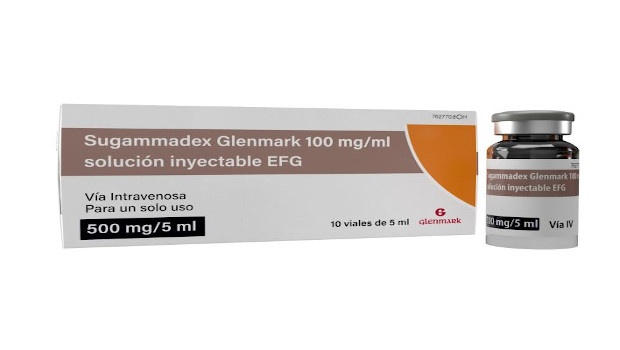
- Country of registration
- Dosage formINJECTABLE, 100 mg/ml
- ATC codeV03AB35
- Active substance
- Prescription requiredYes
- Manufacturer
- CompositionHIDROXIDO DE SODIO (E 524) (c.s.p. 7,5 pH mg)
- This information is for reference only and does not constitute medical advice. Always consult a doctor before taking any medication. Oladoctor is not responsible for medical decisions based on this content.
- Alternatives to SUGAMMADEX ELM 100 mg/mL Injectable SolutionDosage form: INJECTABLE, 100 mgActive substance: sugammadexManufacturer: Merck Sharp & Dohme B.V.Prescription requiredDosage form: INJECTABLE, 100 mgActive substance: sugammadexManufacturer: Merck Sharp & Dohme B.V.Prescription requiredDosage form: INJECTABLE, 100 mg/mlActive substance: sugammadexManufacturer: Accord Healthcare S.L.U.Prescription required
Online doctors for SUGAMMADEX ELM 100 mg/mL Injectable Solution
Discuss questions about SUGAMMADEX ELM 100 mg/mL Injectable Solution, including use, safety considerations and prescription review, subject to medical assessment and local regulations.









Get SUGAMMADEX ELM 100 mg/mL Injectable Solution Prescription Online
Fill in a 2-min form
Tell us your symptoms, history, and what medicine you're requesting.
Pick a doctor or let us assign
Choose a specialist or we'll match you with the next available doctor.
Doctor reviews your case
Usually within 30 minutes. They may ask follow-up questions via chat.
Collect from any pharmacy
Electronic prescription sent to your email — valid across Spain.
Frequently Asked Questions
SUGAMMADEX ELM 100 mg/mL Injectable Solution requires a prescription in Spain. You can check with a doctor online whether this medicine may be appropriate for your situation.
The active ingredient in SUGAMMADEX ELM 100 mg/mL Injectable Solution is sugammadex. This information helps identify medicines with the same composition but different brand names.
SUGAMMADEX ELM 100 mg/mL Injectable Solution is manufactured by Laboratorios Lorien S.L.. Pharmacy brands and packaging may differ depending on the distributor.
Doctors such as Family doctors, Psychiatrists, Dermatologists, Cardiologists, Endocrinologists, Gastroenterologists, Pulmonologists, Nephrologists, Rheumatologists, Hematologists, Infectious disease physicians, Allergists, Geriatricians, Paediatricians, Oncologists may assess whether SUGAMMADEX ELM 100 mg/mL Injectable Solution is appropriate, depending on your situation and local regulations. You can book an online consultation to discuss your symptoms and possible next steps.
Spain has a well-developed healthcare infrastructure across major cities such as Madrid, Barcelona, Valencia, and Seville. Pharmacies are widely available and operate under strict regulations, ensuring access to prescribed medications.
You can buy SUGAMMADEX ELM 100 mg/mL Injectable Solution in Madrid, Barcelona, Seville, or Valencia at any local pharmacy with a valid prescription.
To obtain a prescription, you can use Oladoctor:
Other medicines with the same active substance (sugammadex) include BRIDION 100 mg/mL INJECTABLE SOLUTION, BRIDION 100 mg/mL INJECTABLE SOLUTION, SUGAMMADEX ACCORD 100 mg/ml INJECTABLE SOLUTION. These may have different brand names or formulations but contain the same therapeutic ingredient. Always consult a doctor before switching or starting a new medicine.
