


VISUDYNE 15 mg POWDER FOR SOLUTION FOR INFUSION
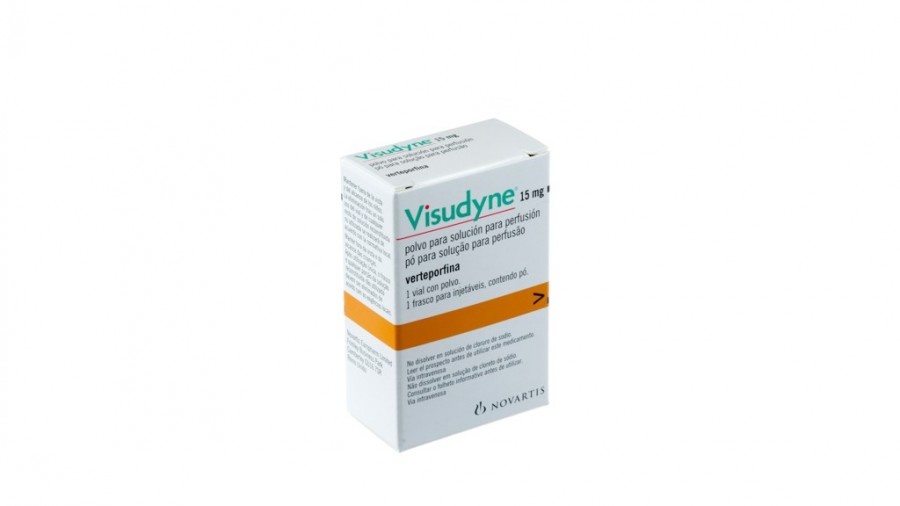



How to use VISUDYNE 15 mg POWDER FOR SOLUTION FOR INFUSION
Translated with AI
This page provides general information and does not replace a doctor’s consultation. Always consult a doctor before taking any medication. Seek urgent medical care if symptoms are severe.
Show originalContents of the leaflet
Introduction
Package Leaflet: Information for the User
Visudyne 15mg powder for solution for infusion
verteporfin
Read all of this leaflet carefully before you are given this medicine because it contains important information for you.
- Keep this leaflet, you may need to read it again.
- If you have any further questions, ask your doctor, pharmacist or nurse.
- This medicine has been prescribed for you only. Do not pass it on to others. It may harm them, even if their signs of illness are the same as yours.
- If you get any side effects, talk to your doctor, pharmacist or nurse. This includes any possible side effects not listed in this leaflet. See section 4.
Contents of the pack
- What is Visudyne and what is it used for
- What you need to know before you are given Visudyne
- How to use Visudyne
- Possible side effects
- Storage of Visudyne
- Contents of the pack and other information
1. What is Visudyne and what is it used for
What is Visudyne
Visudyne contains the active substance verteporfin, which is activated by laser light in a treatment called photodynamic therapy. When you are given an infusion of Visudyne, it is distributed throughout your body via the bloodstream, including the blood vessels in the back of your eye. When the laser light shines on your eye, Visudyne is activated.
What Visudyne is used for
Visudyne is used to treat the wet form of age-related macular degeneration and pathological myopia.
These diseases cause loss of vision. The loss of vision is caused by new blood vessels (choroidal neovascularization) that damage the retina (the light-sensitive membrane that lines the back of the eye). There are two types of choroidal neovascularization: classic and occult.
Visudyne is used to treat classic choroidal neovascularization in adults with age-related macular degeneration, and also for the treatment of all types of choroidal neovascularization in adults with pathological myopia.

2. What you need to know before you are given Visudyne
You must not be given Visudyne
- if you are allergicto verteporfin or any of the other ingredients of this medicine (listed in section 6).
- if you have porphyria(a rare disease that can increase sensitivity to light).
- if you have severe liver problems.
If you are in any of these situations, tell your doctor. You must not be given Visudyne.
Warnings and precautions
Consultyour doctor, pharmacist or nursebefore you are given Visudyne
- If you experience any problems related to the infusion or symptoms during or after treatment such as chest pain, sweating, dizziness, rash, difficulty breathing, hot flushes, irregular heartbeat or convulsions, tell your doctor or nurse immediately, as the infusion may need to be interrupted and you may need to be treated urgently. Infusion-related problems may also include sudden loss of consciousness.
- If you have any liver problems or a blockage in the bile duct, tell your doctor before starting treatment with Visudyne.
- If Visudyne leaks out of the vein during infusion, and especially if the affected area is exposed to light, it can cause pain, swelling, blistering and changes in skin color. If this happens, the infusion should be stopped, the skin should be treated with cold compresses and the area should be totally protected from light until the skin color returns to normal. You may need to take a pain reliever.
- You will be sensitive to bright light for 48 hours after infusion. During this time, avoid direct exposure to sunlight, indoor bright lights such as in sunbeds, bright halogen lights, high-power lamps used in surgery or by dentists, or light from medical devices that emit light, such as pulse oximeters (used to measure oxygen in the blood). If you need to go outside during the day in the first 48 hours after treatment, protect your skin and eyes by wearing protective clothing and dark sunglasses. Sunscreens do not provide protection. Dim indoor light is safe.
- Do not stay in the dark because exposure to normal indoor light will help your body get rid of Visudyne more quickly.
- If you notice any eye problems after treatment, such as loss of vision, tell your doctor.
Other medicines and Visudyne
Tell your doctor, nurse or pharmacist if you are taking, have recently taken or might take any other medicines.
Tell your doctor or pharmacist if you are taking any of the following medicines, as they may increase your sensitivity to light:
- tetracyclines or sulfonamides (used to treat bacterial infections),
- phenothiazines (used to treat psychiatric disorders, or nausea and vomiting),
- sulfonylureas (used to treat diabetes),
- medicines used to lower blood sugar,
- thiazide diuretics (used to reduce high blood pressure),
- griseofulvin (used to treat fungal infections),
- calcium channel blockers (used to treat high blood pressure, angina and irregular heart rhythms),
- antioxidants such as beta-carotene or medicines that can eliminate or inactivate free radicals (such as dimethyl sulfoxide (DMSO), formate, mannitol and alcohol),
- vasodilators (used to widen blood vessels by relaxing smooth muscle),
- or if you are undergoing radiotherapy,
Pregnancy and breast-feeding
- There is very limited experience with the use of Visudyne in pregnant women. It is important that you inform your doctor if you are pregnant, think you may be pregnant or plan to become pregnant. You will only be given Visudyne if your doctor considers it absolutely necessary.
- Verteporfin passes into breast milk in small amounts. Inform your doctor if you are breast-feeding. He/she will decide whether you should be given Visudyne. It is recommended that if you are given Visudyne, you should not breast-feed for 48 hours after administration.
Consult your doctor or pharmacist before taking any medicine.
Driving and using machines
After treatment with Visudyne, you may have some vision problems, such as abnormal or decreased vision, which may be temporary. If this happens, do not drive or use tools or machines until your vision improves.
Visudyne contains small amounts of butylhydroxytoluene (E321)
This ingredient is irritating to the eyes, skin and mucous membranes.
Therefore, in case ofdirect contact with Visudyne, the area should be washed thoroughly with water.
3. How to use Visudyne
Treatment with Visudyne is a two-stage process
- First, your doctor or pharmacist will prepare the Visudyne infusion solution. This will be administered by your doctor or nurse into a vein using an infusion pump (intravenous infusion).
- The second stage is the activation of Visudyne in the eye 15 minutes after the start of the infusion. Your doctor will place a special contact lens on your eye and treat you using a special laser. It will take 83 seconds for the laser to release the necessary dose to activate Visudyne. During this time, you must follow your doctor's instructions and keep your eyes still.
If necessary, Visudyne therapy can be repeated every 3 months, up to 4 times a year.
Use in children
Visudyne is a treatment only for adults and is not indicated for use in children.
If you have been given too much Visudyne
In case of overdose with Visudyne, the period during which you are sensitive to light may be prolonged and you may need to follow the instructions on protection as indicated in section 2 for more than 48 hours. Your doctor will advise you.
Overdose of Visudyne and light in the treated eye can cause severe loss of vision.
If you have any further questions on the use of this medicine, ask your doctor or pharmacist.

4. Possible side effects
Like all medicines, this medicine can cause side effects, although not everybody gets them.
Some side effects can be serious:
Common(may affect up to 1 in 10 people)
- Eye disorders: severe loss of vision (loss of 4 lines or more in the 7 days following treatment), visual disturbances such as blurred or confused vision, flashes of light, decreased vision and changes in the field of vision in the treated eye such as dark or grey shadows, blind spots or black spots.
- General disorders: hypersensitivity (allergic reactions), syncope (fainting), headache, dizziness, difficulty breathing.
Uncommon(may affect up to 1 in 100 people)
- Eye disorders: hemorrhage in the retina or vitreous humor (the clear gel-like substance that fills the eyeball behind the lens), swelling or fluid retention in the retina and detachment of the retina in the treated eye.
- Infusion site reactions: as with other types of infusions, some patients experienced bleeding at the infusion site, changes in skin color and hypersensitivity. If this happens to you, you will have increased sensitivity to light in that area of skin until the green discoloration disappears.
- General disorders: rash, urticaria, itching
Rare(may affect up to 1 in 1,000 people)
- Eye disorders: lack of blood supply to the retina or choroid (the vascular layer of the eye) in the treated eye.
- General disorders: feeling unwell.
Frequency not known(frequency cannot be estimated from the available data)
- Eye disorders: tear in the colored layer of the retina, swelling or fluid retention in the macula.
- General disorders: vasovagal reactions (fainting), sweating, flushing or changes in blood pressure. In rare cases, hypersensitivity and vasovagal reactions can be severe and potentially include convulsions.
- Heart attackhas been reported, especially in patients with a history of heart disease, in some cases within 48 hours after treatment with Visudyne. If you suspect a heart attack, seek medical attention immediately.
- Localized death of skin tissue (necrosis).
If you experience any of these side effects, tell your doctor immediately.
Other side effects:
Common(may affect up to 1 in 10 people)
- Infusion site reactions: as with other types of infusions, some patients experienced pain, swelling, inflammation and exudation at the infusion site.
- General disorders: feeling dizzy (nausea), sunburn-like reactions, fatigue, infusion-related reaction, which is mainly presented as chest pain or back pain and increased cholesterol levels.
Uncommon(may affect up to 1 in 100 people)
- General disorders: pain, increased blood pressure, increased sensitivity and fever.
Frequency not known(frequency cannot be estimated from the available data)
- Infusion site reactions: as with other types of infusions, some patients experienced blistering.
- General disorders: changes in heart rate. Infusion-related reaction that can radiate to other areas, including but not limited to the pelvis, shoulders or thorax.
Reporting of side effects
If you get any side effects, talk to your doctor, pharmacist or nurse. This includes any possible side effects not listed in this leaflet. You can also report side effects directly via the national reporting system listed in Appendix V. By reporting side effects, you can help provide more information on the safety of this medicine.
5. Storage of Visudyne
Keep this medicine out of the sight and reach of children.
Do not use this medicine after the expiry date which is stated on the carton after “EXP” and on the vial after “EXP”. The expiry date refers to the last day of the month shown.
Do not store above 25°C. Store the vial in the outer packaging to protect from light.
The chemical and physical stability during use has been demonstrated for 4 hours at 25°C. From a microbiological point of view, the product should be used immediately. If not used immediately, in-use storage times and conditions prior to use are the responsibility of the user and would normally not be longer than 4 hours at less than 25°C protected from light.
6. Contents of the pack and other information
What Visudyne contains
- The active substance is verteporfin. Each vial contains 15 mg of verteporfin. After reconstitution, 1 ml contains 2 mg of verteporfin. 7.5 ml of reconstituted solution contains 15 mg of verteporfin.
- The other ingredients are dimyristoylphosphatidylcholine, egg phosphatidylglycerol, ascorbyl palmitate, butylhydroxytoluene (E321) and lactose monohydrate.
Appearance and packaging
Visudyne is supplied as a dark green to black powder in a transparent glass vial. Before use, the powder is reconstituted in water to form a dark green opaque solution.
Visudyne is available in packs containing 1 vial of powder.
Marketing authorisation holder
CHEPLAPHARM Arzneimittel GmbH
Ziegelhof 24
17489 Greifswald
Germany
Manufacturer
Delpharm Huningue S.A.S.
26 rue de la Chapelle
68330 Huningue
France
CHEPLAPHARM Arzneimittel GmbH
Ziegelhof 23-24
17489 Greifswald
Germany
Date of last revision of this leaflet:
Other sources of information
Detailed information on this medicine is available on the European Medicines Agency web site: http://www.ema.europa.eu
This information is intended only for healthcare professionals:
Reconstitute Visudyne in 7.0 ml of water for injections to obtain 7.5 ml of a solution with a concentration of 2.0 mg/ml. Reconstituted Visudyne is a dark green opaque solution. It is recommended that reconstituted Visudyne be inspected visually for particulate matter and discoloration prior to administration. To achieve a dose of 6 mg/m2 body surface area (the recommended dose for treatment), dilute the required amount of Visudyne solution in a 50 mg/ml (5%) dextrose solution for infusion to a final volume of 30 ml. Do not use sodium chloride solution. It is recommended to use a standard filter in the infusion line with hydrophilic membranes (such as polyethersulfone) with a pore size of not less than 1.2 micrometers.
For storage conditions, see section 5 of this leaflet.
The vial and any remaining reconstituted solution should be discarded after use (single use).
If solution is spilled, it should be wiped up with a damp cloth. Contact with the eyes and skin should be avoided. It is recommended to wear rubber gloves and eye protection. Disposal of the unused medicine and all materials that have come into contact with it should be done in accordance with local regulations.
- Country of registration
- Availability in pharmacies
Supply issue reported
Data from the Spanish Agency of Medicines (AEMPS) indicates a supply issue affecting this medicine.<br><br>Availability may be limited in some pharmacies.<br><br>For updates or alternatives, consult your pharmacist. - Active substance
- Prescription requiredYes
- Manufacturer
- This information is for reference only and does not constitute medical advice. Always consult a doctor before taking any medication. Oladoctor is not responsible for medical decisions based on this content.
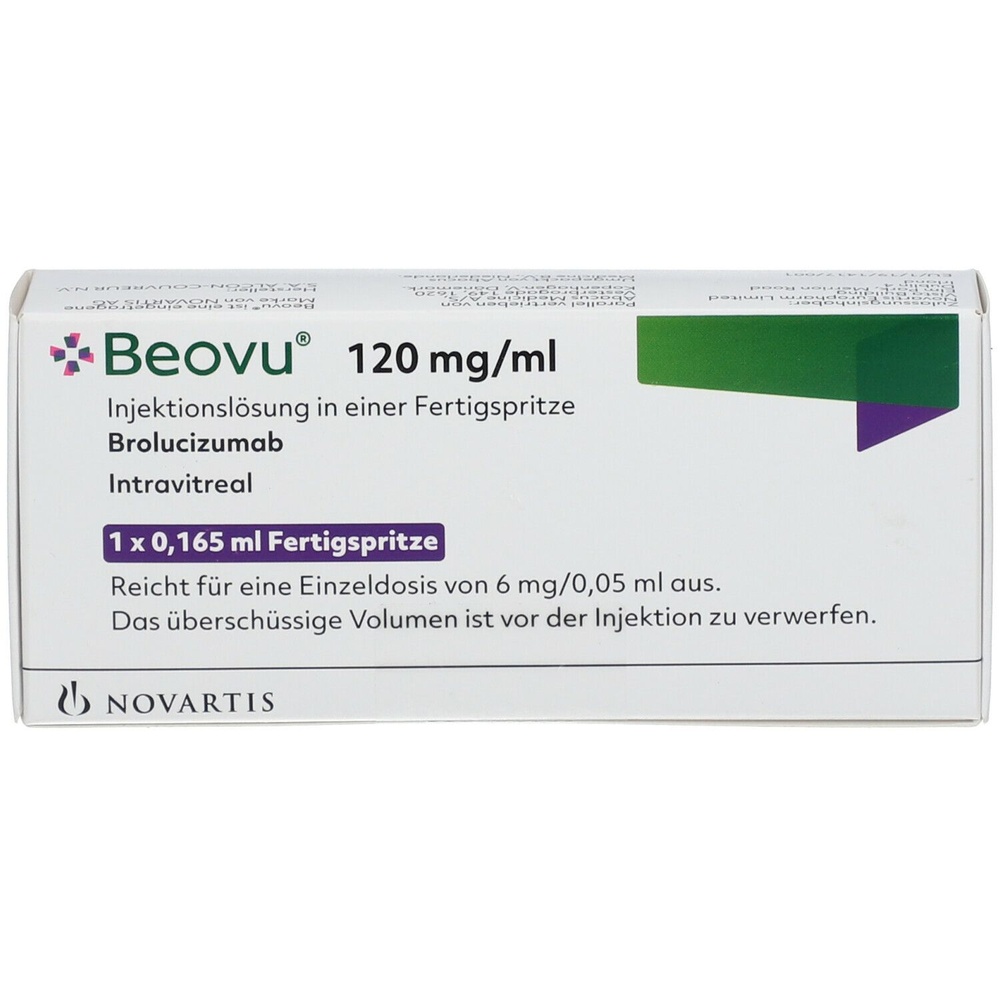
- Alternatives to VISUDYNE 15 mg POWDER FOR SOLUTION FOR INFUSIONDosage form: INJECTABLE, 40 mg/mlActive substance: afliberceptManufacturer: Sandoz GmbhPrescription requiredDosage form: INJECTABLE, 40 mg/mlActive substance: afliberceptManufacturer: Sandoz GmbhPrescription requiredDosage form: INJECTABLE, 120 mg/mlActive substance: brolucizumabManufacturer: Novartis Europharm LimitedPrescription required
Online doctors for VISUDYNE 15 mg POWDER FOR SOLUTION FOR INFUSION
Discuss questions about VISUDYNE 15 mg POWDER FOR SOLUTION FOR INFUSION, including use, safety considerations and prescription review, subject to medical assessment and local regulations.





Frequently Asked Questions
