


VIMIZIM 1mg/ml CONCENTRATE FOR INFUSION SOLUTION
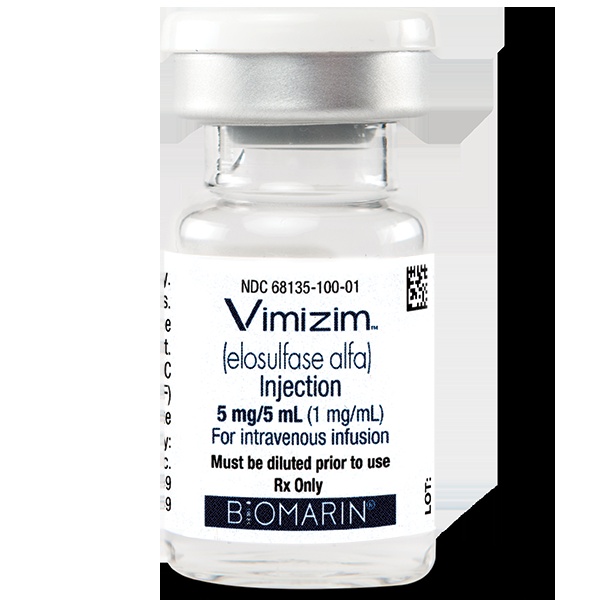



How to use VIMIZIM 1mg/ml CONCENTRATE FOR INFUSION SOLUTION
Translated with AI
This page provides general information and does not replace a doctor’s consultation. Always consult a doctor before taking any medication. Seek urgent medical care if symptoms are severe.
Show originalContents of the leaflet
Introduction
Package Leaflet: Information for the User
Vimizim 1 mg/ml concentrate for solution for infusion
elosulfase alfa
This medicine is subject to additional monitoring, which will allow for quick identification of new safety information. You can help by reporting any side effects you may get. The last section of the leaflet includes information on how to report side effects.
Read all of this leaflet carefully before you start using this medicine because it contains important information for you.
- Keep this leaflet, you may need to read it again.
- If you have any further questions, ask your doctor or pharmacist.
- If you get any side effects, talk to your doctor or pharmacist. This includes any possible side effects not listed in this leaflet. See section 4.
Contents of the pack
- What is Vimizim and what is it used for
- What you need to know before you are given Vimizim
- How Vimizim is given
- Possible side effects
- Storage of Vimizim
- Contents of the pack and other information
1. What is Vimizim and what is it used for
Vimizim contains an enzyme called elosulfase alfa which belongs to a group of medicines known as enzyme replacement therapies. It is used to treat adults and children with mucopolysaccharidosis type IVA (MPS IVA disease, also known as Morquio A syndrome).
People with MPS IVA disease either completely lack or have very low levels of N-acetylgalactosamine-6-sulfatase, an enzyme that breaks down certain substances in the body, such as keratan sulfate, which are found in many tissues of the body, including cartilage and bone. As a result, these substances are not broken down or processed by the body as they should be. They build up in tissues, interfere with their normal function, and cause the symptoms of MPS IVA, such as difficulty walking, breathing problems, short stature, and hearing loss.
How Vimizim works
This medicine replaces the natural enzyme N-acetylgalactosamine-6-sulfatase that is lacking in patients with MPS IVA. It has been shown that treatment improves walking ability and reduces the levels of keratan sulfate in the body. This medicine may improve the symptoms of MPS IVA.

2. What you need to know before you are given Vimizim
You must not be given Vimizim
- if you have had life-threatening allergic reactions to elosulfase alfa or any of the other ingredients of this medicine (listed in section 6).
Warnings and precautions
- If you are treated with Vimizim, you may develop infusion reactions. An infusion reaction is any adverse event, including an allergic reaction, that occurs during the infusion or within a day after the infusion (see section 4). If you experience one of these reactions, you should contact your doctor immediately.
perfusión or within a day after the perfusion (see section 4). If you experience one of these reactions, you should contact your doctor immediately.
- If you have an allergic reaction during the infusion, your doctor may slow down or stop the infusion. Your doctor may also give you additional medicines to control allergic reactions (e.g. antihistamines and/or corticosteroids).
- If you experience back pain, numbness in the arms or legs, or loss of control for urination or defecation, you should contact your doctor immediately.These problems may be part of the disease and may be due to pressure on your spinal cord.
Using Vimizim with other medicines
Tell your doctor if you are taking, have recently taken, or might take any other medicines.
Pregnancy, breast-feeding, and fertility
You should not be given Vimizim during pregnancy unless clearly necessary. It is not known if Vimizim is excreted in breast milk. Consult your doctor if the benefits of taking Vimizim are greater than the possible risk to your newborn during breast-feeding. It is not known if Vimizim affects human fertility. No effects on fertility were observed in animals.
Driving and using machines
Dizziness has been reported in some patients during Vimizim infusion. Consult your doctor if you feel dizzy after the infusion, especially before driving or using any machine, as dizziness may be dangerous.
Vimizim contains sodium and sorbitol (E420)
This medicine contains 8 mg of sodium (the main component of table salt) in each 5 ml vial. This is equivalent to 0.4% of the recommended daily intake of sodium for adults.
This medicine contains 100 mg of sorbitol in each 5 ml vial, equivalent to 40 mg/kg. Sorbitol is a source of fructose. If you (or your child) have hereditary fructose intolerance (HFI), a rare genetic disorder in which the patient cannot break down fructose, consult your doctor before receiving this medicine.
Consult your doctor before receiving this medicine if you (or your child) have HFI or cannot take sweet foods or drinks because they cause nausea, vomiting, or unpleasant effects such as bloating, stomach cramps, or diarrhea.
3. How Vimizim is given

Your doctor or nurse will give you Vimizim through a vein.
The medicine must be diluted before administration. Your doctor or nurse will give you some medicines before treatment to reduce allergic reactions, and may also give you medicines to help control fever.
Dose
The dose you receive depends on your body weight. The recommended dose for adults and children is 2 mg/kg body weight given once a week through a vein (intravenous infusion). Each infusion will be given over approximately 4 hours. Treatment with Vimizim may start at the earliest possible age and is intended for long-term use.
If you have any further questions on the use of this medicine, ask your doctor or nurse.
4. Possible side effects
Like all medicines, this medicine can cause side effects, although not everybody gets them.
Side effects were mainly seen while the patients were receiving the medicine or immediately after (“infusion reactions”). The most serious side effects were severe allergic reactions (seen in less than 1 in 100 people) and vomiting (seen in more than 1 in 10 people). Symptoms of an allergic reaction include rash, itching, or hives on the skin (seen in up to 1 in 10 people). If you experience any difficulty swallowing or speaking, severe shortness of breath, wheezing, swelling of the face or lips, dizziness, or weak pulse, these may be symptoms of a severe allergic reaction and you should tell your doctor immediately.Depending on the severity of the side effect, your doctor may slow down or temporarily stop the infusion and/or give you additional medicines to reduce the effects of a severe allergic reaction (e.g. antihistamines and/or corticosteroids) or to reduce fever (antipyretics).
Very common side effects include symptoms of infusion reactions, such as headache, nausea, fever, chills, and stomach pain. Other very common adverse reactions were diarrhea, pain in the mouth and throat, dizziness, and breathing problems.
Common side effects were muscle pain.
Reporting of side effects
If you get any side effects, talk to your doctor or pharmacist. This includes any possible side effects not listed in this leaflet. You can also report side effects directly via the national reporting system listed in Appendix V. By reporting side effects, you can help provide more information on the safety of this medicine.
5. Storage of Vimizim
Keep this medicine out of the sight and reach of children.
Do not use this medicine after the expiry date which is stated on the carton and vial after EXP. The expiry date is the last day of the month stated.
Unopened vials:
Store in a refrigerator (2°C – 8°C).
Do not freeze.
Store in the original package to protect from light.
Do not use Vimizim if the solution is discolored or contains visible particles.
After dilution:
The product should be used immediately after dilution. If not used immediately, in-use storage times and conditions are the responsibility of the user and normally should not exceed 24 hours at 2°C – 8°C, followed by up to 24 hours at 23°C – 27°C during administration.
Medicines should not be disposed of via wastewater or household waste. Ask your pharmacist how to dispose of medicines no longer required. These measures will help protect the environment.
6. Contents of the pack and other information
What Vimizim contains
- The active substance is elosulfase alfa. Each ml of concentrate contains 1 mg of elosulfase alfa. Each 5 ml vial contains 5 mg of elosulfase alfa.
- The other ingredients are: sodium acetate trihydrate, sodium dihydrogen phosphate monohydrate, arginine hydrochloride, sorbitol, polysorbate 20, and water for injections (see section 2: “Vimizim contains sodium and sorbitol (E420)”).
Appearance and pack contents
Vimizim is a concentrate for solution for infusion (sterile concentrate). The clear to slightly opalescent and colorless to pale yellow solution should not contain visible particles.
Presentation: 1 vial of 5 ml
Marketing authorisation holder
BioMarin International Limited
Shanbally, Ringaskiddy
County Cork, P43 R298
Ireland
Manufacturer
BioMarin International Limited
Shanbally, Ringaskiddy
County Cork, P43 R298
Ireland
Date of last revision of this leaflet MM/YYYY
Detailed information on this medicine is available on the European Medicines Agency web site: http://www.ema.europa.eu. There are also links to other web sites about rare diseases and orphan medicines.
<------------------------------------------------------------------------------------------------------------------------>
This information is intended only for healthcare professionals:
Vimizim should not be mixed with any other medicine in the same infusion, except for those mentioned below.
Each vial of Vimizim is for single use. Vimizim must be diluted with a 9 mg/ml (0.9%) sodium chloride solution for infusion using an aseptic technique. The diluted Vimizim solution should be administered to patients using an infusion set. An infusion set equipped with an in-line filter (0.2 μm) may be used.
Disposal of unused product and all materials that have come into contact with it should be in accordance with local requirements.
Preparation of Vimizim infusion (using an aseptic technique)
- The number of vials to be diluted will be determined based on the patient’s weight and will be removed from the refrigerator in advance to allow them to reach 23°C – 27°C. Do not heat the vials or place them in the microwave. The recommended dose is 2 mg/kg body weight administered once a week through a vein (intravenous infusion). Each infusion requires approximately 4 hours.
- Patient weight (kg) multiplied by 2 (mg/kg) = Patient dose (mg).
- Patient dose (mg) divided by 1 (mg/ml of Vimizim concentrate) = Total number of ml of Vimizim
- Total amount (ml) of Vimizim divided by 5 ml per vial = Total number of vials
- The total number of vials calculated should be rounded up to the next whole vial.
- Obtain an infusion bag containing 9 mg/ml (0.9%) sodium chloride solution for infusion suitable for intravenous administration. The total infusion volume will be determined based on the patient’s body weight.
- Patients weighing less than 25 kg should receive a total volume of 100 ml.
- Patients weighing 25 kg or more should receive a total volume of 250 ml.
- Before dilution, each vial should be inspected for particles and color changes. The clear to slightly opalescent and colorless to pale yellow solution should not contain visible particles. Do not shake the vials.
- Remove and discard a volume of the 9 mg/ml (0.9%) sodium chloride solution for infusion from a 100 ml or 250 ml infusion bag equivalent to the total volume of Vimizim to be added.
- Slowly withdraw the calculated volume of Vimizim from the appropriate number of vials, taking care to avoid excessive agitation.
- Slowly add the volume of Vimizim to the 9 mg/ml (0.9%) sodium chloride solution for infusion.
When diluted with 100 ml of 9 mg/ml (0.9%) sodium chloride solution for infusion:the initial rate will be 3 ml/h. The infusion rate will be increased every 15 minutes as follows: first increase the rate to 6 ml/h, then increase the rate every 15 minutes in increments of 6 ml/h until a maximum rate of 36 ml/h is reached.
When diluted with 250 ml of 9 mg/ml (0.9%) sodium chloride solution for infusion:the initial rate will be 6 ml/h. The infusion rate will be increased every 15 minutes as follows: first increase the rate to 12 ml/h, then increase the rate every 15 minutes in increments of 12 ml/h until a maximum rate of 72 ml/h is reached.
Weight of patient (kg) | Volume of infusion total (ml) | Step 1 Infusion rate initial 0 to 15 minutes (ml/h) | Step 2 15 to 30 minutes (ml/h) | Step 3 30 to 45 minutes (ml/h) | Step 4 45 to 60 minutes (ml/h) | Step 5 60 to 75 minutes (ml/h) | Step 6 75 to 90 minutes (ml/h) | Step 7 More than 90 minutes (ml/h) |
< 25 | 100 | 3 | 6 | 12 | 18 | 24 | 30 | 36 |
≥ 25 | 250 | 6 | 12 | 24 | 36 | 48 | 60 | 72 |
The infusion rate may be increased as tolerated by the patient.
- The diluted solution will be gently mixed before infusion.
- The diluted solution will be visually inspected for particles before use. Do not use if the solution is discolored or contains particles.
- The diluted solution should be used immediately. If not used immediately, in-use storage times and conditions are the responsibility of the user and normally should not exceed 24 hours at 2°C – 8°C, followed by up to 24 hours at 23°C – 27°C during administration.
- Country of registration
- Active substance
- Prescription requiredYes
- Manufacturer
- This information is for reference only and does not constitute medical advice. Always consult a doctor before taking any medication. Oladoctor is not responsible for medical decisions based on this content.
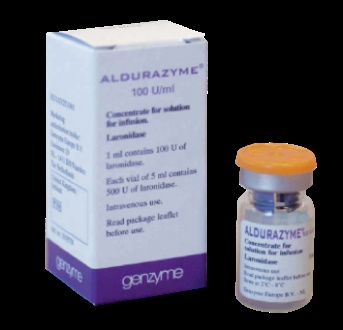
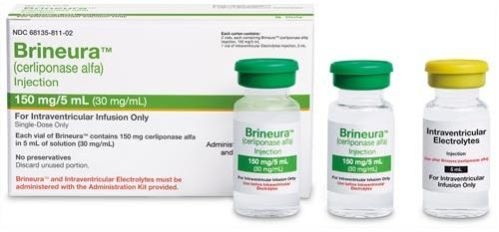
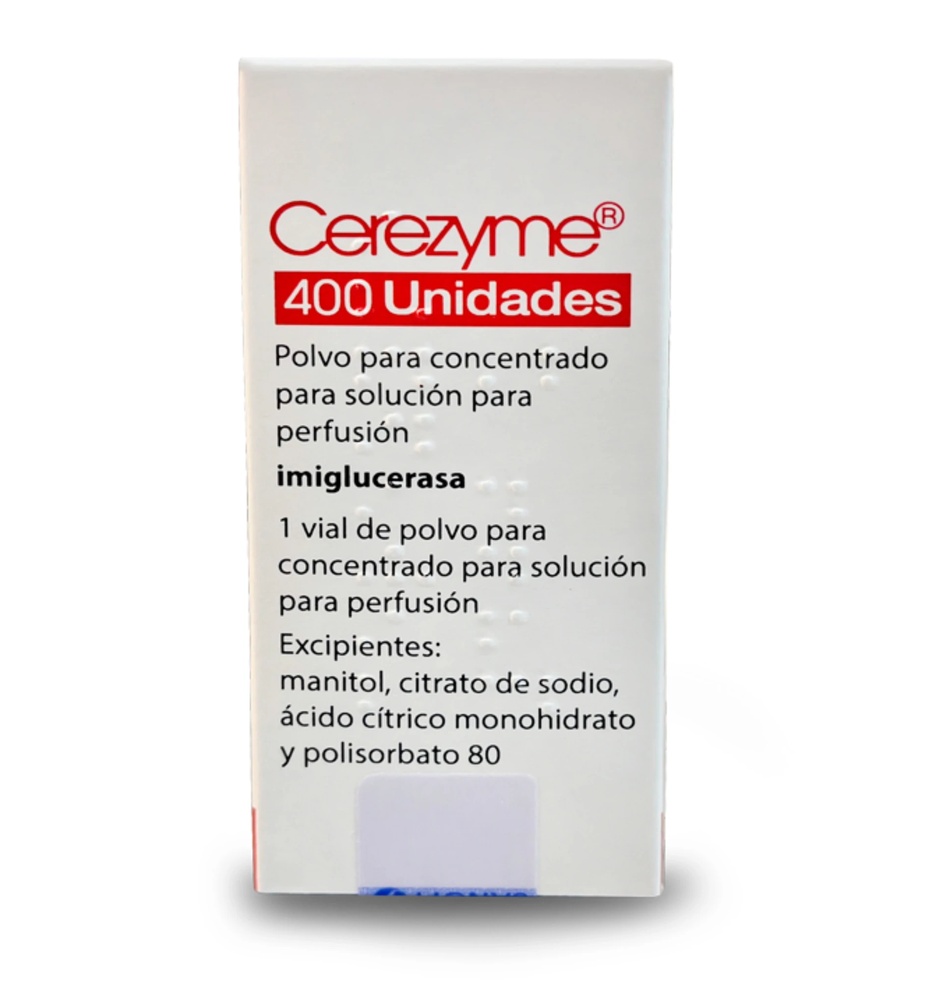
- Alternatives to VIMIZIM 1mg/ml CONCENTRATE FOR INFUSION SOLUTIONDosage form: INJECTABLE INFUSION, 100 UActive substance: laronidaseManufacturer: Sanofi B.V.Prescription requiredDosage form: INJECTABLE PERFUSION, 30 mg/mlActive substance: cerliponase alfaManufacturer: Biomarin International LimitedPrescription requiredDosage form: INJECTABLE INFUSION, UnknownActive substance: imigluceraseManufacturer: Sanofi B.V.Prescription required
Online doctors for VIMIZIM 1mg/ml CONCENTRATE FOR INFUSION SOLUTION
Discuss questions about VIMIZIM 1mg/ml CONCENTRATE FOR INFUSION SOLUTION, including use, safety considerations and prescription review, subject to medical assessment and local regulations.





Frequently Asked Questions
