


RABEPRAZOL KRKA 10 mg GASTRO-RESISTANT TABLETS
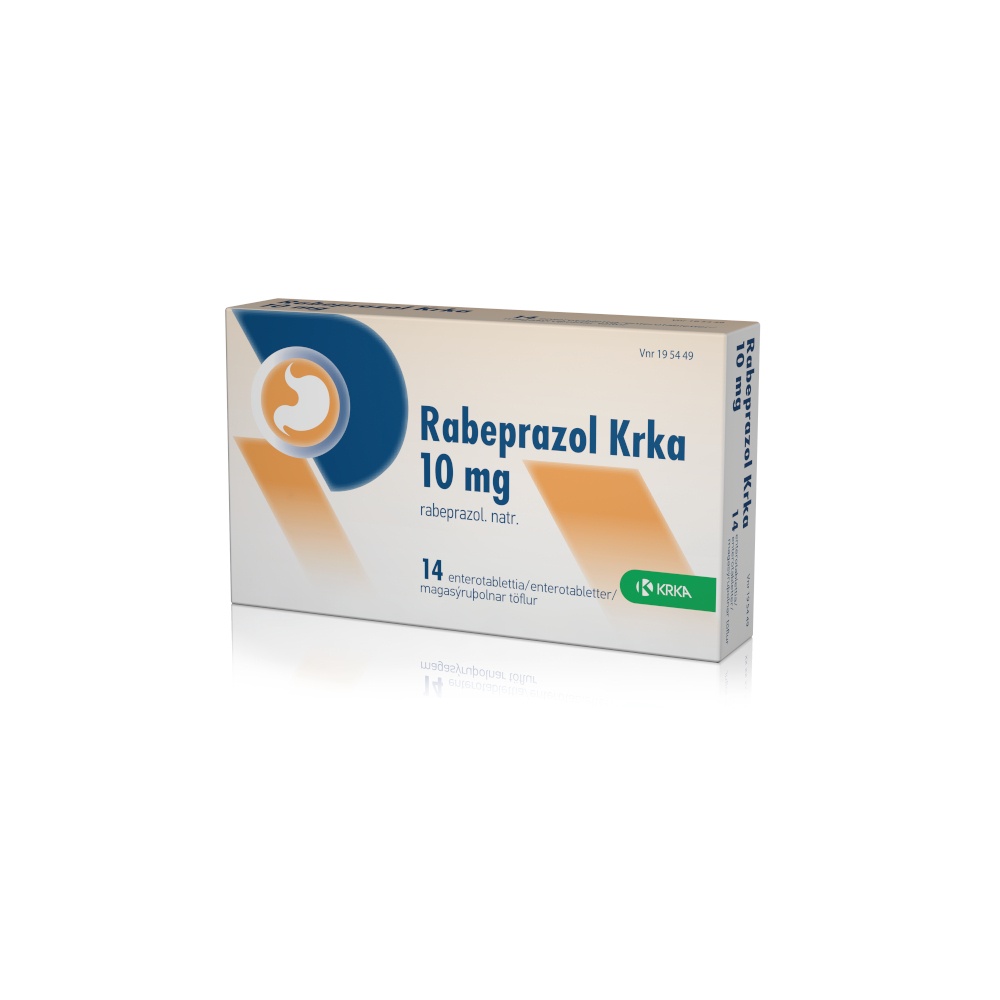



How to use RABEPRAZOL KRKA 10 mg GASTRO-RESISTANT TABLETS
Translated with AI
This page provides general information and does not replace a doctor’s consultation. Always consult a doctor before taking any medication. Seek urgent medical care if symptoms are severe.
Show originalContents of the leaflet
Introduction
Package Leaflet: Information for the User
Rabeprazol Krka 10 mg Gastro-Resistant Tablets EFG
Rabeprazole Sodium
Read all of this leaflet carefully before you start taking this medicine because it contains important information for you.
- Keep this leaflet, you may need to read it again.
- If you have any further questions, ask your doctor or pharmacist.
- This medicine has been prescribed for you only. Do not pass it on to others. It may harm them, even if their signs of illness are the same as yours.
- If you get any side effects, talk to your doctor or pharmacist. This includes any possible side effects not listed in this leaflet. See section 4.
Contents of the pack
- What is Rabeprazol Krka and what is it used for
- What you need to know before you take Rabeprazol Krka
- How to take Rabeprazol Krka
- Possible side effects
- Storage of Rabeprazol Krka
- Contents of the pack and other information
1. What is Rabeprazol Krka and what is it used for
Rabeprazol Krka contains the active substance rabeprazole sodium. Rabeprazole belongs to a group of medicines called “Proton Pump Inhibitors” (PPIs), which reduce the amount of acid produced by the stomach.
Rabeprazole is used to treat the following diseases:
- “Gastroesophageal Reflux Disease” (GERD), which may include symptoms of acidity. The cause of GERD is the passage of acid and food from the stomach to the esophagus.
- Stomach ulcers or ulcers in the upper part of the intestine (duodenal ulcers). If these ulcers are infected with a bacterium called “Helicobacter pylori” (H. pylori), you will need to take antibiotics. Taking rabeprazole and antibiotics together will eliminate the infection and the ulcer will heal. It will also stop the infection and the recurrence of the ulcer.
- Zollinger-Ellison syndrome, in which the stomach produces too much acid.

2. What you need to know before you take Rabeprazol Krka
Do not takeRabeprazol Krka
- If you are allergic to rabeprazole sodium or any of the other ingredients of this medicine (listed in section 6).
- If you are pregnant or think you may be pregnant.
- If you are breast-feeding.
Do not take rabeprazole if you are in any of the above situations. If you are not sure, consult your doctor or pharmacist before taking rabeprazole.
See also the section on pregnancy, breast-feeding, and fertility.
Warnings and precautions
Consult your doctor or pharmacist before starting to take rabeprazole.
- If you are allergic to other proton pump inhibitors or to “substituted benzimidazoles”.
- In some patients, blood and liver problems have been observed, but they often improve when treatment with rabeprazole is interrupted.
- If you have a stomach tumor.
- If you have ever had liver problems.
- If you are taking atazanavir - for HIV infection.
- If you have reduced body stores or risk factors for low vitamin B12 levels and receive long-term treatment with rabeprazole. Like all acid-reducing agents, rabeprazole may reduce the absorption of vitamin B12.
- If you have ever had a skin reaction after treatment with an acid-reducing medicine similar to rabeprazole.
- If you get a skin rash, especially in areas of the skin exposed to the sun, consult your doctor as soon as possible, as it may be necessary to interrupt treatment with rabeprazole. Remember to mention any other symptoms you may notice, such as joint pain.
- If you are scheduled to have a specific blood test (Chromogranin A).
- During treatment with rabeprazole, kidney inflammation can occur. The signs and symptoms include: decreased urine volume or blood in the urine and/or hypersensitivity reactions such as fever, skin rash, and joint stiffness. You should report these signs to your doctor.
If you are in doubt about any of the above, consult your doctor or pharmacist before taking rabeprazole.
If you experience severe diarrhea (watery or bloody) with symptoms such as fever, abdominal pain, or tenderness, stop taking rabeprazole and consult your doctor immediately.
If you are taking a proton pump inhibitor like rabeprazole, especially for a period of more than one year, you may have a slightly increased risk of hip, wrist, or spine fractures. Inform your doctor if you have osteoporosis or if you are taking corticosteroids (which can increase the risk of osteoporosis).
Children
Rabeprazole should not be used in children.
Taking Rabeprazol Krka with other medicines
Tell your doctor or pharmacist if you are taking, have recently taken, or might take any other medicines. This includes medicines obtained without a prescription and herbal medicines.
In particular, tell your doctor or pharmacist if you are taking any of the following medicines:
- Ketoconazole or itraconazole - used to treat fungal infections. Rabeprazole may decrease the amount of these medicines in the blood. Your doctor may need to adjust the dose.
- Atazanavir - used to treat HIV infection. Rabeprazole may decrease the amount of this type of medicine in the blood and should not be used together.
- Methotrexate (a chemotherapy medicine used at high doses to treat cancer) - if you are taking a high dose of methotrexate, your doctor may temporarily stop your treatment with rabeprazole.
If you are in doubt about any of the above, consult your doctor or pharmacist before taking rabeprazole.
Pregnancy, breast-feeding, and fertility
- Do not take rabeprazole if you are pregnant or think you may be pregnant.
- Do not take rabeprazole during breast-feeding or if you plan to start breast-feeding.
If you are pregnant or breast-feeding, think you may be pregnant, or plan to become pregnant, consult your doctor or pharmacist before using this medicine.
Driving and using machines
You may feel drowsy while taking rabeprazole. If this happens, do not drive or use tools or machines.
3. How to take Rabeprazol Krka
Follow the instructions for administration of this medicine exactly as indicated by your doctor. In case of doubt, consult your doctor or pharmacist again.
Taking this medicine
- Only remove a tablet from the blister when it is time to take your medicine.
- Swallow the tablets whole with a little water. Do not crush or chew the tablets.
- Your doctor will tell you how many tablets to take and the duration of your treatment, which will depend on your indication.
If you are taking this medicine for a long time, your doctor will want to monitor you.
Adults and elderly patients
For “Gastroesophageal Reflux Disease” (GERD)
Treatment of moderate to severe symptoms (symptomatic GERD)
- The usual dose is one 10 mg rabeprazole tablet once a day for up to 4 weeks.
- Take the tablet in the morning before eating.
- If your symptoms recur after 4 weeks of treatment, your doctor will tell you to take one rabeprazole 10 mg tablet as needed.
Treatment of more severe symptoms (erosive or ulcerative GERD)
- The usual dose is one 20 mg rabeprazole tablet once a day for 4 to 8 weeks.
- Take the tablet in the morning before eating.
Long-term treatment of symptoms (maintenance GERD)
- The usual dose is one 10 or 20 mg rabeprazole tablet once a day for as long as your doctor has indicated.
- Take the tablet in the morning before eating.
- Your doctor will want to see you at regular intervals to monitor your symptoms and dose.
For stomach ulcers (peptic ulcers)
- The usual dose is one 20 mg rabeprazole tablet once a day for 6 weeks.
- Take the tablet in the morning before eating.
- Your doctor may tell you to take rabeprazole for another 6 weeks if your symptoms do not improve.
For ulcers in the intestine (duodenal ulcers)
- The usual dose is one 20 mg rabeprazole tablet once a day for 4 weeks.
- Take the tablet in the morning before eating.
- Your doctor may tell you to take rabeprazole for another 4 weeks if your symptoms do not improve.
For ulcers caused by H. pylori infection and to prevent recurrence
- The usual dose is one 20 mg rabeprazole tablet twice a day for 7 days.
- Your doctor will also tell you to take antibiotics called amoxicillin and clarithromycin.
For more information on the other medicines used to treat H. pylori, read the package leaflets for each of them.
Zollinger-Ellison syndrome where the stomach produces too much acid
- The usual dose is three 20 mg rabeprazole tablets once a day at the start.
- Your doctor may adjust the dose depending on how you respond to treatment.
If you are on long-term treatment, you will need to see your doctor at regular intervals for dose and symptom review.
Children:this medicine should not be used in children.
Patient with liver problems. You should consult your doctor, who will be particularly careful when starting and during treatment with rabeprazole.
If you take more Rabeprazol Krka than you should
If you take more rabeprazole than you should, talk to your doctor or go to a hospital immediately. Take the medicine with you.
In case of overdose or accidental ingestion, consult your doctor or pharmacist immediately or call the Toxicology Information Service, telephone 91 562 04 20, indicating the medicine and the amount ingested.
If you forget to take Rabeprazol Krka
- If you forget to take a tablet, take it as soon as you remember. However, if it is almost time to take the next tablet, skip the missed dose and continue as usual.
- If you forget to take your medicine for more than 5 days, consult your doctor before taking more medicine.
- Do not take a double dose (two doses at the same time) to make up for the missed dose.
If you stop taking Rabeprazol Krka
Relief of symptoms usually occurs before the ulcer is completely healed. It is important that you do not stop treatment until your doctor tells you to.
If you have any further questions on the use of this product, ask your doctor or pharmacist.

4. Possible side effects
Like all medicines, this medicine can cause side effects, although not everybody gets them.
Stop taking rabeprazole and contact your doctor immediately if you notice any of the following side effects – you may need urgent medical treatment:
- Allergic reactions - the signs may include: sudden swelling of the face, difficulty breathing, or low blood pressure that can cause fainting or collapse.
- Frequent infections, such as sore throat or high temperature (fever), or ulcers in the mouth or throat.
- Bruising or bleeding easily.
These side effects are rare (may affect up to 1 in 1,000 people).
- Severe skin blisters or rashes, or sores or ulcers in your mouth and throat.
These side effects are very rare (may affect up to 1 in 10,000 people).
Other possible side effects:
Common (may affect up to 1 in 10 people):
- Infections.
- Difficulty sleeping.
- Headache or dizziness.
- Cough, runny nose, or sore throat (pharyngitis).
- Effects on the stomach or intestine such as stomach pain, diarrhea, gas (flatulence), nausea, vomiting, or constipation.
- Pain or back pain.
- Weakness or flu-like symptoms.
- Benign polyps in the stomach.
Uncommon (may affect up to 1 in 100 people):
- Feeling nervous or drowsy.
- Chest infection (bronchitis).
- Painful sinuses and blocked nose (sinusitis).
- Dry mouth.
- Indigestion or belching.
- Skin rash or redness.
- Muscle or leg or joint pain.
- Fractures in the hip, wrist, and spine.
- Urinary tract infection (urinary tract infection).
- Chest pain.
- Chills or fever.
- Changes in liver function (observed in blood tests).
Rare (may affect up to 1 in 1,000 people):
- Lack of appetite (anorexia).
- Depression.
- Hypersensitivity (including allergic reactions).
- Visual disturbances.
- Inflamed mouth (stomatitis) or taste disorders.
- Stomach upset or stomach pain.
- Liver problems, including yellowing of the skin and whites of the eyes (jaundice).
- Itchy rash or blisters.
- Sweating.
- Kidney problems.
- Weight gain.
- Changes in white blood cells (observed in blood tests) that can cause frequent infections.
- Decreased platelet count that can cause bleeding or bruising more easily than normal.
Other possible side effects (frequency not known - cannot be estimated from the available data):
- Swelling of the breasts in men.
- Fluid retention.
- Inflammation of the intestine (leading to diarrhea).
- Low sodium levels in the blood that can cause tiredness and confusion, muscle spasms, convulsions, and coma.
- Patients who have previously had liver problems may very rarely develop encephalopathy (brain disease).
- Skin rash, possibly with joint pain.
If you are taking rabeprazole for more than three months, it is possible that your blood magnesium levels may decrease. Low magnesium levels can cause tiredness, muscle contractions, disorientation, convulsions, dizziness, and increased heart rate. If you have any of these symptoms, consult your doctor immediately. Low magnesium levels can also lead to a decrease in blood potassium or calcium levels. Your doctor may decide to perform periodic blood tests to monitor magnesium levels.
Reporting of side effects
If you experience any side effects, talk to your doctor, pharmacist, or nurse, even if it is possible that they are not listed in this leaflet. You can also report them directly through the Spanish Pharmacovigilance System for Human Use Medicines: www.notificaram.es. By reporting side effects, you can help provide more information on the safety of this medicine.
5. Storage of Rabeprazol Krka
Keep this medicine out of the sight and reach of children.
Do not use rabeprazole after the expiration date stated on the packaging and on the blister after EXP. The expiration date is the last day of the month indicated.
Store in the original package to protect from moisture and light.
Do not store above 30°C.
Medicines should not be disposed of via wastewater or household waste. Deposit the packaging and medicines you no longer need in the SIGRE collection point at the pharmacy. Ask your pharmacist how to dispose of the packaging and medicines you no longer need. This will help protect the environment.
6. Contents of the pack and other information
Composition ofRabeprazol Krka
- The active substance is rabeprazole sodium. Each gastro-resistant tablet contains 10 mg of rabeprazole sodium, equivalent to 9.42 mg of rabeprazole.
- The other ingredients are mannitol (E-421), light magnesium oxide (E-530), hydroxypropylcellulose (E-463), low-substitution hydroxypropylcellulose (E-463), and magnesium stearate (E-572) in the core, and ethylcellulose (E-462), light magnesium oxide (E-530), hypromellose phthalate, mono- and diacetin (E-472a), talc (E-553b), titanium dioxide (E-171), and red iron oxide (E-172) in the coating.
Appearance of the product and pack contents
The 10 mg gastro-resistant tablets are pink-orange, biconvex, and round with a beveled edge.
They are available in blisters in packs of 28 gastro-resistant tablets.
Marketing authorization holder and manufacturer
KRKA, d.d. Novo mesto
Šmarješka cesta 6
8501 Novo mesto
Slovenia
You can request more information about this medicine by contacting the Local Representative of the Marketing Authorization Holder:
Krka Farmacéutica, S.L.
C/ Anabel Segura 10
28108 Alcobendas, Madrid
Spain
Date of the last revision of this leaflet:
"Detailed and updated information on this medicine is available on the website of the Spanish Agency for Medicines and Health Products (AEMPS) http://www.aemps.gob.es/"
- Country of registration
- Average pharmacy price12.19 EUR
- Active substance
- Prescription requiredYes
- Manufacturer
- This information is for reference only and does not constitute medical advice. Always consult a doctor before taking any medication. Oladoctor is not responsible for medical decisions based on this content.
- Alternatives to RABEPRAZOL KRKA 10 mg GASTRO-RESISTANT TABLETSDosage form: TABLET, 10 mgActive substance: rabeprazoleManufacturer: Janssen Cilag S.A.Prescription requiredDosage form: TABLET, 20 mgActive substance: rabeprazoleManufacturer: Janssen Cilag S.A.Prescription requiredDosage form: TABLET, 20 mgActive substance: rabeprazoleManufacturer: Almus Farmaceutica S.A.U.Prescription required
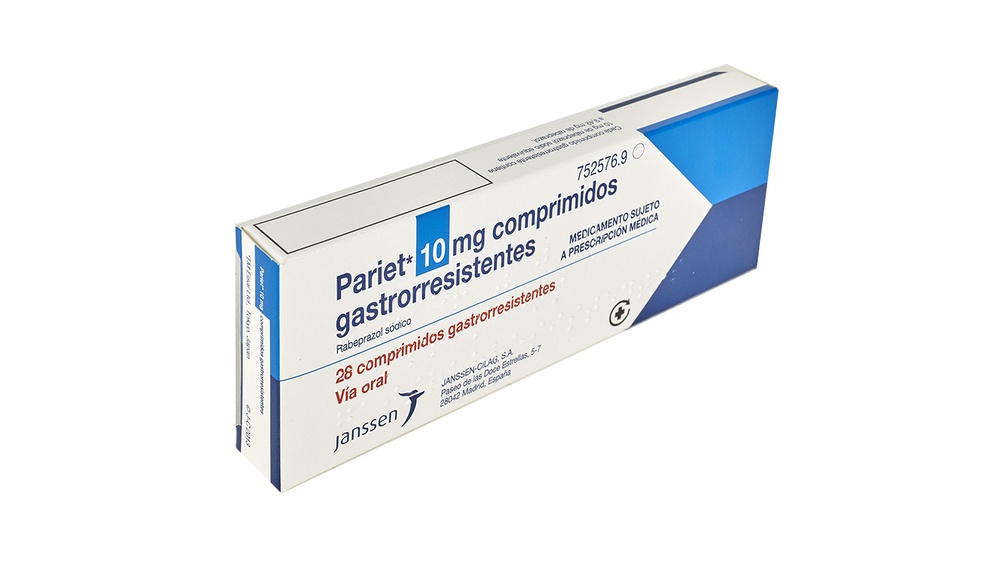

Online doctors for RABEPRAZOL KRKA 10 mg GASTRO-RESISTANT TABLETS
Discuss questions about RABEPRAZOL KRKA 10 mg GASTRO-RESISTANT TABLETS, including use, safety considerations and prescription review, subject to medical assessment and local regulations.











Frequently Asked Questions
