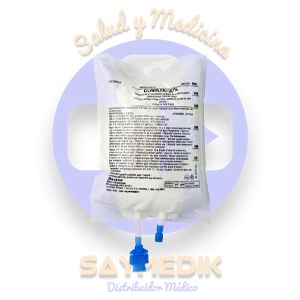
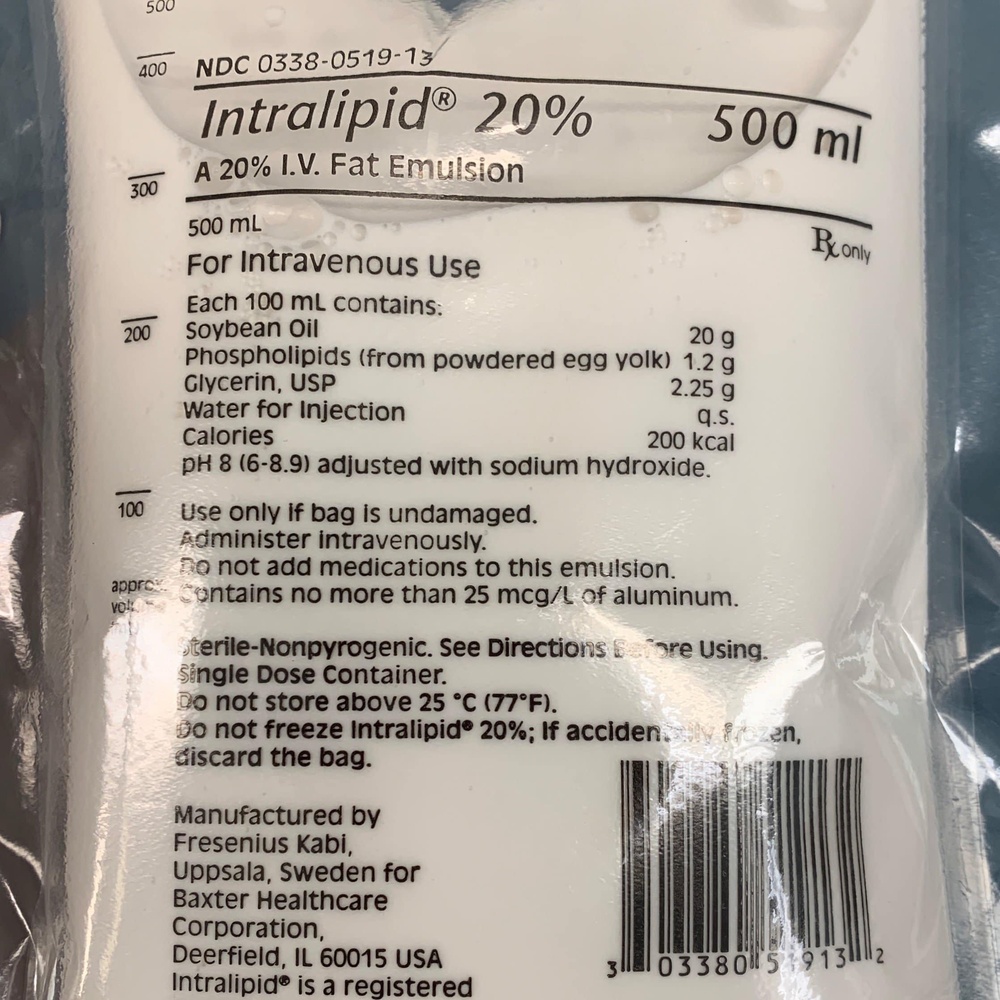
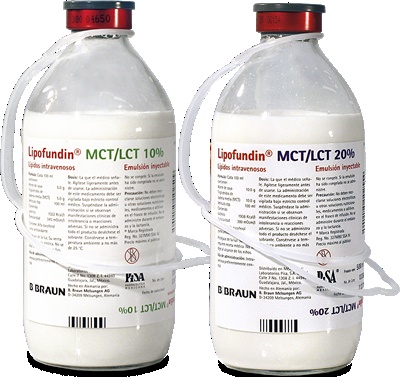
LIPOPLUS 20% Emulsion for infusion



How to use LIPOPLUS 20% Emulsion for infusion
Translated with AI
This page provides general information and does not replace a doctor’s consultation. Always consult a doctor before taking any medication. Seek urgent medical care if symptoms are severe.
Show originalContents of the leaflet
Introduction
Package Leaflet: Information for the Patient
Lipoplus 20%
Medium-chain triglycerides / soybean oil, refined / omega-3 fatty acid triglycerides
Read all of this leaflet carefully before you start taking this medicine because it contains important information for you.
- Keep this leaflet, you may need to read it again.
- If you have any further questions, ask your doctor or pharmacist.
- This medicine has been prescribed for you only. Do not pass it on to others. It may harm them, even if their signs of illness are the same as yours.
- If you experience any side effects, talk to your doctor or pharmacist. This includes any possible side effects not listed in this leaflet. See section 4.
Contents of the package leaflet
- What is Lipoplus 20% and what is it used for
- What you need to know before you take Lipoplus 20%
- How to take Lipoplus 20%
- Possible side effects
- Storage of Lipoplus 20%
- Contents of the pack and other information
1. What is Lipoplus 20% and what is it used for
Lipoplus 20% is an oil-in-water emulsion. The oils contained in Lipoplus 20% provide energy and contain essential fatty acids necessary for your body to grow or recover.
Lipoplus 20% is used to provide fats to patients who need to be fed through intravenous infusion, as they are unable to eat normally or their intake is not sufficient.
Lipoplus is indicated in adults, premature newborns, full-term newborns, infants, and children, and adolescents.

2. What you need to know before you take Lipoplus 20%
Do not use Lipoplus 20%
if you have one or more of the following conditions:
- If you are allergic to egg proteins, fish, peanuts, or soy or to any of the other components of this medicine (listed in section 6).
- Abnormally high concentrations of fats in the blood (severe hyperlipidemia characterized by hypertriglyceridemia).
- Conditions in which the blood does not clot properly (severe coagulopathy).
- Disorder of bile secretion (intrahepatic cholestasis).
- Severe liver failure.
- Severe kidney failure without access to treatment with an artificial kidney (hemofiltration or dialysis).
- Blockage of blood vessels by blood clots or fat (acute thromboembolic events, fat embolism).
- Abnormally high concentrations of acidic substances in the blood (acidosis).
Patients should not generally receive artificial nutrition through intravenous infusion (parenteral nutrition)if they have one or more of the following conditions:
- Potentially life-threatening circulation problems, such as those that may occur if you are in a state of collapse or shock.
- Acute phase of heart attack (myocardial infarction) or stroke.
- Unstable metabolism, e.g., due to diabetes mellitus, severe infections affecting the whole body (sepsis), or coma of unknown origin.
- Insufficient oxygen supply to the tissues.
- Disorders of the salt composition of your body.
- Lack of fluids or excess water in the body.
- Fluid in the lungs (acute pulmonary edema).
- Severe heart failure (decompensated heart failure).
Warnings and precautions
Consult your doctor before starting to use Lipoplus 20%.
Monitoring
- During infusion, your doctor should monitor the amount of fat (serum triglycerides) in your blood. If the fat values in your blood increase too much, your doctor may reduce the infusion rate or interrupt it.
- While receiving this solution, your doctor should check your fluid level, the concentration of salts in the blood, and the acid-base balance. The function of your liver and kidneys, as well as the coagulation function of your blood, should be monitored. Additionally, blood cell counts should be performed.
- If you show signs of an allergic reaction (such as fever, chills, skin rash, or respiratory problems) when receiving this medicine, your doctor should interrupt the infusion immediately.
Additional measures
- Before receiving this medicine, your doctor will correct any existing disorder of fluids and salt content in your body, as well as any acid-base imbalance.
- In addition to Lipoplus 20%, you may receive a carbohydrate solution and an amino acid solution to prevent metabolic disorders in which your blood becomes acidic (metabolic acidosis).
- To make your intravenous nutrition complete, you may also receive carbohydrate and amino acid solutions. The nursing staff may also take measures to ensure that the fluid, electrolyte, vitamin, and trace element requirements of your body are met.
Elderly patients
In some disorders, your ability to use fats correctly may be impaired. Your doctor will take into account that some of these disorders are frequently associated with advanced age, e.g., altered heart or kidney function.
Patients with heart or kidney problems
If you have heart or kidney problems, your doctor will be especially attentive when administering this medicine to you.
Patients with lipid metabolism disorders
In some disorders, your ability to use fats correctly may be impaired, and the fat values in your blood may be too high. Therefore, it is essential that your doctor knows:
- if you have diabetes mellitus
- if you have pancreatitis (inflammation of the pancreas)
- if you have liver failure or altered kidney function
- if you have reduced thyroid gland activity (hypothyroidism)
- if you have blood poisoning (sepsis)
- if you have a disorder in which you may have a combination of 3 or more of the following: increased fat around your abdomen, decreased "good" cholesterol (C-HDL), increased blood fats, high blood pressure, and increased blood sugar (metabolic syndrome)
If your ability to use fats correctly is impaired, your doctor should closely monitor the fat concentrations in your blood (serum triglycerides).
Children and adolescents
In infants at risk of jaundice, your doctor should monitor the concentrations of fat (serum triglycerides) and bilirubin in the blood. It may be necessary for your doctor to adjust the daily doses of fat.
During infusion, this solution should be protected from phototherapy light to reduce the formation of potentially harmful substances (triglyceride hydroperoxides).
When used in newborns and children under 2 years, the solution (in the vials and administration equipment) should be protected from light exposure until administration is completed. Exposure of Lipoplus 20% to ambient light, especially after mixing with trace elements or vitamins, generates peroxides and other degradation products that can be reduced if the product is protected from light exposure.
Taking Lipoplus 20% with other medicines
Tell your doctor or pharmacist if you are taking, have recently taken, or might take any other medicines.
Lipoplus 20% may interact with other medicines. Tell your doctor if you are taking or receiving certain medicines that may prevent blood clotting in an undesirable way, i.e.
? heparin
? coumarin products, e.g., warfarin.
It may be necessary to monitor your blood clotting by taking regular blood samples.
Pregnancy and breastfeeding
If you are pregnant or breastfeeding, think you may be pregnant, or are planning to have a baby, ask your doctor for advice before taking this medicine.
Pregnancy
If you are pregnant, you will only receive this medicine if your doctor considers it absolutely necessary for your recovery. There are no data on the use of Lipoplus 20% in pregnant women.
Breastfeeding
Breastfeeding is not recommended in mothers with parenteral nutrition.
Driving and using machines
You will receive this medicine in a controlled environment, e.g., in a hospital or under other medical supervision, which normally excludes driving and using machines.
Lipoplus 20% contains sodium
This medicine contains 59.8 mg of sodium (main component of table/cooking salt) in each 1000 ml. This is equivalent to 3% of the maximum daily sodium intake recommended for an adult.
3. How to use Lipoplus 20%
Dosage
Your doctor will decide the dose of this medicine and the duration of treatment. The daily doses will be adjusted to your needs, age, and body weight. The doses are normally calculated based on "grams of fat per kg of body weight". Particular attention will be paid to ensuring that the doses and infusion rates used are correct for you, so as not to exceed your ability to use the infused fat.
How is Lipoplus 20% administered?
Lipoplus 20% is administered through intravenous infusion as part of a nutrition program. For this purpose, a tube (catheter) will be inserted into a vein, through which the fat emulsion can be administered separately or together with other fluids.
When used in newborns and children under 2 years, the solution (in the vials and administration equipment) should be protected from light exposure until administration is completed (see section 2).
If you receive more Lipoplus 20% than you should
If you have received too much Lipoplus 20%, you may experience abnormally high concentrations of fats in the blood (hyperlipidemia), your blood may become too acidic (metabolic acidosis), or you may suffer from the so-called "fat overload syndrome". For symptoms of fat overload syndrome, see section 4 "Possible side effects".
If you have received too much Lipoplus 20%, the infusion will be stopped immediately and will not be restarted until you have recovered. Your doctor may need to adjust the daily doses of fat. Your doctor will decide on any additional treatment.
If you have any further questions on the use of this product, ask your doctor or pharmacist.

4. Possible side effects
Like all medicines, this medicine can cause side effects, although not everybody gets them.
The following side effects can be serious. If you experience any of the following side effects, contact your doctor immediately and you will be taken off this medicine:
Very rare: may affect up to 1 in 10,000 people
- allergic reactions, e.g., skin reactions, difficulty breathing, swelling of the lips, mouth, and throat, breathing difficulties
- breathing problems (dyspnea)
- bluish skin (cyanosis)
Other side effects include
Very rare: may affect up to 1 in 10,000 people
- fat overload syndrome (see "Fat overload syndrome" below)
- increased tendency of your blood to clot (hypercoagulation)
- abnormally high concentrations of fats (hyperlipidemia)
- abnormally high concentrations of sugar (hyperglycemia)
- abnormally high concentrations of acidic substances in your blood (metabolic acidosis)
- decrease or increase in blood pressure
- drowsiness
- feeling of dizziness, nausea, vomiting, loss of appetite
- headache
- flushing
- redness of the skin (erythema)
- fever
- sweating
- feeling of cold, chills
Rare: may affect up to 1 in 1,000 people
- back pain, bone pain, chest pain, and pain in the lumbar region
Frequency not known: cannot be estimated from the available data
- disorder of bile flow (cholestasis)
- decrease in white blood cell count (leukopenia)
- decrease in platelet count (thrombocytopenia)
If you experience any of these side effects, the infusion will be interrupted.
Fat overload syndrome
You may suffer from a "fat overload syndrome" if you have received too much Lipoplus 20% or when your body has problems using fats. Your body's ability to use fats may be influenced by a sudden change in your condition (due to kidney problems or an infection). Usually, the symptoms are reversible if the infusion is interrupted. A fat overload syndrome is characterized by the following symptoms:
- high concentrations of fat in the blood (hyperlipidemia)
- fever
- fat deposits in the liver or other organs (fat infiltration)
- enlargement of the liver (hepatomegaly), which may be accompanied by jaundice
- enlargement of the spleen (splenomegaly)
- decrease in red blood cell count (anemia)
- decrease in white blood cell count (leukopenia)
- decrease in platelet count (thrombocytopenia)
- disorder of blood clotting
- destruction of red blood cells (hemolysis)
- increase in immature red blood cells (reticulocytosis)
- abnormal results in liver function tests
- loss of consciousness (coma)
Reporting of side effects
If you experience any side effects, talk to your doctor or pharmacist. This includes any possible side effects not listed in this leaflet. You can also report side effects directly through the Spanish Medicines Monitoring System for Human Use: www.notificaRAM.es. By reporting side effects, you can help provide more information on the safety of this medicine.
5. Storage of Lipoplus 20%
Keep this medicine out of the sight and reach of children.
Do not use this medicine after the expiry date which is stated on the label and carton. The expiry date is the last day of the month stated.
Lipoplus 20% should be used immediately after the first opening.
Do not store above 25°C.
Keep the container in the original packaging to protect it from light.
Do not freeze. Products that have been frozen should be discarded
Do not use this medicine if you notice:
- large oil droplets in the emulsion or two separate liquid layers
- color change
- damage to the container or closure
When used in newborns and children under 2 years, the solution (in the vials and administration equipment) should be protected from light exposure until administration is completed (see section 2).
6. Container Content and Additional Information
Composition of Lipoplus 20%
- The active ingredients in 1000 ml of Lipoplus 20%:
Medium-chain triglycerides | 100.0 g | |||||||||||||||||||||||||||||||||||||||||||||||
Refined soybean oil | 80.0 g | |||||||||||||||||||||||||||||||||||||||||||||||
Triglycerides with omega-3 fatty acids | 20.0 g | |||||||||||||||||||||||||||||||||||||||||||||||
This provides the following content of essential fatty acids per liter:
200 mg/ml (20%) corresponds to the total triglyceride content.
Product Appearance and Container Content Lipoplus 20% is a white, milky, and sterile oil-in-water emulsion for infusion (for intravenous administration). It is marketed in glass bottles with rubber stoppers, in the following formats: 10 × 100 ml, 1 × 250 ml, 10 × 250 ml, 1 × 500 ml, 10 × 500 ml, 1 × 1000 ml, 6 × 1000 ml Not all formats may be marketed. Marketing Authorization Holder and Manufacturer [To be completed at the national level]
34212 Melsungen, Germany Mailing Address 34209 Melsungen, Germany This medicinal product is authorized in the Member States of the European Economic Community and in the United Kingdom (Northern Ireland) under the following names:
Date of the Last Revision of this Leaflet:09/2023 ------------------------------------------------------------------------------------------------------------------- This information is intended only for healthcare professionals: Administration Method and Special Precautions for Disposal and Other Handling Intravenous route. Lipid emulsions are suitable for peripheral venous administration and can also be administered separately through peripheral veins as part of total parenteral nutrition. The Y-connector or bypass set should be placed as close as possible to the patient if lipid emulsions are administered simultaneously with amino acid and carbohydrate solutions. Administration Method When used in newborns and children under 2 years, the solution (in bottles and administration equipment) should be protected from light exposure until administration is completed. For single use. The container and unused medicinal product should be disposed of after use. Do not combine partially used containers. Shake gently before use. Use only containers that are not damaged and in which the emulsion is homogeneous and has a white, milky color. Visually inspect the emulsion for the absence of phase separation and color changes before administration (oil droplets, oil layer). The emulsion should be brought to room temperature without assistance before infusion, i.e., the product should not be placed in a heating device (such as an oven or microwave). If filters are used, they should be lipid-permeable. Before infusing a fat emulsion together with other solutions through a Y-connector or bypass set, the compatibility of these liquids should be checked, especially when solutions containing other medicinal products are administered simultaneously. Particular attention should be paid when administering solutions that contain divalent cations (such as calcium or magnesium) simultaneously. Special Precautions for Disposal and Other Handling: When used in newborns and children under 2 years, it should be protected from light exposure until administration is completed. Exposure of Lipoplus 20% to ambient light, especially after mixing with trace elements or vitamins, generates peroxides and other degradation products that can be reduced if the product is protected from light exposure. Treatment Duration Since clinical experience with long-term use of Lipoplus is limited, this medicinal product should not be administered for more than one week. If parenteral nutrition with lipid emulsions is still indicated, Lipoplus may be administered for longer periods provided that adequate monitoring is used. Infusion Rate The infusion should be administered at the lowest possible infusion rate. During the first 15 minutes, the infusion rate used should be only 50% of the maximum infusion rate. Maximum Infusion Rate for Adults Up to 0.15 g/kg body weight/h of lipids. Maximum Infusion Rate for Premature Newborns, Full-term Newborns, Infants, and Young Children Up to 0.15 g/kg body weight/h of lipids. Maximum Infusion Rate for Children and Adolescents Up to 0.15 g/kg body weight/h of lipids. Interference with Laboratory Tests Lipids may interfere with certain laboratory tests (such as bilirubin, lactate dehydrogenase, oxygen saturation) when the blood sample is taken before the lipids have been eliminated from the bloodstream, which may require between 4 and 6 hours. Incompatibilities In the absence of compatibility studies, this medicinal product should not be mixed with others. Validity Period after Mixing with Compatible Additives From a microbiological point of view, the product should be used immediately after mixing the additives. If not used immediately after mixing the additives, the times and conditions of storage during use before administration are the responsibility of the user. To view the complete information for this product, consult the Summary of Product Characteristics or the package leaflet of Lipoplus 20%. Special Warnings and Precautions for Use Exposure of intravenous parenteral nutrition solutions to light, especially after mixing with trace elements or vitamins, may have adverse effects on the clinical outcome of newborns due to the generation of peroxides and other degradation products. When used in newborns and children under 2 years, Lipoplus 20% should be protected from ambient light until administration is completed. |