


LAMZEDE 10 mg POWDER FOR SOLUTION FOR INFUSION
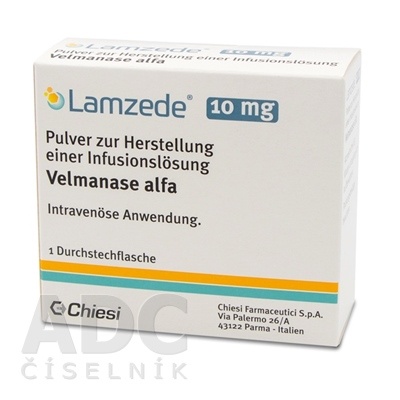



How to use LAMZEDE 10 mg POWDER FOR SOLUTION FOR INFUSION
Translated with AI
This page provides general information and does not replace a doctor’s consultation. Always consult a doctor before taking any medication. Seek urgent medical care if symptoms are severe.
Show originalContents of the leaflet
Introduction
Package Leaflet: Information for the Patient
Lamzede10mg powder for solution for infusion
velmanasa alfa
This medicinal product is subject to additional monitoring, which will allow for the quick identification of new safety information. You can help by reporting any side effects you may get. The last section of the leaflet contains information on how to report side effects.
Read all of this leaflet carefully before you start using this medicine because it contains important information for you.
- Keep this leaflet, you may need to read it again.
- If you have any further questions, ask your doctor.
- If you get any side effects, talk to your doctor, pharmacist or nurse. This includes any possible side effects not listed in this leaflet. See section 4.
Contents of the pack
- What is Lamzede and what is it used for
- What you need to know before you use Lamzede
- How to use Lamzede
- Possible side effects
- Storage of Lamzede
- Contents of the pack and other information
1. What is Lamzede and what is it used for
Lamzede contains the active substance velmanasa alfa, which belongs to a group of medicines called enzyme replacement therapies. It is used to treat patients with mild to moderate alpha-mannosidosis. It is used to treat the non-neurological symptoms of the disease.
Alpha-mannosidosis is a rare genetic disorder caused by the deficiency of an enzyme called alpha-mannosidase, which is needed to break down certain sugar compounds (called "mannose-rich oligosaccharides") in the body. When this enzyme is absent or does not work properly, these sugar compounds accumulate inside cells and cause the signs and symptoms of the disease. Typical manifestations of the disease include distinctive facial features, mental retardation, difficulty controlling movements, hearing and speech difficulties, frequent infections, skeletal problems, muscle pain, and weakness.
Velmanasa alfa is designed to replace the missing enzyme in patients with alpha-mannosidosis.

2. What you need to know before you use Lamzede
Do not use Lamzede
- if you are allergic to velmanasa alfa or any of the other ingredients of this medicine (listed in section 6).
Warnings and precautions
Talk to your doctor before you start using Lamzede.
Hypersensitivity reactions can occur with the administration of Lamzede. These reactions usually occur during or shortly after infusion and can manifest with various symptoms, such as localized or diffuse skin reactions, gastrointestinal symptoms, or swelling of the throat, face, lips, or tongue (see section 4 "Possible side effects"). If the hypersensitivity reaction is severe, it is recommended to immediately stop the administration of Lamzede and follow the current medical protocol for emergency treatment. Less severe hypersensitivity reactions can be controlled by temporarily interrupting the infusion or reducing the infusion rate; your doctor may consider administering medications used to treat allergies.
If you receive treatment with Lamzede, you may experience a side effect during or immediately after the infusion (infusion) used to administer the medicine (see section 4 "Possible side effects"). This is known as an infusion-related reactionand can sometimes be severe.
- Your doctor may decide to keep you under observation for an hour or more after the infusion due to infusion-related reactions.
- Infusion-related reactions include dizziness, headache, nausea, low blood pressure, fatigue, and fever. If you experience an infusion-related reaction, you should inform your doctor immediately.
- If you have an infusion-related reaction, you may be given additional medications to treat or help prevent future reactions. These medications may include medications used to treat allergies (antihistamines), medications used to treat fever (antipyretics), and medications to control inflammation (corticosteroids).
- If the infusion-related reaction is severe, your doctor will stop the infusion immediately and start administering appropriate medical treatment.
- If the infusion-related reactions are severe and/or there is a loss of effect of this medicine, your doctor will perform a blood test to check if there are antibodies that could affect the outcome of the treatment.
- Most of the time, you will be able to continue receiving Lamzede even if you experience an infusion-related reaction.
Antibodies may play a role in hypersensitivity and infusion-related reactions observed with the use of Lamzede. Although 24% of patients developed antibodies against Lamzede during its clinical development, no clear correlation was observed between antibody titers and reduced efficacy or the occurrence of hypersensitivity reactions.
Other medicines and Lamzede
Tell your doctor if you are taking, have recently taken, or might take any other medicines.
Pregnancy and breastfeeding
If you are pregnant or breastfeeding, think you may be pregnant, or are planning to have a baby, ask your doctor for advice before using this medicine.
You should not take this medicineduring pregnancy unlessyour doctor considers it clearly necessary. Your doctor will discuss this with you.
It is not known whether velmanasa alfa passes into breast milk. Lamzede can be used during breastfeeding, as the breastfed child will not absorb velmanasa alfa.
Driving and using machines
Lamzede has no or negligible influence on the ability to drive and use machines.
Lamzede contains sodium
This medicine contains less than 1 mmol of sodium (23 mg) per dose unit, which is essentially "sodium-free".
3. How to use Lamzede
This medicine should only be used under the supervision of a doctor with experience in the treatment of alpha-mannosidosis or similar diseases and should only be administered by a healthcare professional.
Lamzede should only be used under the supervision of a doctor with experience in the treatment of alpha-mannosidosis. Your doctor may advise you to receive treatment at home if you meet certain criteria. Contact your doctor if you wish to receive treatment at home.
Dose
The recommended dose of Lamzede is 1 mg/kg body weight administered once a week.
Use in children and adolescents
Lamzede can be administered to children and adolescents at the same dose and frequency as adults.
Administration
Lamzede is supplied in a vial as a powder for infusion, which will be reconstituted with water for injections before administration.
Once reconstituted, the medicine will be administered through an infusion pump (drip) into a vein over a period of at least 50 minutes under the supervision of your doctor.
If you have any further questions on the use of this medicine, ask your doctor, pharmacist, or nurse.

4. Possible side effects
Like all medicines, this medicine can cause side effects, although not everybody gets them. Most side effects occur during the infusion or shortly after (see section 2 "Warnings and precautions").
While you are being treated with Lamzede, you may experience some of the following reactions:
Serious side effects
Common side effects (may affect up to 1 in 10 people)
- loss of consciousness (fainting, which may be preceded by a feeling of dizziness, lightheadedness, or confusion)
- acute kidney failure (kidney problems that can be recognized by fluid retention, swelling of the legs, ankles, or feet, drowsiness, shortness of breath, or fatigue)
- hypersensitivity and severe allergic reaction (symptoms include localized or diffuse skin rash, dizziness, difficulty breathing, chest pain, chills, fever, gastrointestinal symptoms such as nausea, vomiting, diarrhea, or abdominal pain, swelling of the throat, face, lips, or tongue)
If you experience any side effect similar to those described, inform your doctor immediately.
Other side effects
Very common side effects (may affect more than 1 in 10 people)
- diarrhea
- weight gain
- fever/increased body temperature
Common side effects (may affect up to 1 in 10 people)
- slow heart rate (bradycardia)
- bluish discoloration of the skin and lips (cyanosis)
- psychotic behavior (mental illness with hallucinations, difficulty thinking clearly, and understanding reality, anxiety), difficulty sleeping
- confusion, fainting, tremors, dizziness, headache
- abdominal pain (abdominal), stomach irritation caused by digestive acids (gastroesophageal reflux disease), nausea, vomiting
- pain at the infusion site, chills, feeling of warmth, general discomfort, fatigue
- skin rash (hives), increased sweating (hyperhidrosis)
- nasal bleeding
- joint pain, back pain, joint stiffness, muscle pain, pain in the limbs (hands, feet)
- eye irritation, eyelid swelling (periorbital edema), eye redness
- increased appetite
Side effects of unknown frequency(cannot be estimated from the available data)
- infection of the inner lining of the sac surrounding the heart (endocarditis)
- boil
- infection caused by a bacterium called Staphylococcus
- decreased appetite
- agitation, fecal incontinence, nervousness
- inability to coordinate muscle movements
- drowsiness
- increased tear secretion
- deafness
- aortic valve incompetence (a disorder in which the aortic valve does not close tightly)
- rapid heart rate
- low blood pressure
- vascular fragility
- oropharyngeal pain
- wheezing
- pain when swallowing
- skin redness
- joint swelling, warmth in the joints
- weakness
Reporting of side effects
If you experience any side effects, talk to your doctor, pharmacist, or nurse. This includes any possible side effects not listed in this leaflet. You can also report side effects directly through the Spanish Pharmacovigilance System for Human Use https://www.notificaram.es. By reporting side effects, you can help provide more information on the safety of this medicine.
5. Storage of Lamzede
Keep this medicine out of the sight and reach of children.
Do not use this medicine after the expiry date which is stated on the label and carton after "EXP/CAD". The expiry date is the last day of the month stated.
Store and transport refrigerated (between 2°C and 8°C). Do not freeze.
Store in the original package to protect from light.
After reconstitution, the medicine should be used immediately. If not used immediately, the reconstituted solution can be stored for a maximum of 24 hours at 2°C to 8°C.
This medicine should not be used if the reconstituted solution contains opaque particles or has changed color.
Medicines should not be disposed of via wastewater or household waste. Ask your pharmacist how to dispose of medicines no longer required. This will help protect the environment.
6. Container Contents and Additional Information
Composition of Lamzede
- The active ingredient is velmanase alfa.
A vial contains 10 mg of velmanase alfa.
After reconstitution, 1 ml of the solution contains 2 mg of velmanase alfa (10 mg / 5 ml).
- The other components are: disodium hydrogen phosphate dihydrate, sodium dihydrogen phosphate dihydrate (see section 2 "Lamzede contains sodium"), mannitol (E 421) and glycine.
Appearance and Container Contents of the Product
Lamzede is a white to off-white powder for solution for infusion, supplied in a glass vial.
Each box contains 1, 5 or 10 vials.
Only some pack sizes may be marketed.
Marketing Authorization Holder
Chiesi Farmaceutici S.p.A.
Via Palermo 26/A
43122 Parma
Italy
Manufacturer
Chiesi Farmaceutici S.p.A.
Via San Leonardo, 96
43122 Parma
Italy
For further information on this medicinal product, please contact the local representative of the marketing authorization holder:
Spain Chiesi España, S.A.U. Tel: + 34 93 494 8000 |
Date of Last Revision of this Leaflet: January 2023
This medicinal product has been authorized under "exceptional circumstances". This means that due to the rarity of this disease, it has not been possible to obtain complete information on this medicinal product.
The European Medicines Agency will review any new information on this medicinal product that may become available annually, and this leaflet will be updated as necessary.
Other Sources of Information
Detailed information on this medicinal product is available on the European Medicines Agency website: http://www.ema.europa.eu. There are also links to other websites on rare diseases and orphan medicines.
---------------------------------------------------------------------------------------------------------------------------
This information is intended solely for healthcare professionals.
Lamzede requires reconstitution and is for intravenous infusion only.
Each vial is for single use only.
Reconstitution and Administration Instructions
Reconstitution and administration of Lamzede should be performed by a healthcare professional.
Aseptic technique should be used during preparation. Filters should not be used during preparation.
- The number of vials to be used should be calculated based on the individual patient's weight. The recommended dose of 1 mg/kg is determined by the following calculation:
- Patient weight (kg) x dose (mg/kg) = Patient dose (in mg).
- Patient dose (in mg) divided by 10 mg/vial (vial content) = number of vials to be reconstituted. If the calculated number of vials includes a fraction, it should be rounded up to the next whole number.
- Approximately 30 minutes before reconstitution, the required number of vials should be removed from the refrigerator. The vials should reach room temperature (between 15°C and 25°C) before reconstitution.
Each vial is reconstituted by slowly injecting 5 ml of water for injectable preparations into the inner wall of each vial. Each milliliter of reconstituted solution contains 2 mg of velmanase alfa. Only the volume corresponding to the recommended dose should be administered.
Example:
- Patient weight (44 kg) x dose (1 mg/kg) = Patient dose (44 mg).
- 44 mg divided by 10 mg/vial = 4.4 vials; therefore, 5 vials should be reconstituted.
- From the total reconstituted volume, only 22 ml (corresponding to 44 mg) should be administered.
- The powder should be reconstituted in the vial by adding water for injectable preparations slowly drop by drop to the inner part of the vial and not directly onto the lyophilized powder. Forced ejection of the water for injectable preparations from the syringe onto the powder should be avoided to minimize foam formation. The reconstituted vials should stand upright on the table for about 5-10 minutes. Then, each vial should be tilted and gently rolled for 15-20 seconds to enhance the dissolution process. The vial should not be inverted, shaken or agitated.
- After reconstitution, an immediate visual inspection of the solution for particles or color changes should be performed. The solution should be clear and should not be used if opaque particles are observed or if the color has changed. Due to the nature of the medicinal product, the reconstituted solution may occasionally contain some proteinaceous particles in the form of fine white threads or translucent fibers, which will be removed by the integrated filter during infusion (see point e).
- The reconstituted solution should be slowly withdrawn from each vial, taking care to avoid foam formation in the syringe. If the volume of the solution exceeds the capacity of a syringe, the necessary number of syringes should be prepared to rapidly replace the syringe during infusion.
- The reconstituted solution should be administered using an infusion set equipped with a pump and a low protein-binding filter of 0.22 μm.
The total infusion volume is determined based on the patient's weight and should be administered over a minimum of 50 minutes. It is recommended to always use the same dilution (2 mg/ml). In patients weighing less than 18 kg, who are to receive less than 9 ml of reconstituted solution, the infusion rate should be calculated such that the infusion time is ≥ 50 minutes. The maximum infusion rate is 25 ml/hour. The infusion time can be calculated using the following table:
Patient Weight (kg) | Dose (ml) | Maximum Infusion Rate (ml/h) | Minimum Infusion Time (minutes) | Patient Weight (kg) | Dose (ml) | Maximum Infusion Rate (ml/h) | Minimum Infusion Time (minutes) | |
5 | 2.5 | 3 | 50 | 53 | 26.5 | 25 | 64 | |
6 | 3 | 3.6 | 50 | 54 | 27 | 25 | 65 | |
7 | 3.5 | 4.2 | 50 | 55 | 27.5 | 25 | 67 | |
8 | 4 | 4.8 | 50 | 56 | 28 | 25 | 67 | |
9 | 4.5 | 5.4 | 50 | 57 | 28.5 | 25 | 68 | |
10 | 5 | 6 | 50 | 58 | 29 | 25 | 70 | |
11 | 5.5 | 6.6 | 50 | 59 | 29.5 | 25 | 71 | |
12 | 6 | 7.2 | 50 | 60 | 30 | 25 | 72 | |
13 | 6.5 | 7.8 | 50 | 61 | 30.5 | 25 | 73 | |
14 | 7 | 8.4 | 50 | 62 | 31 | 25 | 74 | |
15 | 7.5 | 9 | 50 | 63 | 31.5 | 25 | 76 | |
16 | 8 | 9.6 | 50 | 64 | 32 | 25 | 77 | |
17 | 8.5 | 10.2 | 50 | 65 | 32.5 | 25 | 78 | |
18 | 9 | 10.8 | 50 | 66 | 33 | 25 | 79 | |
19 | 9.5 | 11.4 | 50 | 67 | 33.5 | 25 | 80 | |
20 | 10 | 12 | 50 | 68 | 34 | 25 | 82 | |
21 | 10.5 | 12.6 | 50 | 69 | 34.5 | 25 | 83 | |
22 | 11 | 13.2 | 50 | 70 | 35 | 25 | 84 | |
23 | 11.5 | 13.8 | 50 | 71 | 35.5 | 25 | 85 | |
24 | 12 | 14.4 | 50 | 72 | 36 | 25 | 86 | |
25 | 12.5 | 15 | 50 | 73 | 36.5 | 25 | 88 | |
26 | 13 | 15.6 | 50 | 74 | 37 | 25 | 89 | |
27 | 13.5 | 16.2 | 50 | 75 | 37.5 | 25 | 90 | |
28 | 14 | 16.8 | 50 | 76 | 38 | 25 | 91 | |
29 | 14.5 | 17.4 | 50 | 77 | 38.5 | 25 | 92 | |
30 | 15 | 18 | 50 | 78 | 39 | 25 | 94 | |
31 | 15.5 | 18.6 | 50 | 79 | 39.5 | 25 | 95 | |
32 | 16 | 19.2 | 50 | 80 | 40 | 25 | 96 | |
33 | 16.5 | 19.8 | 50 | 81 | 40.5 | 25 | 97 | |
34 | 17 | 20.4 | 50 | 82 | 41 | 25 | 98 | |
35 | 17.5 | 21 | 50 | 83 | 41.5 | 25 | 100 | |
36 | 18 | 21.6 | 50 | 84 | 42 | 25 | 101 | |
37 | 18.5 | 22.2 | 50 | 85 | 42.5 | 25 | 102 | |
38 | 19 | 22.8 | 50 | 86 | 43 | 25 | 103 | |
39 | 19.5 | 23.4 | 50 | 87 | 43.5 | 25 | 104 | |
40 | 20 | 24 | 50 | 88 | 44 | 25 | 106 | |
41 | 20.5 | 24.6 | 50 | 89 | 44.5 | 25 | 107 | |
42 | 21 | 25 | 50 | 90 | 45 | 25 | 108 | |
43 | 21.5 | 25 | 52 | 91 | 45.5 | 25 | 109 | |
44 | 22 | 25 | 53 | 92 | 46 | 25 | 110 | |
45 | 22.5 | 25 | 54 | 93 | 46.5 | 25 | 112 | |
46 | 23 | 25 | 55 | 94 | 47 | 25 | 113 | |
47 | 23.5 | 25 | 56 | 95 | 47.5 | 25 | 114 | |
48 | 24 | 25 | 58 | 96 | 48 | 25 | 115 | |
49 | 24.5 | 25 | 59 | 97 | 48.5 | 25 | 116 | |
50 | 25 | 25 | 60 | 98 | 49 | 25 | 118 | |
51 | 25.5 | 25 | 61 | 99 | 49.5 | 25 | 119 | |
52 | 26 | 25 | 62 |
- When the last syringe is empty, the dosing syringe is replaced by a 20 ml syringe filled with 9 mg/ml (0.9%) sodium chloride injection solution. A volume of 10 ml of sodium chloride solution should be administered through the infusion system to perfuse the remaining fraction of Lamzede in the patient's line.
Disposal
Disposal of unused medicinal product and all materials that have come into contact with it should be done in accordance with local regulations.
- Country of registration
- Active substance
- Prescription requiredYes
- Manufacturer
- This information is for reference only and does not constitute medical advice. Always consult a doctor before taking any medication. Oladoctor is not responsible for medical decisions based on this content.
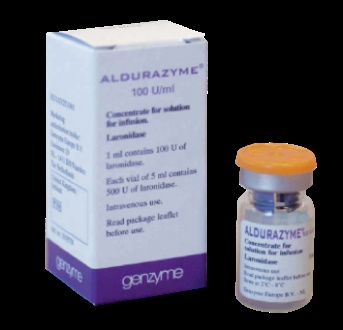
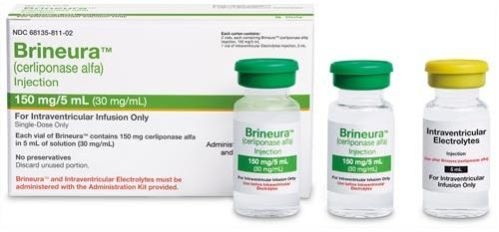
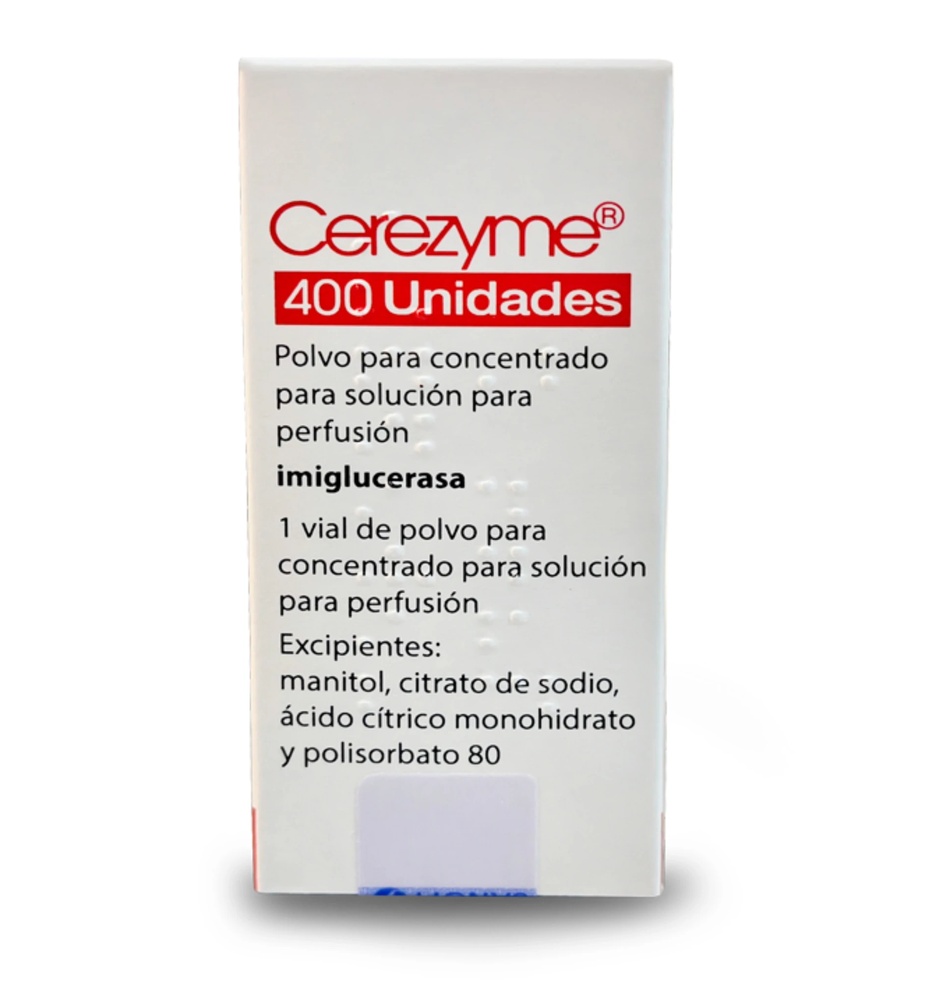
- Alternatives to LAMZEDE 10 mg POWDER FOR SOLUTION FOR INFUSIONDosage form: INJECTABLE INFUSION, 100 UActive substance: laronidaseManufacturer: Sanofi B.V.Prescription requiredDosage form: INJECTABLE PERFUSION, 30 mg/mlActive substance: cerliponase alfaManufacturer: Biomarin International LimitedPrescription requiredDosage form: INJECTABLE INFUSION, UnknownActive substance: imigluceraseManufacturer: Sanofi B.V.Prescription required
Online doctors for LAMZEDE 10 mg POWDER FOR SOLUTION FOR INFUSION
Discuss questions about LAMZEDE 10 mg POWDER FOR SOLUTION FOR INFUSION, including use, safety considerations and prescription review, subject to medical assessment and local regulations.





Frequently Asked Questions
