


HYDROXYCARBAMIDE HIKMA 500 mg HARD CAPSULES
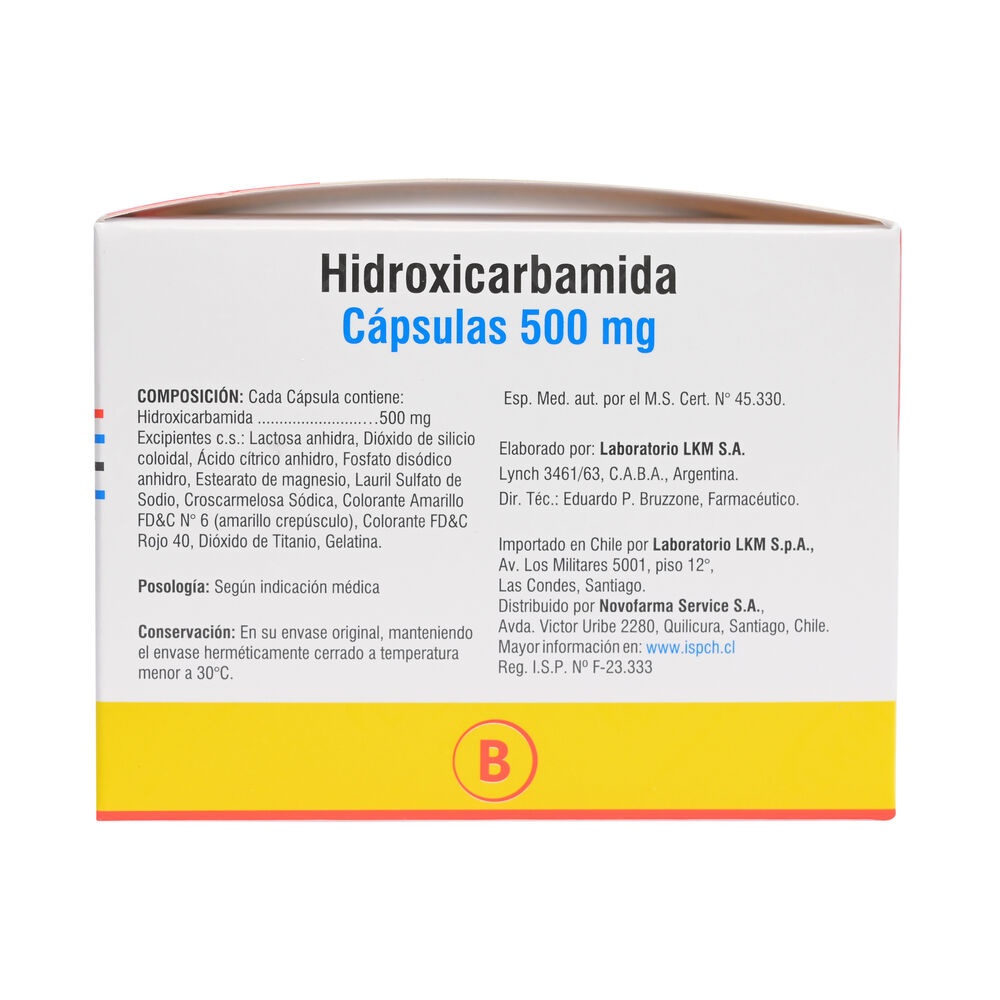



How to use HYDROXYCARBAMIDE HIKMA 500 mg HARD CAPSULES
Translated with AI
This page provides general information and does not replace a doctor’s consultation. Always consult a doctor before taking any medication. Seek urgent medical care if symptoms are severe.
Show originalContents of the leaflet
Introduction
Patient Information Leaflet
Hidroxicarbamida Hikma 500 mg hard capsules EFG
Read all of this leaflet carefully before you start taking this medicine because it contains important information for you.
- Keep this leaflet, you may need to read it again.
- If you have any further questions, ask your doctor or pharmacist.
- This medicine has been prescribed for you only. Do not pass it on to others. It may harm them, even if their signs of illness are the same as yours.
- If you get any side effects, talk to your doctor or pharmacist. This includes any possible side effects not listed in this leaflet. See section 4.
Contents of the pack
- What is Hidroxicarbamida Hikma and what is it used for
- What you need to know before you take Hidroxicarbamida Hikma
- How to take Hidroxicarbamida Hikma
- Possible side effects
- Storage of Hidroxicarbamida Hikma
- Package contents and additional information
1. What is Hidroxicarbamida Hikma and what is it used for
Hidroxicarbamida Hikma is an anti-cancer medicine. Treatment with an anti-cancer medicine is sometimes called cancer chemotherapy. Each capsule contains 500 mg of hydroxyurea as the active ingredient.
Hydroxyurea is used in the treatment of:
- Essential thrombocythemia or polycythemia vera.
- Chronic myeloid leukemia (CML) in the chronic or accelerated phase of the disease.

2. What you need to know before you take Hidroxicarbamida Hikma
Do not take Hidroxicarbamida Hikma
- if you are allergic to hydroxyurea or any of the other ingredients of this medicine (listed in section 6).
- if you have insufficient blood cells
- if you have severe anemia
Warnings and precautions
Talk to your doctor or pharmacist before starting treatment with Hidroxicarbamida
- if you have any kidney or liver problems
- if you are pregnant, plan to become pregnant or are breastfeeding
- if you have ever had gout
- if you are taking any HIV medication
- if you have leg ulcers
- if you have a known lack of vitamin B12 or folic acid
- if you are currently taking other cancer medications, especially interferon therapy
- if hemolytic anemia (a disorder in which red blood cells are destroyed faster than they can be produced) is detected in blood tests, your doctor will discontinue treatment with Hidroxicarbamida Hikma.
- if you have diabetes and are using a continuous glucose monitor (CGM) to check your blood sugar level. Hydroxyurea (also known as hydroxycarbamide) may cause falsely high glucose readings in certain sensors. This could lead to more insulin being used than necessary, resulting in low blood sugar (hypoglycemia). Talk to the doctor who prescribed the CGM about whether it is safe to use while taking Hidroxicarbamida Hikma.
A complete blood count, including a bone marrow examination, as well as kidney and liver function, should be reviewed before treatment and repeatedly during treatment.
Long-term use of Hidroxicarbamida has been reported to cause secondary leukemia.
Skin cancer has been reported in patients receiving long-term hydroxyurea. You should protect your skin from the sun and inspect your skin regularly during treatment and after discontinuing therapy with hydroxyurea. Your doctor will also inspect your skin during routine follow-up visits.
Other medicines and Hidroxicarbamida Hikma
Tell your doctor or pharmacist if you are taking, have recently taken or might take any other medicines.
Special care will be taken if you are taking any of the following medicines:
- Antiretroviral medicines (those that inhibit or destroy a retrovirus such as HIV), e.g. didanosine, stavudine, and indinavir.
- Myelosuppressive medicines (which decrease the production of red, white, or platelet blood cells) and radiotherapy.
- Certain vaccines (if in doubt, consult your pharmacist or doctor).
It may be necessary to adjust the dose of some medicines if they are taken at the same time as Hidroxicarbamida.
Hidroxicarbamida Hikma with food and drinks
You can take this medicine with food or drinks, before or after meals.
Pregnancy, breastfeeding, and fertility
Hidroxicarbamida Hikma is not recommended during pregnancy. Talk to your doctor if you think you may be pregnant. Effective contraceptive methods are strongly recommended.
If you become pregnant or plan to become pregnant while taking Hidroxicarbamida, your doctor will discuss with you the possible benefits and risks of continuing to use this medicine.
For male patients taking Hidroxicarbamida, if your partner becomes pregnant or plans to become pregnant, your doctor will discuss with you the possible benefits and risks of continuing this treatment.
The active ingredient of Hidroxicarbamida Hikma passes into human breast milk. Hidroxicarbamida Hikma is not recommended during breastfeeding, your doctor will discuss with you the possible benefits and risks of continuing to use Hidroxicarbamida Hikma.
Driving and using machines
Your ability to drive or use machines may be impaired during treatment with hydroxyurea. You should talk to your doctor.
Hidroxicarbamida Hikma contains lactose.
If your doctor has told you that you have an intolerance to some sugars, consult with them before taking this medicine.
Hidroxicarbamida Hikma contains sodium.
This medicine contains less than 23 mg of sodium (1 mmol) per capsule; this is, essentially “sodium-free”.
3. How to take Hidroxicarbamida Hikma
People who do not take Hidroxicarbamida Hikma should not be exposed to it. To minimize the risk of exposure, use disposable gloves when handling this medicine. Anyone handling hydroxyurea should wash their hands before and after contact with the capsules. Pregnant women should not handle Hidroxicarbamida.
You should take your medicine as directed by your doctor. Your pharmacist may also help you if you are unsure.
You may be instructed to take your medicine daily or intermittently.
In chronic myeloid leukemia, the usual dose is 40 mg/kg of your body weight, once a day. The dose is adjusted individually according to the white blood cell count.
In polycythemia vera, the usual dose is 15 to 20 mg/kg of your body weight, once a day. This dose is then adjusted individually to 1-2 capsules (500 - 1,000 mg) depending on the white blood cell count.
In essential thrombocytopenia, the usual dose is 15 mg/kg of your body weight, once a day. The dose is adjusted individually according to the white blood cell count.
Elderly patients may be more sensitive to the effects of hydroxyurea and may receive a lower dose.
You can take this medicine at any time of day, before or after meals. The capsules should be swallowed whole with a glass of water. However, if you find it difficult to swallow them, the contents of the capsule can be emptied into a glass of water and taken immediately. If some of the powder floats on the surface of the water, DO NOT WORRY, this is just filler from the capsule. DO NOT inhale the contents of the capsules and, if spilled on the skin, clean immediately.
While you are being treated with hydroxyurea, it is important that you drink plenty of fluids. This will help your kidneys work well.
You should continue taking your capsules until your doctor tells you to stop.
Your doctor will perform regular blood tests while you are taking hydroxyurea.
If you take more Hidroxicarbamida Hikma than you should
In case of overdose or accidental ingestion, it is recommended to go quickly to the Emergency Service of the nearest Hospital or consult the Toxicology Information Service, telephone (91) 562 04 20. It is recommended to take the packaging and the leaflet of the medicine to the healthcare professional.
If you forget to take Hidroxicarbamida Hikma
If you forget to take a dose of this medicine, DO NOT take the forgotten dose. Take the next dose when it is due, DO NOT take a double dose to make up for the forgotten dose.

4. Possible side effects
Like all medicines, this medicine can cause side effects, although not everybody gets them.
Talk to your doctor immediately if you experience symptoms such as:
- fever, cough, or respiratory problems, this could be a sign of severe lung disease (frequency not known)
Gastrointestinal side effects are common, but rarely require a reduction in dose or discontinuation of treatment.
Very common(affects more than 1 in 10 people)
- Blood disorders (reduction of white blood cells, red blood cells, and platelets).
- Anorexia.
- Dizziness, nausea, vomiting, diarrhea, constipation, abdominal pain, stomach upset, indigestion, pancreatitis.
- Black tarry stools or blood in the stool.
- Skin and muscle weakness changes (dermatomyositis): you may experience symptoms such as muscle sensitivity, muscle weakness, or fatigue (especially when climbing stairs, walking, or getting up from a chair, etc.).
- Skin problems such as skin rashes, skin darkening, skin peeling, purple skin spots, and redness may occur. There may be a worsening of existing redness or discomfort in the skin or mucous membranes if you have received radiotherapy in the past.
- Difficulty or pain when urinating and kidney problems.
- Absence or low amount of sperm in the semen (azoospermia or oligospermia).
- Fever, weakness, loss of energy, chills, discomfort.
Common(affects less than 1 in 10 people)
- Megaloblastosis (large, immature blood cells).
- Skin cancer.
- Hallucinations, disorientation, seizures, dizziness, drowsiness, headache.
- Pulmonary fibrosis, pulmonary edema, pulmonary infiltration, and dyspnea (difficulty breathing).
- Increased liver enzymes, liver inflammation (hepatitis), problems with bile flow (cholestasis).
Uncommon(affects less than 1 in 100 people)
- Jaundice.
Rare(affects less than 1 in 1,000 people)
- Gangrene.
- Allergic alveolitis (lung inflammation).
- Hypersensitivity reaction.
Very rare(affects less than 1 in 10,000 people)
- Skin inflammation that causes red scaly patches and may occur with joint pain.
Frequency not known(cannot be estimated from the available data)
- Weight gain.
- Muscle pain.
- Porphyria cutanea tarda.
- Kidney failure.
- Urination problems.
- Enlargement of the breast in males (gynecomastia).
- Hemolytic anemia
Reporting of side effects
If you experience any side effects, talk to your doctor or pharmacist. This includes any possible side effects not listed in this leaflet. You can also report side effects directly through the Spanish Pharmacovigilance System for Human Use Medicines: https://www.notificaram.es. By reporting side effects, you can help provide more information on the safety of this medicine.
5. Storage of Hidroxicarbamida Hikma
Do not store above 30°C. Keep in the original packaging to protect from moisture.
Keep this medicine out of the sight and reach of children.
Do not use this medicine after the expiry date which is stated on the carton after EXP. The expiry date is the last day of the month stated.
Medicines should not be disposed of via wastewater or household waste. Return the containers and any unused medicine to a pharmacy for safe disposal. If you are unsure, ask your pharmacist how to dispose of containers and any unused medicine. This will help protect the environment.
6. Package contents and additional information
Composition of Hidroxicarbamida Hikma
- The active substance is hydroxyurea.
- The other ingredients are lactose monohydrate, citric acid monohydrate, magnesium stearate, disodium phosphate anhydrous, and for the hard capsules, gelatin (E441), erythrosine (E127), titanium dioxide (E171), black iron oxide (E172(i)), patent blue V (E131), and yellow iron oxide (E172(iii)).
Hidroxicarbamida Hikma is presented as hard gelatin capsules.
Appearance and packaging of the product
The hard capsules of Hidroxicarbamida Hikma are pink, opaque capsules with light green opaque caps and 'HH3' printed in black.
The 500 mg Hidroxicarbamida Hikma capsules are packaged in blisters, corresponding to 30, 50, or 100 capsules per pack.
Not all pack sizes may be marketed.
Marketing authorization holder and manufacturer
Marketing authorization holder:
Hikma Farmacêutica (Portugal), S.A.
Estrada do Rio da Mó, nº8, 8A/8B, Fervença
2705-906 Terrugem SNT
Portugal
Manufacturer:
Tecnimede, S.A.
Quinta da Cerca,
Caixaria 2565-187
Dois Portos
Portugal
You can request more information about this medicine by contacting the local representative of the marketing authorization holder:
Hikma España, S.L.U.
Calle Anabel Segura nº11, Edificio A, planta 1ª, oficina 2
28108 - Alcobendas, Madrid
Spain
Date of last revision of this leaflet:11/2024
Detailed and updated information on this medicine is available on the website of the Spanish Agency for Medicines and Health Products (AEMPS) http://www.aemps.gob.es/
------------------------------------------------------------------------------------------------------------------
The following information is intended for healthcare professionals only:
Special precautions for disposal and other handling
People who do not take Hidroxicarbamida Hikma should not be exposed to it. To minimize the risk of exposure, use disposable gloves when handling this medicine. Anyone handling hydroxyurea should wash their hands before and after contact with the capsules. Pregnant women should not handle Hidroxicarbamida.
To minimize the risk of skin exposure, always use impermeable gloves when handling capsules containing hydroxyurea. This includes all handling activities in clinical, pharmacy, storage, and home healthcare settings, including unpacking and inspection, transportation within a facility, and preparation and administration of doses. Local guidelines for handling cytotoxics should always be followed.
Any unused or expired product should be disposed of in accordance with local requirements.
- Country of registration
- Active substance
- Prescription requiredYes
- Manufacturer
- This information is for reference only and does not constitute medical advice. Always consult a doctor before taking any medication. Oladoctor is not responsible for medical decisions based on this content.
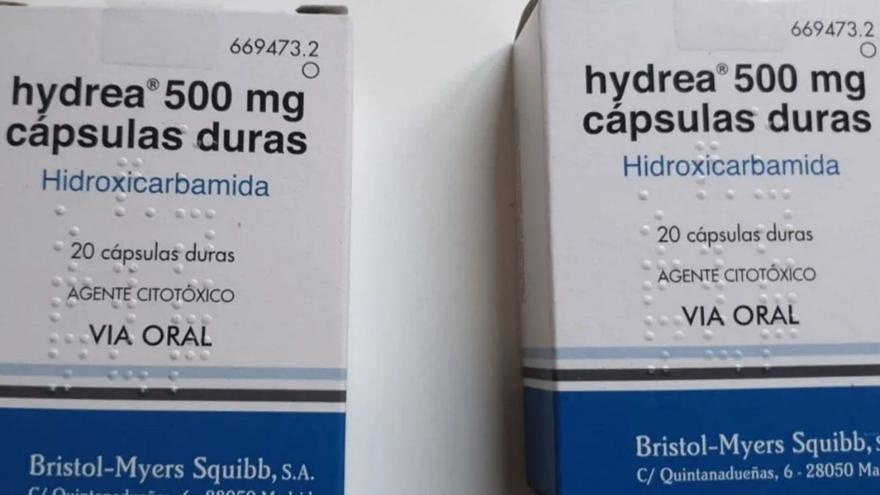
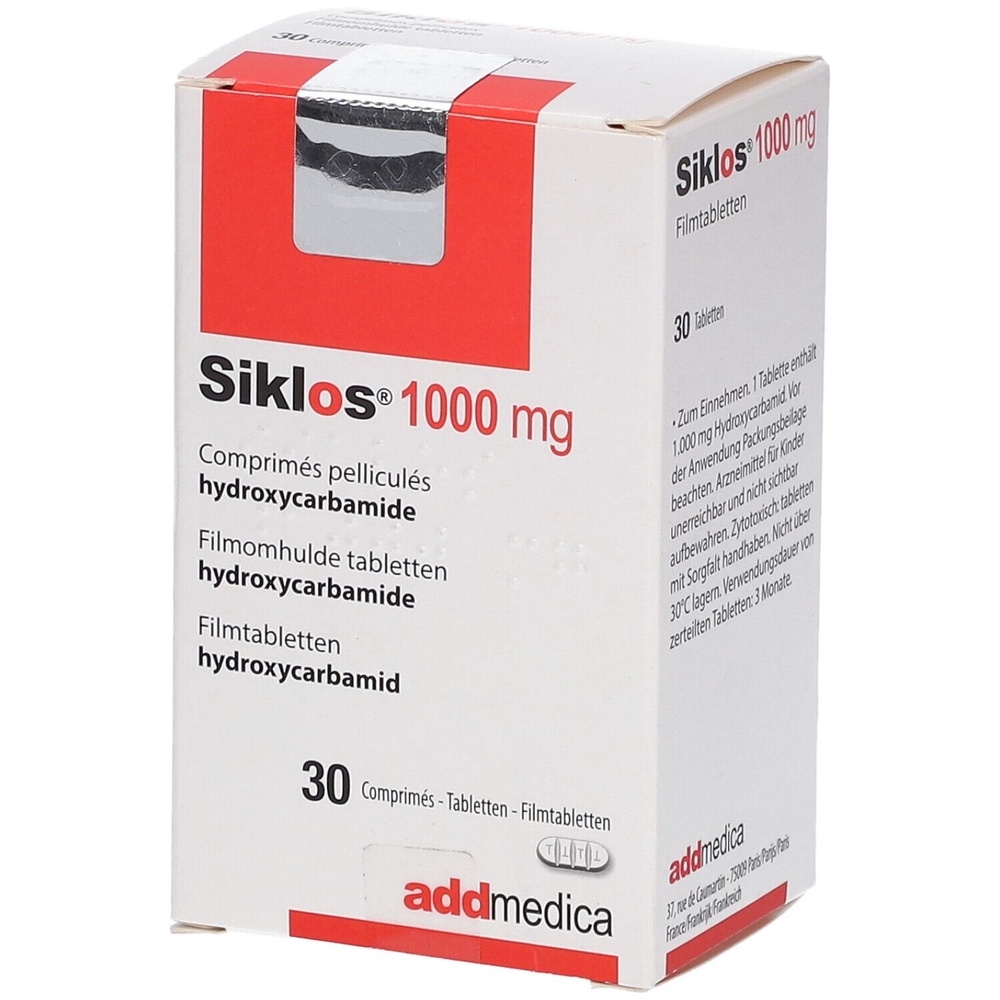
- Alternatives to HYDROXYCARBAMIDE HIKMA 500 mg HARD CAPSULESDosage form: CAPSULE, 500 mgActive substance: hydroxycarbamideManufacturer: Medac Gesellschaft Für Klinische Spezialpräparate GmbhPrescription requiredDosage form: CAPSULE, 500 mgActive substance: hydroxycarbamideManufacturer: Cheplapharm Arzneimittel GmbhPrescription requiredDosage form: TABLET, 1000 mgActive substance: hydroxycarbamideManufacturer: TheraviaPrescription required

Online doctors for HYDROXYCARBAMIDE HIKMA 500 mg HARD CAPSULES
Discuss questions about HYDROXYCARBAMIDE HIKMA 500 mg HARD CAPSULES, including use, safety considerations and prescription review, subject to medical assessment and local regulations.


Frequently Asked Questions
