


ESOMEPRAZOL VIATRIS 40 mg GASTRO-RESISTANT TABLETS



How to use ESOMEPRAZOL VIATRIS 40 mg GASTRO-RESISTANT TABLETS
Translated with AI
This page provides general information and does not replace a doctor’s consultation. Always consult a doctor before taking any medication. Seek urgent medical care if symptoms are severe.
Show originalContents of the leaflet
Introduction
Package Leaflet: Information for the Patient
Esomeprazol Viatris 40 mg Gastro-Resistant Tablets EFG
Esomeprazol
Read all of this leaflet carefully before you start taking this medicine because it contains important information for you.
- Keep this leaflet, you may need to read it again.
- If you have any further questions, ask your doctor or pharmacist.
- This medicine has been prescribed for you only. Do not pass it on to others. It may harm them, even if their signs of illness are the same as yours.
- If you get any side effects, talk to your doctor or pharmacist. This includes any possible side effects not listed in this leaflet. See section 4.
Contents of the pack and other information:
- What is Esomeprazol Viatris and what is it used for
- What you need to know before you take Esomeprazol Viatris
- How to take Esomeprazol Viatris
- Possible side effects
- Storage of Esomeprazol Viatris
- Contents of the pack and other information
1. What is Esomeprazol Viatris and what is it used for
Esomeprazol Viatris contains the active substance esomeprazol. It belongs to a group of medicines called proton pump inhibitors. These work by reducing the amount of acid produced by the stomach.
Esomeprazol Viatris is used to treat the following conditions:
Adults
- Gastroesophageal reflux disease (GERD). This is where acid from the stomach escapes into the gullet (the tube which carries food from the mouth to the stomach) causing pain and inflammation.
- Ulcers in the stomach or duodenum (the tube leading out of the stomach) caused by infection with a bacterium called Helicobacter pylori. If you have this condition, your doctor may also prescribe antibiotics to treat the infection and allow the ulcer to heal.
- Ulcers in the stomach caused by medicines called non-steroidal anti-inflammatory drugs (NSAIDs). Esomeprazol Viatris can also be used to prevent ulcers in the stomach or duodenum if you are taking NSAIDs.
- Too much acid in the stomach caused by a growth in the pancreas (Zollinger-Ellison syndrome).
- Prevention of rebleeding of gastric or duodenal ulcers with esomeprazol intravenous.
Adolescents aged 12 years and above
- Gastroesophageal reflux disease (GERD). This is where acid from the stomach escapes into the gullet (the tube which carries food from the mouth to the stomach) causing pain and inflammation.
- Ulcers in the stomach or duodenum that are infected with a bacterium called Helicobacter pylori. If you have this condition, your doctor may also prescribe antibiotics to treat the infection and allow the ulcer to heal.

2. What you need to know before you take Esomeprazol Viatris
Do not take Esomeprazol Viatris
- If you are allergic (hypersensitive) to esomeprazol or any of the other ingredients of this medicine (listed in section 6).
- If you are allergic to other proton pump inhibitors (e.g. pantoprazole, lansoprazole, rabeprazole, omeprazol).
- If you are taking a medicine that contains nelfinavir (used to treat HIV infection).
- If you have ever had a skin reaction after treatment with a medicine that reduces stomach acid.
If any of these apply to you, do not take esomeprazol. If you are not sure, consult your doctor or pharmacist before taking this medicine.
Warnings and precautions
Consult your doctor or pharmacist before taking Esomeprazol Viatris:
- If you have severe liver problems.
- If you have severe kidney problems.
-
- If you have ever had a skin reaction after treatment with a medicine that reduces stomach acid.
- If you are due to have a specific blood test (Chromogranin A).
If you get a rash on your skin, especially in areas exposed to the sun, tell your doctor as soon as possible, as you may need to stop your treatment with Esomeprazol Viatris. Also remember to mention any other symptoms you might notice, such as joint pain.
Esomeprazol Viatris may hide the symptoms of other diseases. Therefore, if you notice any of the following before or while you are taking Esomeprazol Viatris, contact your doctor immediately:
- You lose a lot of weight for no reason and have problems swallowing.
- You have stomach pain or indigestion.
- You start vomiting food or blood.
- Your stools are black (blood-stained).
If you are taking esomeprazol on demand and your symptoms persist or come back, consult your doctor.
If you are taking proton pump inhibitors like esomeprazol, especially over a period of more than one year, you may be at increased risk of fracture of the hip, wrist, or spine. Inform your doctor if you have osteoporosis or if you are taking corticosteroids (which may increase the risk of osteoporosis).
Skin rash and skin symptoms
If you get a rash on your skin, especially in areas exposed to the sun, tell your doctor as soon as possible, as you may need to stop your treatment with esomeprazol. Also remember to mention any other symptoms you might notice, such as joint pain.
Severe skin reactions, including Stevens-Johnson syndrome, toxic epidermal necrolysis, drug rash with eosinophilia and systemic symptoms (DRESS), and acute generalized exanthematous pustulosis have been reported in association with esomeprazol treatment (see section 4). Stop taking esomeprazol and contact your doctor immediately if you notice any of the following symptoms: severe skin rash, blisters, or a skin rash that covers a large area of your body, sores in your mouth, or redness and swelling of your eyes (conjunctivitis), and/or any signs of high fever or enlarged lymph nodes.
If at any time during esomeprazol treatment (even after several weeks) you experience a rash (even if it is not severe and/or includes eruptions in the mouth), or any of these symptoms, stop taking esomeprazol and contact your doctor immediately.
Using Esomeprazol Viatris with other medicines
Tell your doctor or pharmacist if you are taking, have recently taken or might take any other medicines.
This is because Esomeprazol Viatris may affect the way some medicines work and some medicines may affect the way Esomeprazol Viatris works.
Do not take Esomeprazol Viatris if you are taking a medicine that contains nelfinavir (used to treat HIV infection).
Tell your doctor or pharmacist if you are taking any of the following medicines:
- Atazanavir (used to treat HIV infection).
- Clopidogrel (used to prevent blood clots).
- Ketoconazole, itraconazole or voriconazole (used to treat fungal infections).
- Erlotinib (used to treat cancer).
- Citalopram, imipramine, clomipramine (used to treat depression).
- Diazepam (used to treat anxiety, relax muscles or in epilepsy).
- Phenytoin (used in epilepsy). If you are taking phenytoin, your doctor may need to monitor you when you start or stop taking Esomeprazol Viatris.
- Medicines that are used to thin the blood, such as warfarin. Your doctor may need to monitor you when you start or stop taking Esomeprazol Viatris.
- Cilostazol (used to treat intermittent claudication – a pain in your legs when you walk which is caused by an insufficient blood supply).
- Cisapride (used for indigestion and heartburn).
- Digoxin (used for heart problems).
- Methotrexate (a chemotherapy medicine used to treat cancer) – if you are taking high doses of methotrexate, your doctor may temporarily stop your Esomeprazol Viatris treatment.
- Tacrolimus (used after organ transplantation).
- Rifampicin (used to treat tuberculosis).
- St John’s Wort (Hypericum perforatum) (used to treat depression).
If your doctor has prescribed the antibiotics amoxicillin and clarithromycin with Esomeprazol Viatris to treat ulcers caused by Helicobacter pylori, it is very important that you tell your doctor about any other medicines you are taking.
Taking Esomeprazol Viatris with food and drink
You can take the tablets with or without food.
Pregnancy, breast-feeding and fertility
If you are pregnant or breast-feeding, think you may be pregnant or are planning to have a baby, ask your doctor or pharmacist for advice before taking this medicine.
Your doctor will decide whether you can take Esomeprazol Viatris during this time.
It is not known if Esomeprazol Viatris passes into breast milk. Therefore, you should not take Esomeprazol Viatris during breast-feeding.
Driving and using machines
Esomeprazol Viatris is unlikely to affect your ability to drive or use any tools or machines. However, side effects such as dizziness and blurred vision (see section 4) may occur. Do not drive or use any tools or machines if you are affected in this way.
Esomeprazol Viatris contains sugar
This medicine contains sugar spheres which contain sucrose, a type of sugar.
If your doctor has told you that you have an intolerance to some sugars, contact them before taking this medicine.
Esomeprazol Viatris contains sodium
This medicine contains less than 1 mmol sodium (23 mg) per gastro-resistant tablet, i.e. essentially “sodium-free”.
3. How to take Esomeprazol Viatris
Always take this medicine exactly as your doctor has told you. Check with your doctor or pharmacist if you are not sure.
- If you are taking this medicine for a long time, your doctor will want to regularly check your condition, especially if you are taking it for more than a year.
- If your doctor has told you to take this medicine as and when you need it, tell your doctor if your symptoms change.
How much to take
- Your doctor will tell you how many tablets to take and for how long. This will depend on your condition, age and how well your liver works.
- The recommended dose is described below:
Adults aged 18 years and above
To treat gastroesophageal reflux disease (GERD):
- If your doctor has found that your gullet (oesophagus) is slightly damaged, the recommended dose is one 40 mg tablet once a day for 4 weeks. Your doctor may tell you to take the same dose for another 4 weeks if your oesophagus has not yet healed.
- The recommended dose once the oesophagus has healed is one 20 mg tablet once a day.
- If your oesophagus has not been damaged, the recommended dose is one 20 mg tablet each day.
- Once the condition has been controlled, your doctor may tell you to take your medicine as and when you need it, up to a maximum of one 20 mg tablet each day.
- If you have severe liver problems, your doctor may give you a lower dose.
To treat ulcers caused by Helicobacter pylori infection and to stop them coming back:
- The recommended dose is one 20 mg tablet twice a day for one week. Your doctor will also prescribe two antibiotics called amoxicillin and clarithromycin.
To treat stomach ulcers caused by NSAIDs (non-steroidal anti-inflammatory drugs):
- The recommended dose is one 20 mg tablet once a day for 4-8 weeks.
To prevent stomach ulcers or ulcers in the duodenum if you are taking NSAIDs (non-steroidal anti-inflammatory drugs):
- The recommended dose is one 20 mg tablet once a day.
To treat too much acid in the stomach caused by a growth in the pancreas (Zollinger-Ellison syndrome):
- The recommended dose is one 40 mg gastro-resistant tablet twice a day. Your doctor will adjust the dose depending on your needs and will also decide how long you need to take the medicine for. The maximum dose is 80 mg twice a day.
Prevention of rebleeding of gastric or duodenal ulcers with esomeprazol intravenous:
- The recommended dose is one 40 mg gastro-resistant tablet once a day for 4 weeks.
Use in adolescents aged 12 years and above
To treat gastroesophageal reflux disease (GERD):
- If your doctor has found that your oesophagus is slightly damaged, the recommended dose is one 40 mg gastro-resistant tablet once a day for 4 weeks. Your doctor may tell you to take the same dose for another 4 weeks if your oesophagus has not yet healed.
- Once the oesophagus has healed, the recommended dose is one 20 mg gastro-resistant tablet once a day.
- If your oesophagus has not been damaged, the recommended dose is one 20 mg gastro-resistant tablet once a day.
- If you have severe liver problems, your doctor may give you a lower dose.
To treat ulcers caused by Helicobacter pylori infection and to stop them coming back:
- The recommended dose is one 20 mg gastro-resistant tablet twice a day for one week. Your doctor will also prescribe two antibiotics called amoxicillin and clarithromycin.
Taking this medicine
- You can take the tablets at any time of the day.
- You can take the tablets with or without food.
- Swallow the tablets whole with a glass of water. Do not chew or crush the tablets. This is because the tablets contain coated pellets which stop the medicine from being broken down by the acid in your stomach. It is important not to damage the pellets.
What to do if you have difficulty swallowing the tablets
If you have difficulty swallowing the tablets:
- Put the tablet into half a glass of non-fizzy water.
- Do not use other liquids.
- Stir until the tablet breaks up (the mixture will not be clear). You can take the mixture immediately or within 30 minutes. Always stir well before taking.
- To make sure you get the full dose, rinse the glass with half a glass of water and drink it.
The solid particles contain the medicine - do not chew or crush them.
If you cannot swallow at all, the tablets can be dispersed in water and given through a gastric tube.
Children under 12 years
Esomeprazol gastro-resistant tablets are not recommended for children under 12 years.
Elderly
No dose adjustment is necessary for the elderly.
If you take more Esomeprazol Viatris than you should
If you take more Esomeprazol Viatris than you should, contact your doctor or pharmacist immediately.
In case of overdose or accidental ingestion, contact your doctor or pharmacist immediately or call the national toll free poison help line at 1-800-222-1222 (US only).
If you forget to take Esomeprazol Viatris
- If you forget to take a dose, take it as soon as you remember, unless it is almost time to take the next dose.
- Do not take a double dose to make up for a forgotten dose.
If you have any further questions on the use of this medicine, ask your doctor or pharmacist.

4. Possible Adverse Effects
Like all medicines, Esomeprazol Viatris can cause adverse effects, although not all people suffer from them.
If you notice any of the following serious adverse effects, stop taking esomeprazol and consult your doctor immediately:- Yellowish skin, dark-colored urine, and fatigue that can be symptoms of liver problems. These adverse effects are rare and may affect up to 1 in 1,000 people.
- A sudden difficulty breathing, swelling of the lips, tongue, and throat or body, skin rash, feeling of dizziness or difficulty swallowing (severe allergic reaction).
These effects are rare and may affect up to 1 in 1,000 people.
- Widespread rash, high body temperature, and enlargement of lymph nodes (DRESS syndrome or drug hypersensitivity syndrome), which is very rarely observed.
- Sudden appearance of a severe skin rash or redness of the skin with blisters or peeling, even after several weeks of treatment. There may also be severe blisters and bleeding of the lips, eyes, mouth, nose, and genitals. Skin rashes can become severe and widespread skin damage (exfoliation of the epidermis and superficial mucous membranes) with potentially fatal consequences. This could be a "multiform erythema", "Stevens-Johnson syndrome", "toxic epidermal necrolysis", or "drug reaction with eosinophilia and systemic symptoms".
These effects are very rare and may affect up to 1 in 10,000 people.
Other adverse effects include:
Frequent (may affect up to 1 in 10 people)
- Headache.
- Effects on your stomach or intestine: diarrhea, stomach pain, constipation, flatulence.
- Feeling of dizziness (nausea) or discomfort (vomiting).
- Benign polyps in the stomach.
Infrequent (may affect up to 1 in 100 people)
- Swelling of feet and ankles.
- Sleep disturbances (insomnia).
- Dizziness, tingling sensation, numbness.
- Feeling of vertigo.
- Dry mouth.
- Changes in blood tests that control how your liver works.
- Skin rash, hives (urticaria), and itching of the skin.
- Fracture of the hip, wrist, or spine (if Esomeprazol is taken at high doses or for long periods).
Rare (may affect up to 1 in 1,000 people)
- Blood problems such as a reduced number of white blood cells or platelets. This causes weakness, bruising, or infections occur more frequently.
- Low sodium levels in the blood. This can cause weakness, discomfort (vomiting), and cramps.
- Feeling of agitation, confusion, or depression.
- Changes in taste.
- Vision problems such as blurred vision.
- Sudden feeling of difficulty breathing or shortness of breath (bronchospasm).
- Inflammation of the inside of the mouth.
- An infection called "candidiasis" that can affect the intestine and is caused by a fungus.
- Liver problems, including jaundice, which can cause yellowish skin, dark urine, and fatigue.
- Hair loss (alopecia).
- Skin rash after sun exposure.
- Joint pain (arthralgia) or muscle pain (myalgia).
- Feeling of general discomfort and lack of energy.
- Increased sweating.
Very rare(may affect up to 1 in 10,000 people)
- Changes in blood count, including agranulocytosis (lack of white blood cells).
- Aggression.
- Seeing, feeling, or hearing things that do not exist (hallucinations).
- Severe liver problems leading to liver failure and brain inflammation.
- Sudden appearance of a severe rash or blisters or peeling of the skin. This may be associated with a high fever and joint pain (multiform erythema, Stevens-Johnson syndrome, toxic epidermal necrolysis, drug reaction with eosinophilia and systemic symptoms).
- Muscle weakness.
- Severe kidney problems.
- Enlargement of the breasts in men.
Frequency unknown (cannot be estimated from available data)
- If you are treated with esomeprazol for more than three months, it is possible that your magnesium levels in the blood may decrease. Low magnesium levels in the blood can cause fatigue, muscle contractions, disorientation, convulsions, dizziness, and increased heart rate. If you experience any of these symptoms, inform your doctor immediately. Low magnesium levels in the blood can also cause a reduction in potassium and calcium levels in the blood. Your doctor may decide to perform periodic blood tests to monitor your magnesium levels.
- Inflammation of the intestine (causing diarrhea).
- Skin rash, possibly with joint pain.
In very rare cases, Esomeprazol can affect white blood cells, causing an immune deficiency. If you have an infection with symptoms such as fever with a severeworsening of your general condition or fever with symptoms of a local infection such as pain in the neck, throat, mouth, or difficulty urinating, you should consult your doctor as soon as possible to rule out a decrease in the number of white blood cells (agranulocytosis) through a blood test. It is important that, in this case, you inform about your medication.
Reporting of adverse effects
If you experience any type of adverse effect, consult your doctor or pharmacist, even if it is a possible adverse effect that is not listed in this prospectus. You can also report them directly through the Spanish Pharmacovigilance System for Human Use Medicines: www.notificaram.es. By reporting adverse effects, you can contribute to providing more information on the safety of this medicine.
5. Conservation of Esomeprazol Viatris
Keep out of sight and reach of children.
Do not use this medicine after the expiration date indicated on the packaging and on the blister pack after CAD. The expiration date is the last day of the month indicated.
Do not store at a temperature above 30°C.
Keep in the original packaging (blister pack) to protect it from moisture.
Medicines should not be thrown down the drain or into the trash. Deposit the packaging and medicines you no longer need at the SIGRE Point in the pharmacy. In case of doubt, ask your pharmacist how to dispose of the packaging and medicines you no longer need. This will help protect the environment.
6. Package contents and additional information
Composition of Esomeprazol Viatris
- The active ingredient is Esomeprazol. Each tablet contains 40 mg of esomeprazol as amorphous magnesium salt.
- The other components are:
Core of the tablet: Hydroxypropylcellulose (E-463), Crospovidone (Type A), Coating:Povidone (K30), Macrogol 400, Macrogol 4000, Macrogol 6000, Hypromellose phthalate (HP-55S), Hypromellose phthalate (HP-50), Diethyl phthalate, Hydroxypropylcellulose, Microcrystalline cellulose (PH 101), Microcrystalline cellulose (PH 112), Crospovidone (Type B), Sodium stearyl fumarate, Opadry 03B86651 Brown (HMPC 2910/Hypromellose 6cP, titanium dioxide (E171), Macrogol/PEG 400, red iron oxide (E172)), Sugar spheres (sucrose and cornstarch), Talc (E553b) (see section 2 "Esomeprazol Viatris contains sucrose").
Appearance of Esomeprazol Viatris and package contents
Esomeprazol Viatris are film-coated tablets, oval, biconvex, and light brick red to brown in color, with the inscription "E6" in low relief on one side and smooth on the other side.
The medicine is presented in OPA-Al-PE-desiccant-HDPE/Alu and Polyamide/Al/PVC/Al blister packs of 14, 28, and 56 tablets.
Only some pack sizes may be marketed.
Marketing Authorization Holder
Viatris Limited
Damastown Industrial Park
Mulhuddart, Dublin 15
DUBLIN
Ireland
Manufacturer
Sun Pharmaceutical Industries Europe B.V.
Polarisavenue 87
2132JH Hoofddorp
Netherlands
or
Terapia S.A.
124 Fabricii Street,
400 632 Cluj Napoca
Romania
You can request more information about this medicine by contacting the local representative of the marketing authorization holder:
Viatris Pharmaceuticals, S.L.U.
C/ General Aranaz, 86
28027- Madrid
Spain
This prospectus has been approved in the following EEE countries with the following names:
Spain:Esomeprazol Viatris 40 mg gastro-resistant tablets EFG
Italy:Ezoran 40 mg Gastro-resistant tablets
Portugal:Esomeprazol Pharmakern 40 mg gastro-resistant tablets
Date of the last revision of this prospectus:February 2025
Detailed and updated information on this medicine is available on the website of the Spanish Agency for Medicines and Health Products (AEMPS) http://www.aemps.gob.es/
------------------------------------------------------------------------------------------------------------------
This information is intended only for healthcare professionals:
Administration through a gastric tube:
- Insert the tablet into a suitable syringe and fill the syringe with approximately 25 ml of water and approximately 5 ml of air. For some tubes, dispersion in 50 ml of water is required to prevent the pellets from clogging the tube.
- Shake the syringe immediately for approximately 2 minutes to disperse the tablet.
- Hold the syringe with the tip up and check that the tip is not clogged.
- Connect the syringe to the tube while maintaining the previous position.
- Shake the syringe and place it with the tip down. Inject immediately 5-10 ml into the tube. Invert the syringe after injection and shake (the syringe must be kept with the tip up to prevent clogging of the tip).
- Put the syringe back with the tip down and inject immediately another 5-10 ml into the tube. Repeat this procedure until the syringe is empty.
- Fill the syringe with 25 ml of water and 5 ml of air and repeat step 5 if necessary to flush any sediment remaining in the syringe. For some tubes, 50 ml of water are required.
- Country of registration
- Average pharmacy price25.1 EUR
- Active substance
- Prescription requiredYes
- Manufacturer
- This information is for reference only and does not constitute medical advice. Always consult a doctor before taking any medication. Oladoctor is not responsible for medical decisions based on this content.
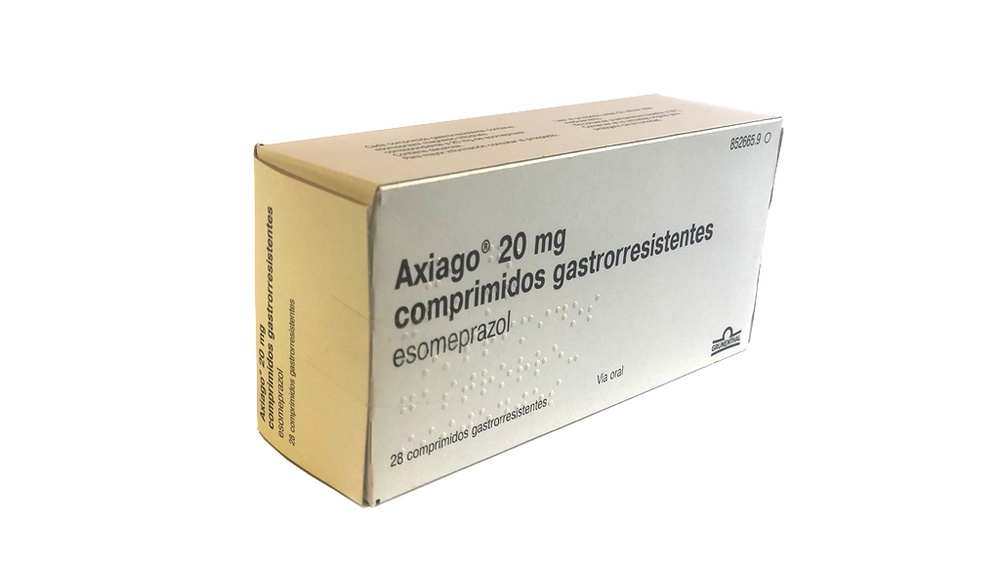
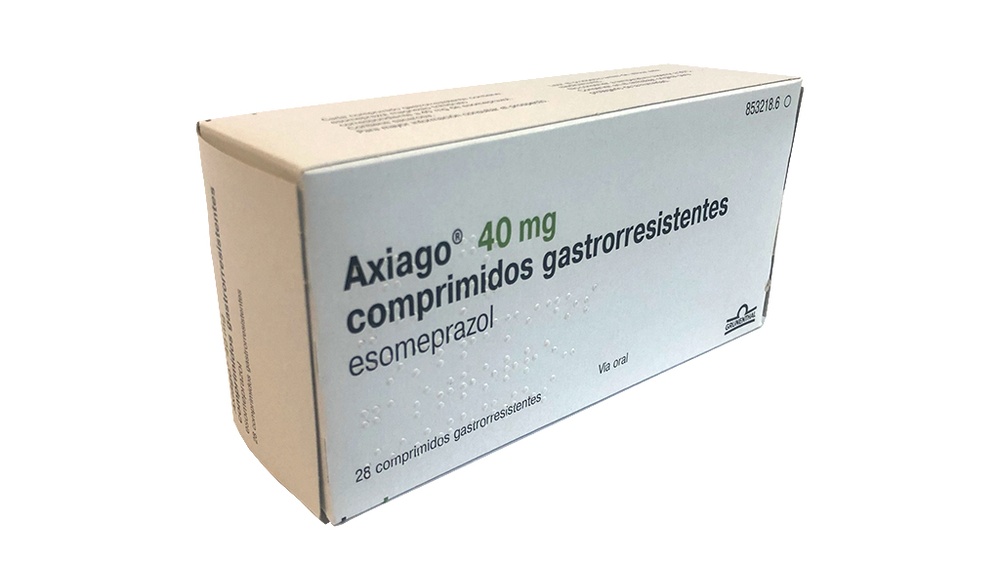
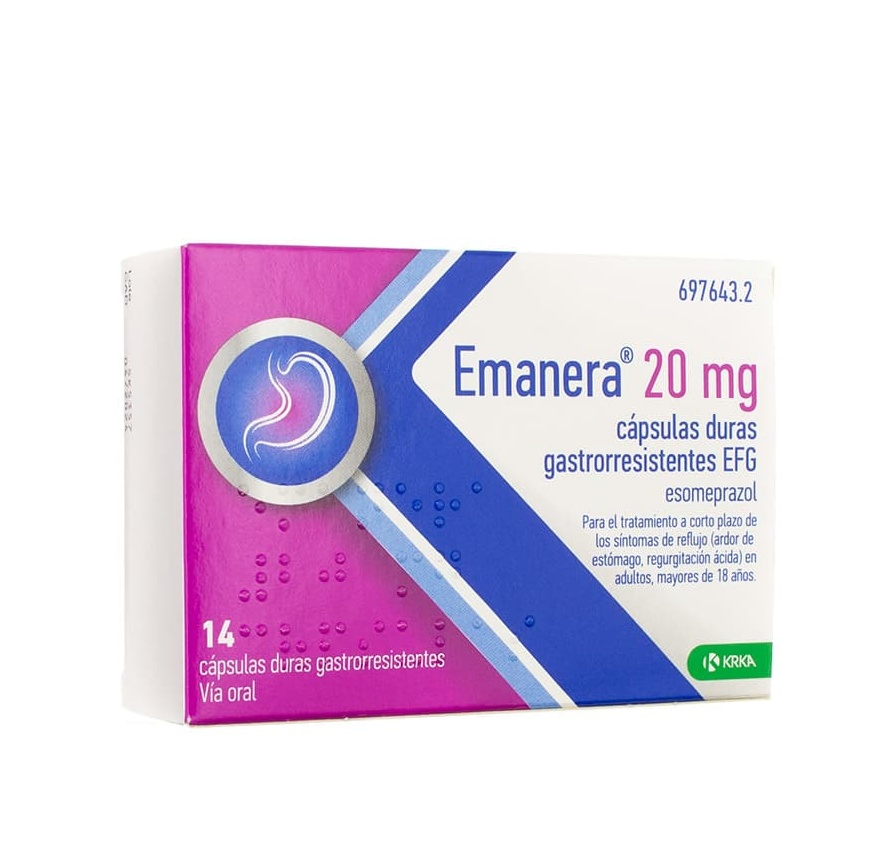
- Alternatives to ESOMEPRAZOL VIATRIS 40 mg GASTRO-RESISTANT TABLETSDosage form: TABLET, 20 mg esomeprazoleActive substance: esomeprazoleManufacturer: Grünenthal Pharma S.A.Prescription requiredDosage form: TABLET, 40 mg esomeprazoleActive substance: esomeprazoleManufacturer: Grünenthal Pharma S.A.Prescription requiredDosage form: CAPSULE, 20 mgActive substance: esomeprazoleManufacturer: Krka D.D. Novo MestoPrescription not required
Online doctors for ESOMEPRAZOL VIATRIS 40 mg GASTRO-RESISTANT TABLETS
Discuss questions about ESOMEPRAZOL VIATRIS 40 mg GASTRO-RESISTANT TABLETS, including use, safety considerations and prescription review, subject to medical assessment and local regulations.











Frequently Asked Questions
