


DICLOFENAC SANDOZ CARE 23.2 mg/g GEL



How to use DICLOFENAC SANDOZ CARE 23.2 mg/g GEL
Translated with AI
This page provides general information and does not replace a doctor’s consultation. Always consult a doctor before taking any medication. Seek urgent medical care if symptoms are severe.
Show originalContents of the leaflet
Introduction
Leaflet:information for the patient
Diclofenac Sandoz Care 23.2 mg/g gel
diclofenac diethylamine
Read the entire leaflet carefullybefore starting to use thismedication,as it contains important informationfor you
Follow the administration instructions of the medication contained in this leaflet or as indicated by your doctor or pharmacist exactly.
- Keep this leaflet, as you may need to read it again.
- If you need advice or more information, consult your pharmacist.
- If you experience side effects, consult your doctor or pharmacist, even if they are side effects not listed in this leaflet. See section 4.
- You should consult a doctor if it worsens or does not improve after 7 days.
Contents of the leaflet
- What is Diclofenac Sandoz Care and what is it used for
- What you need to know before starting to use Diclofenac Sandoz Care
- How to use Diclofenac Sandoz Care
- Possible side effects
5 Conservation of Diclofenac Sandoz Care
- Contents of the packaging and additional information
1. What is Diclofenac Sandoz Care and what is it used for
Diclofenac Sandoz Care contains the active ingredient diclofenac diethylamine, which belongs to a group of medications called non-steroidal anti-inflammatory drugs (NSAIDs).
Diclofenac is used in adults and adolescents from 14 years:
for the treatment of mild to moderate pain associated with muscle and joint injuries, such as sports injuries.
This medication is intended for short-term treatments.

2. What you need to know before starting to use Diclofenac Sandoz Care
Do not use Diclofenac Sandoz Care:
- if you are allergic to
- diclofenac,
- other medications used to treat pain, fever, or inflammation, such as ibuprofen or acetylsalicylic acid (a substance also used to prevent blood clotting) or
- any of the other components of this medication (listed in section 6).
The symptoms of an allergic reaction may include: wheezing or difficulty breathing (asthma; bronchospasm); skin rash with blisters or hives; swelling of the face, tongue, or throat; nasal discharge.
If you are not sure, consult your doctor or pharmacist.
- If you are in the last 3 months of pregnancy.
- In children and adolescents under 14 years.
Warnings and precautions
Consult your doctor or pharmacist before starting to use diclofenac if:
You are more prone than other patients to suffer from asthma attacks (so-called analgesic/asthma intolerance), local skin or mucous membrane inflammation (so-called Quincke's edema) or hives if you have asthma, hay fever, nasal membrane inflammation (so-called nasal polyps) or chronic obstructive pulmonary disease, chronic respiratory tract infections (especially those associated with symptoms of hay fever) or hypersensitivity to other analgesic and anti-rheumatic medications of any type.
In these patients, diclofenac can only be used under certain precautions (preparation for emergencies) and direct medical supervision. The sample applies to patients who are also allergic to other substances, e.g., with skin reactions, itching, or hives.
When diclofenac is applied to a large area of the skin and for a prolonged period, the possibility of systemic side effects derived from the application of diclofenac cannot be excluded.
Apply diclofenac only to intact, healthy skin, not diseased or damaged skin. Avoid contact with the eyes and oral mucosa. The gel should not be ingested orally.
After applying the gel to the skin, you can use a non-occlusive (permeable) dressing, but let the gel dry on the skin for a few minutes. Do not use an occlusive, airtight dressing.
If the symptoms worsen or do not improve after 7 days, consult a doctor.
The use of diclofenac should be discontinued if a skin rash develops.
Avoid exposure to the sun, including sunlamps, when using this medication.
Avoid letting children touch the area where the gel is applied.
Children and adolescents
Diclofenac is contraindicated in children and adolescents under 14 years.
Other medications and Diclofenac Sandoz Care
Tell your doctor or pharmacist if you are using, have recently used, or may need to use any other medication.
In the intended cutaneous use of diclofenac, no interactions have been known so far.
Pregnancy and breastfeeding
If you are pregnant or breastfeeding, think you may be pregnant, or plan to become pregnant, consult your doctor or pharmacist before using this medication.
Pregnancy
Do not use diclofenac if you are in the last 3 months of pregnancy. Do not use diclofenac during the first 6 months of pregnancy unless it is clearly necessary and your doctor advises you to do so. If you need treatment during this period, you should use the lowest dose for the shortest possible time.
Oral forms (e.g., tablets) of the diclofenac formulation may produce adverse effects on the fetus. It is unknown whether the same risk applies to diclofenac when used on the skin.
Breastfeeding
Diclofenac should only be used under medical advice during breastfeeding, as diclofenac passes into breast milk in small amounts. Do not apply diclofenac to the breasts if you are a breastfeeding mother, or to other large areas of the skin or for a prolonged period.
Driving and using machines
Diclofenac does not affect or slightly affects the ability to drive or use machines.
Effects of other ingredients (excipients)
Diclofenac Sandoz Care contains:
- 50 mg of propylene glycol (E1520) per gram of gel, which may cause skin irritation,
- 0.2 mg of butylhydroxytoluene (E321) per gram of gel, which may cause local skin reactions (e.g., contact dermatitis) or eye and mucous membrane irritation,
- up to 0.01 mg of hexyl benzoate per gram of gel, which may cause local irritation,
- fragrance with citral and eugenol, which may cause allergic reactions. In addition to allergic reactions in sensitized patients, non-sensitized patients may become sensitized.

3. How to take Diclofenac Sandoz Care
Follow the administration instructions of this medication contained in this leaflet or as indicated by your doctor or pharmacist exactly. In case of doubt, consult your doctor or pharmacist again.
Adults and adolescents from 14 years
Diclofenac is used 2 times a day (preferably in the morning and at night).
Depending on the size of the affected area to be treated, a quantity the size of a cherry to a walnut is required, corresponding to 2-4 g of gel.
The maximum daily dose is 8 g of gel.
Elderly patients
No special dose adjustment is necessary. If you are an elderly patient, you should pay special attention to side effects and, if necessary, consult a doctor or pharmacist.
Renal and hepatic impairment
No dose reduction is necessary.
Use in children and adolescents (under 14 years)
This medication is contraindicated in children and adolescents under 14 years (see section 2 "Do not use Diclofenac Sandoz Care").
Mode of application
Before using it for the first time, remove the plastic seal from the tube. Do not use if the seal is broken.
Diclofenac is for cutaneous use only (it should only be used on the skin).
The gel is applied to the affected parts of the body in a thin layer and gently rubbed into the skin. Then, the hands should be cleaned with a paper towel and then washed, unless the hands are the area being treated.
If too much gel is accidentally applied, the excess should be wiped off with a paper towel.
The paper towel should be thrown away in household waste to prevent unused product from entering the aquatic environment.
Before applying a dressing, the gel should be allowed to dry on the skin for a few minutes.
Duration of treatment
The duration of treatment depends on the symptoms and the underlying disease.
This medication should not be used for more than 7 days without medical advice.
If the symptoms worsen or do not improve after 7 days, a doctor should be consulted.
If you use more Diclofenac Sandoz Care than you should
It is unlikely that an overdose will occur if you use more diclofenac than you should, as absorption into the bloodstream is low when used on the skin. If you significantly exceed the recommended dose when used on the skin, the gel should be removed and washed with water.
If you accidentally ingest this medication, contact your doctor immediately.
If you forget to use Diclofenac Sandoz Care
If you forget a dose, apply it as soon as possible. Do not use a double dose to make up for the forgotten dose.
If you have any other doubts about the use of this medication, ask your doctor or pharmacist.
4. Possible side effects
Like all medications, this medication can cause side effects, although not everyone will experience them.
Some rare and very rare side effects can be serious.
If you experience any of the following signs of an allergic reaction, stopusing diclofenac and inform your doctor or pharmacist immediately:
- Blistering skin rash; hives (rare: may affect up to 1 in 1,000 people).
- Wheezing, difficulty breathing, or feeling of chest tightness (asthma) (very rare: may affect up to 1 in 10,000 people).
- Swelling of the face, lips, tongue, or throat (very rare: may affect up to 1 in 10,000 people)
Other possible side effects:
Frequentside effects (may affect up to 1 in 10 people):
- Skin rash, itching, redness, eczema, dermatitis (including contact dermatitis).
Very rareside effects (may affect up to 1 in 10,000 people)
- Pustular rash.
- Hypersensitivity reactions (including hives).
- Photosensitivity with the appearance of skin reactions after exposure to sunlight.
When diclofenac is applied to a large area of the skin and for a prolonged period, the possibility of systemic side effects (e.g., renal, hepatic, or gastrointestinal side effects, systemic hypersensitivity reactions), such as those that may occur after systemic administration of medications containing diclofenac, cannot be completely excluded.
Reporting side effects
If you experience any side effects, consult your doctor or pharmacist, even if they are side effects not listed in this leaflet. You can also report them directly through the Spanish Medication Surveillance System for Human Use: https://www.notificaram.es. By reporting side effects, you can contribute to providing more information on the safety of this medication.
5. Conservation of Diclofenac Sandoz Care
Keep this medication out of sight and reach of children.
Do not use this medication after the expiration date shown on the tube after CAD/EXP. The expiration date is the last day of the month indicated.
Store below 25°C. Do not refrigerate or freeze.
Do not use this medication if you observe visible signs of deterioration.
Medications should not be thrown away in drains or household waste. Deposit the packaging and medications you no longer need in the SIGRE collection point at the pharmacy. If in doubt, ask your pharmacist how to dispose of the packaging and medications you no longer need. This will help protect the environment.
6. Contents of the packaging and additional information
Composition of Diclofenac Sandoz Care
- The active ingredient is diclofenac diethylamine. 1 gram of gel contains 23.2 mg of diclofenac diethylamine, equivalent to 20 mg of diclofenac sodium.
- The other ingredients are: propylene glycol (E1520), oleic alcohol, isopropyl alcohol, butylhydroxytoluene (E321), diethylamine, light liquid paraffin, macrogol stearate, carbomer 980 F, coco-caprylate/caprate, perfumed cream 45399 (containing hexyl benzoate, citral, eugenol), and purified water.
Appearance of the product and contents of the packaging
Diclofenac Sandoz Care is a white, viscous gel with a characteristic fragrance and a pH between 6.5 and 8.0.
The gel is presented in a laminated aluminum tube with a high-density polyethylene layer sealed with a top seal and a polypropylene cap.
Packaging sizes: 50 g, 100 g, 150 g, and 180 g tubes.
Not all packaging sizes may be marketed.
Marketing authorization holder and manufacturer
Marketing authorization holder
Sandoz Farmacéutica, S.A.
Centro Empresarial Parque Norte
Edificio Roble
C/ Serrano Galvache, 56
28033 Madrid
Spain
Manufacturer
Kern Pharma, S.L.
Venus 72
Polígono Ind. Colón II
08228 Terrassa
Barcelona
or
Lek Pharmaceuticals d.d.
Verovškova 57
1526 Ljubljana
Slovenia
Date of the last revision of this leaflet:February 2025.
Detailed information about this medication is available on the website of the Spanish Agency for Medicines and Health Products (AEMPS) http://www.aemps.gob.es/
- Country of registration
- Active substance
- Prescription requiredNo
- Manufacturer
- This information is for reference only and does not constitute medical advice. Always consult a doctor before taking any medication. Oladoctor is not responsible for medical decisions based on this content.
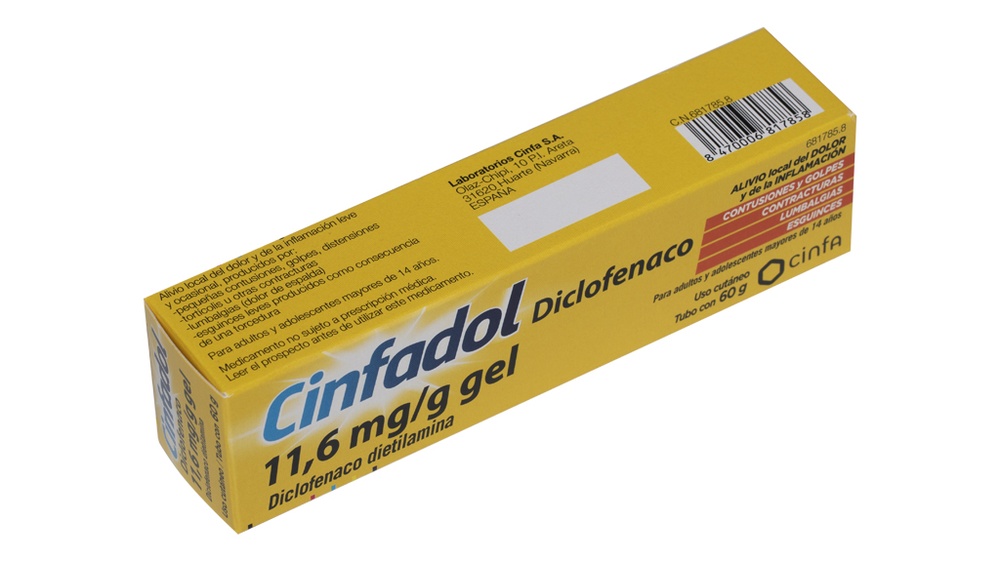
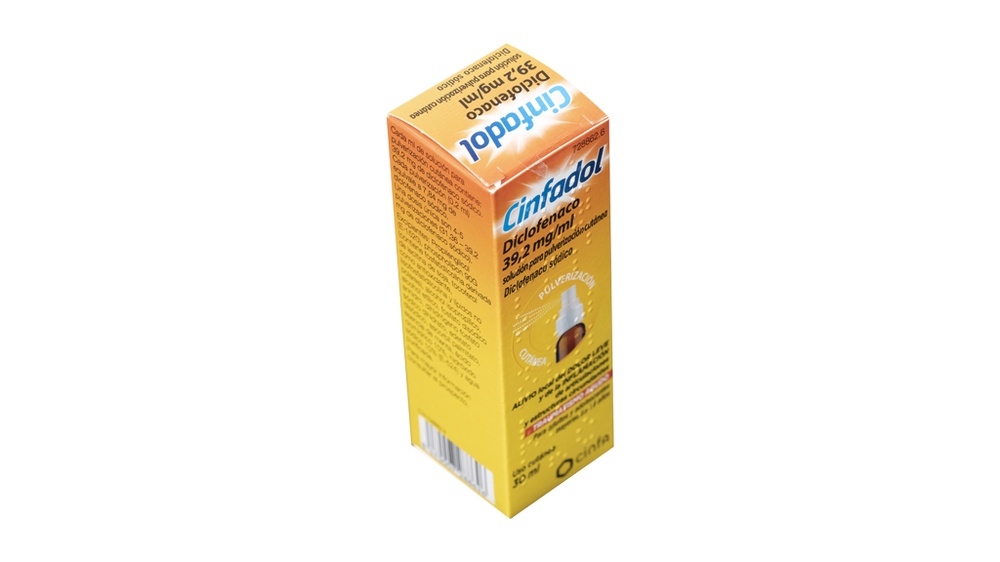
- Alternatives to DICLOFENAC SANDOZ CARE 23.2 mg/g GELDosage form: GEL, 10 mg/gActive substance: diclofenacManufacturer: Laboratorios Cinfa S.A.Prescription not requiredDosage form: GEL, 23.2 mg/gActive substance: diclofenacManufacturer: Laboratorios Cinfa S.A.Prescription not requiredDosage form: TOPICAL SOLUTION, 39.2 mg/mlActive substance: diclofenacManufacturer: Laboratorios Cinfa S.A.Prescription not required

Online doctors for DICLOFENAC SANDOZ CARE 23.2 mg/g GEL
Discuss questions about DICLOFENAC SANDOZ CARE 23.2 mg/g GEL, including use, safety considerations and prescription review, subject to medical assessment and local regulations.


Frequently Asked Questions
