


SOLTRIM 160MG/800MG POWDER AND SOLUTION FOR INJECTABLE SOLUTION



How to use SOLTRIM 160MG/800MG POWDER AND SOLUTION FOR INJECTABLE SOLUTION
Translated with AI
This page provides general information and does not replace a doctor’s consultation. Always consult a doctor before taking any medication. Seek urgent medical care if symptoms are severe.
Show originalContents of the leaflet
Introduction
Package Leaflet:information for the user
Soltrim 160 mg/800 mg powder and solution for solution for injection
trimethoprim/sulfamethoxazole (lisinato)
Read all of this leaflet carefully before you start using this medicine because it contains important information for you.
- Keep this leaflet, you may need to read it again.
- If you have any further questions, ask your doctor or pharmacist.
- This medicine has been prescribed for you only. Do not pass it on to others. It may harm them, even if their signs of illness are the same as yours.
- If you get any side effects, talk to your doctor or pharmacist. This includes any possible side effects not listed in this leaflet. See section 4.
Contents of the pack
- What is Soltrim and what is it used for
- What you need to know before you use Soltrim
- How to use Soltrim
- Possible side effects
- Storing Soltrim
- Contents of the pack and other information
1. What is Soltrim and what is it used for
Soltrim is a medicine that contains two antibiotics (trimethoprim and a sulfonamide called sulfamethoxazole) that belongs to a group of medicines called sulfonamide and trimethoprim combinations, which act against a wide variety of microorganisms that cause infections.
Antibiotics are used to treat bacterial infections and are not effective against viral infections such as flu or common cold. It is important that you follow the instructions regarding dose, administration interval, and treatment duration indicated by your doctor. Do not store or reuse this medicine. If you have any leftover antibiotic after finishing the treatment, return it to the pharmacy for proper disposal. Do not throw away medicines via wastewater or household waste. |
Soltrim is indicated in adults and children from 2 months of age, for the treatment of the following infections:
- Treatment of pneumonia caused by Pneumocystis jiroveci (P. carinii)
- Treatment of nocardiosis (lung infection caused by Nocardiaspp.)
Soltrim may also be useful in the treatment of:
- Toxoplasmosis.
- Listeriosis (infection caused by a bacterium).
- Infections caused by the bacterium Staphylococcus aureusresistant to methicillin (MRSA).

2. What you need to know before you use Soltrim
Do not use Soltrim
- if you are allergic to sulfonamides, trimethoprim, cotrimoxazole, or any of the other components of this medicine (listed in section 6).
- in children under 2 months.
- if you have a blood disease called megaloblastic anemia due to folate deficiency.
- if you have severe liver disease.
- if you have severe kidney disease.
- if you have or are at risk of having a metabolic disease called acute porphyria, which consists of a deficiency of substances capable of synthesizing a blood component.
- if you are pregnant or breastfeeding.
You must immediately stop treatment with this medicine when you first appear with a skin rash, sore throat, fever, arthralgia (joint pain), cough, difficulty breathing, pallor, purpura (purple spots on the skin), or jaundice (yellowing of the skin and mucous membranes) or severe blood disorders. These signs may be indicators of the onset of serious adverse reactions.
With the use of Soltrim, skin rashes that can threaten the patient's life (Stevens-Johnson syndrome, toxic epidermal necrolysis, acute generalized exanthematous pustulosis, and drug reaction with eosinophilia and systemic symptoms) have been described. You must suspend treatment if you appear with red circular spots or patches on the skin, often with a central blister. Other signs that may appear are sores in the mouth, throat, nose, genitals, and conjunctivitis (swollen and red eyes).
These skin rashes that can threaten the patient's life are often accompanied by flu-like symptoms. The rash can progress to the formation of generalized blisters or skin peeling.
The period of greatest risk of severe skin reactions is during the first weeks of treatment.
If you have developed Stevens-Johnson syndrome, toxic epidermal necrolysis, acute generalized exanthematous pustulosis, or drug reaction with eosinophilia and systemic symptoms with the use of Soltrim, you should not use this medicine again at any time.
If you develop rashes or these symptoms on the skin, stop using Soltrim, go immediately to a doctor, and inform them that you are using this medicine.
Warnings and precautions
Consult your doctor or pharmacist before starting to use Soltrim.
- if you have kidney problems.
- if you are in situations that predispose to a deficiency of folic acid (advanced age, chronic alcoholism, rheumatoid arthritis, treatment with medicines that prevent seizures, malabsorption syndrome, and states of malnutrition) or have a congenital deficiency of the enzyme glucose-6-phosphate dehydrogenase.
- if you are an elderly patient, especially if you have liver or kidney problems, or are being treated with other medicines, as the risk of you suffering from side effects is greater.
- if you have severe allergies or bronchial asthma.
- if you have acquired immunodeficiency syndrome (AIDS).
- if you are at risk of hyperkalemia (increased potassium in the blood) and hyponatremia (decreased sodium in the blood).
- if you are taking a diet rich in potassium or other medicines that can increase potassium in the blood.
- if you have hypoalbuminemia (decreased albumin in the blood) as the risk of crystaluria (uric acid crystals in the urine) is greater.
In prolonged treatments, your doctor will ask you to have blood tests and may recommend taking folate supplements.
If you experience an unexpected worsening of cough and shortness of breath, inform your doctor immediately.
Hemophagocytic lymphohistiocytosis
Very rare cases of excessive immune reactions due to unregulated activation of white blood cells that cause inflammation (hemophagocytic lymphohistiocytosis) have been reported, which can be potentially fatal if not diagnosed and treated early. If you experience multiple symptoms such as fever, swelling of the lymph nodes, feeling of weakness, dizziness, shortness of breath, bruising, or skin rash with or without a slight delay, contact your doctor immediately.
If local irritation and inflammation occur after administration of Soltrim, treatment should be discontinued and restarted at another site.
Soltrim, like most antibiotics, can cause pseudomembranous colitis (inflammation of the large intestine that causes diarrhea and abdominal pain) due to the microorganism Clostridium difficile. If you experience diarrhea, you should consult your doctor to rule out this diagnosis.
Consult your doctor if you have had or have any of the above situations.
Other medicines and Soltrim
Tell your doctor or pharmacist if you are using, have recently used, or might use any other medicines, including those obtained without a prescription, vaccines, and herbal medicines.
Soltrim may interact with:
- immunosuppressive medicines, used to decrease the body's defense mechanism (cyclosporine, pyrimethamine, methotrexate, mercaptopurine, or azathioprine), increasing their toxicity.
- hypoglycemic agents, used to regulate blood sugar levels.
- diuretics, used to promote fluid elimination, as the risk of hyperkalemia (increased potassium in the blood) is increased.
- local anesthetics.
- potassium aminobenzoate, used to treat some diseases in which the skin becomes less flexible.
- angiotensin-converting enzyme inhibitors, used to decrease blood pressure.
- antipsychotics (such as chlorpromazine or haloperidol).
- antidepressants (such as imipramine).
- antifungals (such as ketoconazole).
- antibiotics (such as erythromycin).
- antihistamines (such as terfenadine or astemizole).
Soltrim may increase the concentrations and potentiate the effect of:
- antiviral medicines, used in the treatment of viral infections (zidovudine, zalcitabine, lamivudine, and amantadine).
- immunosuppressive medicines, used to decrease the body's defense mechanism (tacrolimus).
- oral anticoagulants, used to prevent blood clotting (warfarin).
- antiarrhythmics, used to regulate heart rhythm (procainamide and digoxin).
- antiepileptics, used to prevent seizures (phenytoin).
- antibiotics, used to treat infections (rifampicin and dapsone).
- methotrexate.
Using Soltrim with food, drinks, and alcohol
Alcohol consumption should be avoided during treatment with Soltrim.
Precautions should be taken in patients with diets rich in potassium.
Pregnancy, breastfeeding, and fertility
You should not take this medicine during pregnancy or breastfeeding.
If you are pregnant or breastfeeding, think you may be pregnant, or are planning to have a baby, ask your doctor or pharmacist for advice before taking this medicine. Your doctor will assess the benefit-risk balance of the treatment.
Driving and using machines
No effects on driving or using machines have been reported.
Soltrim contains benzyl alcohol and sodium metabisulfite.
This medicine contains 200 mg of benzyl alcohol in each dose unit. Benzyl alcohol may cause allergic reactions. Consult your doctor or pharmacist if you are pregnant or breastfeeding. This is because large amounts of benzyl alcohol can accumulate in your body and cause side effects (metabolic acidosis). Consult your doctor or pharmacist if you have liver or kidney disease. This is because large amounts of benzyl alcohol can accumulate in the body and cause side effects (metabolic acidosis).
Benzyl alcohol has been associated with the risk of serious side effects, including respiratory problems ("gasping syndrome") in children. Do not administer this medicine to your newborn (up to 4 weeks of age) unless your doctor has recommended it. This medicine should not be used for more than one week in children under 3 years of age unless your doctor or pharmacist has indicated it.
This medicine may cause serious allergic reactions and bronchospasm (sudden feeling of suffocation) because it contains sodium metabisulfite.
3. How to use Soltrim
Soltrim will be prepared and administered by trained healthcare personnel.
Before administration, the vial with lyophilized powder (which contains sulfamethoxazole) must be reconstituted with the ampoule of solution (which contains trimethoprim) and administered by intravenous infusion after prior dilution during a period of between one hour and one and a half hours.
The administration of Soltrim by parenteral route should only be performed in patients who cannot take medication orally or when it is necessary to rapidly achieve high serum concentrations.
Follow the instructions for administration of the medicine contained in this leaflet or as indicated by your doctor, pharmacist, or nurse. If in doubt, ask your doctor, pharmacist, or nurse.
Use in adults and children over 12 years
Depending on the severity of the infection, the doses may range from 160 - 320 mg of trimethoprim and 800 - 1,600 mg of sulfamethoxazole (1 vial + 1 ampoule or 2 vials + 2 ampoules) administered 2 to 4 times a day, i.e., every 6-12 hours.
Children between 2 months and 12 years
The average dose based on weight is as follows: 3.2 mg of trimethoprim and 16 mg of sulfamethoxazole per kilogram of body weight administered every 12 hours (which corresponds to 0.12 ml/kg every 12 hours).
The recommended doses regardless of body weight are:
Children from 6 to 12 years
The usual dose is half a vial (80 mg of trimethoprim and 400 mg of sulfamethoxazole) every 12 hours.
Children from 6 months to 5 years
The usual dose is a quarter of a vial (40 mg of trimethoprim and 200 mg of sulfamethoxazole) every 12 hours.
Children from 2 to 5 months
The usual dose is 0.75 ml (20 mg of trimethoprim and 100 mg of sulfamethoxazole) every 12 hours.
Elderly patients
The usual dose is the same as in adults. In case of kidney problems, the dose will be adjusted according to kidney function.
Patients with kidney problems
In case of kidney problems, your doctor will decide whether it is necessary to reduce the usual dose based on creatinine clearance (a value indicating kidney function).
Pneumocystis jiroveci pneumonia
In children over 2 months and adults, the recommended dose by intravenous route is 15 - 20 mg of trimethoprim/kg/day and 75 - 100 mg of sulfamethoxazole/kg/day. The daily dose should be divided into 3 - 4 equal doses administered by intravenous infusion, until oral treatment is started.
Treatment should be continued for a total treatment period of at least 2 weeks, with a recommended period of 21 days.

Nocardiosis
The recommended dose by intravenous route is 15 mg/kg/day of trimethoprim and 75 mg/kg/day of sulfamethoxazole, in 2 - 4 doses for 3 - 4 weeks. After that, reduce the dose to 10 mg/kg/day of trimethoprim / 50 mg/kg/day of sulfamethoxazole in 2 - 4 doses, for a period of 3 to 6 months.
Toxoplasmosis
The recommended dose in adults by intravenous route is 10 mg/kg/day of trimethoprim and 50 mg/kg/day of sulfamethoxazole every 12 hours, for 30 days.
Listeriosis
The recommended dose in adults by intravenous route is 10-20 mg/kg/day of trimethoprim and 50-100 mg/kg/day of sulfamethoxazole, in 2 – 4 doses for at least 2 weeks.
The recommended dose in children by intravenous route is 10-12 mg/kg/day of trimethoprim and 50-60 mg/kg/day of sulfamethoxazole, in 4 doses for a period of 14 to 21 days.
Infections caused by methicillin-resistant Staphylococcus aureus(MRSA) such as osteomyelitis and septic arthritis or skin and soft tissue infections.
- osteomyelitis: the dose in adults is 3.5- 4 mg/kg/dose every 8-12 hours. There is not enough evidence to recommend a dosage in pediatrics.
- purulent cellulitis: the dose in adults is between 160 mg of trimethoprim/ 800 mg of sulfamethoxazole every 12 hours and 320/1,600 mg every 12 hours. The pediatric dose is 4-6 mg/kg/dose of trimethoprim and 20-30 mg/kg /dose every 12 hours.
- septic arthritis: the dose in adults is 3.4-4 mg/kg/dose every 8-12 hours. There is not enough evidence to recommend a dosage in pediatrics.
- skin and soft tissue infections: the dose in adults is 160/800 mg every 12 hours.
If you use more Soltrim than you should
Consult your doctor or pharmacist immediately, go to an emergency department, or call the Toxicology Information Service, phone 915.620.420.
Symptoms of overdose include loss of appetite, vomiting, nausea, dizziness, colic, headache, drowsiness, unconsciousness, depression, confusion, and bone marrow depression.
Treatment should be discontinued. If diuresis is low, administration of fluids is recommended. This medicine is dialyzable by hemodialysis, but peritoneal dialysis is not effective.
Calcium folinate administered at a dose of 3 to 6 mg by intramuscular route for 5-7 days is an effective antidote against adverse reactions caused by trimethoprim. There is no antidote for sulfamethoxazole overdose.
If you forget to use Soltrim
Do not use a double dose to make up for forgotten doses.
If you stop treatment with Soltrim
Do not stop using your medicine or reduce the dose without your doctor's advice.
If you have any other questions about the use of this medicine, ask your doctor or pharmacist.
4. Possible Adverse Effects
Like all medicines, this medicine can cause adverse effects, although not all people suffer from them.
Call emergency services immediately if you experience multiple symptoms such as fever, very low blood pressure, or increased heart rate after taking this medicine, as it may be a symptom of shock.
With Soltrim treatment, skin reactions can occur, such as exfoliative dermatitis (generalized scaling), rash, itching, purpura (small spots on the skin); fever, liver disorders (elevated liver enzymes or transaminases, hepatitis (inflammation of the liver)), kidney disorders (elevated creatinine in blood, tubulointerstitial nephritis, crystal formation in urine), hyperkalemia (increased potassium concentration in blood), hyponatremia (decreased sodium concentration in blood), and hypoglycemia (decreased blood sugar levels) may also appear.
With unknown frequency, purple, raised, and painful sores can occur on the extremities and sometimes on the face and neck, with fever (Sweet's syndrome). With unknown frequency, cases of acute generalized exanthematous pustulosis (AGEP) and drug reaction with eosinophilia and systemic symptoms, also known as DRESS (see section 2), have also been described.
More serious adverse reactions can occur, such as blood disorders (neutropenia or agranulocytosis (decrease or absence of granulocytes in blood), aplastic anemia, bone marrow failure, leukopenia (decrease in white blood cells), thrombocytopenia (decrease in platelet count)), severe liver disorders (liver necrosis), and allergic reactions.
Very rarely, life-threatening skin reactions can occur (Stevens-Johnson syndrome with red blisters, erosion, and skin with bleeding crusts or Toxic Epidermal Necrolysis with scaling and blisters on the superficial layers of the skin) (see section 2).
Treatment with antibiotics, including Soltrim, can alter the colon flora due to the overgrowth of a bacterium called Clostridium difficile, leading to intestinal symptoms (whose severity can range from mild diarrhea to fatal colitis). If you suffer from intense and prolonged diarrhea, even if it appears two months after Soltrim administration, you should consult your doctor.
Special Populations
Patients with glucose-6-phosphate dehydrogenase enzyme deficiency:A hemolysis reaction (destruction of red blood cells) can occur, which often depends on the dose.
Elderly patients: The most frequent adverse reactions are severe skin reactions or those related to bone marrow function, such as a decrease in platelet count in blood (with or without the appearance of red spots on the skin). An increased incidence of decreased platelet count has been described in patients treated simultaneously with diuretic medications (mainly thiazides).
Patients infected with HIV: The most serious adverse reactions that occur most frequently include a decrease in the number of a certain type of white blood cell (neutropenia), intense redness of the skin with scaling in layers or flakes (exfoliative dermatitis), appearance of blisters on the skin and mucous membranes that can be life-threatening (Toxic Epidermal Necrolysis).
Patients with AIDS: They present skin and bone marrow reactions more frequently than the rest of the population. They can present a decrease in the number of white blood cells (leukopenia), a decrease in the number of platelets (thrombocytopenia), rash on the skin (exanthema), and an increase in liver enzymes (indicators of liver function) and creatinine (indicator of renal function), usually around the 7th-14th day of treatment; an increase in blood potassium levels (hyperkalemia) and a decrease in blood sodium levels (hyponatremia) have also been observed.
Reporting of Adverse Effects
If you experience any type of adverse effect, consult your doctor, pharmacist, or nurse, even if it is a possible adverse effect that does not appear in this prospectus. You can also report them directly through the Spanish Pharmacovigilance System for Human Use Medicines: https://www.notificaram.es.
By reporting adverse effects, you can contribute to providing more information on the safety of this medicine.
5. Conservation of Soltrim
Keep this medicine out of sight and reach of children.
Before reconstitution:
No special storage conditions are required.
Do not use this medicine after the expiration date that appears on the packaging after CAD. The expiration date is the last day of the month indicated.
After reconstitution:
Once the powder is reconstituted with the solution, the medicine must be used within the next 24 hours. This solution must be stored at room temperature.
To be administered by intravenous perfusion, Soltrim must be mixed extemporaneously at a ratio of 1 ml of the reconstituted vial with the ampoule of solution per 50 ml of perfusion solution, see the section with information intended for doctors or healthcare professionals at the end of the prospectus.
Once prepared, the solution must be used within the next 6 hours. This solution can be stored at room temperature.
Medicines must not be thrown away through the sewers or into the trash. Deposit the packaging and medicines that are no longer needed in the SIGRE Point of the pharmacy. In case of doubt, ask your pharmacist how to dispose of the packaging and medicines that are no longer needed. This way, you will help protect the environment.
6. Package Contents and Additional Information
Soltrim Composition
- The active ingredients of Soltrim are trimethoprim and sulfamethoxazole.
- Each ampoule of solution contains 160 mg of trimethoprim, and each vial with lyophilized powder contains 800 mg of sulfamethoxazole.
- The other components present in the ampoule are: benzyl alcohol (200 mg), glycofurol, glycerin formaldehyde, sodium metabisulfite, hydrochloric acid (to adjust pH), and water for injectable preparations.
Product Appearance and Package Contents
Powder and solution for injectable solution.
The powder contained in the vial is white. The solution contained in the ampoule is transparent and colorless.
Both components must be mixed before administration. The total volume of the reconstituted injectable solution is 6 ml. The appearance of this reconstituted solution is transparent and slightly yellowish.
Each Soltrim package contains:
- 5 glass ampoules containing 5 ml of trimethoprim solution
- 5 glass vials containing lyophilized sulfamethoxazole powder
Marketing Authorization Holder and Manufacturer
Marketing Authorization Holder
Almirall, S.A. General Mitre, 151 08022 – Barcelona (Spain)
Manufacturer
Famar Health Care Services Madrid, S.A.U. Avda. Leganés, 62 28923 Alcorcón – Madrid (Spain).
and/or
Industrias Farmacéuticas Almirall, S.A.
Ctra. de Martorell, 41-61 (Sant Andreu de la Barca (Barcelona)) - 08740 - Spain
Date of the last revision of this prospectus: 09/2025
Detailed information about this medicine is available on the website of the Spanish Agency for Medicines and Health Products (AEMPS) http://www.aemps.gob.es.
-----------------------------------------------------------------------------------------------------------------
This information is intended only for doctors or healthcare professionals:
Intravenous Perfusion
Soltrim must not be injected directly by the intravenous route.
Instructions for dilution of the medicine before administration by intravenous perfusion:
Soltrim must be mixed extemporaneously at a ratio of 1 ml of the reconstituted vial with the ampoule of solution (which contains trimethoprim) per 50 ml of solution, resulting in the following:
- ½ reconstituted vial of Soltrim per 125 ml of perfusion solution.
- 1 reconstituted vial of Soltrim per 250 ml of perfusion solution.
- 2 reconstituted vials of Soltrim per 500 ml of perfusion solution.
The solutions to be used can be the following:
- Ringer's solution
- Physiological saline solution (0.9% sodium chloride)
- Glucosaline solution (0.18% sodium chloride + 4% glucose)
- 5% or 10% glucose solution
- 10% levulose solution
- 1.6 M sodium bicarbonate solution
Sodium lactate 1/6 Molar solutions, 15% glucose solutions, or high molecular weight solutions such as dextran must not be used.
If, once the solution is prepared, turbidity or precipitates are observed after agitation, the solution must be discarded and a new one prepared.
The disposal of unused medicine and all materials that have come into contact with it will be carried out in accordance with local regulations.
- Country of registration
- Dosage formINJECTABLE, 160 mg trimethoprim/ ampoule; 800 mg sulfamethoxazole (lisinate)/ vial
- ATC codeJ01EE01
- Average pharmacy price20.78 EUR
- Active substance
- Prescription requiredYes
- Manufacturer
- This information is for reference only and does not constitute medical advice. Always consult a doctor before taking any medication. Oladoctor is not responsible for medical decisions based on this content.
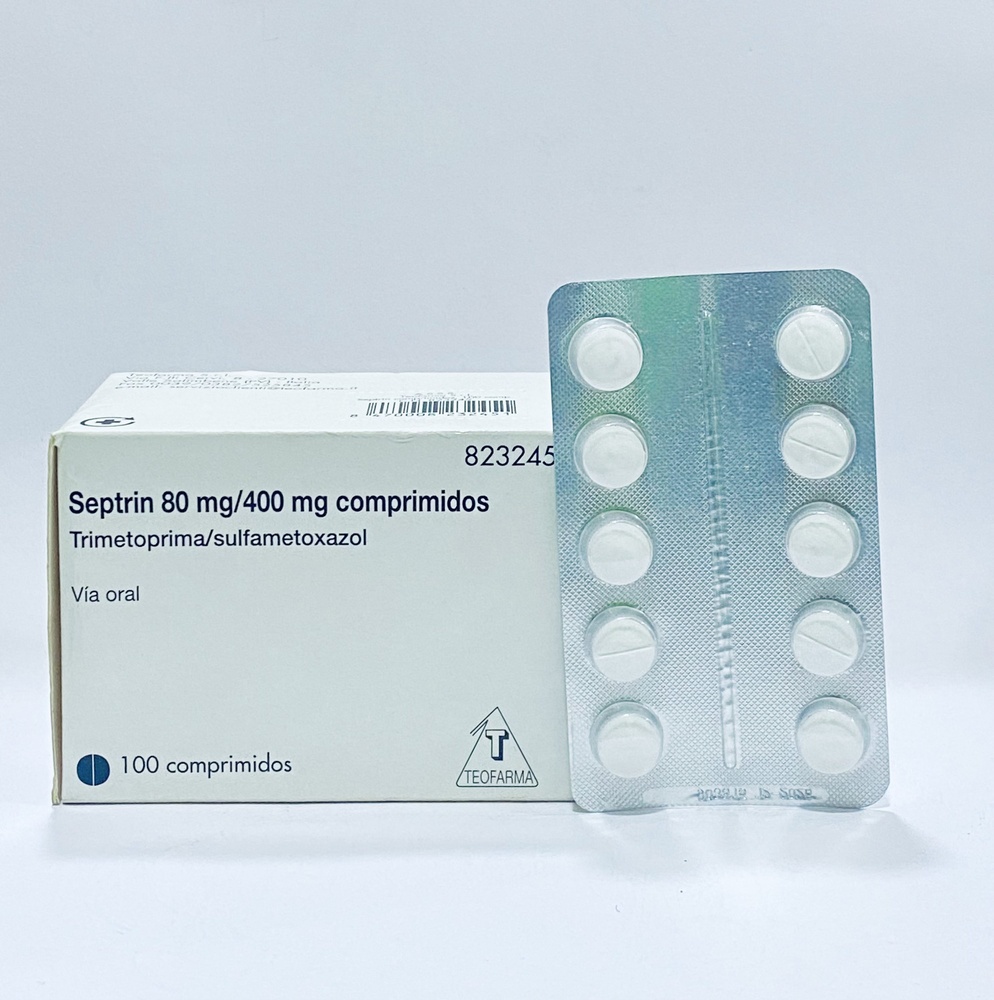
- Alternatives to SOLTRIM 160MG/800MG POWDER AND SOLUTION FOR INJECTABLE SOLUTIONDosage form: TABLET, 80/400 mg/mgActive substance: sulfamethoxazole and trimethoprimManufacturer: Teofarma S.R.L.Prescription requiredDosage form: TABLET, 160 mg trimethoprim; 800 mg sulfamethoxazoleActive substance: sulfamethoxazole and trimethoprimManufacturer: Teofarma S.R.L.Prescription requiredDosage form: TABLET, 20 trimethoprim; 100 mg sulfamethoxazoleActive substance: sulfamethoxazole and trimethoprimManufacturer: Teofarma S.R.L.Prescription required

Online doctors for SOLTRIM 160MG/800MG POWDER AND SOLUTION FOR INJECTABLE SOLUTION
Discuss questions about SOLTRIM 160MG/800MG POWDER AND SOLUTION FOR INJECTABLE SOLUTION, including use, safety considerations and prescription review, subject to medical assessment and local regulations.











Frequently Asked Questions
