



SOLIFENACINA 6 mg /0.4 Mg Modified-Release Tablets

Prescription review online
A doctor will review your case and decide whether a prescription is medically appropriate.

Talk to a doctor about this medicine
Discuss your symptoms and possible next steps in a quick online consultation.



How to use SOLIFENACIN/TAMSULOSIN NORMON 6 mg/0.4 mg MODIFIED-RELEASE TABLETS
Contents of the leaflet
- Introduction
- What Solifenacin/Tamsulosin Normon is and what it is used for
- What you need to know before you take Solifenacin/Tamsulosin Normon
- How to take Solifenacin/Tamsulosin Normon
- Possible side effects
- Storage of Solifenacin/Tamsulosin Normon
- Container Content and Additional Information
Introduction
Package Leaflet: Information for the User
Solifenacin/Tamsulosin Normon 6mg/0.4mg modified-release tablets EFG
solifenacin succinate/tamsulosin hydrochloride
Read all of this leaflet carefully before you start taking this medicine because it contains important information for you.
- Keep this leaflet, you may need to read it again.
- If you have any further questions, ask your doctor or pharmacist.
- This medicine has been prescribed for you only. Do not pass it on to others. It may harm them, even if their signs of illness are the same as yours.
- If you get any side effects, talk to your doctor or pharmacist. This includes any possible side effects not listed in this leaflet. See section 4.
Contents of the pack
- What Solifenacin/Tamsulosin Normon is and what it is used for
2 What you need to know before you take Solifenacin/Tamsulosin Normon
- How to take Solifenacin/Tamsulosin Normon
- Possible side effects
- Storage of Solifenacin/Tamsulosin Normon
- Contents of the pack and other information
1. What Solifenacin/Tamsulosin Normon is and what it is used for
Solifenacin/Tamsulosin Normon is a combination of two different medicines called solifenacin and tamsulosin in one tablet. Solifenacin belongs to a group of medicines called anticholinergics and tamsulosin belongs to a group of medicines called alpha-blockers.
Solifenacin/Tamsulosin Normon is used in men to treat both moderate to severe filling symptoms and emptying symptoms of the lower urinary tract caused by bladder problems and by an enlarged prostate (benign prostatic hyperplasia). This medicine is used when previous treatment with monotherapy for this condition did not sufficiently relieve the symptoms.
When the prostate gland enlarges, it can cause urinary problems (emptying symptoms) such as delayed urination (difficulty starting urination), reduced urine flow (weak stream), dribbling, and a feeling of incomplete emptying of the bladder. At the same time, the bladder is also affected and contracts spontaneously at times when urination is not desired. This causes filling symptoms such as changes in bladder sensation, urgency (having a strong and sudden need to urinate without prior warning), and having to urinate more frequently.
Solifenacin reduces the involuntary contractions of the bladder and increases the amount of urine that your bladder can hold. Therefore, you can expect to wait longer before having to go to the bathroom. Tamsulosin allows urine to pass more easily through the urethra and facilitates urination.

Not sure if this medicine is right for you?
Discuss your symptoms and treatment with a doctor online.
2. What you need to know before you take Solifenacin/Tamsulosin Normon
Do not take Solifenacin/Tamsulosin Normon
- If you are allergic to solifenacin or tamsulosin or any of the other ingredients of this medicine (listed in section 6).
- If you are undergoing renal dialysis.
- If you have severe liver disease.
- If you have severe kidney disease and if, at the same time, you are being treated with medicines that may decrease the elimination of solifenacin/tamsulosin from the body (e.g. ketoconazole, ritonavir, nelfinavir, itraconazole). Your doctor or pharmacist will inform you if this is the case.
- If you have moderate liver disease and if, at the same time, you are being treated with medicines that may decrease the elimination of solifenacin/tamsulosin from the body (e.g. ketoconazole, ritonavir, nelfinavir, itraconazole). Your doctor or pharmacist will inform you if this is the case.
- If you have a severe stomach or intestinal condition (including toxic megacolon, a complication associated with ulcerative colitis).
- If you have a muscle disease called myasthenia gravis, which can cause extreme weakness of certain muscles.
- If you have increased pressure in the eyes (glaucoma), with gradual loss of vision.
- If you experience fainting due to a decrease in blood pressure when changing position (when sitting or standing up); this is called orthostatic hypotension.
Tell your doctor if you think you have any of these conditions.
Warnings and precautions
Consult your doctor or pharmacist before starting to take Solifenacin/Tamsulosin Normon:
- If you have difficulty eliminating fluid (urinary retention).
- If you have any obstruction of the digestive system.
- If you have a risk of decreased activity of the digestive system (movements of the stomach and intestine). Your doctor will inform you if this is the case.
- If you have a tear in the diaphragm (hiatal hernia) or heartburn and/or if, at the same time, you are taking medicines that may cause or worsen esophagitis.
- If you have a certain type of nerve disease (autonomic neuropathy).
- If you have severe kidney disease.
- If you have moderate liver disease.
Regular medical check-ups are necessary to monitor the development of the condition for which you are being treated.
This medicine may affect blood pressure, which can cause dizziness, drowsiness, or rarely, fainting (orthostatic hypotension). You should sit or lie down if you experience any of these symptoms until they have disappeared.
If you are going to undergo or have scheduled eye surgery due to cataracts or increased pressure in the eyes (glaucoma), please inform your ophthalmologist that you have previously used, are using, or plan to use solifenacin/tamsulosin. The specialist can then take the necessary precautions regarding medication and surgical techniques to be used. Ask your doctor if you should delay or temporarily interrupt taking this medicine when you are going to undergo eye surgery for cataracts or increased pressure in the eye (glaucoma).
Children and adolescents
Do not give this medicine to children and adolescents.
Other medicines and Solifenacin/Tamsulosin Normon
Tell your doctor or pharmacist if you are using, have recently used, or might use any other medicines.
It is especially important that you inform your doctor if you are using:
- Medicines such as ketoconazole, erythromycin, ritonavir, nelfinavir, itraconazole, verapamil, diltiazem, and paroxetine, which reduce the rate at which solifenacin/tamsulosin is eliminated from the body.
- Other anticholinergic medicines, as the effects and side effects of both medicines can be intensified if you are taking two medicines of the same type.
- Cholinergics, as they may reduce the effect of solifenacin/tamsulosin.
- Medicines such as metoclopramide and cisapride, which can accelerate the functioning of the digestive system. Solifenacin/tamsulosin may reduce their effect.
- Other alpha-blockers (used to decrease blood pressure), as they may cause an undesired drop in blood pressure.
- Medicines such as bisphosphonates, which may cause or exacerbate inflammation of the esophagus (esophagitis).
Taking Solifenacin/Tamsulosin Normon with food and drinks
Solifenacin/tamsulosin can be taken with or without food, according to your preferences.
Pregnancy, breastfeeding, and fertility
Solifenacin/tamsulosin is not indicated for use in women.
In men, abnormal ejaculation (ejaculation disorder) has been reported. This means that the semen is not released through the urethra, but instead goes into the bladder (retrograde ejaculation) or that the ejaculated volume is reduced or nonexistent (ejaculatory failure). This phenomenon is harmless.
Driving and using machines
This medicine may cause dizziness, blurred vision, fatigue, and less frequently, drowsiness. If you experience these side effects, do not drive or use machines.
3. How to take Solifenacin/Tamsulosin Normon
Follow exactly the administration instructions of this medicine indicated by your doctor or pharmacist. In case of doubt, consult your doctor or pharmacist again.
The maximum daily dose is one tablet containing 6 mg of solifenacin and 0.4 mg of tamsulosin, taken orally. It can be taken with or without food, depending on your preferences. Do not crush or chew the tablet.
If you take more Solifenacin/Tamsulosin Normon than you should
If you have taken more tablets than you were told to, or if someone else has taken your tablets by mistake, contact your doctor, pharmacist, or hospital immediately for advice.
In case of overdose or accidental ingestion, consult your doctor or pharmacist immediately or call the Toxicological Information Service, phone 91 562 04 20, indicating the medicine and the amount ingested.
In case of overdose, your doctor may treat you with activated charcoal; emergency stomach lavage may be useful if performed within one hour of the overdose. Do not induce vomiting.
The symptoms of overdose may include: dry mouth, dizziness, and blurred vision, seeing things that are not there (hallucinations), over-excitability, convulsions, difficulty breathing, increased heart rate (tachycardia), inability to empty the bladder completely or partially or to urinate (urinary retention), and/or undesired increase in blood pressure.
If you forget to take Solifenacin/Tamsulosin Normon
Take your next solifenacin/tamsulosin tablet as normal. Do not take a double dose to make up for forgotten doses.
If you stop taking Solifenacin/Tamsulosin Normon
If you stop taking this medicine, your initial symptoms may reappear or worsen. Always consult your doctor if you are considering stopping treatment.
If you have any other questions about the use of this medicine, ask your doctor or pharmacist.

Started taking the medicine and have questions?
Discuss your symptoms and treatment with a doctor online.
4. Possible side effects
Like all medicines, this medicine can cause side effects, although not everybody gets them.
The most serious side effect that has been observed with a frequency of less than 1 in 100 men during treatment with solifenacin, succinate/tamsulosin, hydrochloride in clinical studies is acute urinary retention, which is a sudden inability to urinate. If you think you may have this, go to your doctor immediately. You may need to stop taking this medicine.
Solifenacin/Tamsulosin may cause allergic reactions:
- Uncommon signs of allergic reactions may include skin rash (which can be itchy) or hives (urticaria).
- Rare symptoms include swelling of the face, lips, mouth, tongue, or throat, which can cause difficulty swallowing or breathing (angioedema). Angioedema has been reported rarely with tamsulosin and very rarely with solifenacin. In case of angioedema, treatment with this medicine should be stopped immediately and definitively.
If you experience an allergic reaction or a severe skin reaction (e.g. blistering and peeling of the skin), you should inform your doctor immediately and stop using this medicine. Treatment and/or measures should be applied.
Other side effects:
Common side effects (may affect up to 1 in 10 men)
- Dry mouth.
- Constipation.
- Indigestion (dyspepsia).
- Dizziness.
- Blurred vision.
- Fatigue.
- Abnormal ejaculation (ejaculation disorder). This means that the semen is not released through the urethra, but instead goes into the bladder (retrograde ejaculation) or that the ejaculated volume is reduced or nonexistent (ejaculatory failure). This phenomenon is harmless.
- Feeling of nausea.
- Abdominal pain.
Uncommon side effects (may affect up to 1 in 100 men)
- Drowsiness.
- Itching (pruritus).
- Skin rash.
- Urinary tract infection, bladder infection (cystitis).
- Taste disorder (dysgeusia).
- Dry eyes.
- Dry nose.
- Gastroesophageal reflux disease.
- Dry throat.
- Dry skin.
- Difficulty urinating.
- Fluid accumulation in the legs (peripheral edema).
- Headache.
- Fast or irregular heartbeat (palpitations).
- Feeling of dizziness or weakness, especially when standing up (orthostatic hypotension).
- Nasal congestion or stuffiness (rhinitis).
- Diarrhea.
- Vomiting.
- Fatigue (asthenia).
Rare side effects (may affect up to 1 in 1,000 men)
- A large amount of hardened feces accumulating in the large intestine (fecal impaction).
- Feeling of fainting (syncope).
- Allergic reaction in the skin that causes swelling in the tissue under the skin surface (angioedema).
Very rare side effects (may affect up to 1 in 10,000 men)
- Hallucinations, confusion.
- Allergic reaction in the skin (erythema multiforme).
- Prolonged and painful erection (usually not during sexual activity) (priapism).
- Inflammation and blistering of the skin and/or mucous membranes of the lips, eyes, mouth, nasal passages, or genitals (Stevens-Johnson syndrome).
Frequency not known (cannot be estimated from the available data)
- Anaphylactic reaction (sudden and severe allergic reaction with difficulty breathing, swelling, dizziness, rapid heartbeat, sweating, and loss of consciousness).
- Decreased appetite.
- High levels of potassium in the blood (hyperkalemia) that can cause abnormal heart rhythm.
- Increased pressure in the eyes (glaucoma).
- Irregular or abnormal heartbeat (prolonged QT interval, Torsades de Pointes, atrial fibrillation, arrhythmia).
- Fast heartbeat (tachycardia).
- Breathing difficulties (dyspnea).
- During eye surgery for cataracts or increased pressure in the eye (glaucoma), it is possible that the pupil (the black circle in the center of the eye) may not increase in size properly. Additionally, the iris (the colored part of the eye) may become flaccid during surgery.
- Voice disorder.
- Liver disorder.
- Muscle weakness.
- Kidney disorder.
- Vision disorder.
- Nosebleed (epistaxis).
- Psychiatric disorders such as confusion (delirium).
- Abdominal discomfort.
Reporting of side effects
If you experience any side effects, talk to your doctor or pharmacist. This includes any possible side effects not listed in this leaflet. You can also report side effects directly to the Spanish Medicines Agency's Pharmacovigilance System for Human Use: https://www.notificaram.es. By reporting side effects, you can help provide more information on the safety of this medicine.
5. Storage of Solifenacin/Tamsulosin Normon
Keep this medicine out of the sight and reach of children.
Do not use this medicine after the expiry date which is stated on the carton or blister after EXP. The expiry date is the last day of the month stated.
This medicine does not require any special storage conditions.
Medicines should not be disposed of via wastewater or household waste. Ask your pharmacist how to dispose of medicines no longer required. These measures will help protect the environment.
6. Container Content and Additional Information
Composition of Solifenacin/Tamsulosin Normon
- The active ingredients are solifenacin succinate and tamsulosin hydrochloride. Each modified-release tablet contains 6 mg of solifenacin succinate and 0.4 mg of tamsulosin hydrochloride.
- The other ingredients are: high molecular weight macrogol, anhydrous colloidal silica (E551), magnesium stearate (E470b), calcium hydrogen phosphate (E341), microcrystalline cellulose (E460), silicified microcrystalline cellulose
(anhydrous colloidal silica and microcrystalline cellulose), low-substituted hydroxypropylcellulose (E463), hypromellose (E464), red iron oxide (E172), macrogol, and butylhydroxytoluene (E321).
Appearance of the Product and Container Content
Solifenacin/Tamsulosin Normon 6 mg/0.4 mg modified-release tablets are round, biconvex, film-coated tablets of red color, with «6 04» engraved on one face and with a diameter of 9 mm.
Solifenacin/Tamsulosin Normon is available in PA/aluminum/PVC/aluminum blister packs or in single-dose PA/aluminum/PVC/aluminum precut blisters.
Packs of 30 tablets (in blisters).
Packs of 30 x 1 tablet (in single-dose precut blisters).
Only some pack sizes may be marketed.
Marketing Authorization Holder and Manufacturer
Marketing Authorization Holder
LABORATORIOS NORMON, S.A.
Ronda de Valdecarrizo, 6 - 28760 Tres Cantos - Madrid (SPAIN)
Manufacturer
ADAMED PHARMA S.A.
ul. Marszalka Józefa Pilsudskiego 5
95-200 Pabianice
Poland
Or
ADALVO LIMITED
Malta Life Sciences Park, Building 1 Level 4
Sir Temi Zammit Buildings
San Gwann SGN 3000
Malta
This medicinal product is authorized in the Member States of the European Economic Area under the following names:
Spain: Solifenacin/Tamsulosin Normon 6 mg/0.4 mg modified-release tablets EFG
Date of the last revision of this leaflet: January 2023
Detailed information on this medicinal product is available on the website of the Spanish Agency for Medicines and Health Products (AEMPS) (http://www.aemps.gob.es/).
You can access detailed and updated information about this medicinal product by scanning the QR code included in the leaflet and packaging with your mobile phone (smartphone). You can also access this information at the following internet address:
https://cima.aemps.es/cima/dochtml/p/88710/P_88710.html
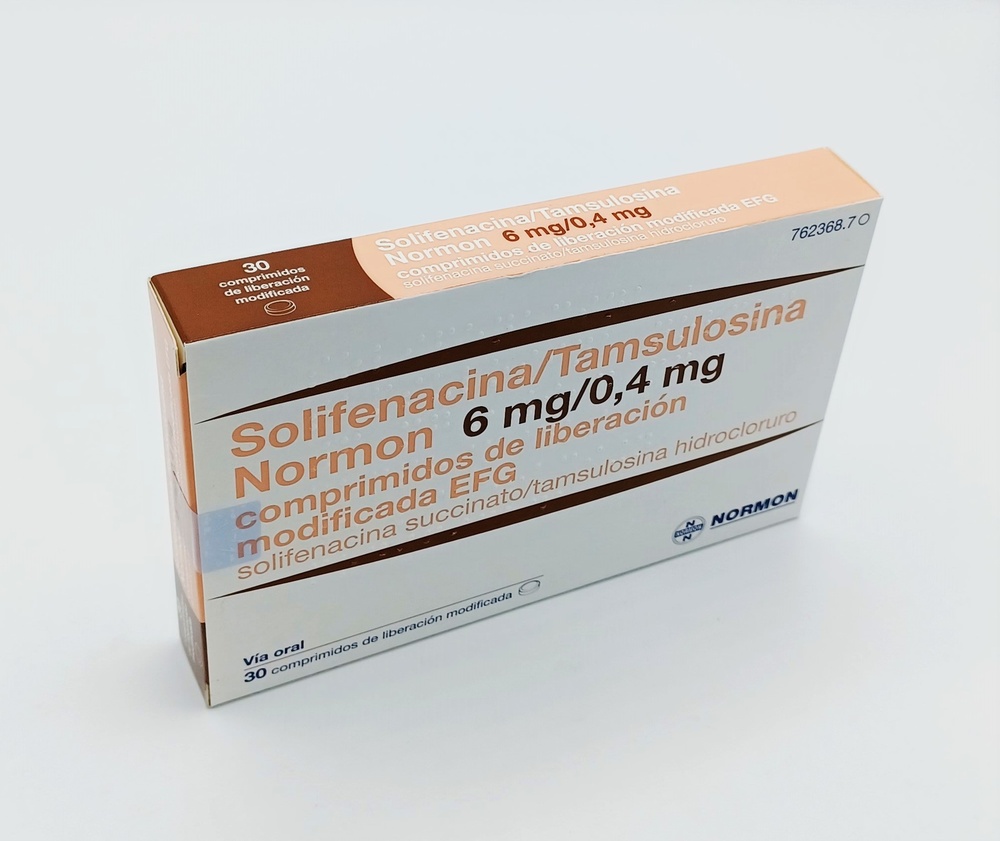
- Country of registration
- Dosage formMODIFIED-RELEASE TABLET, 6 mg/0.4 mg
- ATC codeG04CA53
- Average pharmacy price30.07 EUR
- Active substance
- Prescription requiredYes
- Manufacturer
- This information is for reference only and does not constitute medical advice. Always consult a doctor before taking any medication. Oladoctor is not responsible for medical decisions based on this content.
- Alternatives to SOLIFENACIN/TAMSULOSIN NORMON 6 mg/0.4 mg MODIFIED-RELEASE TABLETSDosage form: MODIFIED-RELEASE TABLET, 6 mg/0.4 mgActive substance: tamsulosin and solifenacinManufacturer: Laboratorios Q Pharma S.L.Prescription requiredDosage form: MODIFIED-RELEASE TABLET, 6 mg/0.4 mgActive substance: tamsulosin and solifenacinManufacturer: Laboratorios Alter S.A.Prescription requiredDosage form: MODIFIED-RELEASE TABLET, 6 mg/0.4 mgActive substance: tamsulosin and solifenacinManufacturer: Aurovitas Spain, S.A.U.Prescription required
Online doctors for SOLIFENACIN/TAMSULOSIN NORMON 6 mg/0.4 mg MODIFIED-RELEASE TABLETS
Discuss questions about SOLIFENACIN/TAMSULOSIN NORMON 6 mg/0.4 mg MODIFIED-RELEASE TABLETS, including use, safety considerations and prescription review, subject to medical assessment and local regulations.

Get SOLIFENACIN/TAMSULOSIN NORMON 6 mg/0.4 mg MODIFIED-RELEASE TABLETS Prescription Online
Fill in a 2-min form
Tell us your symptoms, history, and what medicine you're requesting.
Pick a doctor or let us assign
Choose a specialist or we'll match you with the next available doctor.
Doctor reviews your case
Usually within 30 minutes. They may ask follow-up questions via chat.
Collect from any pharmacy
Electronic prescription sent to your email — valid across Spain.
Frequently Asked Questions
SOLIFENACIN/TAMSULOSIN NORMON 6 mg/0.4 mg MODIFIED-RELEASE TABLETS requires a prescription in Spain. You can check with a doctor online whether this medicine may be appropriate for your situation.
The active ingredient in SOLIFENACIN/TAMSULOSIN NORMON 6 mg/0.4 mg MODIFIED-RELEASE TABLETS is tamsulosin and solifenacin. This information helps identify medicines with the same composition but different brand names.
The average pharmacy price for SOLIFENACIN/TAMSULOSIN NORMON 6 mg/0.4 mg MODIFIED-RELEASE TABLETS is around 30.07 EUR. Prices may vary depending on the manufacturer and dosage form.
SOLIFENACIN/TAMSULOSIN NORMON 6 mg/0.4 mg MODIFIED-RELEASE TABLETS is manufactured by Laboratorios Normon S.A.. Pharmacy brands and packaging may differ depending on the distributor.
Doctors such as Family doctors, Psychiatrists, Dermatologists, Cardiologists, Endocrinologists, Gastroenterologists, Pulmonologists, Nephrologists, Rheumatologists, Hematologists, Infectious disease physicians, Allergists, Geriatricians, Paediatricians, Oncologists may assess whether SOLIFENACIN/TAMSULOSIN NORMON 6 mg/0.4 mg MODIFIED-RELEASE TABLETS is appropriate, depending on your situation and local regulations. You can book an online consultation to discuss your symptoms and possible next steps.
Spain has a well-developed healthcare infrastructure across major cities such as Madrid, Barcelona, Valencia, and Seville. Pharmacies are widely available and operate under strict regulations, ensuring access to prescribed medications.
You can buy SOLIFENACIN/TAMSULOSIN NORMON 6 mg/0.4 mg MODIFIED-RELEASE TABLETS in Madrid, Barcelona, Seville, or Valencia at any local pharmacy with a valid prescription.
To obtain a prescription, you can use Oladoctor:
Other medicines with the same active substance (tamsulosin and solifenacin) include BITAMSOL 6 mg/0.4 mg MODIFIED-RELEASE TABLETS, DAITAL 6 MG/0.4 MG MODIFIED-RELEASE TABLETS, SOLIFENACIN / TAMSULOSIN Aurovitas 6 mg / 0.4 mg Modified-Release Tablets. These may have different brand names or formulations but contain the same therapeutic ingredient. Always consult a doctor before switching or starting a new medicine.
