



SMOFKABIVEN EXTRA NITROGEN WITHOUT ELECTROLYTES EMULSION FOR INFUSION

Prescription review online
A doctor will review your case and decide whether a prescription is medically appropriate.

Talk to a doctor about this medicine
Discuss your symptoms and possible next steps in a quick online consultation.



How to use SMOFKABIVEN EXTRA NITROGEN WITHOUT ELECTROLYTES EMULSION FOR INFUSION
Contents of the leaflet
- Introduction
- What SmofKabiven extra Nitrogen without electrolytes is and what it is used for
- What you need to know before you start using SmofKabiven extra Nitrogen without electrolytes
- How to use SmofKabiven extra Nitrogen without electrolytes
- Possible side effects
- Storage of SmofKabiven extra Nitrogen without electrolytes
- Container Content and Additional Information
Introduction
Package Leaflet: Information for the User
SmofKabiven extra Nitrogen without electrolytes emulsion for infusion
Read all of this leaflet carefully before you start using this medicine because it contains important information for you.
- Keep this leaflet, you may need to read it again.
- If you have any further questions, ask your doctor, pharmacist, or nurse.
- If you experience any side effects, talk to your doctor, pharmacist, or nurse, even if they are not listed in this leaflet. See section 4.
Contents of the Package Leaflet
- What SmofKabiven extra Nitrogen without electrolytes is and what it is used for
- What you need to know before you start using SmofKabiven extra Nitrogen without electrolytes
- How to use SmofKabiven extra Nitrogen without electrolytes
- Possible side effects
- Storage of SmofKabiven extra Nitrogen without electrolytes
- Contents of the pack and further information
1. What SmofKabiven extra Nitrogen without electrolytes is and what it is used for
SmofKabiven extra Nitrogen without electrolytes is an emulsion for infusion that is administered into your blood through a drip (intravenous infusion). The product contains amino acids (components used in the formation of proteins), glucose (carbohydrates), and lipids (fat), in a plastic bag, and can be administered to adults and children from 2 years of age.
A healthcare professional will administer SmofKabiven extra Nitrogen without electrolytes when other forms of nutrition are not sufficient or not possible.

Not sure if this medicine is right for you?
Discuss your symptoms and treatment with a doctor online.
2. What you need to know before you start using SmofKabiven extra Nitrogen without electrolytes
Do not use SmofKabiven extra Nitrogen without electrolytes:
- if you are allergic (hypersensitive) to the active substances or to any of the other components of this medicine (listed in section 6)
- if you are allergic to fish or egg
- if you are allergic to peanuts or soy, you should not use this product. SmofKabiven extra Nitrogen without electrolytes contains soybean oil
- if you have too much fat in your blood (hyperlipidemia)
- if you have severe liver disease
- if you have blood coagulation problems (coagulation disorders)
- if your body has problems using amino acids
- if you have severe kidney disease without the possibility of dialysis
- if you are in acute shock
- if you have too much sugar in your blood (hyperglycemia) that is not controlled
- if you have fluid in your lungs (acute pulmonary edema)
- if you have too much fluid in your body (overhydration)
- if you have heart failure that is not being treated
- if you have a defect in your blood coagulation system (hemophagocytic syndrome)
- if you are in an unstable situation, such as after severe trauma, uncontrolled diabetes mellitus, acute heart attack, stroke, blood clot, metabolic acidosis (a condition that leads to too much acid in your blood), severe infection (sepsis), coma, and if you do not have enough fluid in your body (hypotonic dehydration)
- in newborn babies or children under 2 years of age
Warnings and precautions
Consult your doctor before starting to use SmofKabiven extra Nitrogen without electrolytes if you have:
- kidney problems
- diabetes mellitus
- pancreatitis (inflammation of the pancreas)
- liver problems
- hypothyroidism (thyroid problems)
- sepsis (severe infection)
If during the infusion you experience fever, rash, swelling, difficulty breathing, chills, sweating, nausea, or vomiting, inform your healthcare professional immediately, as these symptoms could be caused by an allergic reaction or because you are receiving too much of the medicine.
Your doctor will need to regularly check your blood through liver function tests and other values.
Children and adolescents
SmofKabiven extra Nitrogen without electrolytes is not intended for newborn babies or children under 2 years of age.
SmofKabiven extra Nitrogen without electrolytes can be administered to children from 2 to 16/18 years of age.
Using SmofKabiven extra Nitrogen without electrolytes with other medicines
Tell your doctor if you are taking, have recently taken, or might take any other medicines, including those obtained without a prescription.
Pregnancy and breastfeeding
There is no information on the use of SmofKabiven extra Nitrogen without electrolytes during pregnancy or breastfeeding. Therefore, SmofKabiven extra Nitrogen without electrolytes should only be administered to pregnant or breastfeeding women if the doctor considers it necessary. However, the use of SmofKabiven extra Nitrogen without electrolytes may be considered during pregnancy and breastfeeding if your doctor advises it.
Driving and using machines
This is not relevant, as this medicine is administered in a hospital.
3. How to use SmofKabiven extra Nitrogen without electrolytes
Follow exactly the administration instructions of this medicine given by your doctor. If you are unsure, consult your doctor again.
Your doctor will decide the dose for you individually, depending on your body weight and situation. SmofKabiven extra Nitrogen without electrolytes will be administered by a healthcare professional.
If you use more SmofKabiven extra Nitrogen without electrolytes than you should
It is very unlikely that you will receive too much of the medicine, as SmofKabiven extra Nitrogen without electrolytes will be administered by a healthcare professional.

Started taking the medicine and have questions?
Discuss your symptoms and treatment with a doctor online.
4. Possible side effects
Like all medicines, SmofKabiven extra Nitrogen without electrolytes can cause side effects, although not everybody gets them.
Common(may affect up to 1 in 10 people): a slight increase in body temperature.
Uncommon(may affect up to 1 in 100 people): elevated levels in blood (plasma) of liver components, loss of appetite, nausea, vomiting, chills, dizziness, and headache.
Rare(may affect up to 1 in 1000 people): low or high blood pressure, difficulty breathing, rapid heart rate (tachycardia). Hypersensitivity reactions (which can cause symptoms such as swelling, fever, drop in blood pressure, skin rash, hives, redness, headache). Sensations of cold and heat. Paleness. Blue discoloration of the lips and skin (due to lack of oxygen in the blood). Pain in the neck, back, bones, chest, and lumbar region.
Reporting of side effects
If you experience any side effects, talk to your doctor, pharmacist, or nurse, even if they are not listed in this leaflet. You can also report side effects directly through the Spanish Pharmacovigilance System for Human Use Medicines: https://www.notificaram.es. By reporting side effects, you can help provide more information on the safety of this medicine.
5. Storage of SmofKabiven extra Nitrogen without electrolytes
Keep this medicine out of the sight and reach of children.
Keep in the outer bag. Do not store above 25°C. Do not freeze.
Do not use this medicine after the expiry date which is stated on the bag and carton. The expiry date is the last day of the month stated.
6. Container Content and Additional Information
SmofKabiven extra Nitrogen without electrolytes contains
The active substances are | g per 1000 ml |
Alanine | 9.2 |
Arginine | 7.9 |
Glycine | 7.2 |
Histidine | 2.0 |
Isoleucine | 3.3 |
Leucine | 4.8 |
Lysine (as acetate) | 4.3 |
Methionine | 2.8 |
Phenylalanine | 3.3 |
Proline | 7.3 |
Serine | 4.3 |
Taurine | 0.65 |
Threonine | 2.9 |
Tryptophan | 1.3 |
Tyrosine | 0.26 |
Valine | 4.1 |
Glucose (as monohydrate) | 85 |
Soybean oil, refined | 8.7 |
Medium-chain triglycerides | 8.7 |
Olive oil, refined | 7.2 |
Fish oil, rich in omega-3 fatty acids | 4.3 |
The other components are: glycerol, purified egg phospholipids, all-rac-α-tocopherol, sodium hydroxide (pH adjustment), sodium oleate, glacial acetic acid (pH adjustment), hydrochloric acid (pH adjustment), and water for injectable preparations.
Product Appearance and Container Content
The glucose and amino acid solutions are transparent, colorless or slightly yellow, and free of particles. The lipid emulsion is white and homogeneous.
Container Sizes:
1 x 506 ml, 6 x 506 ml
1 x 10¹² ml, 4 x 10¹² ml
1 x 1518 ml, 4 x 1518 ml
1 x 2025 ml, 4 x 2025 ml
1 x 2531 ml, 3 x 2531 ml
Marketing Authorization Holder and Manufacturer
Marketing Authorization Holder
Fresenius Kabi España S.A.U.
C/ Marina 16-18.
08005 Barcelona (Spain)
Manufacturer
Fresenius Kabi AB, SE-751 74 Uppsala, Sweden
Date of Last Revision of this Leaflet: March 2023
Detailed and updated information on this medicinal product is available on the website of the Spanish Agency for Medicines and Health Products (AEMPS) http://www.aemps.gob.es/
------------------------------------------------------------------------------------------------------------------------
This information is intended only for healthcare professionals:
Special Warnings and Precautions for Use
To avoid the risks associated with too rapid infusion rates, it is recommended to use continuous and well-controlled infusion, if possible using an infusion pump.
Since the use of a central vein is associated with a high risk of infection, strict aseptic precautions should be taken to avoid any contamination during catheter insertion and handling.
Serum glucose, electrolytes, and osmolarity, as well as fluid balance, acid-base balance, and liver enzyme levels should be monitored.
In case of any signs or symptoms of anaphylactic reaction (such as fever, shivering, skin rash, or dyspnea), the infusion should be interrupted immediately.
SmofKabiven extra Nitrogen without electrolytes should not be administered simultaneously with blood in the same infusion equipment due to the risk of pseudoagglutination.
Method of Administration
Intravenous route, infusion in a central vein.
To provide complete parenteral nutrition, oligoelements and vitamins should be added to SmofKabiven extra Nitrogen without electrolytes according to the patient's needs.
Posology
Adults
Dosage:
The dose range of 13-31 ml SmofKabiven extra Nitrogen without electrolytes/kg body weight/day will provide 0.14 – 0.32 g of nitrogen/kg body weight/day (corresponding to 0.85 – 2.0 g amino acids/kg body weight/day) and 12 – 28 kcal/kg body weight/day of total energy (8 – 19 kcal/kg body weight/day of non-protein energy).
Infusion Rate
The usual maximum infusion rate for glucose is 0.25 g/kg body weight/h, for amino acids 0.1 g/kg body weight/h, and for lipids 0.15 g/kg body weight/h.
The infusion rate should not exceed 1.5 ml/kg body weight/hour (corresponding to 0.13 g glucose, 0.10 g amino acids, and 0.04 g lipids/kg body weight/h). The recommended infusion period is 14 – 24 hours.
Intradiolytic Parenteral Nutrition (IDPN)
The maximum infusion rate for intradiolytic parenteral nutrition in stable adult patients undergoing chronic renal replacement therapy is 3.0 ml/kg/h (corresponding to 0.20 g amino acids/kg/h, 0.25 g glucose/kg/h, and 0.09 g lipids/kg/h). The infusion volume in IDPN should be guided by the difference between oral food intake and recommended nutrient intake, unavoidable nutrient losses caused by renal replacement therapy, as well as individual patient metabolic tolerance. The usual infusion time for IDPN is 3 to 5 hours, depending on patient needs and the expected duration of the renal replacement therapy session. The recommended maximum daily dose is not modified.
Maximum Daily Dose:
The maximum daily dose varies with the patient's clinical situation and may even change from day to day. The recommended maximum daily dose is 31 ml/kg body weight/day.
Pediatric Population
Children (2-11 years)
Dosage:
The dose of up to 31 ml/kg body weight/day should be adjusted regularly according to the pediatric patient's requirements, which vary more than in adult patients.
Infusion Rate:
The maximum infusion rate is 1.8 ml/kg body weight/h (corresponding to 0.12 g amino acids/kg/h, 0.15 g glucose/kg/h, and 0.05 g lipids/kg/h). At the maximum recommended infusion rate, infusion periods longer than 17 hours should not be used, except in exceptional cases and under close monitoring.
The recommended infusion period is 12 – 24 hours.
Maximum Daily Dose:
The maximum daily dose varies with the patient's clinical condition and may even change from day to day. The maximum daily dose is 31 ml/kg body weight/day.
Adolescents (12-16/18 years)
SmofKabiven extra Nitrogen without electrolytes can be used in adolescents in the same way as in adults.
Disposal Precautions
Do not use if the container is damaged.
Use only if the amino acid and glucose solutions are transparent and colorless or slightly yellow, and if the lipid emulsion is white and homogeneous. The contents of the three separate chambers should be mixed before use and before making any additions through the additive port. After opening the peel-type seals, the bag should be inverted several times to ensure a homogeneous mixture, which does not show evidence of phase separation.
For single use. Any remaining mixture should be discarded after infusion.
Compatibility
Compatibility data are available for the products Dipeptiven 200 mg/ml, Supliven, Glycophos 216 mg/ml, Vitalipid Adult/Infant, and Soluvit lyophilized in defined quantities and with electrolyte solutions in defined concentrations. When adding electrolytes, the amounts already present in the bag should be taken into account according to the patient's clinical needs. The generated data support additions to the activated bag according to the following table:
Stable compatibility range for 7 days, i.e., 6 days of storage at 2-8°C followed by 24 hours at 20-25°C.
Units | Maximum Total Content | |||||
Size of SmofKabiven Extra Nitrogen without Electrolytes bag | ml | 506 | 1012 | 1518 | 2025 | 2531 |
Additive | Volume | |||||
Dipeptiven | ml | 0-150 | 0 - 300 | 0 - 300 | 0 - 300 | 0 - 300 |
Supliven | ml | 0 - 10 | 0 - 20 | 0 - 20 | 0 - 20 | 0 - 20 |
Soluvit | vial | 0 - 1 | 0 - 2 | 0 - 2 | 0 - 2 | 0 - 2 |
Vitalipid Adult/Infant | ml | 0 - 10 | 0 - 20 | 0 - 20 | 0 - 20 | 0 - 20 |
Electrolyte Limits1 | Concentration | |||||
Sodium | mmol | ≤ 150 | ≤ 150 | ≤ 150 | ≤ 150 | ≤ 150 |
Potassium | mmol | ≤ 150 | ≤ 150 | ≤ 150 | ≤ 150 | ≤ 150 |
Calcium | mmol | ≤ 5 | ≤ 5 | ≤ 5 | ≤ 5 | ≤ 5 |
Magnesium | mmol | ≤ 5 | ≤ 5 | ≤ 5 | ≤ 5 | ≤ 5 |
Organic phosphate (Glycophos) | mmol | ≤ 30 | ≤ 30 | ≤ 30 | ≤ 30 | ≤ 30 |
Zinc | mmol | ≤ 0.2 | ≤ 0.2 | ≤ 0.2 | ≤ 0.2 | ≤ 0.2 |
Selenium | µmol | ≤ 2 | ≤ 2 | ≤ 2 | ≤ 2 | ≤ 2 |
1includes the amounts of all products.
Note: This table indicates compatibility. It is not a dosage guideline.
In the case of products with a trade name, before prescribing them, consult the approved technical sheet.
There are data on compatibility with other additives and the shelf life of the different mixtures, available upon request.
Additions should be made aseptically.
Validity Period after Mixing the Bag Chambers
The physical and chemical stability of the mixed three-chamber bag has been demonstrated for 48 hours at 20-25°C. From a microbiological point of view, the product should be used immediately. If not used immediately, the storage time until use and the conditions prior to use are the responsibility of the user and should not normally exceed 24 hours at 2-8°C, unless the mixture has been made under controlled and validated aseptic conditions.
Validity Period after Mixing with Additives
Physical and chemical stability has been demonstrated for the mixed three-chamber bag with additives (see section 6.6) for up to 7 days, i.e., 6 days at 2-8°C followed by 24 hours at 20-25°C, including the duration of administration. From a microbiological point of view, the product should be used immediately after making the additions. If not used immediately, the storage time until use and the conditions prior to use are the responsibility of the user. The storage time should not normally exceed 24 hours at 2-8°C, unless the addition of supplements has been made under controlled and validated aseptic conditions.
Instructions for Use of SmofKabiven extra Nitrogen without Electrolytes
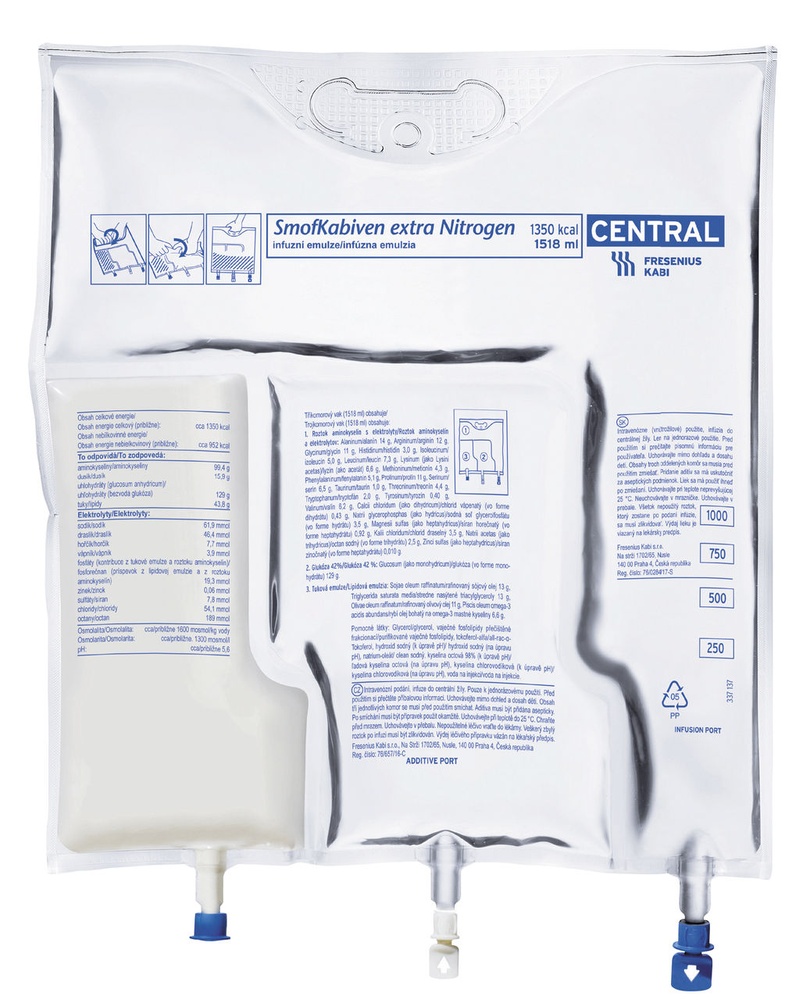
The Bag
506 ml, 1012 ml, 1518 ml, 2025 ml, 2531 ml
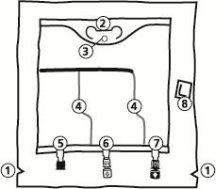
- Notches on the overbag
- Handle
- Hole for hanging the bag
- Breakable seals
- Blind port (used only during manufacturing)
- Additive port
- Infusion port
- Oxygen absorber
- Opening the overbag
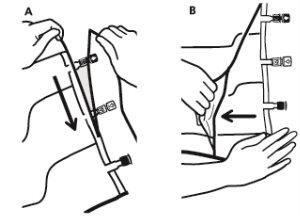
- To remove the overbag, hold it in a horizontal position and tear along the notch towards the ports along the top edge (A)
- Then, simply tear along the container; separate the overbag and discard it along with the oxygen absorber (B).
- Mixing
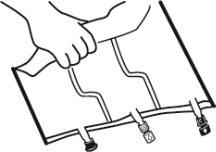
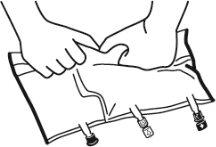
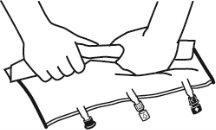
- Place the bag on a flat surface.
- Roll the bag from the hanger part towards the port part, first with the right hand and then applying constant pressure with the left hand until the vertical seals have opened. The peel-type vertical seals open due to the liquid pressure.
The peel-type seals can also be opened before removing the overbag.
Note:The liquids mix easily even if the horizontal seal remains closed.
506 ml, 1012 ml, 1518 ml, 2025 ml, 2531 ml
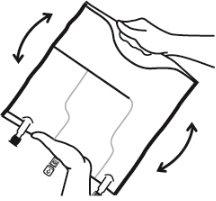
- Mix the contents of the three chambers by inverting the bag three times until the components are completely mixed.
- Final Preparation:
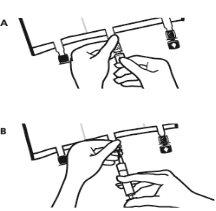
- Place the bag back on a flat surface. Just before injecting additives, break the white additive port by the arrow mark (A).
Note:The additive port membrane is sterile.
- Hold the base of the additive port. Insert the needle, inject the additives (of known compatibility) through the center of the injection point (B).
- Mix completely between each addition, inverting the bag three times. Use syringes with 18-23 gauge needles and a maximum length of 40 mm.
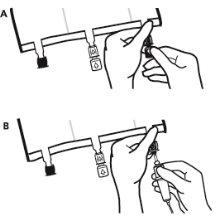
- Just before inserting the infusion set, break the blue infusion port by the arrow mark (A).
Note:The infusion port membrane is sterile.
- Use non-vented infusion equipment or close the air inlet of the vented equipment.
- Hold the base of the infusion port.
- Insert the spike through the infusion port. The spike should be fully inserted to ensure its retention.
Note:The inside of the infusion port is sterile.
- Hanging the Bag
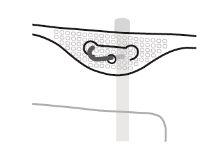
- Hang the bag by the ring under the hanger
- Country of registration
- Dosage formINJECTABLE PERFUSION, N/A (more than 4 active ingredients)
- ATC codeB05BA10
- Active substance
- Prescription requiredYes
- Manufacturer
- CompositionGLICEROL (E 422) (25,0. Cámara lipídica g mg), HIDROXIDO DE SODIO (E 524) (C.S.P. pH 8. Cámara lipídica mg mg), OLEATO DE SODIO (0,3. Cámara lipídica g mg)
- This information is for reference only and does not constitute medical advice. Always consult a doctor before taking any medication. Oladoctor is not responsible for medical decisions based on this content.
- Alternatives to SMOFKABIVEN EXTRA NITROGEN WITHOUT ELECTROLYTES EMULSION FOR INFUSIONDosage form: INJECTABLE PERFUSION, 3.92 g / 1.26 g / 7.21 g / 3.36 g / 4.2 g / 5.11 g / 2.94 g / 2.8 g / 4.76 g / 5.07 g / 4.06 g / 14.49 g / 0.28 g / 8.05 g / 3.5 g / 200 gActive substance: combinationsManufacturer: Baxter S.L.Prescription requiredDosage form: INJECTABLE INFUSION, 3.5 g / 200 g / 5.22 g / 1.88 g / 3.92 g / 1.26 g / 7.21 g / 3.36 g / 4.2 g / 5.11 g / 2.94 g / 2.8 g / 662 mg / 1.02 g / 4.76 g / 5.15 g / 5.07 g / 4.06 g / 14.49 g / 0.28 g / 8.05 gActive substance: combinationsManufacturer: Baxter S.L.Prescription requiredDosage form: INJECTABLE PERFUSION, 4.25 g / 300 g / 5.22 g / 1.54 g / 4.76 g / 1.53 g / 8.76 g / 4.08 g / 5.1 g / 6.2 g / 3.57 g / 3.4 g / 662 mg / 1.02 g / 5.78 g / 5.94 g / 6.16 g / 4.93 g / 17.6 g / 0.34 g / 9.78 gActive substance: combinationsManufacturer: Baxter S.L.Prescription required
Online doctors for SMOFKABIVEN EXTRA NITROGEN WITHOUT ELECTROLYTES EMULSION FOR INFUSION
Discuss questions about SMOFKABIVEN EXTRA NITROGEN WITHOUT ELECTROLYTES EMULSION FOR INFUSION, including use, safety considerations and prescription review, subject to medical assessment and local regulations.









Get SMOFKABIVEN EXTRA NITROGEN WITHOUT ELECTROLYTES EMULSION FOR INFUSION Prescription Online
Fill in a 2-min form
Tell us your symptoms, history, and what medicine you're requesting.
Pick a doctor or let us assign
Choose a specialist or we'll match you with the next available doctor.
Doctor reviews your case
Usually within 30 minutes. They may ask follow-up questions via chat.
Collect from any pharmacy
Electronic prescription sent to your email — valid across Spain.
Frequently Asked Questions
SMOFKABIVEN EXTRA NITROGEN WITHOUT ELECTROLYTES EMULSION FOR INFUSION requires a prescription in Spain. You can check with a doctor online whether this medicine may be appropriate for your situation.
The active ingredient in SMOFKABIVEN EXTRA NITROGEN WITHOUT ELECTROLYTES EMULSION FOR INFUSION is combinations. This information helps identify medicines with the same composition but different brand names.
SMOFKABIVEN EXTRA NITROGEN WITHOUT ELECTROLYTES EMULSION FOR INFUSION is manufactured by Fresenius Kabi España, S.A.U.. Pharmacy brands and packaging may differ depending on the distributor.
Doctors such as Family doctors, Psychiatrists, Dermatologists, Cardiologists, Endocrinologists, Gastroenterologists, Pulmonologists, Nephrologists, Rheumatologists, Hematologists, Infectious disease physicians, Allergists, Geriatricians, Paediatricians, Oncologists may assess whether SMOFKABIVEN EXTRA NITROGEN WITHOUT ELECTROLYTES EMULSION FOR INFUSION is appropriate, depending on your situation and local regulations. You can book an online consultation to discuss your symptoms and possible next steps.
Spain has a well-developed healthcare infrastructure across major cities such as Madrid, Barcelona, Valencia, and Seville. Pharmacies are widely available and operate under strict regulations, ensuring access to prescribed medications.
You can buy SMOFKABIVEN EXTRA NITROGEN WITHOUT ELECTROLYTES EMULSION FOR INFUSION in Madrid, Barcelona, Seville, or Valencia at any local pharmacy with a valid prescription.
To obtain a prescription, you can use Oladoctor:
Other medicines with the same active substance (combinations) include CLINIMIX N12G20 SOLUTION FOR INFUSION, CLINIMIX N12G20E SOLUTION FOR INFUSION, CLINIMIX N14G30E SOLUTION FOR INFUSION. These may have different brand names or formulations but contain the same therapeutic ingredient. Always consult a doctor before switching or starting a new medicine.
