


SAPROPTERIN TEVA 100 mg ORAL SOLUBLE TABLETS
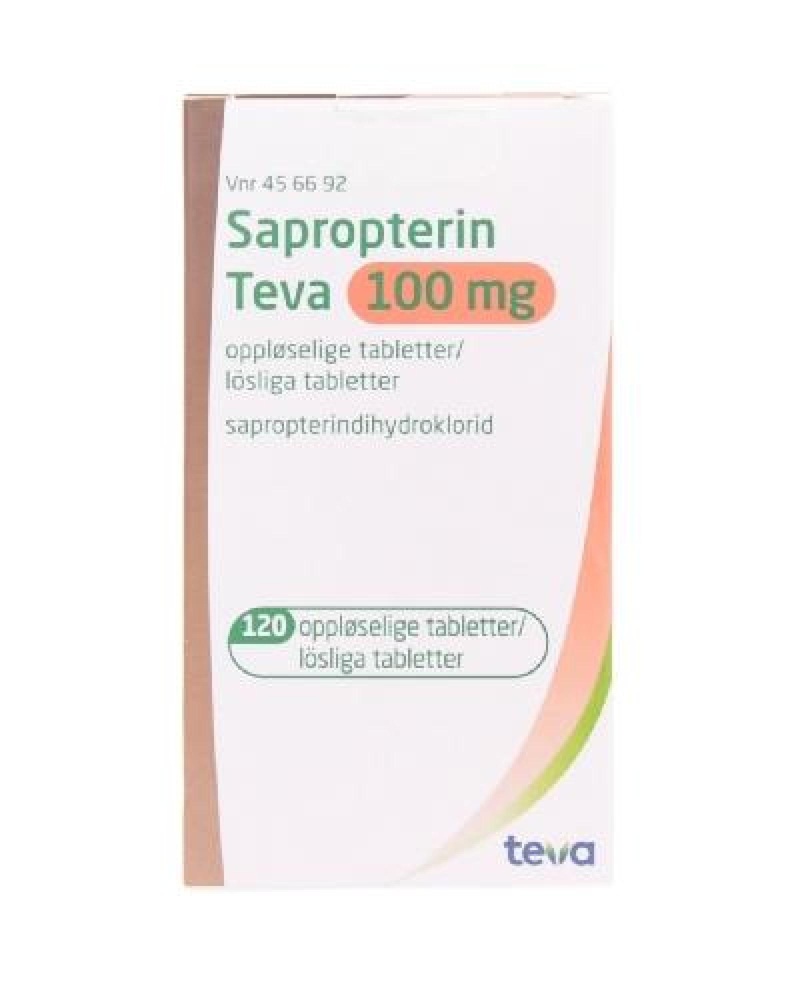



How to use SAPROPTERIN TEVA 100 mg ORAL SOLUBLE TABLETS
Translated with AI
This page provides general information and does not replace a doctor’s consultation. Always consult a doctor before taking any medication. Seek urgent medical care if symptoms are severe.
Show originalContents of the leaflet
Introduction
Leaflet:information for the patient
Sapropterina Teva 100 mg soluble tablets EFG
sapropterina dihydrochloride
Read the entire leaflet carefully before starting to take this medication,as it contains important information for you.
- Keep this leaflet, as you may need to read it again.
- If you have any questions, consult your doctor or pharmacist.
- This medication has been prescribed to you only, and you should not give it to others, even if they have the same symptoms as you, as it may harm them.
- If you experience side effects, consult your doctor or pharmacist, even if they are not listed in this leaflet. See section 4.
Contents of the leaflet
- What is Sapropterina Teva and what is it used for
- What you need to know before taking Sapropterina Teva
- How to take Sapropterina Teva
- Possible side effects
5 Storage of Sapropterina Teva
- Contents of the pack and further information
1. What is Sapropterina Teva and what is it used for
This medication contains the active ingredient sapropterin, which is a synthetic copy of a substance naturally found in the body called tetrahydrobiopterin (BH4). BH4 is necessary in the body to convert an amino acid called phenylalanine into another amino acid called tyrosine.
Sapropterina Teva is used to treat hyperphenylalaninemia (HPA) or phenylketonuria (PKU) in patients of any age. HPA and PKU are due to abnormally high levels of phenylalanine in the blood that can be harmful. Sapropterina reduces these levels in some patients who respond to BH4 and may help increase the amount of phenylalanine that can be included in the diet.
This medication is also used to treat a hereditary disease called BH4 deficiency in patients of any age, in which the body cannot produce enough BH4. Because BH4 levels are very low, the body cannot properly use phenylalanine, and the levels of this amino acid increase, having harmful effects. By replacing the BH4 that the body cannot produce, Sapropterina Teva reduces the harmful excess of phenylalanine in the blood and increases tolerance to dietary phenylalanine.

2. What you need to know before taking Sapropterina Teva
Do not take Sapropterina Teva
If you are allergic to sapropterin or any of the other components of this medication (listed in section 6).
Warnings and precautions
Consult your doctor or pharmacist before starting to take Sapropterina Teva, especially:
- if you are 65 years or older
- if you have kidney or liver problems
- if you are ill. It is recommended to consult with your doctor in case of illness, as blood phenylalanine levels may increase
- if you have a predisposition to seizures
When receiving treatment with sapropterin, your doctor will perform blood tests to check the phenylalanine and tyrosine content and decide whether to adjust the sapropterin dose or diet if necessary.
You should continue dietary treatment according to your doctor's recommendations. Do not change your diet without telling your doctor. Even if you take sapropterina, if your blood phenylalanine levels are not well controlled, you may experience serious neurological problems. Your doctor should continue to monitor your blood phenylalanine levels frequently during treatment with sapropterina, to ensure they are not too high or too low.
Other medications and Sapropterina Teva
Tell your doctor or pharmacist if you are taking, have recently taken, or may need to take any other medication. In particular, you should inform your doctor if you are using:
- levodopa (to treat Parkinson's disease)
- cancer treatments (e.g., methotrexate)
- antibiotics (e.g., trimethoprim)
- medications that cause blood vessel dilation (e.g., glyceryl trinitrate [GTN], isosorbide dinitrate [ISDN], sodium nitroprusside [SNP], molsidomine, minoxidil)
Pregnancy and breastfeeding
If you are pregnant or breastfeeding, think you may be pregnant, or plan to become pregnant, consult your doctor or pharmacist before using this medication.
If you are pregnant, your doctor will tell you how to properly control phenylalanine levels. If they are not strictly controlled before pregnancy or when you become pregnant, it may be harmful to you and your baby. Your doctor will monitor dietary phenylalanine restriction before and during pregnancy.
If a strict diet does not satisfactorily reduce the amount of phenylalanine in the blood, your doctor will consider whether you should take this medication.
You should not use this medication during breastfeeding.
Driving and using machines
Sapropterina Teva is not expected to affect your ability to drive or use machines.
Sapropterina Teva contains sodium
This medication contains less than 1 mmol of sodium (23 mg) per tablet; it is essentially "sodium-free".
3. How to take Sapropterina Teva
Follow your doctor's instructions for taking this medication exactly. If you are unsure, consult your doctor again.
Dose for PKU
The recommended initial dose of Sapropterina Teva in patients with PKU is 10 mg per kilogram of body weight. Take Sapropterina Teva once a day, with a meal to increase absorption, and at the same time each day, preferably in the morning. Your doctor may adjust the dose, usually between 5 and 20 mg daily per kilogram of body weight, based on your condition.
Dose for BH4 deficiency
The recommended initial dose of Sapropterina Teva in patients with BH4 deficiency is 2 to 5 mg per kilogram of body weight. Take Sapropterina Teva with a meal to increase absorption. Divide the total daily dose into 2 or 3 doses administered throughout the day. Your doctor may adjust the dose up to 20 mg daily per kilogram of body weight, based on your condition.
The following table is an example of how to calculate the appropriate dose
Body weight (kg) | Number of 100 mg tablets (10 mg/kg dose) | Number of 100 mg tablets (20 mg/kg dose) |
10 | 1 | 2 |
20 | 2 | 4 |
30 | 3 | 6 |
40 | 4 | 8 |
50 | 5 | 10 |
Method of administration
For patients with PKU, the total daily dose is taken once a day and at the same time each day, preferably in the morning.
For patients with BH4 deficiency, the total daily dose is divided into 2 or 3 doses distributed throughout the day.
Use in all patients
Place the prescribed tablets in a glass or cup of water, as described exactly below, and stir until they dissolve.
The tablets may take a few minutes to dissolve. To help the tablets dissolve faster, you can crush them. You may see small particles in the solution that will not affect the effectiveness of the medication. Drink the dissolved Sapropterina Teva preparation with a meal within 15 to 20 minutes of preparation.
Do not ingest the capsule with the desiccant included in the bottle.
Use in patients with a body weight over 20 kg
Place the tablets in a glass or cup (120 to 240 ml) of water and stir until they dissolve.
Use in children up to 20 kg of body weight
The dose is based on body weight, which will change as the child grows. Your doctor will tell you:
- the number of Sapropterina Teva tablets needed for a dose
- the amount of water needed to mix a dose of Sapropterina Teva
- the amount of solution to administer to the child for the prescribed dose
The child should drink the solution with a meal.
Administer the prescribed amount of solution to the child within 15 to 20 minutes of dissolving the tablets. If you cannot administer the dose to the child within 15 to 20 minutes of dissolving the tablets, you will need to prepare a new solution, as the unused solution should not be used after 20 minutes.
Materials needed to prepare and administer the dose of Sapropterina Teva to the child
- The number of Sapropterina Teva tablets needed for a dose
- A medicine cup with graduated markings corresponding to 20, 40, 60, and 80 ml
- A glass or cup
- A spoon or clean utensil for stirring
- An oral syringe (graduated in 1 ml divisions; a 10 ml syringe for administering volumes ≤10 ml or a 20 ml syringe for administering volumes >10 ml)
Ask your doctor for the medicine cup and oral syringe (10 ml or 20 ml) if you do not have these materials.
Steps for preparing and taking the dose:
- Place the prescribed tablets in the medicine cup. Pour the amount of water indicated by your doctor (e.g., your doctor told you to use 20 ml to dissolve one Sapropterina Teva tablet) into the medicine cup. Check that the liquid level aligns with the mark on the medicine cup indicated by your doctor. Stir with the spoon or clean utensil until the tablets dissolve.
- If your doctor told you to administer only part of the solution, insert the tip of the oral syringe into the medicine cup. Slowly pull the plunger back to draw up the amount indicated by your doctor.
- Transfer the solution to a glass or dosing cup by slowly pushing the plunger until all the solution previously drawn into the oral syringe is inside (e.g., if your doctor told you to dissolve two Sapropterina Teva tablets in 40 ml of water and administer 30 ml to the child, you will need to use the 20 ml oral syringe twice to draw up the 30 ml [e.g., 20 ml + 10 ml] of solution and transfer it to a glass or dosing cup). Use a 10 ml oral syringe for administering volumes ≤10 ml or a 20 ml oral syringe for administering volumes >10 ml.
- If the baby is too small to drink from a glass or cup, you can administer the solution using the oral syringe. Draw up the prescribed volume of prepared solution into the dosing cup and insert the tip of the oral syringe into the baby's mouth. Aim the tip of the oral syringe towards one of the cheeks. Slowly push the plunger, releasing a small amount at a time, until all the solution in the oral syringe is administered.
- Discard any remaining solution. Remove the plunger from the oral syringe body. Wash both parts of the oral syringe and the dosing cup with warm water and let them air dry. When the oral syringe is dry, reinsert the plunger into the oral syringe body. Store the oral syringe and medicine cup for the next use.
If you take more Sapropterina Teva than you should
If you take more Sapropterina Teva than prescribed, you may experience side effects that can include headache and dizziness. If you take more Sapropterina Teva than prescribed, inform your doctor or pharmacist immediately.
If you think you have taken an overdose and experience any of these symptoms, inform your doctor immediately. You can also call the Toxicology Information Service, Tel. 91 562 0420.
If you forget to take Sapropterina Teva
Do not take a double dose to make up for missed doses. Take the next dose at the usual time.
If you stop taking Sapropterina Teva
Do not stop taking Sapropterina Teva without discussing it with your doctor first, as phenylalanine levels in the blood may increase.
If you have any other questions about the use of this medication, ask your doctor or pharmacist.

4. Possible side effects
Like all medications, this medication can cause side effects, although not everyone will experience them.
There have been a few reports of allergic reactions (such as skin rashes and severe reactions). The frequency is unknown (the frequency cannot be estimated from the available data).
If you experience inflamed, red, and severely itchy areas (hives), runny nose, rapid or irregular heartbeat, swelling of the tongue or throat, sneezing, wheezing, severe breathing difficulties, or dizziness, you may be experiencing a severe allergic reaction to the medication. If you experience these symptoms, consult your doctor immediately.
Very common side effects (may affect more than 1 in 10 people)
Headache and runny nose.
Common side effects (may affect up to 1 in 10 people)
Sore throat, nasal congestion or blockage, cough, diarrhea, vomiting, stomach pain, low phenylalanine levels in blood tests, indigestion, and general discomfort (nausea) (see section 2: "Warnings and precautions").
Unknown side effects (cannot be estimated from the available data)
Gastritis (inflammation of the stomach lining), esophagitis (inflammation of the esophagus lining).
Reporting side effects
If you experience any side effects, consult your doctor, pharmacist, or nurse, even if they are not listed in this leaflet. You can also report them directly through the Spanish Medication Surveillance System for Human Use: https://www.notificaram.es By reporting side effects, you can help provide more information on the safety of this medication.
5. Storage of Sapropterina Teva
Keep this medication out of sight and reach of children.
Do not use this medication after the expiration date shown on the label and packaging after EXP. The expiration date is the last day of the month indicated.
Store below 25°C. Store in the original packaging to protect from light and moisture.
Medications should not be disposed of through wastewater or household waste. Deposit the packaging and any unused medication in the pharmacy's SIGRE collection point. If you have any questions, ask your pharmacist how to dispose of the packaging and any unused medication. This will help protect the environment.
6. Contents of the pack and further information
Composition of Sapropterina Teva
- The active ingredient is sapropterin dihydrochloride. Each tablet contains 100 mg of sapropterin dihydrochloride (equivalent to 77 mg of sapropterin).
- The other ingredients are mannitol (E421), pregelatinized starch (from corn), crospovidone (E1202), riboflavin (E101), ascorbic acid (E300), sodium stearyl fumarate, and sodium.
Appearance of the product and packaging contents
Sapropterina Teva 100 mg soluble tablets are round, white to light yellow tablets, approximately 9.5 mm in diameter, marked with "L71" on one side and "T" on the other side.
They are available in high-density polyethylene (HDPE) bottles with child-resistant closures. Each bottle contains 30 or 120 tablets. The bottles are sealed with an aluminum foil seal. Each bottle contains a small plastic tube with desiccant (silica gel).
Not all pack sizes may be marketed.
Marketing authorization holder and manufacturer
Marketing authorization holder
Teva Pharma, S.L.U.
C/ Anabel Segura, 11
Edificio Albatros B, 1ª planta
28108 Alcobendas (Madrid)
Spain
Manufacturer
Teva Operations Poland Sp. Z.o.o
ul. Mogilska 80
31-546 Krakow
Poland
Date of the last revision of this leaflet:March 2022
Other sources of information
Detailed information about this medication is available on the website of the Spanish Agency for Medicines and Health Products (AEMPS) (http://www.aemps.gob.es/)
- Country of registration
- Dosage formTABLET, 100 mg
- ATC codeA16AX07
- Active substance
- Prescription requiredYes
- Manufacturer
- This information is for reference only and does not constitute medical advice. Always consult a doctor before taking any medication. Oladoctor is not responsible for medical decisions based on this content.
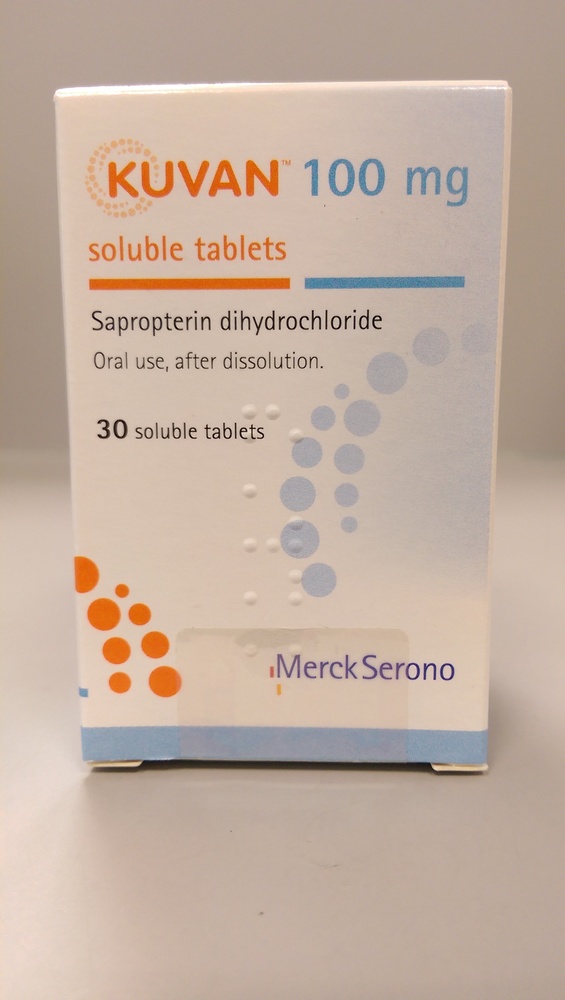
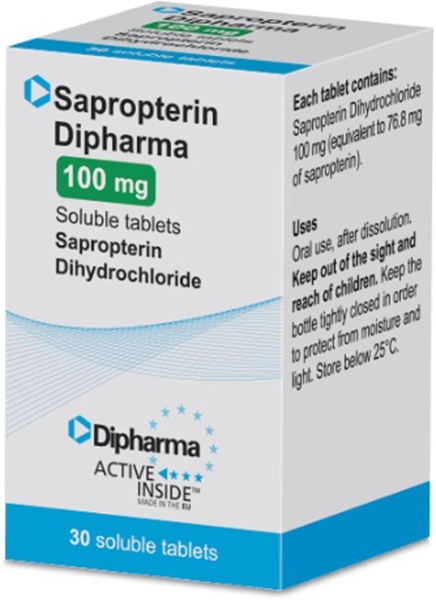
- Alternatives to SAPROPTERIN TEVA 100 mg ORAL SOLUBLE TABLETSDosage form: TABLET, 100 mgActive substance: sapropterinManufacturer: Biomarin International LimitedPrescription requiredDosage form: TABLET, 100 mgActive substance: sapropterinManufacturer: Aurovitas Spain, S.A.U.Prescription requiredDosage form: TABLET, 100 mgActive substance: sapropterinManufacturer: Dipharma Arzneimittel GmbhPrescription required
Online doctors for SAPROPTERIN TEVA 100 mg ORAL SOLUBLE TABLETS
Discuss questions about SAPROPTERIN TEVA 100 mg ORAL SOLUBLE TABLETS, including use, safety considerations and prescription review, subject to medical assessment and local regulations.



.jpg)





Frequently Asked Questions
