


SANCUSO 3.1 mg/24h TRANSDERMAL PATCH



How to use SANCUSO 3.1 mg/24h TRANSDERMAL PATCH
Translated with AI
This page provides general information and does not replace a doctor’s consultation. Always consult a doctor before taking any medication. Seek urgent medical care if symptoms are severe.
Show originalContents of the leaflet
Introduction
Package Leaflet: Information for the Patient
SANCUSO 3.1 mg/24 hours transdermal patch
granisetron
Read all of this leaflet carefully before you start using this medicine because it contains important information for you.
- Keep this leaflet, you may need to read it again.
- If you have any further questions, ask your doctor or nurse.
- This medicine has been prescribed for you only. Do not pass it on to others. It may harm them, even if their signs of illness are the same as yours.
- If you get any side effects, talk to your doctor or nurse. This includes any possible side effects not listed in this leaflet. See section 4.
Contents of the pack
- What SANCUSO is and what it is used for
- What you need to know before you use SANCUSO
- How to use SANCUSO
- Possible side effects
- Storing SANCUSO
- Contents of the pack and other information
1. What SANCUSO is and what it is used for
The active substance in SANCUSO is granisetron, which belongs to a group of medicines called antiemetics and antinauseants.
SANCUSO is a transdermal patch (skin patch) used to prevent nausea and vomiting in adults receiving chemotherapy (cancer treatments) for 3 to 5 days who have difficulty swallowing tablets (e.g., due to pain, dryness, or inflammation of the mouth or throat).
You should consult a doctor if it worsens or does not improve after the first day of chemotherapy.

2. What you need to know before you use SANCUSO
Do not use SANCUSO:
- if you are allergic to granisetron or any of the other ingredients of this medicine (listed in section 6);
- if you are allergic to any other anti-nausea medicine whose name ends in "setron", e.g., ondansetron.
Warnings and precautions
Consult your doctor or nurse before starting treatment if any of the following apply to you:
- if you have been told you have a heart disease or disorder;
- if you have stomach pain or a swollen stomach;
- if you have kidney or liver problems.
This medicine may not work as well and/or may affect the skin if exposed to direct sunlight or light from sunlamps or tanning beds. It is important to do the following:
- while wearing the transdermal patch, cover it with clothing if you are going to be exposed to sunlight or be near a sunlamp, including tanning beds;
- keep the skin where this medicine was applied covered for another 10 days after removing the transdermal patch to protect the area from exposure to direct sunlight.
It is not known how activities such as swimming, strenuous exercise, or using saunas or hot tubs may affect this medicine. Avoid these activities while wearing the transdermal patch. You can continue to shower or bathe normally while wearing the transdermal patch.
External heat, e.g., from hot water bottles or heat pads, should be avoided in the area of the transdermal patch.
Children and adolescents
This medicine must not be used by children and adolescents under 18 years.
Using SANCUSO with other medicines
Tell your doctor or nurse if you are using, have recently used, or might use any other medicines. SANCUSO may affect how some medicines work. Similarly, some medicines may affect how SANCUSO works. In particular, tell your doctor or nurse if you are taking the following medicines:
- Paracetamol, used to treat pain.
- Phenobarbital, used to treat epilepsy.
- Ketoconazole, used to treat fungal infections.
- SSRIs (selective serotonin reuptake inhibitors) used to treat depression and/or anxiety, including fluoxetine, paroxetine, sertraline, fluvoxamine, citalopram, and escitalopram.
- SNRIs (serotonin and norepinephrine reuptake inhibitors) used to treat depression and/or anxiety, including venlafaxine and duloxetine.
- Buprenorphine, opioids, or other serotonergic medicines.
Pregnancy and breastfeeding
Do not use this medicine if you are pregnant unless your doctor has specifically recommended it.
Breastfeeding should be interrupted while wearing the patch.
If you are pregnant or breastfeeding, think you may be pregnant, or plan to become pregnant, consult your doctor before using this medicine.
Driving and using machines
SANCUSO has no influence on the ability to drive and use machines.
3. How to use SANCUSO
Follow the instructions for administration of this medicine exactly as told by your doctor. If you are unsure, consult your doctor or nurse again.
The recommended dose is one transdermal patch. The medicine from the transdermal patch passes gradually into your body through the skin, and so the patch should be applied 1 to 2 days (24 to 48 hours) before starting chemotherapy.
This medicine is administered transdermally. This medicine releases the active substance slowly and constantly through the skin and enters the bloodstream for the entire time you wear the transdermal patch.
Things to remember while using the transdermal patch
- Do not store or keep the transdermal patch outside the sealed pouch.
- Do not cut the transdermal patch into smaller pieces.
- Use only one transdermal patch at a time.
- When you remove the transdermal patch, look at the skin and tell your doctor if you see a severe skin reaction (if your skin is very red, itchy, or if you see blisters).
- Direct sunlight or exposure to sunlamps may affect the transdermal patch. While wearing the transdermal patch, you must keep it covered, for example, under clothing, if there is a risk of exposure to direct sunlight or sunlamps. Continue to cover the application area for another 10 days after removing the transdermal patch.
- Water contact while bathing or showering will not affect how SANCUSO works. However, the transdermal patch may partially detach. Try not to wear the transdermal patch in water for prolonged periods.
- There is no information on the effect of activities such as strenuous exercise or using saunas or hot tubs on the transdermal patch; therefore, you should avoid these activities while wearing the transdermal patch.
- You must avoid external heat (e.g., hot water bottles or heat pads) in the area of the transdermal patch.
When to apply and remove the transdermal patch
Do not remove the transdermal patch from the pouch until you are ready to apply it. Apply one transdermal patch at least 1 day (24 hours) before your chemotherapy appointment. You can apply the transdermal patch up to 2 days (48 hours) before chemotherapy. Wear the transdermal patch for the entire time you receive chemotherapy. You can wear the transdermal patch for up to 7 days, depending on the duration of chemotherapy. Remove the transdermal patch at least 1 day (24 hours) after completing chemotherapy.
Where to apply the transdermal patch
Apply the transdermal patch to a clean, dry, and intact area of skin on the outer aspect of the upper arm. If you cannot apply the transdermal patch to your arms, your doctor may tell you to apply it to your abdomen. The area you choose should not be oily, recently shaved, or have skin problems such as cuts, abrasions, or irritation (redness or a rash). Do not apply SANCUSO to areas treated with creams, oils, lotions, powders, or other skin products that could make the transdermal patch not stick well to the skin.
How to apply the transdermal patch
- Take a pouch from the carton and open it using the slit provided. Each pouch contains one transdermal patch stuck to a rigid plastic film.
- Remove the transdermal patch from the pouch.
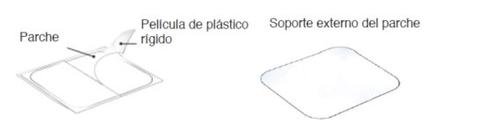
- The adhesive side of the transdermal patch is covered by a rigid plastic film in two pieces. Fold the transdermal patch in half and remove one half of the rigid plastic film. Be careful not to touch the adhesive side of the transdermal patch to itself and avoid touching the adhesive side of the transdermal patch.
- While holding the remaining half of the rigid plastic film, apply the transdermal patch to the skin of the outer aspect of the upper arm.
- Remove the second half of the rigid plastic film and press the entire transdermal patch firmly in place with your fingers, making sure it is in contact with the skin, especially around the edges.
- Wash your hands after applying the transdermal patch.
- Leave the transdermal patch in place for the entire time you receive chemotherapy.
- Do not re-use the transdermal patch once removed. The following instructions are for disposal of the transdermal patch (see section 5).
After removing the transdermal patch
- The used transdermal patch still contains some granisetron and should be disposed of immediately as described in section 5.
- After removing the transdermal patch, you may see some adhesive residue on the skin. Gently wash the area with soap and water to remove it. Alcohol or other liquid solvents such as nail varnish remover may cause skin irritation and should not be used.
- Wash your hands.
- You may see some redness of the skin where the transdermal patch was applied. This redness should go away with time. If it does not go away, tell your doctor.
If the transdermal patch comes off
If the transdermal patch starts to come off, you can apply the same transdermal patch to the same area of skin. If necessary, use surgical tape or a bandage to hold the transdermal patch in place. If the transdermal patch is lost or damaged, contact your doctor.
If you use more SANCUSO than you should
If you use more SANCUSO than you should, just remove the extra patches and consult your doctor.
If you forget to use SANCUSO
It is important to use this medicine as instructed by your doctor to prevent nausea or vomiting after chemotherapy. If you forget to apply the transdermal patch at the right time, apply it as soon as you remember and tell your doctor as soon as possible before chemotherapy.
If you stop using SANCUSO
It is important that you use this medicine for the entire duration of your chemotherapy (up to 7 days) to prevent nausea or vomiting after chemotherapy. Consult your doctor if you want to remove the patch before completing the chemotherapy treatment cycle (up to 7 days).
If you have any other questions about using this medicine, ask your doctor or nurse.

4. Possible side effects
Like all medicines, SANCUSO can cause side effects, although not everybody gets them.
If you are receiving chemotherapy that makes you feel moderately or severely sick, you may still be sick despite treatment with an anti-sickness medicine, including this one.
Tell your doctor immediatelyif you develop constipation or if you have stomach pain or swelling. Constipation is a common side effect and may affect up to 1 in 10 people.
Remove the transdermal patch and tell your doctorif you notice:
- signs and symptoms of a condition called serotonin syndrome, which can be severe and, in some cases, life-threatening. These may include changes in blood pressure (which may make you feel dizzy or have a headache), fast heart rate, blurred vision (which may be due to dilation of the pupil of the eye), sweating, increased bowel movements/noises, shivering, trembling, muscle spasms or jerks, and overactive reflexes. You may also have a high fever, feel agitated or confused, have stiff muscles, and notice that you talk more than usual. It is not known how many people will develop serotonin syndrome (it cannot be estimated from the available data);
- a severe skin reaction (if your skin is very red, itchy, or if you see blisters). Skin reactions at the application site, such as irritation, itching, or redness, are uncommon and may affect up to 1 in 100 people.
Other possible side effects:
Uncommon side effects are:
- headache, feeling of "spinning" even when standing still (vertigo);
- decreased appetite, weight loss;
- flushing (or redness of the skin);
- feeling sick (nausea), retching, dry mouth;
- joint pain;
- swelling due to fluid retention (edema);
- changes in liver function tests (if you have blood tests, tell your doctor or nurse that you have received SANCUSO).
Rare side effects (may affect up to 1 in 1,000 people) are:
- abnormal muscle movements (such as tremors, muscle stiffness, and muscle contractions).
Side effects with a frequency not known (cannot be estimated from the available data):
Skin allergic reactions. Signs can include small, itchy, raised red bumps.
Other possible side effects associated with granisetron medicines (frequency not known):
- Allergic reactions, including urticaria (raised, itchy, red rash) and anaphylaxis (a severe allergic reaction that can include sudden wheezing, difficulty breathing, swelling of the eyelids, face, or lips, rash, or itching).
- Difficulty sleeping/sleep disturbances.
- Excessive sleepiness.
- Prolongation of the QT interval in the ECG (changes in heart rhythm [ECG] indicating a heart rhythm disorder).
- Constipation.
- Diarrhea.
- Lack of energy/weakness/loss of strength.
Reporting of side effects
If you experience any side effects, talk to your doctor or nurse, even if it is not listed in this leaflet. You can also report side effects directly through the national reporting system listed in Appendix V. By reporting side effects, you can help provide more information on the safety of this medicine.
5. Storing SANCUSO
Keep this medicine out of the sight and reach of children.
Do not use this medicine after the expiry date which is stated on the carton and on the pouch after EXP. The expiry date is the last day of the month shown.
Store in the original packaging to protect from light.
Used transdermal patches still contain active ingredients, which may be harmful to others. Fold the used transdermal patch in half with the adhesive side inwards and dispose of it safely, out of the reach of children. Medicines should not be disposed of via wastewater or household waste. Ask your pharmacist how to dispose of medicines no longer required. This will help protect the environment.
6. Contents of the pack and other information
What SANCUSO contains
- The active substance is granisetron. Each 52 cm2 transdermal patch contains 34.3 mg of granisetron, which releases 3.1 mg of granisetron every 24 hours.
- The other ingredients are:
- Transdermal patch adhesive: acrylate-vinyl acetate copolymer
- Backing film: polyester
- Rigid plastic film: siliconized polyester
Appearance and packaging
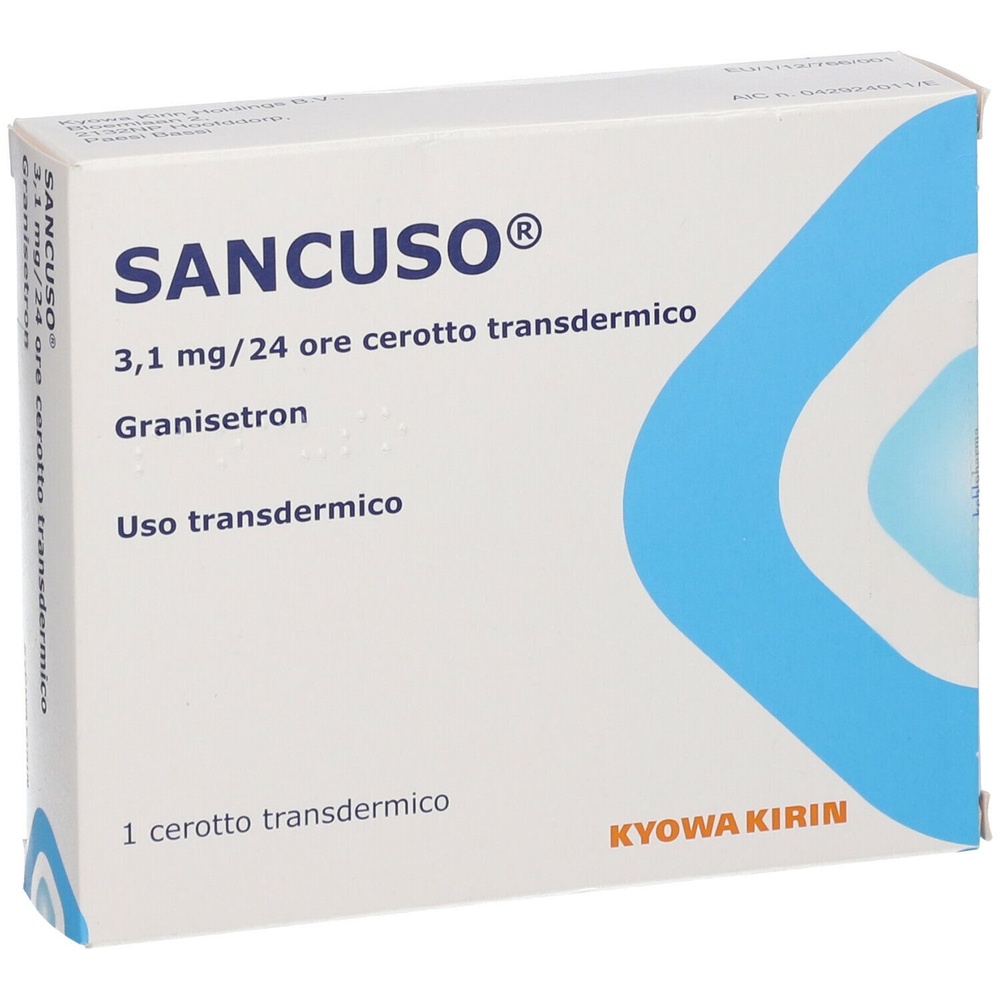
SANCUSO is a thin, transparent, and rectangular transdermal patch with rounded corners, stuck to a rigid plastic film. The transdermal patch comes in a pouch. Each carton contains one transdermal patch.
Marketing authorisation holder
Grünenthal GmbH
Zieglerstraße 6
52078 Aachen
Germany
Manufacturer
Pharbil Waltrop GmbH (a subsidiary of NextPharma)
ImWirrigen 25
45731 Waltrop
Germany
Date of last revision of this leaflet:
Detailed information on this medicine is available on the European Medicines Agency web site: http://www.ema.europa.eu.
- Country of registration
- Dosage formTRANSDERMAL PATCH, 3.1 mg/24 h
- ATC codeA04AA02
- Active substance
- Prescription requiredYes
- Manufacturer
- This information is for reference only and does not constitute medical advice. Always consult a doctor before taking any medication. Oladoctor is not responsible for medical decisions based on this content.
- Alternatives to SANCUSO 3.1 mg/24h TRANSDERMAL PATCHDosage form: INJECTABLE PERFUSION, 3 mg granisetron hydrochloride/50 mlActive substance: granisetronManufacturer: Altan Pharmaceuticals SaPrescription requiredDosage form: TABLET, 1 mgActive substance: granisetronManufacturer: Aurovitas Spain, S.A.U.Prescription requiredDosage form: INJECTABLE, 1 mgActive substance: granisetronManufacturer: Fresenius Kabi España, S.A.U.Prescription required

Online doctors for SANCUSO 3.1 mg/24h TRANSDERMAL PATCH
Discuss questions about SANCUSO 3.1 mg/24h TRANSDERMAL PATCH, including use, safety considerations and prescription review, subject to medical assessment and local regulations.











Frequently Asked Questions
