



RIVASTIGMINA 3 mg Hard Capsules

Prescription review online
A doctor will review your case and decide whether a prescription is medically appropriate.

Talk to a doctor about this medicine
Discuss your symptoms and possible next steps in a quick online consultation.



How to use RIVASTIGMINE STADAFARMA 3 mg HARD CAPSULES
Contents of the leaflet
- Introduction
- What is Rivastigmine Stadafarma and what is it used for
- What you need to know before you take Rivastigmine Stadafarma
- How to take Rivastigmine Stadafarma
- Possible side effects
- Patients with dementia or Parkinson's disease
- Storing Rivastigmine Stadafarma
- Contents of the pack and other information
- Manufacturer
Introduction
Package Leaflet: Information for the User
Rivastigmine Stadafarma 1.5 mg Hard Capsules EFG
Rivastigmine Stadafarma 3 mg Hard Capsules EFG
Rivastigmine Stadafarma 4.5 mg Hard Capsules EFG
Rivastigmine Stadafarma 6 mg Hard Capsules EFG
Read all of this leaflet carefully before you start taking this medicine because it contains important information for you.
- Keep this leaflet, you may need to read it again.
- If you have any further questions, ask your doctor, pharmacist, or nurse.
- This medicine has been prescribed for you only. Do not pass it on to others. It may harm them, even if their signs of illness are the same as yours.
- If you get any side effects, talk to your doctor, pharmacist, or nurse. This includes any possible side effects not listed in this leaflet. See section 4.
Contents of the pack
- What is Rivastigmine Stadafarma and what is it used for
- What you need to know before you take Rivastigmine Stadafarma
- How to take Rivastigmine Stadafarma
- Possible side effects
- Storing Rivastigmine Stadafarma
- Contents of the pack and other information
1. What is Rivastigmine Stadafarma and what is it used for
The active substance in Rivastigmine Stadafarma is rivastigmine.
Rivastigmine belongs to a group of substances called cholinesterase inhibitors. In patients with Alzheimer's dementia or dementia associated with Parkinson's disease, certain nerve cells die in the brain, causing low levels of the neurotransmitter acetylcholine (a substance that allows nerve cells to communicate with each other). Rivastigmine works by blocking the enzymes that break down acetylcholine: acetylcholinesterase and butyrylcholinesterase. By blocking these enzymes, rivastigmine allows an increase in acetylcholine in the brain, helping to reduce the symptoms of Alzheimer's disease and dementia associated with Parkinson's disease.
Rivastigmine is used to treat adult patients with mild to moderately severe Alzheimer's dementia, a progressive brain disorder that gradually affects memory, intellectual ability, and behavior. The capsules and oral solution can also be used to treat dementia in adult patients with Parkinson's disease.

Not sure if this medicine is right for you?
Discuss your symptoms and treatment with a doctor online.
2. What you need to know before you take Rivastigmine Stadafarma
Do not take Rivastigmine Stadafarma:
- if you are allergic to rivastigmine or any of the other ingredients of this medicine (listed in section 6).
- if you have a skin reaction that spreads beyond the patch size, if there is a more intense local reaction (such as blisters, increasing skin inflammation, swelling) and if there is no improvement within 48 hours after removing the transdermal patch.
If you are in any of these situations, inform your doctor and do not take rivastigmine.
Warnings and precautions
Consult your doctor before starting to take Rivastigmine Stadafarma:
- if you have or have ever had an irregular or slow heart rate (pulse), prolonged QTc, family history of prolonged QTc, torsades de pointes, or if you have low blood levels of potassium or magnesium.
- if you have or have ever had an active stomach ulcer.
- if you have or have ever had difficulty urinating.
- if you have or have ever had seizures.
- if you have or have ever had asthma or severe respiratory disease.
- if you have or have ever had (impairment) of kidney function.
- if you have or have ever had (impairment) of liver function.
- if you suffer from tremors.
- if you have low body weight.
- if you have gastrointestinal reactions such as a feeling of nausea, vomiting, and diarrhea. You may become dehydrated (lose a large amount of fluid) if vomiting or diarrhea is prolonged.
If you are in any of these situations, your doctor may consider it necessary to monitor you more closely while you are being treated.
If you have not taken rivastigmine for more than three days, do not take the next dose until you have consulted your doctor.
Children and adolescents
Rivastigmine should not be used in the pediatric population for the treatment of Alzheimer's disease.
Other medicines and Rivastigmine Stadafarma
Tell your doctor or pharmacist if you are taking, have recently taken, or might take any other medicines.
Rivastigmine should not be administered at the same time as other medicines with similar effects to those of rivastigmine. Rivastigmine may interfere with anticholinergic medicines (medicines used to relieve stomach cramps or spasms, for the treatment of Parkinson's disease, or to prevent travel sickness).
Rivastigmine should not be administered at the same time as metoclopramide (a medicine used to relieve or prevent nausea and vomiting). Taking the two medicines together may cause problems such as stiffness in the limbs and hand tremors.
In case you need to undergo surgery while taking rivastigmine, inform your doctor before you are given any anesthetic, as rivastigmine may exaggerate the effects of some muscle relaxants during anesthesia.
Caution should be exercised when using rivastigmine with beta-blockers (medicines such as atenolol used to treat high blood pressure, angina, and other heart conditions). Taking the two medicines together may cause complications such as a decrease in heart rate (bradycardia) that can lead to fainting or loss of consciousness.
Caution should be exercised when using rivastigmine with other medicines that may affect heart rate or the heart's electrical system (prolonged QT).
Pregnancy, breastfeeding, and fertility
If you are pregnant or breastfeeding, think you may be pregnant, or are planning to have a baby, ask your doctor or pharmacist for advice before taking this medicine.
If you are pregnant, it is necessary to evaluate the benefits of using rivastigmine against the possible adverse effects for the fetus. Rivastigmine should not be used during pregnancy unless it is clearly necessary.
You should not breastfeed during treatment with rivastigmine.
Driving and using machines
Your illness may affect your ability to drive or use machines, and you should not carry out these activities unless your doctor tells you it is safe to do so.
Rivastigmine may cause dizziness and drowsiness, mainly at the start of treatment or when the dose is increased. If you experience these effects, do not drive or use machines.
3. How to take Rivastigmine Stadafarma
Follow exactly the administration instructions of this medicine given by your doctor or pharmacist. In case of doubt, consult your doctor, pharmacist, or nurse again.
How to start treatment
Your doctor will tell you what dose of rivastigmine you should take.
- Normally, treatment starts with a low dose.
- Your doctor will gradually increase the dose depending on how you respond to treatment.
- The highest dose you should take is 6 mg twice a day.
Your doctor will regularly check if the medicine is working for you. Your doctor will also check your weight while you are taking this medicine.
If you have not taken rivastigmine for more than three days, do not take the next dose until you have consulted your doctor.
Taking this medicine
- Tell your caregiver that you are taking rivastigmine.
- To benefit from your medicine, take it every day.
- Take rivastigmine twice a day (in the morning and in the evening), with meals.
- Swallow the capsule whole with the help of liquid.
- Do not open or crush the capsule.
If you take more Rivastigmine Stadafarma than you should
If you accidentally take more rivastigmine than you should, inform your doctor. You may need medical attention.
In case of overdose or accidental ingestion, consult your doctor or pharmacist immediately or call the Toxicology Information Service, phone: 91 562 04 20, indicating the medicine and the amount ingested. Some people who have accidentally taken higher doses have suffered from nausea, vomiting, diarrhea, high blood pressure, and hallucinations. There may also be a slowing of the heart rate and fainting.
If you forget to take Rivastigmine Stadafarma
If you miss a dose of rivastigmine, wait and take the next dose at the usual time. Do not take a double dose to make up for forgotten doses.
If you have any other questions about the use of this medicine, ask your doctor or pharmacist.

Started taking the medicine and have questions?
Discuss your symptoms and treatment with a doctor online.
4. Possible side effects
Like all medicines, this medicine can cause side effects, although not everybody gets them.
You may have side effects more often when you start your treatment or when your dose is increased. Generally, side effects will slowly disappear as your body gets used to the medicine.
Frequencies are defined as:
- Very common (may affect more than 1 in 10 people).
- Common (may affect up to 1 in 10 people).
- Uncommon (may affect up to 1 in 100 people).
- Rare (may affect up to 1 in 1,000 people).
- Very rare (may affect up to 1 in 10,000 people).
- Frequency not known (cannot be estimated from the available data).
Very common (may affect more than 1 in 10 people).
- Nausea.
- Lack of appetite.
- Stomach problems, such as nausea, vomiting, diarrhea.
Common (may affect up to 1 in 10 people).
- Anxiety.
- Sweating.
- Headache.
- Heartburn.
- Weight loss.
- Stomach pain.
- Feeling of agitation.
- Feeling of fatigue or weakness.
- Feeling of general discomfort.
- Tremors or feeling of confusion.
- Decreased appetite.
- Nightmares.
Uncommon (may affect up to 1 in 100 people).
- Depression.
- Difficulty sleeping.
- Fainting or accidental falls.
- Changes in liver function.
Rare (may affect up to 1 in 1,000 people).
- Chest pain.
- Skin rash, itching.
- Seizures (convulsions).
- Ulcers in your stomach or intestine.
Very rare (may affect up to 1 in 10,000 people).
- High blood pressure.
- Urinary tract infection.
- Seeing things that do not exist (hallucinations).
- Heart rate problems, such as fast or slow heart rate.
- Gastrointestinal bleeding - manifested as blood in the stool or when vomiting.
- Pancreatitis - signs include severe pain in the upper part of the stomach, often with nausea or vomiting.
- Worsening of Parkinson's disease symptoms or development of similar symptoms - such as muscle stiffness, difficulty moving.
Frequency not known (cannot be estimated from the available data).
- Severe vomiting that can cause a tear in the tube that connects your mouth to your stomach (esophagus).
- Dehydration (loss of a large amount of fluid).
- Liver disorders (yellowing of the skin, yellowing of the whites of the eyes, abnormal darkening of urine or unexplained nausea, vomiting, fatigue, and loss of appetite).
- Aggression, feeling of restlessness.
- Irregular heart rate.
- Pisa syndrome (a condition that involves involuntary muscle contraction and abnormal tilting of the body and head to one side).
Patients with dementia or Parkinson's disease
These patients experience some side effects more frequently and also have some additional side effects:
Very common (may affect more than 1 in 10 people).
- Tremors.
- Fainting.
- Accidental falls.
Common (may affect up to 1 in 10 people).
- Anxiety.
- Feeling of restlessness.
- Fast or slow heart rate.
- Difficulty sleeping.
- Excessive saliva and dehydration.
- Abnormally slow movements or movements that you cannot control.
- Worsening of Parkinson's disease symptoms or development of similar symptoms - such as muscle stiffness, difficulty moving, and muscle weakness.
Uncommon (may affect up to 1 in 100 people).
- Irregular heartbeat and loss of movement control.
Frequency not known (cannot be estimated from the available data).
- Pisa syndrome (a condition that involves involuntary muscle contraction and abnormal tilting of the body and head to one side).
Other side effects observed in rivastigmine transdermal patches and that may appear with hard capsules:
Common (may affect up to 1 in 10 people).
- Fever.
- Severe confusion.
- Urinary incontinence (inability to properly hold urine).
Uncommon (may affect up to 1 in 100 people).
- Hyperactivity (high level of activity, restlessness).
Frequency not known (cannot be estimated from the available data).
- Allergic reaction where the patch was applied, such as blisters or skin inflammation.
If you experience any of these side effects, contact your doctor as you may need medical attention.
Reporting of side effects
If you experience any side effects, talk to your doctor, pharmacist, or nurse. This includes any possible side effects not listed in this leaflet. You can also report side effects directly through the Spanish Medicines Monitoring System for Human Use: www.notificaram.es. By reporting side effects, you can help provide more information on the safety of this medicine.
5. Storing Rivastigmine Stadafarma
Keep this medicine out of the sight and reach of children.
This medicine does not require any special storage conditions.
Do not use this medicine after the expiry date which is stated on the carton and blister, after EXP. The expiry date is the last day of the month stated.
Medicines should not be disposed of via wastewater or household waste. Ask your pharmacist how to dispose of medicines no longer required. These measures will help protect the environment.
6. Contents of the pack and other information
Composition of Rivastigmine Stadafarma
- The active substance is rivastigmine hydrogen tartrate.
- Rivastigmine Stadafarma 1.5 mg: each hard capsule contains rivastigmine hydrogen tartrate equivalent to 1.5 mg of rivastigmine.
- Rivastigmine Stadafarma 3 mg: each hard capsule contains rivastigmine hydrogen tartrate equivalent to 3 mg of rivastigmine.
- Rivastigmine Stadafarma 4.5 mg: each hard capsule contains rivastigmine hydrogen tartrate equivalent to 4.5 mg of rivastigmine.
- Rivastigmine Stadafarma 6 mg: each hard capsule contains rivastigmine hydrogen tartrate equivalent to 6 mg of rivastigmine.
- The other ingredients (excipients) are:
Powder: microcrystalline cellulose, hypromellose, magnesium stearate, anhydrous colloidal silica, and purified water.
Capsule: red iron oxide (E-172), titanium dioxide (E-171), and gelatin.
Rivastigmine Stadafarma 3 mg, 4.5 mg, and 6 mg capsules also contain yellow iron oxide (E172).
Appearance and packaging
Rivastigmine Stadafarma 1.5 mg are hard capsules of a reddish-brown color that contain a white to slightly yellowish powder.
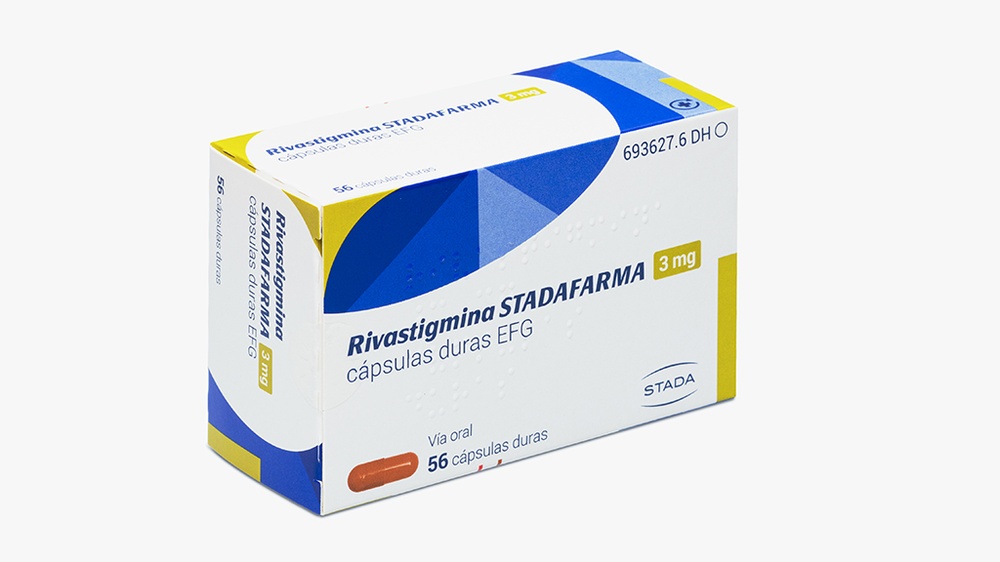
Rivastigmine Stadafarma 3 mg are hard capsules of an orange color that contain a white to slightly yellowish powder.
Rivastigmine Stadafarma 4.5 mg are hard capsules of a caramel color that contain a white to slightly yellowish powder.
Rivastigmine Stadafarma 6 mg are hard capsules with an orange cap and a reddish-brown body that contain a white to slightly yellowish powder.
They are packaged in blisters and are available in three different presentations: 28, 56, and 112 capsules.
Not all pack sizes may be marketed.
Marketing authorization holder and manufacturer
Marketing authorization holder
Laboratorio STADA, S.L.
Frederic Mompou, 5
08960 Sant Just Desvern (Barcelona)
Spain
Manufacturer
Laboratorios Medicamentos Internacionales, S.A. (MEDINSA)
c/ Solana, 26.
28850 Torrejón de Ardoz (Madrid)
Spain
or
Laboratori Fundació Dau
c/ C 12-14,
Polígono Industrial de la Zona Franca,
08040 Barcelona
Spain
Date of last revision of this leaflet: January 2025.
Detailed information on this medicine is available on the website of the Spanish Agency for Medicines and Health Products (AEMPS) http://www.aemps.gob.es/
- Country of registration
- Dosage formCAPSULE, 3.0 mg
- ATC codeN06DA03
- Active substance
- Prescription requiredYes
- Manufacturer
- This information is for reference only and does not constitute medical advice. Always consult a doctor before taking any medication. Oladoctor is not responsible for medical decisions based on this content.
- Alternatives to RIVASTIGMINE STADAFARMA 3 mg HARD CAPSULESDosage form: TRANSDERMAL PATCH, 13.3 mg/24 hActive substance: rivastigmineManufacturer: Esteve Pharmaceuticals S.A.Prescription requiredDosage form: TRANSDERMAL PATCH, 4.6 mg/24 hActive substance: rivastigmineManufacturer: Esteve Pharmaceuticals S.A.Prescription requiredDosage form: TRANSDERMAL PATCH, 9.5 mg/24 hActive substance: rivastigmineManufacturer: Esteve Pharmaceuticals S.A.Prescription required
Online doctors for RIVASTIGMINE STADAFARMA 3 mg HARD CAPSULES
Discuss questions about RIVASTIGMINE STADAFARMA 3 mg HARD CAPSULES, including use, safety considerations and prescription review, subject to medical assessment and local regulations.









Get RIVASTIGMINE STADAFARMA 3 mg HARD CAPSULES Prescription Online
Fill in a 2-min form
Tell us your symptoms, history, and what medicine you're requesting.
Pick a doctor or let us assign
Choose a specialist or we'll match you with the next available doctor.
Doctor reviews your case
Usually within 30 minutes. They may ask follow-up questions via chat.
Collect from any pharmacy
Electronic prescription sent to your email — valid across Spain.
Frequently Asked Questions
RIVASTIGMINE STADAFARMA 3 mg HARD CAPSULES requires a prescription in Spain. You can check with a doctor online whether this medicine may be appropriate for your situation.
The active ingredient in RIVASTIGMINE STADAFARMA 3 mg HARD CAPSULES is rivastigmine. This information helps identify medicines with the same composition but different brand names.
RIVASTIGMINE STADAFARMA 3 mg HARD CAPSULES is manufactured by Laboratorio Stada S.L.. Pharmacy brands and packaging may differ depending on the distributor.
Doctors such as Family doctors, Psychiatrists, Dermatologists, Cardiologists, Endocrinologists, Gastroenterologists, Pulmonologists, Nephrologists, Rheumatologists, Hematologists, Infectious disease physicians, Allergists, Geriatricians, Paediatricians, Oncologists may assess whether RIVASTIGMINE STADAFARMA 3 mg HARD CAPSULES is appropriate, depending on your situation and local regulations. You can book an online consultation to discuss your symptoms and possible next steps.
Spain has a well-developed healthcare infrastructure across major cities such as Madrid, Barcelona, Valencia, and Seville. Pharmacies are widely available and operate under strict regulations, ensuring access to prescribed medications.
You can buy RIVASTIGMINE STADAFARMA 3 mg HARD CAPSULES in Madrid, Barcelona, Seville, or Valencia at any local pharmacy with a valid prescription.
To obtain a prescription, you can use Oladoctor:
Other medicines with the same active substance (rivastigmine) include ALZERTA 13.3 mg/24h TRANSDERMAL PATCHES, ALZERTA 4.6 mg/24h TRANSDERMAL PATCHES, ALZERTA 9.5 mg/24h TRANSDERMAL PATCHES. These may have different brand names or formulations but contain the same therapeutic ingredient. Always consult a doctor before switching or starting a new medicine.
