



RISPERIDONA 1 mg /Ml Oral Solution

Prescription review online
A doctor will review your case and decide whether a prescription is medically appropriate.

Talk to a doctor about this medicine
Discuss your symptoms and possible next steps in a quick online consultation.



How to use RISPERIDONE VIATRIS 1 mg/ml ORAL SOLUTION
Contents of the leaflet
- Introduction
- What Risperidone Viatris is and what it is used for
- What you need to know before taking Risperidone Viatris
- How to take Risperidone Viatris
- Possible Adverse Effects
- Storage of Risperidona Viatris
- Package Contents and Additional Information
Introduction
Package Leaflet: Information for the Patient
Risperidone Viatris 1 mg/ml Oral Solution EFG
Read the entire package leaflet carefully before starting to take this medication, as it contains important information for you.
- Keep this package leaflet, as you may need to read it again.
- If you have any questions, consult your doctor or pharmacist.
- This medication has been prescribed to you only, and you should not give it to others, even if they have the same symptoms as you, as it may harm them.
- If you experience side effects, consult your doctor or pharmacist, even if they are not listed in this package leaflet. See section 4.
Contents of the Package Leaflet
- What Risperidone Viatris is and what it is used for.
- What you need to know before taking Risperidone Viatris.
- How to take Risperidone Viatris.
- Possible side effects.
- Storage of Risperidone Viatris.
- Package Contents and Additional Information.
1. What Risperidone Viatris is and what it is used for
Risperidone Viatris belongs to a group of medications called "antipsychotics".
Risperidone Viatris is used to treat the following:
- Schizophrenia, where you may see, hear, or feel things that are not there, believe in something that is not true, or feel particularly suspicious or confused.
- Mania, where you may feel very excited, elated, agitated, enthusiastic, or hyperactive. Mania occurs in a condition called "bipolar disorder".
- Short-term treatment (up to 6 weeks) of persistent aggression in people with Alzheimer's disease, who may harm themselves or others. They must have tried other alternative treatments (non-pharmacological) previously.
- Short-term treatment (up to 6 weeks) of persistent aggression in intellectually disabled children and adolescents with behavioral disorders.
Risperidone Viatris may help reduce the symptoms of your illness and prevent them from coming back.

Not sure if this medicine is right for you?
Discuss your symptoms and treatment with a doctor online.
2. What you need to know before taking Risperidone Viatris
Do not take Risperidone Viatris
- If you are allergic to risperidone or any of the other components of this medication (listed in section 6).
Warnings and Precautions
Consult your doctor or pharmacist before starting to take Risperidone Viatris if:
- You are taking furosemide (a diuretic used to reduce swelling and fluid retention caused by various medical conditions, including heart or liver disease).
- You have any heart problems. Examples include: irregular heartbeat, if you experience weakness of the heart muscle (heart failure), have had a heart attack, or if you are prone to having low blood pressure or if you use medications for blood pressure. Risperidone may lower blood pressure. You may need to have your dose adjusted.
- You know of any factor that may make you prone to having a stroke, such as high blood pressure, cardiovascular disease, or problems with the blood vessels in the brain.
- You know of any factor that may make you prone to developing blood clots, such as current or past smoking, or if you are likely to be immobile for a prolonged period (e.g., after surgery or illness).
- You or a family member have a history of blood clots, as medications like this have been associated with their formation.
- You have or have had a low white blood cell count in your blood, particularly if this has occurred when taking other medications.
- You have ever experienced involuntary movements of the tongue, mouth, and face.
- You have ever experienced symptoms that include fever, muscle stiffness, sweating, or a decrease in level of consciousness (also known as Neuroleptic Malignant Syndrome).
- You have Parkinson's disease (a brain disease that affects movement, such as tremors, rigid posture, slow movements, and shuffling feet) or dementia (a general decline in intellectual ability, such as memory loss and other mental faculties), particularly dementia with Lewy bodies (a set of abnormal proteins that appear inside neurons in Parkinson's disease).
- You are diabetic or at risk of developing diabetes (you may have high blood sugar levels).
- You have epilepsy.
- You are male and have ever had a prolonged or painful erection.
- You have problems controlling your body temperature or feel excessive heat.
- You suffer from, or start to suffer from during treatment, dehydration or have low blood volume (hypovolemia).
- You have low levels of potassium or magnesium in your blood.
- You have kidney problems.
- You have liver problems.
- You have an abnormally high level of the hormone prolactin in your blood or if you have a tumor that may be dependent on prolactin.
If you are unsure about any of the above, consult your doctor or pharmacist before starting to take risperidone.
During treatment
Risperidone may cause changes in your white blood cell count, which help fight infections, so your doctor may perform blood tests before and during treatment.
Risperidone may cause you to gain weight. Significant weight gain can negatively affect your health. Your doctor should measure your body weight periodically.
Because an increase in the occurrence of diabetes mellitus or worsening of pre-existing diabetes mellitus has been observed in patients taking risperidone, your doctor should determine if there are signs of high blood sugar levels. In patients with a history of diabetes mellitus, blood sugar levels should be regularly monitored.
It is common for risperidone to increase the levels of a hormone called "prolactin". This could cause side effects, such as menstrual disorders or fertility problems in women, breast swelling in men, decreased libido, impotence, and spontaneous milk secretion from the mammary glands (see "Possible side effects"). If such side effects occur, it is recommended to evaluate prolactin levels in the blood.
If you are scheduled to undergo eye surgery, inform your doctor or hospital staff that you are taking this medication. During cataract surgery (a clouding of the eye's lens), this medication could affect the pupil or iris (the colored part of the eye) and cause eye injury.
Elderly patients with dementia
In elderly patients with dementia, there is an increased risk of having a stroke (also known as a transient ischemic attack or TIA). You should not take risperidone if you have dementia caused by a stroke. During treatment with risperidone, you should see your doctor frequently.
If you or your caregiver notice a sudden change in your mental state or the sudden appearance of weakness or numbness in your face, arms, or legs, especially on one side, or confused speech, even if only for a short time, seek medical attention immediately. It may be a sign of a stroke.
Children and adolescents
Other causes of aggressive behavior should be ruled out before starting treatment for behavioral disorders.
Before starting treatment, your child's body weight should be measured and monitored periodically.
If during treatment with risperidone your child experiences fatigue, changing the administration hours may improve their attention difficulties.
A small, inconclusive study has shown an increase in height in children given risperidone, but it is unknown whether this is due to the effect of the medication or other reasons.
Other medications and Risperidone Viatris
Tell your doctor or pharmacist if you are taking, have recently taken, or may take any other medication.
It is especially important that you talk to your doctor or pharmacist if you are taking any of the following products:
- Medications that act on your brain, such as those used to calm you down (benzodiazepines) or some pain medications (opioids), medications for allergies (some antihistamines), as risperidone may increase their sedative effect.
- Medications that can change the electrical activity of your heart, such as those used for malaria (quinine, mefloquine), heart rhythm problems (such as quinidine, disopyramide, procainamide, propafenone, amiodarone, sotalol), allergies (antihistamines), some antidepressants, tricyclic antidepressants (such as maprotiline), or other medications for mental problems.
- Medications that cause a slow heartbeat, such as beta-blockers or verapamil (used to treat high blood pressure or angina).
- Medications that cause low potassium levels in the blood (e.g., some diuretics).
- Medications for high blood pressure. Risperidone may lower blood pressure.
- Medications for Parkinson's disease (such as levodopa).
- Medications that increase the activity of the central nervous system (psychostimulants, such as methylphenidate).
- Diuretics, which are used for heart problems or to treat swelling of some parts of the body due to fluid retention (such as furosemide or hydrochlorothiazide). Risperidone, taken alone or with furosemide, may increase the risk of stroke or death in elderly patients with dementia.
The following medications may decrease the effect of risperidone:
- Rifampicin (a medication for treating some infections).
- Carbamazepine, phenytoin (medications for epilepsy).
- Phenobarbital.
If you start or stop taking these medications, you may need a different dose of risperidone.
The following medications may increase the effect of risperidone:
- Quinidine (used for certain types of heart disease).
- Antidepressants such as paroxetine, fluoxetine, sertraline, fluvoxamine, and tricyclic antidepressants (such as amitriptyline).
- Medications known as beta-blockers and verapamil (used to treat high blood pressure).
- Phenothiazines, paliperidone oral (e.g., used to treat psychosis or as sedatives).
- Cimetidine, ranitidine (stomach acid blockers).
- Itraconazole and ketoconazole (medications for treating fungal infections).
- Certain medications used in the treatment of HIV/AIDS, such as ritonavir.
If you start or stop taking these medications, you may need a different dose of risperidone.
If you are unsure about any of the above, consult your doctor or pharmacist before using risperidone.
Taking Risperidone Viatris with alcohol
You should avoid consuming alcohol while taking risperidone.
Pregnancy, breastfeeding, and fertility
- If you are pregnant or breastfeeding, think you may be pregnant, or plan to become pregnant, consult your doctor or pharmacist before using this medication. Your doctor will decide if you can take it.
- The following symptoms may occur in newborns of mothers who have taken risperidone in the last trimester of pregnancy (last three months): tremors, muscle stiffness, and/or weakness, drowsiness, agitation, breathing problems, and difficulty feeding. If your baby experiences any of these symptoms, you should contact your doctor.
- Risperidone may increase the levels of a hormone called "prolactin" that can affect fertility in female or male patients (see section 4 Possible side effects).
Driving and using machines
Dizziness, fatigue, and vision problems have been observed during treatment with risperidone. Do not drive or operate tools or machines without consulting your doctor first.
Risperidone Viatris contains benzoic acid (E-210)
This medication contains 1.5 mg of benzoic acid in each ml of oral solution. Benzoic acid may increase the risk of jaundice (yellowing of the skin and eyes) in newborns (up to 4 weeks of age).
3. How to take Risperidone Viatris
Follow the instructions for administration of this medication indicated by your doctor. If you are unsure, consult your doctor or pharmacist again.
The recommended dose is as follows:
For the treatment of schizophrenia
Adults
- The initial dose is 2 mg per day, which may be increased to 4 mg per day on the second day.
- Your doctor may adjust your dose depending on how you respond to treatment.
- Most people feel better with daily doses of 4 mg to 6 mg.
- This daily total dose can be divided into one or two doses per day. Your doctor will indicate which dose is best for you.
Elderly patients
- The initial dose will normally be 0.5 mg, twice a day.
- Later, your doctor may gradually increase your dose to 1 mg to 2 mg, twice a day.
- Your doctor will indicate which dose is best for you.
For the treatment of mania
Adults
- The initial dose will normally be 2 mg, once a day.
- Later, your doctor may adjust your dose gradually depending on your response to treatment.
- Most people feel better with daily doses of 1 mg to 6 mg.
Elderly patients
- The initial dose will normally be 0.5 mg, twice a day.
- Later, your doctor may adjust your dose gradually to 1 mg to 2 mg, twice a day, depending on your response to treatment.
For the treatment of long-term aggression in people with Alzheimer's disease
Adults (including elderly patients)
- The initial dose will normally be 0.25 mg, twice a day.
- Later, your doctor may gradually change your dose depending on your response to treatment.
- Most people feel better with doses of 0.5 mg, twice a day. Some patients may need 1 mg, twice a day.
- The duration of treatment in patients with Alzheimer's disease should not exceed 6 weeks.
Use in children and adolescents
- Children and adolescents under 18 years of age should not receive treatment with Risperidone Viatris for schizophrenia or mania.
For the treatment of behavioral disorders in children and adolescents
The dose depends on your child's weight:
If they weigh less than 50 kg
- The initial dose will normally be 0.25 mg, once a day.
- The dose may be increased, one day yes and one day no, in increments of 0.25 mg per day.
- The normal maintenance dose is 0.25 mg to 0.75 mg, once a day.
If they weigh 50 kg or more
- The initial dose will normally be 0.5 mg, once a day.
- The dose may be increased, one day yes and one day no, in increments of 0.5 mg per day.
- The normal maintenance dose is 0.5 mg to 1.5 mg, once a day.
The duration of treatment in patients with behavioral disorders should not exceed 6 weeks.
Children under 5 years of age should not receive treatment with risperidone for behavioral disorders.
Patients with liver or kidney problems
Regardless of the disease being treated, all initial doses and subsequent doses of risperidone should be reduced by half. Dose increases should be made more slowly in these patients.
Risperidone should be used with caution in this group of patients.
How to take Risperidone Viatris
Your doctor will indicate how much medication you should take and for how long. This will depend on your illness and may vary from person to person.
The solution comes with a syringe. You should use it to measure the exact amount of medication you need.
Follow these steps:
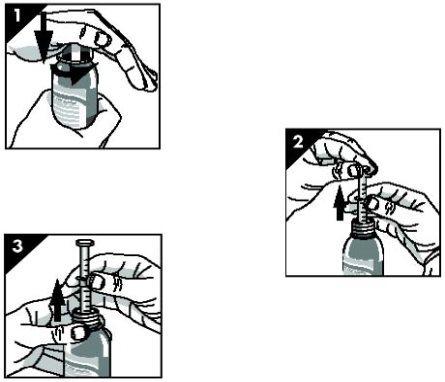
- Remove the child-resistant cap. Push the plastic cap down, turning it counterclockwise (Figure 1).
- Insert the syringe into the vial.
- Holding the lower ring, pull the upper ring up to the mark that corresponds to the number of ml or mg you should administer (Figure 2).
- Holding the lower ring, remove the entire syringe from the vial (Figure 3).
- Empty the pipette into a non-alcoholic beverage that is not tea. Slide the upper ring down.
- Close the vial.
- Wash the syringe with water.
If you take more Risperidone Viatris than you should
- Go to the doctor immediately. Take the medication package with you. You can also call the Toxicology Information Service, phone 91 562 04 20, indicating the medication and the amount taken.
- In case of overdose, you may feel drowsy or tired, have abnormal body movements, problems standing and walking, dizziness due to low blood pressure, or have abnormal heartbeats or convulsions.
If you forget to take Risperidone Viatris
- If you forget to take a dose, take it as soon as you remember. But if it's close to the time for your next dose, skip the missed dose and continue as usual. If you forget two or more doses, contact your doctor.
- Do not take a double dose (two doses at once) to make up for missed doses.
If you interrupt treatment with Risperidone Viatris
You should not stop taking the treatment unless your doctor tells you to. Symptoms may come back or you may experience nausea, vomiting, sweating, difficulty sleeping, and involuntary movement disorders. If your doctor decides to interrupt the treatment, your dose may be gradually decreased over a few days.
If you have any other questions about the use of this medication, ask your doctor or pharmacist.

Started taking the medicine and have questions?
Discuss your symptoms and treatment with a doctor online.
4. Possible Adverse Effects
Like all medicines, this medicine can cause adverse effects, although not all people will suffer from them.
Contact your doctor immediately or go to the emergency department of a hospitalif you experience any of the following adverse effects:
Frequent (may affect up to 1 in 10 people):
- Development of pulmonary infections, including severe pulmonary infections such as pneumonia – may present with an increase in body temperature, cough with mucus, which may be with blood or frothy, and feeling very unwell.
Uncommon (may affect up to 1 in 100 people):
- Weakness or sudden numbness of the face, arms, or legs, especially on one side, cases of vision problems or difficulty speaking that last less than 24 hours. These can be signs of a mini-stroke (TIA), stroke, or reduced blood flow to the brain.
- Abnormal heart rhythm, such as heart palpitations (fibrillation), very slow or abnormal heart rhythm (heart block). These can be caused by abnormal electrical conduction of the heart and can be detected as an anomaly in the electrical activity of the heart (electrocardiogram or ECG). In some cases, this can be potentially fatal.
- Lack of response to stimuli (change in internal or external environment), decreased consciousness or loss of consciousness or seizures.
- Involuntary rhythmic movements of the tongue, mouth, and face. It may be necessary to interrupt risperidone.
- Development of diabetes – occurs when the body is unable to control blood sugar levels correctly. You may feel very thirsty, need to urinate frequently, have an increased appetite, feel tired and drowsy. If left untreated, it can lead to coma or complications resulting from uncontrolled diabetes.
- Infections with symptoms such as fever and severe deterioration of your general condition, or fever with symptoms of local infection such as sore throat or mouth. Risperidone may cause a significant decrease in the number of white blood cells in the blood, and as a consequence, decrease your resistance to infections. You will have blood tests to check for a possible reduction in white blood cells in the blood. It is essential to tell your doctor that you are taking this medicine.
- Pulmonary infection caused by the passage of food into the airways, pulmonary congestion (e.g., due to an accumulation of phlegm).
- Infection under the skin, usually in the thighs and buttocks (cellulitis).
- Inability to urinate or incomplete emptying of the bladder.
Rare (may affect up to 1 in 1,000 people):
- Severe allergic reaction causing difficulty breathing and shock, swollen face, sudden swelling of the lips and eyes, tongue or throat, difficulty swallowing, hives, and decreased blood pressure.
- Unexplained muscle pain, muscle cramps, or muscle weakness (rhabdomyolysis).
- Blood clots in the veins, especially in the legs (symptoms include swelling, pain, and redness of the leg), which can travel through the blood vessels to the lungs and cause chest pain and difficulty breathing. If you notice any of these symptoms, go to the doctor immediately.
- Fever, muscle stiffness, sweating, or a decrease in the level of consciousness (a disorder called "Neuroleptic Malignant Syndrome"). Immediate medical treatment may be necessary.
- Prolonged or painful erection, called priapism. Immediate medical treatment may be necessary.
- Abdominal pain that radiates to the back. This can be a symptom of pancreatitis.
- Increased eye pressure (glaucoma), which can cause vision problems and serious long-term vision problems.
- Decrease in the normal level of sodium in the blood, which can make you feel weak, confused, and have muscle pains. This can be due to inadequate secretion of the hormone (ADH), which makes the body retain water and dilute the blood, reducing the amount of sodium. It can be associated with excessive intake of large amounts of water (more than 2 liters of water per day).
Very Rare (may affect up to 1 in 10,000 people):
- Loss of appetite, unexplained weight loss, nausea, vomiting, stomach pain, difficulty breathing, slow heart rate, unusual muscle pain, or feeling of weakness, fatigue, or discomfort. These can be signs of a potentially fatal complication of uncontrolled diabetes, called diabetic ketoacidosis.
The following adverse effects may also appear:
Very Common (may affect more than 1 in 10 people):
- Parkinsonism. It is a medical term that includes several symptoms. Each individual symptom may occur with less frequency than 1 in 10 people. Parkinsonism includes: increased saliva secretion or very moist mouth, musculoskeletal stiffness, drooling, pain when bending limbs, slower, reduced, or difficult body movements, lack of facial expression, muscle tension, torticollis, muscle stiffness, short and rapid steps when walking, dragging feet, and absence of normal arm movements, persistent blinking in response to forehead tapping (an abnormal reflex).
- Headache, difficulty staying or falling asleep.
- Drowsiness, drowsiness.
Common (may affect up to 1 in 10 people):
- Fatigue, tiredness, inability to stay still, anxiety, drowsiness, depression, agitation, dizziness, feeling of exhaustion, sleep disturbance.
- Vomiting, diarrhea, constipation, nausea, heartburn or indigestion, abdominal pain or discomfort, sore throat, dry mouth, toothache.
- Weight gain, increased body temperature, increased appetite, decreased appetite.
- Shortness of breath, flu, blurred vision, eye infections or allergic reactions that can produce a sticky discharge, sinus infections, nasal congestion, nasal bleeding, cough.
- Urinary tract infection, bedwetting, inability to control urine flow (incontinence).
- Tremors, muscle cramps, involuntary movements of the face or arms and legs, repetitive movements or abnormal postures associated with muscle contractions, muscle and joint pain, back pain.
- Fluid retention in the body (e.g., swelling of arms and legs), pain in arms and legs.
- Rash, skin redness, ear infections.
- Fast heartbeat, chest pain, increased blood pressure.
- Falls.
- Increased prolactin hormone levels in the blood.
Uncommon (may affect up to 1 in 100 people):
- Excessive water consumption, thirst, fecal incontinence, gas, hoarseness or voice disorder.
- High blood sugar levels.
- Bladder infection, viral infection, and other infections, tonsil infection, stomach infection, eye discharge, fungal infection of the nails.
- Decrease in blood pressure when standing up, decrease in blood pressure, feeling of dizziness when changing position, feeling heartbeats, slow heartbeat.
- Pain when urinating, frequent urination.
- Confusion, attention disorder, excessive sleepiness, nightmares, nervousness, elevated mood (mania).
- Increased liver enzymes, decreased hemoglobin or red blood cell count (anemia), increased eosinophils (special white blood cells), increased creatine phosphokinase, decreased platelet count (blood cells that help stop bleeding), increased cholesterol in the blood.
- Muscle weakness, excessive restlessness associated with muscle spasms and tremors, ear pain, neck pain, joint swelling, abnormal posture, joint stiffness, chest discomfort.
- Skin injury, skin disorder, dry skin, intense itching, acne, hair loss, eczema (skin inflammation), which can be due to mites, skin discoloration, skin thickening, flushing, feeling of pins and needles, reduced skin sensitivity to pain or touch, inflammation of the fatty skin.
- Absence of menstruation, sexual dysfunction, erectile dysfunction, ejaculation disorder, breast secretion, breast enlargement in males, breast pain or discomfort, decreased sexual desire, irregular or late menstruation, vaginal discharge.
- Fainting, gait disorder (way of walking), inactivity, weight loss, reduced appetite with malnutrition and weight loss, feeling of "indisposition", balance disorder, allergy, chills, coordination anomaly, taste disturbances.
- Increased sensitivity to light, increased blood flow to the eye, dry eyes, increased tearing.
- Crepitus in the lungs, speech problems, difficulty swallowing, wheezing or whistling when breathing.
- Ringing in the ears, feeling of movement and dizziness (vertigo), facial edema.
Rare (may affect up to 1 in 1,000 people):
- Inability to reach orgasm, breast enlargement, sensitivity, and swelling of the breasts.
- Dandruff.
- Coldness in arms and legs, tongue swelling, lip inflammation, hardening of body parts such as the skin.
- Absence of movement or response while awake (catatonia).
- Sleepwalking.
- Sleep-related eating disorder.
- Formation of crusts on the eyelid margin, eye movement, problems with eye movement, complications during cataract surgery.
- Absence of emotions.
- Medication withdrawal syndrome.
- Decrease in body temperature.
- Rapid and shallow breathing, respiratory problems during sleep, sinus arrhythmia (a normal variation in heart rate caused by breathing).
- Movement disorder.
- Head tremor.
- Yellowing of the skin and eyes (jaundice).
- Presence of blood sugar (glucose) in the urine, low blood sugar levels, high insulin and fat (triglycerides) levels in the blood.
Very Rare (may affect up to 1 in 10,000 people):
- Intestinal obstruction (persistent constipation accompanied by abdominal swelling and vomiting).
The following adverse effects have appeared with the use of another medicine called paliperidone, which is very similar to risperidone, so it is also expected to appear with risperidone: Fast heartbeat when standing up.
Unknown: Cannot be estimated from available data
- Severe skin rash or potentially fatal rash with blisters and skin peeling that can start in the mouth and around, nose, eyes, and genitals and spread to other areas of the body (Stevens-Johnson syndrome or toxic epidermal necrolysis)
Other Adverse Effects in Children and Adolescents
In general, it is expected that adverse effects in children will be similar to those that appeared in adults.
The following adverse effects were reported more frequently in children and adolescents (5 to 17 years) than in adults: feeling drowsy or less alert, fatigue (tiredness), headache, increased appetite, vomiting, common cold symptoms, nasal congestion, abdominal pain, dizziness, cough, fever, tremor (shaking), diarrhea, and urinary incontinence (loss of control).
Reporting Adverse Effects
If you experience any type of adverse effect, consult your doctor or pharmacist, even if it is a possible adverse effect that does not appear in this prospectus. You can also report them directly through the Spanish Pharmacovigilance System for Human Use Medicines: https://www.notificaram.es. By reporting adverse effects, you can contribute to providing more information on the safety of this medicine.
5. Storage of Risperidona Viatris
Keep this medicine out of sight and reach of children.
Do not use this medicine after the expiration date that appears on the packaging or on the bottle, after CAD or EXP. The expiration date is the last day of the month indicated.
Do not store at a temperature above 30°C. Do not refrigerate or freeze. Keep in the original packaging.
Once the bottle is opened, what has not been used should be discarded after 4 months.
Medicines should not be thrown down the drain or into the trash. Deposit the packaging and medicines you no longer need in the SIGRE Point of the pharmacy. In case of doubt, ask your pharmacist how to dispose of the packaging and medicines you no longer need. This way, you will help protect the environment.
6. Package Contents and Additional Information
Composition of Risperidona Viatris
The active ingredient is risperidone. Each ml of oral solution contains 1 mg of risperidone.
The other components are tartaric acid (E334), benzoic acid (E210), hydrochloric acid, and purified water.
Appearance of the Product and Package Contents
The oral solution is transparent and colorless. It is available in amber glass bottles with a child-resistant cap, containing 30 ml, 60 ml, 100 ml, and 120 ml.
A syringe (pipette) is included to facilitate accurate measurement. A pipette cleaner is also included.
Only some package sizes may be marketed.
Marketing Authorization Holder and Manufacturer
Marketing Authorization Holder
Viatris Limited
Damastown Industrial Park
Mulhuddart, Dublin 15
Dublin
Ireland
Manufacturer
Chanelle Medical Unlimited Company
Dublin Road, Loughrea, County Galway
Ireland
or
McDermott Laboratories Ltd. t/a Gerard Laboratories
35/36 Baldoyle Industrial Estate, Grange Road, Dublin 13
Ireland
or
Mylan Hungary Kft.
Mylan utca 1
Komárom, 2900
Hungary
You can request more information about this medicine by contacting the local representative of the marketing authorization holder:
Viatris Pharmaceuticals, S.L.U.
C/ General Aranaz, 86
28027 - Madrid
Spain
This medicine is authorized in the Member States of the European Economic Area with the following names:
Germany: Risperidon dura 1 mg/ml Lösung zum Einnehmen
Spain: Risperidona Viatris 1 mg/ml oral solution EFG
Italy: Risperidone Mylan Generics
Netherlands: Risperidon drank Mylan 1 mg/ml, drank
Portugal: Risperidona Mylan 1 mg/ml, oral solution
United Kingdom: Risperidone 1 mg/ml oral solution
Date of the last revision of this prospectus:August 2024
Detailed information about this medicine is available on the website of the Spanish Agency for Medicines and Health Products (AEMPS) https://www.aemps.gob.es/
- Country of registration
- Dosage formORAL SOLUTION/SUSPENSION, 1 mg/ml
- ATC codeN05AX08
- Average pharmacy price13.66 EUR
- Availability in pharmaciesSupply issue reported
- Active substance
- Prescription requiredYes
- Manufacturer
- CompositionACIDO BENZOICO (E210) (1,50 mg mg)
- This information is for reference only and does not constitute medical advice. Always consult a doctor before taking any medication. Oladoctor is not responsible for medical decisions based on this content.
- Alternatives to RISPERIDONE VIATRIS 1 mg/ml ORAL SOLUTIONDosage form: TABLET, 1 mgActive substance: risperidoneManufacturer: Neuraxpharm Spain S.L.Prescription requiredDosage form: TABLET, 3 mgActive substance: risperidoneManufacturer: Neuraxpharm Spain S.L.Prescription requiredDosage form: TABLET, 6 mgActive substance: risperidoneManufacturer: Neuraxpharm Spain S.L.Prescription required
Online doctors for RISPERIDONE VIATRIS 1 mg/ml ORAL SOLUTION
Discuss questions about RISPERIDONE VIATRIS 1 mg/ml ORAL SOLUTION, including use, safety considerations and prescription review, subject to medical assessment and local regulations.







Get RISPERIDONE VIATRIS 1 mg/ml ORAL SOLUTION Prescription Online
Fill in a 2-min form
Tell us your symptoms, history, and what medicine you're requesting.
Pick a doctor or let us assign
Choose a specialist or we'll match you with the next available doctor.
Doctor reviews your case
Usually within 30 minutes. They may ask follow-up questions via chat.
Collect from any pharmacy
Electronic prescription sent to your email — valid across Spain.
Frequently Asked Questions
RISPERIDONE VIATRIS 1 mg/ml ORAL SOLUTION requires a prescription in Spain. You can check with a doctor online whether this medicine may be appropriate for your situation.
The active ingredient in RISPERIDONE VIATRIS 1 mg/ml ORAL SOLUTION is risperidone. This information helps identify medicines with the same composition but different brand names.
The average pharmacy price for RISPERIDONE VIATRIS 1 mg/ml ORAL SOLUTION is around 13.66 EUR. Prices may vary depending on the manufacturer and dosage form.
RISPERIDONE VIATRIS 1 mg/ml ORAL SOLUTION is manufactured by Viatris Limited. Pharmacy brands and packaging may differ depending on the distributor.
Doctors such as Family doctors, Psychiatrists, Dermatologists, Cardiologists, Endocrinologists, Gastroenterologists, Pulmonologists, Nephrologists, Rheumatologists, Hematologists, Infectious disease physicians, Allergists, Geriatricians, Paediatricians, Oncologists may assess whether RISPERIDONE VIATRIS 1 mg/ml ORAL SOLUTION is appropriate, depending on your situation and local regulations. You can book an online consultation to discuss your symptoms and possible next steps.
Spain has a well-developed healthcare infrastructure across major cities such as Madrid, Barcelona, Valencia, and Seville. Pharmacies are widely available and operate under strict regulations, ensuring access to prescribed medications.
You can buy RISPERIDONE VIATRIS 1 mg/ml ORAL SOLUTION in Madrid, Barcelona, Seville, or Valencia at any local pharmacy with a valid prescription.
To obtain a prescription, you can use Oladoctor:
Other medicines with the same active substance (risperidone) include ARKETIN 1 mg FILM-COATED TABLETS, ARKETIN 3 mg FILM-COATED TABLETS, ARKETIN 6 mg FILM-COATED TABLETS. These may have different brand names or formulations but contain the same therapeutic ingredient. Always consult a doctor before switching or starting a new medicine.
