



RISPERIDONA 1 mg /Ml Oral Solution

Prescription review online
A doctor will review your case and decide whether a prescription is medically appropriate.

Talk to a doctor about this medicine
Discuss your symptoms and possible next steps in a quick online consultation.



How to use RISPERIDONE TARBIS 1mg/ml ORAL SOLUTION
Contents of the leaflet
- Introduction
- What Risperidona Tarbis is and what it is used for
- What you need to know before you take Risperidona Tarbis
- How to take Risperidona Tarbis
- Possible Adverse Effects
- Conservation of Risperidona Tarbis
- Package contents and additional information
Introduction
Package Leaflet: Information for theuser
Risperidona Tarbis 1 mg/ml oral solution EFG
Read all of this leaflet carefully before you start takingthis medicine, because it contains important information for you.
- Keep this leaflet, as you may need to read it again.
- If you have any further questions, ask your doctor or pharmacist.
- This medicine has been prescribed for you only. Do not pass it on to others. It may harm them, even if their symptoms are the same as yours.
- If you experience any side effects, talk to your doctor or pharmacist. This includes any possible side effects not listed in this leaflet. See section 4.
Contents of the pack
- What Risperidona Tarbis is and what it is used for
- What you need to know before you take Risperidona Tarbis
- How to take Risperidona Tarbis
- Possible side effects
- Storing Risperidona Tarbis
- Contents of the pack and other information
1. What Risperidona Tarbis is and what it is used for
Risperidona Tarbis belongs to a group of medicines called “antipsychotics”.
Risperidona Tarbis is used to treat the following:
- Schizophrenia, where you may see, hear, or feel things that are not there, believe in things that are not true, or feel unusually suspicious or confused.
- Mania, where you may feel very excited, elated, agitated, enthusiastic, or hyperactive. Mania occurs in a condition called “bipolar disorder”.
- Short-term treatment (up to 6 weeks) of persistent aggression in people with Alzheimer's dementia, who may harm themselves or others. Other alternative treatments (non-pharmacological) should have been tried before.
- Short-term treatment (up to 6 weeks) of persistent aggression in intellectually disabled children and adolescents with conduct disorders.
Risperidona Tarbis can help reduce the symptoms of your illness and prevent them from coming back.

Not sure if this medicine is right for you?
Discuss your symptoms and treatment with a doctor online.
2. What you need to know before you take Risperidona Tarbis
Do not take Risperidona Tarbis if:
- You are allergic to risperidone or any of the other ingredients of this medicine (listed in section 6).
If you are not sure, talk to your doctor or pharmacist before taking Risperidona Tarbis.
Warnings and precautions
Talk to your doctor or pharmacist before taking Risperidona Tarbis if:
- You have any heart problems. Examples include irregular heartbeats, or if you are prone to having low blood pressure or if you are taking medicines for high blood pressure. Risperidona Tarbis can lower blood pressure. You may need to have your dose adjusted.
- You know of any factor that may make you prone to having a stroke, such as high blood pressure, cardiovascular diseases, or problems with the blood vessels in the brain.
- You have ever had involuntary movements of the tongue, mouth, and face.
- You have ever had symptoms that include fever, muscle stiffness, sweating, or a decreased level of consciousness (also known as Neuroleptic Malignant Syndrome).
- You have Parkinson's disease or dementia.
- If you have had low white blood cell counts in the past (which may or may not have been caused by other medicines).
- You are diabetic.
- You have epilepsy.
- You are male and have ever had a prolonged or painful erection. If you experience this while taking Risperidona Tarbis, contact your doctor immediately.
- You have problems controlling your body temperature or feel excessive heat.
- You have kidney problems.
- You have liver problems.
- You have an abnormally high level of the hormone prolactin in your blood or if you have a tumor that may depend on prolactin.
- You or a family member have had blood clot problems, as antipsychotics have been associated with the formation of blood clots.
If you are unsure about any of the above, talk to your doctor or pharmacist before taking Risperidona Tarbis.
Because very rarely, patients treated with risperidone have had a dangerously low number of a type of white blood cell needed to fight infections in the blood, your doctor may check your white blood cell count.
Risperidona Tarbis may cause you to gain weight. Significant weight gain can affect your health unfavorably. Your doctor will regularly monitor your weight.
Because diabetes mellitus or worsening of pre-existing diabetes mellitus has been seen in patients taking Risperidona Tarbis, your doctor should check for signs of high blood sugar. In patients with pre-existing diabetes mellitus, blood sugar should be monitored.
Elderly patients with dementia
In elderly patients with dementia, there is an increased risk of having a stroke. You should not take risperidone if you have dementia caused by a stroke.
During treatment with risperidone, you should see your doctor frequently.
If you or your caregiver notice a sudden change in your mental state or the sudden appearance of weakness or numbness in the face, arms, or legs, especially on one side, or confused speech, even if only for a short time, seek medical treatment immediately. It may be a sign of a stroke.
Children and adolescents
Other causes of aggressive behavior should be ruled out before starting treatment for conduct disorders.
If during treatment with risperidone you experience fatigue, changing the administration times may improve your attention difficulties.
Before starting treatment, your weight or your child's weight may be measured and followed regularly during treatment.
Taking Risperidona Tarbis with other medicines
Tell your doctor or pharmacist if you are taking, have recently taken, or might take any other medicines.
It is especially important to tell your doctor or pharmacist if you are taking any of the following:
- Medicines that act on your brain, such as those used to calm you down (benzodiazepines) or some pain medicines (opioids), allergy medicines (some antihistamines), as risperidone may increase their sedative effect.
- Medicines that can change the electrical activity of your heart, such as those used for malaria, heart rhythm problems, allergies (antihistamines), some antidepressants, or other medicines for mental problems.
- Medicines that cause a slow heartbeat.
- Medicines that cause low potassium levels in the blood (such as some diuretics).
- Medicines for high blood pressure. Risperidona Tarbis may lower blood pressure.
- Medicines for Parkinson's disease (such as levodopa).
- Diuretics, which are used for heart problems or to treat swelling of some parts of the body due to fluid retention (such as furosemide or chlorthiazide). Risperidona Tarbis, taken alone or with furosemide, may increase the risk of stroke or death in elderly patients with dementia.
The following medicines may decrease the effect of risperidone:
- Rifampicin (a medicine for treating some infections).
- Carbamazepine, phenytoin (medicines for epilepsy).
- Phenobarbital.
If you start or stop taking these medicines, you may need a different dose of risperidone.
The following medicines may increase the effect of risperidone:
- Quinidine (used for certain heart diseases).
- Antidepressants such as paroxetine, fluoxetine, and tricyclic antidepressants.
- Medicines known as beta-blockers (used to treat high blood pressure).
- Phenothiazines (such as medicines used to treat psychosis or as sedatives).
- Cimetidine, ranitidine (stomach acid blockers).
If you start or stop taking these medicines, you may need a different dose of risperidone.
If you are unsure about any of the above, talk to your doctor or pharmacist before taking Risperidona Tarbis.
Taking Risperidona Tarbis with food, drinks, and alcohol
You can take this medicine with or without food. You should avoid drinking alcohol while taking Risperidona Tarbis.
Risperidona Tarbis 1 mg/ml oral solution should not be mixed with tea.
Pregnancy, breastfeeding, and fertility
- If you are pregnant or breastfeeding, think you may be pregnant, or plan to become pregnant, consult your doctor or pharmacist before taking this medicine. Your doctor will decide whether you can take it.
- The following symptoms may occur in newborn babies of mothers who have used Risperidona Tarbis in the last trimester of pregnancy (the last three months of pregnancy): trembling, stiffness, and/or muscle weakness, drowsiness, agitation, breathing problems, and difficulty feeding. If your baby develops any of these symptoms, contact your doctor.
- Risperidona Tarbis may increase the levels of a hormone called “prolactin” that can affect fertility (see Possible side effects).
Driving and using machines
Dizziness, tiredness, and vision problems have been observed during treatment with Risperidona Tarbis. Do not drive or operate tools or machines without consulting your doctor first.
Risperidona Tarbis contains sodium
Patients on low-sodium diets should note that this medicine contains 11.14 mg (0.484 mmol) of sodium per ml.
3. How to take Risperidona Tarbis
Always take Risperidona Tarbis exactly as your doctor has told you. Check with your doctor or pharmacist if you are not sure.
Your doctor will tell you how much medicine to take and for how long. This will depend on your illness and may vary from person to person. The amount of medicine you should take is explained above in the section “How much to take”.
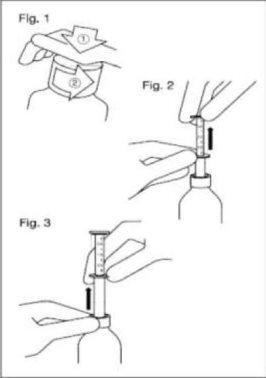
The solution comes with a syringe (pipette). Use only the syringe (pipette) provided with this medicine to measure the prescribed dose. Measure the exact dose of medicine you need. Pay attention when measuring a small dose, for example, for 0.25 mg, you need to measure 0.25 ml (a quarter of a milliliter); for 0.5 mg, you need to measure 0.5 ml (half a milliliter).
Follow these steps:
- Remove the child-resistant cap. Push the plastic cap down, turning it counterclockwise (Figure 1).
- Insert the pipette into the bottle.
- Holding the lower ring, pull the upper ring up to the mark that corresponds to the number of milliliters you should administer (Figure 2).
- Holding the lower ring, remove the entire pipette from the bottle (Figure 3).
- Empty the pipette into a non-alcoholic beverage that is not tea. Slide the upper ring down.
- Close the bottle.
- Rinse the pipette with water and let it air dry.
If you take more Risperidona Tarbis than you should
- Go to your doctor immediately. Take the medicine pack with you. You can also call the Toxicology Information Service, phone 91 562 04 20, indicating the medicine and the amount taken.
- In case of overdose, you may feel drowsy or tired, have abnormal body movements, problems standing and walking, dizziness due to low blood pressure, or have abnormal heartbeats or seizures.
If you forget to take Risperidona Tarbis
- If you forget to take a dose, take it as soon as you remember. But if it is almost time for your next dose, skip the missed dose and continue as usual. If you forget two or more doses, contact your doctor.
- Do not take a double dose (two doses at the same time) to make up for the missed dose.
If you stop taking Risperidona Tarbis
Do not stop taking the treatment unless your doctor tells you to. The symptoms may come back. If your doctor decides to stop the treatment, your dose may be gradually decreased over a few days.
If you have any further questions about the use of this medicine, ask your doctor or pharmacist.

Started taking the medicine and have questions?
Discuss your symptoms and treatment with a doctor online.
4. Possible Adverse Effects
Like all medicines, this medicine can cause adverse effects, although not all people will suffer from them.
Report immediately to your doctor if:
- You have blood clots in the veins, especially in the legs (symptoms include swelling, pain, and redness of the leg), which can circulate through the blood vessels to the lungs, causing chest pain and difficulty breathing. If you notice any of these symptoms, seek medical advice immediately.
- You have dementia and experience a sudden change in your mental state or sudden weakness or numbness of the face, arms, or legs, especially on one side, or have difficulty speaking even for a short period. These may be signs of a stroke.
- You have fever, muscle stiffness, sweating, or a decrease in the level of consciousness (a disorder known as "Neuroleptic Malignant Syndrome"). You may need immediate medical treatment.
- You are a man and experience a prolonged or painful erection. This is known as priapism. You may need immediate medical treatment.
- You experience involuntary rhythmic movements of the tongue, mouth, and face. It may be necessary to withdraw risperidone.
The following side effects may appear:
Very common (affect more than 1 in 10 people):
- Difficulty staying or falling asleep.
- Parkinsonism: This disease may include slow or altered movement, feeling of stiffness or tension in the muscles (making sudden movements) and sometimes a feeling of "freezing" of movement that then restarts. Other signs of parkinsonism include walking slowly, dragging feet, resting tremor, increased saliva and/or drooling, and loss of facial expressiveness.
- Feeling drowsy or less attentive.
- Headache.
Common (affect between 1 and 10 in 100 people):
- Pneumonia, chest infection (bronchitis), symptoms of a common cold, sinusitis, urinary tract infection, ear infection, feeling like you have the flu.
- Risperidona Tarbis may increase the levels of a hormone called "prolactin" that is detected in blood tests (which may or may not cause symptoms). When symptoms of increased prolactin appear, they may include in men, breast swelling, difficulty having or maintaining erections, or other sexual dysfunctions. In women, they may include breast discomfort, milk secretion from the breasts, loss of menstrual periods, or other problems with the cycle.
- Weight gain, increased appetite, decreased appetite.
- Sleep disorders, irritability, depression, anxiety, restlessness.
- Dystonia: This is a disease that involves slow or continuous involuntary contraction of the muscles. Although any part of the body can be affected (and can cause abnormal postures), dystonia often affects the muscles of the face, including abnormal movements of the eyes, mouth, tongue, or jaw.
- Dizziness.
- Discinesia: This disease involves involuntary muscle movements and may include repetitive, spasmodic, or twisting movements, or spasms.
- Tremor (agitation).
- Blurred vision, eye infection, or "red eye."
- Rapid heartbeat, increased blood pressure, shortness of breath.
- Sore throat, cough, nasal bleeding, nasal congestion.
- Abdominal pain, abdominal discomfort, vomiting, nausea, constipation, diarrhea, indigestion, dry mouth, toothache.
- Rash, skin redness.
- Muscle spasms, bone or muscle pain, back pain, joint pain.
- Urinary incontinence (loss of control).
- Swelling of the body, arms, or legs, fever, chest pain, weakness, fatigue (tiredness), pain.
- Falls.
Uncommon (affect between 1 and 10 in 1,000 people):
- Respiratory tract infection, bladder infection, eye infection, tonsillitis, fungal infection of the nails, skin infection, localized infection in a single area of the skin or body part, viral infection, skin inflammation caused by mites.
- Decrease in a type of white blood cell that helps fight infections, decrease in the number of white blood cells, decrease in platelets (blood cells that help stop bleeding), anemia, decrease in red blood cells, increase in the number of eosinophils (a type of white blood cell) in the blood.
- Allergic reaction.
- Diabetes or worsening of diabetes, high blood sugar levels, excessive water intake.
- Weight loss, loss of appetite that causes malnutrition and weight loss.
- Increased cholesterol in the blood.
- Euphoria (mania), confusion, decreased sexual desire, nervousness, nightmares.
- Late discinesia (spasms or involuntary movements that cannot be controlled in the face, tongue, or other parts of the body). Report to your doctor immediately if you experience involuntary rhythmic movements of the tongue, mouth, or face. It may be necessary to withdraw Risperidona Tarbis.
- Sudden loss of blood flow to the brain (stroke or "mini" stroke).
- Lack of response to stimuli, loss of consciousness, decreased level of consciousness.
- Seizures (epileptic crises), fainting.
- A restlessness that causes movement of body parts, balance disorder, abnormal coordination, dizziness when standing up, attention problems, speech problems, loss or alteration of taste, decreased skin sensitivity to pain or touch, tingling, pinching, or numbness of the skin.
- Increased sensitivity of the eyes to light, dry eyes, increased tearing, redness of the eyes.
- Feeling that everything is spinning (vertigo), ringing in the ears, ear pain.
- Atrial fibrillation (abnormal heart rhythm), interruption of conduction between the upper and lower parts of the heart, anomaly in the electrical activity of the heart, prolongation of the QT interval in the heart, slow heartbeat, anomaly in the electrical conduction of the heart (electrocardiogram or ECG), feeling of fluttering or pounding in the chest (palpitations).
- Decreased blood pressure, decreased blood pressure when standing up (as a consequence, some people taking Risperidona Tarbis may feel weakness, dizziness, or loss of consciousness when standing up or sitting down suddenly), flushing.
- Aspiration pneumonia, pulmonary congestion, respiratory tract congestion, crackling sounds in the lungs, wheezing, voice disorder, breathing difficulty.
- Stomach or intestine infection, fecal incontinence, very hard stools, difficulty swallowing, excessive gas or flatulence.
- Hives (or "urticaria"), itching, hair loss, skin thickening, eczema, dry skin, skin discoloration, acne, scaly and itchy skin or scalp, skin disorder, skin injury.
- Increased CPK (creatine phosphokinase) in the blood, an enzyme that is sometimes released with muscle degradation.
- Abnormal posture, joint stiffness, joint swelling, muscle weakness, neck pain.
- Frequent urination, inability to urinate, painful urination.
- Erectile dysfunction, ejaculation disorder.
- Loss of menstruation, loss of menstrual periods, or other problems with the cycle (in women).
- Development of breasts in men, milk secretion from the breasts, sexual dysfunction, breast pain, breast discomfort, vaginal secretion.
- Swelling of the face, mouth, eyes, or lips.
- Chills, increased body temperature.
- Change in gait.
- Feeling of thirst, feeling of discomfort, chest discomfort, feeling "unwell," discomfort.
- Increased liver transaminases in the blood, increased GGT (a liver enzyme called gamma-glutamyltransferase) in the blood, increased liver enzymes in the blood.
- Pain due to the procedure.
Rare (affect between 1 and 10 in 10,000 people):
- Infection.
- Inappropriate secretion of a hormone that controls urine volume.
- Sugar in the urine, decreased blood sugar, increased triglycerides in the blood (a type of fat).
- Lack of emotions, inability to reach orgasm.
- Neuroleptic malignant syndrome (confusion, decreased or lost consciousness, high fever, and severe muscle stiffness).
- Problems in the blood vessels of the brain.
- Diabetic coma due to uncontrolled diabetes.
- Head agitation.
- Glaucoma (increased eye pressure), problems with eye movement, eye rotation, crusts on the eyelid margin.
- Dangerously low number of a type of white blood cell necessary to fight infections in the blood.
- Severe allergic reaction characterized by fever, swelling of the mouth, face, lips, or tongue, shortness of breath, itching, skin rash, and sometimes decreased blood pressure.
- Excessive water intake.
- Irregular heartbeat.
- Blood clots in the legs, blood clots in the lungs.
- Respiratory problems during sleep (sleep apnea), rapid, shallow breathing.
- Pancreatitis, intestinal obstruction.
- Tongue swelling, cracked lips, skin rash related to the medication.
- Dandruff.
- Muscle fiber rupture and muscle pain (rhabdomyolysis).
- Delayed menstrual periods, breast enlargement, breast swelling, milk secretion from the breasts.
- Increased insulin (a hormone that controls blood sugar levels) in the blood.
- Priapism (a prolonged erection that may require surgical treatment).
- Skin hardening.
- Decreased body temperature, coldness in arms and legs.
- Drug withdrawal syndrome.
- Yellowing of the skin and eyes (jaundice).
Very rare (affect less than 1 in 10,000 people):
- Complications of uncontrolled diabetes, which can be life-threatening.
- Severe allergic reaction with swelling, which can affect the throat, causing difficulty breathing.
The following adverse effects have appeared with the use of another medicine called paliperidone, which is very similar to risperidone, so it is also expected to appear with RISPERIDONA TARBIS: Rapid heartbeat when standing up.
Other adverse effects in children and adolescents
In general, it is expected that the adverse effects in children will be similar to those that appeared in adults. The following adverse effects were reported more frequently in children and adolescents (5 to 17 years) than in adults: feeling drowsy or less attentive, fatigue (tiredness), headache, increased appetite, vomiting, common cold symptoms, nasal congestion, abdominal pain, dizziness, cough, fever, tremor (shaking), diarrhea, and urinary incontinence (loss of control).
Reporting of adverse effects
If you experience any type of adverse effect, consult your doctor or pharmacist, even if it is a possible adverse effect that does not appear in this prospectus. You can also report them directly through the Spanish Pharmacovigilance System for Human Use Medicines: https://www.notificaRAM.es.
By reporting adverse effects, you can contribute to providing more information on the safety of this medicine.
5. Conservation of Risperidona Tarbis
Keep this medicine out of the sight and reach of children.
Do not use this medicine after the expiration date that appears on the packaging. The expiration date is the last day of the month indicated.
Do not store at a temperature above 30°C. Do not freeze. Keep in the original packaging to protect it from light and moisture.
Once the bottle is opened, any unused Risperidona Tarbis oral solution must be discarded after 3 months.
Medicines should not be thrown down the drain or into the trash. Deposit the packaging and medicines you no longer need in the SIGRE collection point at the pharmacy. If in doubt, ask your pharmacist how to dispose of the packaging and medicines you no longer need. This will help protect the environment.
6. Package contents and additional information
Composition of Risperidona Tarbis
- The active ingredient is risperidone: Each ml of Risperidona Tarbis oral solution contains 1 mg of risperidone.
- The other components (excipients) are: sodium chloride, domiphen bromide, anhydrous citric acid, disodium phosphate dodecahydrate, lemon flavor (with maltodextrin from corn starch) and purified water.
Appearance of Risperidona Tarbis and package contents
Risperidona Tarbis is presented as a clear, slightly yellowish oral solution.
Each package contains 30 ml or 100 ml of oral solution.
Each package of Risperidona Tarbis contains a dosing syringe. The smallest amount that this syringe can dispense is 0.25 ml, and the maximum is 3 ml.
Only some package sizes may be marketed.
Marketing authorization holder and manufacturer
Marketing authorization holder:
Tarbis Farma, S.L.
Gran Vía Carlos III, 94
08028 Barcelona (Spain)
Manufacturer:
Laboratorios Tedec Meiji Farma, S.A.
Ctra. M-300, km 30.500
28802 Alcalá de Henares (Spain)
or
FARMALABOR, PRODUCTOS FARMACEUTICOS S.A.
Zona Industrial de Condeixa-a-Nova
Condeixa-a-Nova- P-3150-194 (Portugal)
Date of the last revision of this prospectus:December 2024
Detailed and updated information on this medicine is available on the website of the Spanish Agency for Medicines and Health Products (AEMPS) http://www.aemps.gob.es/
- Country of registration
- Dosage formORAL SOLUTION/SUSPENSION, 1 mg/ml
- ATC codeN05AX08
- Average pharmacy price13.66 EUR
- Active substance
- Prescription requiredYes
- Manufacturer
- CompositionCLORURO DE SODIO (9,0 mg mg), HIDROGENOFOSFATO DISODICO DODECAHIDRATADO (C.S.P PH 7,0 - mg)
- This information is for reference only and does not constitute medical advice. Always consult a doctor before taking any medication. Oladoctor is not responsible for medical decisions based on this content.
- Alternatives to RISPERIDONE TARBIS 1mg/ml ORAL SOLUTIONDosage form: TABLET, 1 mgActive substance: risperidoneManufacturer: Neuraxpharm Spain S.L.Prescription requiredDosage form: TABLET, 3 mgActive substance: risperidoneManufacturer: Neuraxpharm Spain S.L.Prescription requiredDosage form: TABLET, 6 mgActive substance: risperidoneManufacturer: Neuraxpharm Spain S.L.Prescription required
Online doctors for RISPERIDONE TARBIS 1mg/ml ORAL SOLUTION
Discuss questions about RISPERIDONE TARBIS 1mg/ml ORAL SOLUTION, including use, safety considerations and prescription review, subject to medical assessment and local regulations.







Get RISPERIDONE TARBIS 1mg/ml ORAL SOLUTION Prescription Online
Fill in a 2-min form
Tell us your symptoms, history, and what medicine you're requesting.
Pick a doctor or let us assign
Choose a specialist or we'll match you with the next available doctor.
Doctor reviews your case
Usually within 30 minutes. They may ask follow-up questions via chat.
Collect from any pharmacy
Electronic prescription sent to your email — valid across Spain.
Frequently Asked Questions
RISPERIDONE TARBIS 1mg/ml ORAL SOLUTION requires a prescription in Spain. You can check with a doctor online whether this medicine may be appropriate for your situation.
The active ingredient in RISPERIDONE TARBIS 1mg/ml ORAL SOLUTION is risperidone. This information helps identify medicines with the same composition but different brand names.
The average pharmacy price for RISPERIDONE TARBIS 1mg/ml ORAL SOLUTION is around 13.66 EUR. Prices may vary depending on the manufacturer and dosage form.
RISPERIDONE TARBIS 1mg/ml ORAL SOLUTION is manufactured by Tarbis Farma S.L.. Pharmacy brands and packaging may differ depending on the distributor.
Doctors such as Family doctors, Psychiatrists, Dermatologists, Cardiologists, Endocrinologists, Gastroenterologists, Pulmonologists, Nephrologists, Rheumatologists, Hematologists, Infectious disease physicians, Allergists, Geriatricians, Paediatricians, Oncologists may assess whether RISPERIDONE TARBIS 1mg/ml ORAL SOLUTION is appropriate, depending on your situation and local regulations. You can book an online consultation to discuss your symptoms and possible next steps.
Spain has a well-developed healthcare infrastructure across major cities such as Madrid, Barcelona, Valencia, and Seville. Pharmacies are widely available and operate under strict regulations, ensuring access to prescribed medications.
You can buy RISPERIDONE TARBIS 1mg/ml ORAL SOLUTION in Madrid, Barcelona, Seville, or Valencia at any local pharmacy with a valid prescription.
To obtain a prescription, you can use Oladoctor:
Other medicines with the same active substance (risperidone) include ARKETIN 1 mg FILM-COATED TABLETS, ARKETIN 3 mg FILM-COATED TABLETS, ARKETIN 6 mg FILM-COATED TABLETS. These may have different brand names or formulations but contain the same therapeutic ingredient. Always consult a doctor before switching or starting a new medicine.
