






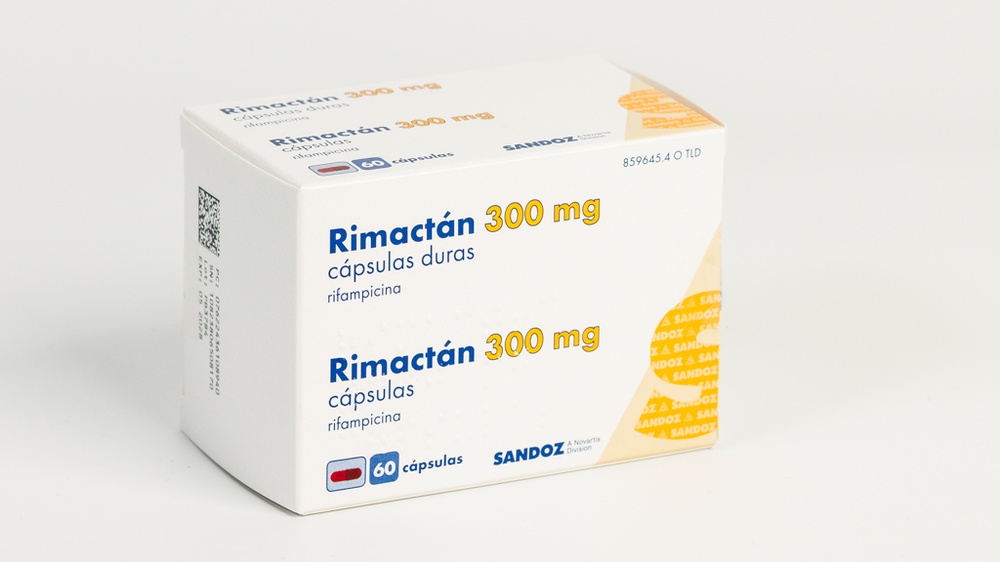
How to use RIMACTAN 300 mg HARD CAPSULES
Translated with AI
This page provides general information and does not replace a doctor’s consultation. Always consult a doctor before taking any medication. Seek urgent medical care if symptoms are severe.
Show originalContents of the leaflet
Introduction
Package Leaflet: Information for the Patient
Rimactan 300 mg hard capsules
rifampicin
Read all of this leaflet carefully before you start taking this medicine because it contains important information for you.
- Keep this leaflet, you may need to read it again.
- If you have any further questions, ask your doctor or pharmacist.
- This medicine has been prescribed for you only. Do not pass it on to others. It may harm them, even if their signs of illness are the same as yours.
- If you get any side effects, talk to your doctor or pharmacist. This includes any possible side effects not listed in this leaflet. See section 4.
Contentsofthepackageleaflet
- What is Rimactan and what is it used for
- What you need to know before you take Rimactan
- How to take Rimactan
- Possible side effects
5 Preservation of Rimactan
- Package contents and additional information
1. What is Rimactan and what is it used for
Rimactan contains rifampicin, which belongs to a group of antibiotics called rifamycins. It works by stopping the growth of the bacteria that cause infections.
Antibiotics are used to treat bacterial infections and do not work for viral infections such as the flu or the common cold.
It is important that you follow the instructions regarding the dose, intake, and duration of treatment indicated by your doctor.
Do not store or reuse this medication. If you have any leftover antibiotic after finishing the treatment, return it to the pharmacy for proper disposal. Do not throw away medications down the drain or in the trash.
Rimactan is indicated for the treatment of infections such as:
- Tuberculosis in all its forms(in combination with other anti-tuberculosis medications).
- Non-mycobacterial infections:other infections different from tuberculosis for which your doctor considers it appropriate to prescribe Rimactan. You should take Rimactan in combination with other antibiotics.
- Brucellosis.Used in combination with a tetracycline.
Rimactan is also indicated for the prevention of:
- Meningococcal meningitis:you can only take Rimactan if you have been in direct contact with patients with meningococcal meningitis (at home, in a nursery, at school, in collective housing) and have not yet developed the disease.
Rimactan should not be used to treat meningococcal meningitis.
This treatment should follow the official recommendations for the treatment of tuberculosis, specifically those of the World Health Organization (WHO).

2. What you need to know before you take Rimactan
Do not take Rimactan:
- if you are allergic to rifampicin or any of the other components of this medication (listed in section 6),
- if you have a history of liver disease caused by medication use or acute hepatitis of any origin, or if you have yellow skin (jaundice),
- if you suffer from porphyria (a group of disorders characterized by sensitivity to light, skin lesions, anemia, psychosis, and acute abdominal pain),
- if you are taking voriconazole (a medication used to treat fungal infections) or protease inhibitors except ritonavir (medications for the treatment of human immunodeficiency virus (HIV) infection that causes AIDS),
- if you have severe kidney impairment.
Warnings and precautions
Consult your doctor or pharmacist before starting to take Rimactan:
- bacterial resistance may occur. To avoid resistance in the treatment of infections, you should use Rimactan in combination with other antibiotics/chemotherapeutic agents,
- if you have serious complications such as changes in blood cells, small purple spots on the skin, difficulty breathing, and asthma-like attacks, shock, and kidney failure, fever, or other skin reactions, your doctor will discontinue treatment,
- if you have chronic liver disease, if you are an alcoholic, or if you are malnourished. Your doctor may reduce the dose of rifampicin,
- if you use hormonal contraceptives, as their effectiveness may be decreased, and you will need to take additional non-hormonal contraceptive measures,
- in premature and newborn infants. It will only be used in emergency cases and with special caution, as their hepatic enzyme system is not fully developed,
- Rimactan is not recommended in children under 6 years of age due to the risk of aspiration,
- you should not take rifampicin and pyrazinamide simultaneously for the treatment of latent tuberculosis infections due to the risk of severe liver damage,
- During treatment, a severe reaction such as Drug Reaction with Eosinophilia and Systemic Symptoms (DRESS) (see section 4. Possible side effects) may occur. If you experience early symptoms of hypersensitivity to rifampicin, such as fever, lymphadenopathy (swelling of the lymph nodes), or biological alterations (eosinophilia; increase in a certain group of white blood cells, liver disorders), with or without skin rash, contact your doctor immediately. The use of rifampicin should be discontinued if a different origin for these symptoms cannot be established.
- a discoloration (yellow, orange, red, brown) of your teeth, urine, sweat, sputum, tears, and feces, which is clinically insignificant. Similarly, it can cause permanent discoloration of soft contact lenses,
- rifampicin may compete with various medications at the level of absorption and biochemical/biochemical metabolism, and therefore, may decrease the exposure, safety, and efficacy of these medications (see "Other medications and Rimactan"),
- rifampicin may compete with various medications at the level of absorption and biochemical/biochemical metabolism, and therefore, may decrease the exposure, safety, and efficacy of these medications (see "Other medications and Rimactan"),
At the beginning of treatment and in prolonged treatments, it is recommended to periodically perform blood cell counts and liver function tests.
Other medications and Rimactan
Tell your doctor or pharmacist if you are taking, have recently taken, or might take any other medications.
Rifampicin increases the elimination of many medications from the body, which may result in a decrease in their activity. These medications include:
- medications for the treatment of epilepsy: e.g., phenytoin, phenobarbital,
- medications for the treatment of heart rhythm disorders: e.g., disopyramide, mexiletine, quinidine, propafenone, tocainide,
- medications for other heart problems: e.g., beta-blockers, losartan, and amlodipine (for the treatment of high blood pressure), medications called calcium channel blockers such as diltiazem, nifedipine, or verapamil, cardiac glycosides such as digoxin (for the treatment of heart failure),
- medications for the treatment of blood coagulation disorders: warfarin,
- medications for the treatment of mental disorders: e.g., haloperidol or aripiprazole,
- medications for the treatment of fungal infections: e.g., fluconazole, itraconazole, ketoconazole, voriconazole,
- medications for the treatment of HIV infection: e.g., saquinavir, indinavir, efavirenz, amprenavir, nelfinavir, atazanavir,
- antiviral medications for the treatment of hepatitis C, e.g., daclatasvir, simeprevir, sofosbuvir, telaprevir, velpatasvir, voxilaprevir,
- certain antibiotics: e.g., chloramphenicol, clarithromycin, dapsone, doxycycline, fluoroquinolones, telithromycin,
- medications used as anesthetics, e.g., thiopental,
- corticosteroids,
- medications used to prevent transplant rejection: e.g., cyclosporine, tacrolimus, sirolimus,
- systemic hormonal contraceptives (including estrogens and progestogens),
- other medications for the treatment of infections: dapsone (for the treatment of leprosy and/or malaria) and quinine (for the treatment of malaria),
- medications for the treatment of diabetes: e.g., chlorpropamide, tolbutamide, sulfonylureas, rosiglitazone,
- medications for the treatment of depression: e.g., amitriptyline, nortriptyline
- medications for the treatment of anxiety and/or insomnia: e.g., diazepam, benzodiazepines, zopiclone, zolpidem,
- medications for the treatment of pain, opioid analgesics (oxycodone, morphine),
- medications for the treatment of high cholesterol: e.g., clofibrate, statins, e.g., simvastatin,
- medications for the treatment of nausea and vomiting: e.g., ondansetron,
- medications for the treatment of cancer: e.g., irinotecan,
- medications for the treatment of degenerative nerve diseases such as amyotrophic lateral sclerosis: e.g., riluzole,
- medications with estrogenic and antiestrogenic activity, e.g., tamoxifen, toremifene,
- antiviral medications for the treatment of hepatitis C (daclatasvir, simeprevir, sofosbuvir, telaprevir, velpatasvir, voxilaprevir),
- other medications: levothyroxine (for the treatment of hypothyroidism), methadone, theophylline (for the treatment of asthma), praziquantel (for the treatment of helminthic parasites), and gestrinone (for the treatment of hormonal problems).
In case you are taking any of these medications, it may be necessary for your doctor to modify the dose.
If you are taking systemic hormonal contraceptives, you should use another non-hormonal contraceptive method during treatment with rifampicin.
The simultaneous use of ketoconazole and rifampicin decreases the serum levels of both medications
The simultaneous use of rifampicin and enalapril decreases the activity of enalapril. If your clinical condition allows, your doctor may need to modify the dose.
When atovaquone and rifampicin are used simultaneously, a decrease in atovaquone concentrations and an increase in rifampicin concentrations are observed.
You should not take rifampicin with para-aminosalicylic acid (a medication used for the treatment of tuberculosis) as it decreases the blood levels of rifampicin, so it is advisable to leave an interval of 8 hours between the intake of both medications.
Antacids reduce the absorption of rifampicin, so you should take your daily dose of rifampicin at least one hour before taking antacids.
The simultaneous use of rifampicin with halothane or isoniazid increases the potential for liver toxicity. You should not use rifampicin with halothane. If you are being treated with rifampicin and isoniazid, your doctor will periodically monitor your liver function (see section "Warnings and precautions").
Concomitant use with a group of antiretroviral medications, non-nucleoside reverse transcriptase inhibitors such as etravirine, nevirapine, or any protease inhibitor (alone or in combination with an antiretroviral called ritonavir), is not recommended.
Concomitant use with maraviroc, another antiretroviral medication, is also not recommended; if clinically justified, a dose adjustment is required.
The concomitant use of rifampicin with other antibiotics that cause vitamin K-dependent coagulopathy (decrease in blood clotting ability), such as cefazolin (or other cephalosporins of the same group), should be avoided, as it can cause severe coagulation disorders (when the blood loses its liquidity and becomes a gel to form a clot) that can lead to a fatal outcome (especially with high doses).
You should not take rifampicin with the combination saquinavir/ritonavir (antiretroviral medications).
Rimactan may alter the results of some laboratory tests, such as:
- the determination of folate and vitamin B12 in blood,
- the bromosulfalein test,
- bilirubin levels in blood,
- it may interfere with the elimination of contrast media used to examine your gallbladder.
Therefore, if necessary, these tests will be performed in the morning and before you have taken your dose of Rimactan.
In patients treated with rifampicin, cases of false-positive results for the presence of opiates in urine have been reported when the analysis was performed with a test called ICMS (Interaction Kinetics of Microparticles in Solution). For this reason, it is recommended to use other techniques in these patients, such as gas chromatography and mass spectrometry.
Taking Rimactan with food, drinks, and alcohol
The absorption of Rimactan is affected by food, so to ensure adequate absorption, you should take Rimactan on an empty stomach, i.e.:
at least 30 minutes before a meal, or
at least 2 hours after a meal.
Pregnancy, breastfeeding, and fertility
If you are pregnant or breastfeeding, think you may be pregnant, or plan to become pregnant, consult your doctor or pharmacist before using this medication.
Pregnancy
Rifampicin should be used in pregnant women or women of childbearing age only when the potential benefits justify the potential risks to the fetus. When rifampicin is administered during the last weeks of pregnancy, it may cause postnatal bleeding in the mother and in the newborn, for which treatment with vitamin K1 is prescribed.
Breastfeeding
Rifampicin is excreted in breast milk; patients who receive rifampicin should not breastfeed unless their doctor considers that the benefit to the patient outweighs the potential risks to the baby.
Driving and using machines
The influence of rifampicin on the ability to drive and use machines is small to moderate. Rifampicin may cause certain side effects that can interfere with the ability to drive and use machines. If you experience these side effects (difficulty breathing, nausea, vomiting, muscle weakness), you should not use machines.
Rimactan contains lactose.
This medication contains lactose. If your doctor has told you that you have an intolerance to certain sugars, consult with them before taking this medication.
3. How to take Rimactán
Follow exactly the administration instructions of this medication indicated by your doctor. In case of doubt, consult your doctor or pharmacist again.
Your doctor will indicate your daily dose and the duration of your treatment. Do not suspend your treatment beforehand. The dosage is individual for you and may be modified by your doctor based on your response to treatment.
If you think the action of Rimactán is too strong or weak, inform your doctor or pharmacist. You should take Rimactán on an empty stomach, half an hour before a meal with a glass of water.
Tuberculosis
The antibiotics currently used in combination with rifampicin for tuberculosis are: isoniazid, pyrazinamide, ethambutol, and streptomycin.
Your doctor will indicate the suitable combination of antibiotics for you and the dose you should take of each antibiotic.
The recommended dose is:
- in adults and adolescents 10 mg/kg per day with a maximum dose of 600 mg, for adults and adolescents over 40 kg the usual doses are:
- Weight less than 50 kg: 450 mg of rifampicin per day (use oral solution of rifampicin)
- Weight over 50 kg: 600 mg of rifampicin per day (2 capsules of Rimactán),
- children and infants over 3 months: 15 (10-20) mg/kg/body weight of rifampicin per day, the maximum daily dose of rifampicin is 600 mg (2 capsules of Rimactán per day). In children with weight alteration, a dose reduction to 10 mg/kg/day may be necessary. In severe infections, such as meningitis, a higher dose may be used, such as 20 mg per kilogram of body weight per day.
In children who weigh less than 15 kg, there are other presentations of rifampicin more suitable (rifampicin suspension).
Prevention of meningococcal meningitis
Note: rifampicin should not be used for the treatment of meningococcal meningitis.
The recommended dose is:
- Adults and adolescents (from 12 years): 600 mg (2 capsules of Rimactán) every 12 hours for 2 days.
- Children ≥ 1 month of age: 10 mg/kg every 12 hours for 2 days. Maximum dose of 600 mg/12 hours.
- Children ≤ 1 month of age: 5 mg/kg every 12 hours for 2 days.
Do not continue taking Rimactán if you have developed the disease.
Brucellosis
The usual dose of Rimactán in adults is 900 mg of rifampicin daily (3 capsules of Rimactán 300 mg per day) in a single dose, in the morning on an empty stomach.
Rimactán 300 mg capsules should be taken in combination with a tetracycline, such as doxycycline.
The duration of treatment should be around 45 days.
Non-mycobacterial infections
The usual dose of Rimactán is:
- Adults: 600-1200 mg (2 to 4 capsules of Rimactán 300 mg) daily divided into 2 doses.
Your doctor will indicate the combination of antibiotics to be taken with Rimactán 300 mg capsules.
Your doctor will inform you of the duration of your treatment.
Use in children and adolescents
Tuberculosis:
Children ≤ 3 months: there is not enough data to establish a recommendation in children under three months.
Brucellosis and non-mycobacterial infections
There is not enough data for a posological recommendation in children and adolescents.
If you take more Rimactán than you should
If you have taken more Rimactán than you should, consult your doctor, pharmacist, or call the Toxicology Information Service, phone: 91 562 04 20, indicating the medication and the amount used.
The symptoms of overdose are: brown-red or orange discoloration of the skin, sputum, tears, sweat, and feces, nausea, vomiting, abdominal pain, liver inflammation, jaundice (yellow skin), drowsiness, confusion, and convulsions.
If you forget to take Rimactán
If you forget a dose, take it as soon as you remember. However, if the next dose is very close, skip the forgotten dose and take your next dose at the usual time.
Do not take a double dose to make up for forgotten doses.
If you interrupt treatment with Rimactán
Continue your treatment as indicated by your doctor, do not stop taking this medication even if you feel better.
If you stop taking this medication too soon, your infection may return. Even the bacteria may become resistant to treatment.
If you have any other doubts about the use of this medication, ask your doctor or pharmacist.

4. Possible adverse effects
Like all medications, this medication can produce adverse effects, although not all people suffer from them.
Severe adverse effects:
If you have any of the following symptoms of a severe allergic reaction, stop taking this medication and inform your doctor immediately or go to the nearest hospital:
Rifampicin should be withdrawn immediately if severe hypersensitivity reactions such as thrombocytopenia, purpura, hemolytic anemia, dyspnea, and asthmatic attacks, shock, or renal failure occur, as these are adverse reactions that rifampicin can cause in exceptional cases. Patients who develop these reactions should not be treated again with rifampicin.
Rifampicin should be withdrawn if other signs of hypersensitivity appear, such as fever or skin reactions. For safety reasons, treatment should not be continued or resumed with rifampicin.
Other adverse effects
Frequent adverse effects(may affect up to 1 in 10 patients):
- thrombocytopenia (reduction of platelet count), with or without appearance of red spots on the skin formed by small subcutaneous hemorrhages (purpura),
- nausea, vomiting,
- elevation of bilirubin in blood, elevation of aspartate aminotransferase, elevation of alanine aminotransferase.
Uncommon adverse effects(may affect up to 1 in 100 patients):
- leukopenia (decrease in white blood cell count),
- diarrhea.
Rare adverse effects(may affect up to 1 in 1,000 patients):
- jaundice, hepatorenal syndrome.
Adverse effects of unknown frequency(cannot be estimated from available data):
- pseudomembranous colitis (severe inflammation of the intestine that can appear after antibiotic treatment),
- flu-like symptoms, headache, dizziness
- disseminated intravascular coagulation (coagulation problems within blood vessels), eosinophilia (increase in a certain group of white blood cells), granulocytopenia (decrease in a type of white blood cells, granulocytes), hemolytic anemia (decrease in red blood cell count due to their destruction), vitamin K-dependent coagulation disorders,
- anaphylactic reaction (severe allergic reaction with respiratory difficulty and even loss of consciousness),
- adrenal insufficiency (alteration of adrenal gland function in patients with renal impairment),
- anorexia,
- psychosis (mental state characterized by loss of contact with reality),
- cerebral hemorrhage and death, in cases where after the appearance of purpura (purple spots on the skin), treatment with rifampicin has been continued or resumed,
- change in tear color,
- shock (cardiocirculatory failure syndrome), flushing (redness of the skin), vasculitis (inflammation of blood vessels), severe bleeding
- dyspnea (shortness of breath), wheezing (sounds during breathing), change in sputum color,
- gastrointestinal disorder, abdominal discomfort, tooth discoloration (which can be permanent)
- hepatitis (inflammation of the liver), hyperbilirubinemia (elevation of bilirubin in blood), cholestasis (reduction of bile flow),
- erythema multiforme,
- severe skin reactions such as acute generalized exanthematous pustulosis (red and scaly rash with bumps under the skin and blisters), Stevens-Johnson syndrome (generalized rash with blisters and peeling of the skin, particularly around the mouth, nose, eyes, and genitals) and toxic epidermal necrolysis (generalized rash with blisters and peeling of the skin, particularly around the mouth, nose, eyes, and genitals, causing widespread skin peeling (more than 30% of body surface), drug reaction with eosinophilia and systemic symptoms (DRESS) (see section 4.4), flu-like symptoms with skin rash, fever, lymph node inflammation, and abnormal blood test results such as increased white blood cell count (eosinophilia) and elevated liver enzymes (see section 2. Warnings and precautions.),
- skin reactions, itching, pruriginous skin rash, urticaria, allergic dermatitis, blistering skin lesions (pemphigus),
- change in sweat color,
- muscle weakness, myopathy (muscle disorder)
- bone pain,
- acute kidney damage usually due to death of kidney cells (tubular necrosis) or kidney inflammation (tubulointerstitial nephritis),
- chromaturia (abnormal urine color),
- postpartum hemorrhage, fetal-maternal blood transfusion, breast milk discoloration,
- menstrual disorder,
- porphyria,
- edema (swelling of the skin due to fluid accumulation),
- decrease in blood pressure,
- increase in creatinine in blood,
- increase in liver enzymes.
Reporting of adverse effects
If you experience any type of adverse effect, consult your doctor or pharmacist, even if it is a possible adverse effect that does not appear in this leaflet. You can also report them directly through the Spanish Medicines and Healthcare Products Agency (AEMPS) https//www.notificaram.es. By reporting adverse effects, you can contribute to providing more information on the safety of this medication.
5. Conservation of Rimactán
Keep in the original packaging to protect it from heat and humidity
Keep this medication out of sight and reach of children.
Do not use this medication after the expiration date that appears on the packaging after CAD/EXP. The expiration date is the last day of the month indicated.
Medications should not be thrown away through the drains or in the trash. Deposit the packaging and medications that are no longer needed in the SIGRE Point of the pharmacy. In case of doubt, ask your pharmacist how to dispose of the packaging and medications that are no longer needed. This way, you will help protect the environment.
6. Package contents and additional information
Composition of Rimactán 300 mg capsules
- The active ingredient is rifampicin. Each capsule contains 300 mg of rifampicin.
- The other components are: lactose and calcium stearate.
Appearance of the product and package contents
Hard, opaque capsule No. 1, two-colored, the lower part brown-red and the upper part brown.
Rimactán 300 mg hard capsules are presented in packs containing Al/PVC/PE/PVDC blisters of 10 and 60 hard capsules of 300 mg of rifampicin.
Marketing authorization holder and manufacturer
Marketing authorization holder
Sandoz Farmacéutica, S.A.
Centro Empresarial Parque Norte
Edificio Roble
C/ Serrano Galvache, 56
28033 Madrid
Spain
Manufacturer:
Sandoz GmbH
Biochemiestraße, 10
A-6250 Kundl
Austria
Date of the last revision of this leaflet:April 2022
Detailed and updated information on this medication is available on the website of the Spanish Agency for Medicines and Healthcare Products (AEMPS) http://www.aemps.gob.es/.
-

- Country of registration
- Dosage formCAPSULE, 300 mg
- ATC codeJ04AB02
- Average pharmacy price20.9 EUR
- Active substance
- Prescription requiredYes
- Manufacturer
- This information is for reference only and does not constitute medical advice. Always consult a doctor before taking any medication. Oladoctor is not responsible for medical decisions based on this content.
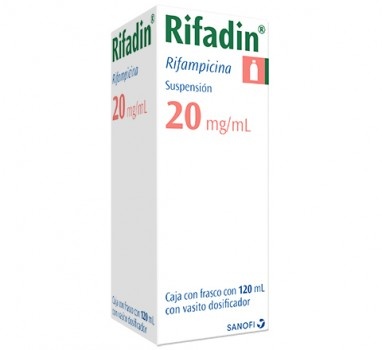
- Alternatives to RIMACTAN 300 mg HARD CAPSULESDosage form: ORAL SOLUTION/SUSPENSION, 2%Active substance: rifampicinManufacturer: Sanofi Aventis S.A.Prescription requiredDosage form: CAPSULE, 300 mgActive substance: rifampicinManufacturer: Sanofi Aventis S.A.Prescription requiredDosage form: INJECTABLE PERFUSION, 600 mgActive substance: rifampicinManufacturer: Sanofi Aventis S.A.Prescription required

Online doctors for RIMACTAN 300 mg HARD CAPSULES
Discuss questions about RIMACTAN 300 mg HARD CAPSULES, including use, safety considerations and prescription review, subject to medical assessment and local regulations.









Get RIMACTAN 300 mg HARD CAPSULES Prescription Online
Fill in a 2-min form
Tell us your symptoms, history, and what medicine you're requesting.
Pick a doctor or let us assign
Choose a specialist or we'll match you with the next available doctor.
Doctor reviews your case
Usually within 30 minutes. They may ask follow-up questions via chat.
Collect from any pharmacy
Electronic prescription sent to your email — valid across Spain.
Frequently Asked Questions
RIMACTAN 300 mg HARD CAPSULES requires a prescription in Spain. You can check with a doctor online whether this medicine may be appropriate for your situation.
The active ingredient in RIMACTAN 300 mg HARD CAPSULES is rifampicin. This information helps identify medicines with the same composition but different brand names.
The average pharmacy price for RIMACTAN 300 mg HARD CAPSULES is around 20.9 EUR. Prices may vary depending on the manufacturer and dosage form.
RIMACTAN 300 mg HARD CAPSULES is manufactured by Sandoz Farmaceutica S.A.. Pharmacy brands and packaging may differ depending on the distributor.
Doctors such as Family doctors, Psychiatrists, Dermatologists, Cardiologists, Endocrinologists, Gastroenterologists, Pulmonologists, Nephrologists, Rheumatologists, Hematologists, Infectious disease physicians, Allergists, Geriatricians, Paediatricians, Oncologists may assess whether RIMACTAN 300 mg HARD CAPSULES is appropriate, depending on your situation and local regulations. You can book an online consultation to discuss your symptoms and possible next steps.
Spain has a well-developed healthcare infrastructure across major cities such as Madrid, Barcelona, Valencia, and Seville. Pharmacies are widely available and operate under strict regulations, ensuring access to prescribed medications.
You can buy RIMACTAN 300 mg HARD CAPSULES in Madrid, Barcelona, Seville, or Valencia at any local pharmacy with a valid prescription.
To obtain a prescription, you can use Oladoctor:
Other medicines with the same active substance (rifampicin) include RIFALDIN 20 mg/ml ORAL SUSPENSION, RIFALDIN 300 mg CAPSULES, RIFALDIN 600 mg POWDER AND SOLVENT FOR SOLUTION FOR INFUSION. These may have different brand names or formulations but contain the same therapeutic ingredient. Always consult a doctor before switching or starting a new medicine.
