



REVATIO 10 mg /Ml Powder For Oral Suspension

Prescription review online
A doctor will review your case and decide whether a prescription is medically appropriate.

Talk to a doctor about this medicine
Discuss your symptoms and possible next steps in a quick online consultation.



How to use REVATIO 10 mg/ml POWDER FOR ORAL SUSPENSION
Contents of the leaflet
- Introduction
- What is Revatio and what is it used for
- What you need to know before you take Revatio
- How to take Revatio
- Possible Adverse Effects
- Storage of Revatio
- Package Contents and Additional Information
Introduction
Package Leaflet: Information for the Patient
Revatio 10 mg/ml Powder for Oral Suspension
sildenafil
Read all of this leaflet carefully before you start taking this medicine because it contains important information for you.
- Keep this leaflet, you may need to read it again.
- If you have any further questions, ask your doctor or pharmacist.
- This medicine has been prescribed for you only. Do not pass it on to others. It may harm them, even if their signs of illness are the same as yours.
- If you get any side effects, talk to your doctor or pharmacist. This includes any possible side effects not listed in this leaflet. See section 4.
Contents of the Pack
- What is Revatio and what is it used for
- What you need to know before you take Revatio
- How to take Revatio
- Possible side effects
- Storing Revatio
- Contents of the pack and other information
1. What is Revatio and what is it used for
Revatio contains the active substance sildenafil which belongs to a group of medicines called phosphodiesterase type 5 inhibitors (PDE5).
Revatio reduces blood pressure in the lungs by dilating the blood vessels in the lungs. Revatio is used to treat high blood pressure in the blood vessels of the lungs (pulmonary arterial hypertension) in adults and children and adolescents from 1 to 17 years.

Not sure if this medicine is right for you?
Discuss your symptoms and treatment with a doctor online.
2. What you need to know before you take Revatio
Do not take Revatio
- if you are allergic to sildenafil or any of the other ingredients of this medicine (listed in section 6).
- if you are taking medicines that contain nitrates or nitric oxide donors such as amyl nitrite (“poppers”). These medicines are often given to relieve chest pain (or angina). Revatio can increase the effects of these medicines. You should tell your doctor if you are taking any of these medicines. If you are not sure, consult your doctor or pharmacist.
- if you are taking riociguat. This medicine is used to treat pulmonary arterial hypertension (i.e., high blood pressure in the lungs) and chronic thromboembolic pulmonary hypertension (i.e., high blood pressure in the lungs caused by blood clots). PDE5 inhibitors, such as Revatio, have shown that they increase the blood pressure lowering effect of this medicine. If you are taking riociguat or are not sure, consult your doctor.
- if you have recently had a stroke, a heart attack, or if you have severe liver disease or very low blood pressure (<90/50 mmHg).
- if you are taking a medicine for fungal infections such as ketoconazole or itraconazole or medicines that contain ritonavir (for HIV).
- if you have previously experienced a loss of vision due to a problem with blood flow to the nerve of the eye called non-arteritic anterior ischemic optic neuropathy (NAION).
Warnings and Precautions
Consult your doctor or pharmacist before starting to take Revatio if:
- you have a disease due to a blockage or narrowing of a vein in the lungs rather than a blockage or narrowing of an artery.
- you have a serious heart problem.
- you have a problem with the pumping chambers of the heart.
- you have high blood pressure in the blood vessels of the lungs.
- you have low resting blood pressure.
- you lose a large amount of body fluids (dehydration) that can occur when you sweat a lot or do not drink enough fluids. This can happen if you are ill with fever, vomiting, or diarrhea.
- you suffer from a rare inherited eye disease (retinitis pigmentosa).
- you suffer from an abnormality of the red blood cells (sickle cell anemia), blood cell cancer (leukemia), bone marrow cancer (multiple myeloma), or any disease or deformity of the penis.
- you currently have stomach ulcers or bleeding disorders (such as hemophilia) or nosebleeds.
- you use medicines for erectile dysfunction.
When PDE5 inhibitors, including sildenafil, are used to treat erectile dysfunction (ED), the following visual adverse effects have been reported with an unknown frequency: decreased or loss of vision, temporary or permanent, in one or both eyes. If you experience a sudden reduction or loss of vision, stop taking Revatio and contact your doctor immediately(see also section 4).
Prolonged and sometimes painful erections have been reported in men taking sildenafil. If you have an erection that lasts for more than 4 hours, stop taking Revatio and consult your doctor immediately(see also section 4).
Special precautions in patients with kidney or liver problems
You should inform your doctor if you have kidney or liver problems, as a dose adjustment may be necessary.
Children
Revatio should not be given to children under 1 year of age.
Taking Revatio with other medicines
Tell your doctor or pharmacist if you are using, have recently used, or might use any other medicines.
- Medicines that contain nitrates or nitric oxide donors such as amyl nitrite (“poppers”). These medicines are often given to relieve chest pain or angina. (See section 2. Before you take Revatio).
- Tell your doctor or pharmacist if you are taking riociguat.
- Treatments for pulmonary hypertension (e.g., bosentan, iloprost).
- Medicines that contain St. John's Wort (herbal remedy), rifampicin (used to treat bacterial infections), carbamazepine, phenytoin, and phenobarbital (used, among others, to treat epilepsy).
- Medicines that inhibit blood clotting (e.g., warfarin), although they have not caused any adverse effects.
- Medicines that contain erythromycin, clarithromycin, telithromycin (antibiotics used to treat certain bacterial infections), saquinavir (for HIV), or nefazodone (for depression), as a dose adjustment may be necessary.
- Alpha-blocker therapy (e.g., doxazosin) for the treatment of hypertension or prostate problems, as the combination of the two medicines can cause symptoms of low blood pressure (e.g., dizziness, fainting).
- Medicines that contain sacubitril/valsartan, used to treat heart failure.
Taking Revatio with food and drink
You should not take grapefruit juice when being treated with Revatio.
Pregnancy and Breastfeeding
If you are pregnant or breastfeeding, think you may be pregnant, or are planning to have a baby, ask your doctor or pharmacist for advice before taking this medicine. Revatio should not be used during pregnancy unless absolutely necessary.
Revatio should not be given to women of childbearing potential unless adequate contraceptive methods are used.
Revatio passes into breast milk at very low levels and is not expected to harm your baby.
Driving and Using Machines
Revatio may cause dizziness and affect vision. You should know how you react to this medicine before driving or using machines.
Revatio contains Sorbitol
Revatio 10 mg/ml powder for oral suspension contains 250 mg of sorbitol per ml of reconstituted suspension.
Sorbitol is a source of fructose. If your doctor has told you that you (or your child) have an intolerance to some sugars, or have been diagnosed with hereditary fructose intolerance (HFI), a rare genetic disorder, in which the patient cannot break down fructose, you (or your child) should consult your doctor before taking this medicine.
Revatio contains Sodium Benzoate
Revatio 10 mg/ml powder for oral suspension contains 1 mg of sodium benzoate per ml of reconstituted suspension. Sodium benzoate can increase the levels of a substance called bilirubin. High levels of bilirubin can cause jaundice (yellowing of the skin and eyes) and can also cause brain damage (encephalopathy) in newborns (up to 4 weeks of age).
Revatio contains Sodium
Revatio 10 mg/ml powder for oral suspension contains less than 1 mmol of sodium (23 mg) per ml of reconstituted suspension; this is essentially “sodium-free”.
3. How to take Revatio
Follow exactly the administration instructions of this medicine given by your doctor.
In case of doubt, consult your doctor or pharmacist again.
For adults, the recommended dose is 20 mg three times a day (taken at intervals of 6 to 8 hours) taken with or without food.
Use in Children and Adolescents
For children and adolescents from 1 to 17 years, the recommended dose is 10 mg (1 ml of oral suspension) three times a day for children and adolescents weighing 20 kg or less, or 20 mg (2 ml of oral suspension) three times a day in children and adolescents weighing more than 20 kg, administered with or without food. In children, doses higher than those recommended should not be used.
The oral suspension should be shaken well for at least 10 seconds before use.
Instructions for Reconstituting the Oral Suspension
It is recommended that your pharmacist reconstitute (prepare) the oral suspension before it is given to you.
When the oral suspension is reconstituted it is a liquid. If the powder has not been reconstituted, you must reconstitute the oral suspension by following the instructions below.
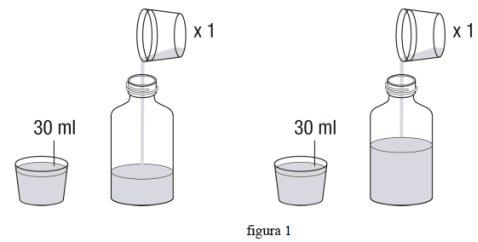
Note:Regardless of the dose you take, you must use a total volume of 90 ml (3 x 30 ml) of water to reconstitute the contents of the bottle.
- Gently tap the bottle to loosen the powder.
- Remove the cap.
- Measure 30 ml of water by filling the measuring cup (included in the package) to the mark and add to the bottle. Measure another 30 ml of water using the measuring cup and add to the bottle. (Figure 1)
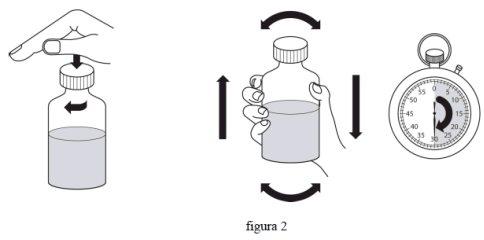
- Replace the cap and shake vigorously for at least 30 seconds. (Figure 2)
- Remove the cap.
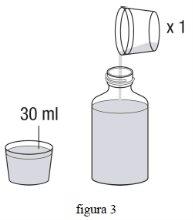
- Using the measuring cup, measure another 30 ml of water and add to the bottle. You must always add a total of 90 ml (3 x 30 ml) of water, regardless of the dose you take. (Figure 3)
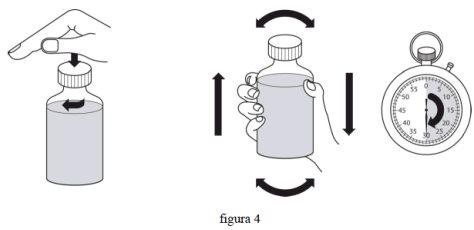
- Replace the cap and shake the bottle vigorously for at least 30 seconds. (Figure 4)
- Remove the cap.
- Press the adapter into the neck of the bottle (as indicated in the figure below). An adapter is provided so that you can fill the oral dosing syringe with the medicine from the bottle. Replace the cap.
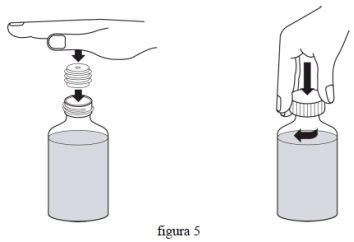
- Write the expiration date of the reconstituted oral suspension on the label of the bottle (the expiration date of the reconstituted oral suspension is 30 days from the date of reconstitution). After this date, any unused oral suspension should be discarded or returned to your pharmacist.
Instructions for Use
Your pharmacist will tell you how to measure the medicine using the oral dosing syringe that is included in the package. Once the oral suspension is reconstituted, it should only be administered using the oral dosing syringe included in each package. See the instructions below before using the oral suspension.
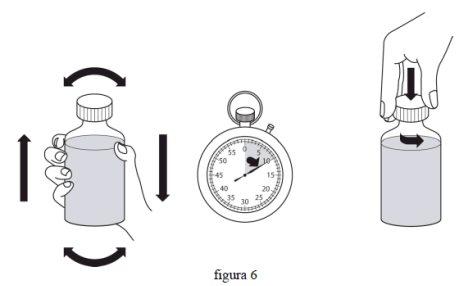
- Shake the reconstituted oral suspension bottle vigorously for at least 10 seconds before using. Remove the cap. (Figure 6)
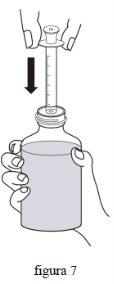
- With the bottle upright, on a flat surface, insert the tip of the oral dosing syringe into the adapter. (Figure 7)
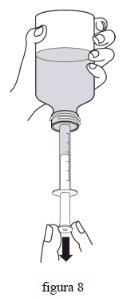
- Invert the bottle holding the oral dosing syringe in place. Slowly pull the plunger of the oral dosing syringe to the mark that indicates your dose (taking 1 ml gives a dose of 10 mg, taking 2 ml gives a dose of 20 mg). To measure the dose exactly, the upper edge of the plunger should be aligned with the appropriate mark on the oral dosing syringe. (Figure 8)
- If you see large bubbles, gently push the plunger into the syringe. This will put the medicine back into the bottle. Repeat this step 3 times.
- Put the bottle back upright with the oral dosing syringe still in place. Remove the oral dosing syringe from the bottle.
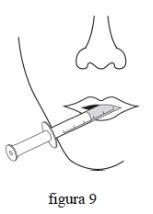
- Put the tip of the oral dosing syringe into your mouth. Point the tip of the oral dosing syringe towards the inside of your cheek. Slowly push the plunger of the oral dosing syringe. Do not squirt the medicine quickly. If the medicine is given to a child, make sure they are sitting or upright before giving the medicine. (Figure 9)
- Replace the cap on the bottle, leaving the bottle adapter in place. Wash the oral dosing syringe as instructed below.
Cleaning and storing the syringe:
- After each administration, wash the syringe. Remove the plunger from the syringe and wash both parts with water.
- Dry both parts. Push the plunger into the syringe. Keep in a clean and safe place with the medicine.
If you take more Revatio than you should
You should not take more medicine than your doctor tells you to.
If you have taken more medicine than you should, talk to your doctor immediately.
Taking more Revatio than you should can increase the risk of known side effects.
If you forget to take Revatio
If you have forgotten to take Revatio, take the dose as soon as you remember and then continue taking your medicine at the usual times. Do not take a double dose to make up for forgotten doses.
If you stop taking Revatio
Suddenly stopping treatment with Revatio can lead to worsening of your symptoms. Do not stop taking Revatio unless your doctor tells you to. Your doctor will tell you how to reduce the dose over a few days before stopping it completely.
If you have any further questions on the use of this product, ask your doctor or pharmacist.

Started taking the medicine and have questions?
Discuss your symptoms and treatment with a doctor online.
4. Possible Adverse Effects
Like all medicines, this medicine can cause adverse effects, although not all people suffer from them.
If you suffer from any of the following adverse effects, stop taking Revatio and inform your doctor immediately (see also section 2):
Adults
The very frequently reported adverse effects (may affect more than 1 in 10 patients) were headache or facial flushing, indigestion, diarrhea, and pain in arms and legs.
The frequently reported adverse effects (may affect up to 1 in 10 patients) are: skin infection, flu-like symptoms, nasal sinus inflammation, reduction in red blood cell count (anemia), fluid retention, difficulty sleeping, anxiety, migraine, tremor, tingling sensation, burning sensation, reduced sense of touch, bleeding in the back of the eye, vision changes, blurred vision, and sensitivity to light, effects on color perception, eye irritation, red eyes, dizziness, bronchitis, nasal bleeding, runny nose, cough, stuffy nose, stomach inflammation, gastroenteritis, heartburn, hemorrhoids, abdominal distension, dry mouth, hair loss, skin flushing, night sweats, muscle pain, back pain, and increased body temperature.
The infrequently reported adverse effects (may affect up to 1 in 100 patients) included: reduced visual acuity, double vision, abnormal sensation in the eye, penile bleeding, presence of blood in semen and/or urine, and breast enlargement in men.
Also, skin rashes, sudden loss of hearing, and decreased blood pressure have been reported with an unknown frequency (the frequency cannot be estimated from the available data).
Children and Adolescents
The following serious adverse effects have been frequently reported (may affect up to 1 in 10 patients): pneumonia, right heart failure, cardiac shock, high blood pressure in the lungs, chest pain, dizziness, respiratory infections, bronchitis, viral stomach and intestine infection, urinary tract infections, and tooth perforations.
The following serious adverse effects were considered related to treatment and have been infrequently reported (may affect up to 1 in 100 patients): allergic reaction (such as skin rash, face, lip, and tongue inflammation, sneezing, difficulty breathing or swallowing), seizures, irregular heartbeat, hearing changes, shortness of breath, digestive tract inflammation, and sneezing due to changes in air flow.
The very frequently reported adverse effects (may affect more than 1 in 10 patients) were headache, vomiting, throat infection, fever, diarrhea, flu, and nosebleeds.
The frequently reported adverse effects (may affect up to 1 in 10 patients) were nausea, increased erections, pneumonia, and runny nose.
Reporting Adverse Effects
If you experience any type of adverse effect, consult your doctor or pharmacist, even if it is a possible adverse effect that is not listed in this prospectus. You can also report them directly through the Spanish Pharmacovigilance System for Human Use Medicines: www.notificaram.es. By reporting adverse effects, you can contribute to providing more information on the safety of this medicine.
5. Storage of Revatio
Keep this medicine out of sight and reach of children.
Do not use this medicine after the expiration date stated on the bottle after CAD. The expiration date is the last day of the month indicated.
Powder
Do not store above 30°C.
Store in the original package to protect it from moisture.
Reconstituted Oral Suspension
Store below 30°C or in the refrigerator between 2°C and 8°C. Do not freeze. After 30 days of reconstitution, discard any remaining oral suspension.
Medicines should not be disposed of through wastewater or household waste. Ask your pharmacist how to dispose of the packaging and medicines that are no longer needed. This will help protect the environment.
6. Package Contents and Additional Information
Composition of Revatio
- The active ingredient is sildenafil (as sildenafil citrate).
After reconstitution, each ml of oral suspension contains 10 mg of sildenafil (as sildenafil citrate). A bottle of reconstituted oral suspension (112 ml) contains 1.12 g of sildenafil (as sildenafil citrate).
- The other ingredients are: Powder for oral suspension: sorbitol (E240) (see section 2 "Revatio contains sorbitol"), anhydrous citric acid, sucralose, sodium citrate (E331) (see section 2 "Revatio contains sodium"), xanthan gum, titanium dioxide (E171), sodium benzoate (E211) (see section 2 "Revatio contains sodium benzoate" and "Revatio contains sodium") and anhydrous colloidal silica; Grape flavor: maltodextrin, grape juice concentrate, acacia gum, pineapple juice concentrate, anhydrous citric acid, natural flavors.
Appearance of Revatio and Package Contents
Revatio is presented as a white to off-white powder for oral suspension that, when reconstituted with water, gives a white oral suspension with a grape flavor.
A 125 ml amber glass bottle (with a polypropylene screw cap) contains 32.27 g of powder for oral suspension.
Once reconstituted, the bottle contains 112 ml of oral suspension, of which 90 ml will be used to administer the doses.
Format: 1 bottle.
Each package also contains a polypropylene measuring cup (graduated to mark 30 ml), a 3 ml polypropylene oral dosing syringe with an HDPE plunger, and an LDPE pressure adapter for the bottle.
Marketing Authorization Holder and Manufacturer
Marketing Authorization Holder:
Upjohn EESV, Rivium Westlaan 142, 2909 LD Capelle aan den IJssel, Netherlands.
Manufacturer:
Fareva Amboise, Zone Industrielle, 29 route des Industries, 37530 Pocé-sur-Cisse, France
Mylan Hungary Kft., Mylan utca 1, Komárom, 2900, Hungary.
You can request more information about this medicine by contacting the local representative of the marketing authorization holder:
Spain
Viatris Pharmaceuticals, S.L.U.
Tel: +34 900 102 712
Date of the Last Revision of this Prospectus:
Other Sources of Information
Detailed information about this medicine is available on the European Medicines Agency website: http://www.ema.europa.eu. There are also links to other websites about rare diseases and orphan medicines.

- Country of registration
- Dosage formORAL SOLUTION/SUSPENSION, 10 mg sildenafil citrate/ml
- ATC codeG04BE03
- Availability in pharmaciesSupply issue reported
- Active substance
- Prescription requiredYes
- Manufacturer
- CompositionSORBITOL (28,069 g mg), BENZOATO DE SODIO (E 211) (0,112 g mg), CITRATO DE SODIO (E-331) (0,427 g mg)
- This information is for reference only and does not constitute medical advice. Always consult a doctor before taking any medication. Oladoctor is not responsible for medical decisions based on this content.
- Alternatives to REVATIO 10 mg/ml POWDER FOR ORAL SUSPENSIONDosage form: TABLET, 25 mgActive substance: sildenafilManufacturer: Adamed Pharma S.A.Prescription requiredDosage form: CHEWABLE TABLET, 100 mgActive substance: sildenafilManufacturer: Farmalider S.A.Prescription requiredDosage form: CHEWABLE TABLET, 25 mgActive substance: sildenafilManufacturer: Farmalider S.A.Prescription required
Online doctors for REVATIO 10 mg/ml POWDER FOR ORAL SUSPENSION
Discuss questions about REVATIO 10 mg/ml POWDER FOR ORAL SUSPENSION, including use, safety considerations and prescription review, subject to medical assessment and local regulations.

Get REVATIO 10 mg/ml POWDER FOR ORAL SUSPENSION Prescription Online
Fill in a 2-min form
Tell us your symptoms, history, and what medicine you're requesting.
Pick a doctor or let us assign
Choose a specialist or we'll match you with the next available doctor.
Doctor reviews your case
Usually within 30 minutes. They may ask follow-up questions via chat.
Collect from any pharmacy
Electronic prescription sent to your email — valid across Spain.
Frequently Asked Questions
REVATIO 10 mg/ml POWDER FOR ORAL SUSPENSION requires a prescription in Spain. You can check with a doctor online whether this medicine may be appropriate for your situation.
The active ingredient in REVATIO 10 mg/ml POWDER FOR ORAL SUSPENSION is sildenafil. This information helps identify medicines with the same composition but different brand names.
REVATIO 10 mg/ml POWDER FOR ORAL SUSPENSION is manufactured by Upjohn Eesv. Pharmacy brands and packaging may differ depending on the distributor.
Doctors such as Family doctors, Psychiatrists, Dermatologists, Cardiologists, Endocrinologists, Gastroenterologists, Pulmonologists, Nephrologists, Rheumatologists, Hematologists, Infectious disease physicians, Allergists, Geriatricians, Paediatricians, Oncologists may assess whether REVATIO 10 mg/ml POWDER FOR ORAL SUSPENSION is appropriate, depending on your situation and local regulations. You can book an online consultation to discuss your symptoms and possible next steps.
Spain has a well-developed healthcare infrastructure across major cities such as Madrid, Barcelona, Valencia, and Seville. Pharmacies are widely available and operate under strict regulations, ensuring access to prescribed medications.
You can buy REVATIO 10 mg/ml POWDER FOR ORAL SUSPENSION in Madrid, Barcelona, Seville, or Valencia at any local pharmacy with a valid prescription.
To obtain a prescription, you can use Oladoctor:
Other medicines with the same active substance (sildenafil) include ABECED 25 mg FILM-COATED TABLETS, AZULSIX 100 mg CHEWABLE TABLETS, AZULSIX 25 mg CHEWABLE TABLETS. These may have different brand names or formulations but contain the same therapeutic ingredient. Always consult a doctor before switching or starting a new medicine.
