






How to use PROHANCE 279.3 mg/ml INJECTABLE SOLUTION IN PRE-FILLED SYRINGE
Translated with AI
This page provides general information and does not replace a doctor’s consultation. Always consult a doctor before taking any medication. Seek urgent medical care if symptoms are severe.
Show originalContents of the leaflet
Introduction
Package Leaflet: Information for the User
ProHance 279.3 mg/ml Solution for Injection in Pre-filled Syringe
Gadoteridol
Read all of this leaflet carefully before you start using this medicine because it contains important information for you.
- Keep this leaflet, you may need to read it again.
- If you have any further questions, ask your doctor or pharmacist.
- This medicine has been prescribed for you only. Do not pass it on to others. It may harm them, even if their signs of illness are the same as yours.
- If you get any side effects, talk to your doctor or pharmacist. This includes any possible side effects not listed in this leaflet. See section 4.
Contents of the Package Leaflet
- What is ProHance and what is it used for
- What you need to know before you use ProHance
- How to use ProHance
- Possible side effects
- Storage of ProHance
- Contents of the pack and further information
1. What is ProHance and what is it used for
This medicinal product is for diagnostic use only.
ProHance belongs to a group of medicinal products called paramagnetic contrast media.
- ProHance is used as a contrast medium in Magnetic Resonance Imaging to improve visualization (compared to Magnetic Resonance Imaging without contrast) of the brain, spinal cord, and surrounding tissues when there are lesions with abnormal vascularization or that determine an alteration of the blood-brain barrier.
- ProHance can also be used in Magnetic Resonance Imaging of the whole body, including pathologies in the head, neck, liver, chest, musculoskeletal system, and soft tissues.

2. What you need to know before you use ProHance
ProHance should only be administered in hospitals or clinics where there are facilities and medical personnel trained to treat allergic reactions.
Do not use ProHance
- if you are allergic (hypersensitive) to gadoteridol or any of the other ingredients of this medicinal product (listed in section 6).
- if you are allergic to another contrast medium containing gadolinium.
Warnings and precautions
Talk to your doctor before starting to use ProHance if:
- you have a history of allergy
- you have a history of epilepsy or brain injuries
- your kidneys do not work properly
- you have recently undergone, or are about to undergo, a liver transplant
Your doctor may decide to perform a blood test to check the proper functioning of your kidneys before deciding on the use of ProHance, especially if you are 65 years old or older.
The administration of ProHance has been associated in some cases with transient, clinically irrelevant changes in serum iron concentration (within the normal range in most cases).
Neonates and Infants
Since renal function is immature in newborns up to 4 weeks and infants up to 1 year of age, ProHance should only be used in these patients after careful evaluation by the doctor.
Using ProHance with other medicines
Tell your doctor or pharmacist if you are using, have recently used, or might use any other medicines.
No medicinal interactions with gadoteridol are known. During clinical trials conducted with ProHance, no clinically significant changes or laboratory abnormalities were observed.
Pregnancy and breastfeeding
Ask your doctor or pharmacist for advice before taking any medicine.
Pregnancy:
Gadoteridol crosses the placenta. It is not known if it can affect the fetus. You should inform your doctor if you are pregnant or think you may be pregnant, as ProHance should not be used during pregnancy unless strictly necessary.
Breastfeeding:
Tell your doctor if you are breastfeeding or about to start. Your doctor will assess whether you should continue breastfeeding or interrupt it 24 hours after administration of ProHance.
Driving and using machines
There is no information on the effects of ProHance on driving or using tools or machines. Ask your doctor if you can drive and if it is safe to use any tool or machine.
ProHance contains sodium hydroxide
This medicinal product contains less than 23 mg (1 mmol) of sodium per dose, so it is considered essentially "sodium-free".
3. How to use ProHance
Follow exactly the administration instructions of ProHance indicated by your doctor. In case of doubt, consult your doctor or pharmacist again.
ProHance is a contrast agent used for a diagnostic test, which must be performed in the presence of qualified personnel or preferably under the supervision of a doctor who will indicate the instructions to follow at all times.
ProHance must not be mixed with any other medicinal product.
ProHance will be administered intravenously.
The recommended dose of ProHance in adults for a complete examination of most brain and spinal pathologies is 0.1 mmol/Kg (0.2 ml/Kg). However, doses of 0.3 mmol/Kg have been shown to be effective in patients suspected of having cerebral metastases or other poorly enhanced cerebral lesions.
The recommended dose for Magnetic Resonance Imaging of the whole body is 0.1 mmol/Kg.
If the radiologist considers it convenient to administer an additional injection of ProHance to expand and improve the study, a complementary dose of 0.1 mmol/Kg can be administered approximately 30 minutes after the first injection. If repeat examinations are to be performed, at least 6 hours must elapse for ProHance to be eliminated.
Use in special populations
The use of ProHance is not recommended in patients with severe kidney problems or in patients who have recently undergone, or are about to undergo, a liver transplant. However, if use is required, during an examination, only one dose of ProHance should be administered and a second injection should not be administered until at least 7 days have passed.
Use in children from term neonates
The recommended dose of ProHance for cerebral and spinal pathologies is 0.1 mmol/Kg (0.2 ml/Kg).
The safety and efficacy of doses greater than 0.1 mmol/Kg and sequential or repeated administrations have not been established.
In children under 18 years of age, use for Magnetic Resonance Imaging of the whole body is not recommended.
Neonates and Infants
Since renal function is immature in newborns up to 4 weeks and infants up to 1 year of age, ProHance should only be administered to these patients after careful evaluation by the doctor and at a dose not exceeding 0.1 mmol/Kg body weight. During an examination, only one dose of ProHance should be administered to neonates and infants, and a second injection should not be administered until at least 7 days have passed.
Elderly patients
If you are 65 years old or older, it is not necessary to adjust the dose, but a blood test may be performed to check the proper functioning of your kidneys.
If you use more ProHance than you should
No cases of overdose have been reported to date; therefore, the signs and symptoms of intoxication with ProHance are not known. In clinical trials, where doses of up to 0.3 mmol/Kg have been administered, no clinically significant changes have been observed due to the increased dose. In case of overdose, the patient should be subjected to clinical observation and symptomatic treatment.
In case of overdose or accidental ingestion, consult the Toxicology Information Service. Telephone (91) 562 04 20, indicating the medicinal product and the quantity administered.

4. Possible side effects
Like all medicines, ProHance can cause side effects, although not everybody gets them.
When using ProHance in the Magnetic Resonance Imaging unit, the same safety rules and procedures as usual will be taken into account.
If you notice any of the following side effects, tell your doctor immediately, as you may need urgent medical treatment.
Frequent (more than 1 in 100 people and less than 1 in 10 people)
- Feeling unwell (nausea)
Uncommon (more than 1 in 1,000 people and less than 1 in 100 people)
- Headache, change in sensations, dizziness, alteration of taste
- Increased tear production
- Flushing, low blood pressure
- Dry mouth, vomiting
- Itching, skin rash, itching
- Pain at the injection site
- Reaction at the injection site (appears over time due to extravasation of the contrast medium)
- Increased heart rate
- Fatigue
Rare (more than 1 in 10,000 people and less than 1 in 1,000 people)
- Hypersensitivity reactions (frequently reported symptoms include throat tightness, throat irritation, difficulty breathing, chest discomfort, feeling of heat, difficulty swallowing, burning sensation, throat swelling, and low blood pressure).
- Anxiety
- Confusion, abnormal movement coordination, convulsions
- Tinnitus
- Changes in heart rhythm
- Laryngospasm, difficulty breathing, nasal secretion, cough, temporary absence of breathing, breathing sounds
- Abdominal pain, tongue swelling, itching in the mouth, gum inflammation, diarrhea
- Facial swelling
- Stiff muscles
- Chest pain, fever
Frequency not known (cannot be estimated from the available data)
- Loss of consciousness
- Coma
- Cardiac arrest
- Respiratory arrest, fluid in the lungs
- Kidney failure
- Vasovagal reaction (symptoms that are frequently experienced include nausea, dizziness, and excessive sweating. In severe cases, symptoms can include pallor, excessive sweating, slow heart rate, and possible loss of consciousness. Additional symptoms may be fear or anxiety, restlessness, fainting, and excessive salivation)
There have been reports of nephrogenic systemic fibrosis (which causes skin hardening and can also affect soft tissues and internal organs), most of which were in patients who were administered ProHance in combination with other gadolinium-based contrast media.
Pediatric population
The safety profile of ProHance is similar in children and adults.
If you experience side effects, talk to your doctor or pharmacist, even if they are side effects not listed in this leaflet.
Reporting of side effects
If you experience any side effects, talk to your doctor or nurse, even if they are possible side effects not listed in this leaflet. You can also report them directly through the Spanish Medicines and Health Products Agency's Pharmacovigilance System for Human Use: https://www.notificaram.es. By reporting side effects, you can help provide more information on the safety of this medicinal product.
5. Storage of ProHance
Keep this medicinal product out of the sight and reach of children.
Store the product at room temperature (between 15°C and 30°C).
Keep the syringe in the outer packaging to protect it from light.
Do not freeze. Frozen syringes must be discarded.
Do not use this medicinal product after the expiry date which is stated on the carton after EXP. The expiry date is the last day of the month shown.
6. Contents of the pack and further information
Composition of ProHance
- The active substance is gadoteridol.
Each syringe contains:
Gadoteridol DCI ……………………………… 279.3 mg/ml (500 millimolar)
- The other ingredients are calcium calteridol, trometamine, hydrochloric acid, sodium hydroxide, and water for injections.
Appearance of the product and pack contents
ProHance is a solution for injection in a pre-filled syringe with 279.3 mg/ml (500 millimolar) of gadoteridol.
Each pack contains a syringe of 10, 15, or 17 ml. The syringe is made of type I glass with a butyl rubber stopper and a polypropylene plunger.
Marketing authorisation holder and manufacturer
Marketing authorisation holder:
BRACCO INTERNATIONAL BV
3051 Strawinskylaan
1077 ZX Amsterdam
Netherlands
Manufacturer:
BRACCO IMAGING S.p.A.
Bioindustry Park
Via Ribes, 5
10010 Colleretto Giacosa (TO)
Italy
You can ask for more information about this medicinal product from the local representative of the marketing authorisation holder:
Laboratorios Farmacéuticos ROVI, S.A.
Julián Camarillo, 35
28037 Madrid
Spain
Date of last revision of this leaflet: May 2024
Other sources of information
Detailed and updated information on this medicinal product is available on the website of the Spanish Agency for Medicines and Health Products (AEMPS) http://www.aemps.gob.es/
-------------------------------------------------------------------------------------------------------------------------
This information is intended only for healthcare professionals:
The complete technical data sheet of ProHance is provided as a separate document in the product packaging, in order to provide healthcare professionals with additional scientific and practical information on the administration and use of this medicinal product.
Please consult the technical data sheet (the technical data sheet must be included in the box).
-

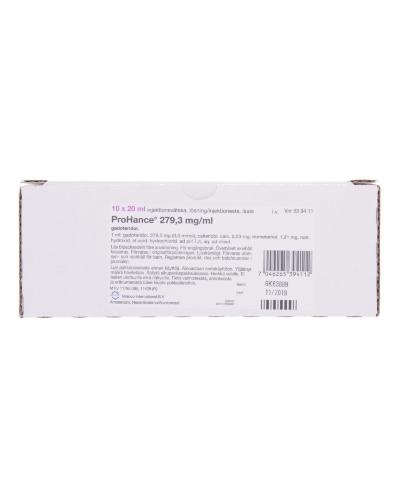
- Country of registration
- Dosage formINJECTABLE, 279.3 mg gadoteridol
- ATC codeV08CA04
- Active substance
- Prescription requiredYes
- Manufacturer
- This information is for reference only and does not constitute medical advice. Always consult a doctor before taking any medication. Oladoctor is not responsible for medical decisions based on this content.
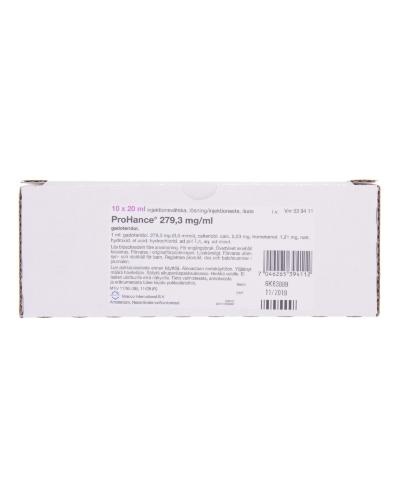
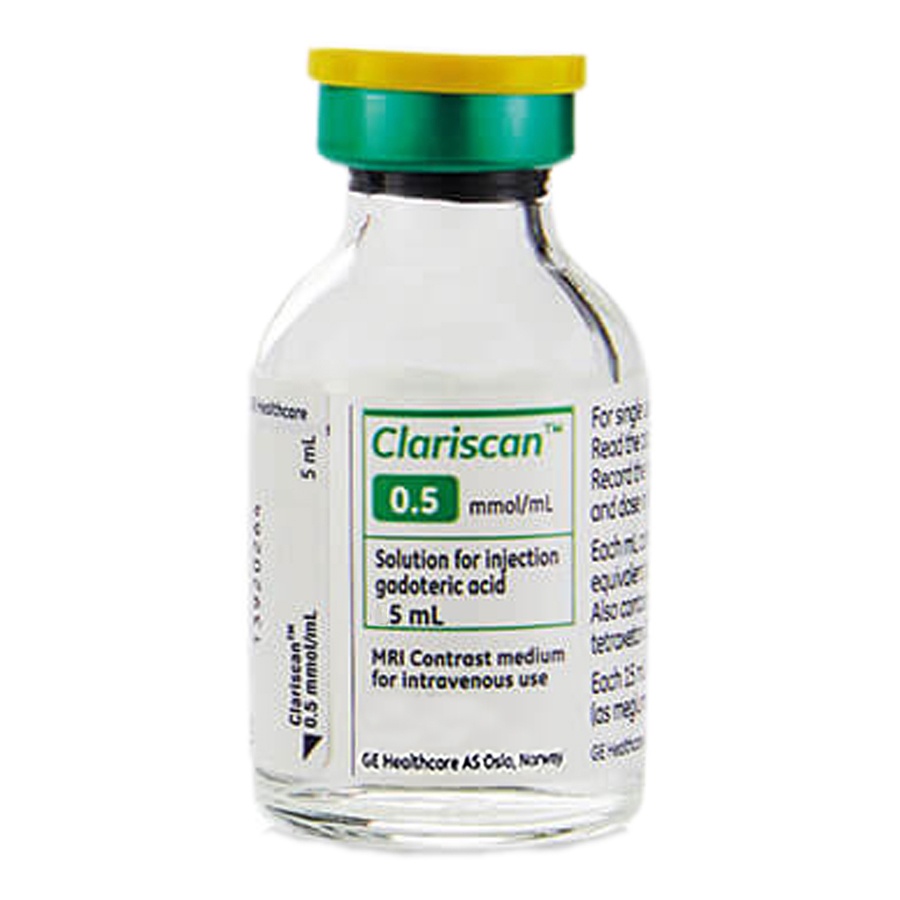
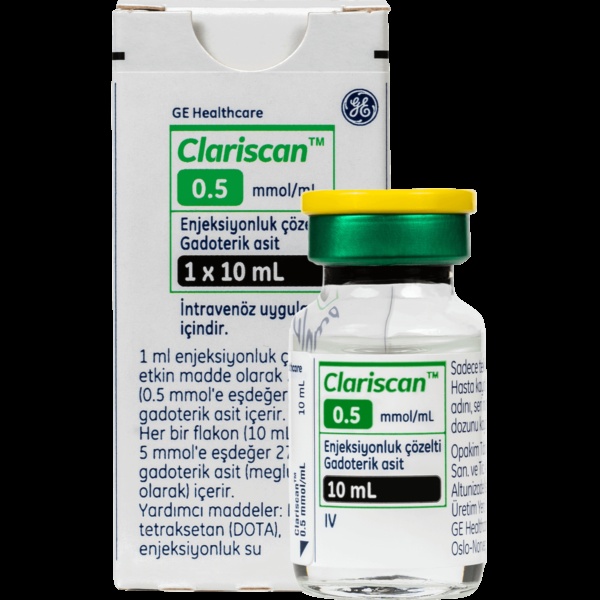
- Alternatives to PROHANCE 279.3 mg/ml INJECTABLE SOLUTION IN PRE-FILLED SYRINGEDosage form: INJECTABLE, 279.3 mg gadoteridol/mlActive substance: gadoteridolManufacturer: Bracco International B.V.Prescription requiredDosage form: INJECTABLE, 0.5 mmol/mlActive substance: gadoteric acidManufacturer: Ge Healthcare Bio-Sciences, S.A.U.Prescription requiredDosage form: INJECTABLE, 0.5 mmol/mlActive substance: gadoteric acidManufacturer: Ge Healthcare Bio-Sciences, S.A.U.Prescription required
Online doctors for PROHANCE 279.3 mg/ml INJECTABLE SOLUTION IN PRE-FILLED SYRINGE
Discuss questions about PROHANCE 279.3 mg/ml INJECTABLE SOLUTION IN PRE-FILLED SYRINGE, including use, safety considerations and prescription review, subject to medical assessment and local regulations.

Get PROHANCE 279.3 mg/ml INJECTABLE SOLUTION IN PRE-FILLED SYRINGE Prescription Online
Fill in a 2-min form
Tell us your symptoms, history, and what medicine you're requesting.
Pick a doctor or let us assign
Choose a specialist or we'll match you with the next available doctor.
Doctor reviews your case
Usually within 30 minutes. They may ask follow-up questions via chat.
Collect from any pharmacy
Electronic prescription sent to your email — valid across Spain.
Frequently Asked Questions
PROHANCE 279.3 mg/ml INJECTABLE SOLUTION IN PRE-FILLED SYRINGE requires a prescription in Spain. You can check with a doctor online whether this medicine may be appropriate for your situation.
The active ingredient in PROHANCE 279.3 mg/ml INJECTABLE SOLUTION IN PRE-FILLED SYRINGE is gadoteridol. This information helps identify medicines with the same composition but different brand names.
PROHANCE 279.3 mg/ml INJECTABLE SOLUTION IN PRE-FILLED SYRINGE is manufactured by Bracco International B.V.. Pharmacy brands and packaging may differ depending on the distributor.
Doctors such as Family doctors, Psychiatrists, Dermatologists, Cardiologists, Endocrinologists, Gastroenterologists, Pulmonologists, Nephrologists, Rheumatologists, Hematologists, Infectious disease physicians, Allergists, Geriatricians, Paediatricians, Oncologists may assess whether PROHANCE 279.3 mg/ml INJECTABLE SOLUTION IN PRE-FILLED SYRINGE is appropriate, depending on your situation and local regulations. You can book an online consultation to discuss your symptoms and possible next steps.
Spain has a well-developed healthcare infrastructure across major cities such as Madrid, Barcelona, Valencia, and Seville. Pharmacies are widely available and operate under strict regulations, ensuring access to prescribed medications.
You can buy PROHANCE 279.3 mg/ml INJECTABLE SOLUTION IN PRE-FILLED SYRINGE in Madrid, Barcelona, Seville, or Valencia at any local pharmacy with a valid prescription.
To obtain a prescription, you can use Oladoctor:
Other medicines with the same active substance (gadoteridol) include PROHANCE 279.3 mg/ml INJECTABLE SOLUTION, CLARISCAN 0.5 mmol/mL Injectable Solution, CLARISCAN 0.5 mmol/mL Injectable Solution in Pre-filled Syringe. These may have different brand names or formulations but contain the same therapeutic ingredient. Always consult a doctor before switching or starting a new medicine.
