



PRIVIGEN 100 mg /Ml Solution For Infusion

Prescription review online
A doctor will review your case and decide whether a prescription is medically appropriate.

Talk to a doctor about this medicine
Discuss your symptoms and possible next steps in a quick online consultation.



How to use PRIVIGEN 100 mg/ml SOLUTION FOR INFUSION
Contents of the leaflet
- Introduction
- What is Privigen and what is it used for
- What you need to know before you use Privigen
- How to use Privigen
- Possible Adverse Effects
- Storage of Privigen
- Contents of the Pack and Further Information
Introduction
Package Leaflet: Information for the User
Privigen 100 mg/ml (10%) Solution for Infusion
Human Normal Immunoglobulin (IgIV)
Read all of this leaflet carefully before you start using this medicine because it contains important information for you.
- Keep this leaflet, you may need to read it again.
- If you have any further questions, ask your pharmacist.
- If you get any side effects, talk to your doctor or pharmacist. This includes any possible side effects not listed in this leaflet. See section 4.
Contents of the pack:
- What is Privigen and what is it used for
- What you need to know before you use Privigen
- How to use Privigen
- Possible side effects
- Storage of Privigen
- Contents of the pack and other information
1. What is Privigen and what is it used for
What is Privigen
Privigen belongs to a class of medicines called human normal immunoglobulins. Immunoglobulins are also known as antibodies and are blood proteins that help the body to fight infections.
How Privigen works
Privigen contains immunoglobulins that have been prepared from the blood of healthy people. The medicine works in exactly the same way as the immunoglobulins that are naturally present in human blood.
What is Privigen used for
Privigen is used to treat adults and children (0-18 years) in the following situations:
- To increase abnormally low blood immunoglobulin levels to normal values (replacement therapy):
- Patients who are born with a reduced ability or inability to produce immunoglobulins (primary immunodeficiencies or PID).
- Patients with acquired immunodeficiency (AIDS) who suffer from severe or recurrent infections, ineffective antimicrobial treatment, and proven specific antibody failure (PSAF)* or IgG serum level of <4 g l.< li>
- To treat certain inflammatory disorders (immunomodulation). There are 5 groups:
- Patients who do not have enough platelets in their blood (Immune Thrombocytopenic Purpura (ITP)), and:
who are at risk of bleeding or who will be undergoing surgery soon.
- Patients with Guillain-Barré Syndrome. This is an acute disease characterized by inflammation of the peripheral nerves, causing severe muscle weakness, mainly in the lower and upper limbs.
- Patients with Kawasaki disease. This is an acute disease that mainly affects young children and is characterized by inflammation of the blood vessels throughout the body.
- Patients with Chronic Inflammatory Demyelinating Polyneuropathy (CIDP). This is a chronic disease characterized by inflammation of the peripheral nerves, causing muscle weakness and numbness, mainly in the legs and upper limbs.
- Patients with Multifocal Motor Neuropathy (MMN). This is a disease of the motor nerves with weakness of the arms and legs, with slow progression.

Not sure if this medicine is right for you?
Discuss your symptoms and treatment with a doctor online.
2. What you need to know before you use Privigen
- Read this section carefully. Before you are given Privigen, you and your doctor must consider the information provided.
Do not use Privigen
- if you are allergic to human immunoglobulins or proline.
- if you have developed antibodies against IgA immunoglobulins in your blood.
- if you have hyperprolinemia type I or II (a genetic disorder that causes high levels of the amino acid proline in the blood). This is an extremely rare disorder. Only a few families with this disease are known worldwide.
Warnings and precautions
What circumstances increase the risk of adverse reactions?
- Tell your doctor or healthcare professional before treatment if any of the following circumstances apply to you:
- You receive this medicine in high doses in 1 or several days and have blood group A, B, or AB or have an underlying inflammatory disease. In these circumstances, immunoglobulins have frequently been reported to increase the risk of red blood cell destruction (hemolysis).
- You are overweight, elderly, diabetic, have been bedridden for a long time, have high blood pressure, low blood volume (hypovolemia), have vascular problems (vascular diseases), have an increased tendency to blood clotting (thrombophilia or thrombotic episodes), or have a disease or disorder that makes your blood more dense (hyperviscosity). In these circumstances, immunoglobulins may increase the risk of heart attack (myocardial infarction), stroke, blood clots in the lungs (pulmonary embolism), or blockage of a blood vessel in the leg, although this is very rare.
- You are diabetic. Although Privigen does not contain sugar, it may be diluted with a special sugar solution (5% glucose), which can affect the patient's blood sugar levels.
- You have or have had previous kidney problems or are taking medicines that can damage your kidneys (nephrotoxic medicines). In these circumstances, immunoglobulins may increase the risk of acute kidney failure (acute renal failure), although this is very rare. Loss of kidney function with a fatal outcome has occurred in isolated cases related to hemodialysis.
What kind of monitoring is required during infusion?
For your personal safety, treatment with Privigen will be carried out under the supervision of your doctor or healthcare professional. You will be observed during the entire infusion and for at least 20 minutes after its completion. In some cases, special precautions may be necessary. Some examples of these circumstances are:
- you receive Privigen at a high infusion rate or
- you are receiving Privigen for the first time or after a prolonged interruption of treatment (e.g., several months).
In these cases, you will be closely monitored during the entire infusion and for at least one hour after its completion.
When may it be necessary to slow down or stop the infusion?
- You may be allergic (hypersensitive) to immunoglobulins without knowing it.
However, actual allergic reactions are very rare. These can occur even if you have previously received human immunoglobulins and tolerated them well. This can happen especially if you have developed antibodies against IgA immunoglobulins. In these very rare cases, allergic reactions, such as a sudden drop in blood pressure or shock, may occur (see also section 4 "Possible side effects").
- In very rare cases, a transfusion-related acute lung injury (TRALI) may occur after administering immunoglobulins. This will lead to fluid accumulation in the air spaces of the lungs (non-cardiogenic pulmonary edema). You will recognize TRALI by severe difficulty breathing (respiratory distress), blue-tinged skin (cyanosis), abnormally low oxygen levels in the blood (hypoxia), decreased blood pressure (hypotension), and increased body temperature (fever). Symptoms usually appear during or within 6 hours after receiving treatment.
Tell your doctor or healthcare professional immediately if you notice these reactions during the infusion of Privigen. He or she will decide whether to reduce the infusion rate or stop the infusion altogether.
Blood tests
- Tell your doctor about your treatment with Privigen before you have any blood tests.
After receiving Privigen, the results of certain blood tests (serological tests) may be altered for some time.
Information on safety regarding infections
Privigen is made from human blood plasma (this is the liquid part of the blood). When medicines are made from blood or plasma, certain measures are taken to prevent the transmission of infections to patients. These measures are:
- careful selection of blood or plasma donors to exclude those who may be at risk of transmitting infections,
- testing of each donation and of plasma pools for the absence of signs of viruses or infections.
- the inclusion of steps in the processing of blood or plasma that can inactivate or remove viruses.
Despite these measures, when administering medicines prepared from human blood or plasma, the possibility of transmitting an infection cannot be completely excluded. This is also true for any unknown or emerging virus, or any other type of infection.
The measures taken are considered effective for enveloped viruses, such as human immunodeficiency virus (HIV), hepatitis B virus, and hepatitis C virus, and for non-enveloped viruses, such as hepatitis A virus and parvovirus B19.
Immunoglobulins have not been associated with hepatitis A or parvovirus B19 infections, possibly because the antibodies against these infections, which are contained in the product, are protective.
- It is strongly recommended that, each time you are given a dose of Privigen, you note the name and batch number of the product, in order to maintain a record of the batches used.
Using Privigen with other medicines
- Tell your doctor or healthcare professional if you are using, have recently used, or might use any other medicines.
Concomitant use of medicines that increase water excretion from your body (loop diuretics) should be avoided during treatment with Privigen. Your doctor will decide whether you should use or continue treatment with loop diuretics.
Vaccines
- Before vaccination, inform the doctor who prescribed it to you about your treatment with Privigen.
After receiving Privigen, the effectiveness of some vaccines may be reduced. The affected vaccines are live, attenuated vaccines, such as measles, mumps, rubella, and varicella. These vaccinations should be postponed until at least three months after the last infusion of Privigen. In the case of measles vaccination, this alteration may persist for up to one year. Therefore, the doctor who prescribed the vaccination should check the effectiveness of the measles vaccination.
Pregnancy and breastfeeding
- If you are pregnant or breastfeeding, think you may be pregnant, or are planning to have a baby, ask your doctor or pharmacist for advice before using this medicine. Your doctor will decide whether you can receive Privigen during pregnancy or while breastfeeding.
However, in pregnant and breastfeeding women, medicines containing antibodies have been used. Long-term clinical experience has shown that no harmful effects are expected during pregnancy or on the newborn.
If you receive Privigen while breastfeeding, the antibodies present in this medicine will also be found in breast milk. Therefore, your baby will also receive the protective antibodies.
Driving and using machines
During treatment with Privigen, patients may experience effects, such as dizziness or nausea, that can affect the ability to drive and use machines. If this occurs, do not drive or use machines until the effects have disappeared.
Privigen contains proline
Do not take it if you have hyperprolinemia (see also section 2, "What you need to know before you use Privigen")
- Tell your doctor before starting treatment.
Sodium content
This medicine contains less than 2.3 mg of sodium (the main component of table/cooking salt) per 100 ml. This is equivalent to 0.12% of the maximum daily intake of 2 g of sodium recommended for an adult.
3. How to use Privigen

Started taking the medicine and have questions?
Discuss your symptoms and treatment with a doctor online.
Privigen is indicated only for infusion into a vein (intravenous infusion). It is usually administered by your doctor or healthcare professional.
Your doctor will calculate the correct dose for you, taking into account your weight, the specific circumstances listed in section 2, "Warnings and precautions", and the response to treatment. The dose calculation for children and young patients is not different from that for adults. At the start of the infusion, you will receive Privigen at a slow infusion rate. If you tolerate this well, your doctor may gradually increase the infusion rate.
If you receive more Privigen than you should
It is unlikely that an overdose will occur, as Privigen is usually administered only under medical supervision. If, despite this, you receive more Privigen than you should, your blood may become too thick (more dense), which could increase the risk of developing blood clots. This can happen especially if you are a patient at risk, for example, if you are elderly or have kidney or heart disease. Tell your doctor if you know you have medical problems.
4. Possible Adverse Effects
Like all medicines, this medicine can cause adverse effects, although not all people will experience them. The possible adverse effects can be reduced or even avoided if Privigen is administered at a slow infusion rate. Such adverse effects can occur even if you have previously received human immunoglobulins and tolerated them well.
In very rare and isolated cases, the following adverse reactions have been described with immunoglobulin preparations:
- Severe hypersensitivity reactions, such as a sudden drop in blood pressure or anaphylactic shock (for example, you may feel dizzy, lightheaded, faint while standing, feel cold in your hands and feet, perceive an abnormal heartbeat or chest pain, or have blurred vision), even if you have not shown hypersensitivity in previous infusions,
- Report immediately to your doctor or healthcare professional if you notice such symptoms during the infusion of Privigen. They will decide whether it is necessary to decrease the infusion rate or stop it completely.
- Formation of blood clots that can be carried in the bloodstream (thromboembolic reactions) and can cause, for example: myocardial infarction (for example, when you have sudden chest pain or shortness of breath), stroke (for example, when you have a sudden episode of muscle weakness, loss of sensations or balance, loss of alertness, or difficulty speaking), blood clots in the lungs' arteries (for example, when you have chest pain, difficulty breathing, or cough up blood), deep vein thrombosis (for example, when you have redness, warmth, pain when touched, or swelling in one or both legs),
- Chest pain, chest discomfort, painful breathing caused by acute lung injury produced by transfusion (TRALI)
- Report immediately to your doctor or healthcare professional if you experience any of the aforementioned symptoms. Anyone who experiences such symptoms should be taken immediately to the hospital's emergency area for evaluation and appropriate treatment.
- Temporary non-infectious meningitis (aseptic meningitis)
- Report immediately to your doctor or healthcare professional if you experience the following symptoms: severe headache, stiffness in the neck, drowsiness, fever, increased sensitivity of the eyes to light (photophobia), nausea, and vomiting after receiving intravenous immunoglobulins. These symptoms could indicate aseptic meningitis, a non-infectious inflammation of the protective membranes surrounding the brain and spinal cord. If you have a recurrence of aseptic meningitis with intravenous immunoglobulin treatment, your doctor will ask about the onset or worsening of your symptoms that may indicate progression to brain swelling (cerebral edema). Your doctor will decide whether further tests are necessary and whether to continue with the Privigen infusion.
- Increased concentration of creatinine in the blood
- Proteinuria
- Acute kidney failure
- Transient decrease in red blood cells (hemolytic anemia or reversible hemolysis), anemia, leukopenia, anisocytosis (including microcytosis).
The adverse effects observed in controlled clinical studies and post-marketing experience are presented in decreasing order of frequency:
Very Common(may occur in more than 1 in 10 patients):
Headache (including sinus headache, migraine, headache discomfort, tension headache, pain (including back pain, pain in the limbs, pain in the joints and bones (arthralgia), neck pain, facial pain), fever (including chills), flu-like illness (including runny nose (nasopharyngitis), sore throat (pharyngolaryngeal pain), mouth and throat blisters (oropharyngeal blisters), throat tightness.
Common(may occur in up to 1 in 10 patients):
Temporary reduction in the number of red blood cells (anemia), reduction in red blood cells (hemolysis including hemolytic anemia) β, reduction in the number of white blood cells (leukopenia), hypersensitivity, dizziness (including vertigo), high blood pressure (hypertension), flushing (including warmth, hyperemia), low blood pressure (including decreased blood pressure), difficulty breathing (dyspnea, including chest pain, chest discomfort, painful breathing), stomach discomfort (nausea), vomiting, soft stools (diarrhea), stomach pain, skin disorder (including rash, itching (pruritus), hives (urticaria), maculopapular rash, skin redness (erythema), skin peeling (exfoliation of the skin), muscle pain (including muscle cramps and stiffness), fatigue (fatigue), physical weakness (asthenia), muscle weakness.
Routine laboratory tests may frequently reveal changes in liver function (hyperbilirubinemia), as well as changes in blood count (for example, positive direct Coombs test), increased alanine aminotransferase, increased aspartate aminotransferase, increased lactate dehydrogenase in blood).
Uncommon(may occur in up to 1 in 100 patients):
Temporary non-infectious meningitis (reversible aseptic meningitis), irregularity in the shape of red blood cells (microscopic detection), presence of elevated platelet counts in the blood (thrombocytosis), drowsiness, chills (shivering), palpitations, tachycardia, thromboembolic events, lack of blood supply to the lower limbs that causes, for example, pain when walking (peripheral vascular disorder), presence of excess serum proteins in the urine (proteinuria, including increased creatinine in blood), pain at the injection site (including discomfort at the infusion site).
In isolated cases (post-marketing experience) the following have been observed in patients treated with Privigen: abnormally low level of specific white blood cells called neutrophils (decreased neutrophil count), anaphylactic shock, painful breathing due to lung injury caused by transfusion (TRALI), and acute kidney failure.
- The cases of hemolytic anemia after the completion of the controlled clinical study were observed with a significantly reduced frequency due to improvements in the manufacturing process of Privigen.
- If you experience adverse effects, consult your doctor or healthcare professional, even if they are adverse effects that do not appear in this leaflet.
See also section 2, "What you need to know before you start using Privigen" for more information on circumstances that increase the risk of adverse effects.
Reporting of Adverse Effects
If you experience any adverse effects, consult your doctor, pharmacist, or nurse, even if they are possible adverse effects that do not appear in this leaflet. You can also report them directly through the national reporting system included in Appendix V. By reporting adverse effects, you can contribute to providing more information on the safety of this medicine.
5. Storage of Privigen
- Keep this medicine out of the sight and reach of children.
- Do not use this medicine after the expiration date stated on the outer packaging and on the label of the vial after "EXP". The expiration date is the last day of the month indicated.
- Since the solution does not contain preservatives, the healthcare professional should infuse it as soon as possible after the first opening of the vial.
- Do not store above 25°C.
- Do not freeze.
- Keep the vial in the outer carton to protect it from light.
- Do not use this medicine if you notice that the solution is cloudy or contains particles floating in the solution.
6. Contents of the Pack and Further Information
Composition of Privigen
- The active substanceis human normal immunoglobulin (IgG antibodies). Privigen contains 100 mg/ml (10%) of human protein, of which at least 98% is IgG.
The approximate percentage of IgG subclasses is as follows:
IgG1 69%
IgG2 26%
IgG3 3%
IgG4 2%
This medicine contains traces of IgA (no more than 25 micrograms/ml).
- The other ingredients (excipients)are the amino acid proline, water for injectable preparations, and hydrochloric acid or sodium hydroxide (for pH adjustment).
Appearance of the Product and Contents of the Pack
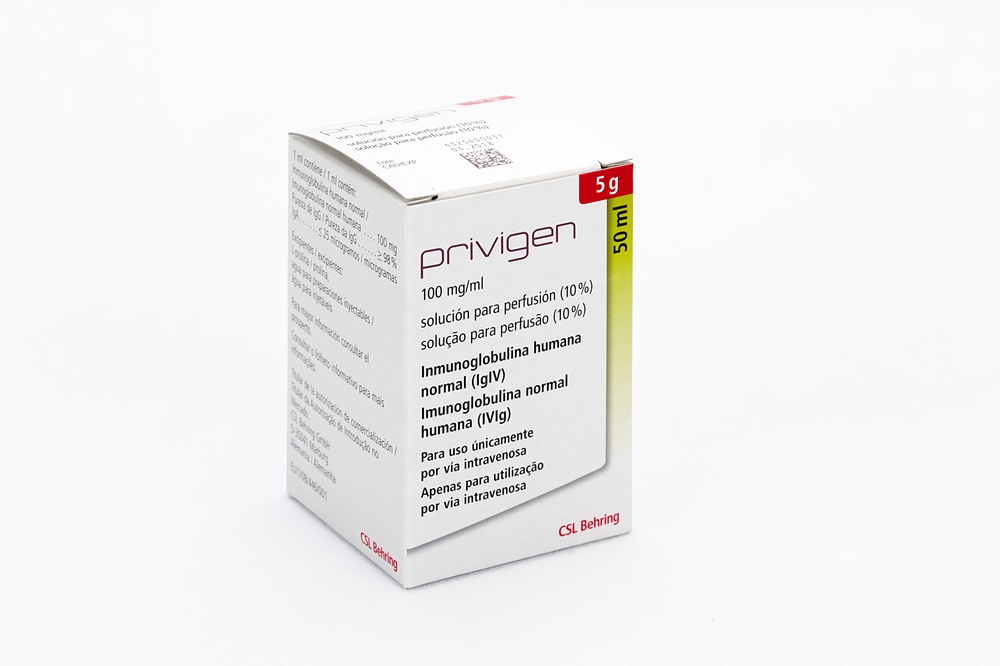
Privigen is presented as a solution for infusion.
The solution is clear or slightly opalescent, and colorless or pale yellow.
Package sizes:
1 vial (2.5 g/25 ml, 5 g/50 ml, 10 g/100 ml, 20 g/200 ml, or 40 g/400 ml)
3 vials (10 g/100 ml or 20 g/200 ml)
Not all package sizes may be marketed.
Marketing Authorization Holder and Manufacturer
CSL Behring GmbH
Emil-von-Behring-Strasse 76
D-35041 Marburg
Germany
You can obtain further information on this medicine from the local representative of the marketing authorization holder:
België/Belgique/Belgien CSL Behring NV Tél/Tel: +32 15 28 89 20 | Luxembourg/Luxemburg CSL Behring NV Tél/Tel: +32 15 28 89 20 |
| Magyarország CSL Behring Kft. Tel: +36 1 213 4290 |
Ceská republika CSL Behring s.r.o. Tel: +420 702 137 233 | Malta AM Mangion Ltd. Tel: +356 2397 6333 |
Danmark CSL Behring ApS Tlf: +45 4520 1420 | Nederland CSL Behring B.V. Tel: +31 85 111 96 00 |
Deutschland CSL Behring GmbH Tel: +49 619 07584810 | Norge CSL Behring AB Tlf: +46 8 544 966 70 |
Eesti CentralPharma Communications OÜ Tel: +3726015540 | Österreich CSL Behring GmbH Tel: +43 1 80101 1040 |
Ελλάδα CSL Behring ΕΠΕ Τηλ: +30 210 7255 660 | Polska CSL Behring Sp. z o.o. Tel.: +48 22 213 22 65 |
España CSL Behring S.A. Tel: +34 933 67 1870 | Portugal CSL Behring Lda Tel: +351 21 782 62 30 |
France CSL Behring SA Tél: +33 1 53 58 54 00 | România Prisum Healthcare S.R.L Tel: +40 21 322 01 71 |
Hrvatska Marti Farm d.o.o. Tel: +385 1 5588297 | Slovenija Emmes Biopharma Global s.r.o. - podružnica v Sloveniji s.r.o. Tel: +386 41 42 0002 |
Ireland CSL Behring GmbH Tel: +49 6190 75 84700 | Slovenská republika CSL Behring s.r.o. Tel: +421 911 653 862 |
Ísland CSL Behring AB Sími: +46 8 544 966 70 | Suomi/Finland CSL Behring AB Puh/Tel: +46 8 544 966 70 |
Italia CSL Behring S.p.A. Tel: +39 02 34964 200 | Sverige CSL Behring AB Tel: +46 8 544 966 70 |
Κύπρος CSL Behring ΕΠΕ Τηλ: +30 210 7255 660 | |
Latvija CentralPharma Communications SIA Tel: +371 6 7450497 | |
Lietuva CentralPharma Communications UAB Tel: +370 5 243 0444 |
Date of the Last Revision of this Leaflet:
Detailed information on this medicine is available on the European Medicines Agency website: http://www.ema.europa.eu.
-------------------------------------------------------------------------------------------------------------------------
This information is intended only for healthcare professionals:
Dosage and Administration
The dosage recommendations are summarized in the following table:
Indication | Dose | Frequency of Injections | |
Replacement Therapy | |||
Primary Immunodeficiency Syndromes (PIDS) | Initial dose: 0.4 - 0.8 g/kg body weight maintenance dose: 0.2 - 0.8 g/kg body weight | every 3 to 4 weeks, to achieve minimum IgG concentrations of at least 6 g/l | |
Secondary Immunodeficiencies (as defined in 4.1) | 0.2 - 0.4 g/kg body weight | every 3 to 4 weeks to achieve minimum IgG levels of at least 6 g/l | |
Immunomodulation | |||
Immune Thrombocytopenic Purpura (ITP) | 0.8 - 1 g/kg body weight or 0.4 g/kg body weight per day | on the first day, possibly repeated once within 3 days for 2 to 5 days | |
Guillain-Barré Syndrome | 0.4 g/kg body weight per day | for 5 days | |
Kawasaki Disease | 2 g/kg body weight | in a single dose, associated with acetylsalicylic acid | |
Chronic Inflammatory Demyelinating Polyneuropathy (CIDP) | initial dose: 2 g/kg body weight maintenance dose: 1 g/kg body weight | in divided doses over 2-5 days every 3 weeks for 1-2 days | |
Multifocal Motor Neuropathy (MMN) | initial dose: 2 g/kg body weight maintenance dose: 1 g/kg body weight or 2 g/kg body weight | over 2 to 5 consecutive days every 2 to 4 weeks or every 4 to 8 weeks for 2 to 5 days | |
Method of Administration
Intravenous route.
Human normal immunoglobulin should be infused intravenously at an initial infusion rate of 0.3 ml/kg body weight over approximately 30 minutes. If well tolerated, the administration rate can be gradually increased up to 4.8 ml/kg body weight per hour.
In patients with primary immunodeficiency who have tolerated the infusion rate of 4.8 ml/kg body weight per hour well, the rate could be gradually increased further, up to a maximum of 7.2 ml/kg body weight per hour.
If prior dilution is desired, Privigen can be diluted with a 5% glucose solution to a final concentration of 50 mg/ml (5%).
Special Precautions
In case of an adverse reaction, the administration rate should be reduced or the infusion should be stopped.
It is strongly recommended that, each time Privigen is administered to a patient, a note be taken of the name and batch number of the product, in order to maintain a link between the patient and the product batch.
Incompatibilities
This medicine should not be mixed with other medicines, except for those mentioned in the following section.
Special Precautions for Disposal and Other Handling
The medicine should be brought to room or body temperature before use. For the administration of Privigen, a vented infusion line should be used. The stopper should always be pierced in the center, within the marked area.
The solution should be clear or slightly opalescent and colorless or pale yellow. Solutions that are cloudy or have deposits should not be used.
If dilution is desired, it is recommended to use a 5% glucose solution. To obtain a 50 mg/ml (5%) immunoglobulin solution, 100 mg/ml (10%) Privigen should be diluted with an equal volume of 5% glucose solution. A strict aseptic technique should be followed during the dilution of Privigen.
Once the vial has been pierced under aseptic conditions, its contents should be used promptly. Since the solution does not contain preservatives, Privigen should be infused as soon as possible.
The disposal of unused medicine and all materials that have come into contact with it will be carried out in accordance with local regulations.
- Country of registration
- Dosage formINJECTABLE PERFUSION, 100 mg
- ATC codeJ06BA02
- Active substance
- Prescription requiredYes
- Manufacturer
- This information is for reference only and does not constitute medical advice. Always consult a doctor before taking any medication. Oladoctor is not responsible for medical decisions based on this content.
- Alternatives to PRIVIGEN 100 mg/ml SOLUTION FOR INFUSIONDosage form: INJECTABLE PERFUSION, 100 mg/mlActive substance: immunoglobulins, normal human, for intravascular adm.Manufacturer: Instituto Grifols S.A.Prescription requiredDosage form: INJECTABLE PERFUSION, 100 mg/mlActive substance: immunoglobulins, normal human, for intravascular adm.Manufacturer: Instituto Grifols S.A.Prescription requiredDosage form: INJECTABLE PERFUSION, 100 mg/mlActive substance: immunoglobulins, normal human, for intravascular adm.Manufacturer: Instituto Grifols S.A.Prescription required
Online doctors for PRIVIGEN 100 mg/ml SOLUTION FOR INFUSION
Discuss questions about PRIVIGEN 100 mg/ml SOLUTION FOR INFUSION, including use, safety considerations and prescription review, subject to medical assessment and local regulations.









Get PRIVIGEN 100 mg/ml SOLUTION FOR INFUSION Prescription Online
Fill in a 2-min form
Tell us your symptoms, history, and what medicine you're requesting.
Pick a doctor or let us assign
Choose a specialist or we'll match you with the next available doctor.
Doctor reviews your case
Usually within 30 minutes. They may ask follow-up questions via chat.
Collect from any pharmacy
Electronic prescription sent to your email — valid across Spain.
Frequently Asked Questions
PRIVIGEN 100 mg/ml SOLUTION FOR INFUSION requires a prescription in Spain. You can check with a doctor online whether this medicine may be appropriate for your situation.
The active ingredient in PRIVIGEN 100 mg/ml SOLUTION FOR INFUSION is immunoglobulins, normal human, for intravascular adm.. This information helps identify medicines with the same composition but different brand names.
PRIVIGEN 100 mg/ml SOLUTION FOR INFUSION is manufactured by Csl Behring Gmbh. Pharmacy brands and packaging may differ depending on the distributor.
Doctors such as Family doctors, Psychiatrists, Dermatologists, Cardiologists, Endocrinologists, Gastroenterologists, Pulmonologists, Nephrologists, Rheumatologists, Hematologists, Infectious disease physicians, Allergists, Geriatricians, Paediatricians, Oncologists may assess whether PRIVIGEN 100 mg/ml SOLUTION FOR INFUSION is appropriate, depending on your situation and local regulations. You can book an online consultation to discuss your symptoms and possible next steps.
Spain has a well-developed healthcare infrastructure across major cities such as Madrid, Barcelona, Valencia, and Seville. Pharmacies are widely available and operate under strict regulations, ensuring access to prescribed medications.
You can buy PRIVIGEN 100 mg/ml SOLUTION FOR INFUSION in Madrid, Barcelona, Seville, or Valencia at any local pharmacy with a valid prescription.
To obtain a prescription, you can use Oladoctor:
Other medicines with the same active substance (immunoglobulins, normal human, for intravascular adm.) include FLEBOGAMMA DIF 100 mg/ml SOLUTION FOR INFUSION, FLEBOGAMMA DIF 100 mg/ml SOLUTION FOR INFUSION, FLEBOGAMMA DIF 100 mg/ml SOLUTION FOR INFUSION. These may have different brand names or formulations but contain the same therapeutic ingredient. Always consult a doctor before switching or starting a new medicine.
