


PRIMPERAN 1mg/ml ORAL SOLUTION



How to use PRIMPERAN 1mg/ml ORAL SOLUTION
Translated with AI
This page provides general information and does not replace a doctor’s consultation. Always consult a doctor before taking any medication. Seek urgent medical care if symptoms are severe.
Show originalContents of the leaflet
Introduction
Package Leaflet: Information for the User
Primperan 1 mg/ml Oral Solution
Metoclopramide Hydrochloride
Read all of this leaflet carefully before you start taking this medicine because it contains important information for you.
- Keep this leaflet, you may need to read it again.
- If you have any further questions, ask your doctor or pharmacist.
- This medicine has been prescribed for you only. Do not pass it on to others. It may harm them, even if their signs of illness are the same as yours.
- If you get any side effects, talk to your doctor or pharmacist. This includes any possible side effects not listed in this leaflet. See section 4.
Contents of the pack and other information
- What is Primperan and what is it used for
- What you need to know before you take Primperan
- How to take Primperan
- Possible side effects
- Storage of Primperan
- Contents of the pack and further information
1. What is Primperan and what is it used for
Primperan is an antiemetic. It contains a medicine called metoclopramide. It works in an area of the brain that prevents nausea and vomiting.
Adult Population
Primperan is used in adults:
- to prevent delayed nausea and vomiting that may occur after chemotherapy
- to prevent nausea and vomiting caused by radiotherapy
- to treat nausea and vomiting, including nausea and vomiting that may occur with migraine
Metoclopramide can be taken in combination with oral painkillers for migraine to make the painkillers more effective.
Pediatric Population
Primperan is indicated in children (1-18 years of age) if other treatments do not work or cannot be used to prevent delayed nausea and vomiting that may occur after chemotherapy.

2. What you need to know before you take Primperan
Do not take Primperan
- if you are allergic to metoclopramide or any of the other ingredients of this medicine (listed in section 6)
- if you have bleeding, obstruction or perforation in the stomach or intestine
- if you have or could have a rare tumor of the adrenal gland, which is near the kidney (pheochromocytoma)
- if you have ever had involuntary muscle spasms (tardive dyskinesia) when you have been treated with a medicine
- if you have epilepsy
- if you have Parkinson's disease
- if you are taking levodopa (a medicine for Parkinson's disease) or dopaminergic agonists (see below "Other medicines and Primperan")
- if you have ever had abnormal levels of blood pigments (methemoglobinemia) or NADH cytochrome b5 reductase deficiency.
Do not give Primperan to children under 1 year of age (see below "Children and adolescents").
Do not take Primperan if any of the above applies to you. If you are not sure, consult your doctor, pharmacist, or nurse before taking Primperan.
Warnings and precautions
Consult your doctor, pharmacist, or nurse before taking Primperan if:
- you have a history of abnormal heartbeats (prolonged QT interval) or any other heart problem
- you have problems with salt levels in your blood, such as potassium, sodium, and magnesium
- you are using other medicines known to affect the way your heart beats
- you have any neurological problems (brain)
- you have liver or kidney problems. The dose may need to be reduced (see section 3).
Your doctor may perform blood tests to check your blood pigment levels. In cases of abnormal levels (methemoglobinemia), treatment should be stopped immediately and permanently.
You should wait at least 6 hours between each dose of metoclopramide, even in the case of vomiting or rejection of the dose, to avoid overdose.
Do not exceed 3 months of treatment due to the risk of involuntary muscle spasms.
Children and adolescents
Uncontrollable movements (extrapyramidal disorders) may occur in children and young adults. This medicine should not be used in children under 1 year of age due to the high risk of uncontrollable movements (see above "Do not take Primperan").
Other medicines and Primperan
Tell your doctor, pharmacist, or nurse if you are taking, have recently taken, or might take any other medicines. This is because some medicines may affect the way Primperan works or Primperan may affect the way other medicines work. These medicines include:
- levodopa or other medicines used to treat Parkinson's disease (see above "Do not take Primperan")
- anticholinergics (medicines used to relieve stomach spasms or cramps)
- opioid derivatives (medicines used to treat severe pain)
- sedatives
- any medicine used to treat mental health problems
- digoxin (a medicine used to treat heart failure)
- cyclosporin (a medicine used to treat some immune system problems)
- mivacurium and suxamethonium (medicines used to relax muscles)
- fluoxetine and paroxetine (medicines used to treat depression)
- rifampicin (a medicine used to treat tuberculosis or other infections), may reduce the amount of metoclopramide in the blood if given at the same time.
Using Primperan with alcohol
Do not consume alcohol during treatment with metoclopramide because it increases the sedative effect of Primperan.
Pregnancy and breastfeeding
If you are pregnant, think you may be pregnant, or are planning to become pregnant, consult your doctor or pharmacist before using this medicine.
Primperan can be taken during pregnancy if necessary. Your doctor will decide whether or not to administer this medicine.
Primperan is not recommended if you are breastfeeding because metoclopramide passes into breast milk and may affect your baby.
Driving and using machines
After taking Primperan, you may feel drowsy, dizzy, or have uncontrollable movements of tics, twitches, or torsion and muscle tone that causes body distortion. This may affect your vision and also interfere with your ability to drive and use machines.
Primperan 1 mg/ml Oral Solution contains methyl parahydroxybenzoate and propyl parahydroxybenzoate
May cause allergic reactions (possibly delayed) because it contains methyl parahydroxybenzoate and propyl parahydroxybenzoate.
Primperan 1 mg/ml Oral Solution contains sodium
This medicine contains less than 23 mg of sodium (1 mmol) per 1 ml of oral solution; this is essentially "sodium-free".
Primperan 1 mg/ml Oral Solution contains alcohol
This medicine contains 4.9 mg of alcohol (ethanol) in each ml of oral solution, which is equivalent to 0.49% (v/v). The amount in 1 ml of oral solution of this medicine is equivalent to less than 0.12 ml of beer or 0.05 ml of wine.
The small amount of alcohol in this medicine does not produce any noticeable effect.
3. How to take Primperan
Follow the instructions for administration of this medicine exactly as indicated by your doctor. If you are unsure, consult your doctor or pharmacist again.
All indications (adult patients)
A single dose of 10 mg is recommended, which can be repeated up to three times a day.
The maximum recommended daily dose is 30 mg or 0.5 mg/kg body weight.
The maximum treatment duration is 5 days.
To prevent delayed nausea and vomiting that may occur after chemotherapy (children 1-18 years of age)
The recommended dose is 0.1 to 0.15 mg/kg body weight, which can be repeated up to three times a day, taken orally.
The maximum dose in 24 hours is 0.5 mg/kg body weight.
Dosing Table
Age | Body weight | Dose | Frequency |
1-3 years | 10-14 kg | 1 mg | Up to 3 times a day |
3-5 years | 15-19 kg | 2 mg | Up to 3 times a day |
5-9 years | 20-29 kg | 2.5 mg | Up to 3 times a day |
9-18 years | 30-60 kg | 5 mg | Up to 3 times a day |
15-18 years | Over 60 kg | 10 mg | Up to 3 times a day |
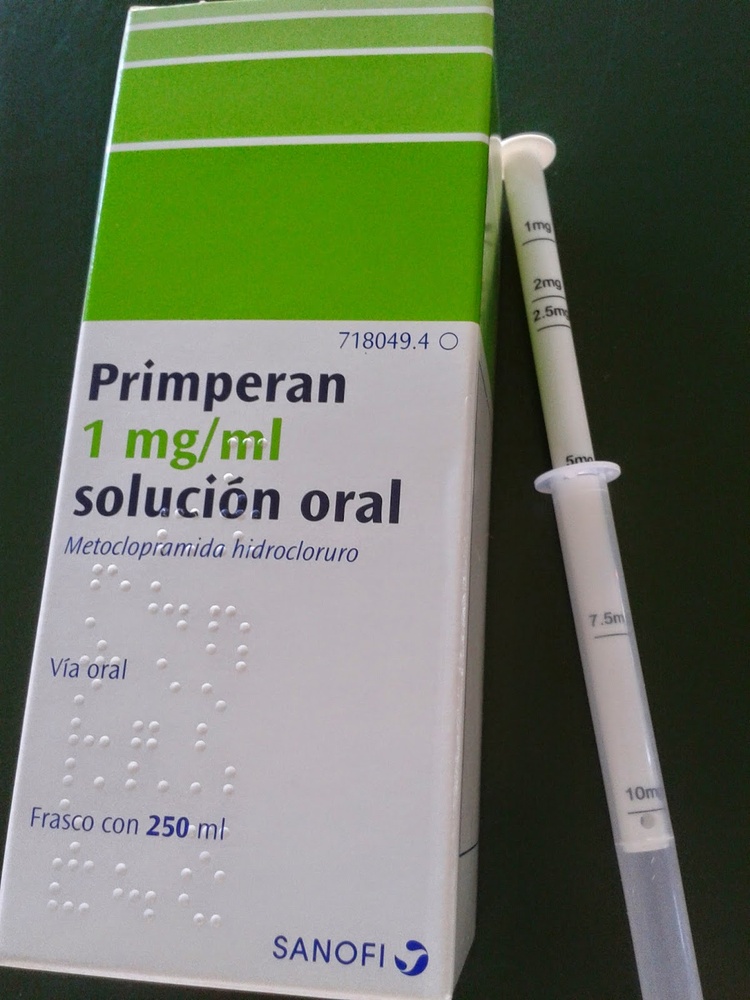
Use the oral measuring syringe provided with the oral solution package to administer the correct dose of metoclopramide.
The oral measuring syringe is graduated in mg. The correspondence with body weight is detailed in the dosing table. The dose is achieved by pulling the plunger to the mg graduation corresponding to the dose.
The use of the oral measuring syringe is restricted to the administration of this solution.
The oral measuring syringe should be rinsed after each use.
The oral measuring syringe should not be immersed in the bottle.
Do not take this medicine for more than 5 days to prevent delayed nausea and vomiting that may occur after chemotherapy.
Method of administration
You should wait at least 6 hours between each dose of metoclopramide, even in the case of vomiting or rejection of the dose, to avoid overdose.
Special populations
Elderly population
The dose may need to be reduced depending on kidney problems, liver problems, and general health problems.
Adults with renal problems
Inform your doctor if you have kidney problems. The dose should be reduced if you have moderate to severe kidney problems.
Adults with hepatic problems
Inform your doctor if you have liver problems. The dose should be reduced if you have severe liver problems.
Children and adolescents
Metoclopramide should not be used in children under 1 year of age (see section 2).
If you take more Primperan than you should
Contact your doctor or pharmacist immediately. You may experience uncontrollable movements (extrapyramidal disorders), feel drowsy, have some consciousness problems, be confused, have hallucinations, and heart problems. Your doctor may prescribe a treatment for these effects if necessary.
In case of overdose or accidental ingestion, consult your doctor or pharmacist immediately or call the Toxicology Information Service, phone: 91 562 04 20, indicating the medicine and the amount ingested.
If you forget to take Primperan
Do not take a double dose to make up for forgotten doses.
If you have any other questions about the use of this medicine, ask your doctor, nurse, or pharmacist.

4. Possible side effects
Like all medicines, this medicine can cause side effects, although not everybody gets them.
Frequency not known(frequency cannot be estimated from the available data)
- allergic reactions (such as anaphylaxis, angioedema, and urticaria).
Symptoms may include rash, itching, difficulty breathing, shortness of breath, swelling of the face, lips, throat, or tongue, cold, sweaty skin, palpitations, dizziness, weakness, or fainting. Contact your doctor or another healthcare professional or go to the emergency department of the nearest hospital immediately.
Stop treatment and inform your doctor, pharmacist, or nurse immediately if you experience one of the following signs while taking this medicine:
- uncontrollable movements (which often affect the head and neck). These can occur in children and young adults and particularly when high doses are used. These signs usually appear at the beginning of treatment and can even occur after a single administration. These movements will stop when treated properly.
- high fever, high blood pressure, seizures, sweating, saliva production. These can be signs of a condition called neuroleptic malignant syndrome.
- itching and skin rashes, facial swelling, lip or throat swelling, difficulty breathing. These can be signs of an allergic reaction, which can be severe.
Very common(may affect more than 1 in 10 people)
- feeling drowsy.
Common(may affect up to 1 in 10 people)
- depression
- uncontrollable movements such as tics, twitches, torsion movements, or muscle contractions (stiffness, rigidity)
- symptoms similar to Parkinson's disease (stiffness, tremor)
- feeling restless
- decreased blood pressure (particularly with intravenous administration)
- diarrhea
- feeling weak.
Uncommon(may affect up to 1 in 100 people)
- high levels of a hormone called prolactin in the blood, which can cause: milk production in men and women who are not breastfeeding
- irregular periods
- hallucinations
- decreased level of consciousness
- slow heart rate (particularly with intravenous administration)
- allergy
- visual disturbances and involuntary deviation of the eyeball.
Rare(may affect up to 1 in 1,000 people)
- confusion
- seizures (especially in patients with epilepsy).
Frequency not known(frequency cannot be estimated from the available data)
- abnormal levels of blood pigments: which can change the color of your skin
- abnormal development of the breasts (gynecomastia)
- involuntary muscle spasms after prolonged use, particularly in elderly patients
- high fever, high blood pressure, seizures, sweating, saliva production. These can be signs of a condition called neuroleptic malignant syndrome
- changes in heartbeats, which can be seen on an ECG (electrocardiogram)
- cardiac arrest (particularly with intravenous administration)
- shock (severe drop in blood pressure) (particularly with intravenous administration)
- fainting (particularly with intravenous administration)
- very high blood pressure
- suicidal thoughts.
Reporting of side effects
If you experience any side effects, talk to your doctor or pharmacist. This includes any possible side effects not listed in this leaflet. You can also report side effects directly through the Spanish Medicines Monitoring System: https://www.notificaram.es. By reporting side effects, you can help provide more information on the safety of this medicine.
5. Storage of Primperan
Keep this medicine out of the sight and reach of children.
No special storage conditions are required.
Do not use Primperan after the expiration date stated on the package after EXP. The expiration date is the last day of the month indicated.
Medicines should not be disposed of via wastewater or household waste. Place the package and any unused medicine in the SIGRE collection point at the pharmacy. If you have any doubts, ask your pharmacist how to dispose of the package and any unused medicine. This will help protect the environment.
6. Contents of the pack and further information
Composition of Primperan 1 mg/ml Oral Solution
- The active ingredient is metoclopramide hydrochloride. Each ml of oral solution contains 1 mg of metoclopramide hydrochloride.
- The other ingredients are: hydroxyethylcellulose, sodium cyclamate, sodium saccharin, methyl parahydroxybenzoate (E218), propyl parahydroxybenzoate (E216), citric acid monohydrate, apricot-orange flavor (contains ethanol), purified water.
Appearance and packaging of the product
It is a clear, viscous liquid, colorless to slightly amber, with an aromatic orange and apricot flavor.
This oral solution is packaged in a 200 ml bottle with a child-resistant cap and includes an oral measuring syringe.
Other presentations:
Primperan 10 mg tablets: Packages with 30 and 60 tablets
Primperan 10 mg/2 ml injectable solution: Package with 12 ampoules of 2 ml
Marketing Authorization Holder
sanofi-aventis, S.A.
C/ Rosselló i Porcel, 21
08016 Barcelona
Spain
Manufacturer
- Nattermann & Cie. GmbH
Nattermannallee, 1
50829 Cologne
Germany
or
Unither Liquid Manufacturing
Entrée 1, 3 Allée de la Neste
Zone Industrielle D’En Sigal
31770 Colomiers
France
Date of last revision of this leaflet: September 2023
Detailed information on this medicine is available on the website of the Spanish Agency for Medicines and Health Products (AEMPS) http://www.aemps.gob.es/
- Country of registration
- Dosage formORAL SOLUTION/SUSPENSION, 100 mg metoclopramide/100 ml
- ATC codeA03FA01
- Average pharmacy price2 EUR
- Active substance
- Prescription requiredYes
- Manufacturer
- This information is for reference only and does not constitute medical advice. Always consult a doctor before taking any medication. Oladoctor is not responsible for medical decisions based on this content.
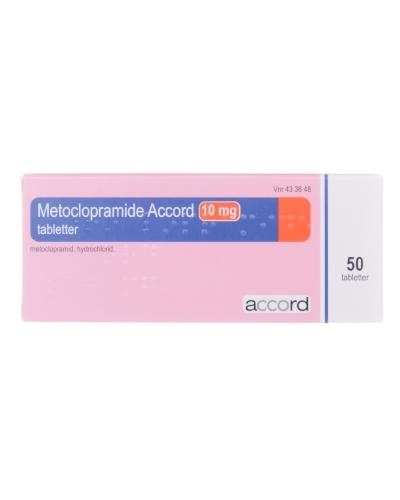
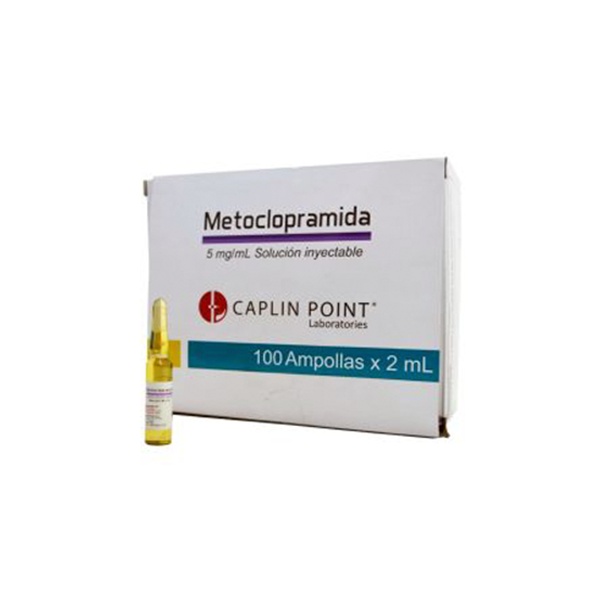
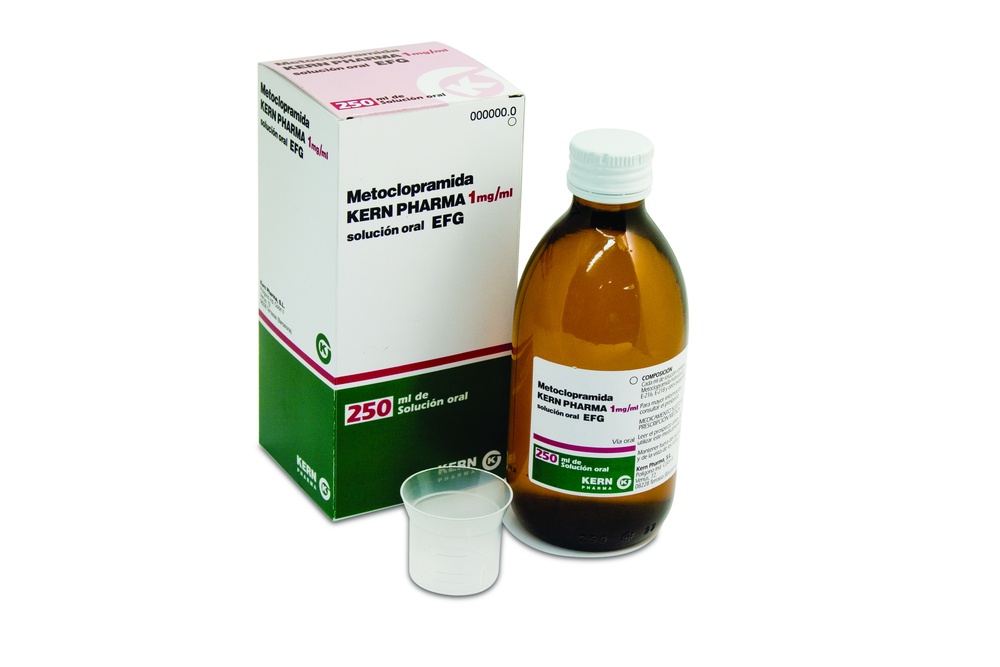
- Alternatives to PRIMPERAN 1mg/ml ORAL SOLUTIONDosage form: TABLET, 10 mgActive substance: metoclopramideManufacturer: Accord Healthcare S.L.U.Prescription requiredDosage form: INJECTABLE, 5 mg/mlActive substance: metoclopramideManufacturer: Laboratorios Basi Industria Farmaceutica S.A.Prescription requiredDosage form: ORAL SOLUTION/SUSPENSION, 1 mg/mlActive substance: metoclopramideManufacturer: Kern Pharma S.L.Prescription required
Online doctors for PRIMPERAN 1mg/ml ORAL SOLUTION
Discuss questions about PRIMPERAN 1mg/ml ORAL SOLUTION, including use, safety considerations and prescription review, subject to medical assessment and local regulations.











Frequently Asked Questions
