



PRAVASTATINA 40 mg Tablets

Prescription review online
A doctor will review your case and decide whether a prescription is medically appropriate.

Talk to a doctor about this medicine
Discuss your symptoms and possible next steps in a quick online consultation.



How to use PRAVASTATIN ALTER 40 mg TABLETS
Contents of the leaflet
- Introduction
- What is Pravastatina Alter and what is it used for
- What you need to know before you take Pravastatina Alter
- How to take Pravastatina Alter
- Possible side effects
- Storage of Pravastatina Alter
- Contents of the pack and other information
Introduction
Package Leaflet: Information for the Patient
Pravastatina Alter 40 mg Tablets EFG
(Pravastatine Sodium)
Read all of this leaflet carefully before you start taking this medicine because it contains important information for you.
- Keep this leaflet, you may need to read it again.
- If you have any further questions, ask your doctor or pharmacist.
- This medicine has been prescribed for you only. Do not pass it on to others. It may harm them, even if their signs of illness are the same as yours.
- If you get any side effects, talk to your doctor or pharmacist. This includes any possible side effects not listed in this leaflet. See section 4.
Contents of the Package Leaflet
- What is Pravastatina Alter and what is it used for
- What you need to know before you take Pravastatina Alter
- How to take Pravastatina Alter
- Possible side effects
- Storage of Pravastatina Alter
- Contents of the pack and other information
1. What is Pravastatina Alter and what is it used for
Pravastatina Alter belongs to a group of medicines known as statins, which act by reducing blood lipid, cholesterol, and triglyceride levels.
Pravastatina Alter, in combination with a suitable diet, is indicated in:
- Treatment of primary hypercholesterolemia and mixed dyslipidemia, diseases characterized by increased cholesterol and/or triglycerides in the blood, when diet or other measures (such as exercise or weight reduction) have not been effective.
- Prevention of cardiovascular problems (myocardial infarction) and death from cardiovascular causes in patients with high cholesterol levels and a high risk of suffering their first cardiovascular problem (Primary Prevention).
- Prevention of cardiovascular problems and death from cardiovascular causes in patients with normal or high cholesterol levels who have already had a cardiovascular problem, such as myocardial infarction or angina pectoris (Secondary Prevention).
- Reduction of blood lipid levels in patients undergoing organ transplantation and receiving immunosuppressive treatment.

Not sure if this medicine is right for you?
Discuss your symptoms and treatment with a doctor online.
2. What you need to know before you take Pravastatina Alter
Do not take Pravastatina Alter
- If you are allergic to pravastatine sodium or any of the other ingredients of this medicine (listed in section 6).
- If you have any active liver disease (hepatic) or have elevated transaminases (enzymes indicative of liver disease).
- If you are pregnant or think you may be pregnant.
- If you are breast-feeding.
Warnings and precautions
Consult your doctor or pharmacist before starting to take Pravastatina Alter:
- If you are taking or have taken in the last 7 days a medicine containing fusidic acid (used to treat bacterial infections) orally or by injection. The combination of fusidic acid and Pravastatina Alter can cause serious muscle problems (rhabdomyolysis).
- If you have had any liver disease or have a history of alcoholism.
It is possible that moderate increases in liver transaminase levels may occur, which in most cases return to their initial level without the need to discontinue treatment.
- You should also inform your doctor if you have kidney failure, hypothyroidism, if you have a family history or have previously suffered from muscle disorders, or if you normally consume alcohol.
- During treatment, some patients may experience muscle pain, sensitivity, weakness, or muscle cramps. If you experience any of these symptoms, you should immediately inform your doctor.
- If you have or have had myasthenia (a disease characterized by generalized muscle weakness that can affect the muscles used for breathing) or ocular myasthenia (a disease that causes weakness of the eye muscles), as statins can sometimes worsen the disease or cause myasthenia (see section 4).
It is possible that your doctor may recommend blood tests to determine the condition of your muscles before starting treatment and during treatment, to consider starting, continuing, or discontinuing treatment.
Inform your doctor if you are taking other medicines that can also cause muscle disorders, such as:
- Fibrates (lower cholesterol levels).
- Nicotinic acid (lowers cholesterol levels).
Consult your doctor, even if any of the above circumstances have occurred to you at any time.
Consult your doctor or pharmacist before taking Pravastatina Alter if you:
- Have severe respiratory failure.
While you are taking this medicine, your doctor will check if you have diabetes or are at risk of developing diabetes. This risk of diabetes increases if you have high levels of sugars and fats in the blood, are overweight, and have high blood pressure.
Also, inform your doctor or pharmacist if you experience constant muscle weakness. Additional tests and medications may be necessary to diagnose and treat this problem.
Taking Pravastatina Alter with other medicines
Inform your doctor or pharmacist if you are taking, have recently taken, or might take any other medicines.
- If you need to take oral fusidic acid to treat a bacterial infection, you will need to stop taking this medicine. Your doctor will tell you when you can restart treatment with Pravastatina Alter. The use of Pravastatina Alter with fusidic acid can cause muscle weakness, sensitivity, or pain (rhabdomyolysis). For more information on rhabdomyolysis, see section 4.
Certain medicines may interact with Pravastatina Alter; in these cases, it may be necessary to change the dose or interrupt treatment with one of them.
It is important that you inform your doctor if you are taking or have recently taken any of the following medicines:
- Cholestyramine or colestipol (can decrease pravastatine levels in the blood) and fibrates (can increase the risk of adverse muscle reactions), which are other medicines used to lower cholesterol levels.
- Cyclosporin, a medicine used to prevent transplant rejection (given together with pravastatine, cyclosporin increases pravastatine levels in the blood).
- Antibiotics such as erythromycin or clarithromycin (can increase pravastatine levels in the blood).
- If you are taking a medicine used in the treatment and prevention of blood clot formation called "vitamin K antagonists", inform your doctor before taking pravastatine because the use of vitamin K antagonists in combination with pravastatine may increase the results of blood tests used to monitor treatment with vitamin K antagonists.
Taking Pravastatina Alter with food and drinks
Pravastatina Alter can be taken with or without food.
If you normally drink alcohol, consult your doctor before taking this medicine.
Pregnancy, breast-feeding, and fertility
If you are pregnant or breast-feeding, think you may be pregnant, or are planning to have a baby, ask your doctor or pharmacist for advice before taking this medicine.
Pregnancy:
Pravastatina Alter is contraindicated during pregnancy. If you become pregnant or think you may be pregnant, you should stop taking this medicine and inform your doctor as soon as possible.
Breast-feeding:
Pravastatina Alter is contraindicated during breast-feeding as it passes into breast milk.
Driving and using machines
At the recommended doses, Pravastatina Alter does not affect the ability to drive or use machines. However, if you notice symptoms of dizziness, do not drive or use machines until you know how the medicine affects you.
Pravastatina Alter contains lactose
This medicine contains lactose. If your doctor has told you that you have an intolerance to some sugars, consult them before taking this medicine.
3. How to take Pravastatina Alter
Follow exactly the administration instructions of this medicine given by your doctor. If you are unsure, consult your doctor or pharmacist again.
Follow these instructions unless your doctor has given you other instructions.
Remember to take your medicine.
Your doctor will tell you the duration of your treatment with Pravastatina Alter 40 mg. Do not stop treatment before then.
The tablets should be swallowed with water and can be administered with or without food, preferably at night.
The usual dose is between 10-40 mg once a day. Your doctor will determine the suitable dose for you and make any necessary adjustments based on your response to the medicine.
Combined treatment:patients treated with pravastatine and cyclosporin should start treatment with 20 mg of pravastatine once a day; your doctor will adjust the dose up to 40 mg. For patients treated with pravastatine and a bile acid sequestrant (e.g., cholestyramine, colestipol), Pravastatina Alter should be administered 1 hour before or 4 hours after the sequestrant.
Children and adolescents (8-18 years) with heterozygous familial hypercholesterolemia:the recommended dose between 8 and 13 years is 10-20 mg once a day, and the recommended dose between 14 and 18 years is 10-40 mg once a day.
Elderly patients:no dose adjustment is necessary in these patients unless there are other risk factors.
Patients with renal or hepatic insufficiency:in patients with moderate or severe renal function impairment or significant hepatic function impairment, treatment should be initiated with a dose of 10 mg.
If you think the effect of Pravastatina Alter is too strong or too weak, talk to your doctor or pharmacist.
If you take more Pravastatina Alter than you should
If you have taken more Pravastatina Alter than you should, consult your doctor, pharmacist, or call the Toxicology Information Service, telephone 91 562 04 20, indicating the medicine and the amount taken.
If you forget to take Pravastatina Alter
In case of forgetting a dose, wait for the next one. Do not take a double dose to make up for forgotten doses.
If you have any further questions on the use of this medicine, ask your doctor or pharmacist.

Started taking the medicine and have questions?
Discuss your symptoms and treatment with a doctor online.
4. Possible side effects
Like all medicines, this medicine can cause side effects, although not everybody gets them.
Disorders of the immune system:
Very rare (may affect up to 1 in 10,000 people): allergic reactions, angioedema (swelling of the arms, legs, face, lips, tongue, and/or throat), lupus-like syndrome (inflammation of the skin).
Disorders of the nervous system:
Uncommon (may affect up to 1 in 100 people): dizziness, headache, sleep disorders, insomnia.
Very rare (may affect up to 1 in 10,000 people): peripheral neuropathy, particularly when used for a long time, and tingling sensation.
Frequency not known (cannot be estimated from the available data): severe myasthenia (a disease that causes generalized muscle weakness that can affect the muscles used for breathing).
Eye disorders:
Uncommon (may affect up to 1 in 100 people): vision disturbances (including blurred vision and double vision).
Frequency not known (cannot be estimated from the available data): ocular myasthenia (a disease that causes weakness of the eye muscles).
Consult your doctor if you experience weakness in the arms or legs that worsens after periods of activity, double vision, or drooping eyelids, difficulty swallowing, or difficulty breathing.
Gastrointestinal disorders:
Uncommon (may affect up to 1 in 100 people): indigestion/heartburn, abdominal pain, nausea, vomiting, constipation, diarrhea, gas.
Very rare (may affect up to 1 in 10,000 people): pancreatitis (inflammation of the pancreas).
Hepatobiliary disorders:
Very rare (may affect up to 1 in 10,000 people): jaundice (yellowing of the skin), hepatitis (inflammation of the liver), fulminant hepatic necrosis (destruction of liver cells).
Disorders of the skin and subcutaneous tissue:
Uncommon (may affect up to 1 in 100 people): itching, skin rash, blistering accompanied by itching, hair and scalp abnormalities (including hair loss).
Musculoskeletal and connective tissue disorders:
Very rare (may affect up to 1 in 10,000 people): rhabdomyolysis (destruction of muscle fibers), which can be associated with kidney disorders, myopathy (muscle disorders).
Tendon disorders, sometimes complicated by rupture.
Frequency not known (cannot be estimated from the available data): muscle rupture.
Renal and urinary disorders:
Uncommon (may affect up to 1 in 100 people): changes in urine elimination (such as difficulty urinating, urinating more frequently, and urinating more frequently at night).
Reproductive system and breast disorders:
Uncommon (may affect up to 1 in 100 people): sexual disorders.
General disorders:
Uncommon (may affect up to 1 in 100 people): fatigue.
Sleep disorders, including insomnia and nightmares
Memory loss
Sexual dysfunction
Depression
Respiratory problems, including persistent cough and/or difficulty breathing or fever
Diabetes mellitus: the frequency will depend on the presence or absence of risk factors (fasting blood glucose levels of 5.6 mmol/L, BMI > 30 kg/m2, elevated triglycerides, history of hypertension). Your doctor will monitor you while you are taking this medicine.
The following side effects of special clinical interest have also been reported during clinical studies:
Musculoskeletal and connective tissue disorders:
Musculoskeletal pain, including joint pain, muscle cramps, muscle pain (very common), muscle weakness (common), and elevated creatine kinase levels (enzyme indicative of muscle disorder).
Frequency not known (cannot be estimated from the available data): constant muscle weakness.
Hepatic disorders:
Elevations of serum transaminases (enzymes indicative of liver disease).
Reporting of side effects
If you experience any side effects, talk to your doctor, pharmacist, or nurse. This includes any possible side effects not listed in this leaflet. You can also report side effects directly through the Spanish Pharmacovigilance System for Human Use Medicines: https://www.notificaram.es. By reporting side effects, you can help provide more information on the safety of this medicine.
5. Storage of Pravastatina Alter
Keep this medicine out of the sight and reach of children.
Do not use this medicine after the expiry date which is stated on the packaging. The expiry date refers to the last day of the month shown.
Do not store above 30°C.
Medicines should not be disposed of via wastewater or household waste. Ask your pharmacist how to dispose of medicines no longer required. These measures will help protect the environment.
6. Contents of the pack and other information
Composition of Pravastatina Alter
- The active ingredient is pravastatine sodium. Each tablet contains 40 mg of pravastatine.
- The other ingredients are: Lactose monohydrate, Povidone 30, Magnesium oxide, Microcrystalline cellulose, Sodium croscarmellose, Magnesium stearate.
Appearance of the product and packaging
Pravastatina Alter are white, round, and scored tablets.
The tablet can be divided into equal doses.
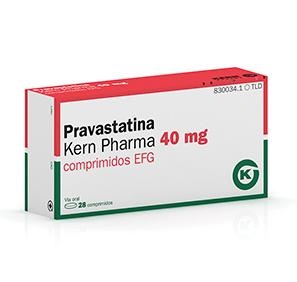
They are presented in Al/Al blisters, which are packaged in boxes of 28 tablets.
Marketing authorization holder and manufacturer:
Laboratorios Alter, S.A.
C/ Mateo Inurria 30
28036 Madrid
Spain
Date of last revision of this leaflet: April 2024
Detailed and updated information on this medicine is available on the website of the Spanish Agency for Medicines and Health Products (AEMPS) http://www.aemps.gob.es/
- Country of registration
- Dosage formTABLET, 40 mg of pravastatin
- ATC codeC10AA03
- Average pharmacy price16.3 EUR
- Active substance
- Prescription requiredYes
- Manufacturer
- CompositionCROSCARMELOSA SODICA (20,000 mg mg), LACTOSA HIDRATADA (260,000 mg mg)
- This information is for reference only and does not constitute medical advice. Always consult a doctor before taking any medication. Oladoctor is not responsible for medical decisions based on this content.
- Alternatives to PRAVASTATIN ALTER 40 mg TABLETSDosage form: TABLET, 10 mgActive substance: pravastatinManufacturer: Esteve Pharmaceuticals S.A.Prescription requiredDosage form: TABLET, 20 mgActive substance: pravastatinManufacturer: Esteve Pharmaceuticals S.A.Prescription requiredDosage form: TABLET, 40 mgActive substance: pravastatinManufacturer: Esteve Pharmaceuticals S.A.Prescription required
Online doctors for PRAVASTATIN ALTER 40 mg TABLETS
Discuss questions about PRAVASTATIN ALTER 40 mg TABLETS, including use, safety considerations and prescription review, subject to medical assessment and local regulations.
Get PRAVASTATIN ALTER 40 mg TABLETS Prescription Online
Fill in a 2-min form
Tell us your symptoms, history, and what medicine you're requesting.
Pick a doctor or let us assign
Choose a specialist or we'll match you with the next available doctor.
Doctor reviews your case
Usually within 30 minutes. They may ask follow-up questions via chat.
Collect from any pharmacy
Electronic prescription sent to your email — valid across Spain.
Frequently Asked Questions
PRAVASTATIN ALTER 40 mg TABLETS requires a prescription in Spain. You can check with a doctor online whether this medicine may be appropriate for your situation.
The active ingredient in PRAVASTATIN ALTER 40 mg TABLETS is pravastatin. This information helps identify medicines with the same composition but different brand names.
The average pharmacy price for PRAVASTATIN ALTER 40 mg TABLETS is around 16.3 EUR. Prices may vary depending on the manufacturer and dosage form.
PRAVASTATIN ALTER 40 mg TABLETS is manufactured by Laboratorios Alter S.A.. Pharmacy brands and packaging may differ depending on the distributor.
Doctors such as Family doctors, Psychiatrists, Dermatologists, Cardiologists, Endocrinologists, Gastroenterologists, Pulmonologists, Nephrologists, Rheumatologists, Hematologists, Infectious disease physicians, Allergists, Geriatricians, Paediatricians, Oncologists may assess whether PRAVASTATIN ALTER 40 mg TABLETS is appropriate, depending on your situation and local regulations. You can book an online consultation to discuss your symptoms and possible next steps.
Spain has a well-developed healthcare infrastructure across major cities such as Madrid, Barcelona, Valencia, and Seville. Pharmacies are widely available and operate under strict regulations, ensuring access to prescribed medications.
You can buy PRAVASTATIN ALTER 40 mg TABLETS in Madrid, Barcelona, Seville, or Valencia at any local pharmacy with a valid prescription.
To obtain a prescription, you can use Oladoctor:
Other medicines with the same active substance (pravastatin) include LIPLAT 10 mg TABLETS, LIPLAT 20 mg TABLETS, LIPLAT 40 mg TABLETS. These may have different brand names or formulations but contain the same therapeutic ingredient. Always consult a doctor before switching or starting a new medicine.
