


POTASSIUM KABI 0.04 mEq/mL in 0.9% SODIUM CHLORIDE SOLUTION FOR INFUSION
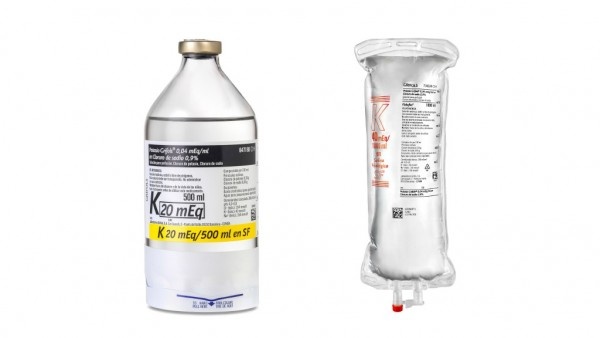



How to use POTASSIUM KABI 0.04 mEq/mL in 0.9% SODIUM CHLORIDE SOLUTION FOR INFUSION
Translated with AI
This page provides general information and does not replace a doctor’s consultation. Always consult a doctor before taking any medication. Seek urgent medical care if symptoms are severe.
Show originalContents of the leaflet
- Introduction
- What Potassium Kabi 0.04 mEq/ml in Sodium Chloride 0.9% is and what it is used for
- What you need to know before you are given Potassium Kabi 0.04 mEq/ml in Sodium Chloride 0.9%
- How Potassium Kabi 0.04 mEq/ml in Sodium Chloride 0.9% will be given to you
- Possible side effects
- Storage of Potassium Kabi 0.04 mEq/ml in Sodium Chloride 0.9%
- Container Content and Additional Information
Introduction
Package Leaflet: Information for the User
Potassium Kabi 0.04 mEq/ml in Sodium Chloride 0.9% Solution for Infusion EFG
potassium chloride and sodium chloride
Read all of this leaflet carefully before you start using this medicine because it contains important information for you.
- Keep this leaflet, you may need to read it again.
- If you have any further questions, ask your doctor or nurse.
- If you get any side effects, talk to your doctor or nurse. This includes any possible side effects not listed in this leaflet. See section 4.
Contents of the pack:
- What Potassium Kabi 0.04 mEq/ml in Sodium Chloride 0.9% is and what it is used for
- What you need to know before you are given Potassium Kabi 0.04 mEq/ml in Sodium Chloride 0.9%
- How Potassium Kabi 0.04 mEq/ml in Sodium Chloride 0.9% will be given to you
- Possible side effects
- Storage of Potassium Kabi 0.04 mEq/ml in Sodium Chloride 0.9%
- Contents of the pack and further information
1. What Potassium Kabi 0.04 mEq/ml in Sodium Chloride 0.9% is and what it is used for
Potassium Kabi 0.04 mEq/ml in Sodium Chloride 0.9% is a solution of potassium chloride and sodium chloride in water. Potassium chloride and sodium chloride are chemical substances (commonly called salts) that are found in the blood.
This medicine is used to treat and prevent:
- a loss of potassium from the body (for example, after treatment with certain diuretics)
- a low level of potassium in the blood (hypokalemia), in situations that may cause loss of water and potassium chloride, including:
- when you cannot eat or drink, due to illness or after surgery
- excessive sweating caused by high fever
conditions of loss of sodium chloride and water

2. What you need to know before you are given Potassium Kabi 0.04 mEq/ml in Sodium Chloride 0.9%
You should not be given Potassium Kabi 0.04 mEq/ml in Sodium Chloride 0.9%if you have any of the following medical conditions:
- if your blood contains high levels of potassium above normal (hyperkalemia)
- if your blood contains high levels of chlorides above normal (hyperchloremia)
- if your blood contains high levels of sodium above normal (hypernatremia)
- if your kidneys do not work well (produce little or no urine)
- if you have heart failure that is not being treated properly (uncompensated heart failure), which causes symptoms such as:
- difficulty breathing
- swelling of the ankles
- if you have a disease where the adrenal glands do not work correctly (Addison's disease).
Warnings and precautions
This medicine has a higher concentration than blood (hypertonic solution). Your doctor will take this into account when calculating the amount of solution to be administered to you.
Consult your doctor or nurse before you are given Potassium Kabi 0.04 mEq/ml in Sodium Chloride 0.9% if:
- you have any type of heart disease or heart failure
- you have kidney failure
- you have a disease of the adrenal glands that affects the amount of steroid hormones in the body (adrenocortical insufficiency)
- you are severely dehydrated (loss of water from the body, for example vomiting or diarrhea)
- you have severely damaged a large area of skin, such as in burns
- you have high blood pressure
- you have swelling under the skin, particularly around the ankles (peripheral edema) or in the lungs (pulmonary edema)
- you have high blood pressure during pregnancy (preeclampsia)
- you have any other condition where the body retains too much sodium (sodium retention)
When you are being given this medicine, your doctor will take blood and urine samples to monitor your condition, especially if you have heart or kidney problems.
Using Potassium Kabi 0.04 mEq/ml in Sodium Chloride 0.9% with other medicines
Tell your doctor or pharmacist if you are using, have recently used or might use any other medicines. It is particularly important that you tell your doctor if you are taking:
- cardiac glycosides used in the treatment of heart failure (such as digoxin)
- antiarrhythmic medicines used to suppress abnormal heart rhythm (such as quinidine, hydroquinidine, procainamide)
- medicines that increase the concentration of potassium in the blood, such as:
- potassium-sparing diuretics, known as water pills (such as amiloride, spironolactone, triamterene)
- angiotensin-converting enzyme (ACE) inhibitors (mainly used to treat high blood pressure)
- angiotensin II receptor antagonists (used to treat high blood pressure)
- cyclosporins (used to prevent transplant rejection)
- tacrolimus (used to prevent transplant rejection and to treat certain skin disorders)
- medicines that contain potassium
- corticosteroids (anti-inflammatory medicines)
Pregnancy and breastfeeding
If you are pregnant or breastfeeding, think you may be pregnant or are planning to have a baby, ask your doctor for advice before using this medicine.
This medicine can be used during pregnancy and breastfeeding. The amount of medicine that you are given will be carefully controlled by your doctor. Your doctor will perform blood tests to monitor the levels of chemical substances in your blood. This is because changes in potassium levels in the blood can affect the way both your heart and your unborn baby's heart work.
Your doctor will carefully monitor your blood pressure, as sodium chloride can increase it (risk of preeclampsia).
Driving and using machines
This medicine does not affect your ability to drive or use machines.
3. How Potassium Kabi 0.04 mEq/ml in Sodium Chloride 0.9% will be given to you
This medicine will be given to you by a doctor or nurse.
Your doctor will decide how much you need and when you will be given it, which will depend on your age, weight, clinical and biological condition, and your state of hydration (amount of water in your body). The amount you receive may also be influenced by other treatments you are receiving.
Potassium Kabi 0.04 mEq/ml in Sodium Chloride 0.9% is administered slowly into a vein as an infusion. The infusion rate will be determined by your doctor. If you need a large volume or rapid infusion of the medicine, your doctor will monitor your ECG (heart graph).
When you are given Potassium Kabi 0.04 mEq/ml in Sodium Chloride 0.9%, your doctor may perform blood tests to monitor your blood levels of potassium and other electrolytes (such as sodium or chlorides) that are normally in the blood. Your doctor will also monitor whether you are urinating normally (adequate urine production).
If you are given more Potassium Kabi 0.04 mEq/ml in Sodium Chloride 0.9% than you should
If you are given too much of the medicine, you may experience: tingling or burning in the arms and legs (paresthesia), muscle weakness, inability to move (paralysis), irregular heartbeat (arrhythmia), heart block (very slow heartbeats), cardiac arrest (the heart stops beating), mental confusion, fluid accumulation in the lungs making breathing difficult (pulmonary edema), fluid accumulation under the skin, particularly around the ankles (peripheral edema), acidification of the blood (acidosis) leading to fatigue, confusion, lethargy, and increased respiratory rate.
If you notice any of these symptoms, you should inform your doctor immediately. You should be stopped from receiving the medicine and receive treatment depending on the symptoms.
If you have any further questions on the use of this medicine, ask your doctor or nurse.

4. Possible side effects
Like all medicines, this medicine can cause side effects, although not everybody gets them.
The following adverse reactions have been reported during post-marketing use of the medicine. The frequency of the event cannot be estimated from the available data. Adverse effects may be associated with the administration technique.
Tell your doctor or nurse if you notice any of the following side effects:
- infection at the injection site
- abnormal increase in blood volume (hypervolemia)
- administration of the solution into the tissues surrounding the vein (extravasation), which can damage the tissues and cause scarring
- pain or irritation at the injection site
- inflammation of the vein into which the solution has been infused (phlebitis). This can cause redness, swelling, and pain or burning along the vein into which the solution has been administered
- formation of a blood clot at the injection site that causes pain, swelling, or redness in the area of the clot
- fever
Reporting of side effects
If you experience any side effects, talk to your doctor or nurse, even if it is possible side effects not listed in this leaflet. You can also report side effects directly through the Spanish Pharmacovigilance System for Human Use Medicines: https://www.notificaram.es. By reporting side effects, you can help provide more information on the safety of this medicine.
5. Storage of Potassium Kabi 0.04 mEq/ml in Sodium Chloride 0.9%
Keep this medicine out of the sight and reach of children.
This medicine does not require any special storage conditions.
Do not use this medicine after the expiry date which is stated on the packaging. The expiry date is the last day of the month stated.
Do not use this medicine if the solution is not transparent or has visible particles. Do not use this medicine if the packaging is damaged in any way.
From a microbiological point of view, the product should be used immediately. If not used immediately, the storage times and conditions are the responsibility of the user.
Medicines should not be disposed of via wastewater or household waste. Ask your pharmacist how to dispose of medicines no longer required. These measures will help protect the environment.
6. Container Content and Additional Information
Composition of Potassium Kabi 0.04 mEq/ml in Sodium Chloride 0.9%
- The active ingredients are potassium chloride and sodium chloride. Each ml contains 3.00 mg of potassium chloride and 9.00 mg of sodium chloride.
Each 500 ml vial contains 1.50 g of potassium chloride and 4.5 g of sodium chloride
Each 1000 ml vial contains 3.00 g of potassium chloride and 9.00 g of sodium chloride
- The other components are water for injectable preparations, sodium hydroxide, and hydrochloric acid for pH adjustment
Appearance of the Product and Container Content
Potassium Kabi 0.04 mEq/ml in Sodium Chloride 0.9% is a clear and colorless solution, without visible particles. It is available in 500 ml and 1000 ml polyethylene vials, closed with a polyolefin cap containing a polyisoprene rubber stopper. It is supplied in packs of 10 vials.
Only some pack sizes may be marketed.
Marketing Authorization Holder and Manufacturer
Marketing Authorization Holder
Fresenius Kabi España, S.A.U.
C/ Marina 16-18,
08005-Barcelona
Spain
Manufacturer
Fresenius Kabi Deutschland GmbH
Else-Kröner-Straße 1,
61352 Bad Homburg v.d.H.
Germany
or
Labesfal – Laboratórios Almiro S.A.
Zona Industrial do Lagedo,
Santiago de Besteiros, 3465 – 157
Portugal
This medicinal product is authorized in the Member States of the European Economic Area under the following names:
Member State | Medicinal Product Name |
Belgium | KCl 0.3% w/v & NaCl 0.9% w/v Fresenius Kabi, solution for infusion |
Estonia | Potassium Chloride/Sodium Chloride Fresenius |
France | Chlorure de potassium 0,3% et chlorure de sodium 0,9% Kabi, solution for perfusion |
Ireland | Potassium Chloride 0.3% w/v & Sodium chloride 0.9% w/v Solution for Infusion |
Italy | Sodio Cloruro e Potassio Cloruro Kabi |
Latvia | Potassium Chloride/ Sodium Chloride Fresenius 3 mg/9 mg/ml solution for infusion |
Lithuania | Potassium Chloride/ Sodium Chloride Fresenius 3 mg/9 mg/ml solution for infusion |
Poland | Kalii chloridum 0,3% + Natrii chloridum 0,9% Kabi |
Portugal | Cloreto de Potássio 0,3% p/v e Cloreto de Sódio 0,9% p/v Kabi |
Slovenia | Kalijev klorid/natrijev klorid Kabi 3 mg/9 mg in 1 ml solution for infusion |
Spain | Potasio Kabi 0.04 mEq/ml en Cloruro de sodio 0.9% solution for perfusion EFG |
Netherlands | KCl 0.3% w/v & NaCl 0.9% w/v Fresenius Kabi, solution for infusion |
United Kingdom | Potassium Chloride 0.3% w/v & Sodium chloride 0.9% w/v Solution for Infusion |
Date of the last revision of thisleaflet: April2015
Detailed and updated information on this medicinal product is available on the website of the Spanish Agency for Medicines and Health Products (AEMPS) http://www.aemps.gob.es/.
------------------------------------------------------------------------------------------------------------------------------
This information is intended only for healthcare professionals:
Handling and Preparation
This medicinal product is for single use only. Discard unused content.
Use only if the solution is clear, without visible particles, and if the container is not damaged.
Route of Administration
Administration is performed by intravenous perfusion using a sterile and apyrogenic device.
Potassium should be administered intravenously through a large peripheral vein or central vein to reduce the risk of sclerosis. If perfused through a central vein, ensure that the catheter is not in the atrium or ventricle to avoid localized hyperkalemia.
Solutions containing potassium should be administered slowly.
Administration Rate
Potassium should not be administered intravenously at a rate greater than 15 to 20 mmol per hour to avoid dangerous hyperkalemia.
In any case, the dose indicated in the "General Posology" section should not be exceeded.
General Posology
The recommended dosage for the treatment of isotonic fluid depletion (extracellular dehydration) by means of any intravenous solution is:
- for adults: 500 ml to 3 liters every 24 hours
- for infants and children: 20 to 100 ml every 24 hours and per kilogram of body weight, depending on age and total body mass.
Posology
- Adults, elderly, and adolescents:
Typical doses of potassium for the prevention of hypokalemia may be up to 50 mmol daily, and similar doses may be suitable for mild potassium deficiencies. When used for the treatment of hypokalemia, the recommended dose is 20 mmol of potassium in 2 or 3 hours (i.e., 7-10 mmol/h) under electrocardiographic control (ECG).
- Pediatric population
When used for the treatment of hypokalemia, the recommended dose is 0.3 – 0.5 mmol/kg body weight/hour. The dose should be adjusted based on laboratory values obtained routinely.
The maximum recommended dose of potassium is 2 to 3 mmol/kg body weight/day.
- Patients with renal insufficiency
Patients with renal insufficiency should receive lower doses.
Potassium Kabi 0.04 mEq/ml in Sodium Chloride 0.9% is a hypertonic solution, with an approximate osmolarity of 388 mOsm/l.
Administration should be performed under continuous and careful supervision. Constant monitoring of clinical status, plasma electrolyte concentrations, plasma creatinine levels, BUN, acid-base balance, and ECG is essential in patients receiving potassium therapy, particularly those with renal or cardiac dysfunction.
It is essential to maintain adequate urine flow and monitor fluid balance.
Potassium salts should be administered with caution to patients with cardiac diseases or conditions that predispose to hyperkalemia, such as renal or adrenocortical insufficiency, acute dehydration, or massive tissue destruction, as occurs in large burns. Constant control of plasma potassium levels is mandatory in patients treated with digitalis.
Sodium salts should be administered with caution to patients with hypertension, heart failure, peripheral or pulmonary edema, renal dysfunction, preeclampsia, or other conditions associated with sodium retention.
Validity Period During Use (Additives)
Before use, the physical and chemical stability of any medicinal product added to the pH of the potassium chloride 0.04 mEq/ml in sodium chloride 0.9% solution should be established.
In the absence of compatibility studies, this medicinal product should not be mixed with other medicinal products.
It is the responsibility of the physician to evaluate the incompatibility of any medication added to the potassium chloride 0.04 mEq/ml in sodium chloride 0.9% solution, checking for any possible change in color and/or possible formation of a precipitate, insoluble complexes, or appearance of crystals. The summary of product characteristics of the added medicinal product should also be consulted.
The incompatibility of medicinal products added to Potassium Kabi 0.04 mEq/ml in Sodium Chloride 0.9% should be checked before addition.
The instructions for use of the medicinal product to be added should be consulted. Before adding a medicinal product, verify if it is soluble and/or stable in water at the pH of the potassium chloride 0.04 mEq/ml in sodium chloride 0.9% solution (pH: 4.5 to 7.0).
Do not use additives known to be incompatible.
From a microbiological point of view, the product should be used immediately. If not used immediately, the time and conditions of storage during use are the responsibility of the user.
- Country of registration
- Dosage formINJECTABLE PERFUSION, 0.9% + 0.04 mEq/ml
- ATC codeB05BB01
- Active substance
- Prescription requiredYes
- Manufacturer
- This information is for reference only and does not constitute medical advice. Always consult a doctor before taking any medication. Oladoctor is not responsible for medical decisions based on this content.
- Alternatives to POTASSIUM KABI 0.04 mEq/mL in 0.9% SODIUM CHLORIDE SOLUTION FOR INFUSIONDosage form: INJECTABLE, 1361 mgActive substance: electrolytesManufacturer: Fresenius Kabi España, S.A.U.Prescription requiredDosage form: INJECTABLE INFUSION, 2% Sodium Chloride / 100 mlActive substance: electrolytesManufacturer: Fresenius Kabi España, S.A.U.Prescription requiredDosage form: INJECTABLE PERFUSION, 33 mg / 30 mg / 860 mgActive substance: electrolytesManufacturer: Fresenius Kabi España, S.A.U.Prescription required

Online doctors for POTASSIUM KABI 0.04 mEq/mL in 0.9% SODIUM CHLORIDE SOLUTION FOR INFUSION
Discuss questions about POTASSIUM KABI 0.04 mEq/mL in 0.9% SODIUM CHLORIDE SOLUTION FOR INFUSION, including use, safety considerations and prescription review, subject to medical assessment and local regulations.








.jpg)


Frequently Asked Questions
